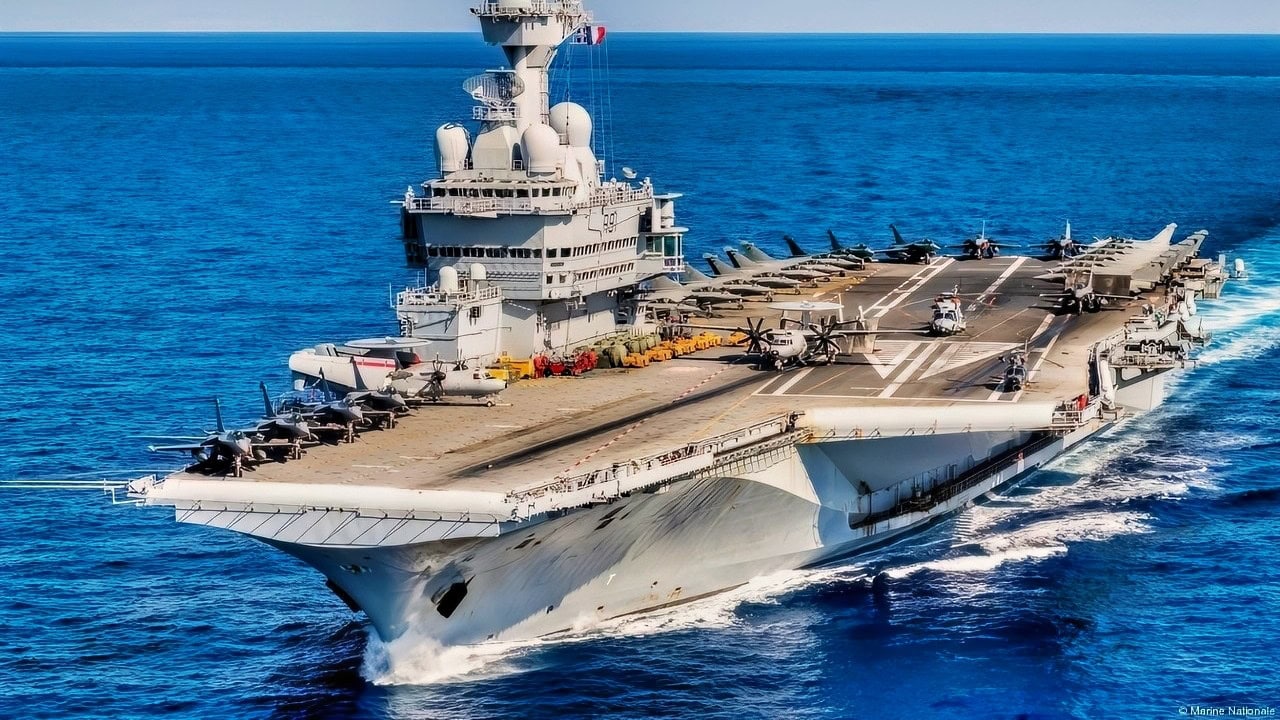
France’s only nuclear-powered aircraft carrier, the Charles de Gaulle, caught fire on October 5, 2026, while undergoing maintenance at the Toulon Naval Base in southern France.
The carrier was undergoing maintenance there.
The fire erupted during metal-cutting operations using a gas-powered cutting torch, Le Figaro said.
No injuries were reported, and the fire did not impact the ship’s nuclear propulsion systems.
The Charles de Gaulle
The aging nuclear-powered aircraft carrier (which will soon be replaced by the newer France Libre aircraft carrier currently being developed in France) arrived at the shipyard for scheduled maintenance in August, with the maintenance cycle set to conclude by December.
When fire alarms sounded, fire crews were directed to a technical compartment near the aircraft hangar.
Luckily for the French, the hangar was clear of aircraft at the time of the conflagration because the ship was undergoing its planned maintenance cycle.
This meant the fire could not threaten the aircraft that would have been parked nearby if the ship were underway.
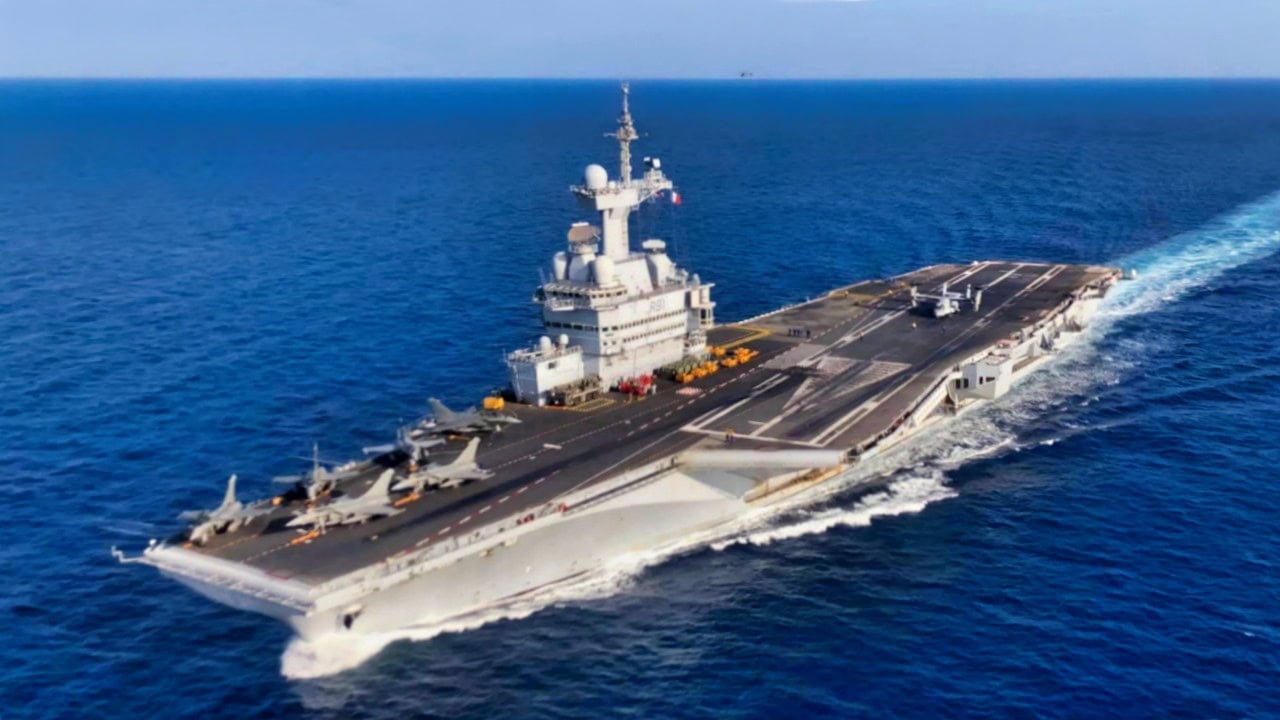
U.S. 5TH FLEET AREA OF OPERATIONS (April 24, 2019) A U.S. Marine MV-22 Osprey assigned to the 22nd Marine Expeditionary Unit sits on the flight deck of France’s Marine Nationale aircraft carrier FS Charles De Gaulle (R 91). This was the second time that Ospreys have landed aboard the French vessel. Marines and Sailors assigned to the 22nd MEU and Kearsarge Amphibious Ready Group are currently deployed to the U.S. 5th Fleet area of operations in support of naval operations to ensure maritime stability and security in the Central region, connecting the Mediterranean and the Pacific through the western Indian Ocean and three strategic choke points. (U.S. Marine Corps photo by Maj. Joshua Smith/Released)
Several hours after the fire erupted in that small compartment near the aircraft hangar on the Charles de Gaulle, firefighters from the Toulon base and the local Marseille Naval Fire Battalion deployed to stop it.
Although it took hours to extinguish the fire on France’s only active nuclear-powered aircraft carrier, the French Navy reported no serious damage.
No official damage report or cost estimate has been made public.
France has long fancied itself as the great military power of Europe.
Depending on which nation you compare it to, that may be true.
Beyond Europe, though, many nations could challenge France’s military might.
French leaders see maintaining one aircraft carrier as essential.
It not only gives the French Navy’s surface warfare fleet a significant naval aviation capability, but it also reminds the world that France is a major military power, like the United States, China, and Russia.
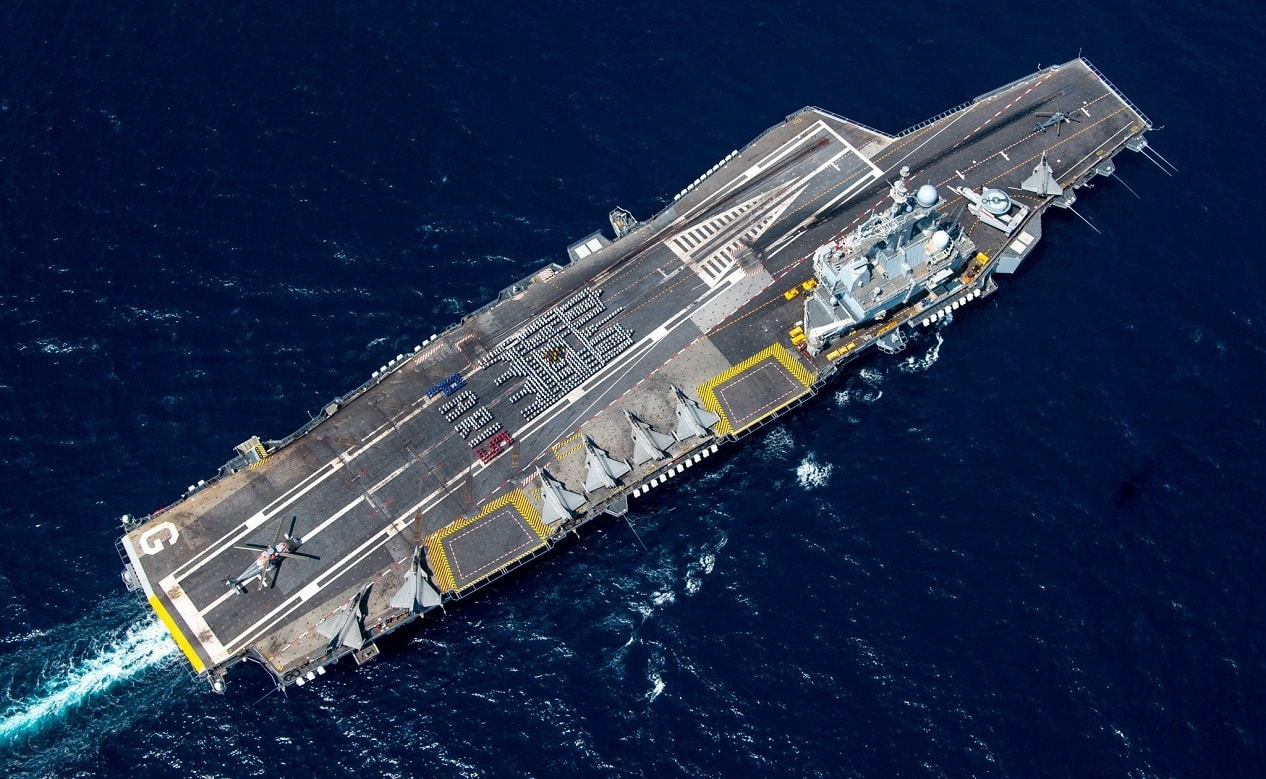
French Aircraft Carrier Charles de Gaulle.
The French Navy commissioned the Charles de Gaulle as its flagship in May 2001.
That warship is the only other nuclear-powered aircraft carrier operated by a nation outside the United States.
Built in the DCN shipyards in Brest, France, she was designed to replace the conventionally powered French carrier, Clemenceau. She displaces around 42,500 metric tons when fully loaded.
This aircraft carrier uses steam-powered catapults to launch its aircraft.
Two K15 nuclear reactors drive two propeller shafts, pushing this carrier to around 27 knots.
She carries around 40 aircraft, including Dassault Rafale-M multirole fighters.
The carrier also carries Northrop Grumman E-2C Hawkeye aircraft. Charles de Gaulle has defensive armament, including Aster 15 surface-to-air missiles and short-range missile systems.
Service Record
Charles de Gaulle has a storied service record, with combat missions in Afghanistan, Libya, Iraq, and even Syria.
Throughout its life, Charles de Gaulle has played an instrumental role in NATO missions.
When the war between the United States, Israel, and the Islamic Republic of Iran initiated in February of this year, the Charles de Gaulle operated in the eastern Mediterranean, protecting–and enhancing–French interests in the region.
But its maintenance cycle arrived in August, prompting Paris to send it back to port.
Once it returned to port, the French could no longer conduct Middle East missions from a sea-based landing strip.
And this is the inherent problem with the structure of the French Navy’s carrier force.
With only one carrier, the force is constrained by the onerous maintenance cycles of a nuclear-powered aircraft carrier.
Downtime
So, once the ship returns to port for scheduled maintenance, the French Navy faces a significant capabilities gap it cannot reliably fill until the ship completes its required maintenance cycle.
A fire while the ship is in the shipyard can drastically complicate the French Navy’s ability to use the carrier as planned.
So far, the fire does not appear to have delayed the carrier’s regularly scheduled maintenance cycle. And the investigation into the fire is ongoing to determine the precise circumstances.
Yet, officials indicate the carrier will deploy as planned in early December 2026.
About the Author: Brandon J. Weichert
Brandon J. Weichert is the Senior National Security Editor at 19FortyFive.com. He also manages The Weichert Brief on Substack. Weichert is the co-host for The Mario Nawfal Show on Twitter/X. He is the author of four bestselling national security books, most recently A Disaster of Our Own Making: How the West Lost Ukraine (Encounter Books). His next book, Fortress Americas: A New Monroe Doctrine (Tucker Carlson Books), is due out December 8. Follow him via Twitter/X @WeTheBrandon.