

Summary and Key Points: US Air Force F-22 Raptors have deployed to Tsuiki Air Base in Japan for Keen Sword 27, the US-Japan exercise running October 19–29 with 45,000 JSDF personnel and 12,000 American service members, including the USS Theodore Roosevelt. The exercise, the 18th since 1985, focuses on defending Japan’s southwestern islands; on Yonaguni, 68 miles from Taiwan, the Marines have NMESIS and MADIS and Japan has deployed its 620-mile Type 25 missile.
F-22 Raptors Are Getting Close to China
U.S. F-22 Raptor stealth fighters recently arrived at Tsuiki Air Base in Japan during Exercise Keen Sword 27. The multinational exercise began on October 19 and runs through the 29th.
Personnel from Japan, Australia, Canada, France, the Netherlands, New Zealand, and the Philippines, along with observers from the UK and South Korea, are joining the American stealth fighters.
The exercise aims to test and improve allied coordination in the Pacific and demonstrate the coalition’s resolve to preserve freedom in the region.
Unofficially, however, the exercise is meant to deter China, whose relations with Japan have recently deteriorated.
F-22’s Deployed to Japan
The F-22s belong to the 525th Expeditionary Fighter Squadron and are based in Elmendorf-Richardson, Alaska.
According to the official post from the U.S. Air Force’s 18th Wing, the fighters were sent to participate in Exercise Keen Sword 27.
The post did not specify how many Raptors were participating in the exercise.
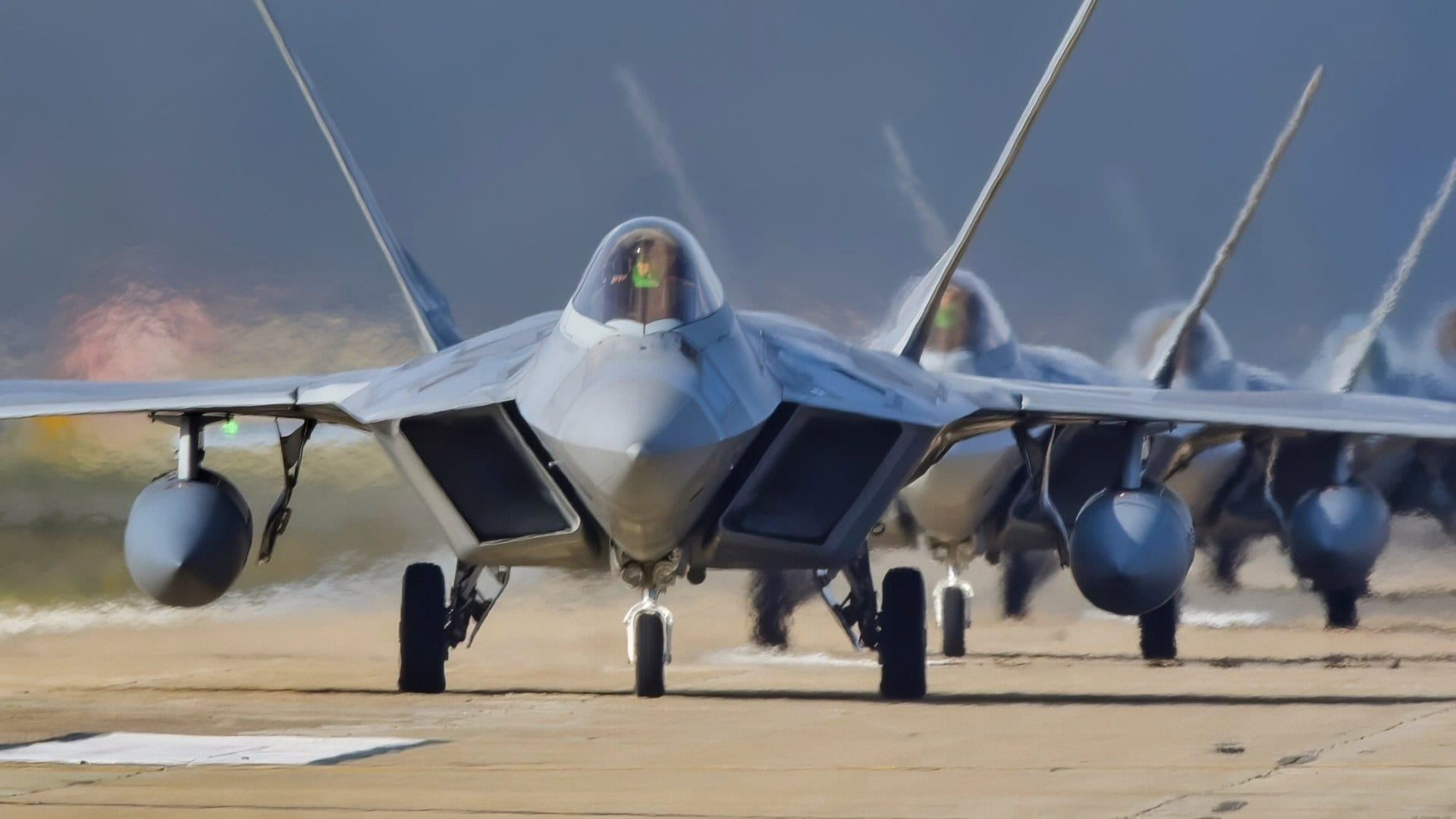
F-22 Raptors from the 1st Fighter Wing and 192nd Fighter Wing, participate in a total force exercise at Joint Base Langley-Eustis, Virginia, Feb. 28, 2019. Both wings partnered with the 633rd Air Base Wing during the Phase I exercise to showcase their readiness and deployability of the F-22s. (U.S. Air Force Photo by Tech Sgt. Carlin Leslie)
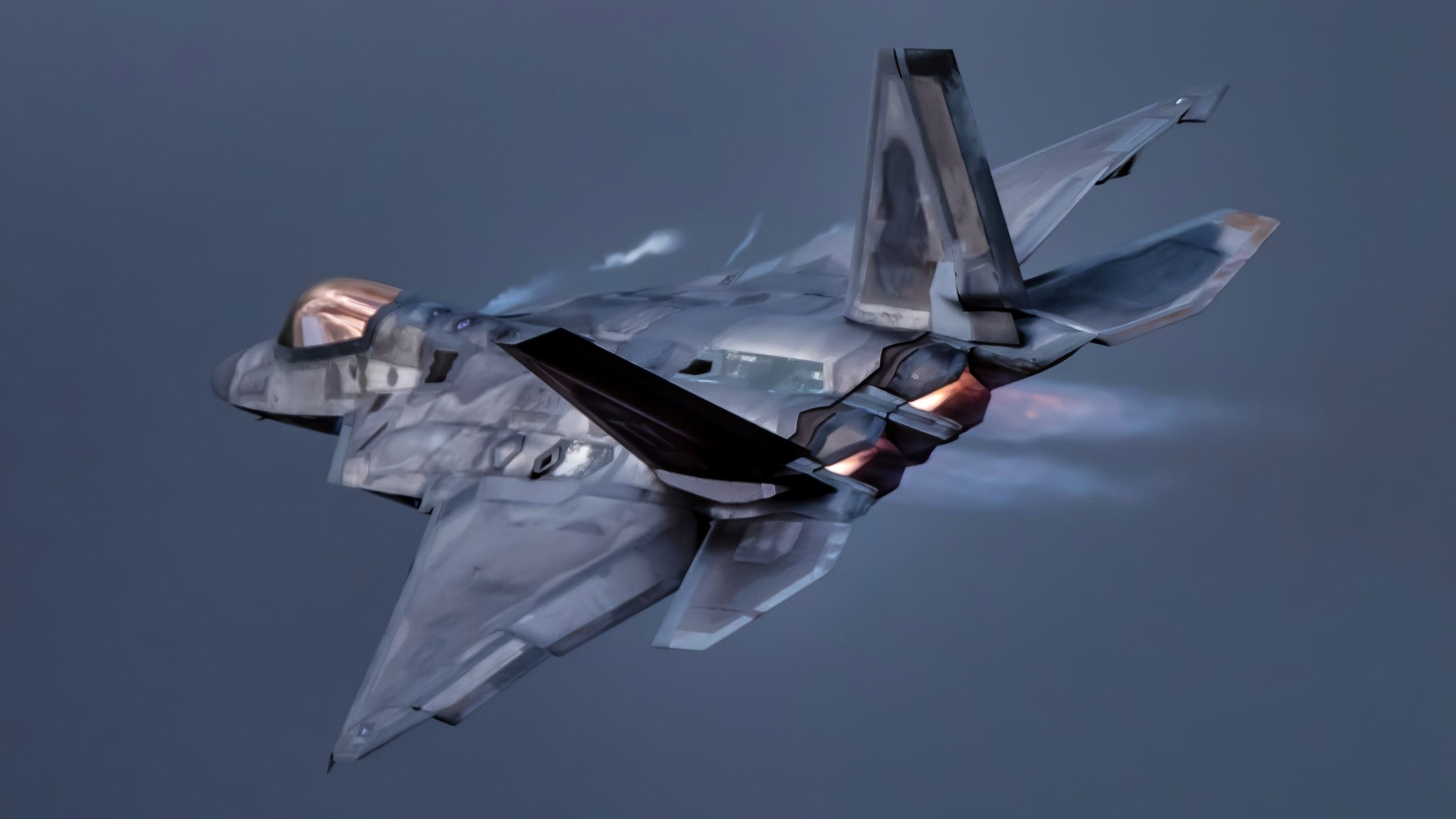
U.S. Air Force Maj. Josh Gunderson, F-22 Raptor Demonstration Team commander and pilot, flies a practice demo at Joint Base Langley-Eustis, Va., Dec. 6, 2019. Representing Air Combat Command, the F-22 Demo Team travels to air shows all across the world showcase the performance and capabilities of the world’s premier 5th-generation fighter. (U.S. Air Force photo by 2nd Lt. Sam Eckholm)
The fighters’ presence allows the Japan Self-Defense Force (JSDF) and its regional allies to practice joint fighter training, unless the F-22s are being deployed as opposing forces. U.S. air assets are typically based at Kadena Air Force Base in Okinawa.
For Keen Sword, however, the Raptors are being stationed at Japan’s Tsuiki Air Base.
It is unclear what role they will play in the exercise, or whether their presence at Tsuiki has broader implications.
Keen Sword 2027 is a large-scale military exercise that runs from October 19 to the 29th.
The exercise involves about 45,000 JSDF personnel, 12,000 American service members, personnel from other allied nations, and about 300 military aircraft and ships.
The exercise aims to improve allied coordination and strengthen military ties. “Those gathered here today are under different national flags and represent different cultures, yet we share the same fundamentals, values of freedom and the rule of law,” said Japan Maritime Self-Defense Force Adm. Tawara Tateki, commander of the JSDF Joint Operations Command. “We also share a common responsibility to preserve these values for future generations.
In this sense, we are truly like-minded partners.”
Strengthening Ties in the Pacific
The U.S.-Japan exercise first began in 1985. Keen Sword 27 is the 18th time the exercise has been held and is one of the largest in recent history. This year’s exercise focuses on defending Japan’s southwestern islands, the ones closest to Taiwan.
Japan’s westernmost island, Yonaguni, only 68 miles from Taiwan, is being used by the Marine Corps to host an NMESIS ground-based anti-ship missile system and the MADIS short-range air defense system.
The JSDF recently deployed its new Type 25 surface-to-ship missile to the Island, which has a range of roughly 1,000 kilometers (620 miles).
According to the JSDF, no live-fire tests are scheduled for the Type 25 during Keen Sword 2025.
Along with the USAF’s F-22s, the U.S. Navy is also participating in the exercise, with the aircraft carrier USS Theodore Roosevelt (CVN-71) currently involved.
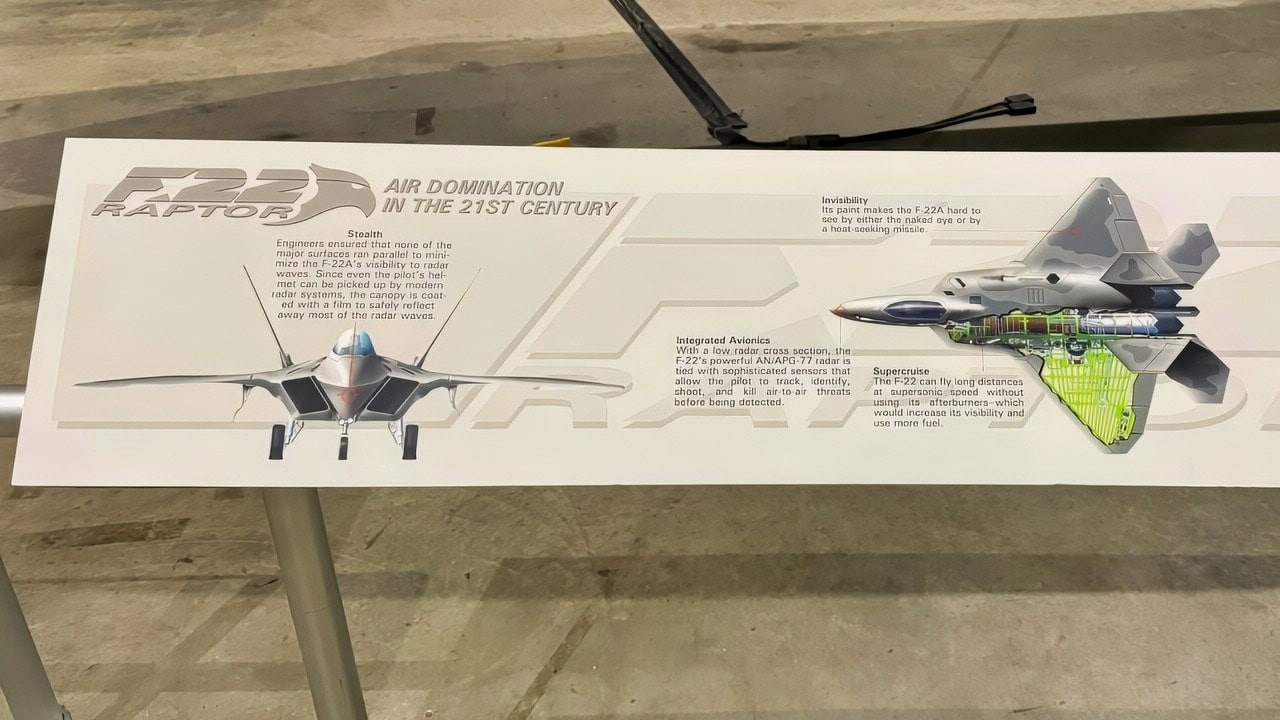
F-22 Raptor Diagram from National Museum of the U.S. Air Force. Image Credit: Harry J. Kazianis.
Roosevelt is rumored to be heading to the Middle East after Keen Sword ends and is reportedly set to arrive by the end of November.
Joining the carrier in Japan are the Ticonderoga-class guided-missile cruiser USS Chosin (CG-65) and the Arleigh Burke-class USS Decatur (DDG-73).
This year, the U.S. and Japan are joined by multiple NATO and regional allies, including Germany, Australia, Canada, France, the Netherlands, New Zealand, and the Philippines.
The exercise covers ballistic missiles and air defense, logistics, facility protection, space and cyber operations, and other operations. Observers from the UK and South Korea will also be present on the sidelines.
Deterrence Against China
While the U.S. and its allies conduct the exercise, China remains at the forefront of everyone’s minds. Sino-Japanese relations have worsened in 2026 since Japanese Prime Minister Sanae Takaichi assumed office in 2025.
Since then, rhetoric between the two has intensified as Japan prepares for an imminent operation against Taiwan.
The Philippines, which is also participating in Keen Sword 2027, has also been victimized by Chinese aggression on multiple occasions in recent years as the PLAN expands its naval presence in the Philippine Sea.
Multiple clashes between the Chinese Coast Guard and Philippine civilian ships have also occurred, despite the CCP’s official non-aggressive stance.
The U.S. expects a confrontation with China in the Pacific in the coming years. The PLA has been building up its ballistic missile inventory, some of which can reach as far as Guam.
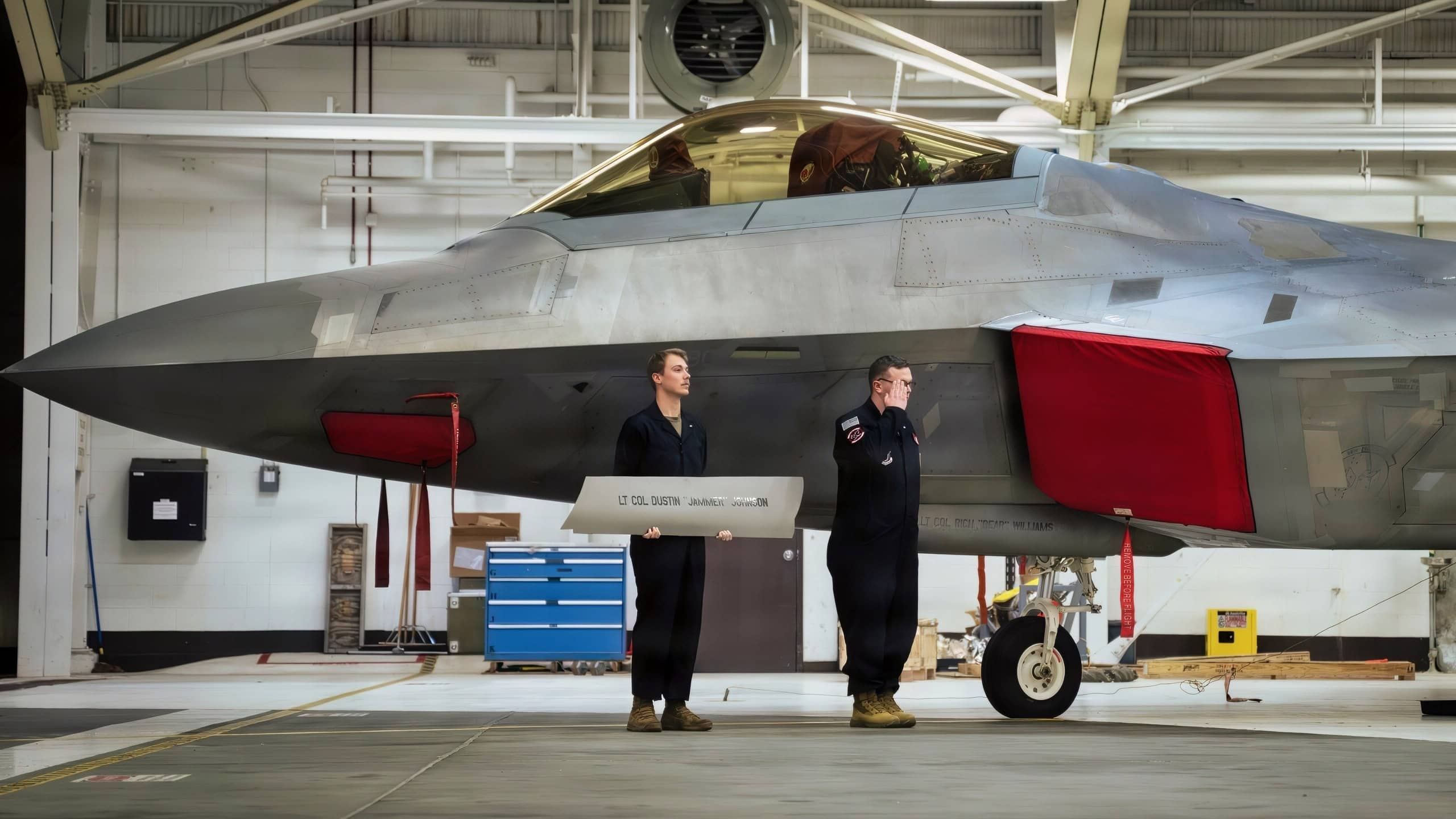
U.S. Air Force Airmen reveal the name of Lt. Col. Richard Williams, commander of the 90th Fighter Squadron, on an F-22 Raptor following the 90th FS change-of-command ceremony on Joint Base Elmendorf-Richardson, Alaska, March 16, 2026. (U.S. Air Force photo by Airman Keola Vischi)
If a confrontation occurs in the Pacific, China will inevitably put U.S. assets near Taiwan in its crosshairs. In this context, ballistic missile defense is especially important for the Pacific.
Additionally, China has been increasing its fleet of fourth- and fifth-generation fighters. Aircraft like the J-20 and J-35 stealth fighters are highly capable and are being manufactured in large numbers.
Earlier this year, the U.S. deployed several F-22’s to Kadena Air Base in Okinawa to strengthen its air deterrence. Although the F-22 Raptor was originally designed during the Cold War, it remains one of the world’s most formidable air superiority fighters.
About the Author: Isaac Seitz
Isaac Seitz, a Defense Columnist, graduated from Patrick Henry College’s Strategic Intelligence and National Security program. He has also studied Russian at Middlebury Language Schools and has worked as an intelligence Analyst in the private sector.