
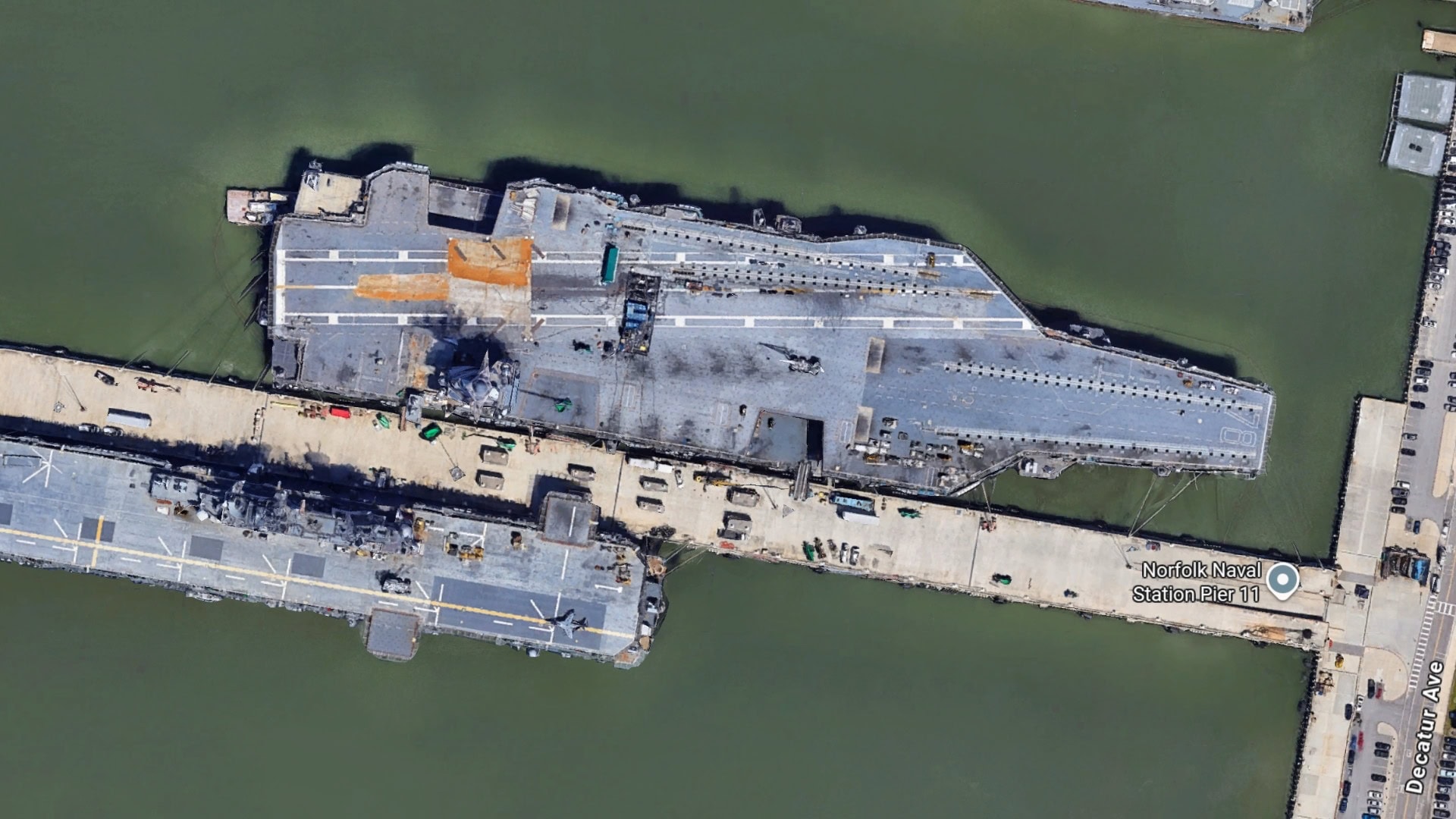
The USS Gerald R. Ford spent a decade as Washington’s favorite procurement punching bag, and most of the punches landed fairly: years late, billions over, catapults that broke, elevators that did not work, a parade of GAO reports cataloging the damage. The criticism told the truth and missed the point. The Navy did not botch a routine aircraft carrier; it deliberately packed a generation of first-of-kind technologies into a single 100,000-ton hull, accepted that every one of them would have to be invented, integrated, and debugged at sea, and bet that the result would own the next fifty years the way the Nimitz class owned the last fifty. In 2026, with the Ford home from a combat deployment that validated her most criticized systems and the John F. Kennedy through sea trials on an accelerated path to delivery, the bet is finally showing its winnings, and the growing pains deserve to be read for what they were: the price of ambition, paid in public.
One Hull, A Generation Of Firsts: Why The Navy Bet Big On CVN-78
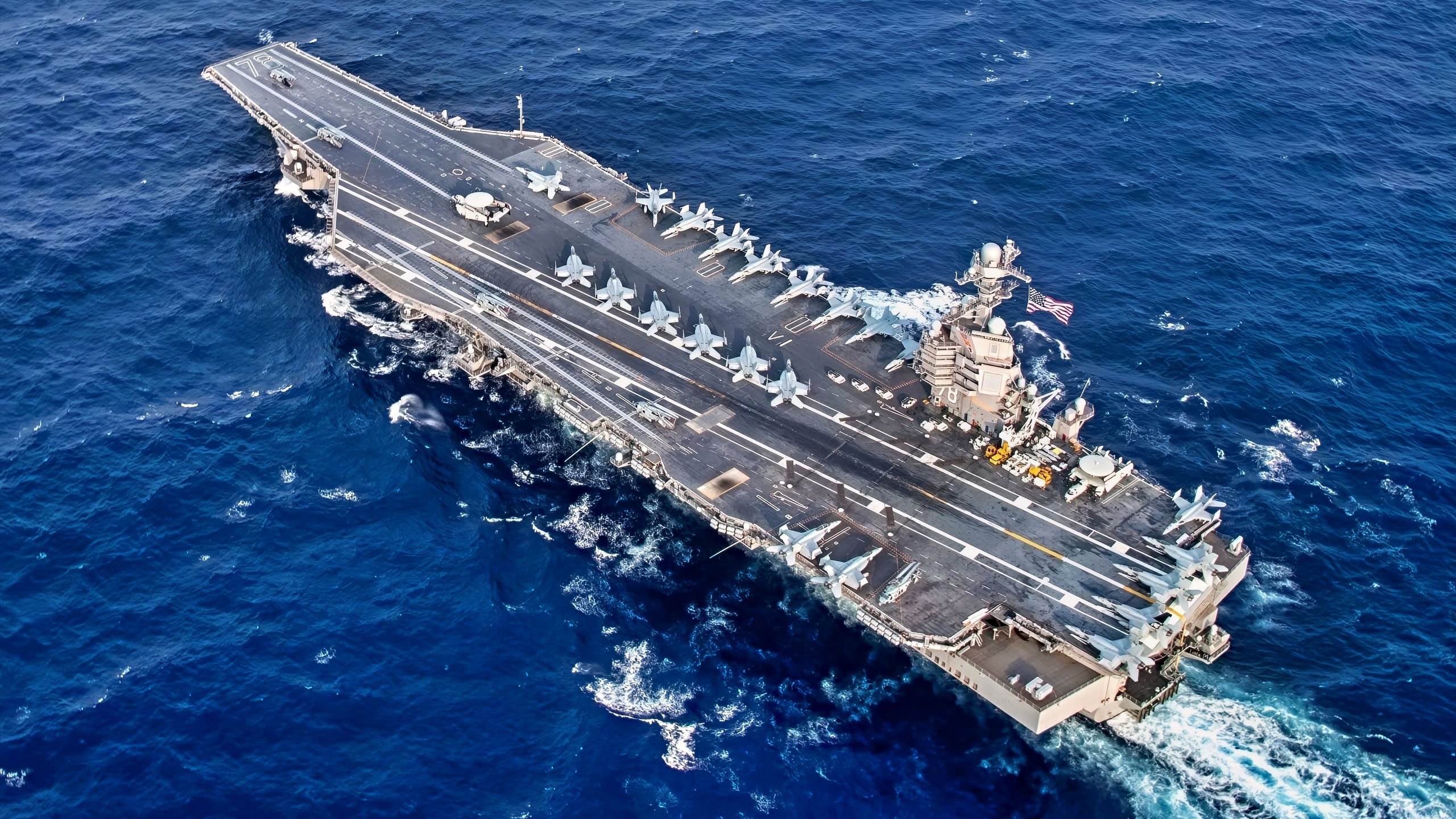
The Ford-class aircraft carrier USS Gerald R. Ford (CVN 78) and the Nimitz-class aircraft carrier USS Harry S. Truman (CVN 75) transit the Atlantic Ocean June 4, 2020, marking the first time a Ford-class and a Nimitz-class aircraft carrier operated together underway. Ford is underway conducting integrated air wing operations, and the Harry S. Truman Carrier Strike Group remains at sea in the Atlantic as a certified carrier strike group force ready for tasking in order to protect the crew from the risks posed by COVID-19, following their successful deployment to the U.S. 5th and 6th Fleet areas of operation. (U.S. Navy photo by Mass Communication Specialist Seaman Riley McDowell)
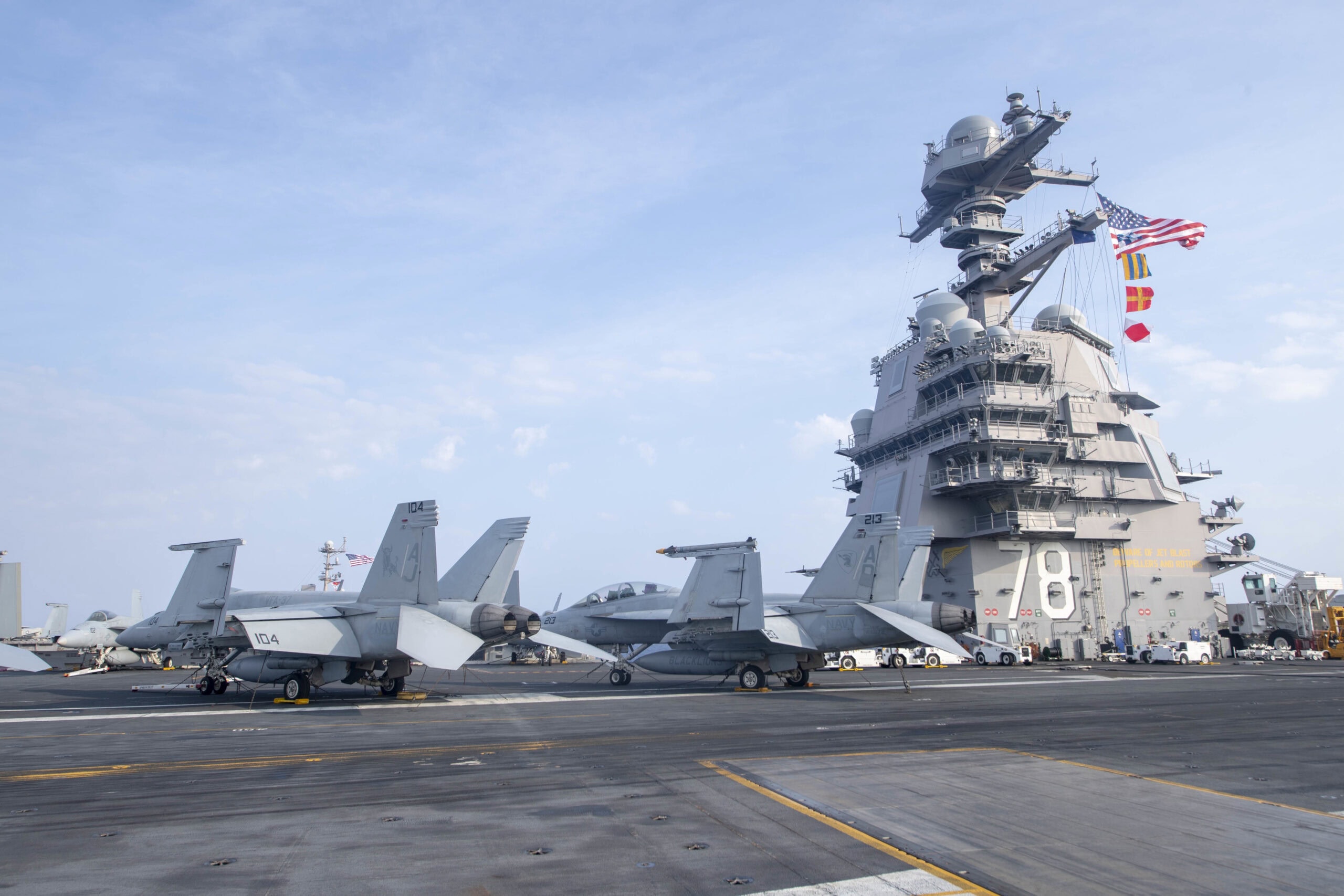
The Ford-class aircraft carrier USS Gerald R. Ford (CVN 78) and the Nimitz-class aircraft carrier USS Harry S. Truman (CVN 75) transit the Atlantic Ocean June 4, 2020, marking the first time a Ford-class and a Nimitz-class aircraft carrier operated together underway. Ford is underway conducting integrated air wing operations, and the Harry S. Truman Carrier Strike Group remains at sea in the Atlantic as a certified carrier strike group force ready for tasking in order to protect the crew from the risks posed by COVID-19, following their successful deployment to the U.S. 5th and 6th Fleet areas of operation. (U.S. Navy photo by Mass Communication Specialist Seaman Sawyer Connally)
The original sin of the Ford-class aircraft carrier program, by its critics’ telling, was bundling. Rather than introducing new systems gradually across several ships, the Navy loaded nearly two dozen developmental technologies into the lead hull at once: a new reactor plant, a new electrical architecture, electromagnetic catapults, digital arresting gear, electromagnetic weapons elevators, new radars, a redesigned island, and a rebuilt flight deck. Each system depended on the others — the catapults needed the electrical plant, the sortie rate needed the elevators, the crew savings needed the automation — so the integration risk compounded, and when one system slipped, the ship slipped with it.
The bundling was nonetheless a choice with logic behind it. A carrier serves half a century, and a Nimitz hull modernized piecemeal would have carried 1970s steam, hydraulics, and electrical margins into the 2070s.
The Navy concluded that the leap had to be taken somewhere, took all of it on one ship, and condemned the Ford to be the vessel where the entire future got debugged. Every famous delay in the program traces to one of those innovations, and every one of those innovations now works.
EMALS: The Catapult That Launches The Drone Age
The Electromagnetic Aircraft Launch System endured years of ridicule over its early reliability, and it brought the ship its single most important capability. Steam catapults deliver one brutal, fixed shove; EMALS delivers precisely controlled acceleration tailored to each airframe, reducing structural stress on every launch and extending aircraft service life with each cycle.
Furthermore, the tailoring runs in both directions: EMALS can fling the heaviest strike loads and gently loft aircraft too light for steam to launch safely at all, which is the entire category of unmanned systems.
The MQ-25 tanker drone and the collaborative combat aircraft that follow it will operate from carriers because electromagnetic launch makes this possible. The Navy did not spend a decade fixing a catapult; it spent a decade buying admission to the unmanned carrier air wing, a ticket the Nimitz class physically cannot purchase.
Advanced Arresting Gear: The Delay That Bought Digital Recovery
The Advanced Arresting Gear has been the program’s most stubborn schedule killer. It required redesigns on the Ford, and the Navy’s own fiscal 2026 budget documents attribute the Kennedy’s delivery slip — from July 2025 to March 2027 — to completing AAG certification along with remaining elevator work, with GAO adding shipyard workforce and material shortages to the indictment. The capability on the other side of that bill is recovery by digitally controlled electric motors rather than hydraulic rams, braking each trap with a precision that the old gear cannot approach.
The same fine control that babies a Super Hornet’s airframe is what allows the safe recovery of lightweight unmanned aircraft, which means AAG is the other half of the drone-age admission ticket.
The elevators tell a parallel story: the Advanced Weapons Elevators became a first-term Trump scandal, the Navy worked the problem, and the same reporting records the issues as effectively mitigated by 2021 — leaving the class with electromagnetic ordnance handling that moves weapons from magazine to flight deck faster and with fewer sailors in the loop, the unglamorous plumbing behind a wartime rearming race.
A1B Reactors: Three Times The Power, Half The Watchstanders
Beneath everything sits the quietest revolution on the ship. The two Bechtel-designed A1B reactors and the all-electric plant they feed generate roughly three times the electrical power of the Nimitz class’s A4W plant, with a design that cuts required reactor manning by half and maintenance demands by two-thirds. The ship’s electrical distribution runs at 13,800 volts, compared to the 4,160 volts of a Nimitz, replacing steam and hydraulic auxiliaries throughout the hull with electric systems.
The margin is the point. EMALS and AAG consume power the Nimitz never had; the dual-band radar consumes more; and the directed-energy weapons the Navy intends to mount against the drone and missile swarms of the 2030s will consume even more.
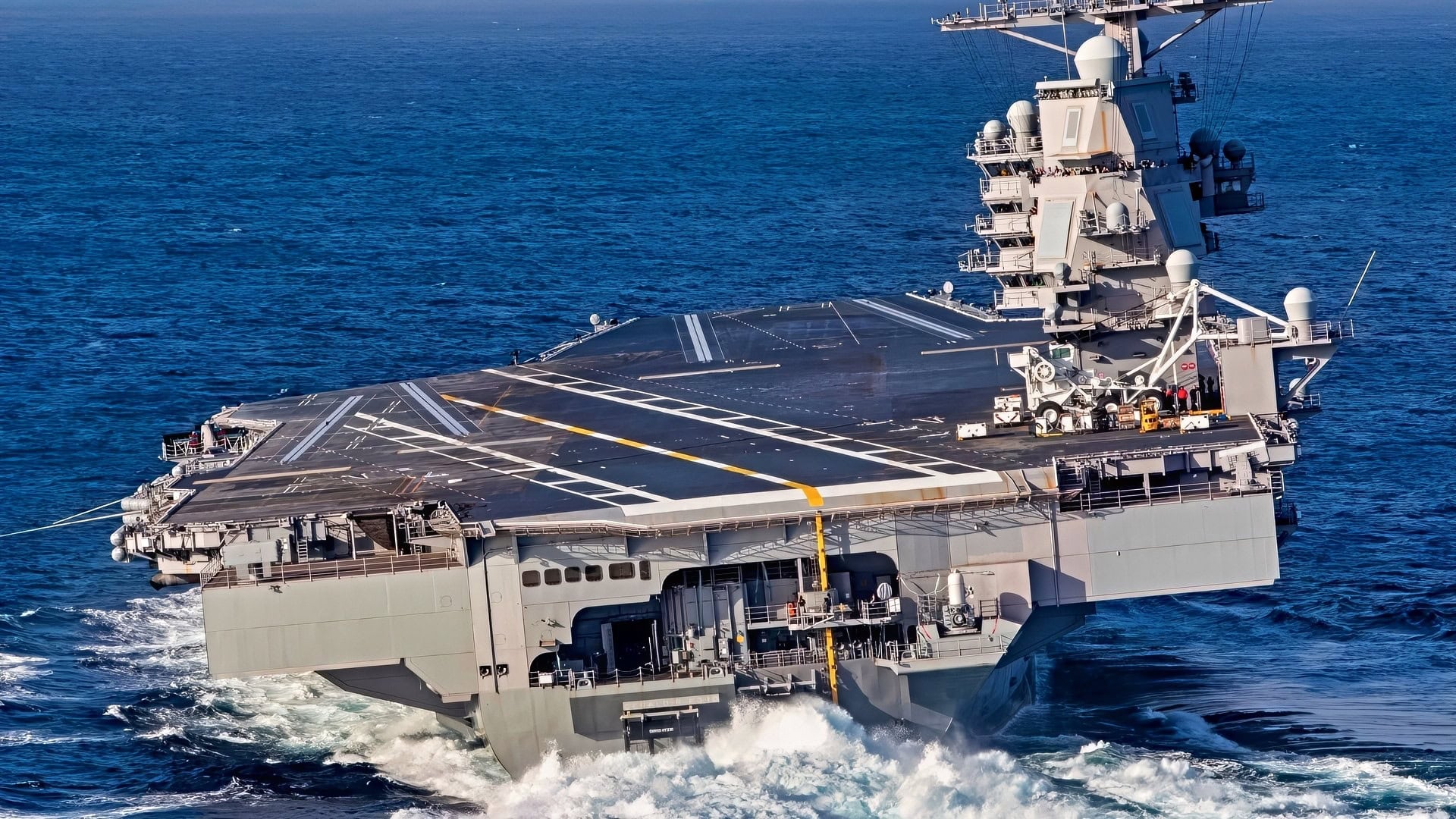
(Oct. 29, 2019) USS Gerald R. Ford (CVN 78) conducts high-speed turns in the Atlantic Ocean. Ford is at sea conducting sea trials following the in port portion of its 15 month post-shakedown availability. (U.S. Navy photo by Mass Communication Specialist 3rd Class Connor Loessin)
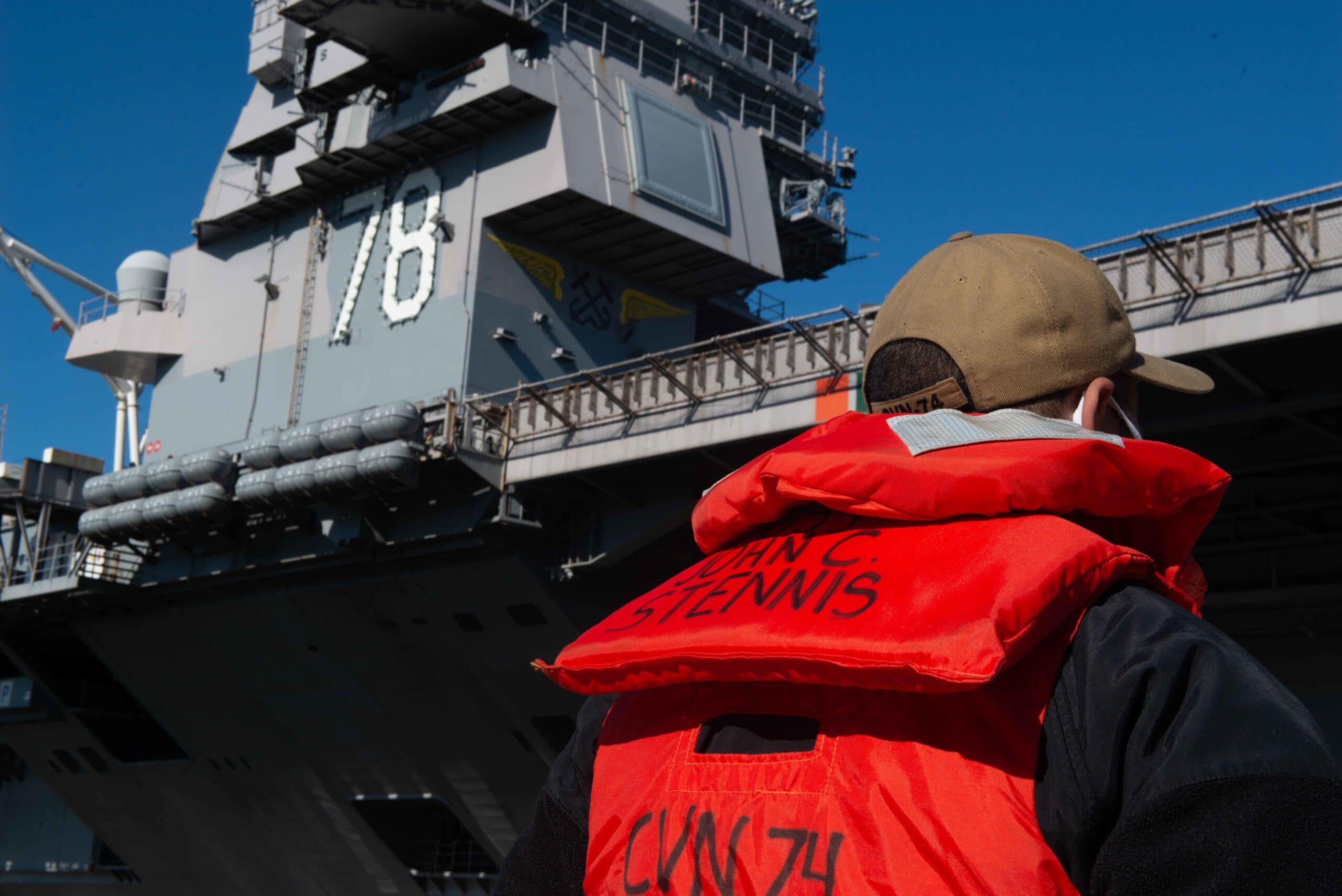
A U.S. Navy Sailor assigned to the aircraft carrier USS John C. Stennis (CVN 74), stands at parade rest as the aircraft carrier USS Gerald R. Ford (CVN 78) pulls into port in Norfolk, Va., Nov. 20, 2020. The John C. Stennis is partnering with Newport News Shipbuilding to complete Refueling Complex Overhaul on schedule with a trained, resilient and cohesive crew. (U.S. Navy photo by Mass Communication Specialist Seaman Apprentice Curtis Burdick)
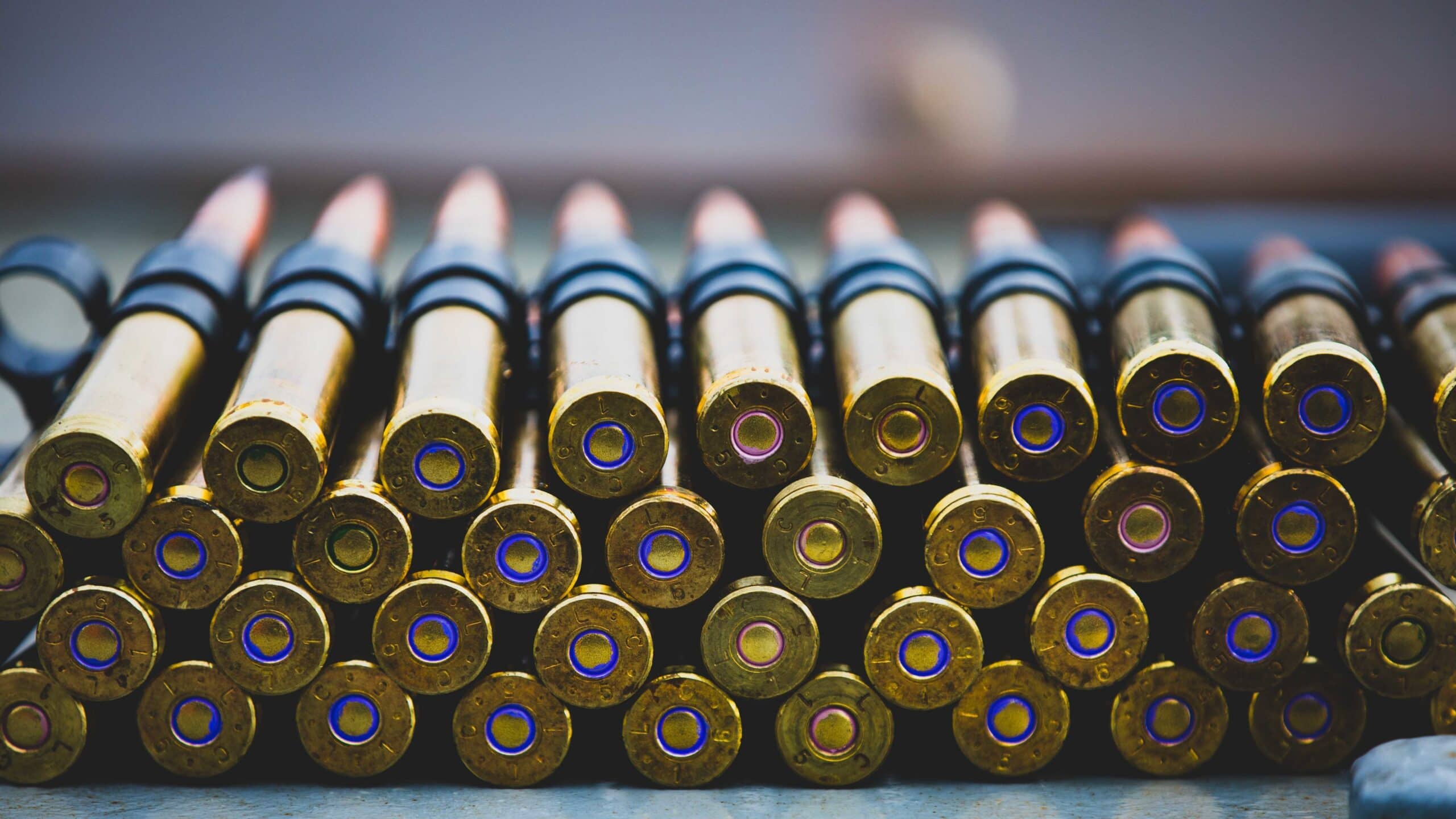
Ammunition is prepared for a .50 caliber machine gun during a live-fire crew certification exercise aboard the Arleigh Burke-class guided-missile destroyer USS Ramage (DDG 61) as part of the Gerald R. Ford Carrier Strike Group, Oct. 26, 2022. The first-in-class aircraft carrier USS Gerald R. Ford (CVN 78) is on its inaugural deployment conducting training and operations alongside NATO Allies and partners to enhance integration for future operations and demonstrate the U.S. Navy’s commitment to a peaceful, stable and conflict free Atlantic region. (U.S. Navy photo by Mass Communication Specialist 2nd Class Sawyer Connally)
Every warship of the coming decades will live or die on electrical generation, and the Ford class enters that era with headroom no carrier on earth can match. The reactor plant drew few headlines because it worked, which is worth remembering when tallying the program’s record: the hardest single piece of the ship, the nuclear heart, came in right.
160 Sorties A Day, 600 Fewer Sailors on This Aircraft Carrier
Assembled, the innovations produce the two numbers the class was designed around. By the class’s design figures, the Ford generates up to 160 sorties per day sustained, with surge capacity beyond 270, against roughly 120 for a Nimitz — a third more combat tempo from the same size hull, the product of faster catapult resets, quicker rearming, and a flight deck reorganized around a smaller island set further aft.
And the ship does it with a crew roughly 600 sailors smaller, automation standing the watches humans once stood, which Navy officials credit for the bulk of a lifecycle saving of nearly $4 billion per hull against a Nimitz.
Across a ten-ship class, the crew reduction alone returns the cost of several carriers.
From The Caribbean To The Iran War: The Vindication Deployments
The proof has arrived operationally over the past three years. The Ford’s first deployments answered the October 7 crisis in the eastern Mediterranean; her combat debut came in this winter’s Caribbean operations, where the class’s advanced technologies performed in a combat role convincingly enough that the Pentagon publicly cited the performance in accelerating the Kennedy’s construction, with delivery now targeted for March 2027.
She subsequently deployed toward Europe amid the Iran war, the systems that once headlined GAO reports now simply doing their jobs at sea. The Kennedy, meanwhile, completed her first builder’s sea trials in early February and returned to Newport News with the core systems validated — and she carries the inheritance that justifies the whole ordeal, delivering with mature versions of every technology the Ford bled for.
The Enterprise and the Doris Miller follow behind her on the same foundation.
The Honest Bill: Late, Over Budget, And A Ten-Carrier Navy
None of this erases the costs, and a fair accounting states them. The lead ship ran years late and billions over. The congressional criticism was earned line by line, and the oversight machinery — GAO, CRS, the Navy’s own reliability reporting — dragged the program toward discipline it did not always supply itself.
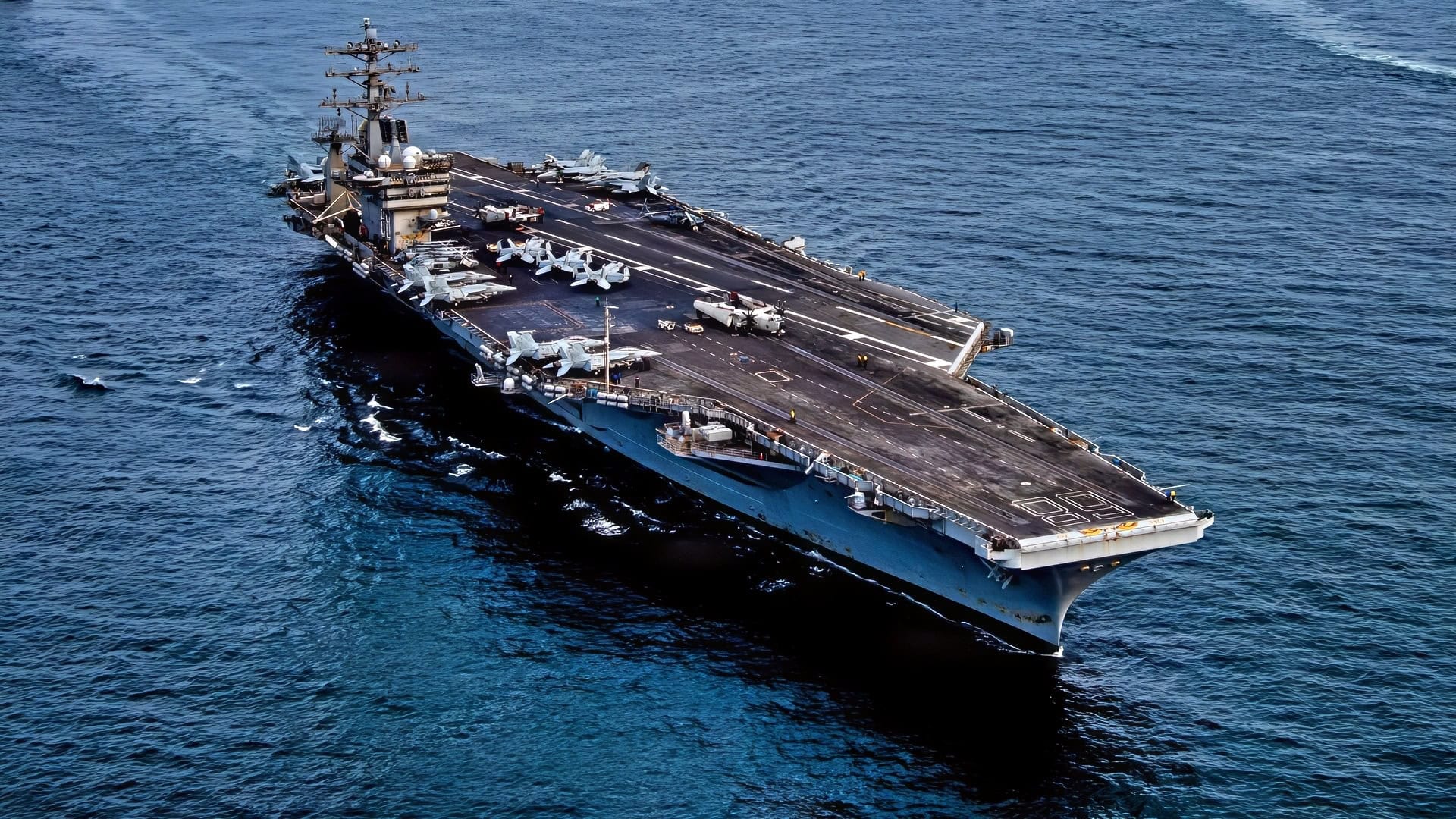
Ecuadorian Navy Esmeralda-class missile corvettes BAE Manabi (CM 12) and BAE Loja (CM 16) conduct formation maneuvering alongside Nimitz-class aircraft carrier USS Nimitz (CVN 68) and Arleigh Burke-class guided missile destroyer USS Gridley (DDG 101), part of Nimitz Carrier Strike Group (NIMCSG), in the Pacific Ocean, April 8, 2026. Nimitz is deployed as part of Southern Seas 2026 which seeks to enhance capability, improve interoperability, and strengthen maritime partnerships with countries throughout the region through joint, multinational and interagency exchanges and cooperation. (U.S. Navy photo by Mass Communication Specialist Seaman Apprentice Julian Jaime)

A U.S. Sailor observes an F/A-18E Super Hornet, attached to Strike Fighter Squadron (VFA) 151, prepare for flight operations on the flight deck of Nimitz-class aircraft carrier USS Abraham Lincoln (CVN 72) during Operation Epic Fury, March 30, 2026. (U.S. Navy photo)
The Kennedys’ slip carries a real fleet consequence: with the fifty-year-old Nimitz retiring this spring, the Navy operates ten carriers instead of eleven until 2027, a gap felt in every deployment schedule. And the bundling critique retains force; staging the technologies across two or three hulls would have spread the risk, even at the price of a slower revolution.
However, the ledger now has two sides, and the second one compounds. The Nimitz class needed decades at sea to reach its mature form. The Ford class matured in the shipyard and in the headlines instead, and what emerges is a carrier that launches the air wing of the unmanned era, fights at a third higher tempo, sails with hundreds fewer sailors, and carries the electrical margin for weapons not yet invented. The growing pains were real, public, and expensive. They were also the sound of the United States Navy building the only aircraft carrier designed for the second half of this century, and the ships now joining the fleet are the answer to every year of bad press the first one absorbed.
About the Author: Harry J. Kazianis
Harry J. Kazianis (@Grecianformula) was the former Senior Director of National Security Affairs at the Center for the National Interest (CFTNI), a foreign policy think tank founded by Richard Nixon based in Washington, DC. Harry has over a decade of experience in think tanks and national security publishing. His ideas have been published in the NY Times, The Washington Post, The Wall Street Journal, CNN, and many other outlets worldwide. He has held positions at CSIS, the Heritage Foundation, the University of Nottingham, and several other institutions related to national security research and studies. He is the former Executive Editor of the National Interest and the Diplomat. He holds a Master’s degree focusing on international affairs from Harvard University.

