
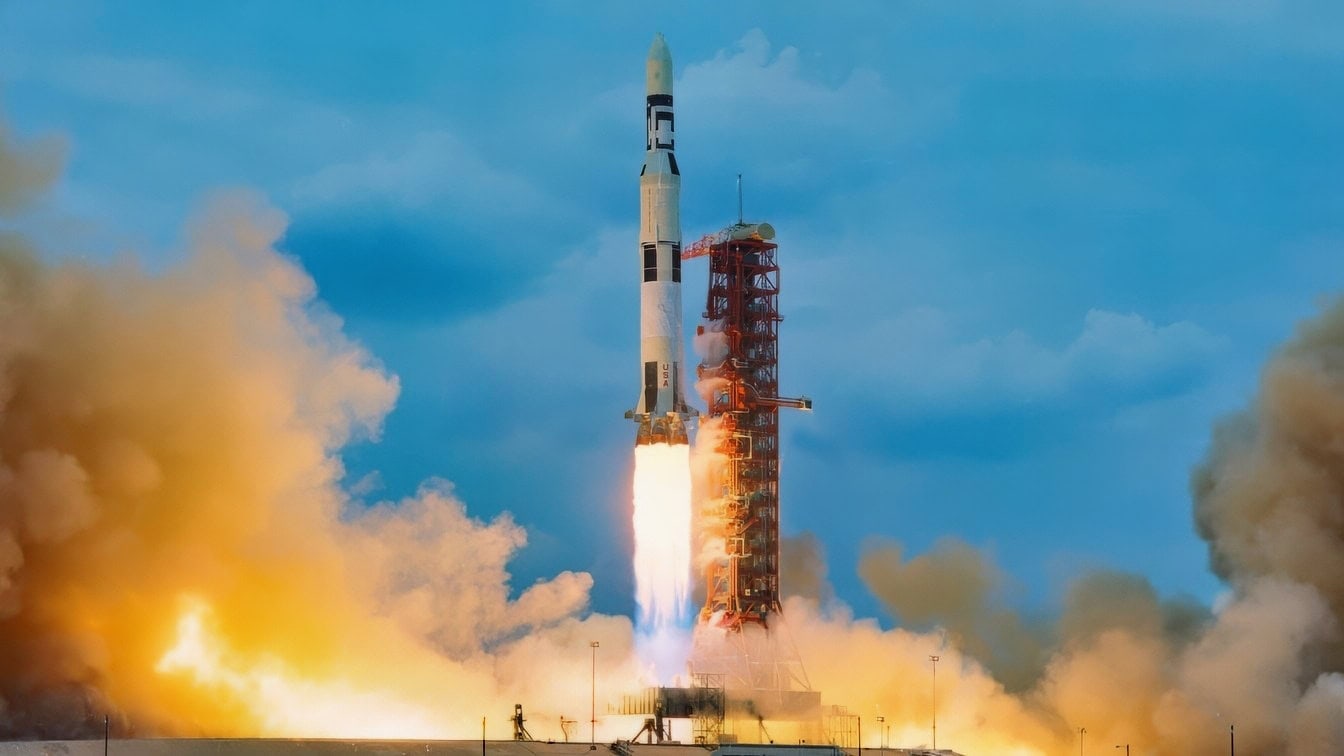
In July 1979, people around the world watched the night sky as America’s first space station fell from orbit. Newspapers and citizens speculated, wondering where the debris might land. Some people even threw “Skylab parties,” highlighting the significance of Skylab’s fall, an event satirized in Wet Hot American Summer. Eventually, the debris landed across Western Australia, where some remains in museum possession today.
Building Skylab
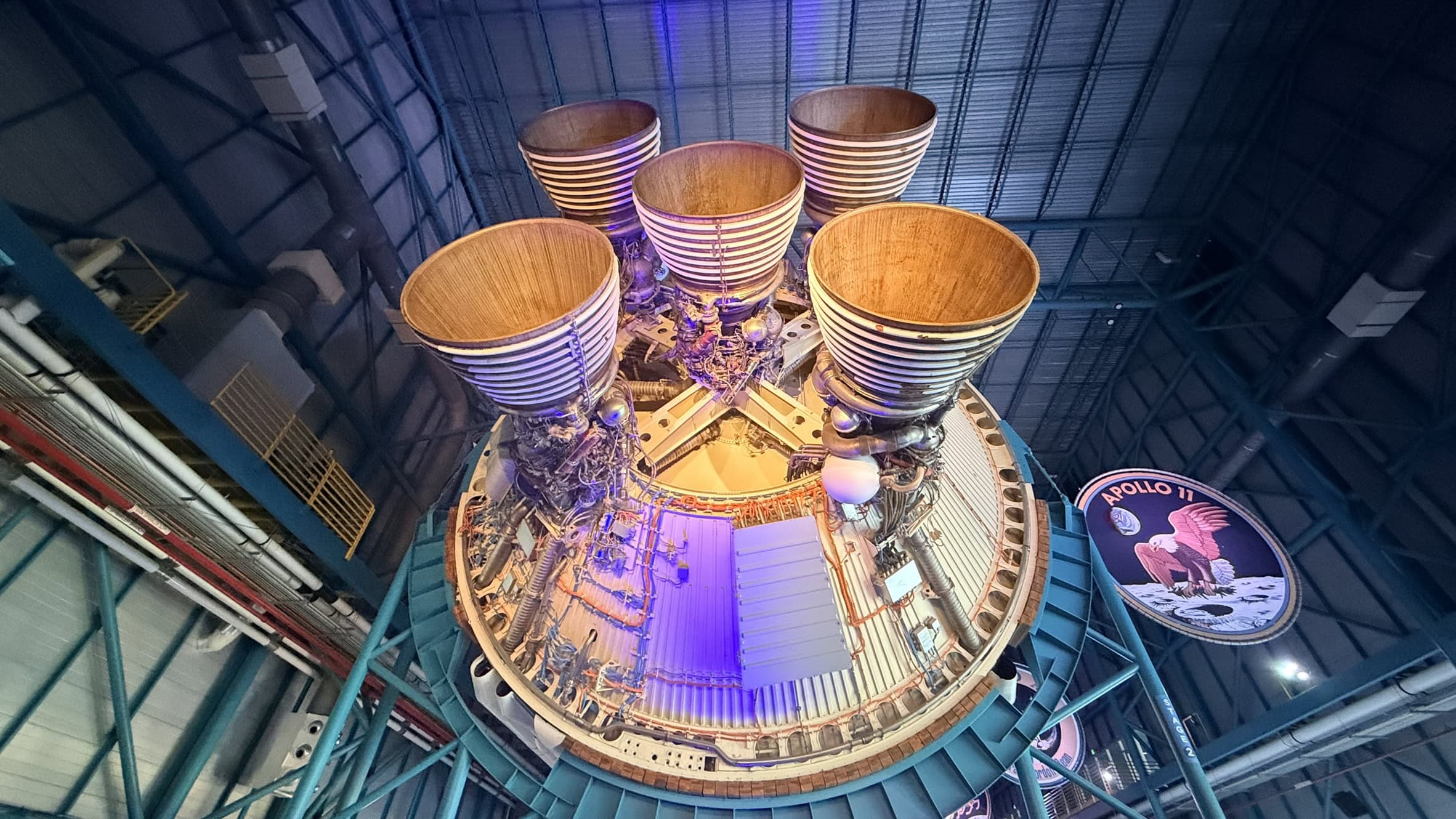
Saturn 5 Rocket. Image from NASA Kennedy Space Center Taken on 6/28/2026. Taken by Harry J. Kazianis for 19FortyFive.com
After the Apollo moon landings, NASA needed a new human spaceflight objective. The pivot from the Moon was somewhat deflating—that had long felt like an end goal, and once it was achieved, NASA’s budget constricted and public attention shifted. NASA’s goals shifted, too. Instead of going farther into space, it wanted to learn how humans could live in space for extended periods, so a project was devised for Earth’s orbit.
Skylab was approved in the late 1960s as the first US space station and launched May 14, 1973. The design was ingenious and cost-saving, built from a modified Saturn V third stage and reused Apollo hardware. The space station, by today’s standards, was massive at 77 tons and 118 feet long. Until the Soviet Mir space station was launched decades later, Skylab was the largest spacecraft ever launched.
Averting Disaster
The Skylab launch almost ended in disaster; indeed, it was one of NASA’s greatest near-misses. During ascent, the meteoroid shield was ripped away, while one solar array was torn off and the second array jammed shut. This caused the station to overheat, with almost no electrical power. The mission was nearly canceled before astronauts even arrived, but NASA engineers rapidly devised an improvised rescue plan.
Launching just 11 days later, Pete Conrad of Apollo 12 fame led Skylab 2 on a remarkable rescue mission. After freeing the jammed solar panel during a spacewalk, the crew deployed an improvised parasol sunshade through the scientific airlock, allowing interior temperatures to drop dramatically, saving the station. This is frequently cited alongside Apollo 13 as one of NASA’s greatest engineering recoveries.
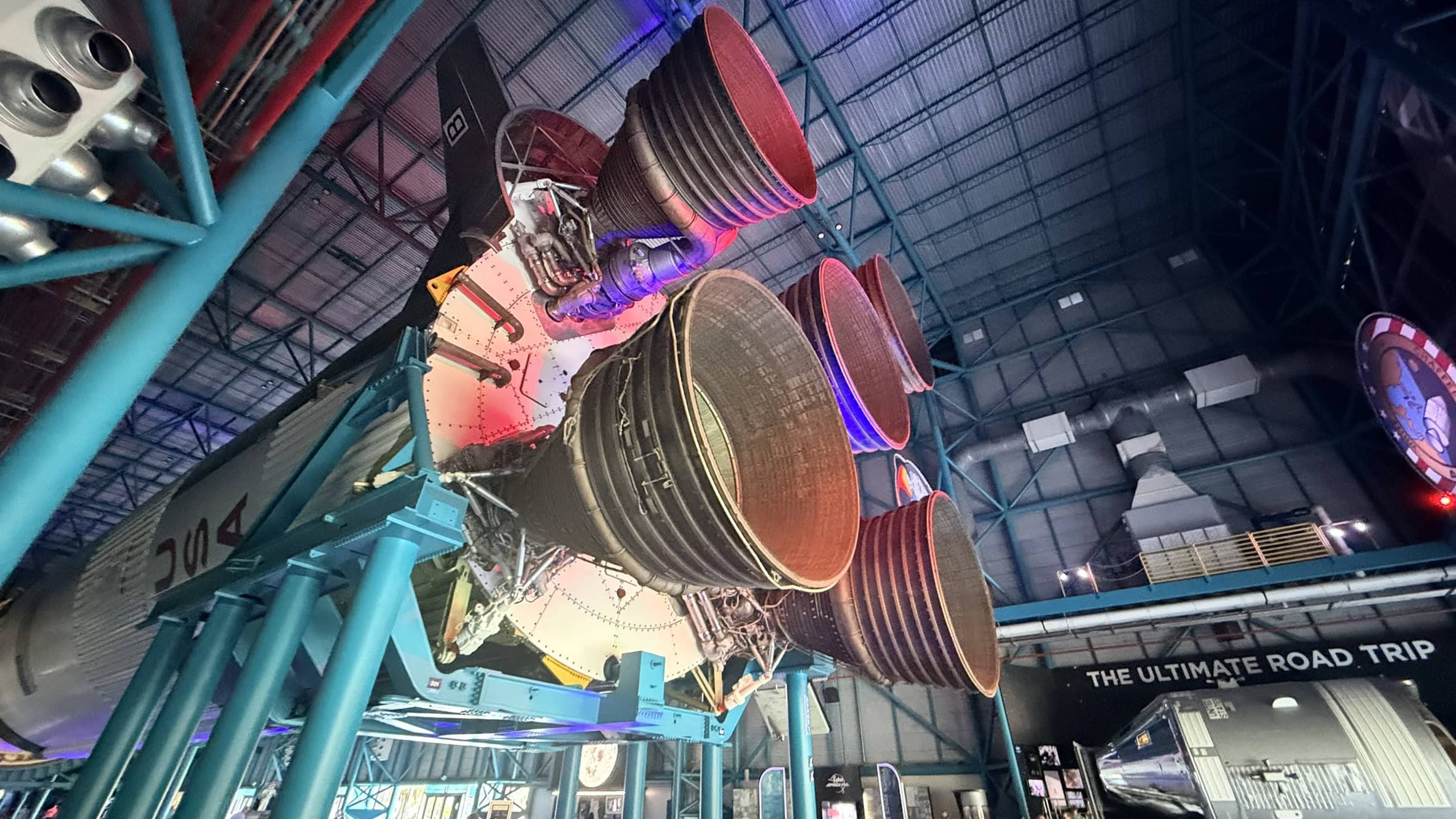
Saturn V rocket at the Kennedy Space Center. Taken on 6/28/2026 by Harry J. Kazianis for 19FortyFive.
Operating Skylab
Once the space station was saved, normal operations proceeded. Three astronaut crews would occupy Skylab, with mission durations of 28 days, 59 days, and 84 days. Each mission broke previous American endurance records, allowing NASA to conduct research into human physiology, including muscle loss, bone density, cardiovascular adaptation, sleep, nutrition, and the psychological effects of confinement. Many of the lessons learned were later applied to the Space Shuttle, Mir, the International Space Station—and are even relevant today for Artemis planning.
Human physiology wasn’t the only research conducted aboard Skylab. Skylab also carried the Apollo Telescope Mount, which was used to observe solar flares, sunspots, coronal mass ejections, and X-ray emissions, producing some of the best solar observations ever made at the time and greatly advancing our understanding of space weather.
Astronauts also observed Earth, photographing agriculture, oceans, deserts, hurricanes, pollution, and geology in what was an early demonstration of Earth observation from orbit, which would help pave the way for modern remote sensing satellites.
Life aboard Skylab was substantially different than life aboard the Apollo, Gemini, or Mercury capsules. There was much more interior volume. The crew was able to enjoy showers, an exercise bike and treadmill, larger work areas, and windows. It was the first real experience of living in space, not just visiting. But it wasn’t all peaches. The crew often felt overloaded and at one point requested a slower schedule in what became known as the “Skylab strike.” This highlighted the importance of balancing productivity with crew well-being, lessons that would later influence ISS mission planning.
The Fall
The original plan was to use the Space Shuttle to boost Skylab into a higher orbit to correct the decay. But when the Shuttle was delayed until 1981, this created a problem. At the same time, solar activity unexpectedly increased, heating the Earth’s upper atmosphere, which expanded the atmosphere. This caused drag to increase significantly, and Skylab lost altitude much faster than predicted. Without propulsion, without the Space Shuttle, there was simply no way to save the space station.
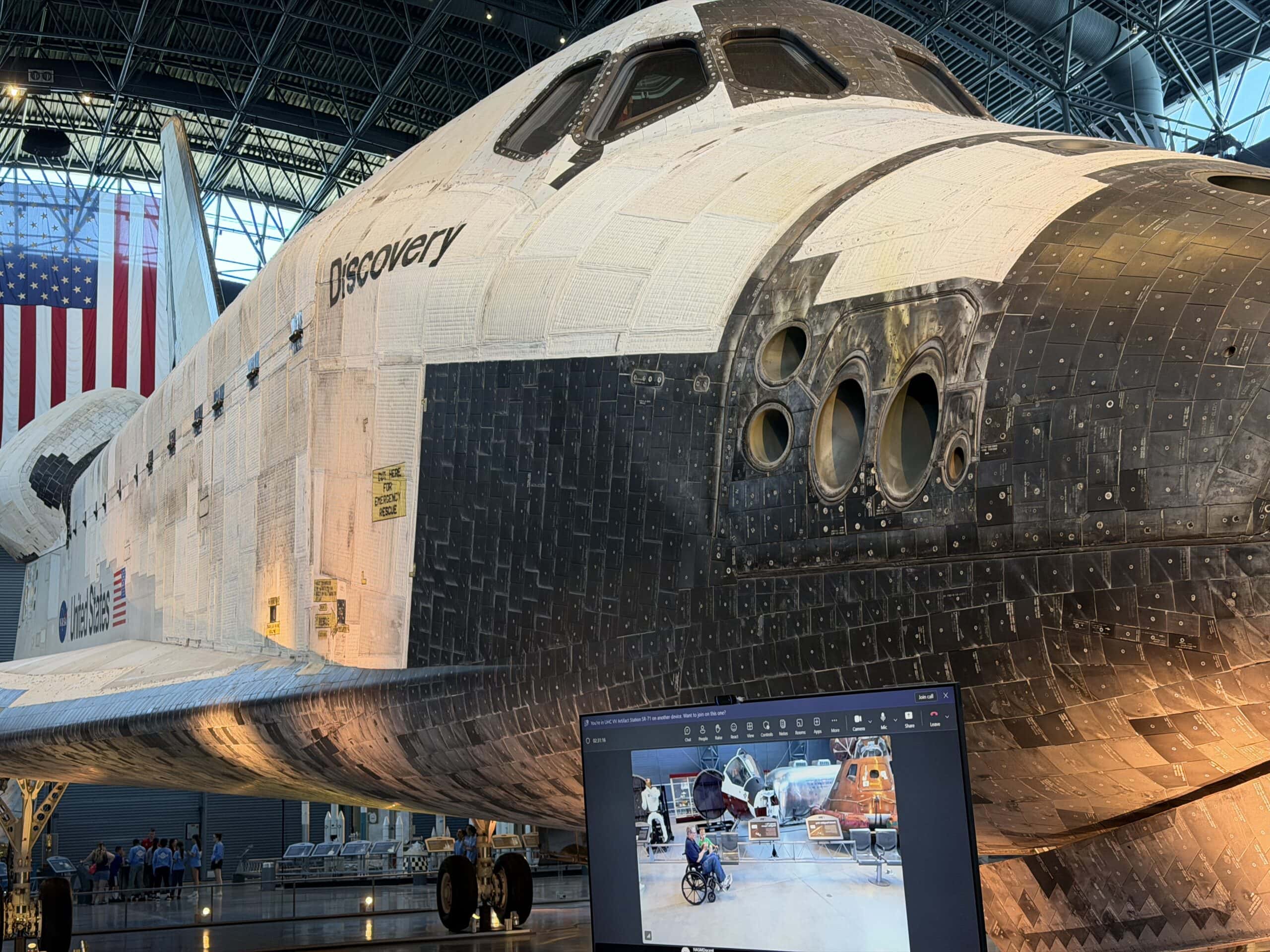
Space Shuttle Discovery at Smithsonian 19FortyFive Photo
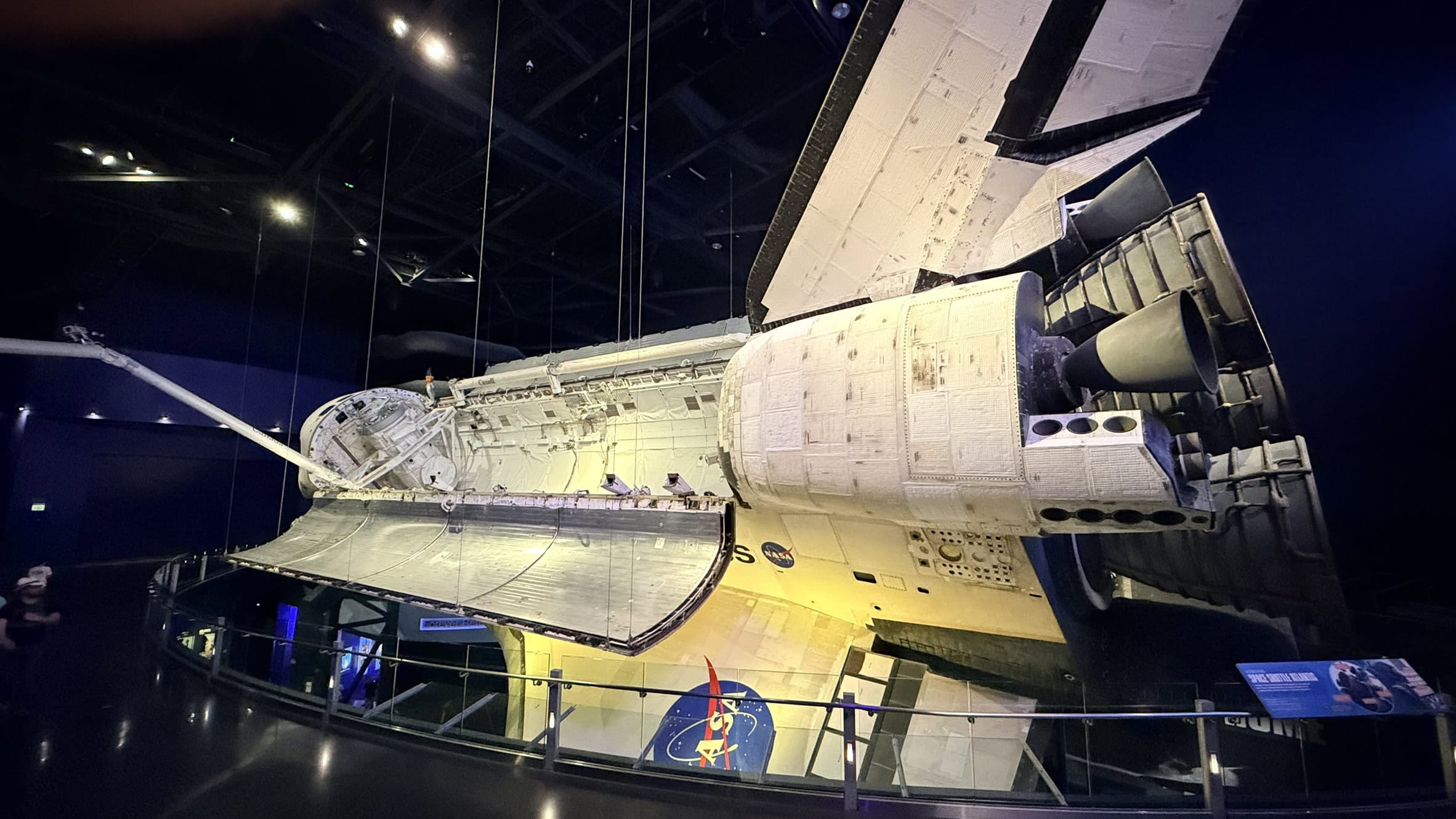
NASA Space Shuttle. Image Credit: Harry J. Kazianis.
NASA attempted a controlled reentry but could not fully steer the station because it lacked propulsion. Millions watched worldwide, with predictions shifting constantly. Ultimately, the debris fell across the Indian Ocean and Western Australia. Fortunately, there were no fatalities or major injuries. Local residents near Esperance, Western Australia, collected debris while the town of Esperance issued NASA a $400 littering fine.
About the Author: Harrison Kass
Harrison Kass is a writer and attorney focused on national security, technology, and political culture. His work has appeared in Tablet, City Journal, The Hill, The Spectator, and The Cipher Brief. He holds a JD from the University of Oregon and a master’s in Global & Joint Program Studies from NYU. More at harrisonkass.com.