
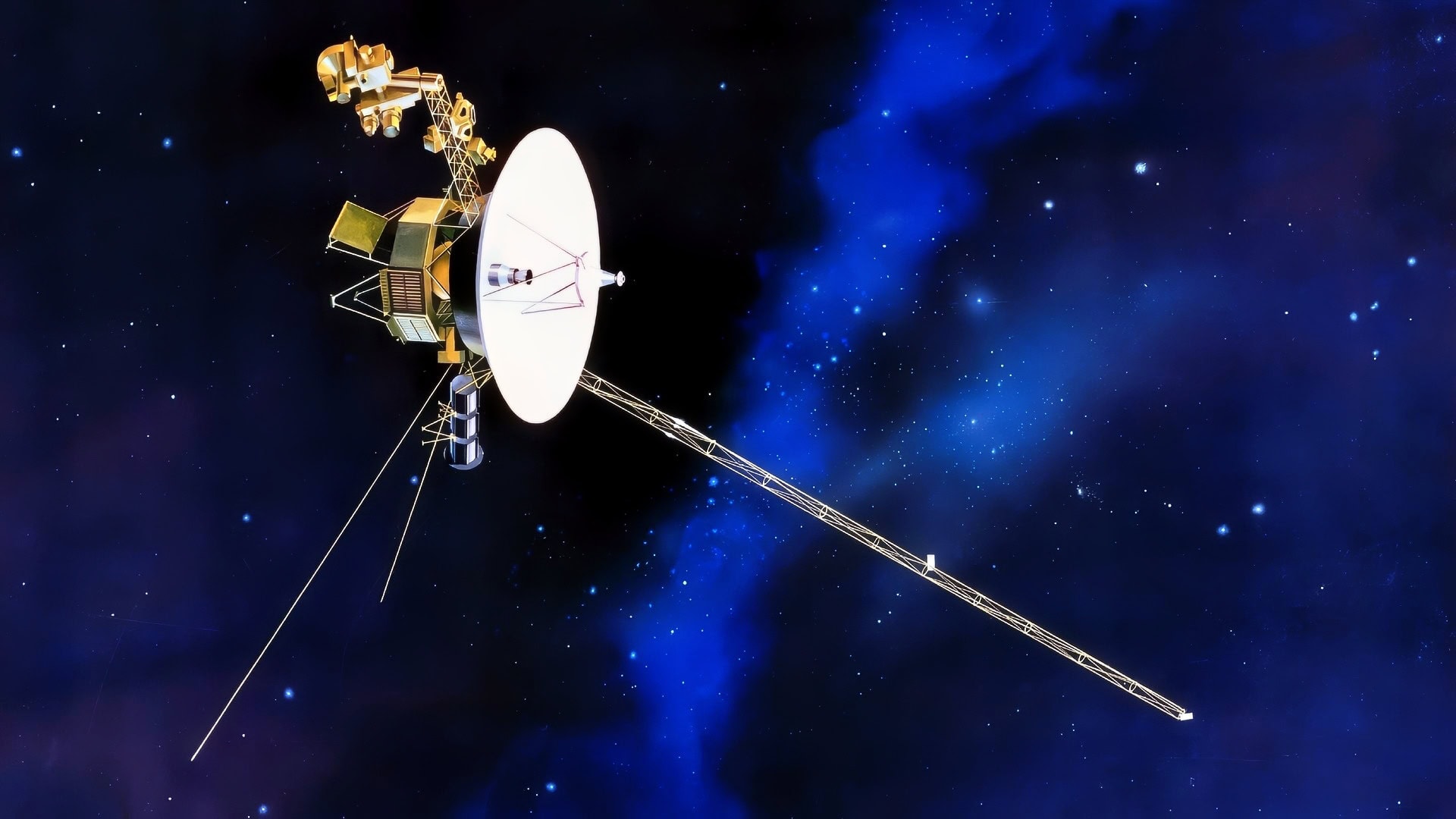
Voyager 1 continues operating, despite being launched almost five decades ago. But to stay operational, engineers are now forced to shut down Voyager’s instruments, one by one, to conserve the dwindling power.
Still, the fact that Voyager is still operating is remarkable; after being launched in 1977, Voyager was only supposed to function for about four years.
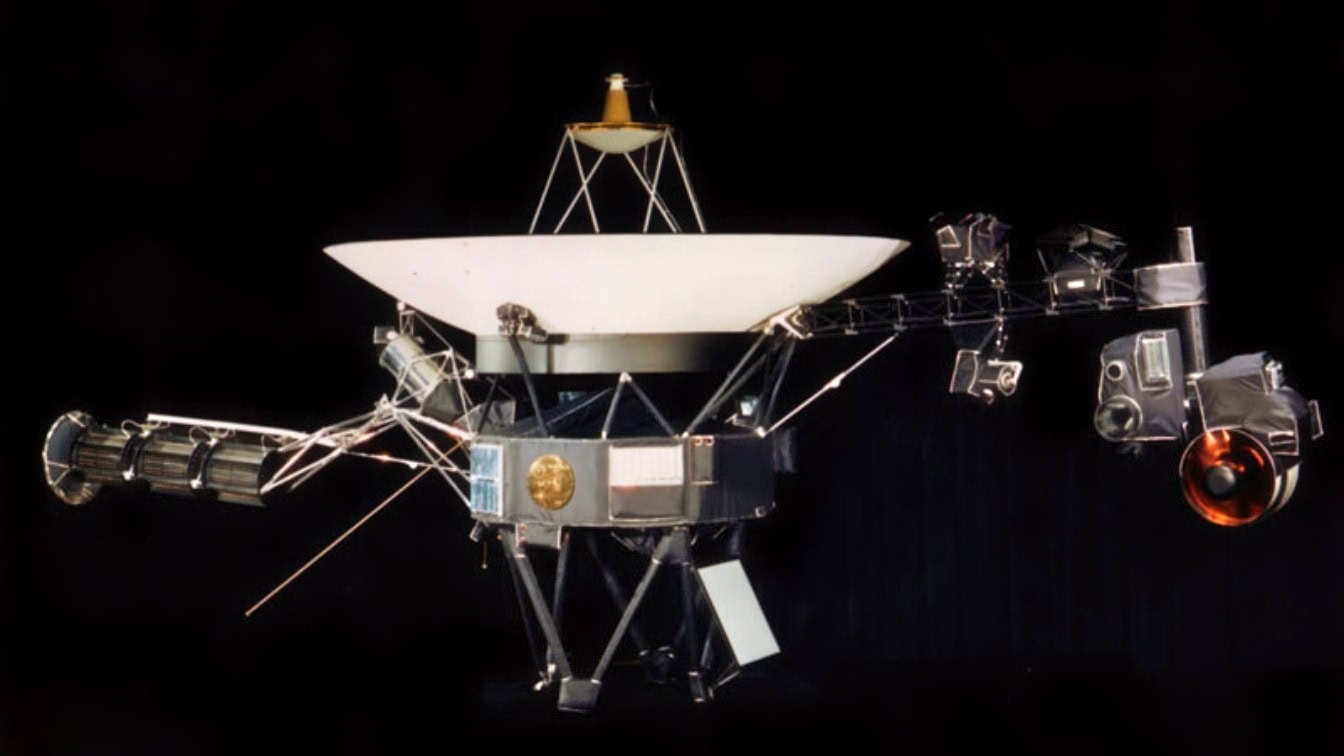
Voyager 1 NASA Image Creative Commons
Hitting over ten times the projected longevity was not luck, however—it reflects conservative engineering, redundancy, simple but robust electronics, nuclear power, and, not to be overlooked, constant human cleverness.
Launching Voyager
NASA launched Voyager 2 in August 1977, while Voyager 1 followed in September 1977. The original mission was to visit Jupiter and Saturn, while Voyager 2 later continued to Uranus and Neptune.
Both ultimately entered the Interstellar Mission after completing their planetary objectives, and today are more than 15 billion miles away, while Voyager 2 trails behind but remains operational nonetheless.
The two spacecraft are humanity’s only functioning spacecraft in interstellar space. What’s remarkable about Voyager isn’t just how far they’ve traveled, but that they’ve done so on 1970s-era technology.
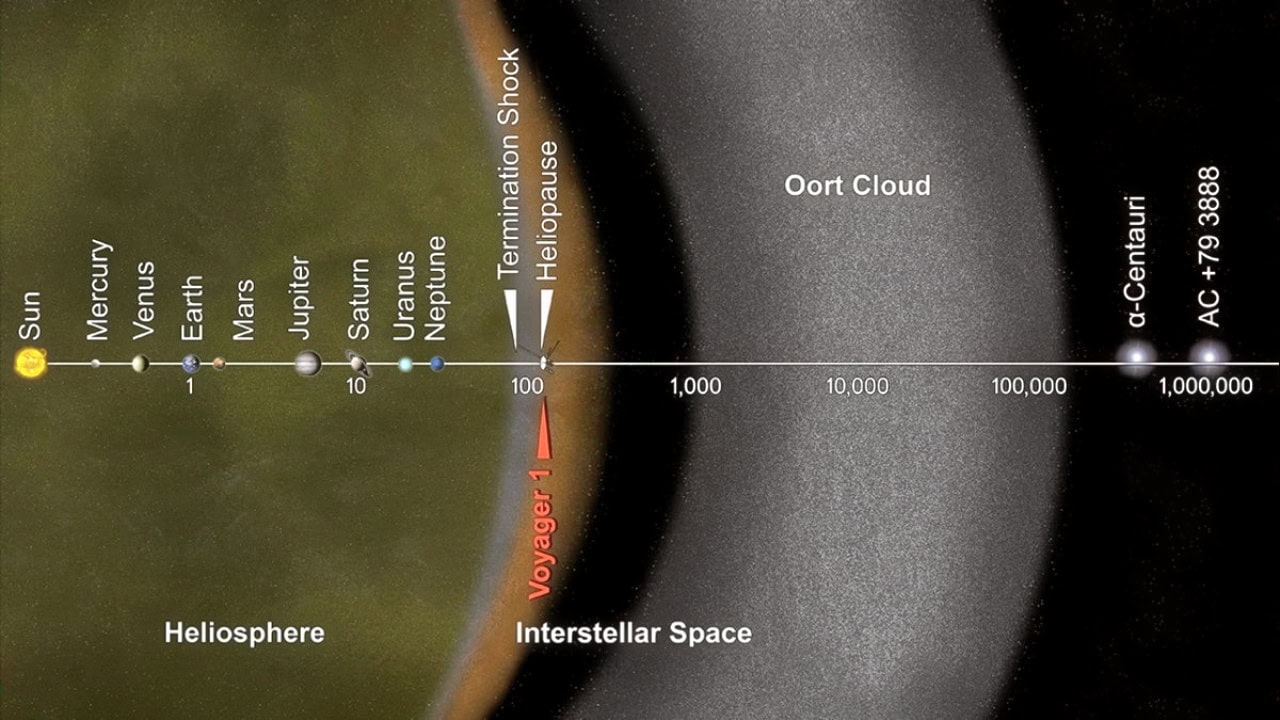
Voyager 1. Image Credit: NASA.
Perfect Vintage
The computers onboard Voyager are tiny by modern standards. Remember that Voyager comes from a completely different era, predating the IBM PC, Macintosh, the internet, GPS, or smartphones.
Voyager launched decades before Google, Nintendo 64, the BlackBerry, or MySpace. Back then, in the 1970s, computer memory was measured in kilobytes, not gigabytes.
Processing power was minuscule relative to modern electronics. Voyager specifically has three onboard computers: the Computer Command System (CCS), the Flight Data System (FDS), and the Attitude and Articulation Control System (AACS).
Each computer performs dedicated tasks rather than relying on one central processor. Limited memory forced engineers to write extremely efficient software, with programs often measuring only a few thousand words of machine code.
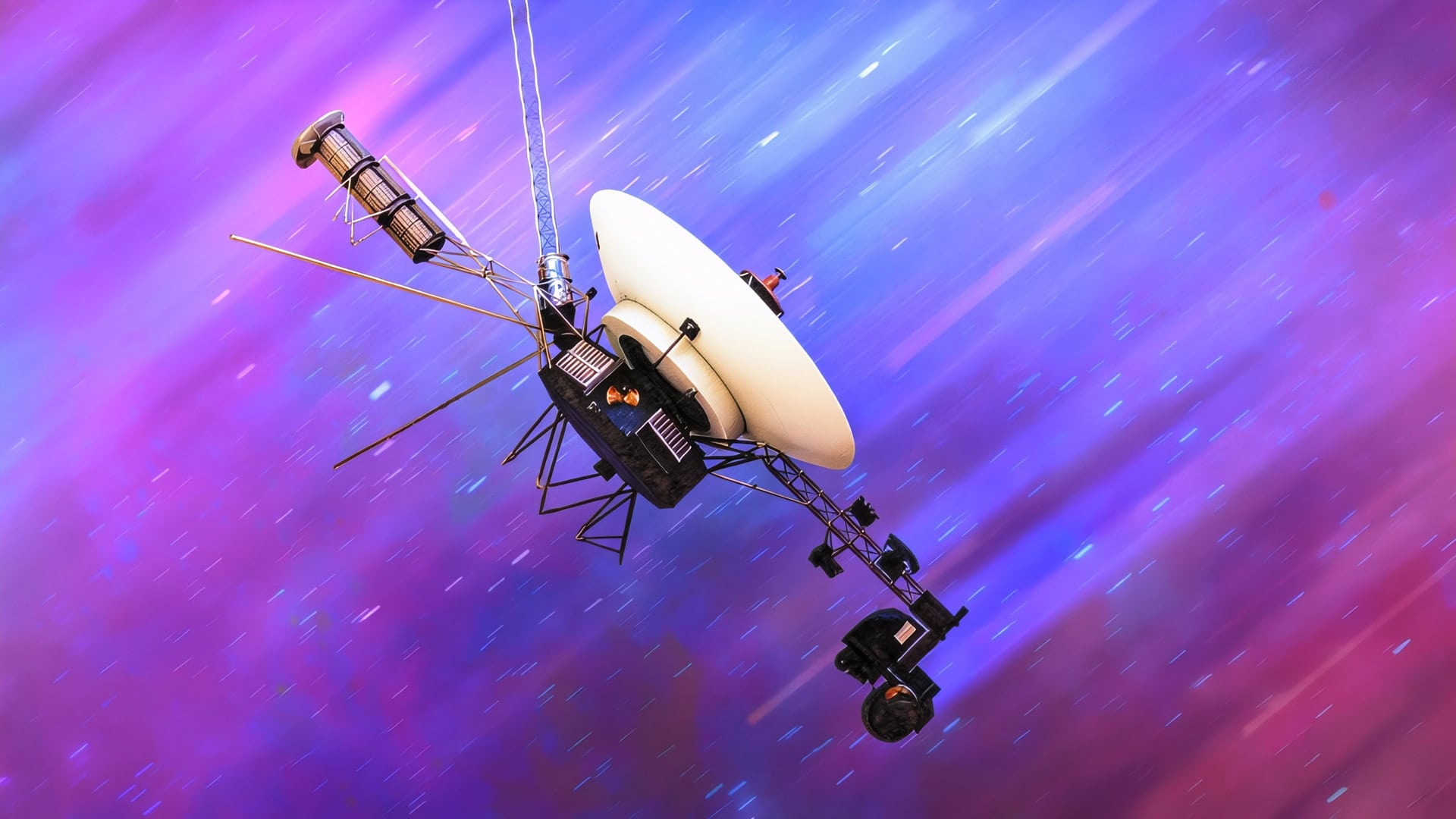
Voyager 2 Probe NASA Photo.
Some of the software has even had to be patched remotely, decades after launch, which is remarkable considering the spacecraft’s age and distance. But this simplicity has played to Voyager’s advantage. The spacecraft survive in part because they do relatively few tasks and because they do those tasks reliably.
Nuclear Batteries
One of Voyager’s greatest engineering advantages is that it features nuclear batteries that never need sunlight.
Voyager is well beyond the point where it could have relied on solar panels, as sunlight becomes too weak beyond Saturn. Instead, Voyager uses three Radioisotope Thermoelectric Generators (RTGs).
The RTG works simply: plutonium-238 naturally decays, and that decay produces heat, which thermocouples then convert directly into electricity.
There are no moving parts, making the system extremely reliable. Originally, the RTGs generated roughly 470 watts.
But Voyager has lost about four watts every year as the plutonium decays and the hardware ages.
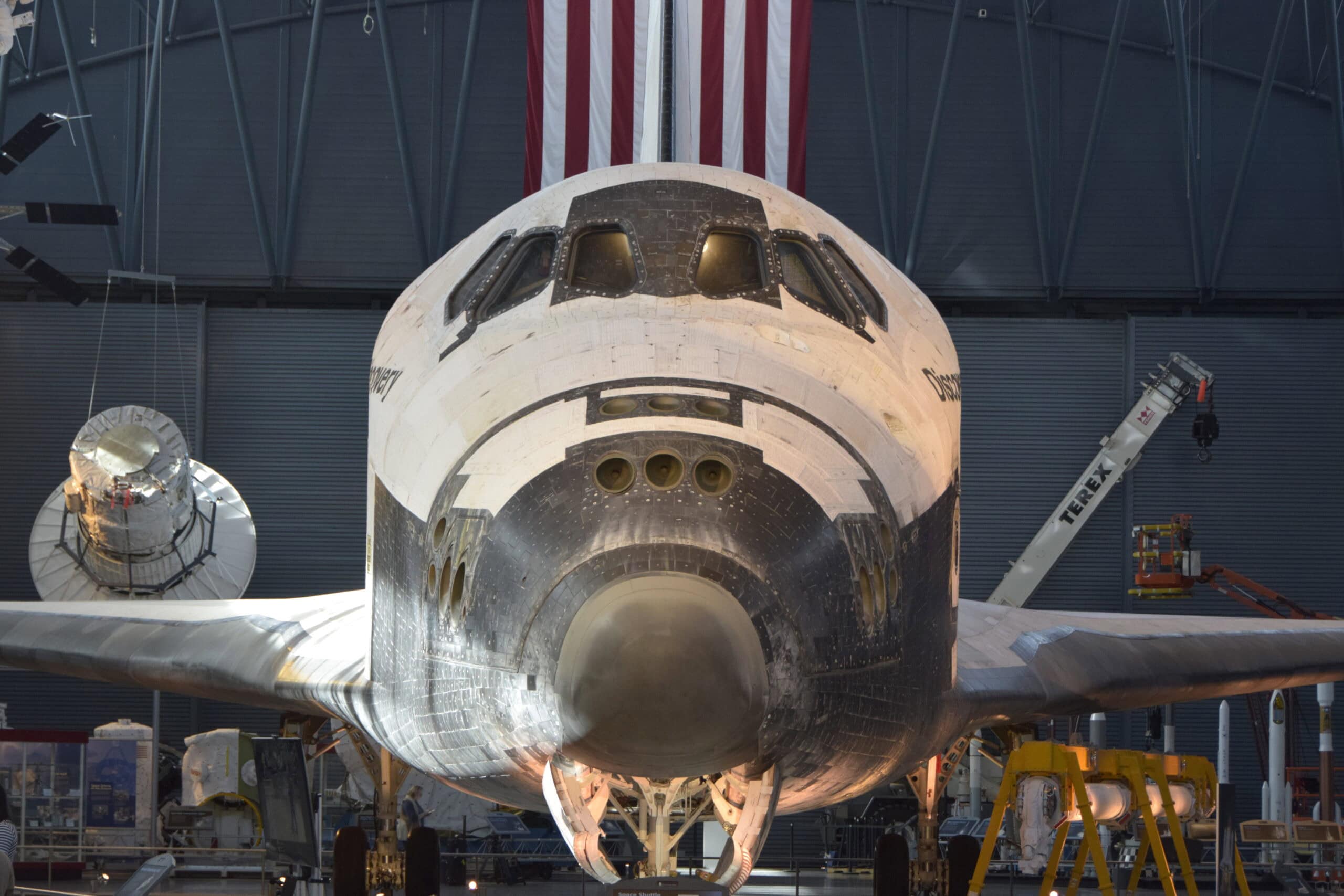
Space Shuttle at Smithsonian. Image taken by 19FortyFive back in 2025.
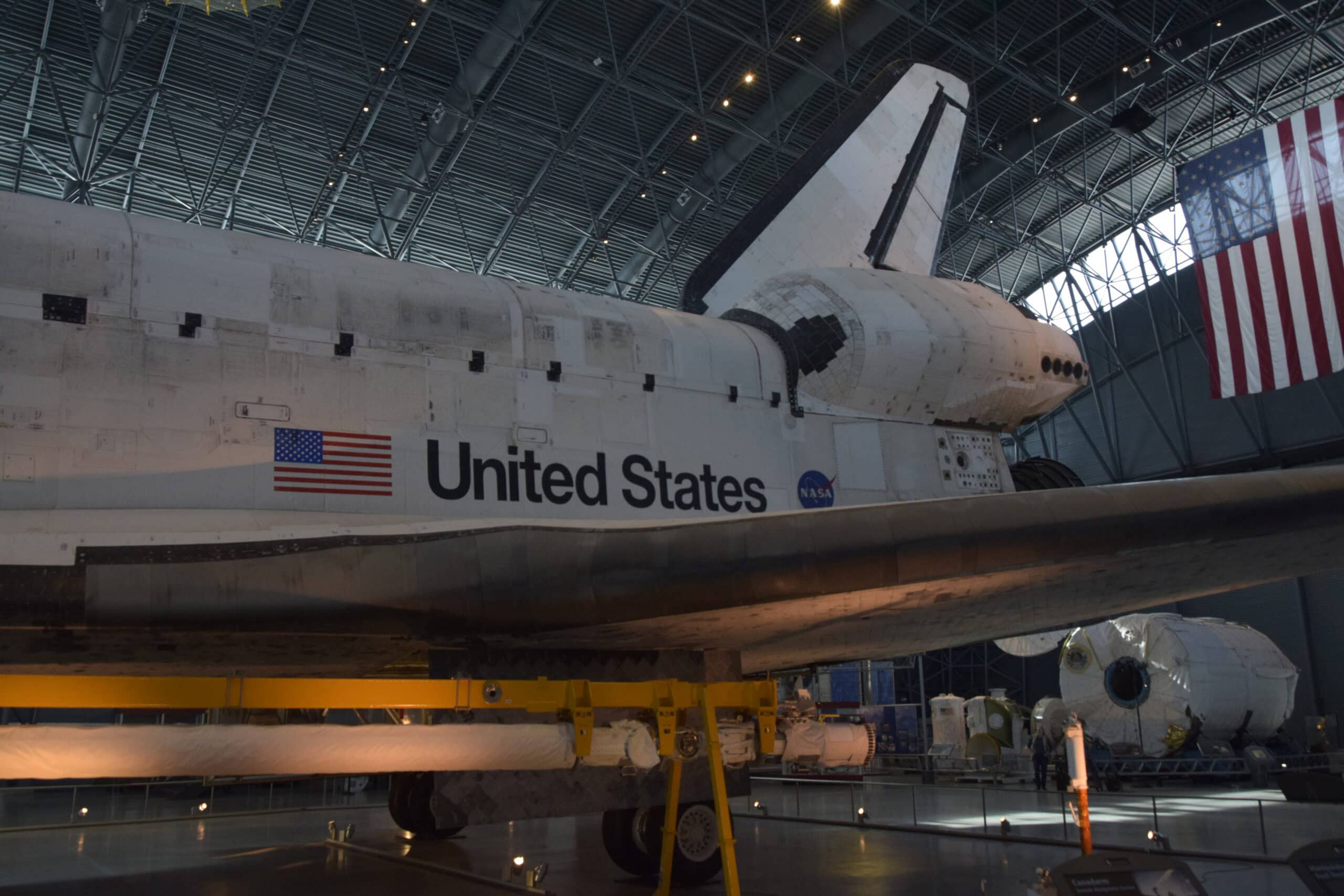
NASA Space Shuttle Discover in 2025. 19FortyFive.com Photo.
That slow decline is why NASA now powers down instruments one at a time, to conserve the dwindling energy source and keep Voyager alive.
Interstellar Communication
Arguably the most fascinating technology aboard Voyager is the communications gear.
The transmitter outputs only about 20–22 watts, which is roughly the equivalent of a household refrigerator lightbulb.
The signal still reaches Earth from more than 15 billion miles away.
This is possible because of the Deep Space Network’s enormous antennas, extremely sensitive receivers, and sophisticated signal processing.
But the radio signal now requires nearly 24 hours to travel one way, with round-trip communications approaching two full days.
Indeed, engineers often wait 45–48 hours simply to confirm that a command succeeded. Ironically, despite being an interstellar capsule, Voyager operations have come to resemble exchanging letters.
Reliable Performance
In the late 1970s, aerospace favored simplicity, redundancy, and conservative safety margins. The electronics were heavily tested before launch.
With fewer integrated circuits than modern spacecraft, there was less software complexity and less dependence on autonomous computing.
Many critical systems were duplicated or backed up. And overall, this simplicity and redundancy limited the opportunities for catastrophic failures. Today, modern spacecraft are vastly more capable—but also much more computationally complex—and therein lies the tradeoff.
Still Going
Voyager is a fascinating case study in longevity.
Several factors have allowed the craft to endure through 50 years of operation, including exceptionally conservative engineering, RTGs providing decades’ worth of electricity, obsessive monitoring by NASA engineers, remote software updates, and the selective shutdown of nonessential items.
Still, the reliability of Voyager’s hardware, built in the 1970s before Americans had access to home computers, the internet, or smartphones, is remarkable.
About the Author: Harrison Kass
Harrison Kass is a writer and attorney focused on national security, technology, and political culture. His work has appeared in Tablet, City Journal, The Hill, The Spectator, and The Cipher Brief. He holds a JD from the University of Oregon and a master’s in Global & Joint Program Studies from NYU. More at harrisonkass.com.