
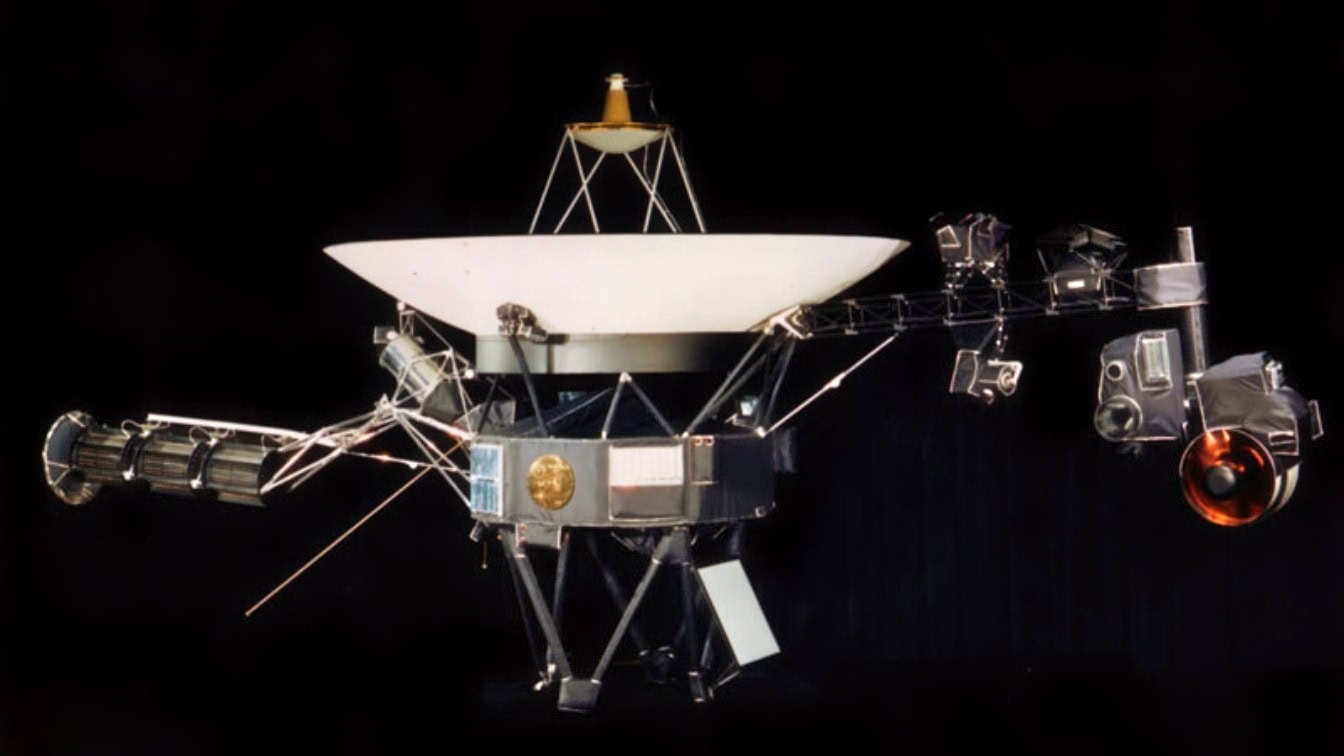
On November 18, 2026, Voyager 1 will reach a remarkable milestone—it will become the first human-made object located one light-day from Earth.
That means a radio command sent from Earth, traveling at the speed of light, will require 24 hours just to reach the spacecraft.
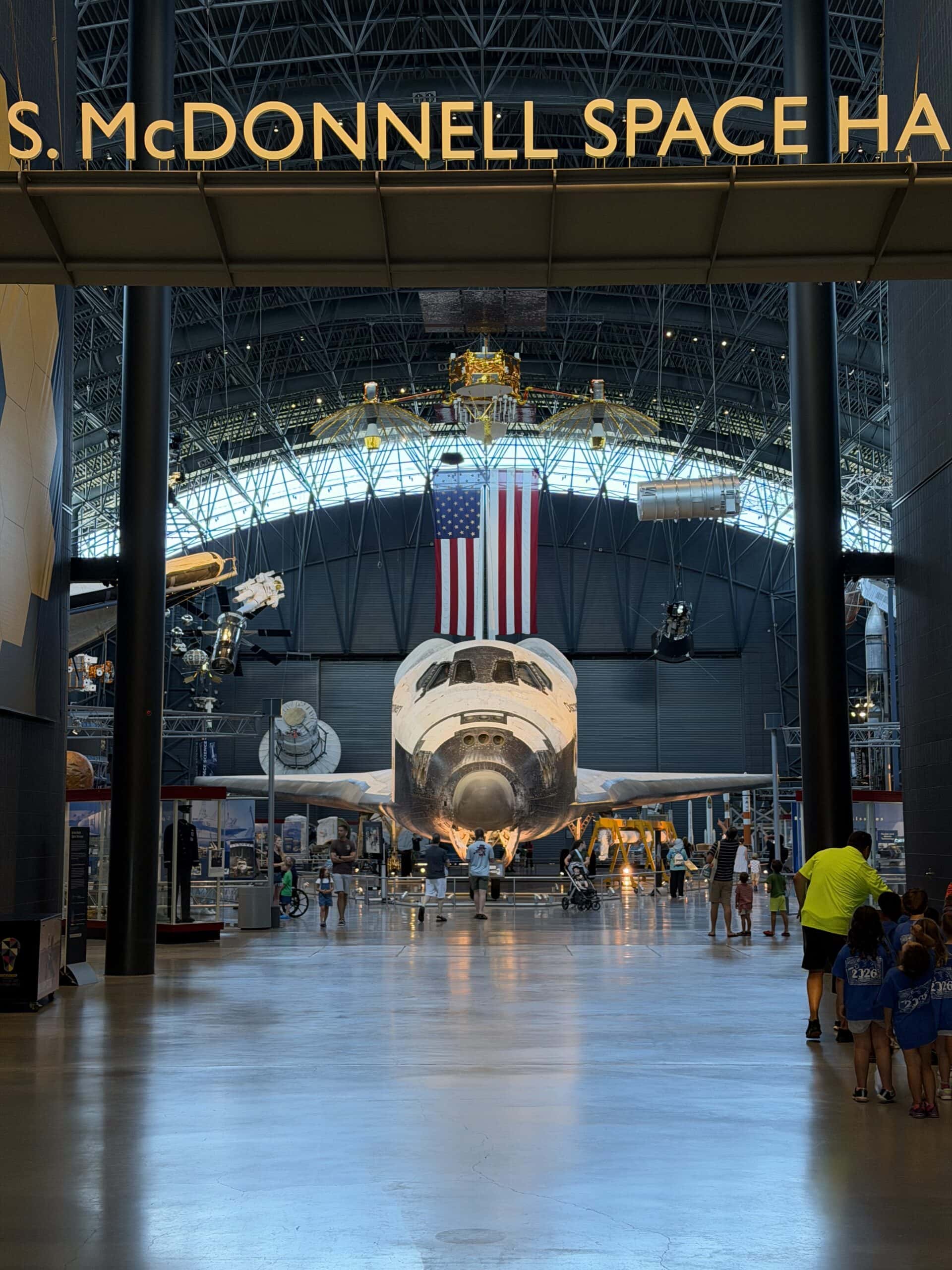
NASA Space Shuttle Discover. Smithsonian Visit Photo by 19FortyFive.com
And any reply will take another full day to return. The boundary serves as a reminder of the extraordinary distances involved in deep-space exploration.
What is a Light-Day?
A light-day is the distance light travels in 24 hours. Light moves at 299,792 km/s, or 186,282 miles per second—the fastest speed possible in the universe.
Over one day, that equals roughly 25.9 billion kilometers, or 16.1 billion miles.
Voyager 1 will become the first human-made object to reach that communication distance from Earth.
Now, Voyager is not crossing into a new region of space. It already entered interstellar space in 2012 after crossing the heliopause (the boundary where the solar wind gives way to the interstellar medium). One light-day is therefore not a physical frontier but a communications milestone, highlighting how remote the Voyager spacecraft has become.
Communication Now Takes Days
Current operations will now become dramatically slower.
For example, an engineer on Earth may send a command on Monday afternoon. Voyager receives it on Tuesday afternoon.
If it immediately responds, Earth won’t receive confirmation until Wednesday afternoon.
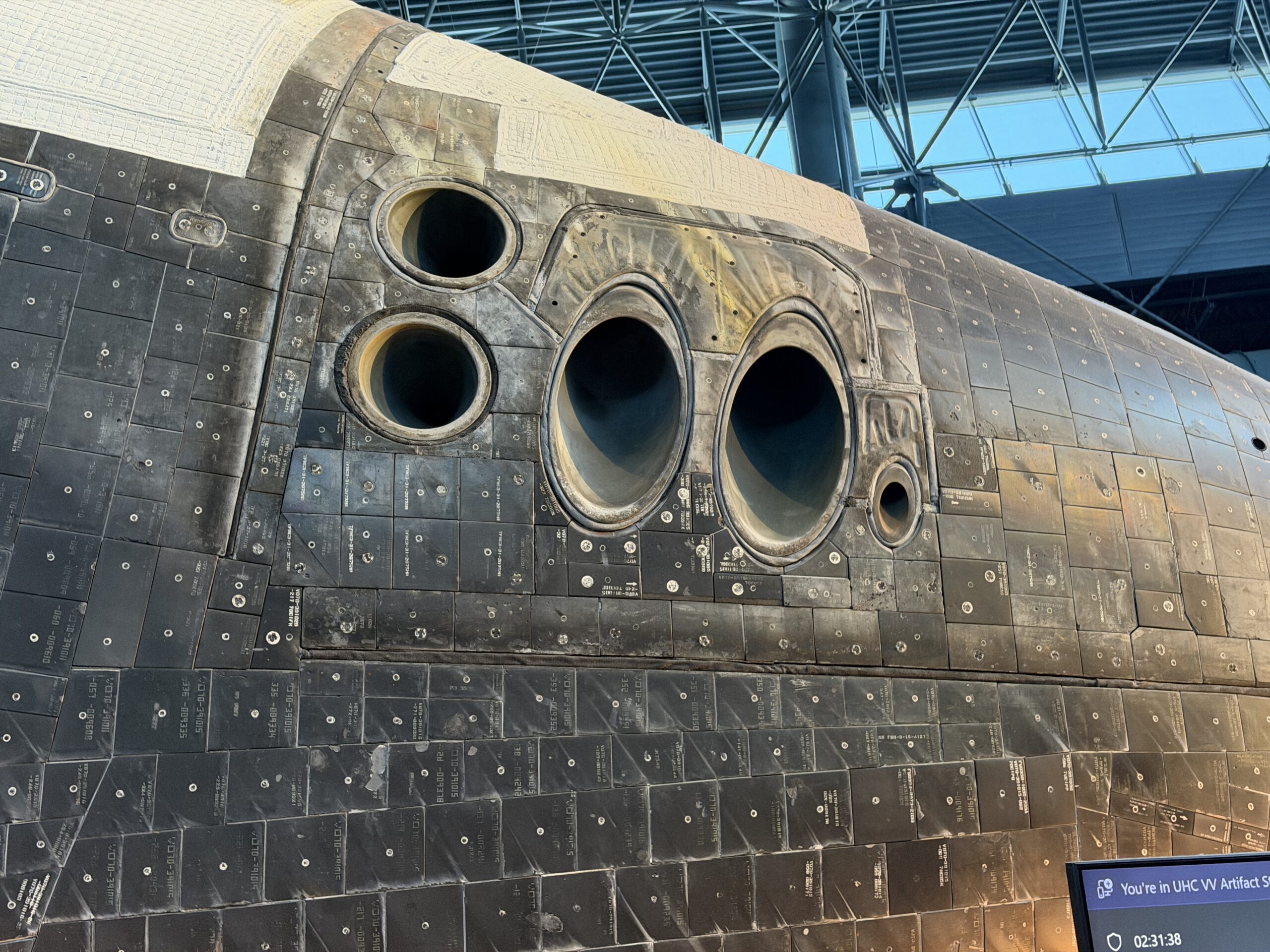
NASA Space Shuttle Discover. Smithsonian Visit Photo by 19FortyFive.com
That is now the minimum round-trip communication: 48 hours. That’s all before onboard execution, Deep Space Network scheduling, and engineering analysis. Every operational decision becomes an exercise in patience.
Still Flying
Launched in 1977, Voyager was originally intended as a four-year mission studying Jupiter and Saturn. The mission successfully completed its planetary objectives decades ago, yet continues operating nearly half a century later.
Today, Voyager is used to study magnetic fields, plasma, and conditions outside the heliosphere. No other functioning spacecraft operates in this region.
But Voyager is dying.
Powered by Radioisotope Thermoelectric Generators (RTGs), Voyager will eventually run out of power. RTGs generate electricity from decaying plutonium-238.
The problem is that output steadily declines, with Voyager losing approximately 4 watts every year.
This is enough to force NASA into continual power conservation; the mission now resembles engineering triage. Indeed, NASA is now slowly turning Voyager off.
To preserve operations, NASA has gradually shut down cameras, cosmic-ray instruments, the low-energy charged-particle detector, heaters, and other nonessential systems. By 2026, only the magnetometer and Plasma Wave Subsystem will remain active.
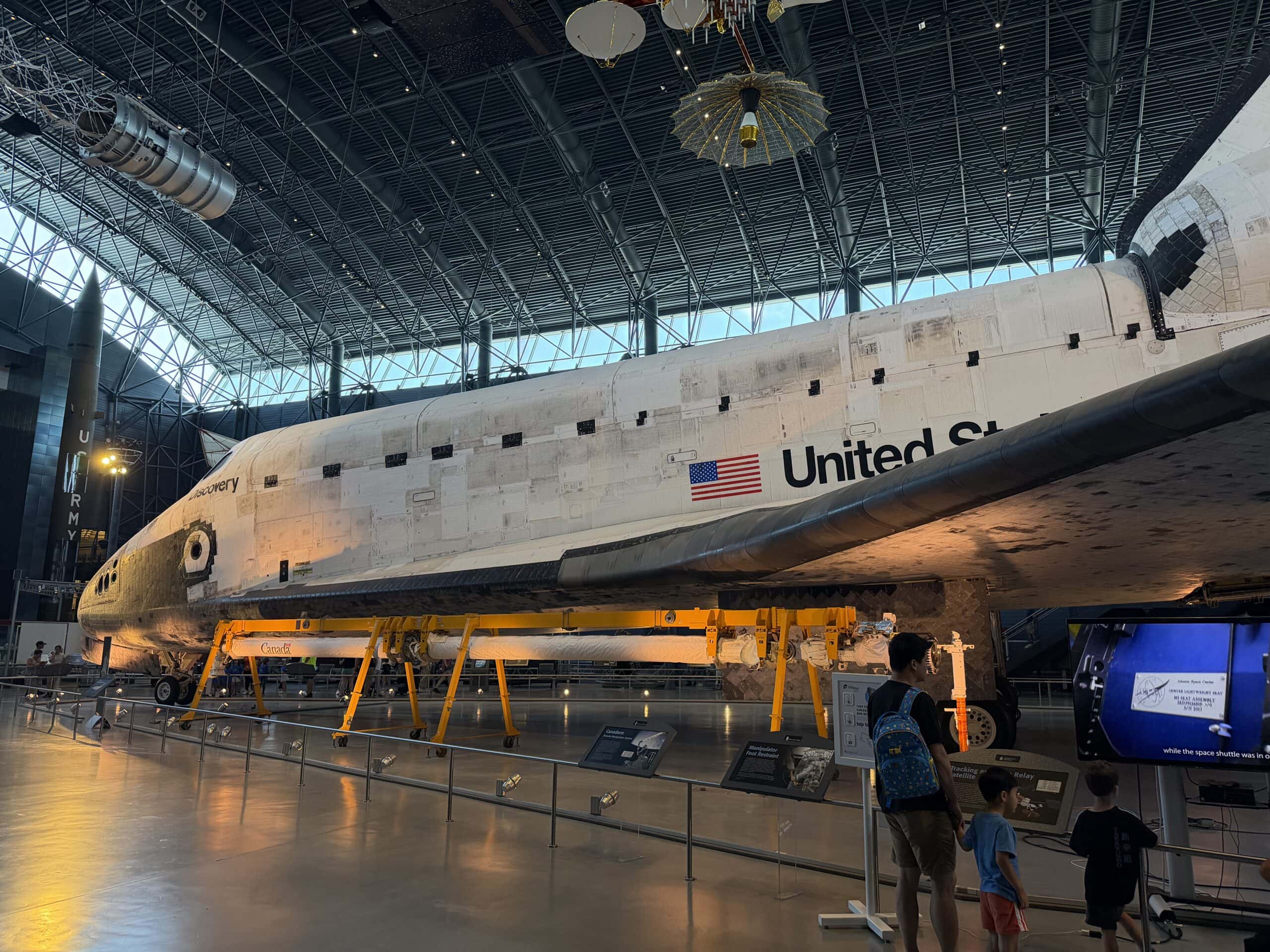
NASA Space Shuttle Discover. Smithsonian Visit Photo by 19FortyFive.com
Each shutdown saves precious electricity. But every shutdown is permanent. The disabled systems will never come back online again.
And unlike spacecraft in Earth orbit, Voyager cannot be repaired. There are no servicing missions. There are no replacement parts.
No software reload if hardware physically fails. Instead, NASA communicates via the Deep Space Network, a system of giant radio antennas, and extremely weak signals.
Engineers diagnose problems remotely across billions of miles, and a simple troubleshooting cycle may consume several days.
It’s All Relative
Although one light-day sounds enormous, in the astronomical realm, it’s almost nothing. One light-day equals roughly 0.0027 light-years.
The nearest star to Earth is Alpha Centauri, which is 4.37 light-years away.
Even after nearly fifty years, Voyager has traveled only a tiny fraction of the distance separating us from the nearest stellar neighbor.
The milestone demonstrates both extraordinary engineering and the enormous scale of interstellar space.
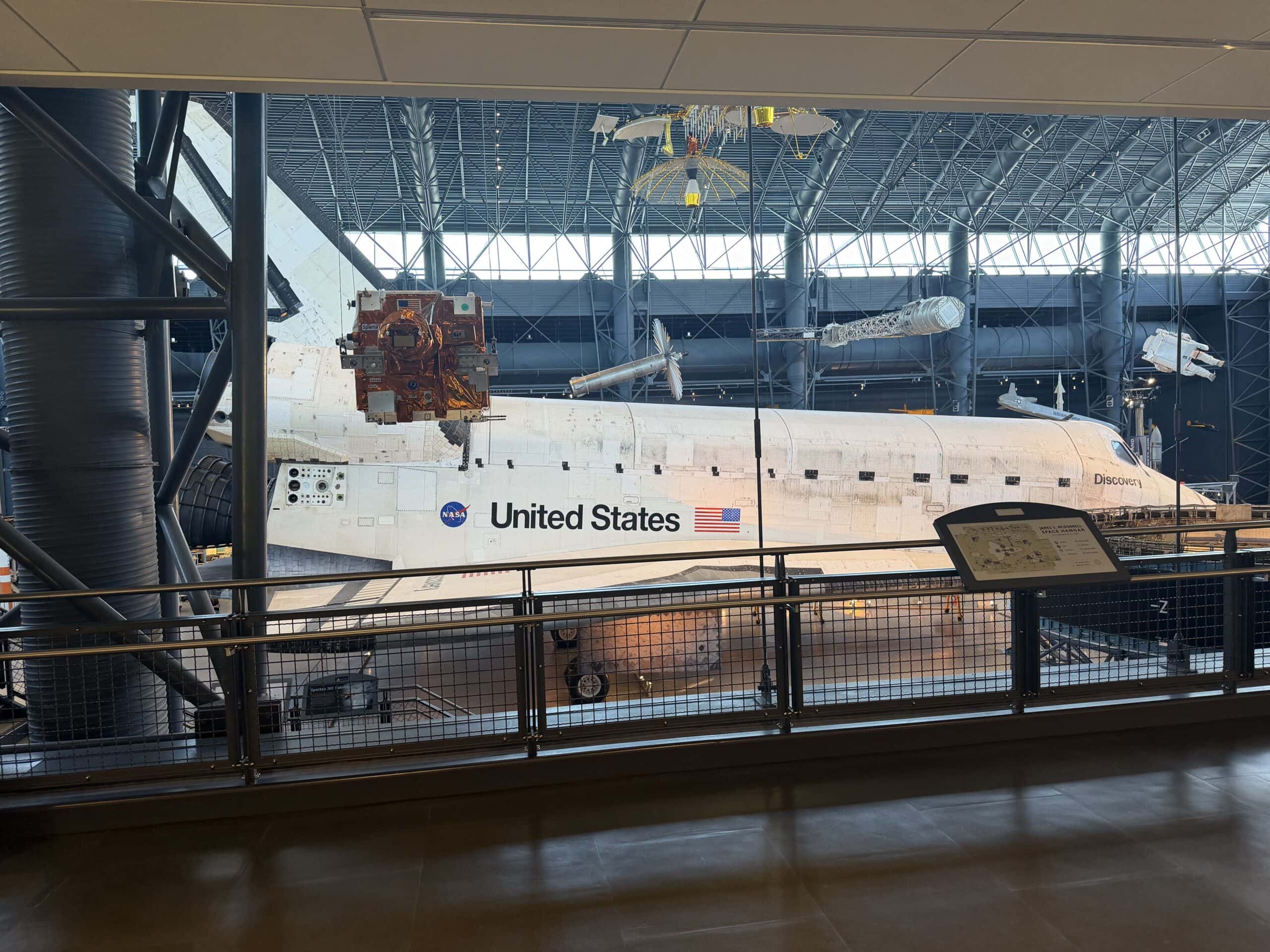
NASA Space Shuttle Discover. Smithsonian Visit Photo by 19FortyFive.com
Voyager remains humanity’s only functioning observatory sampling interstellar plasma, magnetic fields, and the cosmic environment beyond the heliosphere.
Voyager provides unique scientific data impossible to obtain elsewhere. Even limited measurements remain valuable because no replacement mission occupies that region.
Built before the internet, GPS, or modern smartphones, Voyager continues to demonstrate the merits of conservative engineering, redundant systems, and exceptional mission planning.
About the Author: Harrison Kass
Harrison Kass is a writer and attorney focused on national security, technology, and political culture. His work has appeared in Tablet, City Journal, The Hill, The Spectator, and The Cipher Brief. He holds a JD from the University of Oregon and a master’s in Global & Joint Program Studies from NYU. More at harrisonkass.com.