
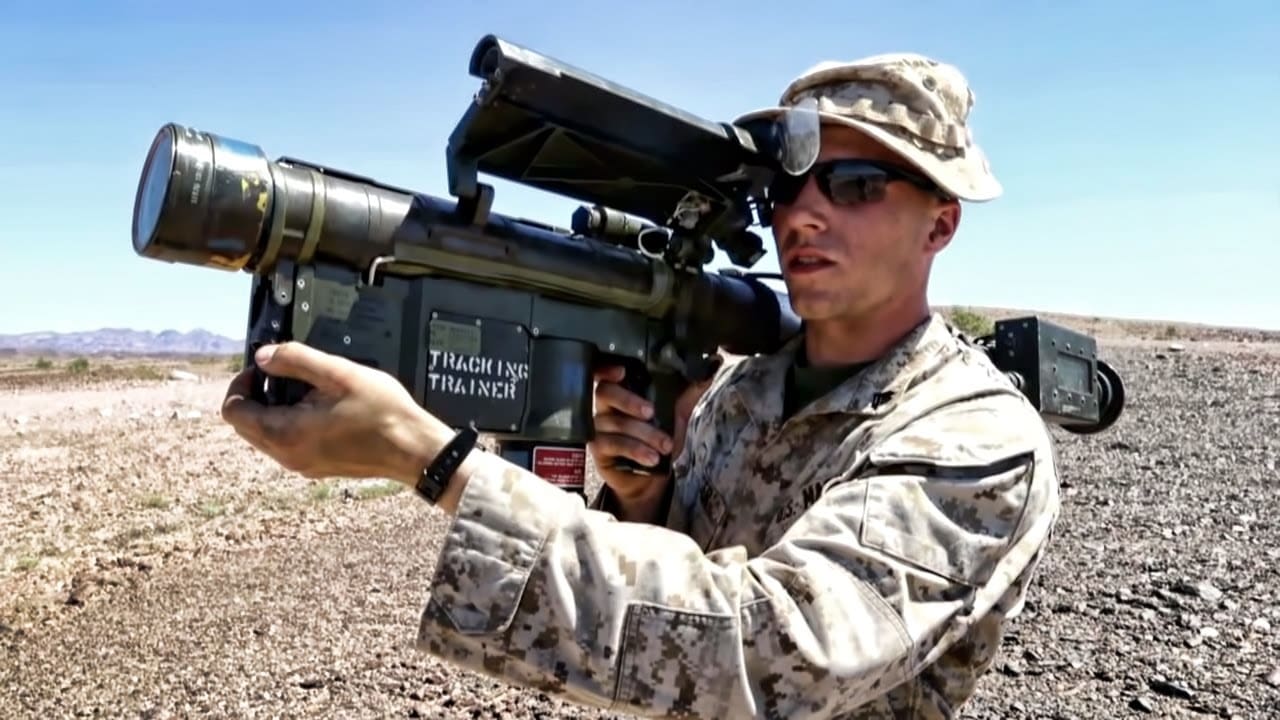
Taiwan’s Army has begun its 2026 Shen Gong live-fire exercise, placing particular emphasis on operational testing of the US-supplied FIM-92 Stinger missile. The exercise was used to evaluate multiple launch platforms under realistic combat conditions, a study that comes as Taiwan continues to strengthen its short-range air defenses amid ongoing PLA assertions. The drills illustrate Taiwan’s broader strategy of building a layered air-defense network capable of surviving an increasingly sophisticated Chinese air campaign.
The Shen Gong Exercise
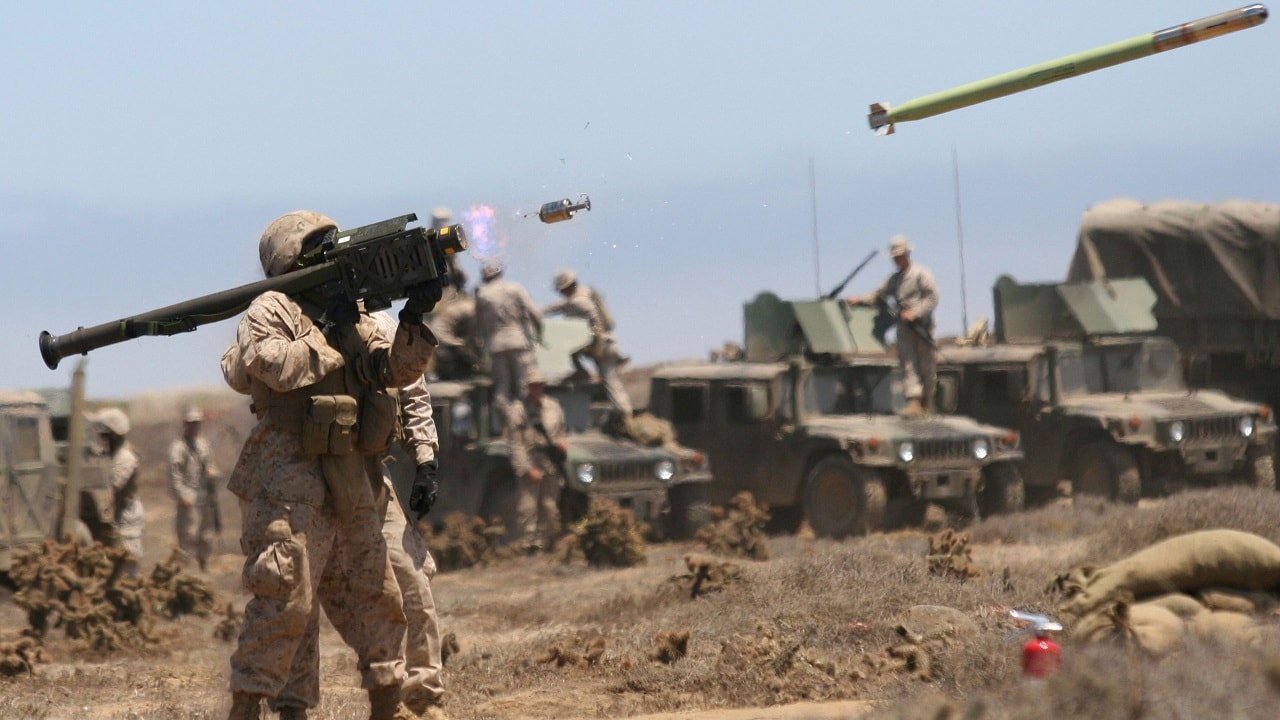
Stinger missile being fired. Image Credit: Creative Commons.
Taiwan’s Shen Gong exercise is an annual live-fire training event designed to validate operational readiness rather than simply test military equipment. During the exercise, soldiers engaged aerial targets using live Stinger missiles. The focus was on target acquisition, tracking, engagement, operator proficiency, and reaction time. The battlefield conditions were calibrated to simulate wartime engagements.
Introducing the Stinger
The FIM-92 Stinger is an American-made man-portable air defense system (MANPADS) developed during the Cold War. Shoulder-fired, the Stinger is an infrared-guided missile designed to destroy helicopters, low-flying aircraft, UAVs, and cruise missiles. Equipped with fire-and-forget guidance and a passive infrared seeker, the Stinger has no radar emissions, making it difficult for enemy aircraft to detect before launch.
Unlike the Patriot missile, the Stinger doesn’t rely on radar guidance, so there is no continuous target illumination, meaning it cannot easily be targeted by radar emissions. Instead, Stinger homes in on an aircraft’s heat signature, allowing it to remain effective even if larger radar networks degrade. This is especially valuable in electronically contested environments.
Four Launch Platforms
During the exercise, Taiwan demonstrated Stinger use from four different launch methods. First, man-portable: used by infantry units in dispersed defensive positions, this option is highly mobile and easy to conceal. Second, Avenger Air Defense System: mounted on a wheeled vehicle, this option features eight ready-to-fire Stingers, electro-optical sensors, and a .50-caliber machine gun. This option is used to protect mechanized forces. Third, dual-mounted Stinger: this features two ready missiles (as the name implies) at fixed installations relying on optical sight. This allows for rapid point defense. And last, the AH-64E Apache: here, the Stinger serves as an inexpensive air-to-air missile, complementing Hellfire missiles and 30-mm cannons. The Stinger allows the Apache to engage helicopters, drones, and slow aircraft, increasing the platform’s flexibility during battlefield operations.
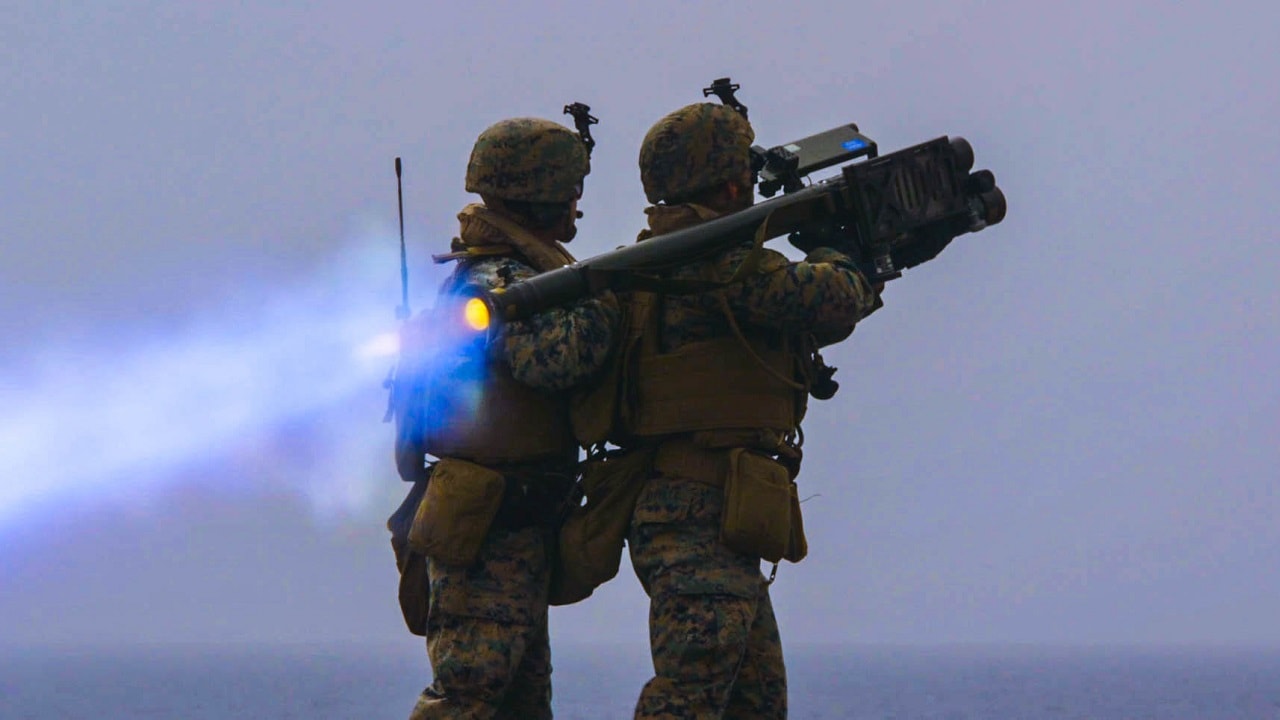
MEDITERRANEAN SEA (March 23, 2018) U.S. Marines with Marine Air Control Group (MACG) 28 Low Altitude Air Defense (LAAD) Detachment, Marine Medium Tiltrotor Squadron (VMM) 162 (Reinforced), 26th Marine Expeditionary Unit (MEU), fire a Stinger trainer missile at a Marine Corps AV-8B Harrier during a Stinger Trainer Launch Simulator (STLS) shoot aboard the amphibious assault ship USS Iwo Jima (LHD 7) in the Mediterranean Sea, March 23, 2018. Iwo Jima and the 26th MEU are conducting naval operations in the U.S. 6th Fleet area of operations. (U.S. Marine Corps photo by Sgt. Sylvia L. Tapia/Released)
Taiwan’s Layered Air Defense
At the uppermost tier, Taiwan’s layered air defense system features the Patriot PAC-3 and the indigenous Sky Bow (Tien Kung), each designed to engage ballistic missiles, high-altitude aircraft, and longer-range threats. Filling in at the lower tier is the Stinger, with a mission of defending against aircraft that penetrate outer defenses, helicopters, drones, cruise missiles, and point defense. The Stinger doesn’t replace Patriot but rather fills in the gaps, allowing for more comprehensive coverage. This matters against China, which possesses the world’s largest air force, complete with hundreds of fourth- and fifth-generation fighters, electronic warfare aircraft, stealth aircraft, a large inventory of cruise missiles, and extensive drone capabilities. Taiwan simply cannot match China aircraft-for-aircraft, knows this, accepts this, and instead focuses on layered denial.
Electronic Warfare Considerations
In a modern conflict, the PLA would surely attempt radar jamming, cyberattacks, suppression of air defenses (SEAD), and the destruction of fixed radar sites—all at the outset of an attack.
In such an environment, infrared-guided Stingers become especially valuable because they are passive, mobile, difficult to locate, and relatively resistant to electronic attack. They provide local air defense even if larger radar-guided systems are degraded.
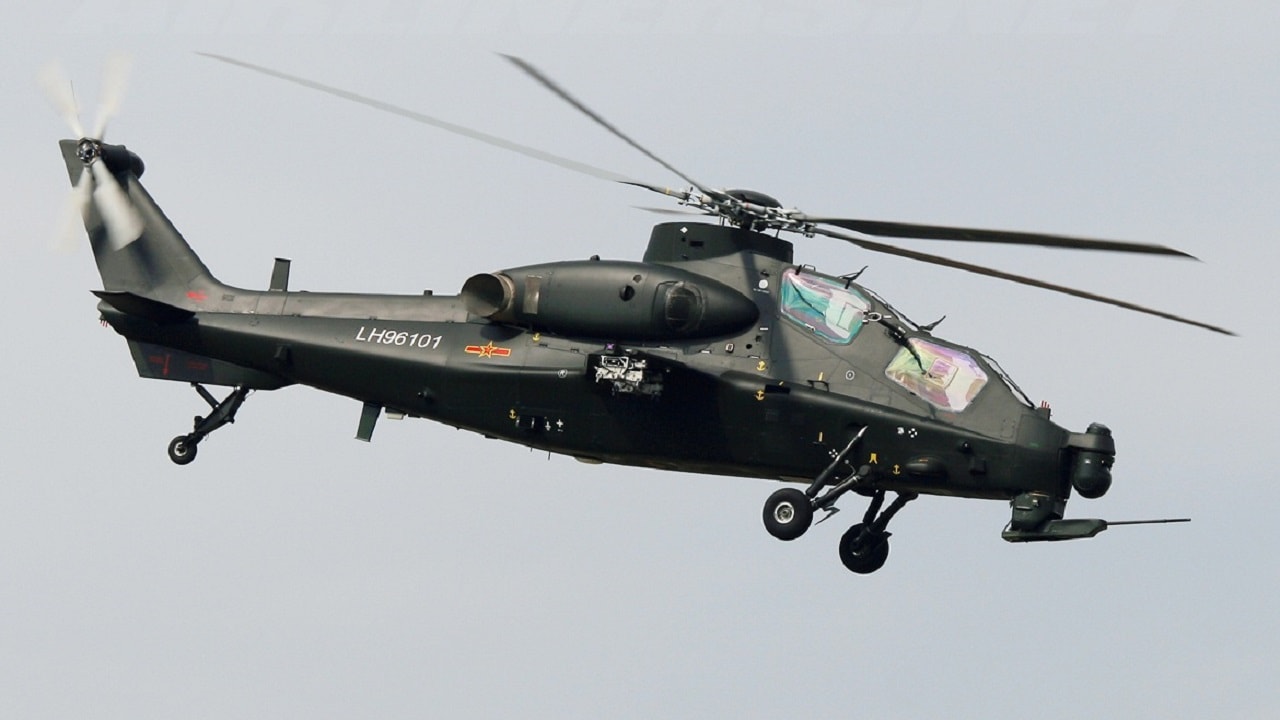
China’s Z-10 helicopter.
Stinger Limitations
Of course, the Stinger is not a strategic solution. The system’s range is only measured in a few miles, and it requires visual or infrared detection to be effective. The Stinger cannot hope to stop ballistic missiles, high-altitude bombers, or large-scale missile barrages. Instead, the Stinger is best viewed as the final defensive layer for smaller-scale assets that slip through the upper tier of Taiwan’s air defense system.
Strategic Implications
The exercise reflects Taiwan’s evolving defense philosophy; rather than attempting to match China’s airpower quantitatively, Taiwan is instead seeking to disperse defenses, complicate PLA planning, increase attrition, and preserve combat capability after the initial strikes.
The Stinger supports these aims. Short-range air defenses are also becoming increasingly important as drones and low-flying precision weapons proliferate. Taiwan appears to have been keeping an eye on conflicts in Ukraine and the Middle East and applying the lessons learned.
About the Author: Harrison Kass
Harrison Kass is a writer and attorney focused on national security, technology, and political culture. His work has appeared in Tablet, City Journal, The Hill, The Spectator, and The Cipher Brief. He holds a JD from the University of Oregon and a master’s in Global & Joint Program Studies from NYU. More at harrisonkass.com.