
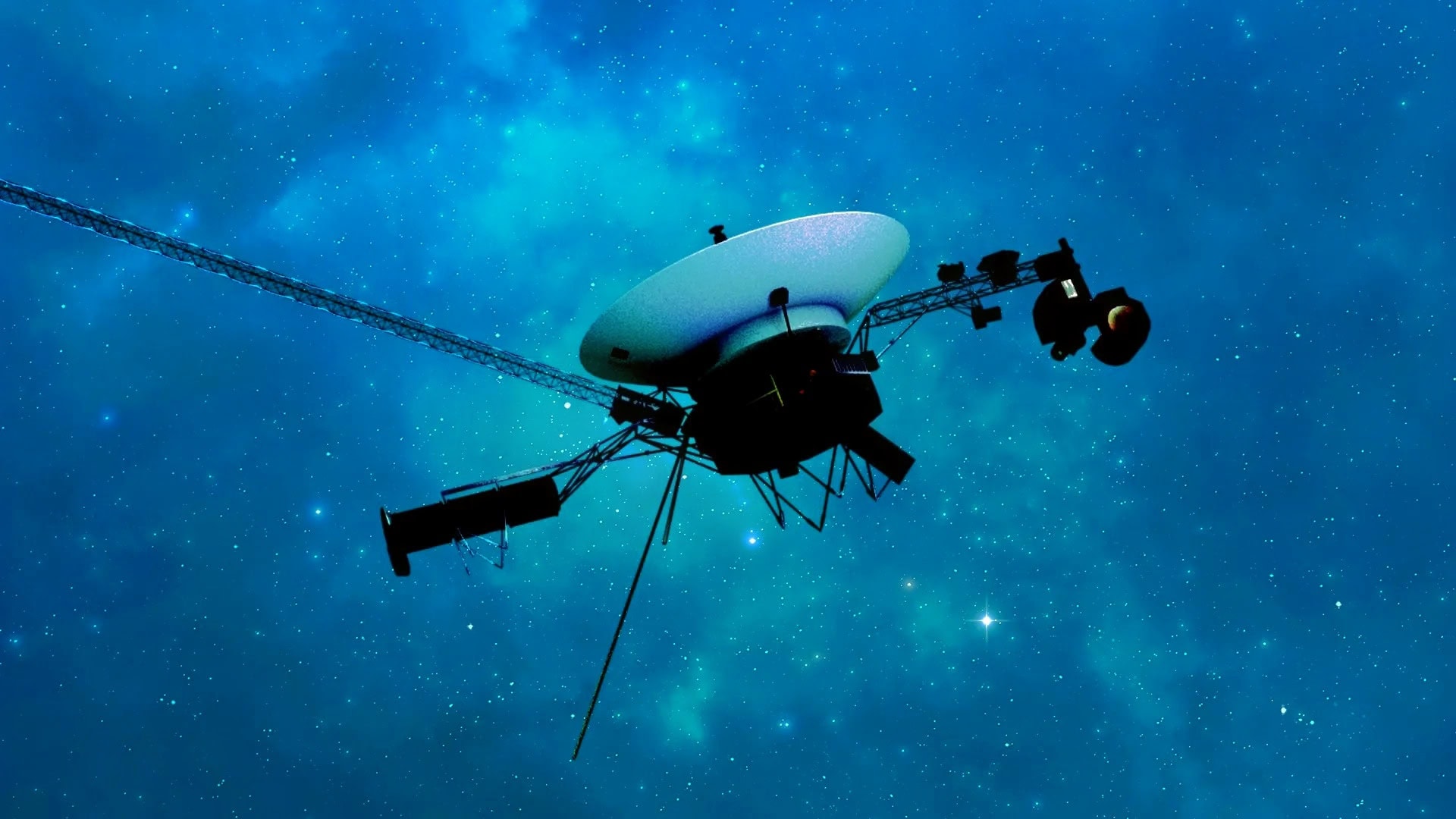
Nearly five decades after launch, Voyager 1 is approaching the end of its operational life, not because it is breaking down, but because it is gradually running out of electrical power.
Every year, Voyager’s plutonium-powered electrical system produces roughly four fewer watts, and now, NASA engineers are being forced to make irreversible decisions about which scientific instruments to shut down permanently. Every shutdown extends the spacecraft’s life a little longer. But eventually, there won’t be enough electricity to power even its transmitter, ending humanity’s longest-running conversation with the most distant spacecraft ever launched.
Voyager 1: Refusing to Die
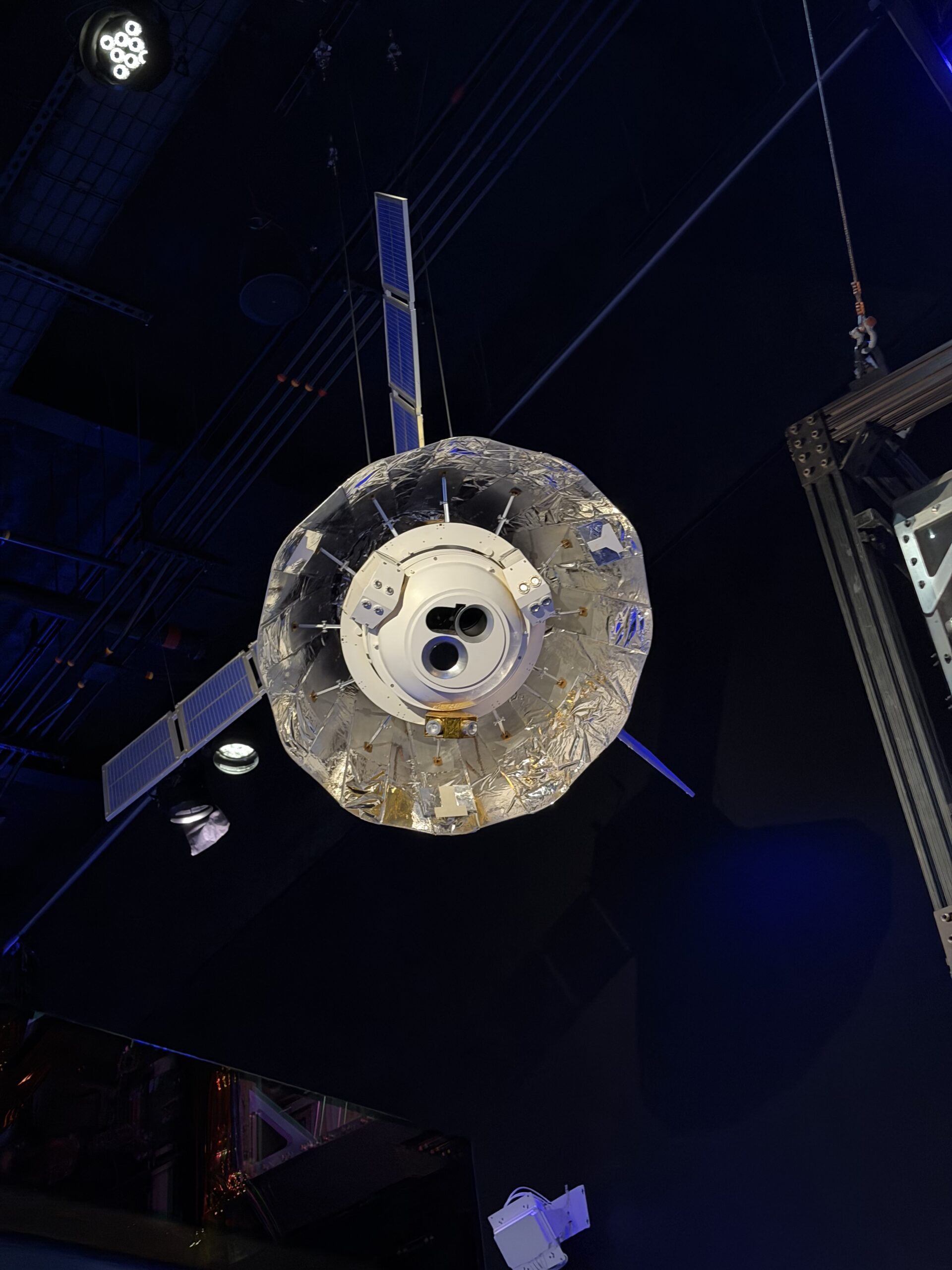
Smithsonian DC Photo Shoot. Image Taken on July 2, 2026, by 19FortyFive.
Voyager 1 was launched in September 1977. Originally designed for a four-year planet tour, Voyager flew past Jupiter in 1979, Saturn in 1980, and then Uranus and Neptune, and then continued into interstellar space after completing its primary objectives. Nearly fifty years later, Voyager is still transmitting scientific data back to Earth, despite being about 15 billion miles away. The spacecraft is the farthest-reaching human-made object ever built and an extraordinary example of engineering longevity.
The Power Source
For power, Voyager carries three Radioisotope Thermoelectric Generators (RTGs). The RTGs do not generate power from sunlight. Instead, they convert heat from the natural decay of Plutonium-238 into electricity. The RTG system is extremely reliable, with few moving parts, making it ideal for deep-space missions where sunlight becomes too weak for solar panels. But gradually, the RTG system is dying.
Nothing is breaking, but physics is eventually winning out. Plutonium naturally decays, heat production gradually decreases, thermocouples become less efficient with age, and electrical output declines each year. When launched in 1977, the RTGs generated 470 watts.
Today, just 230 watts are generated, meaning the system is losing about four watts annually. That’s the equivalent of the wattage needed to power only a few household light bulbs. But NASA cannot recharge the spacecraft, and obviously no servicing mission is possible.
So the decline, while slight and incremental, is terminal.
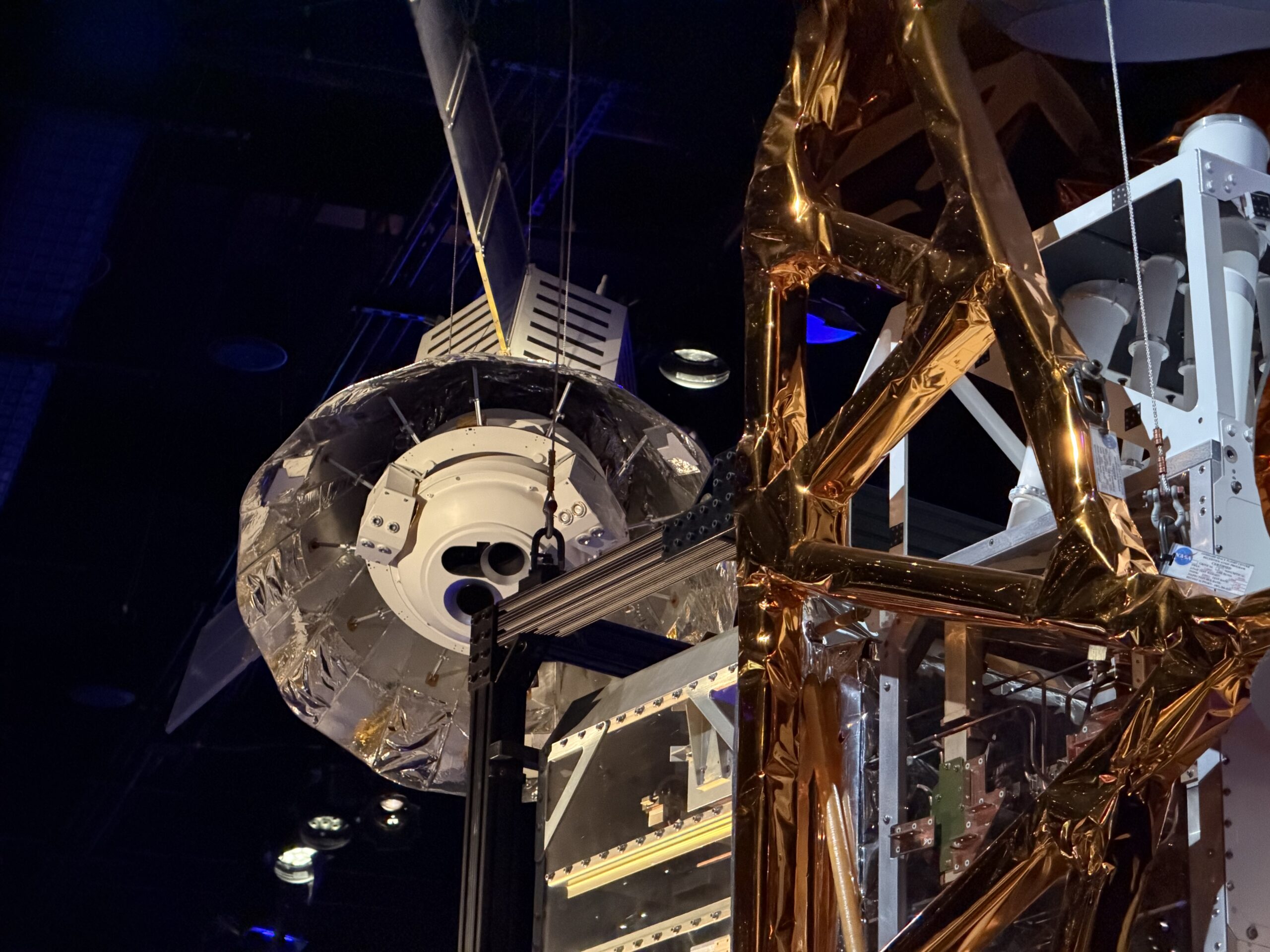
Smithsonian DC Photo Shoot. Image Taken on July 2, 2026, by 19FortyFive.
Engineering Triage
Rather than one catastrophic failure, NASA performs controlled sacrifices on Voyager; every few months or years, engineers will evaluate which instrument provides the greatest scientific value, how much power it consumes, and whether shutting it off can extend the overall mission life.
The engineers know they can’t repair the spacecraft or restore the power source, so they prioritize survival and triage instruments accordingly.
Once an instrument is switched off, however, the shutdown is permanent. Without power, the heaters lose power, temperatures plunge, electronics freeze, and the hardware can never realistically be restarted.
The cameras, for example, were shut down long ago. Planetary instruments were shut down, as were other nonessential systems. Now, the remaining instruments measure magnetic fields, cosmic rays, plasma, and interstellar particles. Each remaining instrument represents one more difficult decision.
Interstellar Distances
Voyager’s radio transmitter produces only about 20 watts. This is comparable to a refrigerator bulb or a dim household appliance. Yet the Deep Space Network can still detect the transmitter.
The 15-billion-mile distance creates a delay, of course. Commands require roughly 22.5 hours one way, while confirmation requires another 22.5 hours the other way. That’s nearly two days between command and response. If something goes wrong, mission controllers simply wait—there is no way to intervene.
The Voyager is worth the hassle, though; it remains the only spacecraft directly sampling interstellar space. Specifically, Voyager measures cosmic rays, charged particles, the magnetic field, and the plasma environment beyond the heliosphere.
Those measurements cannot currently be duplicated by any other mission. Even one additional year of data helps scientists better understand the interactions among the solar wind, the interstellar medium, and cosmic radiation, as well as the boundary of our solar system.
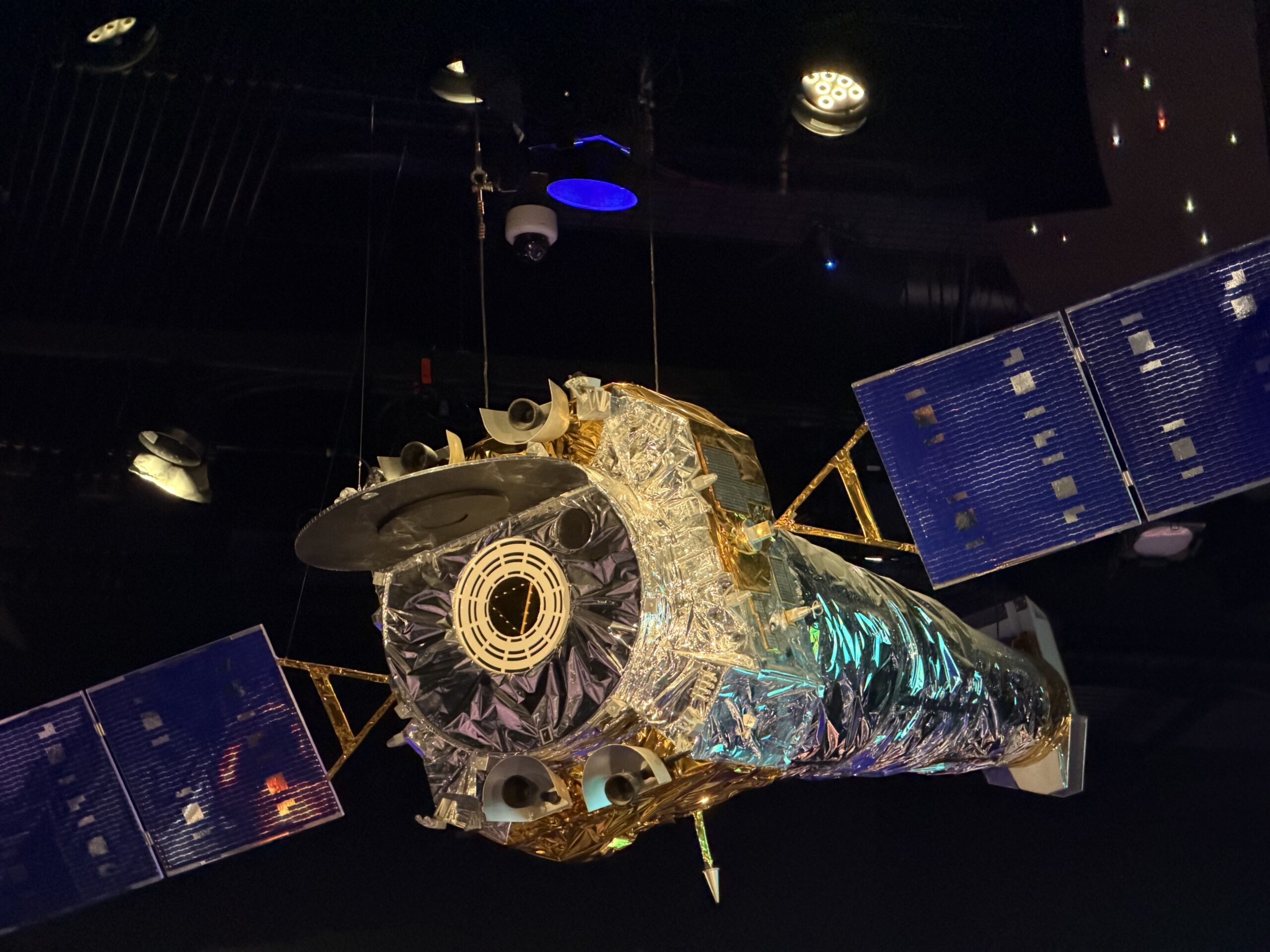
Smithsonian DC Photo Shoot. Image Taken on July 2, 2026, by 19FortyFive.
The End Approaches
The end is approaching.
It will arrive, not with a dramatic explosion, but with power falling below minimum operating thresholds, and NASA shutting down the final instrument, with the final transmitter losing power. The Deep Space Network will continue listening, but the signal will cease. Voyager will simply disappear into silence.
Voyager survived more than ten times longer than originally intended; the spacecraft serves as a testament to how durable well-designed systems can be. But the mission also serves as a reminder that deep-space exploration is constrained by power generation, communications, and the fundamental laws of physics.
About the Author: Harrison Kass
Harrison Kass is a writer and attorney focused on national security, technology, and political culture. His work has appeared in Tablet, City Journal, The Hill, The Spectator, and The Cipher Brief. He holds a JD from the University of Oregon and a master’s in Global & Joint Program Studies from NYU. More at harrisonkass.com.