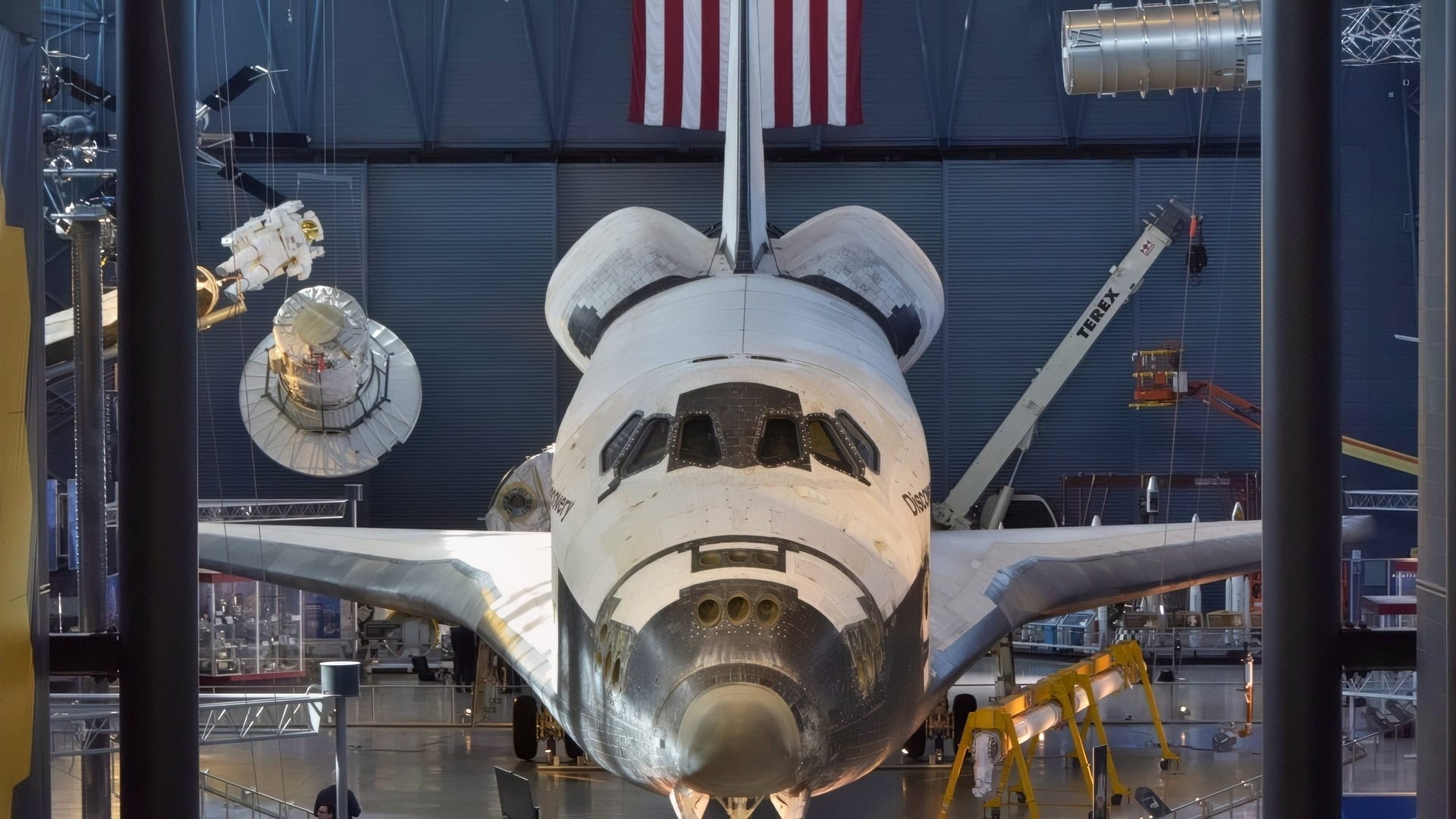
When the Obama administration presided over the end of the space shuttle program, NASA had no viable replacement planned. In 2011, the final shuttle launched, ending the program forever. It was, in many respects, a tragedy for NASA’s manned spaceflight program.
The End of the Shuttle Era
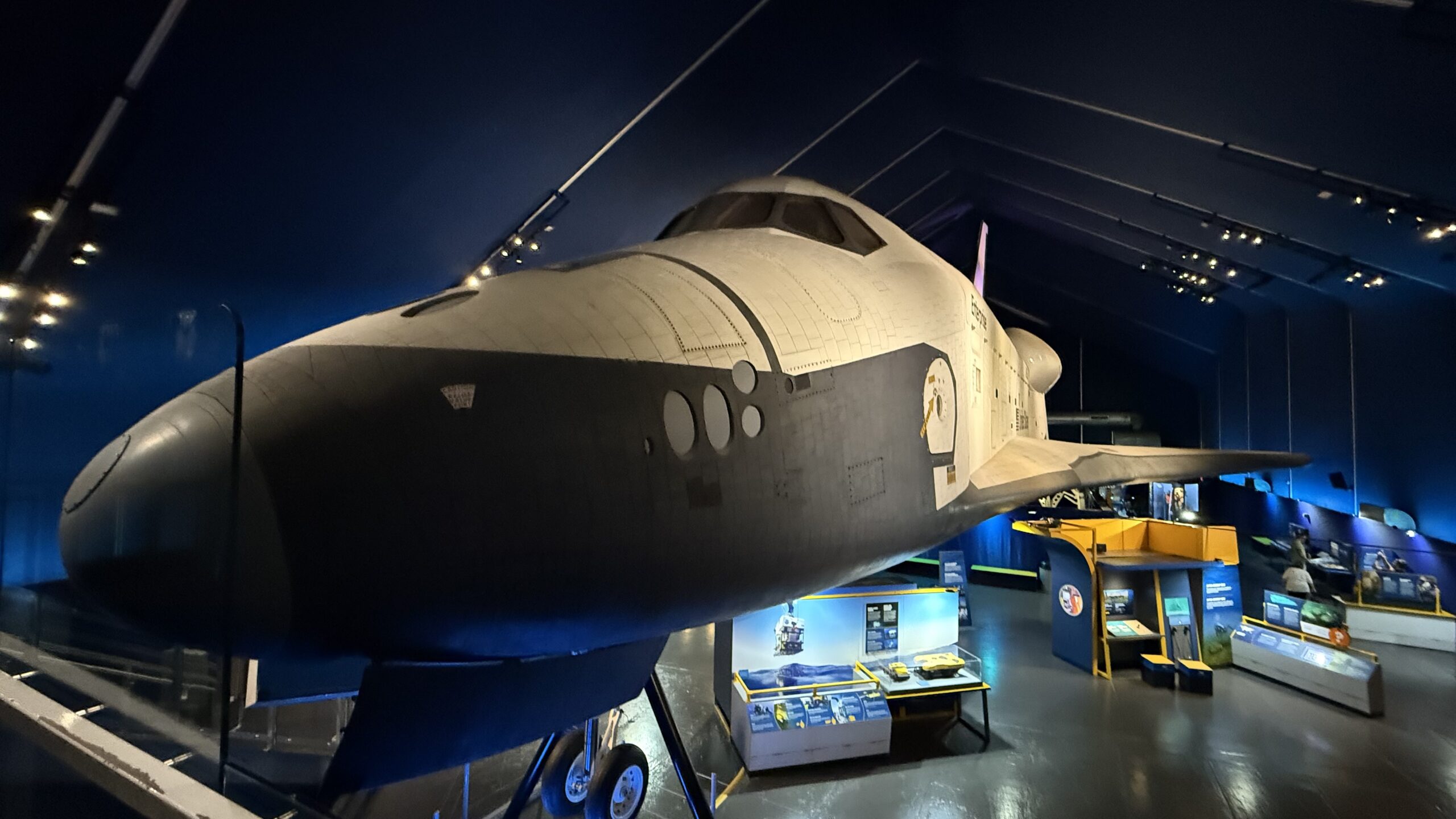
NASA Space Shuttle Onboard USS Intrepid. 19FortyFive.com Image.
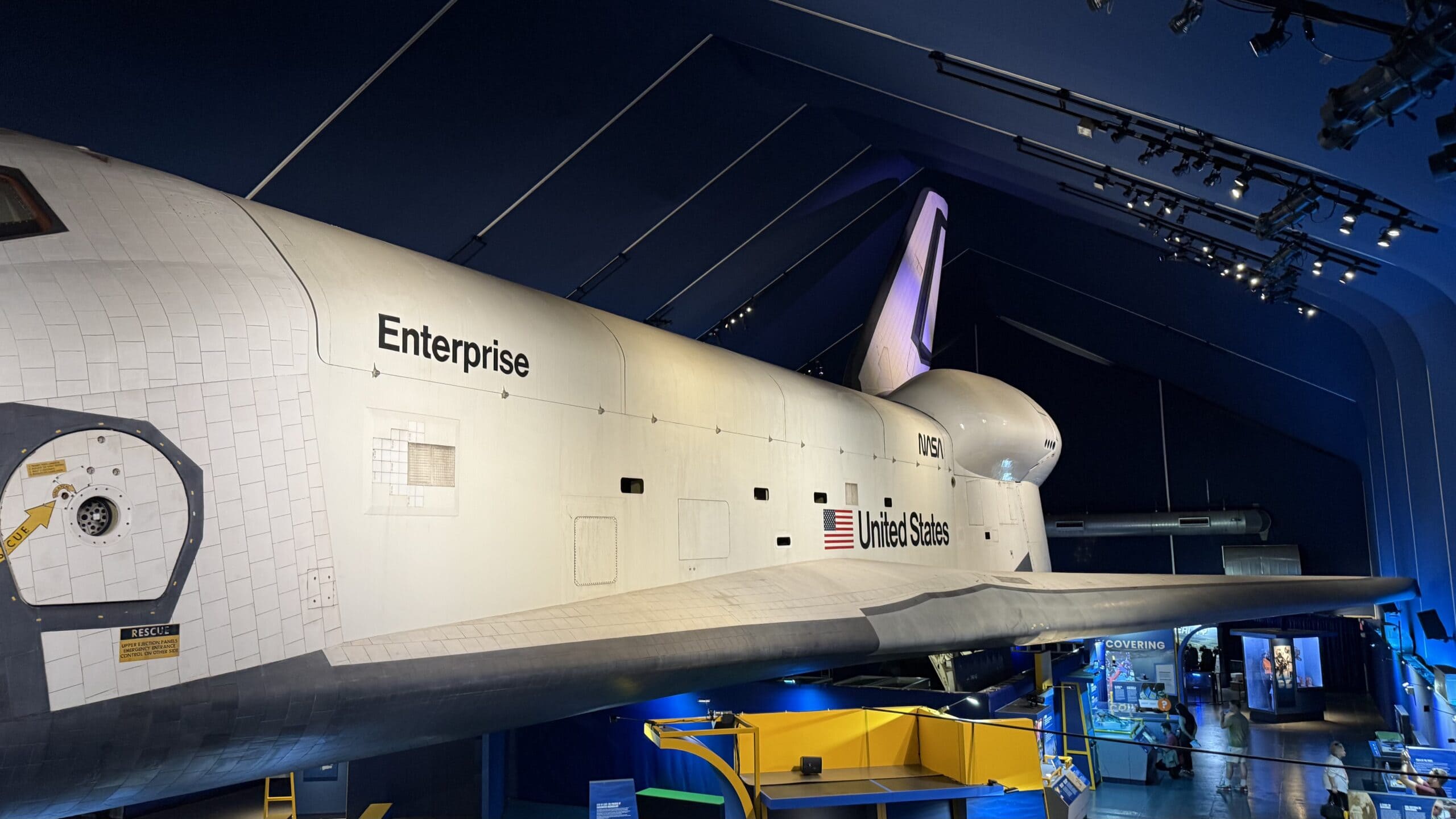
NASA Space Shuttle Onboard USS Intrepid. 19FortyFive.com image.
Space Shuttle Photo from back in 2022. Harry J. Kazianis Original Photo.
Even though the Americans had mothballed their low-Earth-orbit manned vehicle–the space shuttle–US astronauts and equipment still needed to reach orbit to maintain the International Space Station (ISS).
If you can believe it, Washington was content to rely upon the Russian space agency, Roscosmos, to ferry American astronauts to and from the ISS.
It was, and remains, a point of controversy that the Obama administration, rather than trying to stretch a bit more life out of the space shuttle, opted to cancel the program, even though there were no serious replacements at the time.
A Program Defined by Tragedy and Limitations
To be fair, the program was getting old in 2011. There had been two serious crises that really challenged the safety of the overall space shuttle program.
The first was the notorious 1986 Challenger disaster, in which that doomed shuttle exploded upon takeoff. In 2003, the space shuttle Columbia exploded while returning to Earth, killing everyone on board.
The shuttle program never fully recovered from those disasters. What’s more, the space shuttle program itself never really lived up to its promise.
You see, when the shuttles were built, they were billed as a cheaper and easier way to access space. But they ended up being very expensive and time-consuming to maintain.
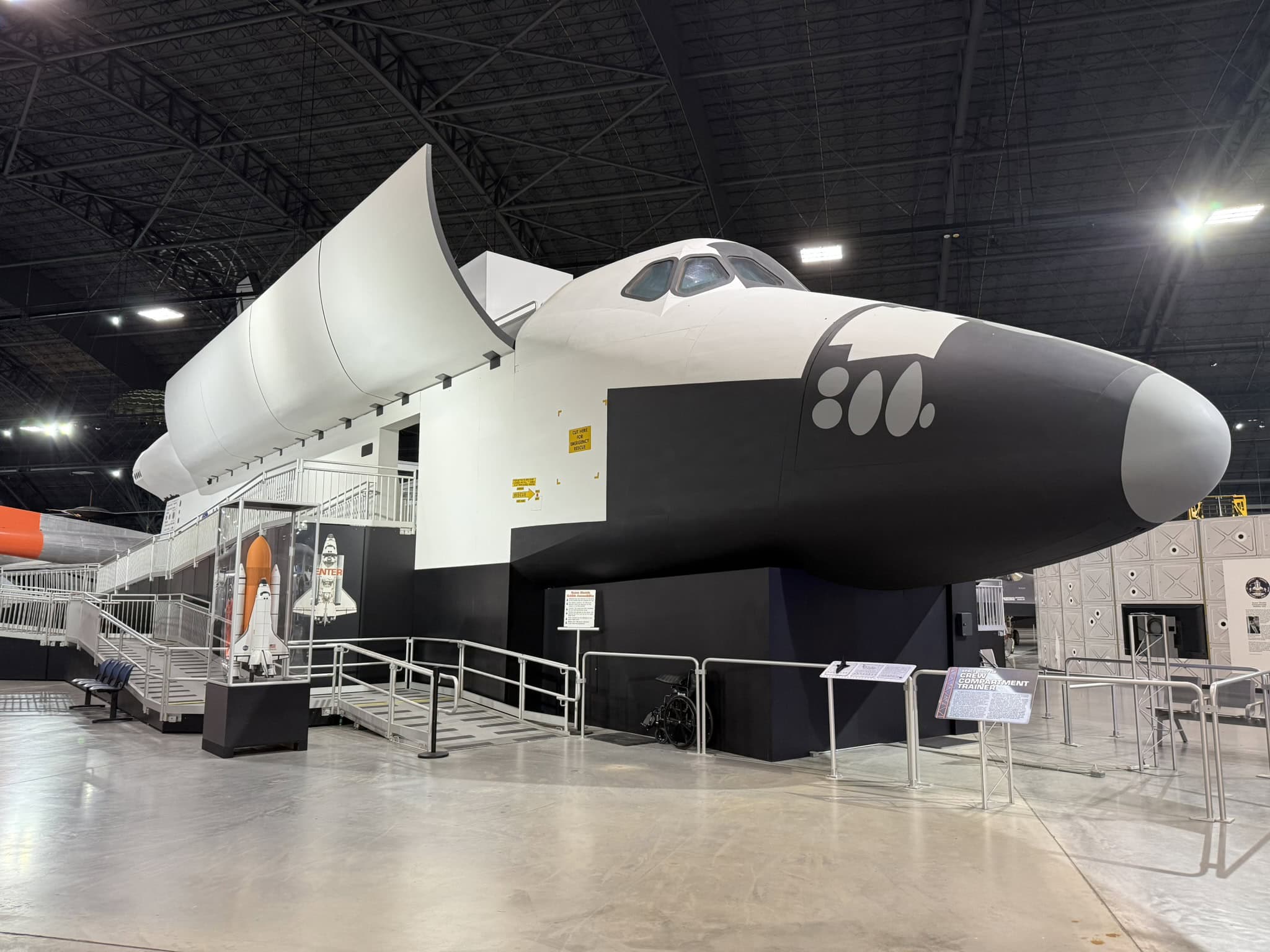
NASA Space Shuttle Demo at the National Museum of the U.S. Air Force. Taken by Harry J. Kazianis, July of 2025.
Each mission cost US taxpayers roughly $450 million. Plus, the shuttles were very limiting.
Because they were low-Earth orbiters, they did not require the same kind of heavy-lift rockets that the Apollo moon missions did. So, NASA mothballed the Saturn V heavy-lift rockets and let that important capability erode in favor of the shuttle.
Stuck in Low-Earth Orbit
Once Americans reached low Earth orbit, what could they do? Other than going to and from the ISS, not very much. And what was the point of the ISS?
Did the United States gain more from abandoning its quest to put humans on the moon (and beyond) in favor of circling the planet on a space station?
The shuttle program was meant to revolutionize human access to and operations in space by making it easier to launch from Earth and cheaper to conduct spaceflight operations.
In so doing, that would spur greater investment and expansion of humanity’s footprint in space. But that’s not what happened.
Space became an increasingly specialized field that lost its appeal. Who wants to foot the bill for $450 million per mission when all we’re doing is circling the planet?
Nixon’s Aerospace Consolation Prize
America’s shuttle program itself was a bit of a development dead end.
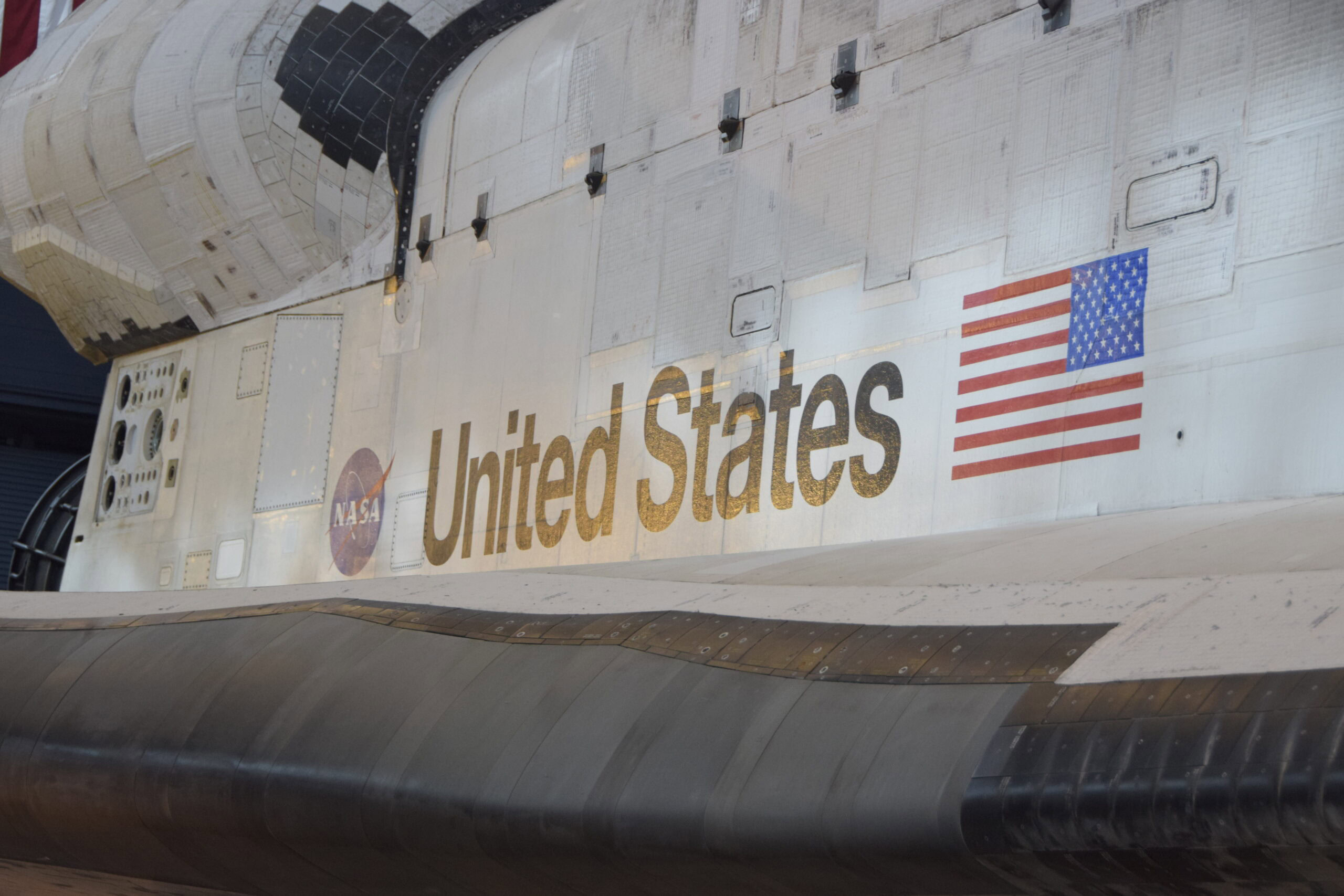
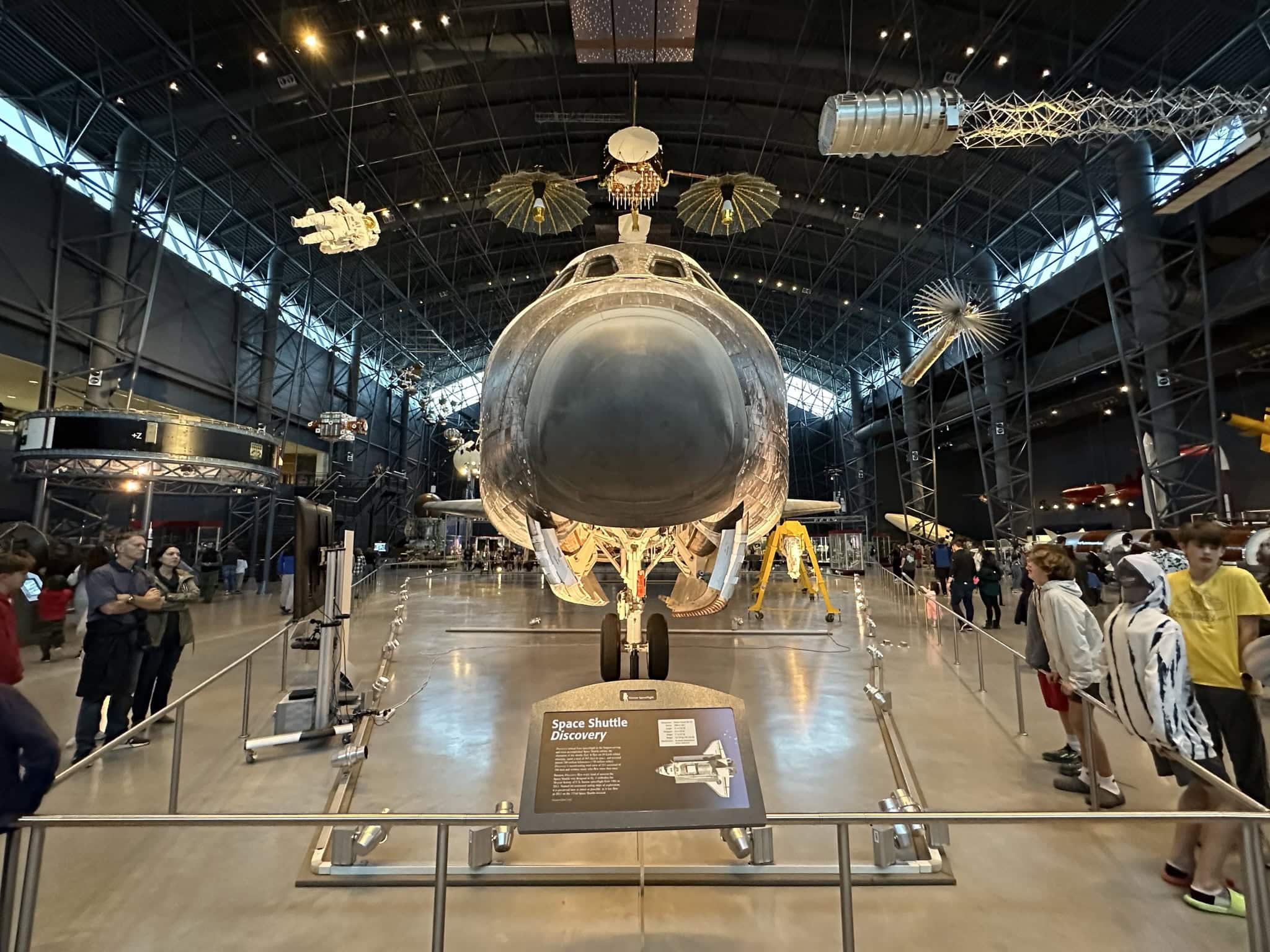
NASA Space Shuttle Discover in 2025. 19FortyFive.com Photo.
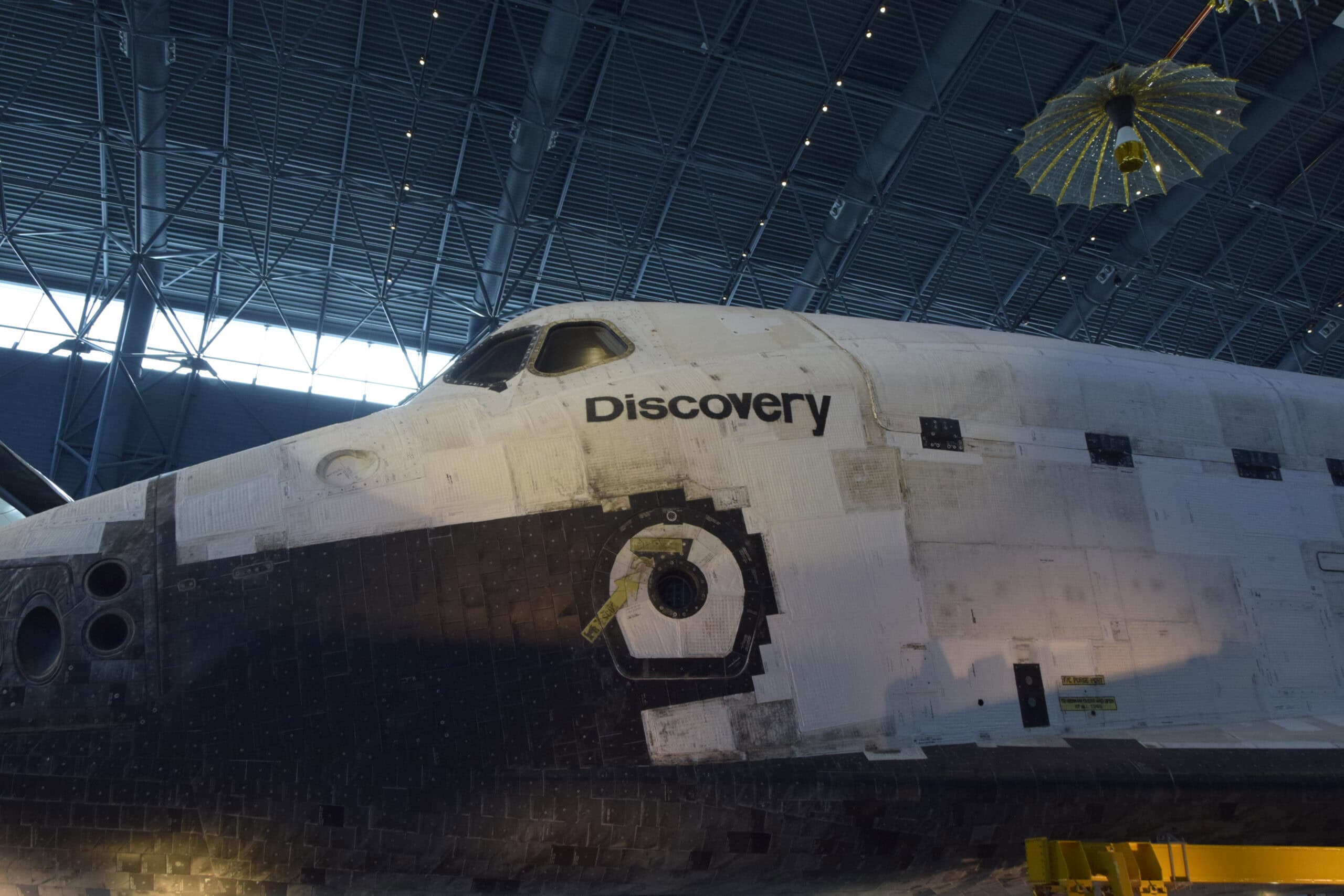
NASA Space Shuttle Discover in 2025. 19FortyFive.com Photo.
When the Apollo moon missions were winding down, there were discussions about where to go next. Would it be Mars?
Would it be the establishment of permanent American colonies on the moon?
At the same time, these important questions were being discussed, the US was pursuing projects such as the Supersonic Transport (SST).
But the shuttle itself was essentially a consolation prize that Congress handed out to the aerospace sector after it killed the National Supersonic Transport Program.
In January 1972, President Richard Nixon, a staunch supporter of the SST Program that Congress had killed the year before, gave final approval for NASA to build the space shuttle as a way to, as he put it, “preserve the continued preeminence of America and American industry in the aerospace field.”
The Shuttle and the Cold War
At first, the space shuttle became a point of contention in geopolitics. A reusable spaceplane with a large cargo hold?
To the Soviets, that looked like a space weapons platform of some kind. Could it deliver strategic payloads on the Earth below, like a bomber?
Would it be employed to place weapons in orbit?
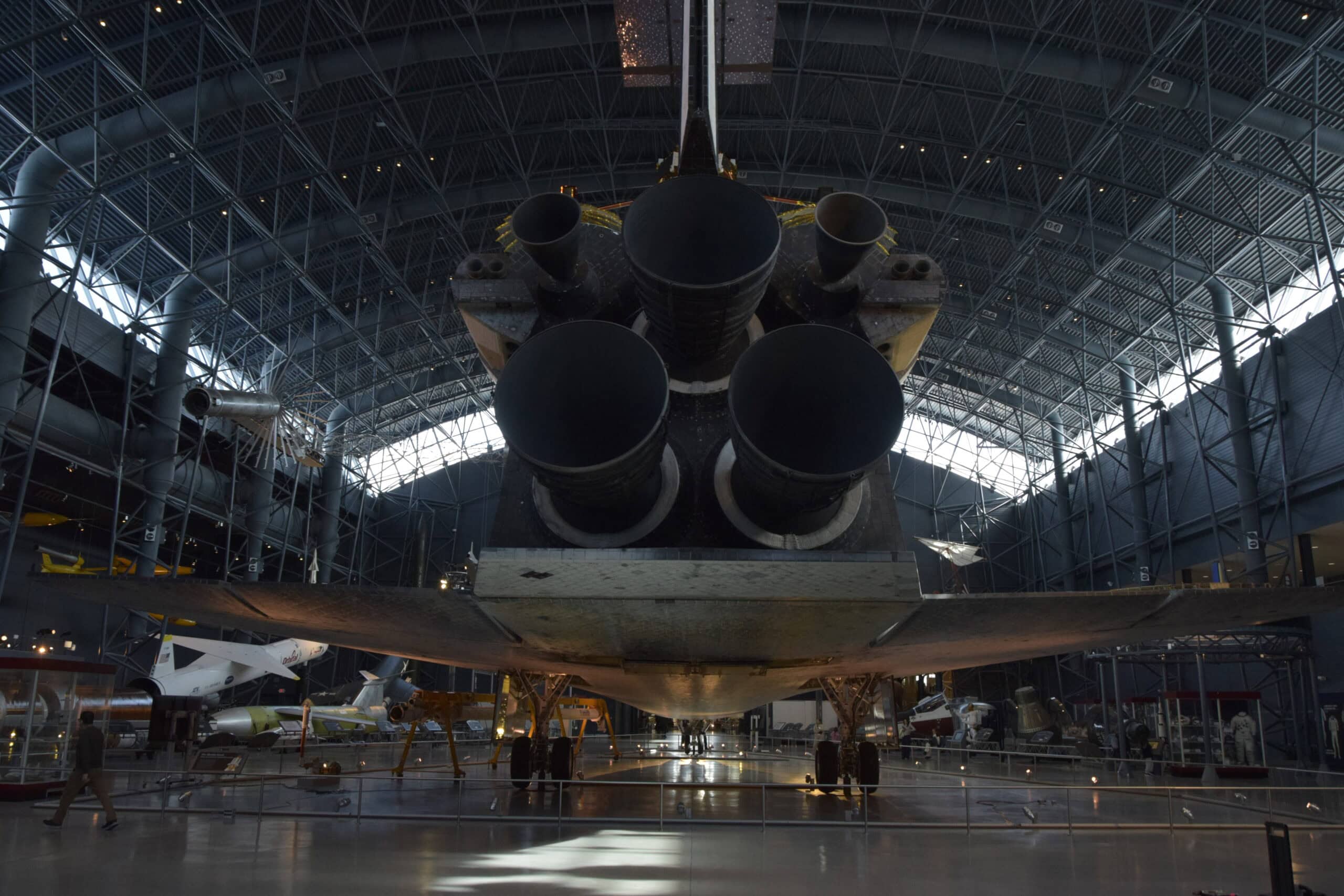
Back of Space Shuttle at Smithsonian outside of Washington, DC. Image Credit: 19FortyFive.com
And when President Ronald Reagan announced his controversial Strategic Defense Initiative (SDI), derisively called “Star Wars” by his critics, Soviet leaders were convinced it would be used as a platform to augment the SDI program in some way.
The Soviets even tried to build their own space shuttle, known as the Buran.
Some space experts, such as Anatoly Zak, have speculated that, rather than merely being a ripoff of the space shuttle, the Soviet Buran was, in many respects, better than its American counterpart.
The Battle for Low-Earth Orbit
Another reason the Americans shifted their focus from the moon and Mars to low-Earth orbit was that the Soviets, after losing the race to the moon, decided to seek dominion over low-Earth orbit.
The Soviet space agency became the master of space station development and management. The Soviets had their Salyut space station for civilian purposes.
But then they had the more secretive Almaz space station, which was an attempt to place an armed space station in orbit.
Low-Earth Orbit became the newest battlefield in the Cold War. America did not want to cede that strategic domain to the Soviets, who had spent years establishing themselves there.
The space shuttle would be America’s primary tool for ensuring US access to low-Earth orbit.
By the end of the Cold War, though, it became apparent that the space shuttle was a stopgap for NASA’s manned spaceflight program and that it desperately needed something better to replace it.
America needed to go back to outer space, not merely Earth orbit.
But American leaders couldn’t make up their minds.
And when the Cold War ended, NASA underwent the same downsizing as the rest of the government, since the Soviet threat was gone.
The country got stuck with a subpar shuttle system that was aging to boot.
After relying on the Russians for far too long, the Obama administration allowed a new startup firm, SpaceX, run by the gonzo tech guru Elon Musk, to compete for launch contracts with NASA.
It was all part of the slow but steady evolution of SpaceX becoming a primary carrier for American astronauts into space.
The Legacy of the Shuttle
The space shuttle was highly damaging to the United States’ manned spaceflight mission. It stunted the rapid, incredible development of American spaceflight that the Apollo moon missions had established.
Rather than move on to the next great achievement in space, America simply hung around in Earth orbit for about 20 years, delaying the development of a new spaceflight system capable of achieving the herculean task of putting Americans permanently on the moon or getting them to Mars.
What’s more, the cancellation of the space shuttle in 2011 was as damaging as relying on it to the extent that the United States did.
With no viable alternative, the Americans had to rely on Russia. It all finally resulted in the dynamic SpaceX being awarded the contracts needed to jumpstart SpaceX’s manned spaceflight missions.
In the end, the space shuttle was both a remarkable engineering achievement and a strategic detour.
It preserved American access to space during the Cold War and helped establish a permanent human presence in low-Earth orbit.
Still, it also redirected NASA away from the deeper ambitions that had defined the Apollo era. By prioritizing routine orbital operations over exploration beyond Earth, the United States spent decades maintaining a capability rather than advancing it.
The shuttle’s retirement exposed how little progress had been made toward a true successor.
Ironically, that crisis created the opening for SpaceX to emerge as the driving force behind a new era of American manned spaceflight–one that is once again focused on returning to the moon, reaching Mars, and restoring the spirit of exploration that once made the United States the undisputed leader in space.
About the Author: Brandon J. Weichert
Brandon J. Weichert is the Senior National Security Editor at 19FortyFive.com. He also manages The Weichert Brief on Substack. Weichert also hosts “National Security Talk” on Rumble. He is the author of four bestselling national security books, the most recent of which is A Disaster of Our Own Making: How the West Lost Ukraine (Encounter Books). Follow him via Twitter/X @WeTheBrandon.