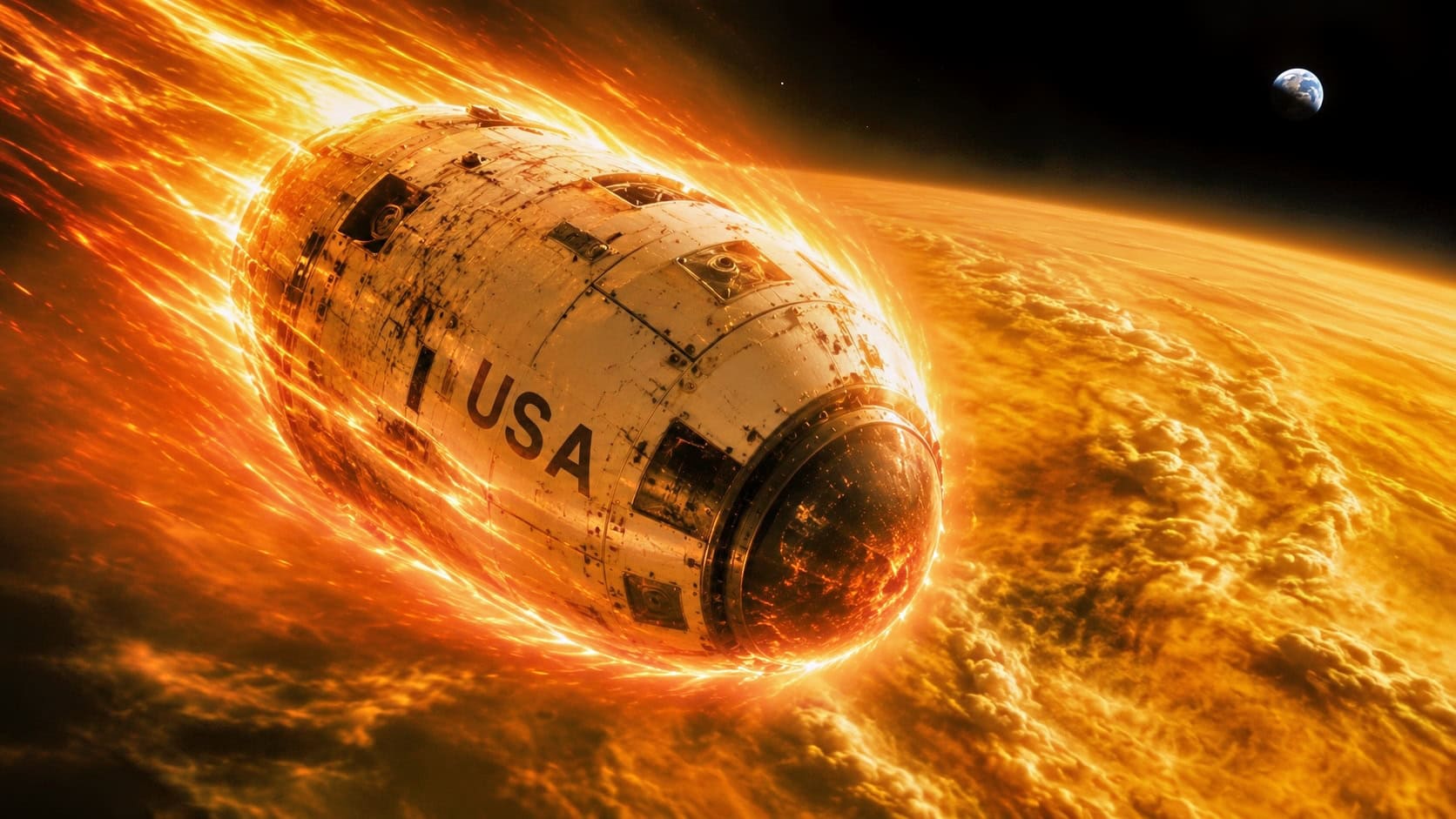
People today are fixated on Mars. The Red Planet has long captured the imagination. A giant desert in space is within humanity’s reach.
But there is another planet in our Solar System that is nearby–and quite different from the red deserts of Mars, the fourth planet from the Sun.
That is the world of Venus, the second planet from the Sun.
The Planet Everyone Forgot
Long dubbed “Earth’s sister planet” because of its size and the fact that it has an atmosphere, Venus is a world long shrouded in mystery (because of its impenetrable, dense atmosphere under which Earth’s sister is entombed).
At one time, Venus captured people’s imagination.
The famous saying “Men are from Mars, women are from Venus” is but one example of how strongly Venus captured the public’s imagination.
Since the advent of modern probes, however, people have shifted their focus to Mars, viewing it as the safer option for exploration.
You see, humanity did travel to Venus a handful of times. Probes in the 1970s were sent to see what was beneath that dense layer of atmosphere.
Venus: Earth’s Twisted Sister
The results were horrific.
Every probe sent to fly within the roiling Venusian atmosphere was destroyed.
A Soviet probe managed to land on the surface, collect haunting images of the broken landmasses, scraggly mountains, and rocky facades, and the greenish-orange sky before it was ultimately crushed like a can.
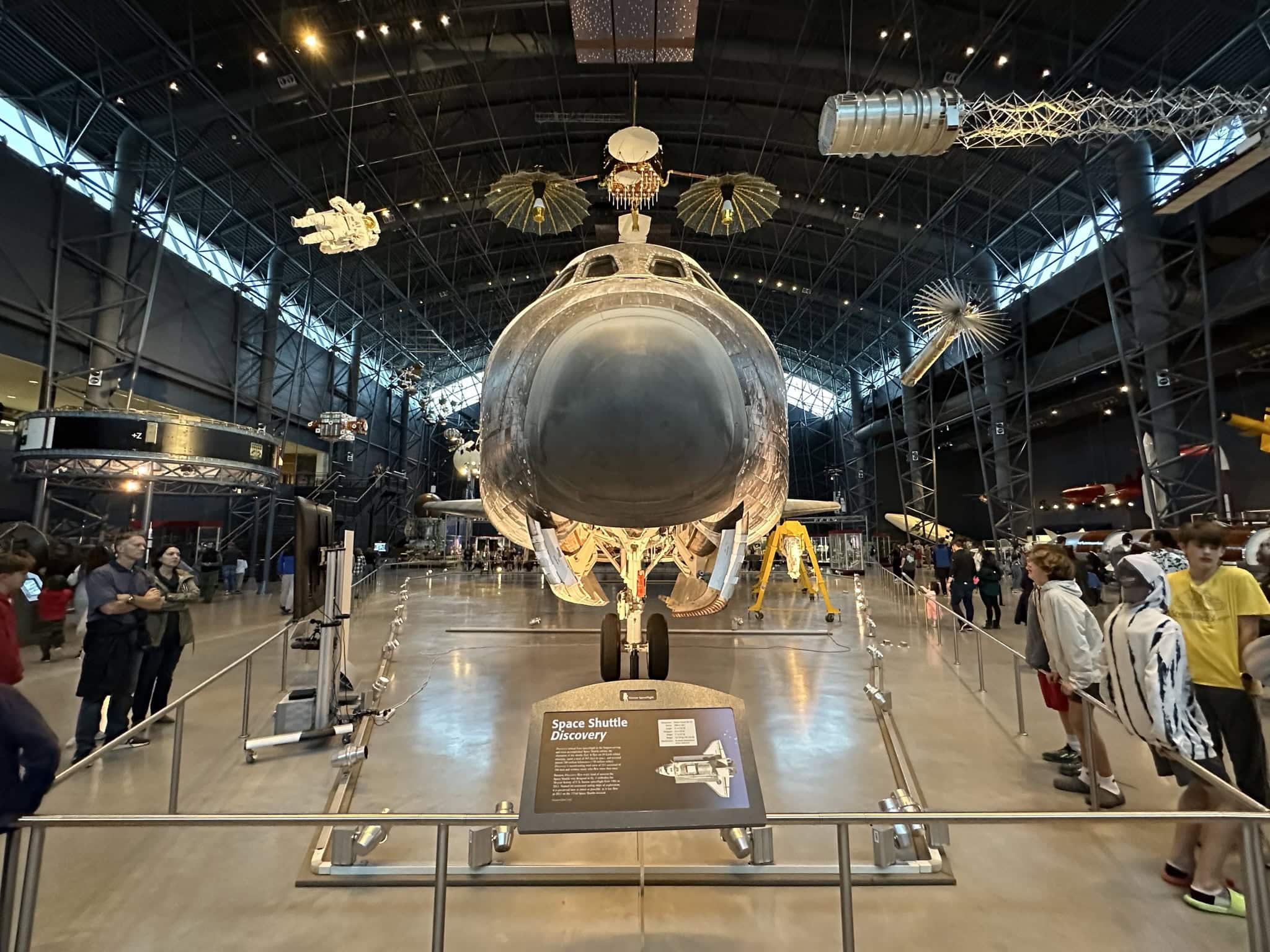
Space Shuttle Photo from back in 2022. Harry J. Kazianis Original Photo.
You see, while Venus is considered “Earth’s sister planet,” it’s the twisted, older sister planet.
Raging with violence and roiling with a manic atmosphere. Any craft that dares venture inside Venus is irretrievable.
Yes, the planet has an atmosphere as the Earth does. But that’s about the only similarity it has.
Venus is subject to temperatures of more than 475 degrees Celsius once you land on the surface.
The atmosphere is essentially a pressure cooker, 90 times greater than Earth, to be exact, for anything on the surface, too.
The world is dominated by a runaway Greenhouse Effect that essentially traps excess heat. It recycles it in a very destructive way throughout the planet, which is why it’s so hot on the surface.
The Surprising Case for Venus
Yet above the clouds, a surprisingly Earth-like sky lies high in the Venusian atmosphere.
The skies are cerulean blue there, and the air might be breathable, as it is above the acid rain that pours from the thick layer of atmosphere choking the surface below.
But Venus is more like the planet Earth than Mars.
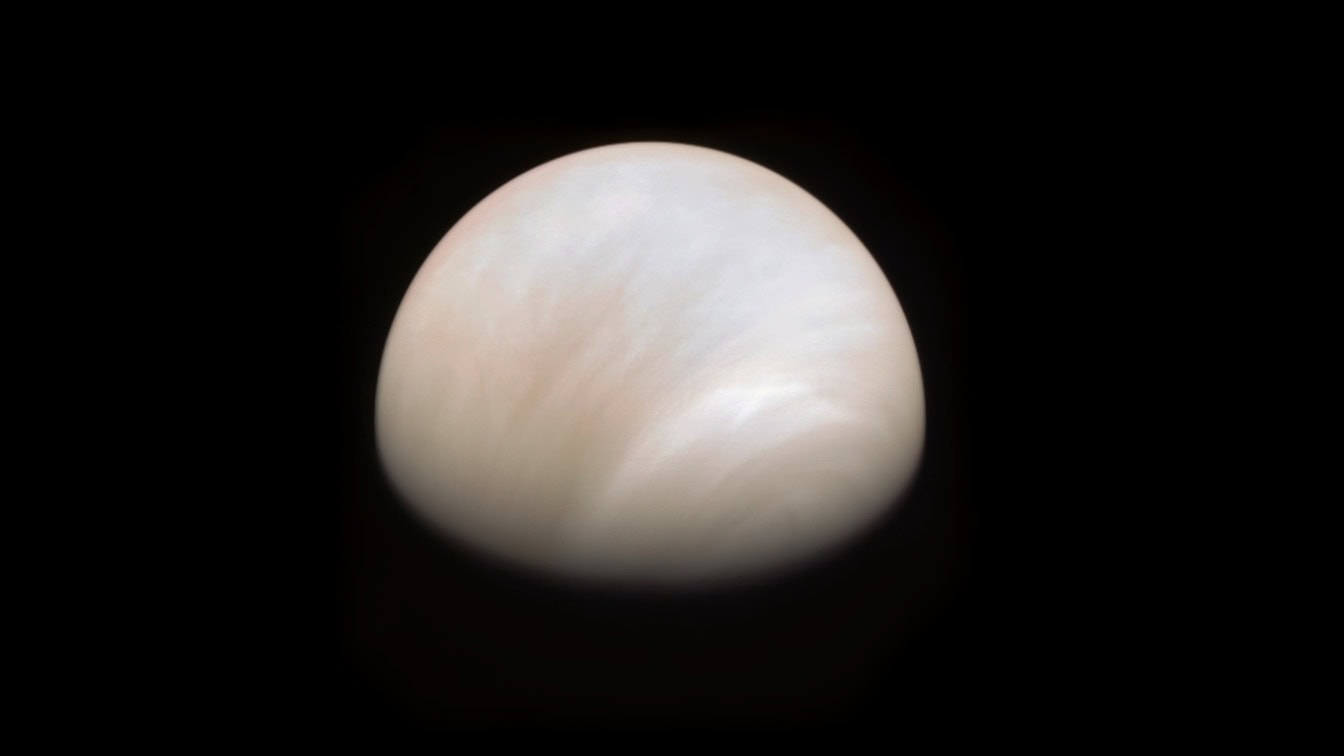
Venus. Creative Commons Image.
In fact, Japan recently sent a probe to Venus to study its atmosphere. There were legitimate scientific papers printed in the last few years theorizing that there might actually be life in the dense clouds of Venus.
Meanwhile, some dreamers at NASA and elsewhere have called for the creation of great airships to be deployed and manned by pioneering astronauts who would conduct studies to learn about the runaway Greenhouse Effect that has turned Venus into a cosmic hell.
Indeed, by studying those processes on Venus, scientists on Earth might better discover and understand similar processes here.
Why Venus Could Be Cheaper Than Mars
More importantly, a manned mission to Venus would be much cheaper than one to Mars. After all, Venus is closer to Earth than Mars.
The round-trip time would be 30-50 percent shorter. That shorter trip would drastically reduce the weight of food, water, oxygen, and radiation shielding required to keep astronauts alive aboard.
The real cheapness of any manned expedition to conduct a flyby of Venus would require less orbital energy to reach from Earth, meaning smaller, cheaper rockets can carry the same amount of payload.
And since Venus is closer to the sun, any manned mission could enjoy four times more solar energy than a trip to Mars would.
This allows the spacecraft to use more efficient solar-powered propulsion systems.
Cry, HAVOC, and Let Slip the Airships for Venus
If NASA wanted to be really bold–and, boy, do most Americans wish they’d be–then they’d look seriously at the High Altitude Venus Operational Concept (HAVOC), which essentially calls for the establishment of floating bases in the Earth-like high atmosphere of Venus.
Essentially, an atmospheric airship would float about the calm high atmosphere and monitor and study the roiling lower atmosphere.
At 30 miles above the surface, the crushing pressure drops to Earth’s level, and temperatures range from a cool 68 degrees Fahrenheit to a balmy 86 degrees Fahrenheit.
A large balloon filled with standard breathable air would lift a heavy payload automatically, and there’d be no decompression risk.
The pressure inside the airship would match the outside pressure, and a puncture, unlike on Mars, would not cause an explosive blowout in the habitat.
Astronauts would have hours to patch any hole that did occur with that all-expensive technology known as duct tape.
What’s more, the astronauts would be better defended from radiation by Venus’ natural atmosphere.
Mars, on the other hand, has almost no radiation shielding, requiring astronauts to build heavy underground habitats or use thick lead walls.
Plus, at the height at which any NASA airship would operate, those airships would not require heavy insulation or energy-intensive heaters.
The outside temperatures would be perfect room temperature, further driving down the costs.
Since Venus has 90 percent of Earth’s gravity, astronauts would remain healthier. Long-term exposure to lower gravity harms human health.
On Mars, astronauts would have to endure lower-gravity environments, which would negatively impact their overall health.
The Risks Are Real
Of course, it would not be without risks.
For starters, Venus’s acid rain corrodes everything.
So, NASA would need to make the airship from specialized materials, such as Teflon or metal oxides, to prevent it from simply disintegrating.
If one were to fall from the ship, even if they had safety gear, like a parachute, they’d be floating into a nightmare that would kill them within minutes.
It’d be hard to design a spacecraft capable of dragging a massive airship to Venus and then dropping it into the planet’s atmosphere at 16,000 miles per hour, hoping a supersonic parachute would deploy properly before the whole airship fell to the hellish surface and was destroyed.
Venus Could Be the Better First Step
Even so, all of that is probably more feasible and cheaper in the near term than a permanent manned settlement on Mars.
Venus isn’t just a peripheral thought.
That is probably a better target for human colonization (in the upper atmosphere) than anything being discussed on Mars.
NASA needs a win.
They need to reinvigorate public interest in space. Landing on the moon will help with that. But we’ve already been there. Americans want to go to new territory.
Mars is exceptionally difficult under current conditions. Closer to Venus might be more doable. And that will give us a major win in the public’s eye.
About the Author: Brandon J. Weichert
Brandon J. Weichert is the Senior National Security Editor at 19FortyFive.com. He also manages The Weichert Brief on Substack. Weichert also hosts “National Security Talk” on Rumble. He is the author of four bestselling national security books, the most recent of which is A Disaster of Our Own Making: How the West Lost Ukraine (Encounter Books). Follow him via Twitter/X @WeTheBrandon.