
It was the go-go 1990s. President Bill Clinton was in the White House, and the nation was more united, with a rising economy lifting all boats. Plus, the Cold War had ended years earlier, and the country could focus its money, time, and resources on the space program.
What emerged from the efforts of scientists, engineers, and technicians at NASA was extraordinary. The mission was to venture to Mars, and the space agency set out to show the world that it could explore other planets beyond the Moon, and do it on a tight budget.
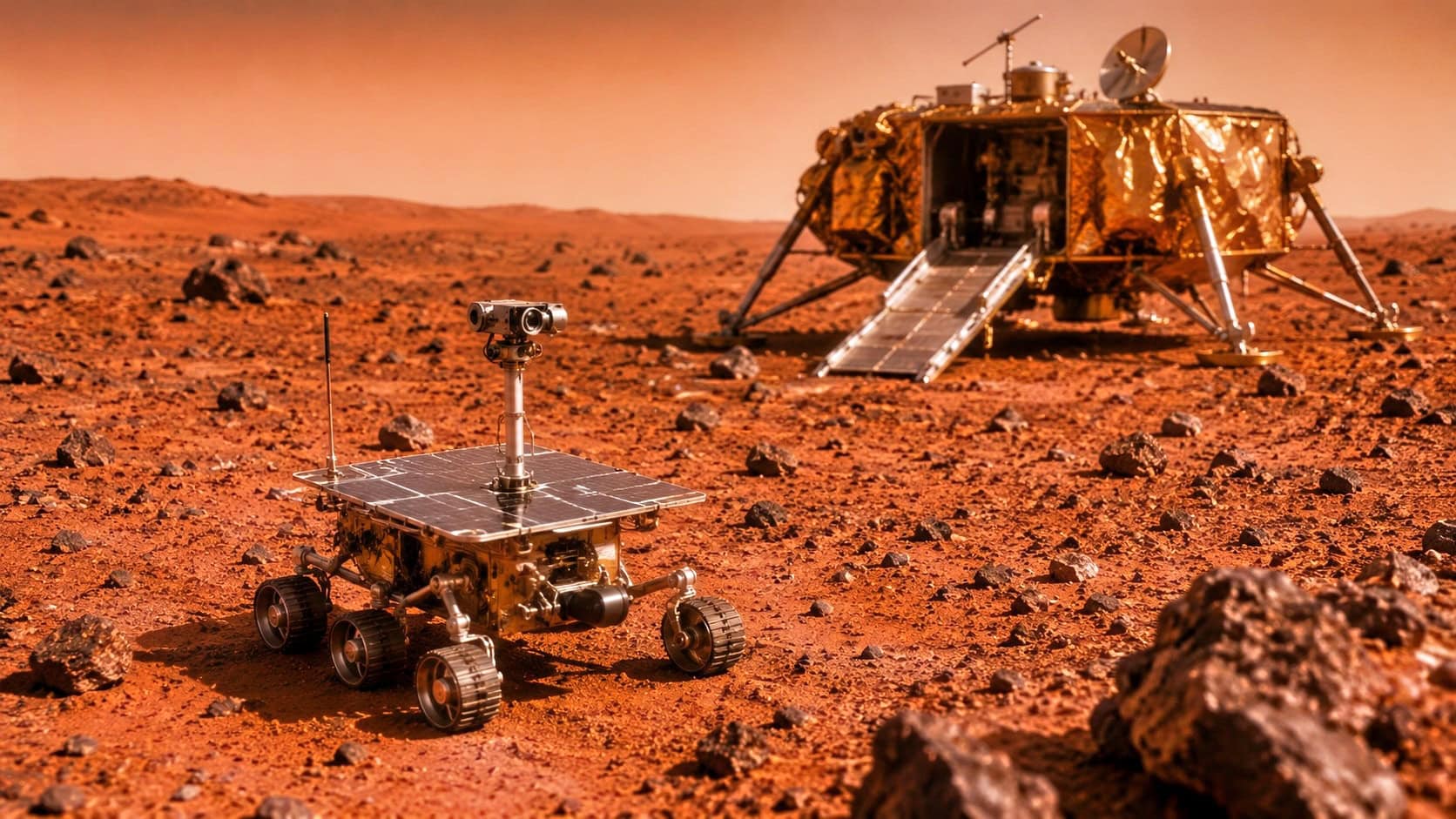
Mars Pathfinder Lander from 1990s NASA. Image Credit: Banana Nano.
Mars: This Was Not Going to Be Easy
The Mars Pathfinder mission was certainly ambitious. Could NASA actually land a rover on the Red Planet? This was going to require the agency’s best minds to ensure that the launch, journey, and landing of an unmanned surface craft were feasible. Moreover, the spacecraft had to send information back to Earth and survive one of the harshest environments in the solar system.
How It Rocketed Into Space
Mars Pathfinder was the spacecraft that carried a small rover named Sojourner, a science “buggy” that was highly advanced for its era. Pathfinder had to be launched first. On December 4, 1996, a Delta II 7925 rocket took off from Cape Canaveral, Florida. Pathfinder was on its way, with Sojourner, about the size of a microwave oven, tucked aboard.
It Was a Present to the American People
It landed on Mars on July 4, 1997. The landing site was called Ares Vallis. The whole nation took notice and celebrated not only the United States’ Independence Day, but a feat of American ingenuity not seen in years.
The Robot Showed that Mars Could Be Conquered
NASA originally just wanted the Pathfinder mission to demonstrate technology. The space agency called this an “instrumented lander and a free-ranging robotic rover.” It was not going to be a piece of cake to ensure this collected the kind of scientific data that could change how we envisioned the Red Planet.
“Included were scientific instruments to analyze the Martian atmosphere, climate, geology, and the composition of its rocks and soil. Mars Pathfinder used an innovative method of directly entering the Martian atmosphere and landing,” according to NASA.
The Data Collected Was Awe-Inspiring
Pathfinder and Sojourner were an unmitigated success. The mission returned “2.3 billion bits of information, including more than 16,500 images from the lander and 550 images from the rover,” NASA said.
Sojourner also conducted experiments on the rocks and soil that geologists loved. Scientists concluded from these tests that Mars was warmer and wetter billions of years ago.
How Did the Spacecraft Land?
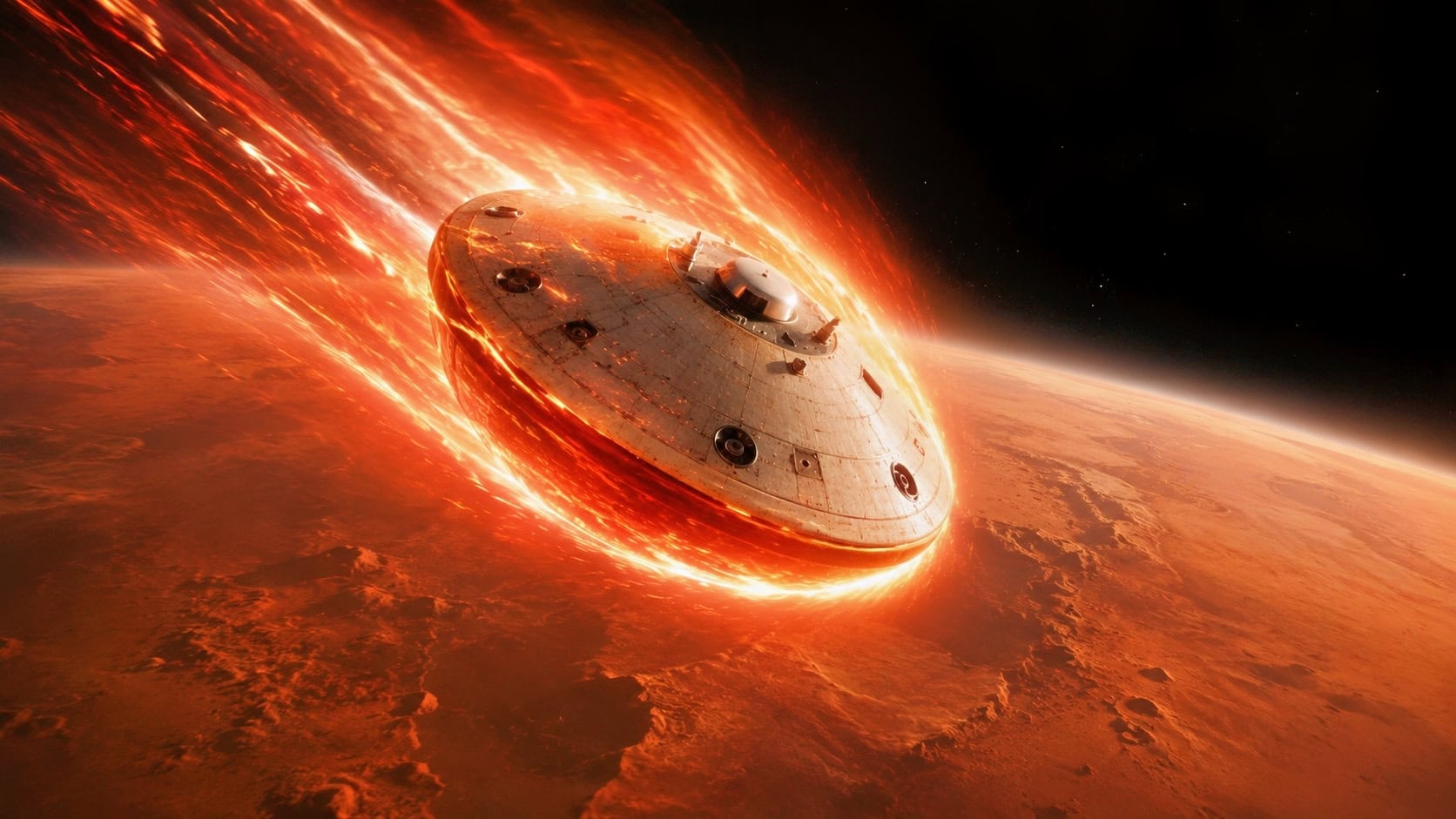
How did the lander and rover descend onto Mars? This was a huge display of engineering prowess. Something had to slow the descent and protect the spacecraft from the heat of entry. Engineers were not sure at first what to use to make a successful landing.
Counter-thrusters would not be powerful enough to slow the descent on their own. The Pathfinder team decided that a large parachute would do much of the job. But the parachute was only part of it; the timing had to be perfect, and the lander and rover were heavy, carrying all the instruments and the onboard laboratory. The impact would also be dangerous, so engineers designed a cocoon of airbags to cushion the landing.
A Bouncing Space Beach Ball
The spacecraft came in at about 31 miles per hour. That doesn’t sound fast at first, but consider the payload and weight that could have crushed the lander when it hit the surface. Once the lander struck Mars, it bounced 15 times. One bounce reached 50 feet in the air.
NASA said it looked like a giant beach ball bouncing across the surface, landing and then leaping upward again. What if the instrumentation and payload had been damaged? The NASA engineers had rehearsed the landing many times, but the pressure was on to get it right for a successful Pathfinder landing.
Would Sojourner Really Work?
It was a harrowing wait of about a day to see if Sojourner could deploy from the lander. Finally, the rover rolled down its ramp and onto Martian soil. The landing site was a good one. There were plenty of rocks to study and analyze. Geologists thought that this area of Mars once had a huge flood.
Sojourner quickly began using its Alpha Proton X-ray Spectrometer and three cameras. Instrumentation also measured the atmosphere and collected weather data.
The rover found that “airborne dust is magnetic, and its characteristics suggest the magnetic mineral is maghemite, a very magnetic form of iron oxide, which may have been freeze-dried on the particles as a stain or cement. An active water cycle in the past may have leached out the iron from materials in the crust,” NASA reported.
Pathfinder was a huge success. It cemented NASA’s fascination with Mars. The entry was dangerous, but the parachute and airbags worked. The mission handled some of the most difficult maneuvers on the planet’s surface and conducted valuable experiments. Cheaply built and ahead of its time, it showed observers and scientists that ambitious planetary exploration was possible in the 1990s, and it paved the way for the Mars missions that followed.
About the Author: Brent M. Eastwood, PhD
Author of now over 3,500 articles on defense issues, Brent M. Eastwood, PhD, is the author of Don’t Turn Your Back On the World: A Conservative Foreign Policy and Humans, Machines, and Data: Future Trends in Warfare, plus two other books. Brent was the founder and CEO of a tech firm that predicted world events using artificial intelligence. He served as a legislative fellow for US Senator Tim Scott and advised the senator on defense and foreign policy issues. He has taught at American University, George Washington University, and George Mason University. Brent is a former US Army Infantry officer. He can be followed on X @BMEastwood.