
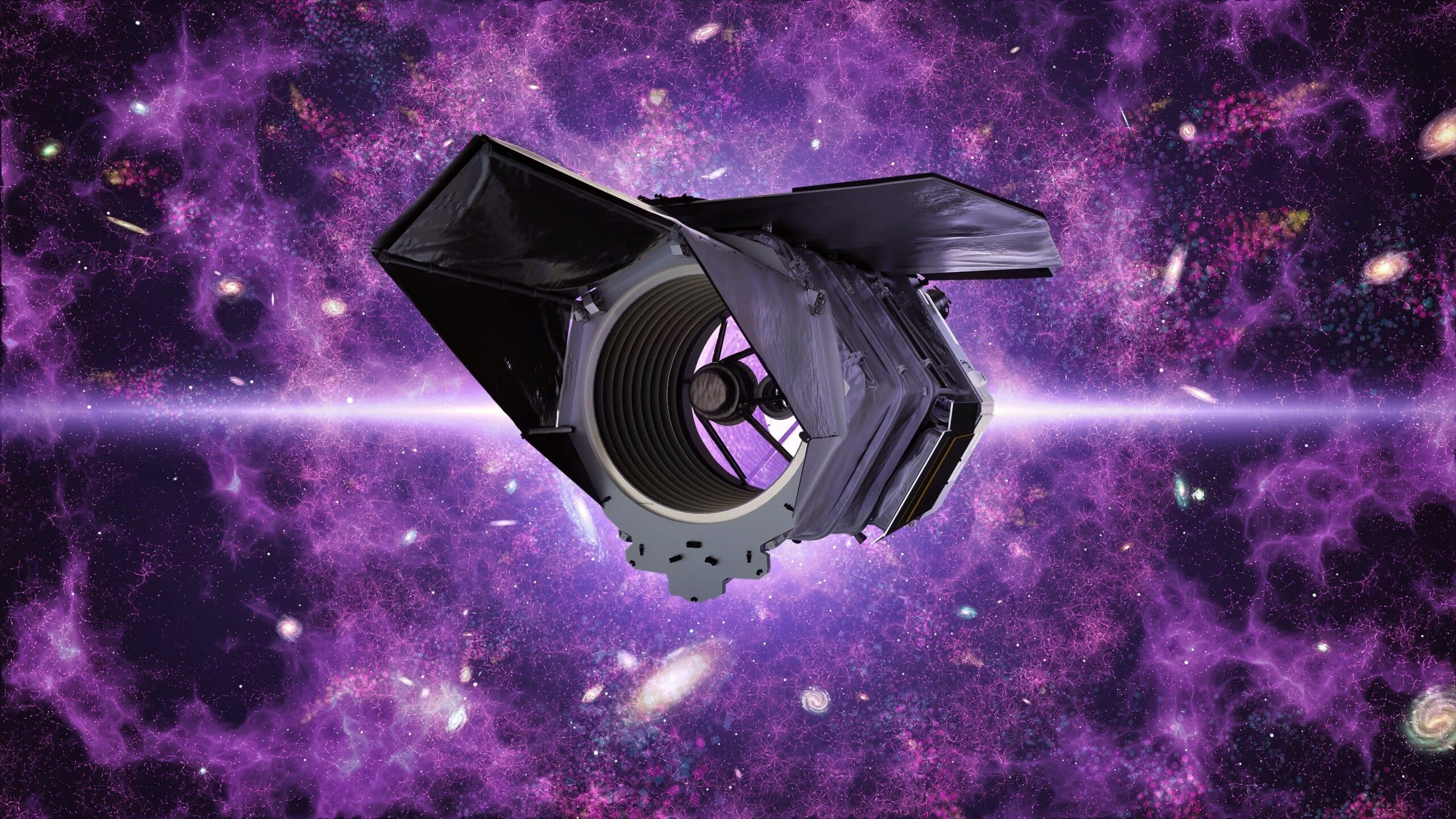
The Nancy Grace Roman Space Telescope is a NASA infrared space telescope whose construction was completed on November 25, 2025, and is scheduled to launch to a Sun–Earth L2 orbit on August 30, 2026, aboard a SpaceX Falcon Heavy rocket.
Designed to explore dark energy, dark matter, and exoplanets, it features a 2.4-meter mirror and a field of view at least 100 times larger than the Hubble Space Telescope.
Formerly known as WFIRST (Wide-Field InfraRed Survey Telescope), the mission was renamed to honor Dr. Nancy Grace Roman, NASA’s first Chief of Astronomy and a key figure who championed space-based observatories.
It is stationed at Lagrange point 2 (L2), roughly 1 million miles away from Earth.
Who Was Dr. Nancy Grace Roman?
Dr. Roman was NASA’s first Chief of Astronomy and was also known as the “Mother of Hubble,” as in the Hubble Space Telescope.
But she was a woman who overcame obstacles at every turn, trailblazing a path that wasn’t open to women in her day.
“I was told from the beginning that women could not be scientists,” she often said. In high school, her guidance counselor discouraged her from taking algebra over Latin, as she was keenly interested in astronomy from an early age, when her mother would point out the stars and Constellations at night.
Roman received her bachelor’s in astronomy from Swarthmore College in 1946 and her doctorate in astronomy from the University of Chicago in 1949. Six months after NASA was formed, she was hired by the agency to create a space-based astronomy program.
She championed efforts to build the Hubble Space Telescope and led her colleague, and future Hubble Chief Scientist, Ed Weiler, to nickname her the “Mother of Hubble.”
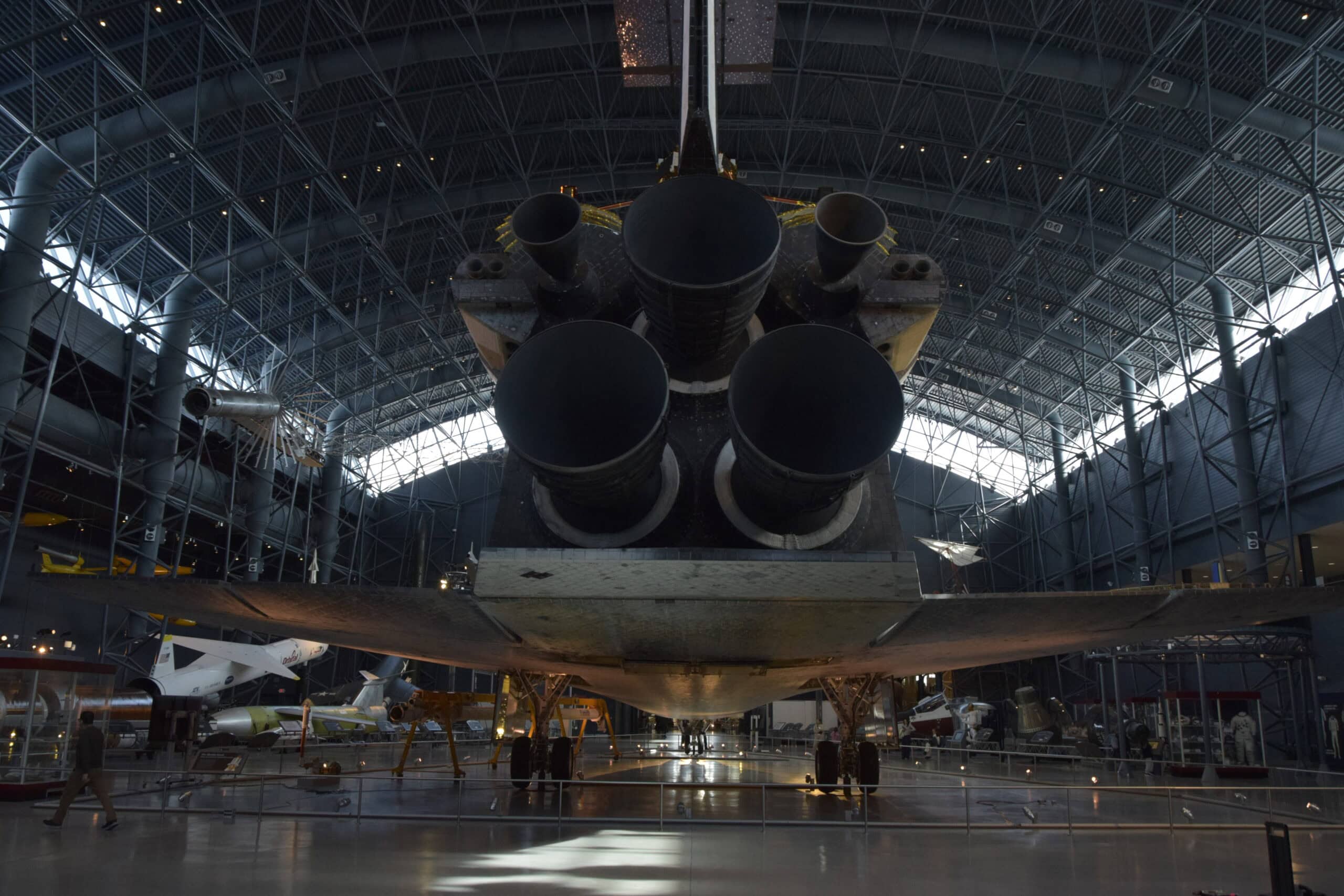
Back of Space Shuttle at Smithsonian outside of Washington, DC. Image Credit: 19FortyFive.com
She retired early from NASA to care for her sick mother; however, she continued consulting with NASA and later returned to serve as director of the Goddard Space Flight Center’s Astronomical Data Center.
She later taught and consulted at NASA before passing away on Christmas Day 2017 at the age of 93.
The Roman Space Telescope Will Outpower The Hubble
The NASA Nancy Grace Roman Space Telescope arrived at the Kennedy Space Center on Sunday, June 21, after completing a barge voyage from Goddard Space Flight Center in Maryland, and is currently in the midst of a 70-day final processing period before a liftoff aboard a SpaceX Falcon Heavy on August 30.
The $4.3 billion observatory is currently located at the Kennedy Payload Hazardous Servicing Facility and is one of NASA’s most powerful upcoming observatories, designed to map the cosmos on a massive scale.
Its primary mirror is 2.4 meters (7.9 feet) in diameter, but its real power lies in its unparalleled surveying speed—it can survey the sky over 1,000 times faster than the Hubble Space Telescope.
The goal of the observatory is to unravel the mysteries of the universe’s accelerated expansion and map cosmic structures by measuring light from over a billion galaxies. Another goal is to conduct an exoplanet census by performing wide-field microlensing surveys of the inner Milky Way to discover thousands of planets beyond our solar system.
TechTimes added that another mission is to determine why the universe’s expansion is accelerating, and whether dark energy is a fixed constant or changes over time.
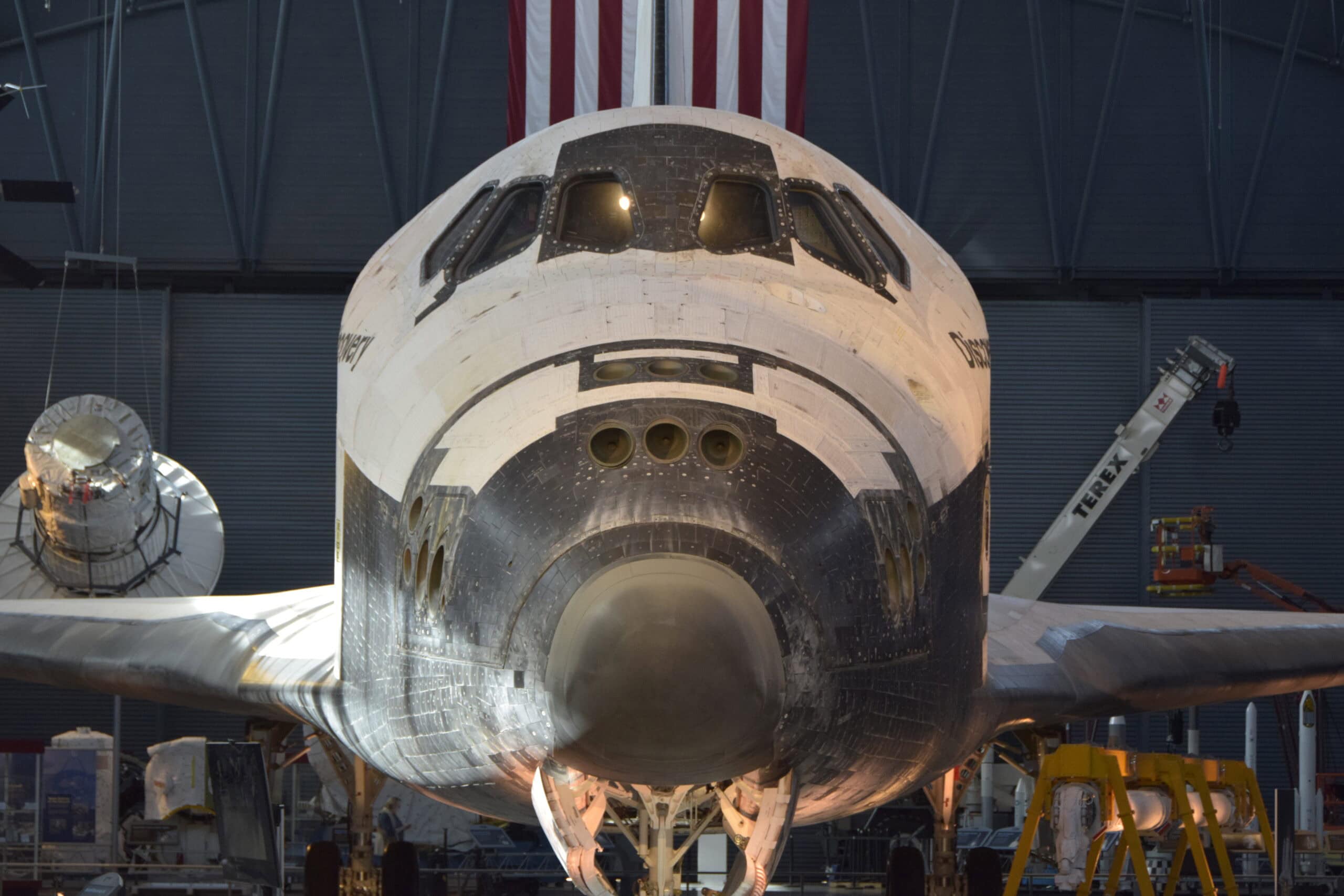
Smithsonian Space Shuttle Display in Washington, DC. Image Credit: 19FortyFive.com
The massive 300-megapixel camera that serves as the observatory’s powerhouse will take panoramic images with the same crisp resolution as the Hubble telescope, but covering over 100 times more sky per snapshot.
The “Wide Field Instrument” And Why It Is Important
The massive camera, known as NASA’s Wide Field Instrument, is built around 18 Teledyne H4RG-10 detectors arranged in a 6×3 mosaic array.
Each detector is a 4,096-by-4,096-pixel mercury cadmium telluride (HgCdTe) sensor — the same semiconductor family used in night-vision systems, according to Tech Times.
The speed at which the Roman Space Telescope operates is what sets it apart.
“What takes Roman a year to observe, it would take Hubble thousands of years,” said Lucas Paganini, the Roman’s executive for NASA.
NASA says that the Wide Field Instrument will also allow Roman to measure the matter in hundreds of millions of distant galaxies through a phenomenon dictated by Einstein’s theory of relativity.
Massive objects like galaxies curve spacetime, bending light passing near them and creating a distorted, magnified view of distant galaxies behind them.
NASA says scientists from around the world will be able to use the observatory to study the cosmos independently, from the nearest exoplanets out to clusters of distant galaxies.
It will provide Earth’s scientists with a much bigger, clearer picture “of the universe and help us answer some of the most profound questions in astrophysics, such as how the universe evolved into what we see today, and what its ultimate fate could be.”
About the Author: Steve Balestrieri
Steve Balestrieri is a National Security Columnist. He served as a US Army Special Forces NCO and Warrant Officer. In addition to writing on defense, he covers the NFL for PatsFans.com and is a member of the Pro Football Writers of America (PFWA). His work was regularly featured in many military publications.