
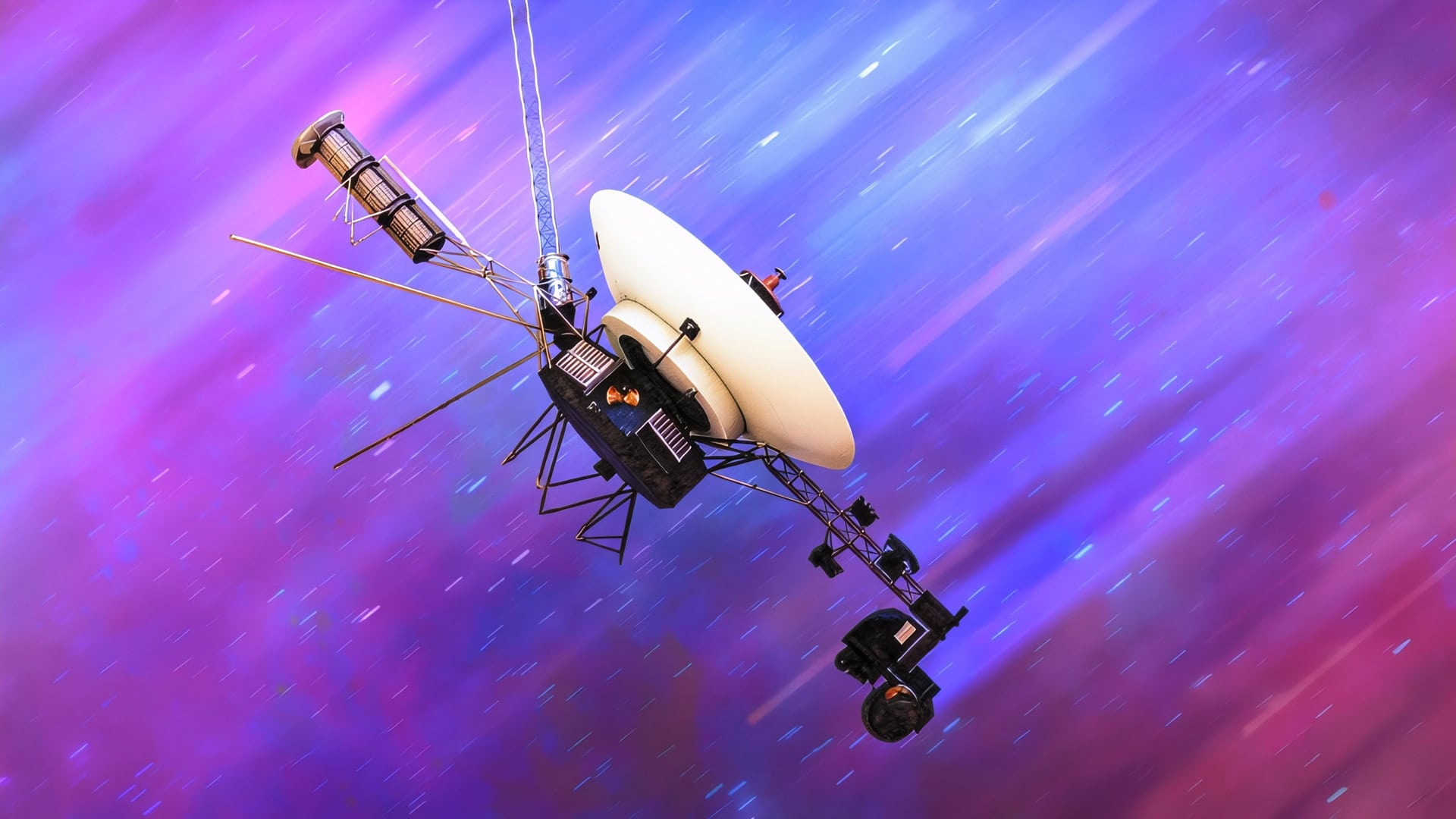
Roughly once every 176 years, the four giant planets of the outer solar system, Jupiter, Saturn, Uranus, and Neptune, swing into an arrangement that lets a single spacecraft visit all of them in a single journey, using the gravity of each world to slingshot itself onward to the next without burning fuel. The last time that window opened was the late 1970s, the first moment in history that humanity had both the rockets and the navigation to use them. NASA’s response was to nearly throw away the chance.
The ambitious original plan to tour all the outer planets was canceled in 1971 to help pay for the Space Shuttle, and was cut down to a cheaper, safer mission to just Jupiter and Saturn.
The only reason anyone ever reached Uranus and Neptune is that engineers at the Jet Propulsion Laboratory built one of the two probes, Voyager 2, durable enough and adaptable enough to make the full tour anyway, kept its path to the outer planets open, and won approval to send it onward once it had proven itself. Voyager 2 became the only spacecraft in history to visit all four giant planets, and the only one ever to reach Uranus or Neptune at all. We have not been back to either since, and the alignment that made the trip possible will not return until around the year 2150.
The Alignment That Comes Once Every 176 Years
In 1964, a summer student at JPL named Gary Flandro was assigned to study possible routes to the outer planets, and he found something remarkable. An alignment of Jupiter, Saturn, Uranus, and Neptune in the late 1970s would allow a single spacecraft to swing from one planet to the next, using each world’s gravity as a free boost. That particular arrangement of the outer planets happens only once every 176 years.
The timing was not negotiable. The planets set the schedule, and the launch had to happen in the late 1970s or not at all for another century and a half, which is why both Voyager spacecraft left Earth in 1977. Voyager 2 launched first, on August 20, and Voyager 1 followed 16 days after its twin, on September 5, on a faster track that would reach Jupiter and Saturn sooner.
How A Planet Becomes A Free Engine
The technique that made the journey possible is the gravity assist. As a spacecraft passes a planet, the planet’s gravity bends its path and increases its speed relative to the Sun, transferring a tiny fraction of the planet’s enormous orbital momentum to the probe and slingshotting it onward faster, all without spending fuel. Flandro himself summed up the trade in plain terms, that the spacecraft speeds up while the planet slows down by an amount far too small to measure. The payoff is enormous.
A direct flight to Neptune, burning conventional fuel, would have taken about 30 years, but by riding the gravity of each planet in turn, Voyager 2 made the trip in 12 years. The method was not just theory. NASA had already tested the slingshot principle with Mariner 10, using Venus’s gravity to redirect the probe to Mercury in 1974, proving that a spacecraft could use one planet’s pull to reach another.
The Grand Tour NASA Canceled
The original vision was far grander than the mission that flew. Called the Grand Tour, it proposed sending two pairs of advanced spacecraft, the Thermoelectric Outer Planet Spacecraft, to survey all the outer worlds from Jupiter out to Pluto.
The price, around a billion dollars, was its undoing. The plan proved too costly at a moment when NASA’s budget was shrinking, and the agency was fighting to fund the new Space Shuttle. Although NASA submitted a budget request for the extended Grand Tour in September 1971, NASA Administrator James Fletcher learned in December that President Nixon would not pay for both the tour and the Shuttle.
In December 1971, the Grand Tour was canceled, and in its place, NASA approved a deliberately modest pair of probes derived from the earlier Mariner spacecraft, officially scoped as a mission to Jupiter and Saturn only, which became the Voyager program.
The Capability Built In Anyway
Here is where the engineers made the difference. The mission they were funded to fly went only to Jupiter and Saturn, and the spacecraft were built to last just about five years, enough to complete that prime mission. But JPL designed the probes to be more capable and more durable than that limited job required, and kept Voyager 2 on a trajectory that preserved the option of continuing to the outer planets.
The four-planet tour was never a secret hidden from Washington. It was an acknowledged possibility, built into the hardware and the flight path, that NASA would decide on later. As Voyager project scientist Ed Stone described it, the mission was approved for Jupiter and Saturn, and if that prime mission succeeded, NASA would then decide whether to continue on to Uranus and Neptune. The capability was engineered against the official scope, waiting to be used if the chance survived.
The Titan Gamble That Freed Voyager 2
Whether Voyager 2 ever got to Uranus and Neptune came down to a gamble at Saturn, and it hinged on the other spacecraft. Voyager 1, on its faster track, was aimed at a close flyby of Saturn’s giant moon Titan, which was known to have a thick atmosphere and was considered too important to skip. But that Titan flyby required a path that would bend Voyager 1 up and out of the plane of the planets, ending its ability to visit anything else.
The catch was that if Voyager 1 failed to get the Titan data, Voyager 2 would have to be retargeted to Titan itself, sacrificing any chance at the outer planets. Voyager 2’s continuation to Uranus and Neptune depended entirely on Voyager 1 succeeding first.
Voyager 1 made its Titan flyby in November 1980 and succeeded, taking the south-polar passage that redirected the spacecraft northward out of the planetary plane and freed its twin. On January 8, 1981, with the Titan objective secured, NASA approved Voyager 2 to hold the trajectory that would carry it past Uranus in 1986 and, if it was still working, on to Neptune in 1989.
The Only Tour Ever Made
Voyager 2 flew past Jupiter in 1979 and Saturn in 1981, and then went where nothing has gone since. It reached Uranus on January 24, 1986, becoming the only spacecraft ever to visit the planet, passing about 50,600 miles above its cloud tops with only five and a half hours of close study before the geometry of the Neptune-bound trajectory pulled it onward. What it found was strange.
Uranus is tipped almost completely on its side, rotating at an axial tilt of about 98 degrees, and Voyager revealed a bland, bluish atmosphere over a genuinely bizarre interior. The planet’s magnetic field is tilted roughly 59 degrees from its rotation axis and offset so far from the center that it emerges about a third of the way out toward the surface, unlike any field seen before. The flyby also turned up ten previously unknown moons, given names from Shakespeare in keeping with the planet’s tradition, and two new rings.
The gravity of Uranus then slung Voyager 2 on toward Neptune, where it made its closest planetary approach of the entire journey on August 25, 1989, sweeping about 2,980 miles over the cloud tops near the north pole. There it found the Great Dark Spot, a vast storm in a deep-blue, methane-tinted atmosphere, along with some of the fastest winds measured anywhere in the solar system, reaching well over a thousand miles per hour.
Five hours after passing Neptune, the spacecraft flew within about 25,000 miles of the moon Triton, the coldest body Voyager ever observed, at minus 392 degrees Fahrenheit, and found evidence of geysers erupting nitrogen and dark material into its thin atmosphere, proof that even a frozen moon at the edge of the planetary system was geologically alive. It was the last solid world Voyager 2 would ever study, and the discoveries did not stop coming the entire way.
We Have Not Been Back
Nearly forty years later, that single 1986 flyby remains the only close look humanity has ever had at Uranus, and the 1989 flyby the only one at Neptune. Almost everything written about those two worlds in textbooks rests on those brief passes by one spacecraft.
The scientific community has not forgotten. The 2023 Planetary Science Decadal Survey ranked a dedicated Uranus orbiter as the top-priority new flagship mission for NASA, but it has not been funded or launched, and the only close-up data anyone has is still Voyager 2’s. Even if such a mission were approved soon, it would not reach Uranus until sometime in the 2040s at the earliest. And the alignment that allowed Voyager 2 to reach all four giant planets cheaply, in a single continuous slingshot, will not return until around the year 2150. Any return now has to be done the slow, hard, expensive way, sending a probe the long route on its own power, because the free ride the planets offered in the 1970s is gone for more than a century.
Voyager 2 did not stop at Neptune. Like its twin, it kept going, and on November 5, 2018, six years after Voyager 1, it crossed the heliopause into interstellar space, where it still transmits today. But its singular distinction is the Grand Tour.
It caught a wave that rises only once every 176 years, a wave NASA very nearly let pass, and rode it to all four giant planets in a feat no spacecraft has matched or can easily repeat.
The greatest journey ever taken across the solar system was a once-in-six-generations chance that was almost squandered to pay for something else, and saved by the engineers who quietly built its full ambition into a spacecraft sold as something smaller.
About the Author: Harry J. Kazianis
Harry J. Kazianis (@Grecianformula) was the former Senior Director of National Security Affairs at the Center for the National Interest (CFTNI), a foreign policy think tank founded by Richard Nixon based in Washington, DC. Harry has over a decade of experience in think tanks and national security publishing. His ideas have been published in the NY Times, The Washington Post, The Wall Street Journal, CNN, and many other outlets worldwide. He has held positions at CSIS, the Heritage Foundation, the University of Nottingham, and several other institutions related to national security research and studies. He is the former Executive Editor of the National Interest and the Diplomat. He holds a Master’s degree focusing on international affairs from Harvard University.

