
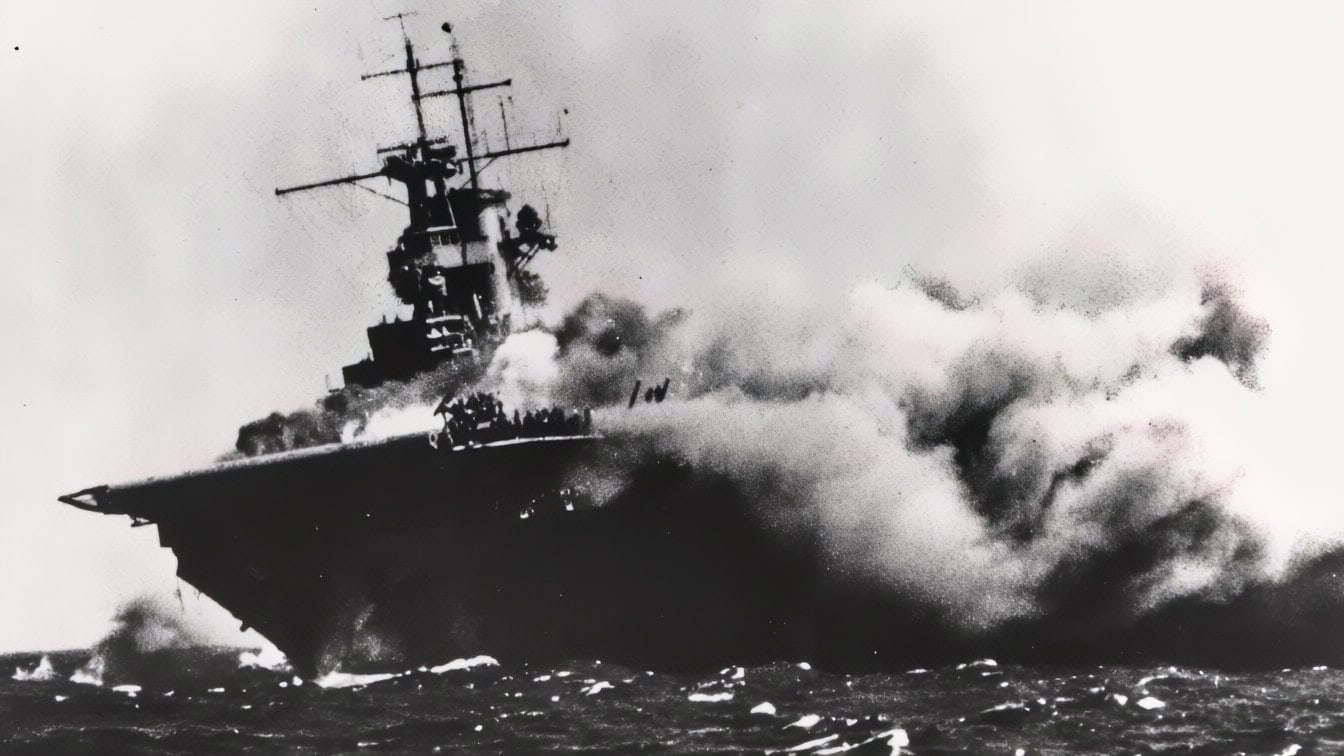
The 14,700-Ton USS Wasp was the Worst Aircraft Carrier Ever Built – USS Wasp entered service as a 741-foot fleet carrier capable of making 29.5 knots and operating roughly 70 to 80 aircraft. Its standard displacement was only 14,700 tons. The Navy placed the striking power of a larger carrier on a hull without a fully developed torpedo-defense system.
On September 15, 1942, Japanese submarine I-19 fired six torpedoes at Wasp’s task force in the South Pacific. Two struck the carrier. Gasoline fires and repeated vapor explosions spread through the forward half of the ship. The order to abandon Wasp came only 35 minutes after the hits.
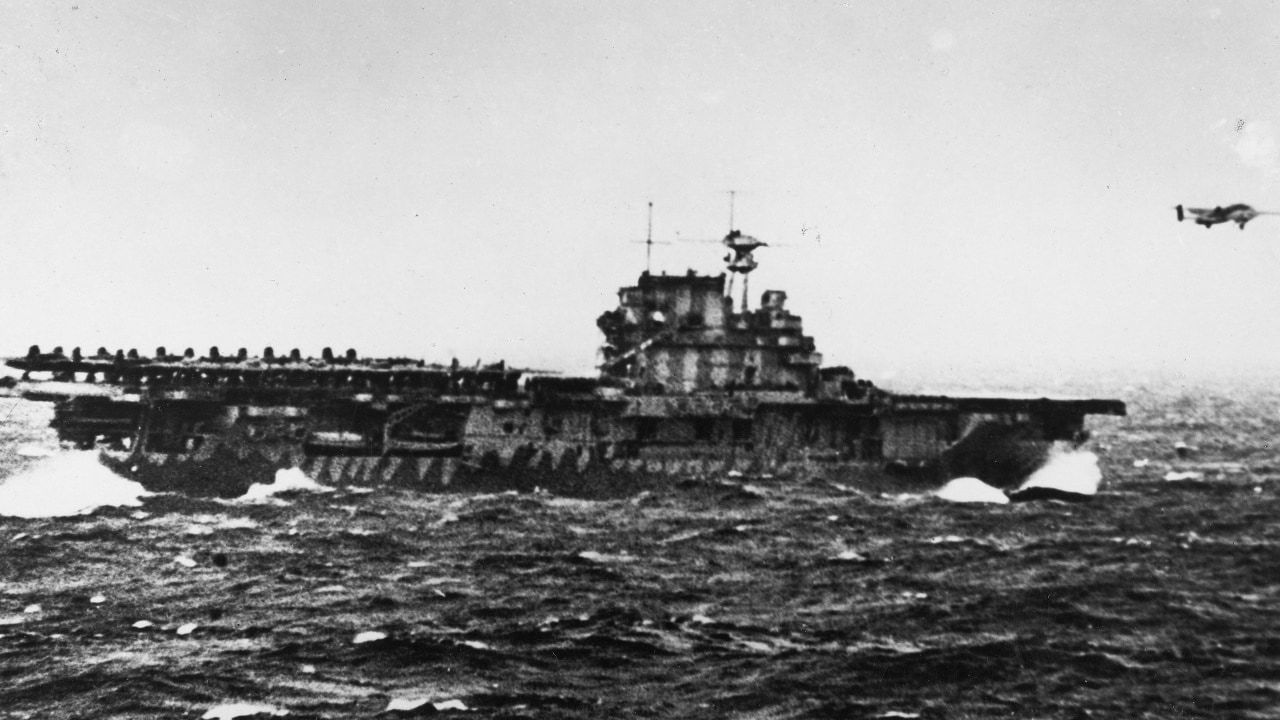
USS Wasp was hit by one Japan’s Long Lance Torpedo. Creative Commons Photo.
Combat loss alone does not make a carrier bad. Lexington, Yorktown, and Hornet also went down in 1942 after delivering immense military value.
For me, Wasp’s claim to the worst-carrier title rests on a design compromise known before construction began: the Navy had 14,700 treaty tons left and wanted one more flight deck.
The crew did not create the weakness. Wasp ferried Army fighters to Iceland, carried British Spitfires toward Malta, and fought over Guadalcanal. Its hull and propulsion plant survived the torpedo attack. The ship was lost because ruptured fuel tanks, broken gasoline lines, burning aircraft, and inadequate water pressure made the fires impossible to contain.
The Treaty Left 14,700 Tons for One More Carrier
The 1922 Washington Naval Treaty allowed the United States 135,000 tons of aircraft carriers. After Lexington, Saratoga, Ranger, Yorktown, and Enterprise, the Navy had 14,700 tons left.
Designers used every remaining ton. The U.S. Naval Institute describes Wasp as a reduced derivative of the 19,800-ton Yorktown design. Wasp gave up 5,100 tons while retaining a large flight deck and air group.
Wasp displaced about 19,100 tons at full load. Six boilers drove two shafts producing roughly 70,000 shaft horsepower. Yorktown used four shafts and about 120,000 shaft horsepower. Wasp still reached 29.5 knots, but lost speed and machinery redundancy.
The ship carried eight 5-inch dual-purpose guns and introduced a deck-edge aircraft elevator later adopted by the Essex class. Those were real strengths. The hard compromises sat below the waterline.
The Bureau of Ships later wrote that a fully developed underwater-protection system did not fit inside a 14,700-ton carrier. Wasp instead received small compartments and a liquid layer inside the shell. The arrangement limited the list after the torpedoes struck, but it did not stop the blasts from rupturing gasoline tanks and piping.
Wasp Still Delivered Real Military Value
Wasp was commissioned on April 25, 1940. Six months later, it became the first Navy carrier to launch Army aircraft when P-40 fighters and O-47 observation planes flew from its deck off the Virginia Capes.
In August 1941, Wasp carried 30 P-40Cs and three trainers toward Iceland. It then completed two ferry missions for Malta in April and May 1942, launching large groups of RAF Spitfires within flying range of the besieged island.
Wasp transferred to the Pacific after Lexington was lost at the Coral Sea and Yorktown sank following Midway. Its aircraft supported the August 1942 landings around Guadalcanal. Wasp fighters destroyed 15 Kawanishi flying boats and seven Japanese floatplane fighters during the opening strikes.
Two Torpedoes Opened Wasp’s Gasoline System
On September 15, Wasp and Hornet covered transports carrying the 7th Marine Regiment toward Guadalcanal. USS North Carolina and ten other warships sailed in formation. Wasp’s aircraft were being recovered, refueled, and rearmed for anti-submarine patrols.
At about 2:45 p.m., lookouts saw torpedoes approaching from starboard. I-19 had launched six Type 95 weapons. Modern Navy histories often credit three hits. The 1944 Bureau of Ships damage report found two torpedo hits followed roughly 20 seconds later by an internal gasoline-vapor explosion mistaken for a third impact.
One torpedo struck near the forward gasoline tanks. The other hit around bomb-magazine spaces. An aircraft secured overhead in the hangar broke loose and crashed onto planes below, rupturing their fuel tanks. Gasoline from ship storage and aircraft spread into several spaces and ignited.
Three more major vapor explosions followed within 25 minutes. One lifted an aircraft elevator. Another threw steel plates and fittings as high as 150 feet. Ready-service ammunition for the forward guns began detonating in the heat.
The wasp’s main propulsion machinery stayed in operation, and overall electrical power remained available. Structural damage and flooding were not fatal. A ruptured forward fire-main loop was not isolated, bleeding pressure from the system. Hangar water curtains and sprinklers were not fully used before later explosions wrecked more of the area.
The Bureau of Ships reached a blunt finding: Wasp would have survived the hull damage without the fires. It remained able to move under its own power when Captain Forrest Sherman ordered abandonment.
One Torpedo Spread Damaged Three American Warships
I-19’s remaining torpedoes continued through the formation. One hit USS North Carolina, tearing open its port side and killing five sailors. The battleship controlled the flooding and returned for repairs.
Another struck USS O’Brien. The destroyer stayed afloat, but whipping damage weakened its hull. O’Brien broke apart and sank on October 19 while attempting to reach the United States.
The contrast strengthens the case against Wasp. Its vulnerability was not simple flooding. Torpedo damage reached aviation gasoline, and the burning fuel defeated a carrier that still had working engines and reserve buoyancy.
The Crew Abandoned a Carrier Still Able to Float
Sherman ordered abandon ship at about 3:20 p.m. Sailors remained until wounded men were lowered into boats and rafts. Sherman left at roughly 4 p.m. Nearby ships rescued 1,946 people.
USS Lansdowne was ordered to finish the burning carrier. Its first two torpedoes failed to explode. Three later weapons detonated, and Wasp sank bow-first at about 9 p.m.
Published Navy accounts disagree over the death toll. The traditional ship-history figure is 193 dead and 366 wounded. A 2019 Seventh Fleet release lists 176 killed, while another Naval History and Heritage Command account gives 173. Forty-five aircraft went down with Wasp.
Wasp’s Best Idea Survived Into the Essex-Class
Wasp was not useless, and its sailors did not fail. The carrier delivered aircraft across two oceans, fought over Guadalcanal, and pioneered the deck-edge elevator. Its record makes the worst-carrier label more precise: this was a frontline fleet carrier whose offensive strength outran its protection.
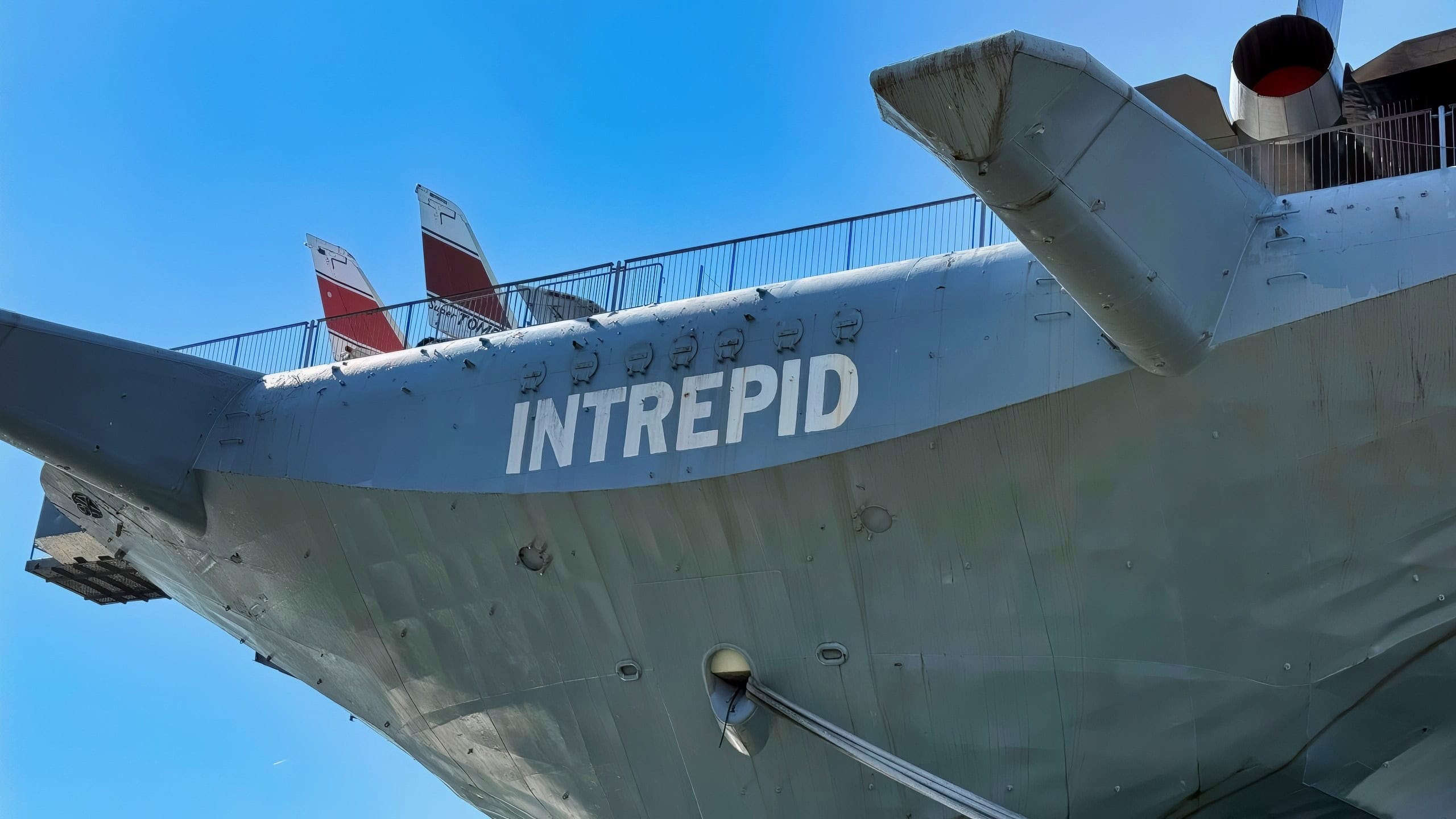
USS Intrepid of the Essex-Class Aircraft Carriers. Image Credit: 19FortyFive.com Original Photo.
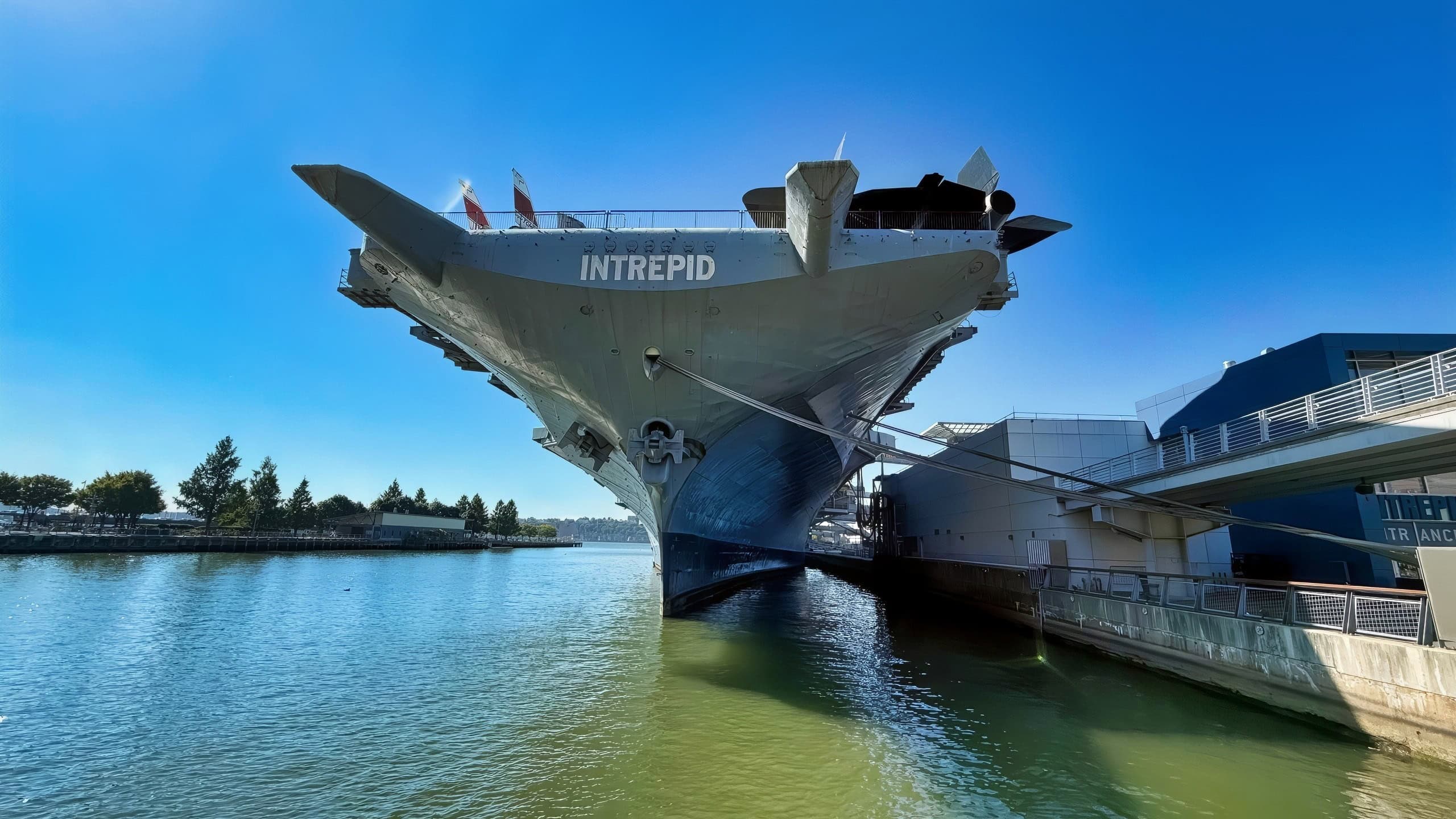
USS Intrepid Essex-Class Aircraft Carrier 19FortyFive.com Photo.
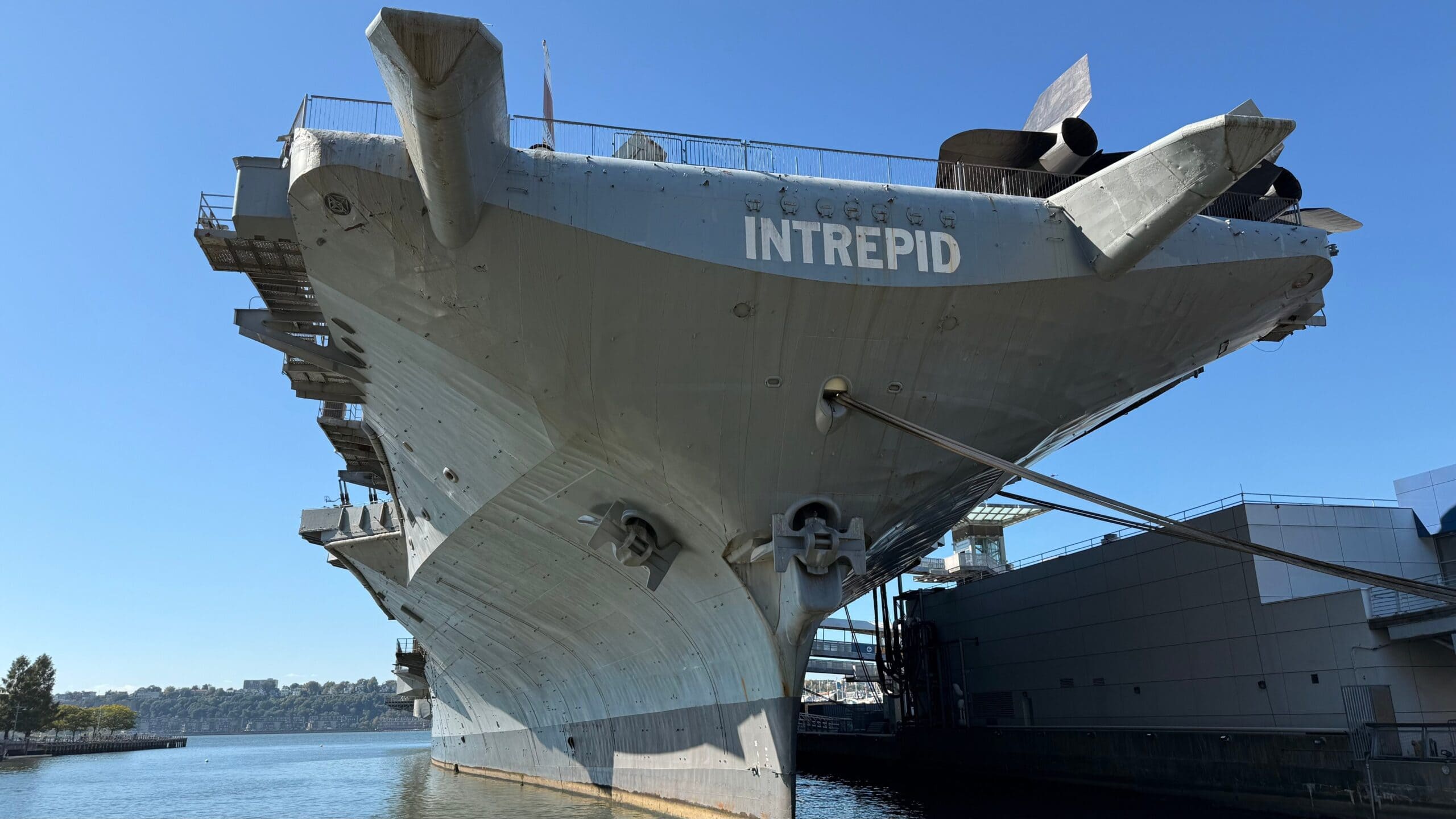
Exterior of Essex-Class USS Intrepid. Image Credit: 19FortyFive.com
The Navy carried Wasp’s deck-edge elevator into the Essex-class while changing the fuel and damage-control arrangements exposed by the sinking. Later carriers placed gasoline storage within stronger protection, improved subdivision, shortened and shielded fuel lines, used inert gas, and moved away from overhead aircraft stowage.
Twenty-four Essex-class carriers were completed. None was lost to enemy action, despite several suffering damage far beyond the two torpedo hits that started Wasp’s destruction.
R/V Petrel found Wasp on January 14, 2019. The carrier rests upright nearly 14,000 feet below the Coral Sea, with aircraft and 5-inch guns still visible around its broken hull.
MORE – 5 Worst US Navy Aircraft Carriers Ever
MORE – 5 Worst Aircraft Carriers Ever
About the Author: Harry J. Kazianis
Harry J. Kazianis (@Grecianformula) was the former Senior Director of National Security Affairs at the Center for the National Interest (CFTNI), a foreign policy think tank founded by Richard Nixon based in Washington, DC. Harry has over a decade of experience in think tanks and national security publishing. His ideas have been published in the NY Times, The Washington Post, The Wall Street Journal, CNN, and many other outlets worldwide. He has held positions at CSIS, the Heritage Foundation, the University of Nottingham, and several other institutions related to national security research and studies. He is the former Executive Editor of the National Interest and the Diplomat. He holds a Master’s degree focusing on international affairs from Harvard University.

