
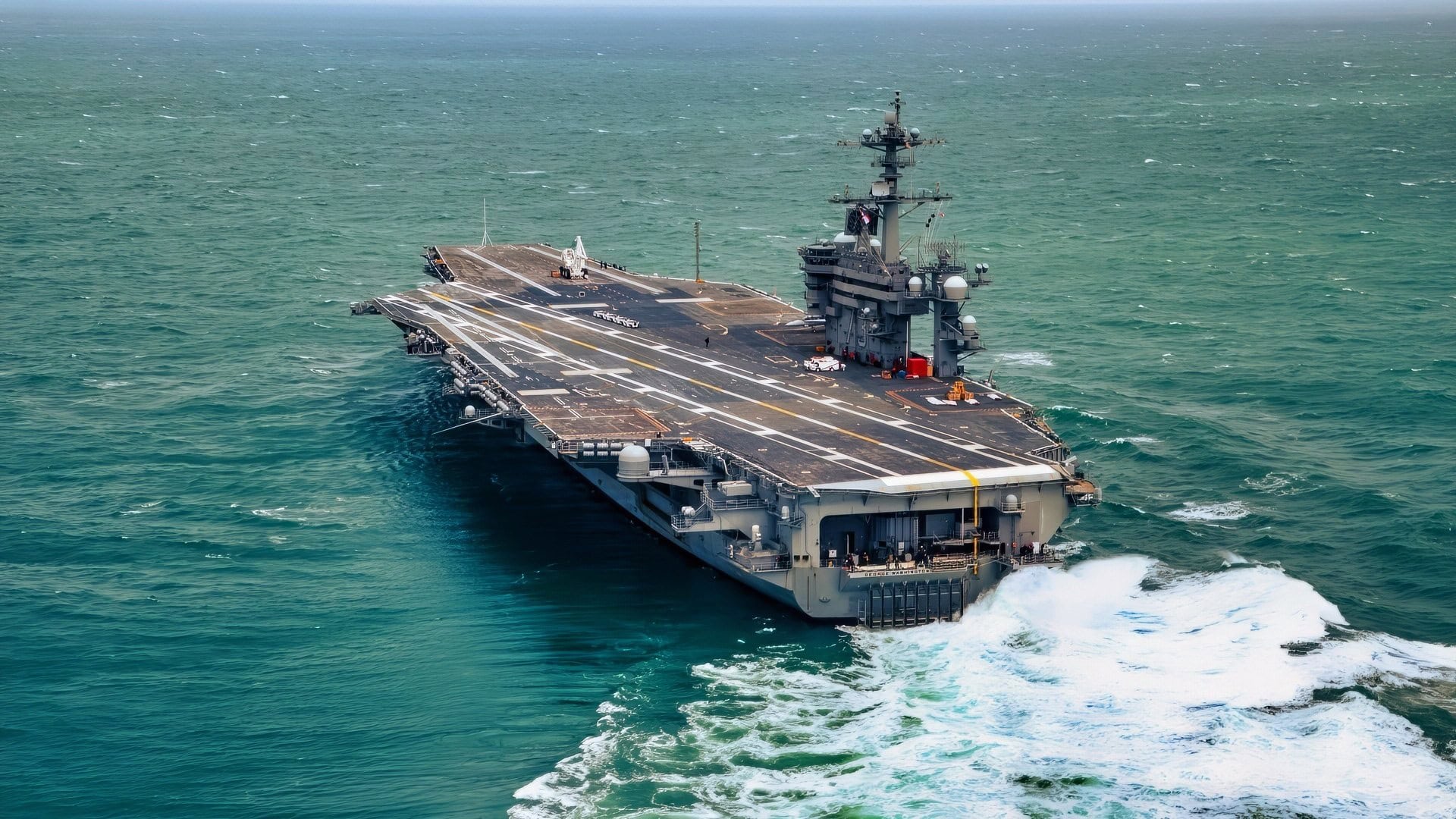
Japan’s 72,000-Ton Shinano Leads the 5 Worst Aircraft Carriers Ever Built – Japan commissioned the Shinano aircraft carrier on November 19, 1944. Ten days later, the 72,000-ton carrier lay at the bottom of the Pacific after four American torpedoes exposed unfinished watertight boundaries, weak damage control, and a rushed decision to send an incomplete warship to sea.
Graf Zeppelin never reached combat. Admiral Kuznetsov managed one combat deployment before entering an overhaul from which it has never emerged. Thailand’s carrier lost its jet force within nine years. France entered World War II with a carrier too slow for its modern fleet.
Those records shape this ranking of what I would say are the worst aircraft carriers of all time. A bad carrier is not simply one sunk by enemy action. Several great carriers were lost after delivering immense military value. The stronger test is how much useful air power a ship produces relative to its size, cost, strategic promise, and demands on its navy.
Early experimental ships deserve some latitude. These five earned their places through a deeper mismatch between their intended mission and what they delivered.
#5: Béarn Was Too Slow for the Fleet France Needed
France began Béarn as a Normandie-class battleship in January 1914, suspended work during World War I, and later converted the unfinished hull into its first aircraft carrier. The ship entered service in 1928, displaced 22,146 long tons at standard load, and was designed to operate 32 aircraft.
Its battleship origins imposed the central defect. Béarn reached only 21.5 knots, a figure recorded in a contemporary U.S. Naval Institute comparison of early carriers. Lexington and Saratoga approached 34 knots. Fleet carriers needed speed to create wind over the deck, maneuver with fast capital ships, and recover aircraft without slowing the formation.
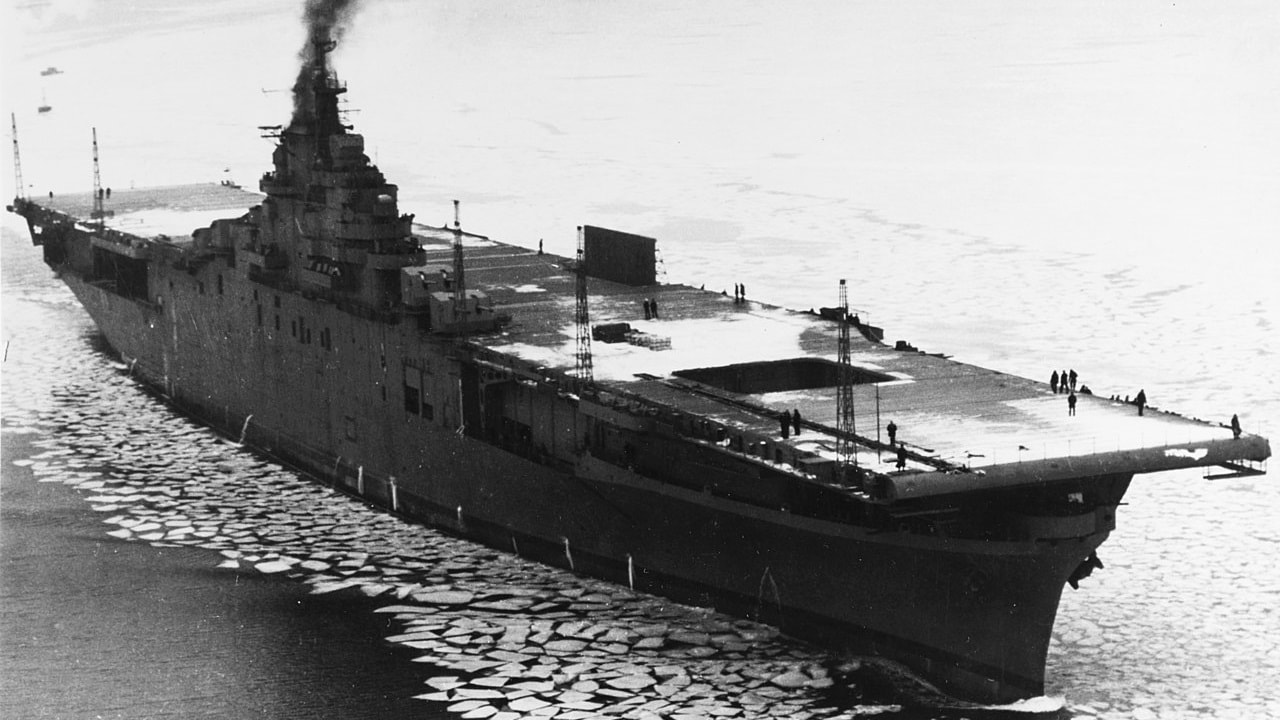
The U.S. Navy aircraft carrier USS Lexington (CV-16) steams through floating ice in Boston Harbor, Massachusetts (USA), on 17 February 1943, the day she first went into commission. Note the snow on her flight deck, and the open catapult track on the starboard side, forward.
Béarn helped France learn deck operations and later served as a transport, submarine tender, and barracks ship. Those contributions keep it at fifth.
Its combat value as a carrier was poor. Proposed machinery improvements still would not have made it fast enough to accompany France’s new battleships. During World War II, it spent much of its time training or transporting aircraft and gold. Across a career lasting nearly four decades, Béarn never launched an aircraft in combat.
#4: Chakri Naruebet Lost Its Carrier Air Wing
HTMS Chakri Naruebet entered service in 1997 as the Royal Thai Navy’s flagship and Southeast Asia’s first modern carrier. The Spanish-built ship displaced about 11,486 tons at full load, reached roughly 26 knots, and was designed around six secondhand AV-8S Matador vertical-takeoff fighters, along with helicopters.
The ship cost roughly $285 million, but buying a hull was only the first bill. Carrier aviation also needs pilots, maintainers, fuel, escorts, spares, munitions, and regular time at sea.
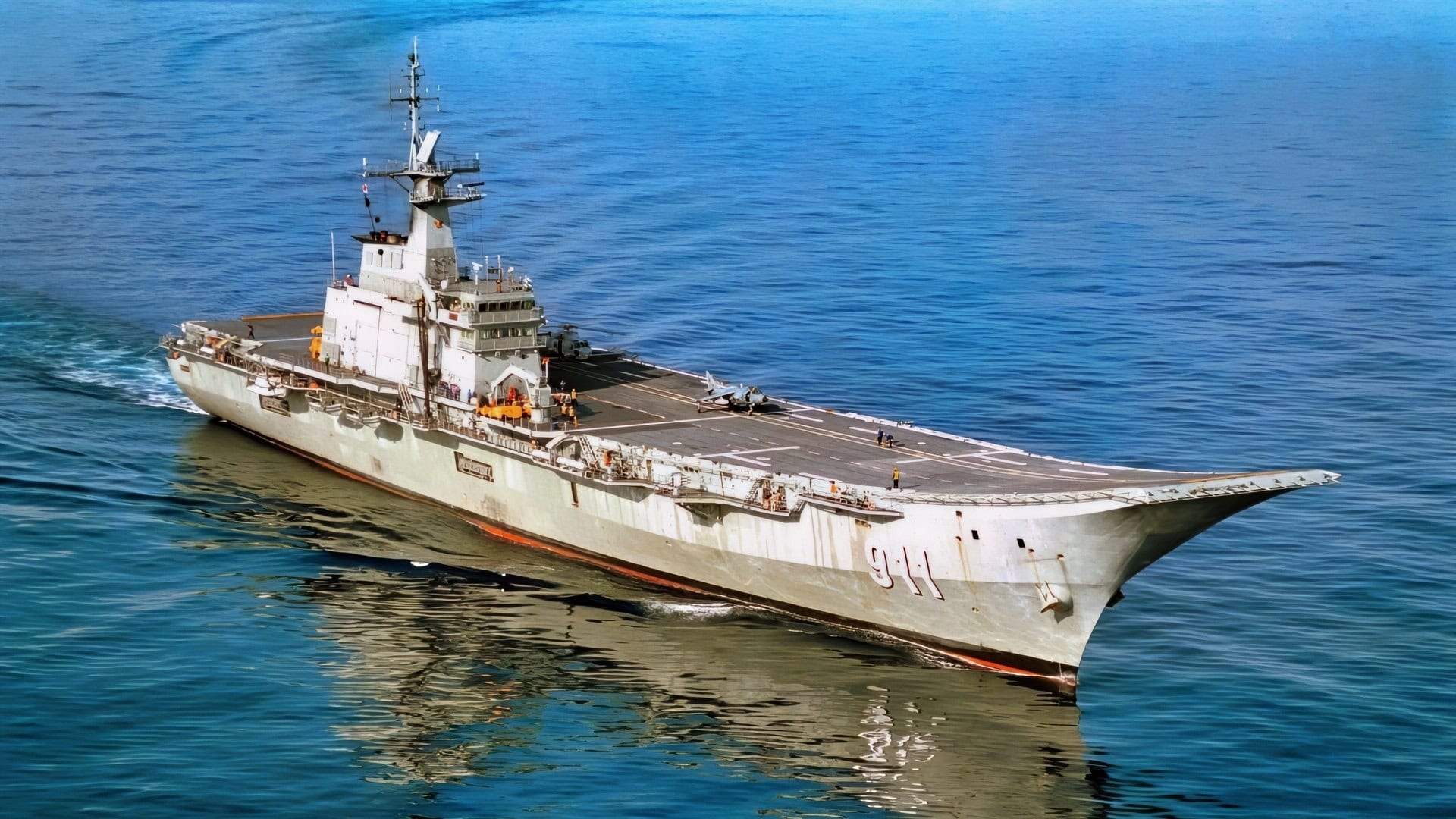
Chakri Naruebet Thailand Aircraft Carrier Creative Commons Image
The Asian financial crisis struck in 1997, the same year Chakri Naruebet entered service. Operating money collapsed. A U.S. Naval Institute fleet review reported that the carrier was largely confined to port due to a lack of funds and had only one flyable Harrier before an American grant provided replacement engines.
Thailand retired the Harriers in 2006. The ship found useful work carrying helicopters, supporting disaster relief and serving as a command platform. The MARCUS-B reconnaissance drone entered operational service aboard it in 2025, but no fixed-wing combat aircraft returned.
Those missions do not erase the mismatch. A carrier built to operate jets has gone without one since 2006. Chakri Naruebet ranks here because Thailand bought the symbol of carrier power without sustaining the system required to generate it.
#3: Admiral Kuznetsov Turned Carrier Operations Into an Endurance Test
Admiral Kuznetsov was supposed to bridge the gap between Soviet aviation cruisers and a true carrier fleet. The roughly 1,000-foot ship displaced around 59,000 tons at full load, used a ski jump and arresting wires for Su-33 and MiG-29K fighters, and carried heavy anti-ship missiles.
The Soviet Union collapsed shortly after its 1991 entry into service. Russia inherited a complex carrier without the money, shipyard base, or training regimen needed for reliable operations.
Troubled boilers produced black exhaust, and a tug often accompanied the ship.
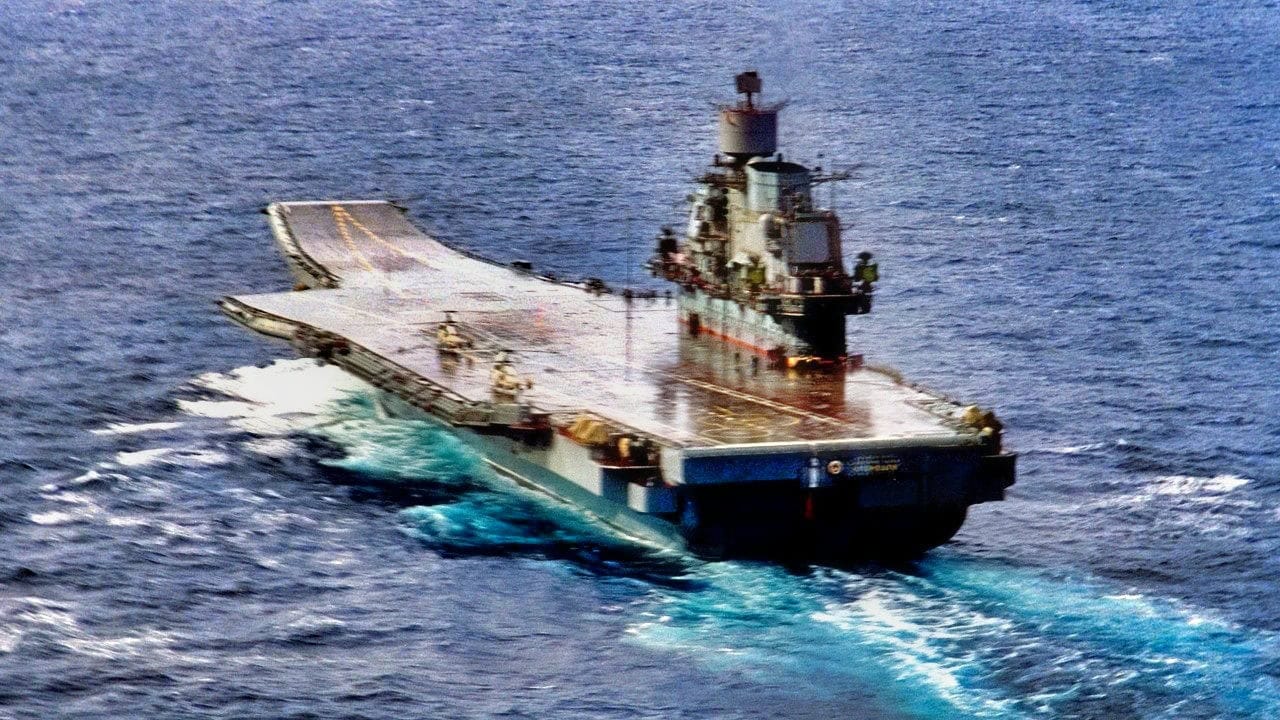
Admiral Kuznetsov Aircraft Carrier Russia. Image Credit: Creative Commons.

Admiral Kuznetsov. Image Credit: Creative Commons.
The carrier spent little time doing carrier work. A U.S. Naval Institute assessment calculated an average of about 15 days at sea per year across much of its career. Its only combat deployments were in Syria in 2016 and 2017.
Russian aircraft flew combat missions, but the deployment exposed serious limits. A MiG-29K ran out of fuel after arresting-system trouble blocked recovery. Weeks later, a Su-33 was lost when a cable broke. Russia shifted part of the air wing ashore.
Kuznetsov entered repair in 2017 and has not sailed since. Its floating dry dock sank in 2018, dropping a 70-ton crane onto the flight deck. A major fire in 2019 killed two people. Deadlines moved repeatedly while costs rose.
By July 2025, repair work had been suspended. The head of Russia’s state shipbuilding corporation said the ship would likely be sold or scrapped, although Moscow had issued no final disposal order by August 2026.
The sequence of smoke, breakdowns, aircraft losses, and repair accidents left Russia without an operational carrier for almost a decade.
#2: Graf Zeppelin Consumed Resources but Never Entered Service
Nazi Germany laid down the Graf Zeppelin in December 1936 and launched it two years later. The carrier displaced roughly 33,500 long tons at full load, measured more than 860 feet, and was designed to exceed 33 knots. Its planned air group numbered about 42 fighters and dive bombers.
The design exposed Germany’s unsettled carrier doctrine. Graf Zeppelin carried 16 5.9-inch guns for fighting surface ships, a heavy battery occupying space and weight better devoted to aviation.
Responsibility was divided between the Kriegsmarine, which owned the ship, and Hermann Göring’s Luftwaffe, which controlled aircraft and aircrews.

Graf Zeppelin aircraft carrier Image: Creative Commons.
Neither service built a mature carrier system. The proposed air group relied on naval versions of the Messerschmitt Bf 109 and Junkers Ju 87, while crews and deck procedures still needed development.
War made the contradiction worse. Germany needed U-boats and escorts more urgently than a carrier, which required years of work before combat. Construction stopped in 1940 when the ship was reported to be about 85 percent complete, resumed in 1942, and then ended again.
The Naval History and Heritage Command’s translated German records state final construction work was ordered halted on February 2, 1943. Graf Zeppelin was never commissioned, never embarked an operational air group, and never launched a combat sortie.
German forces scuttled the ship in 1945. The Soviets raised it and sank it during weapons tests in 1947. Graf Zeppelin became a clear example of the strategic incoherence behind Hitler’s oversized Plan Z fleet: a major warship started without the time, industrial priority, or institutional structure required to use it.
#1: Shinano Sank Ten Days After Commissioning
Shinano began as the third Yamato-class battleship. After Japan lost four fleet carriers at Midway in June 1942, the unfinished hull was converted into an aircraft carrier.
The result displaced about 72,000 tons at full load. Size did not produce a proportionate striking force. Shinano was planned mainly as a protected support carrier carrying replacement aircraft, fuel, weapons, and repair facilities for other carriers.
Its own operational group numbered only about 47 aircraft.

Shinano Aircraft Carrier from Japan.
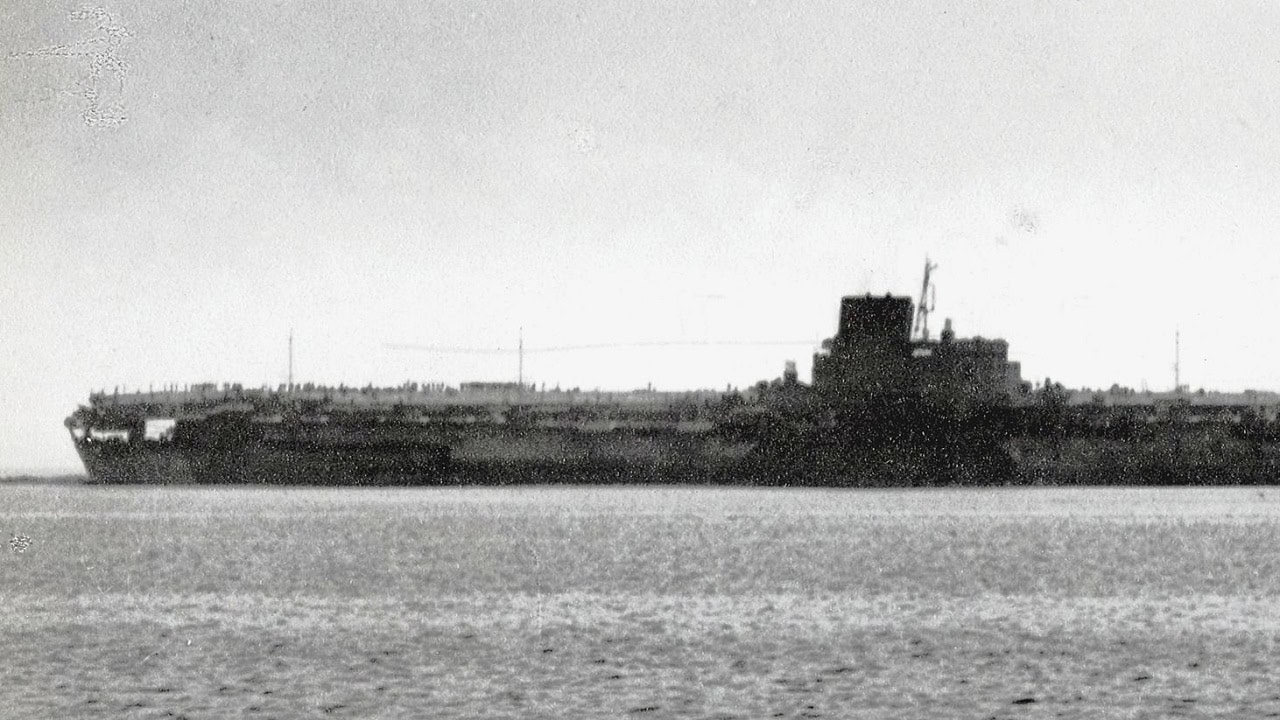
Japanese aircraft carrier Shinano underway during her sea trials.
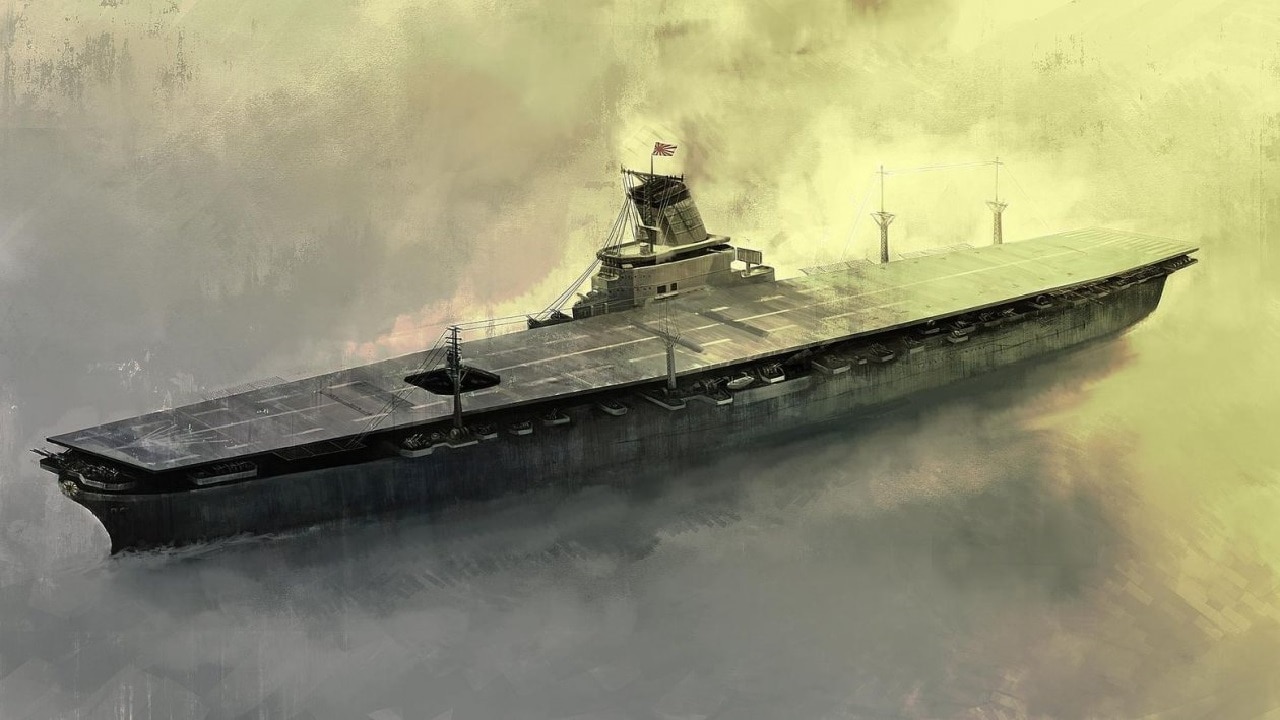
Aircraft Carrier Shinano. Image Credit: Creative Commons.
The concept held some logic, but the immense vessel carried less direct air power than American Essex-class carriers, around half its displacement.
By late 1944, American bombers threatened the Tokyo area.
The Japanese Navy ordered the Shinano to be moved from Yokosuka to Kure for final work. Captain Toshio Abe sought a delay. The carrier was unfinished; its crew inexperienced, and shipyard workers remained aboard.
Shinano was commissioned on November 19 and departed on November 28 with three destroyers.
Many watertight doors had not been installed. Openings through bulkheads remained unsealed. Pumps, fire mains, and damage-control arrangements were incomplete. Its operational air group waited at Kure.
USS Archerfish found the formation during the evening. Commander Joseph Enright tracked it for hours and fired six torpedoes shortly after 3:15 a.m. on November 29. Four hit the starboard side.
A completed ship with a trained crew stood a better chance. Shinano’s armor limited some blast damage, but water moved through unfinished boundaries and open penetrations. Forward motion worsened the flooding. Pumps failed, the list increased, and two lines from the escorts parted.
Japan had transformed one of its most expensive battleship hulls into a carrier with a modest air group, rushed it into commission, and sent it through waters threatened by submarines without basic watertight integrity. The four-torpedo sinking of the 72,000-ton conversion remains the largest warship loss inflicted by a submarine.
Abe ordered abandonment at 10:18 a.m. At 10:57, Shinano rolled onto its starboard side and sank. Japanese destroyers rescued 1,080 sailors and civilian workers. Another 1,435 people went down with an aircraft carrier commissioned ten days earlier.
About the Author: Harry J. Kazianis
Harry J. Kazianis (@Grecianformula) was the former Senior Director of National Security Affairs at the Center for the National Interest (CFTNI), a foreign policy think tank founded by Richard Nixon based in Washington, DC. Harry has over a decade of experience in think tanks and national security publishing. His ideas have been published in the NY Times, The Washington Post, The Wall Street Journal, CNN, and many other outlets worldwide. He has held positions at CSIS, the Heritage Foundation, the University of Nottingham, and several other institutions related to national security research and studies. He is the former Executive Editor of the National Interest and the Diplomat. He holds a Master’s degree focusing on international affairs from Harvard University.

