
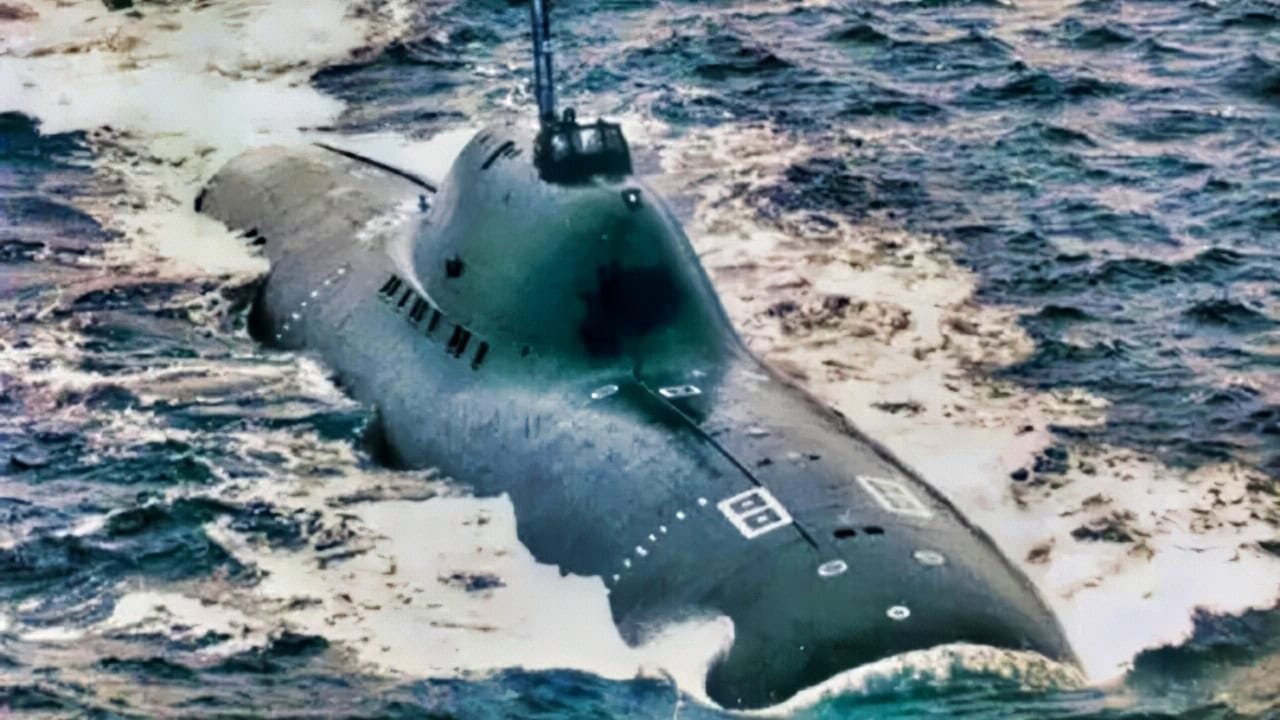
Forty-seven days after the Soviet Union formally dissolved, two nuclear-powered attack submarines collided beneath the Barents Sea. At 8:16 p.m. Moscow time on February 11, 1992, the Russian submarine K-276 rose into USS Baton Rouge (SSN-689) near Kildin Island and the entrance to Kola Bay. Neither crew reported an injury. Both boats reached port under their own power. One returned to the fleet within months. The other became the first Los Angeles-class submarine to be retired.
Two Nuclear Submarines Collide At the Worst Possible Time
The timing was politically toxic. Washington and Moscow were trying to build a post-Cold War relationship while Russia inherited most of the Soviet nuclear arsenal. Secretary of State James Baker was already in Russia when the Pentagon disclosed the collision and informed President Boris Yeltsin. Moscow alleged an intrusion into Russian waters. Washington said Baton Rouge had remained in international waters.
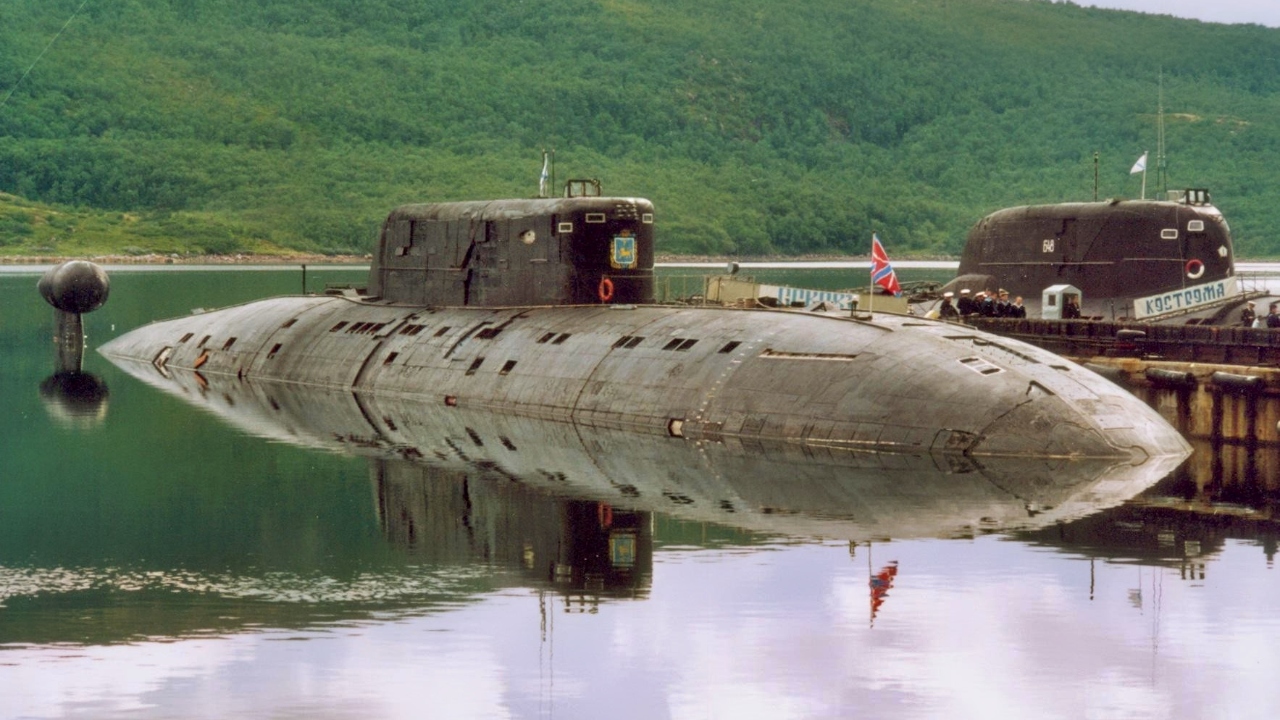
Sierra-Class Submarine. Image Credit: Creative Commons.
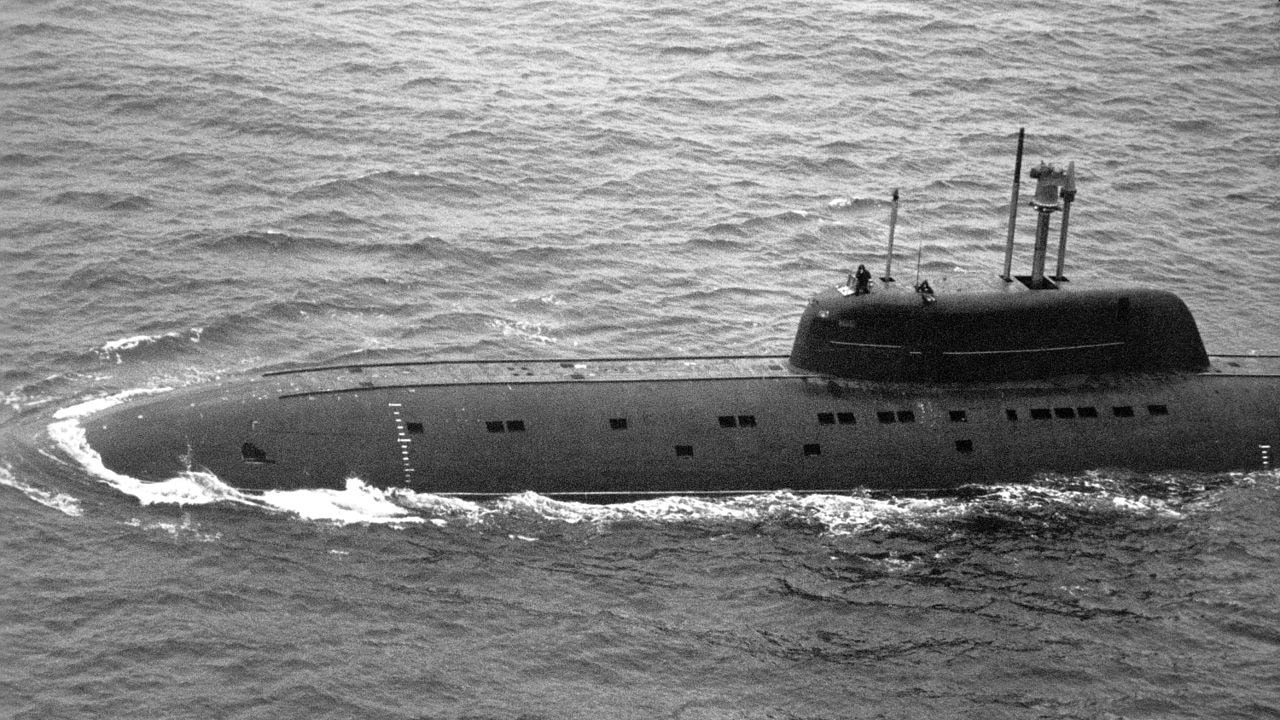
Sierra-Class Submarine. Image Credit: Creative Commons.
The Russian boat involved was K-276 at the time of the collision. It was later designated B-276 and received the name Kostroma in 1996. Western navies called its Project 945 design the Sierra I class. Its titanium pressure hull and double-hull arrangement produced a formidable attack submarine. Baton Rouge entered service in June 1977 as the second Los Angeles-class submarine.
The Soviet flag had come down, but the undersea intelligence contest continued. Russia’s Northern Fleet still controls ballistic-missile submarines central to the country’s nuclear deterrent. Contemporary reporting identified Baton Rouge’s assignment as surveillance of Russian naval activity near the Kola Peninsula. The exact task remains classified. Possible missions included recording acoustic signatures, observing fleet movements or servicing seabed sensors near the Northern Fleet’s principal bases.
Kildin Island Put Two Quiet Submarines in the Worst Water for Passive Sonar
The American account placed Baton Rouge at periscope depth, about 22 yards below the surface, when K-276 began rising underneath it. The front of the Russian sail struck the underside and aft portion of the American submarine. The boats collided before either crew established a usable acoustic track. The strongest technical reconstruction points to a blind encounter rather than deliberate ramming or a prolonged chase.
Analyst Eugene Miasnikov examined the accident for an MIT arms-control publication and The Submarine Review. He set the water depth at roughly 100 to 200 meters and estimated passive detection ranges against a quiet submarine to be only a few hundred meters. Breaking waves raised background noise, while sound reflected from the surface and seabed, blurring direction and range.

Los Angeles-Class Submarine. Image Credit: Creative Commons.
Baton Rouge also faced a sonar blind sector behind the hull. Miasnikov estimated its fixed array lacked coverage across roughly 60 degrees astern. A long towed array offered better detection, but a kilometer of cable and hydrophones was ill-suited to shallow water and tight maneuvering. Active sonar offered clearer range information while announcing the American submarine’s presence. Stealth and collision avoidance pulled in opposite directions.
K-276 faced the same problem. Had the Russian boat been transmitting active sonar, Baton Rouge should have heard the pulses from kilometers away and moved. The absence of warning supports the conclusion that both crews relied on passive sensors. Two submarines, longer than football fields, occupied the same small volume of dark, noisy water, unaware of it until metal struck metal.
The Collision Damaged Both Nuclear Submarines but Neither Reactor
The Russian boat sustained an impact to the forward portion of its sail and sonar fairing. Russian reports described fragments of Baton Rouge’s external acoustic coating embedded in the damaged structure. K-276 entered repair at the Nerpa yard on March 28 and completed the work by June 29, 1992. No public report identified a breach of its titanium pressure hull.
The first Pentagon statements described Baton Rouge as undamaged. A later inspection at Norfolk found scrapes, dents, and two cuts in the port ballast tank. The Navy never released a complete structural survey, repair estimate, or pressure-hull assessment. Claims assigning the submarine’s retirement entirely to collision damage exceed the public evidence. The damage was included in the retirement calculation, but its full extent remains classified.
The damage stayed away from both reactor plants, torpedo rooms, and occupied pressure-hull spaces. A pressure-hull rupture would have caused rapid flooding. Damage to reactor cooling or control systems would have turned a navigation accident into a nuclear emergency near Russia’s largest complex of strategic submarine bases.
The collision also demonstrated how little margin existed during close surveillance. Baton Rouge displaced roughly 6,900 tons submerged. The Sierra displaced about 8,300 tons. Their combined submerged mass exceeded 15,000 tons, yet neither crew received sufficient warning to execute an effective evasive maneuver.
USS Baton Rouge Became the First Los Angeles-Class Submarine Retired
Baton Rouge was approaching a costly nuclear refueling as the Navy cut force structure after the Soviet collapse. Collision repairs, reactor refueling and continued operation of an early Los Angeles-class hull competed against newer submarines and a shrinking budget. The impact did not act alone, but it made the investment harder to defend.
The history of the Baton Rouge–K-276 collision is often compressed into a claim of Russia sinking an American submarine without firing. The administrative record is more exact. Baton Rouge entered commission-in-reserve status on November 1, 1993, was decommissioned and struck on January 13, 1995, and completed recycling at Puget Sound Naval Shipyard on September 30, 1997. She had served less than 18 years.
K-276 followed the opposite path. Repair took about three months, and the boat later returned to Northern Fleet service. The titanium-hulled Sierra class fed Russian naval mythology around the accident. Its crew painted a white star containing the number “1” on the sail, using a wartime-style kill marking even though neither side fired a weapon.
The Collision Reached Boris Yeltsin Before Baton Rouge Reached Norfolk
The Pentagon’s acknowledgment was unusual because submarine intelligence missions are normally kept secret. Contemporary accounts reported Baker’s discussion with Yeltsin while U.S. officials defended the patrol. Russian military leaders prepared a formal protest and argued a foreign nuclear submarine had operated secretly inside Russian waters during a period advertised as a new partnership.
The territorial dispute turned on two methods of drawing the same 12-nautical-mile limit. The United States measured outward while following the general coastline. Russia used a straight baseline between Kildin Island and the Rybachy Peninsula, placing more of the entrance to Kola Bay inside its territorial sea. Baton Rouge sat outside the limit under Washington’s method and inside it under Moscow’s. A navigation-boundary dispute became a sovereignty crisis.
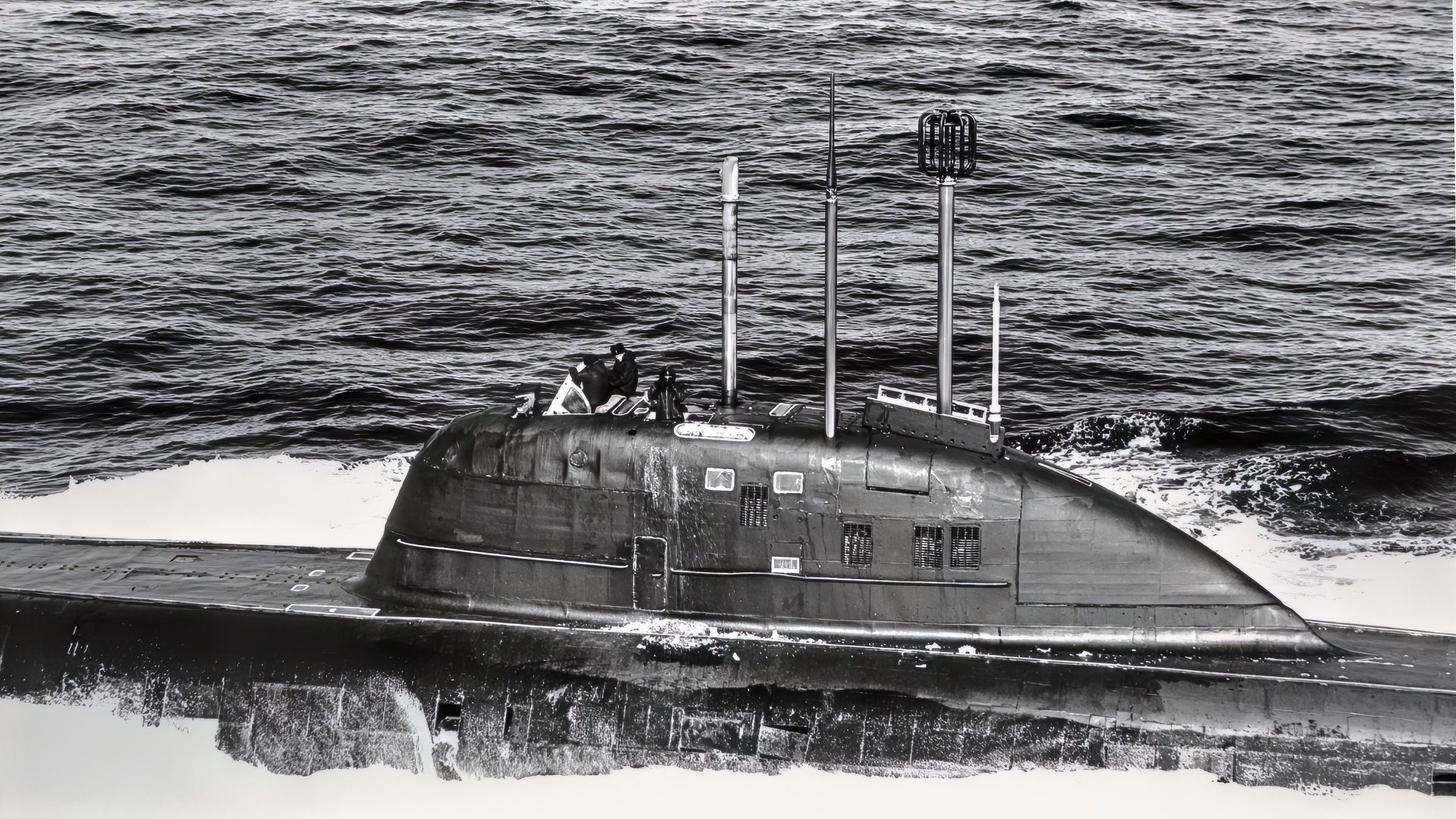
A port view of the sail of a Soviet Victor-II class nuclear-powered attack submarine underway.
Defense Secretary Dick Cheney said the collision did not justify ending U.S. submarine operations near Russia. Intelligence collection continued. Thirteen months later, USS Grayling collided with K-407 Novomoskovsk north of Murmansk. The second accident forced another policy review. Earlier episodes, including the 1984 collision between USS Kitty Hawk and Soviet submarine K-314, had already shown the risks surrounding close naval surveillance.
The Lessons Were About Sonar, Secrecy and Escalation
For the U.S. Navy, Kildin Island demonstrated that acoustic superiority was conditional. A quiet submarine, advanced processing, and a highly trained crew did not remove blind sectors, shallow-water reverberation, or the limits of passive detection.
The same point returned decades later when USS Connecticut struck an undersea mountain: undersea awareness is never complete, and the cost of one missed contact arrives in seconds.
The accident also strengthened the argument for better procedures around foreign submarine bases. A greater standoff distance reduced the intelligence value of a patrol. Active sonar or frequent communications compromised stealth. Moving farther offshore improved safety while making close observation harder. No technical solution eliminated the tradeoff.
For Russia, the collision exposed a different weakness. An American attack submarine reached the approaches to the Northern Fleet without an apparent track from shore-based, airborne, or naval anti-submarine forces.
Active searches might have improved local safety, but they also would have advertised Russian positions. Protecting a bastion against a quiet intruder demanded sensors, aircraft, and ships that the collapsing post-Soviet state struggled to sustain.
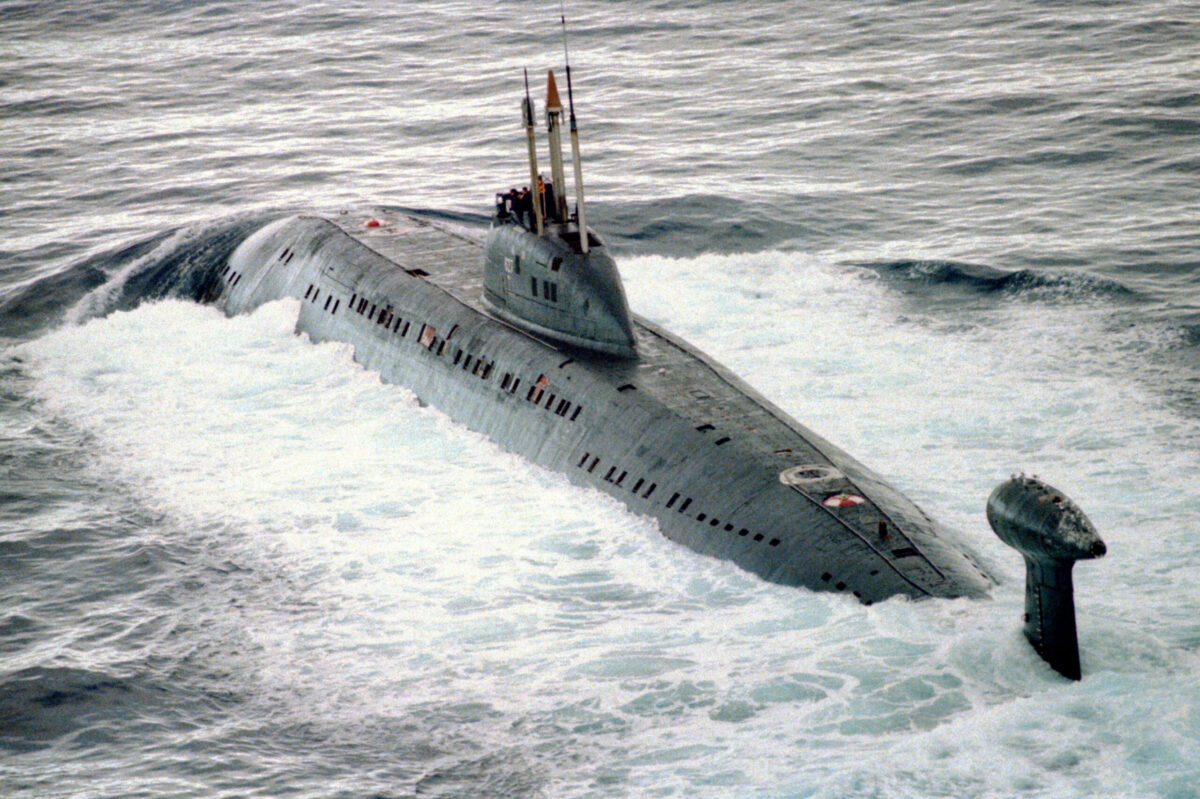
An aerial port quarter view of the Russian Northern Fleet VICTOR III class nuclear-powered attack submarine underway on the surface.
(Exact date unknown)
For both navies, the accident exposed the escalation risk surrounding covert operations near nuclear forces. Surface ships exchange signals and appear on radar. Submarines gathering intelligence depend on remaining unseen and silent.
No underwater traffic system separates a surveillance boat from a submarine leaving port. Passive sonar, low speed, and radio silence preserve the mission while removing tools that could help avoid a collision.
K-276 finished repairs on June 29, 1992. USS Baton Rouge’s recycling ended on September 30, 1997, five years and seven months after the two submarines met beneath the water off Kildin Island.
About the Author: Harry J. Kazianis
Harry J. Kazianis (@Grecianformula) was the former Senior Director of National Security Affairs at the Center for the National Interest (CFTNI), a foreign policy think tank founded by Richard Nixon based in Washington, DC. Harry has over a decade of experience in think tanks and national security publishing. His ideas have been published in the NY Times, The Washington Post, The Wall Street Journal, CNN, and many other outlets worldwide. He has held positions at CSIS, the Heritage Foundation, the University of Nottingham, and several other institutions related to national security research and studies. He is the former Executive Editor of the National Interest and the Diplomat. He holds a Master’s degree focusing on international affairs from Harvard University.

