
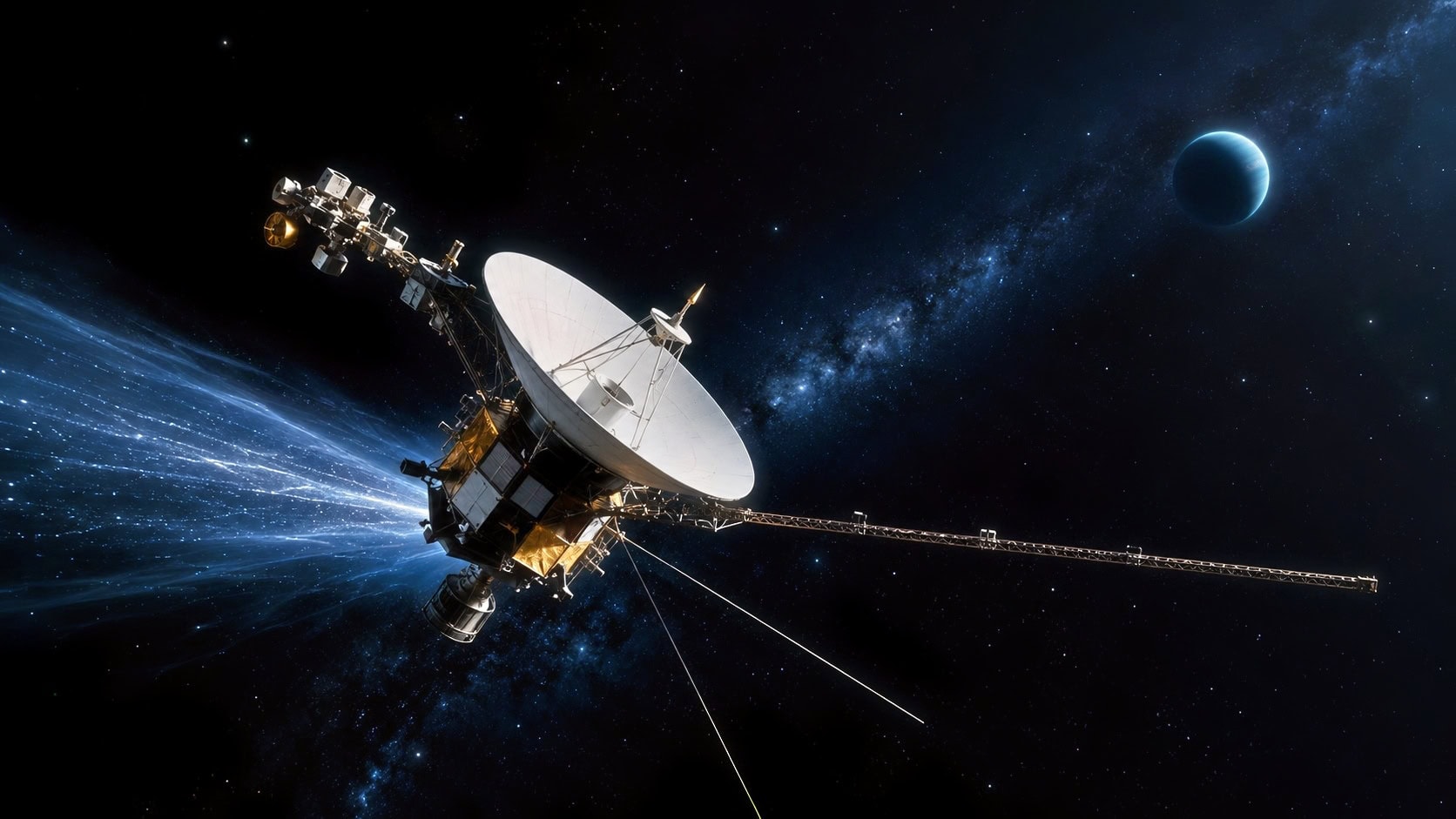
Voyager 2 is one of the greatest engineering achievements in the history of humankind. Launched in 1977, it visited Jupiter, Saturn, Uranus, and Neptune before continuing into interstellar space.
Today, Voyager 2 is traveling at roughly 34,000 miles per hour—faster than a rifle bullet or anything else humans have ever built.
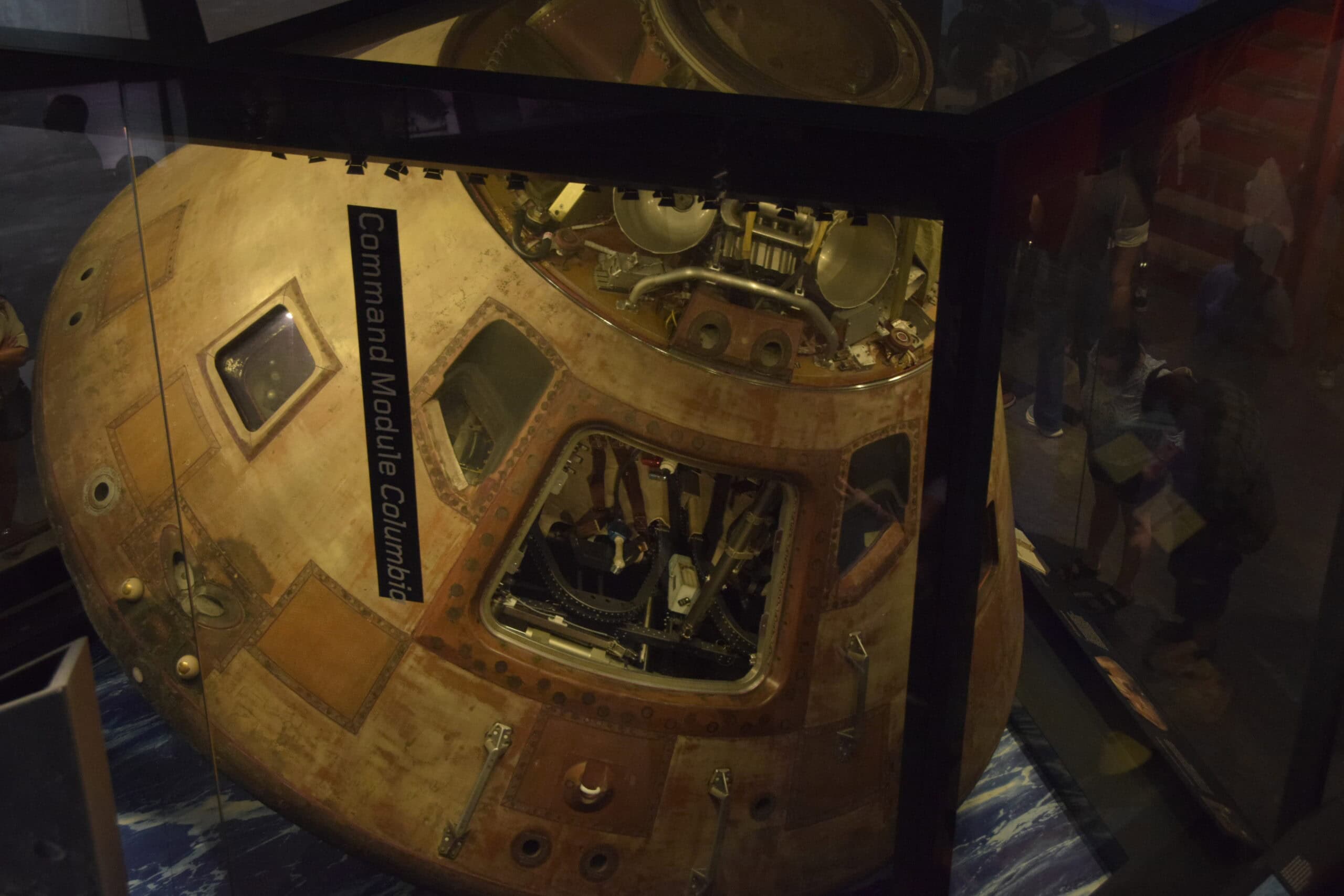
Apollo 11 Command Module. 19FortyFive.com Original Image from the Smithsonian. Taken 6/24/2026.
Yet despite almost 50 years of travel, Voyager 2 remains nowhere near another star, exposing one of the harshest realities of interstellar travel: space is far larger than most people can comprehend.
It’s All Relative
Voyager 2 is fast. At 34,000 miles per hour, it could cross the continental United States in a few minutes, circle Earth in well under an hour, or reach the Moon in less than a day.
By any normal standard, Voyager is moving at an extraordinary velocity, representing the outer limit of what traditional 20th-century spaceflight could achieve.
But despite this remarkable velocity, Voyager has barely made any progress in the interstellar context.
The nearest star to Earth, Alpha Centauri, isn’t nearby at all but rather 4.37 light-years away. That might sound manageable until it’s translated into relatable distances: 25 trillion miles.
If you pointed Voyager directly toward Alpha Centauri, the travel time would be 75,000 years.
Consider that human civilization only invented writing about 6,000 years ago; Voyager would need more than ten times that span just to reach our nearest stellar neighbor.
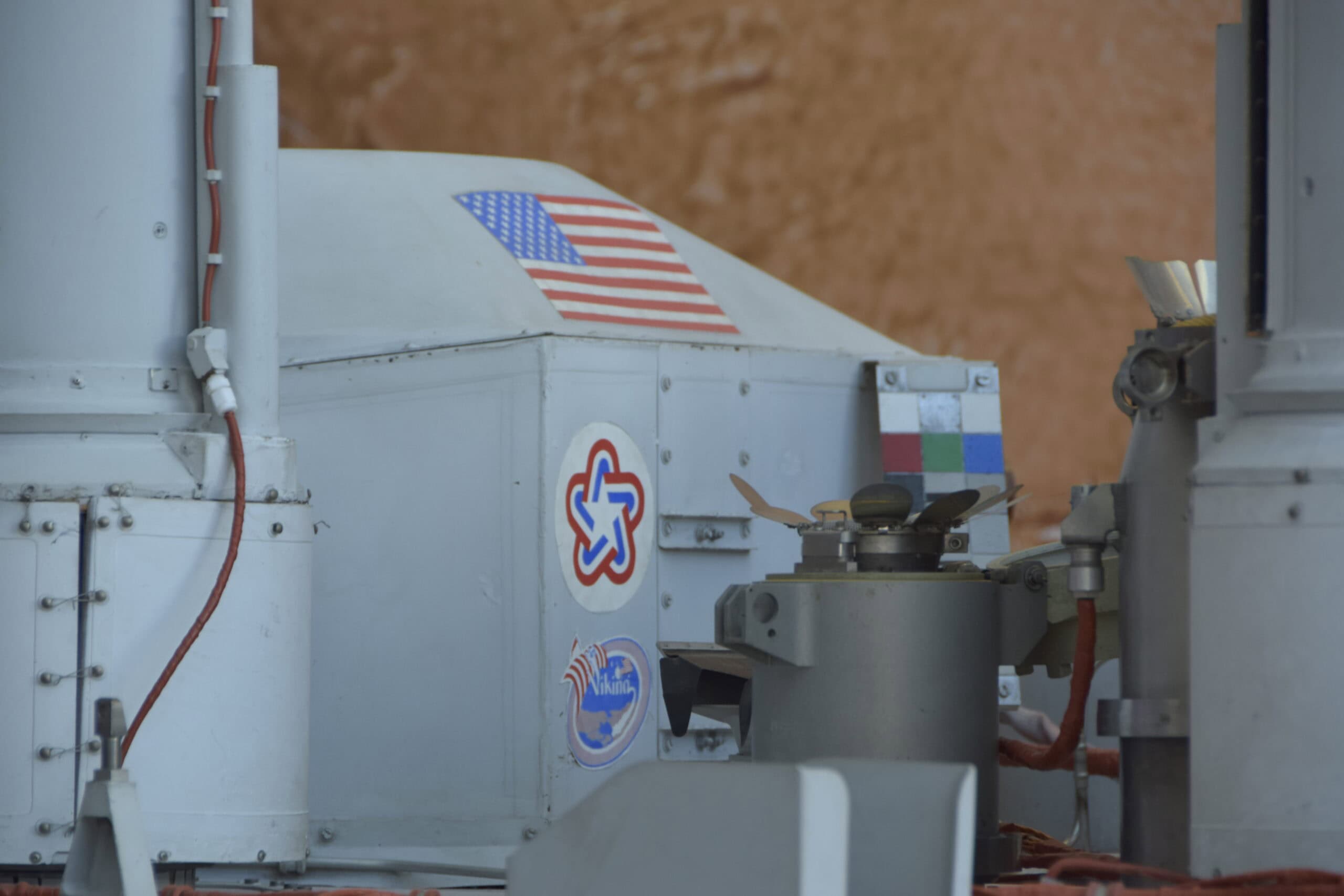
Viking Lander Image Credit 19FortyFive.com Taken at the Smithsonian on 6/24/2026.
The Physics Problem
Many people assume that the problem is building a better spacecraft—but the reality is more fundamental.
Distance scales in space are brutal. Even extraordinary speeds become meaningless across interstellar distances.
Voyager’s speed, 34,000 miles per hour, is not even one percent of the speed of light, 670 million miles per hour.
In fact, Voyager travels at only 0.005 percent the speed of light. So in interstellar terms, Voyager is practically motionless.
To solve the problem, we can’t just build a bigger rocket. Rockets must carry their own fuel, and more fuel means more weight—but more weight requires even more fuel.
This creates a vicious cycle. Every additional increment of velocity becomes dramatically more expensive. Chemical rockets eventually hit a wall—they work brilliantly for reaching orbit and exploring planets, but they are terrible for crossing between stars.
Voyager demonstrates the limits of chemical propulsion. Gravity assists from four giant planets helped accelerate the probe.
But even with perfect mission planning and decades of travel, the result remains a 75,000-year trip. This is not a failure of NASA. It is evidence that chemistry alone cannot deliver practical interstellar travel.
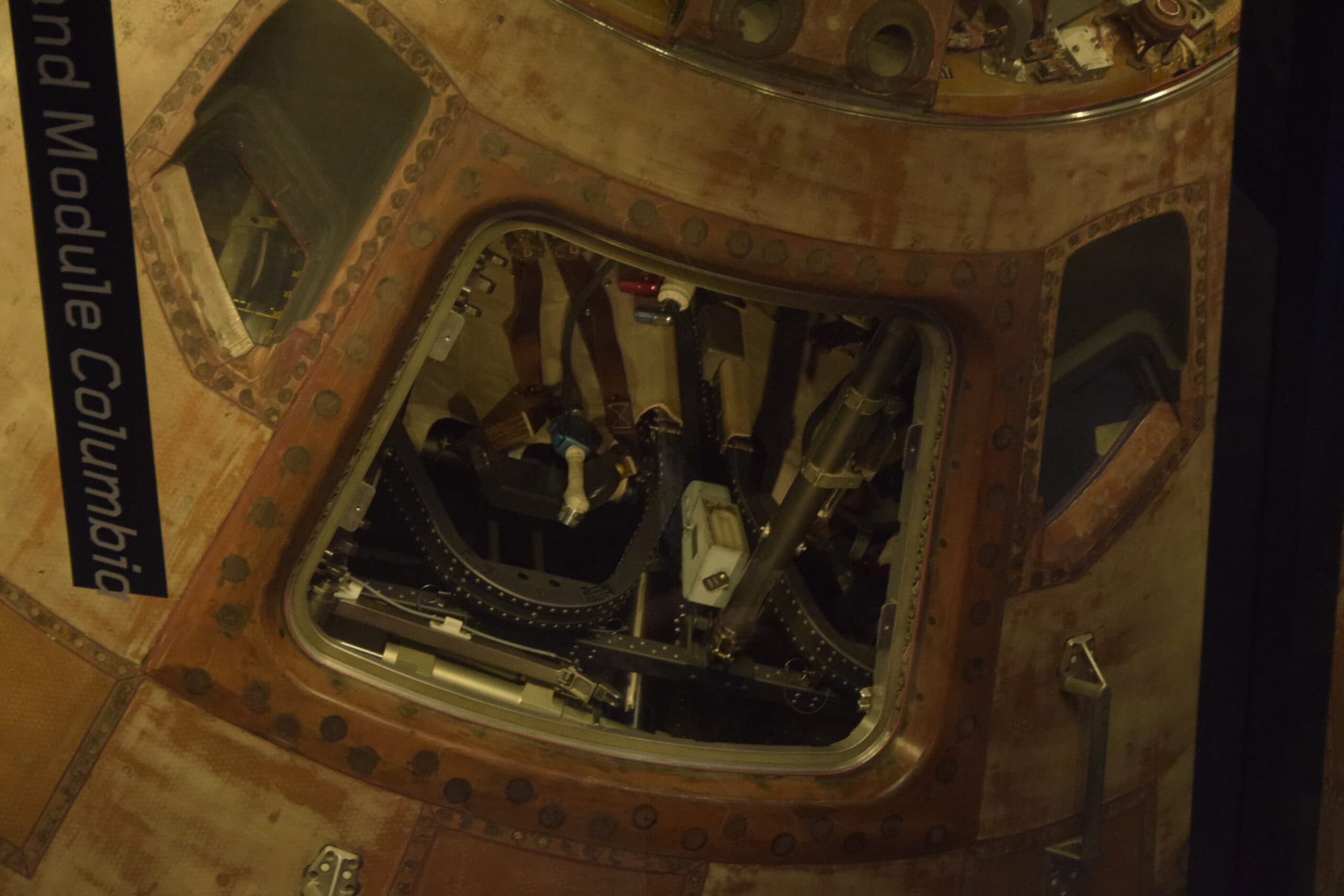
Apollo 11 Command Module. 19FortyFive.com Original Image from the Smithsonian. Taken 6/24/2026.
The Next Generation of Ideas
One of the most discussed interstellar concepts today is Breakthrough Starshot, which uses laser propulsion rather than onboard fuel.
The basic idea is that massive Earth-based lasers will target the reflective light sails of an ultra-light spacecraft, eliminating the need for heavy propellant.
The projected performance is around 20 percent of the speed of light—approximately 37,000 miles per second. At such speeds, the timeline collapses.
Whereas Voyager needs 75,000 years to reach Alpha Centauri, a laser sail probe would need just 20 years. The new propulsion method would change everything.
While Voyager is insufficient for interstellar travel, the project wasn’t a failure.
Quite the opposite—it remains one of humanity’s greatest exploratory achievements.
It has traveled farther than any spacecraft in history and continues to transmit data home nearly half a century after launch.
But Voyager offers an uncomfortable lesson. Reaching another star requires more than incremental improvements—it requires an entirely different technological paradigm.
The Voyager 2 paradox is not that the spacecraft is slow; rather, the paradox is that something unimaginably fast by human standards is effectively standing still on the scale of the galaxy.
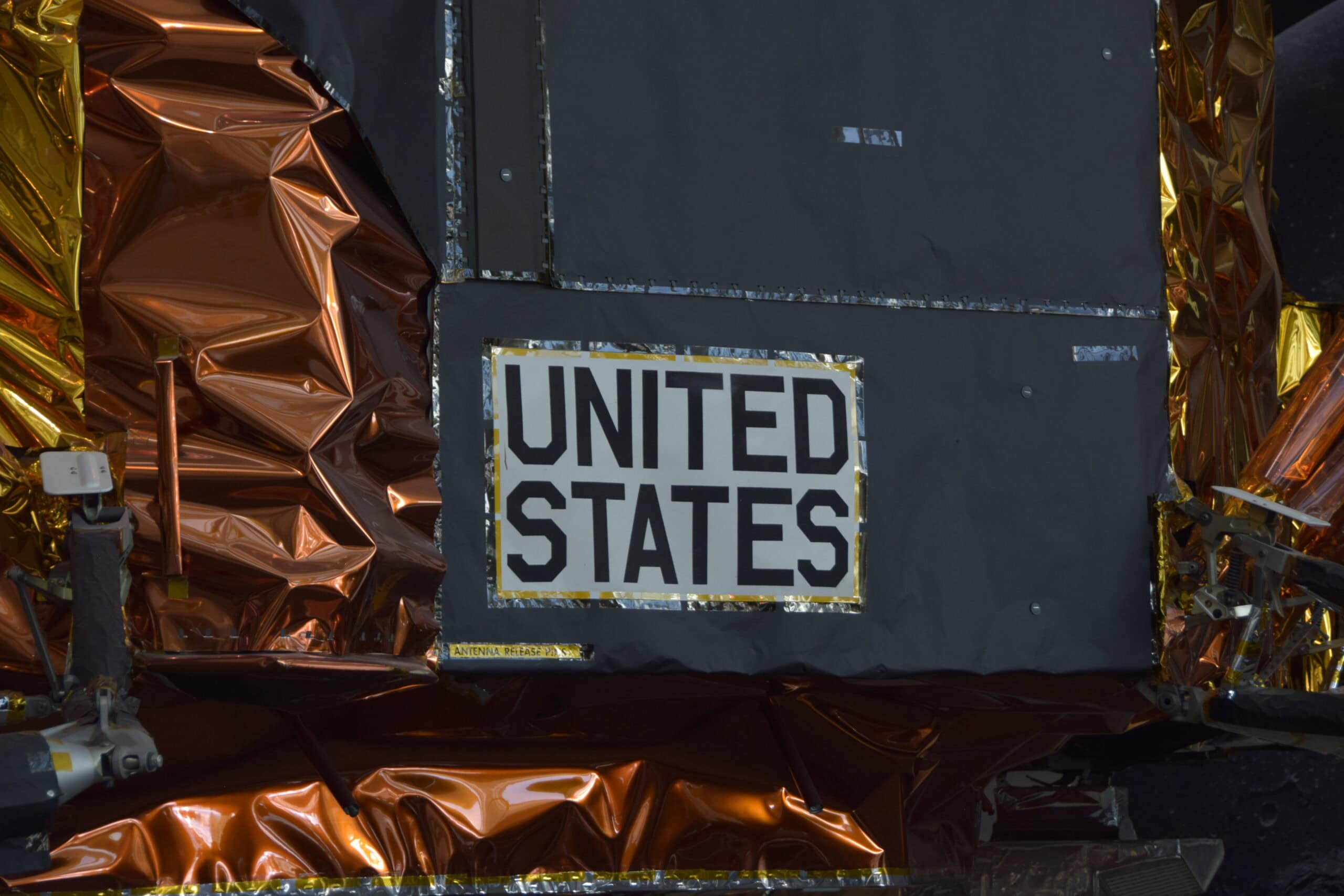
Apollo 11 Lunar Module. Image Credit: 19FortyFive.com Original Photo.
Voyager represents the pinnacle of the chemical rocket age.
But if humanity ever wishes to become an interstellar species, it will need to develop technologies radically different from those that first carried us into orbit, to the Moon, and to Neptune.
In that respect, Voyager 2 serves as both a triumph and a reminder of how far we still have to go.
Like this article? Add Us As a Preferred Source on Google
About the Author: Harrison Kass
Harrison Kass is a writer and attorney focused on national security, technology, and political culture. His work has appeared in Tablet, City Journal, The Hill, The Spectator, and The Cipher Brief. He holds a JD from the University of Oregon and a master’s in Global & Joint Program Studies from NYU. More at harrisonkass.com.