
As Russia ramps up its ballistic missile campaign against Ukraine, Kyiv is urgently looking for new ways to destroy the weapons before they ever leave the ground – and Ukrainian President Volodymyr Zelenskyy believes that Elon Musk could help.
The Ukrainian president reportedly asked U.S. President Donald Trump during closed-door talks at the White House on July 28 to persuade Elon Musk to allow Ukraine to expand its use of Starlink, the SpaceX satellite internet service.
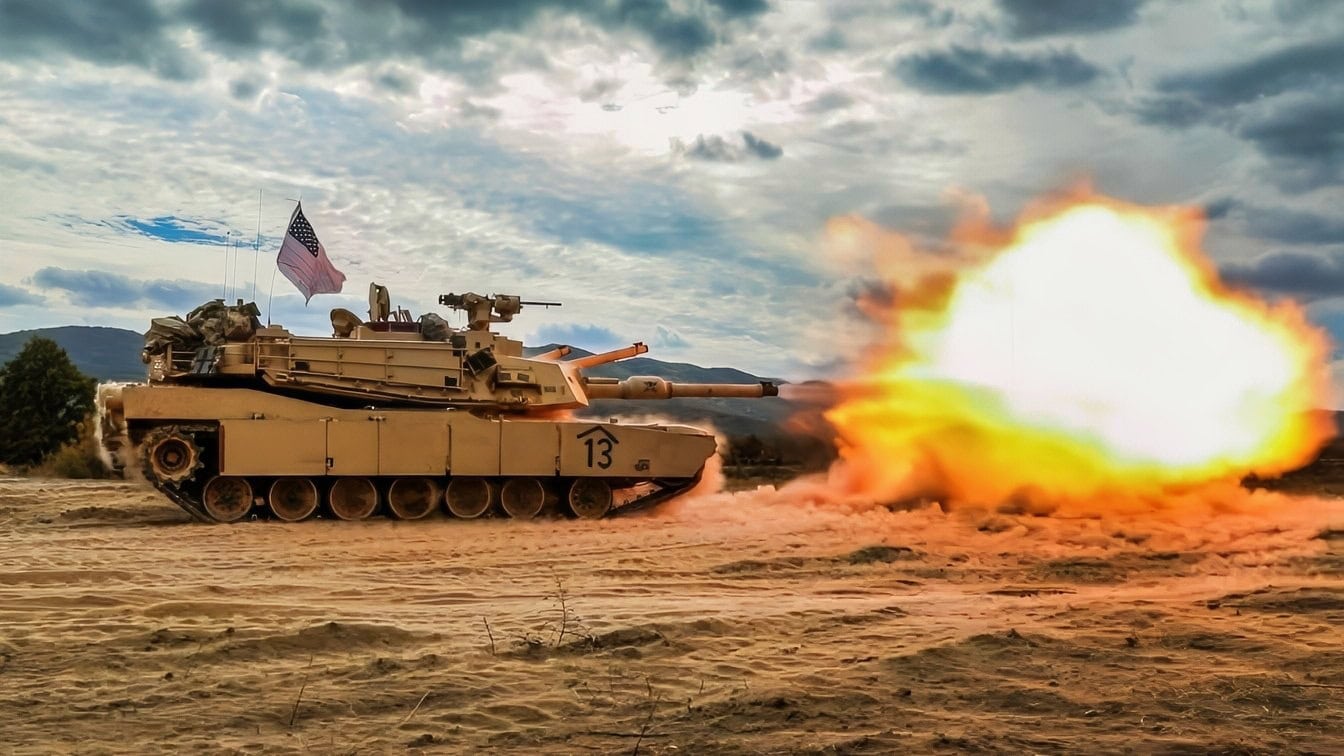
An M1A2 Abrams main battle tank with 1-16th Infantry, 1st Armored Brigade Combat Team, 1st Infantry Division, conducts a Live Fire Accuracy Screening Test Sept. 28, 2025, on Novo Selo Training Area, Bulgaria. The LFAST is used to assess and confirm the accuracy of its firing system before live fire gunnery, ensuring the tank is ready for combat and its firing control systems are functioning correctly. Abrams live fire exercises increase the lethality of crews on collective tables while generating warfighting readiness and combat credible forces along NATO’s Eastern Flank. (U.S. Army photo by Sgt. 1st Class Richard Perez)

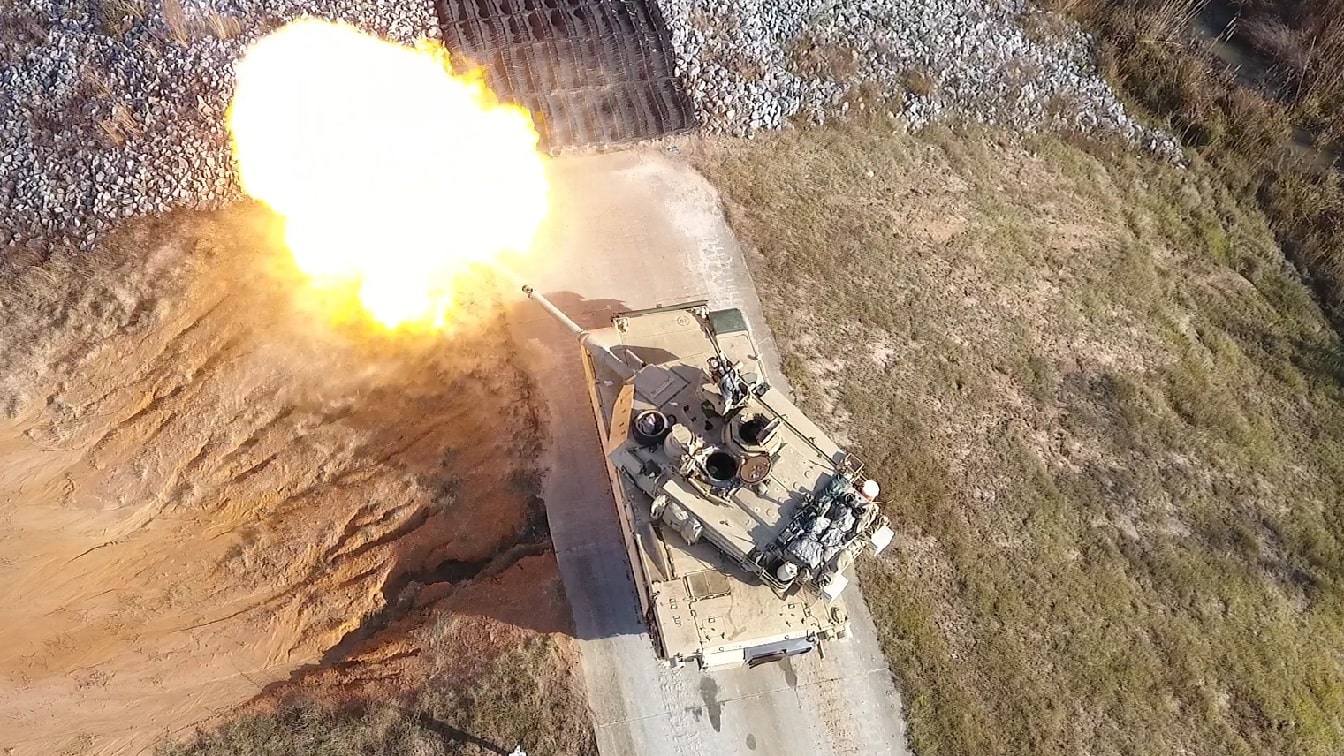
Soldiers with Echo Company, 1st Battalion, 81st Armor Regiment, 194th Armored Brigade, conduct tank gunnery training with the M1 Abrams tank July 09, 2025, at Brooks Range, on Fort Benning, Georgia. (U.S. Army photo by Daniel Marble)
The Atlantic reported on the alleged conversation on July 30, citing two officials familiar with the conversation, and describing how Zelenskyy hopes Starlink systems could be used to assist with drone strikes against ballistic missile launchers inside Russia. According to that report, Zelenskyy proposed expanding Ukraine’s use of the satellite network as an alternative way of combating Russia’s ballistic missiles at a time when supplies of U.S.-made Patriot interceptors are running dangerously low.
Trump was reportedly noncommittal, but the proposal could allow Ukraine to tackle an existential threat it currently cannot reliably defend against. Rather than attempting to intercept every Russian ballistic missile after launch, Kyiv is looking to destroy the launchers before they can fire.
Zelenskyy’s request was urgent then, but not even a month later, it is significantly more pressing today.
Zelenskyy Asked Trump to Talk to Musk
Zelenskyy traveled to Washington on July 28, where he met Trump at the White House before holding talks with U.S. senators at the Capitol. Speaking to reporters after those meetings, Zelenskyy publicly confirmed that he had pressed both Trump and lawmakers for additional systems and interceptors capable of defending Ukraine against ballistic missiles.
Speaking to reporters following the meeting, Zelenskyy did not detail the full extent of his conversation with the president, but he did say that the “real problem is anti-ballistic systems and anti-ballistic missiles.” Zelenskyy acknowledged the problem but did not specify, for obvious reasons, his efforts to push Musk to allow Starlink technology to be used for military purposes.
According to The Atlantic’s report, Zelenskyy told Trump that he wanted Musk’s permission to help guide drone strikes against ballistic missile launchers.
Ukraine cannot simply use existing Starlink terminals for military purposes, even if it already owns them. Starlink controls which terminals can be used in specific locations, meaning Kyiv would need the company’s permission to use them for military purposes.
Where Elon Stands
Musk is conscious of the value that Starlink offers Ukraine in the war. SpaceX first provided Ukraine with access to the network after Russia invaded in February 2022, and Starlink quickly became critical to Ukrainian battlefield communications. But by early 2023, SpaceX was publicly drawing a distinction between using the network for military communications and using it to conduct offensive strikes.
Speaking at a conference in Washington on February 8, 2023, SpaceX President Gwynne Shotwell said the company was comfortable with Ukrainian troops using Starlink for communications but had never intended the service to be used as a weapon. Shotwell said Ukraine had used Starlink in ways that were “unintentional and not part of any agreement,” specifically citing its use to control drones. SpaceX had therefore taken steps to restrict that capability.
That issue became even more controversial later that same year when it was revealed how Ukraine had requested Starlink coverage around Russian-occupied Crimea to support an attack on Russia’s Black Sea Fleet. Musk confirmed in September 2023 that he rejected a request from Kyiv to activate service around Sevastopol, arguing that SpaceX would have become an “explicitly complicit” actor in a “major act of war.”
Early accounts of the request incorrectly claimed that Musk had switched Starlink off during the operation, but Walter Isaacson, Musk’s biographer, said that coverage had never been activated around Crimea and Musk had instead refused Ukraine’s request to switch it on.
SpaceX’s current acceptable-use policy makes this distinction clear for customers, stating that ordinary Starlink service cannot be used to remotely pilot drones or for any military activity unless SpaceX explicitly permits it.
Zelenskyy is seeking that explicit permission.
What Will Musk Say?
It’s difficult to predict how Musk will respond. The obvious response for a company looking to protect its interests would be to reject the request, lest it expose itself to military and political risks. But the argument for an exception has become more urgent for Ukraine, and perhaps the West, in recent days and weeks.
Russia launched 24 ballistic missiles during its August 5 attack on Kyiv and surrounding regions, and Ukraine failed to intercept a single one. The attack killed 17 people and wounded dozens. Another Russian barrage overnight into August 8 killed at least four more, including a three-year-old boy.
Zelenskyy also revealed earlier this week that Ukraine has received only around one-third as many missile interceptors from its allies in 2026 as it did last year, leaving Kyiv exposed. If Musk says no, Ukraine will have few to no options left in the short term.
About the Author: Jack Buckby
Jack Buckby is a British researcher and analyst specializing in defense and national security, based in New York. His work focuses on military capability, procurement, and strategic competition, producing and editing analysis for policy and defense audiences. He brings extensive editorial experience, with a career output spanning over 1,000 articles at 19FortyFive and National Security Journal, and has previously authored books and papers on extremism and deradicalization.