
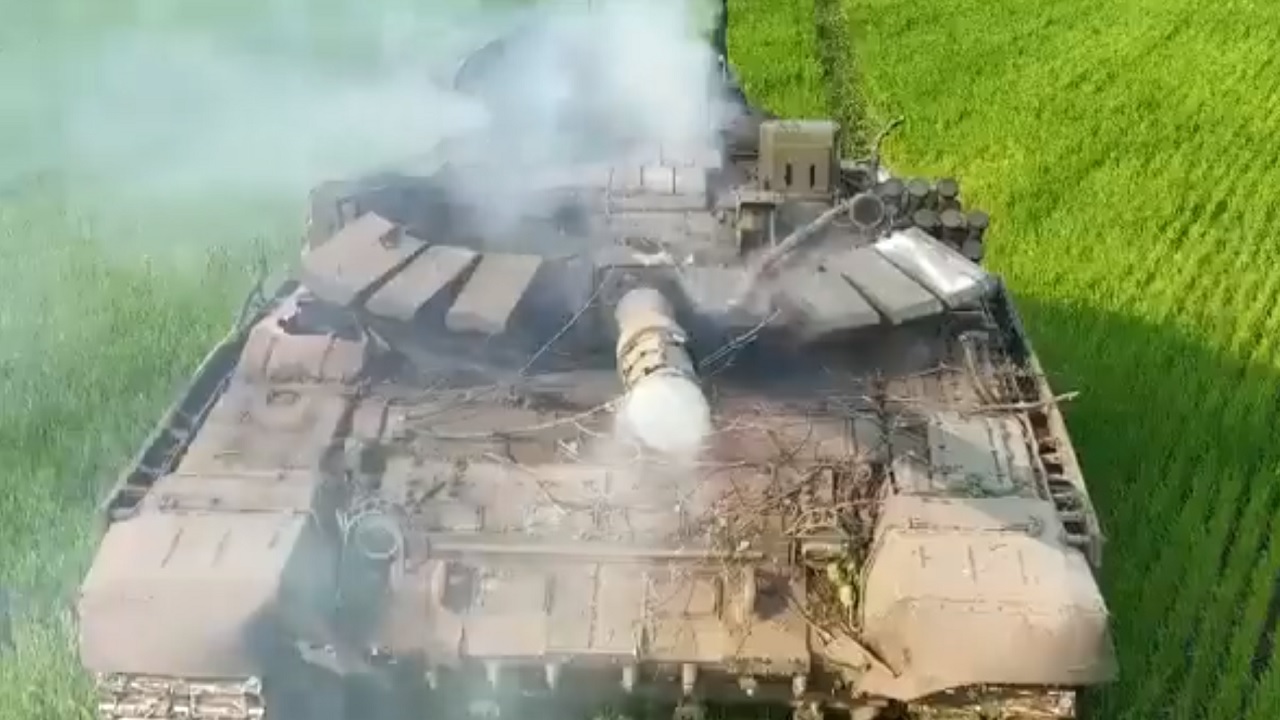
On August 6, the Wall Street Journal reported on a new U.S. intelligence assessment describing how Vladimir Putin might test NATO’s resolve in the years ahead. Officials described a range of options, from cyberattacks and deniable proxies to, at the far end, a small-scale ground incursion on the alliance’s eastern flank, sometime between this fall and 2029. Washington used to assume Putin wouldn’t risk provoking NATO while Ukraine stayed unresolved, an assumption that broke earlier this year once the war stalled out and the Kremlin came away from it without the win it needed.
Then there’s a line almost no one has quoted in full. The assessment rates the most extreme scenario, a limited land incursion, as low probability, which gradually increases over the years. That’s not the same as a number. The people who wrote it don’t hand reporters percentages for something like this, and what ended up in print reads more like a forecaster’s hedge than a betting line.
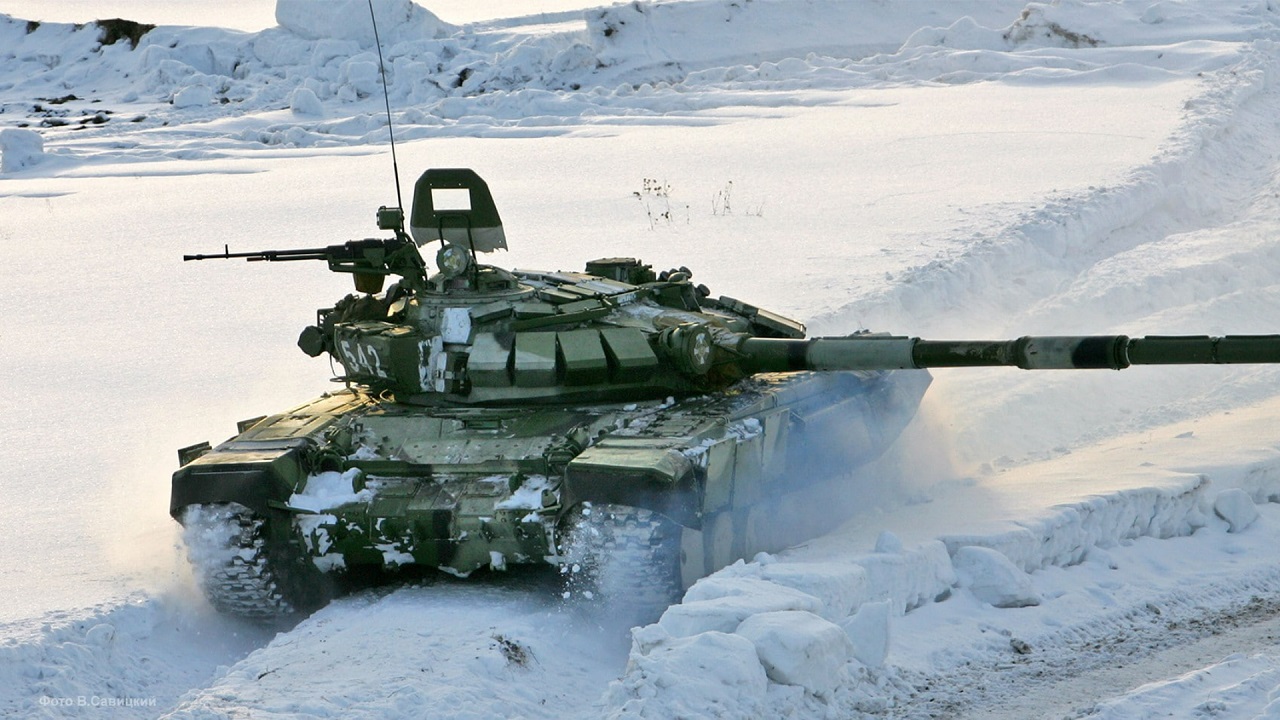
T-90 tank in the snow. Image Credit: Creative Commons.
That report landed about a week after a Russian Kh-101 cruise missile came down in a field outside Tarnawa-Kolonia, in eastern Poland. Both threads end up mattering for the same reason: how NATO responds to a small, deniable provocation now is the best evidence available of how it would respond to a bigger one. F-16s scrambled, and prosecutors in Lublin had the wreckage identified within days.
Lithuania’s foreign minister, Kęstutis Budrys, went on LRT the following Monday and said NATO’s political response to the incident could have been much stronger. He’s the same official who argued earlier this year that NATO’s Eastern Sentry and Baltic Sentry missions were already producing what he called tangible results: fewer airspace violations and less drone activity, and, he added, fewer incidents against undersea infrastructure in the Baltic.
Why the Dramatic Option Is Also the Worst One
The more dangerous Russian campaign against NATO is the deniable one running through cables and drones. What follows is about the scenario leading to every headline this week, and why Moscow has every reason to avoid it.
Run the numbers Putin would actually have to run. A strip of NATO territory buys nothing that changes the trajectory of a war he’s already fighting and not winning. The harder version of the prize, the kind of symbolic win that would count as proof that NATO’s guarantee is hollow, fares no better under the same arithmetic. Article 5 obliges the alliance to assist a member under attack without dictating what that assistance has to look like, so this isn’t automatic escalation. Even so, it would cost something close to as much in a different currency, forcing the exact allied conversation two years of deniable pressure have been built to avoid.
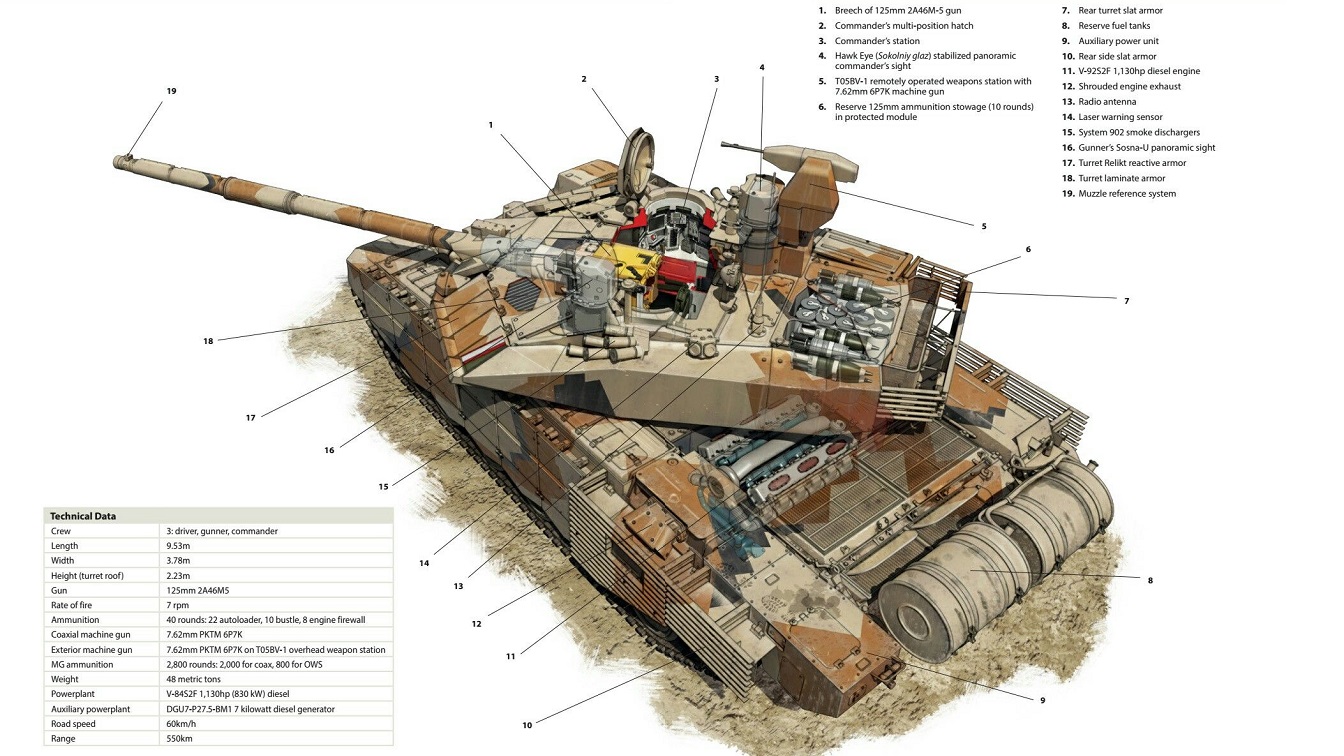
T-90 Tank. Image Credit: Creative Commons.
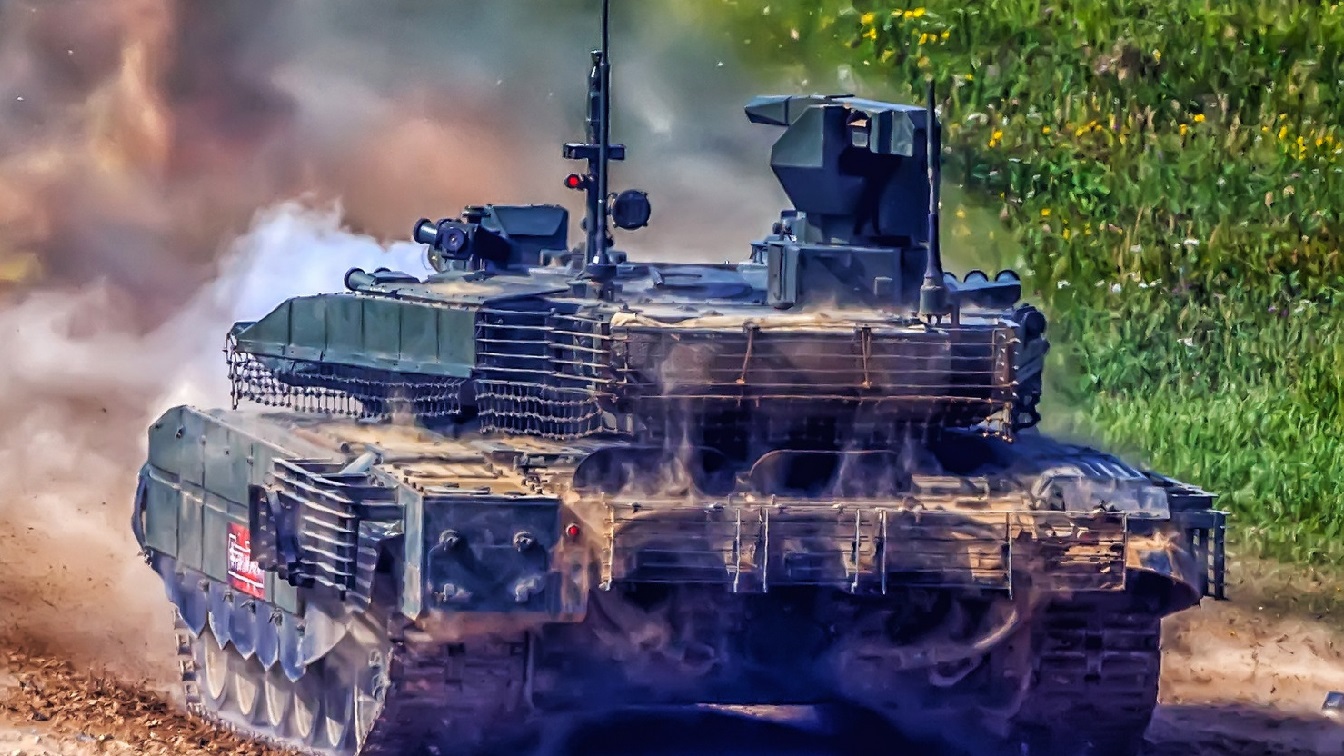
T-90M. Image Credit: Creative Commons.
Regular troops crossing a border answer the attribution question almost the moment it’s asked. Whether they answer the intent question is a different matter. Moscow can still claim it was an accident or that an unauthorized unit went rogue, and there’s enough precedent for such a claim that nobody can rule it out. What a uniform does take away is the easy deniability, the “we don’t actually know who did this” that’s kept two years of pressure below the threshold that would force everyone to respond together.
So the ratio runs backward from how this has been covered. The scenario is dramatic enough to lead a story, and it’s also the one that costs Moscow the most for the least. Low is where this one starts, and there’s nothing reassuring buried in that. It’s just an accurate read of what the trade looks like from the Kremlin’s side of the table.
Three Things Would Have to Move
Nothing about that math is locked in, and there are basically three ways it could shift.
Start with capability, since it’s the easiest to point to. Germany’s top general, Christian Freuding, said in June that all thirty-two NATO allies now agree Russia could have the capacity to invade a member state by 2029. That’s a claim about what Moscow might eventually be able to build, not about what Putin wants to do once he has it, and that gap is almost closed every time this story gets retold on cable news.
The second piece is motive, and it’s harder to be disciplined about. Lithuania’s defense minister, Robertas Kaunas, said on July 20 that the Kremlin needs some kind of new victory, pointing to the stalled front and fuel shortages at home. He may well be right. What’s worth watching isn’t a minister’s quote on Lithuanian radio. It’s whether Russian incidents start losing the deniability that’s defined them so far, since a Kremlin willing to pay that cost at the low end would be a sign that the same cost has stopped deterring at the high end.
Then there’s the piece that deserves the most space, because it’s the one NATO actually has some control over: whether Moscow expects a response to look certain. Putin doesn’t need a precise count of American Patriot interceptors to form a general sense of whether the eastern flank would answer fast and together. He needs the impression, not the inventory count. That perception depends partly on reports of strain on U.S. stocks of PrSM, ATACMS, and Stinger missiles, which feed Moscow’s calculations regardless of whether the Pentagon disputes the specific numbers.
NATO Is Already Pulling One of Those Levers
This is the part that should reshape the policy argument and mostly doesn’t. There are two separate reasons the incursion stays irrational, and they run on two different clocks. One is structural: crossing the border costs Moscow deniability, no matter what NATO does, full stop. The other is a choice NATO is actively making right now, and could stop making: keeping the expected cost of a response high enough that the gamble doesn’t pay off. That second one is the reversible part, which is also the part worth watching most closely.
Budrys’s claim about Eastern Sentry and Baltic Sentry belongs right here. It’s the best evidence anyone’s offered that deterrence against the lower-order threat is working right now, on the near clock, at least according to the man making the claim.
The same official’s complaint about the weak political response to the Kh-101 incident points at a different lever, though, one that fires after something has already happened rather than the one that prevents it.
That lever is the harder one to show is holding. Conventional reinforcement and magazine depth are supposed to do the same job on the far clock, out to 2029. Nobody has to choose between funding one and the other, but letting either quietly run down hands Moscow back the exact condition it’s currently missing.
So, Would Putin Really Do It?
Probably not, under the arithmetic as it stands today.
The territorial prize doesn’t come close to justifying the cost in deniability, and NATO has kept the price of a response too high on top of that.
Two of the three things that could change that math are schedule shifts that Washington and Brussels don’t fully control. The third is the one job the alliance actually has for the next three years: making sure it doesn’t move either.
That’s a less satisfying answer than the one this week’s coverage has been chasing, and it puts the harder job on NATO rather than on Moscow.
Keeping a low probability low takes continuous work, not a single decision, and the alliance’s own conduct over the next three years will decide whether it stays that way.
MORE – Japan Lost at Pearl Harbor
About the Author: Dr. Andrew Latham
Andrew Latham is a professor of international relations and political theory at Macalester College in Saint Paul, MN. You can follow him on X: @aakatham.