

The best public accounting puts Russia’s military spending at 53.148 trillion rubles from January 1, 2022, through March 31, 2026. Rounded to a usable headline number, Moscow’s wartime military bill stands at 53.1 trillion rubles, or roughly $625 billion, using year-by-year dollar conversions rather than a single exchange rate for the entire period. The ruble sum is the hard figure, as close as I can get to it right now, but clearly is not absolute, but meant to show you, the reader, the scale of Russian spending. The dollar total is an approximation. And the reality is clear: Putin has very little to show for it, lost the war based on many different goals he himself set, and looks like China’s junior partner.
The Ukraine War Math Is Tough for Russia
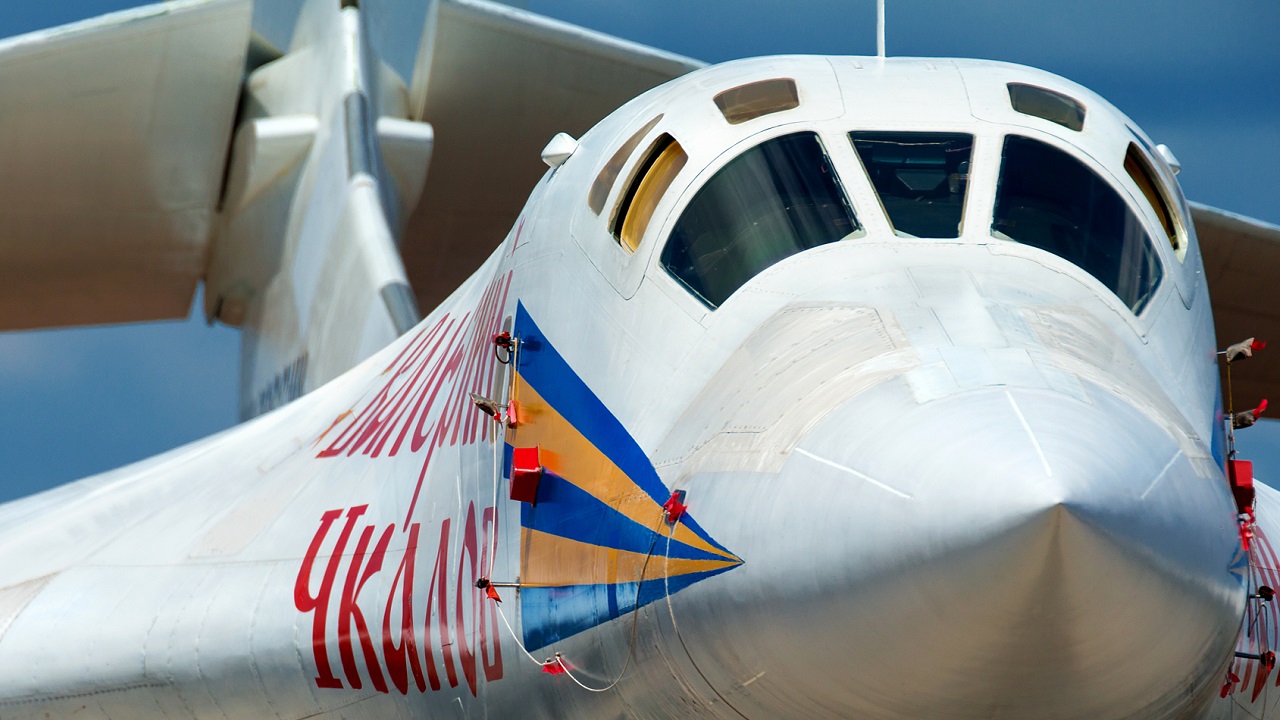
Tu-160. Image Credit: Creative Commons.
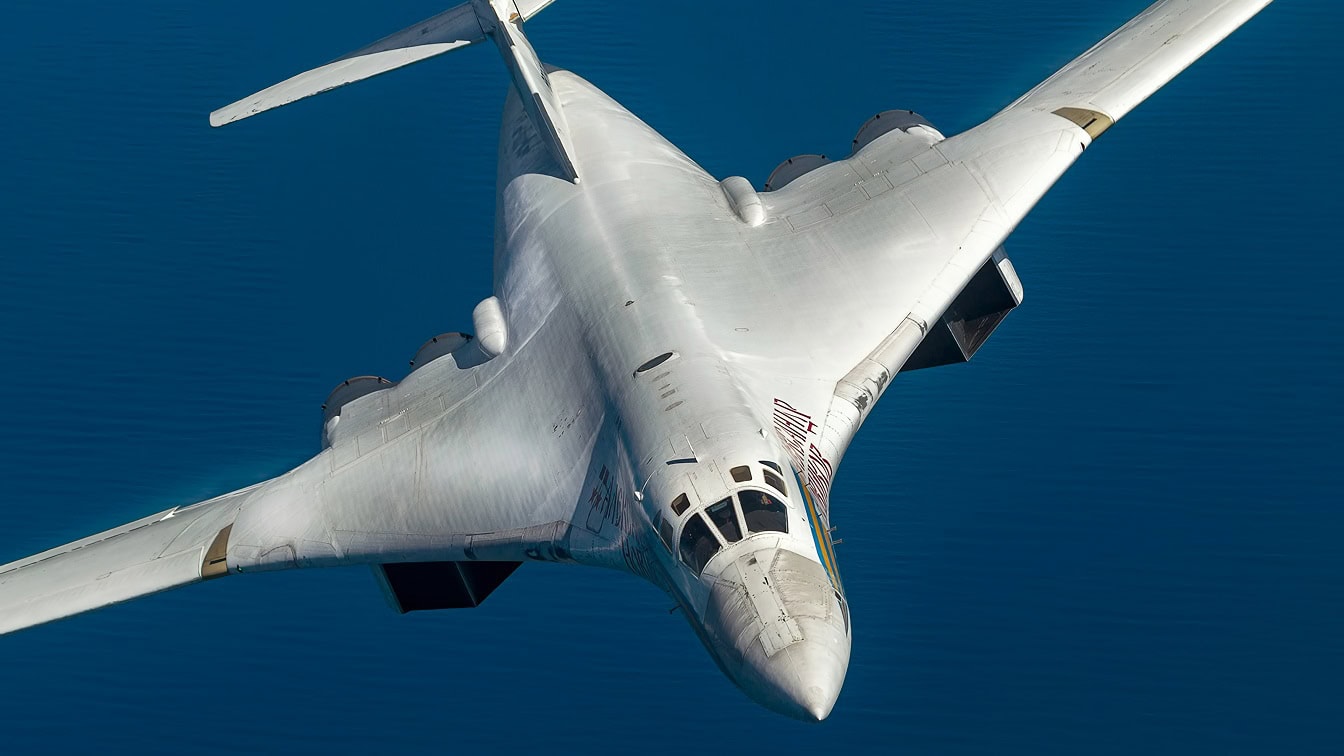
Tu-160 Bomber. Image Credit: Creative Commons.
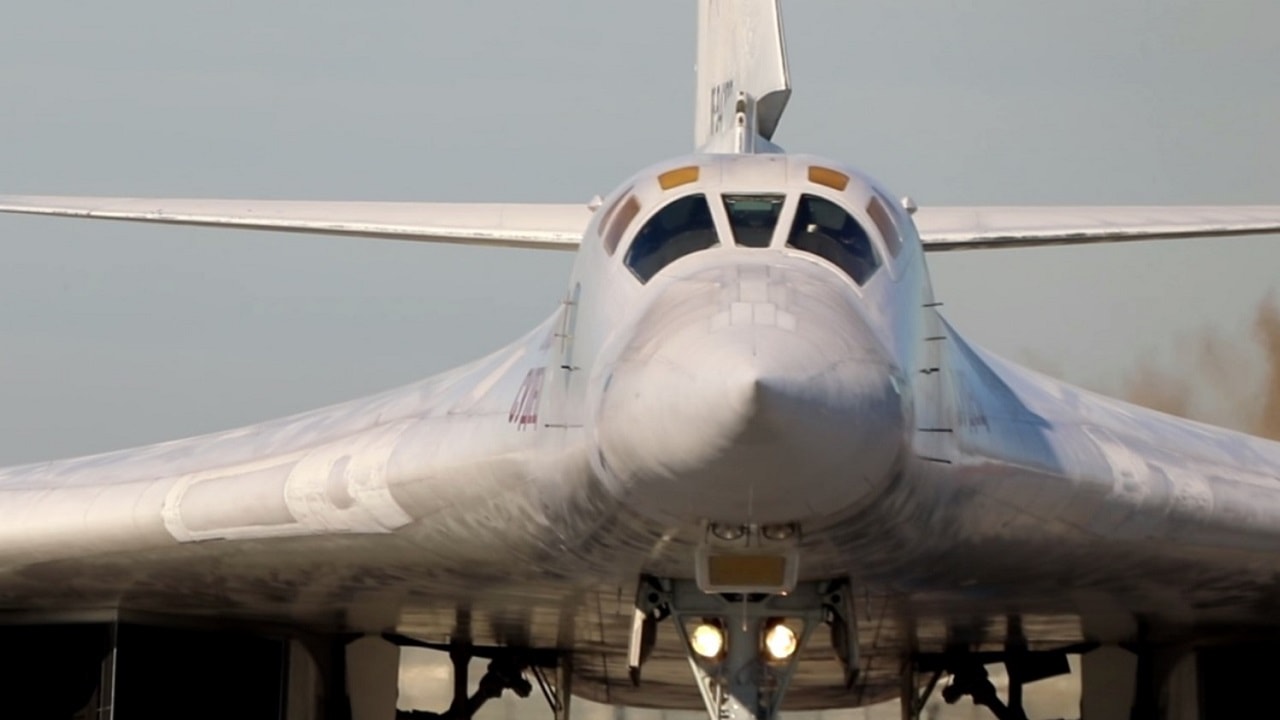
Tu-160. Image Credit: Creative Commons.
The arithmetic starts with the Stockholm International Peace Research Institute’s annual estimates: 7.457 trillion rubles in 2022, 9.435 trillion in 2023, 14.393 trillion in 2024, and 15.964 trillion in 2025. Economist Janis Kluge calculated another 5.9 trillion rubles in the first quarter of 2026 from Russian Finance Ministry data. Add those five figures, and the result is 53.148 trillion rubles. No estimate is included for April through August 2026.
This is not a Kremlin invoice labeled “the Ukraine war.” The total includes nuclear forces, military salaries, bases, procurement, and other defense functions, as well as the 54 days of 2022 before the full-scale invasion. It also misses some regional enlistment bonuses and other war-related spending outside the federal military accounts. SIPRI estimates that direct operations in Ukraine consumed about 4.5 percent of Russian GDP in 2024 and 5.1 percent in 2025, compared with total military burdens of 7.2 percent and 7.5 percent, respectively. The war drove most of the bill, not every ruble.
The Ukraine War Failure
What did Russia obtain? Nothing compared to what it spent; that’s for sure.
A Russia Matters review of DeepState and Institute for the Study of War data placed Moscow’s net gain since February 24, 2022, between 28,191 and 29,051 square miles, equal to about 12 percent of Ukraine.
Including Crimea and the parts of Donbas held before 2022, Russia controls roughly 19-20 percent.
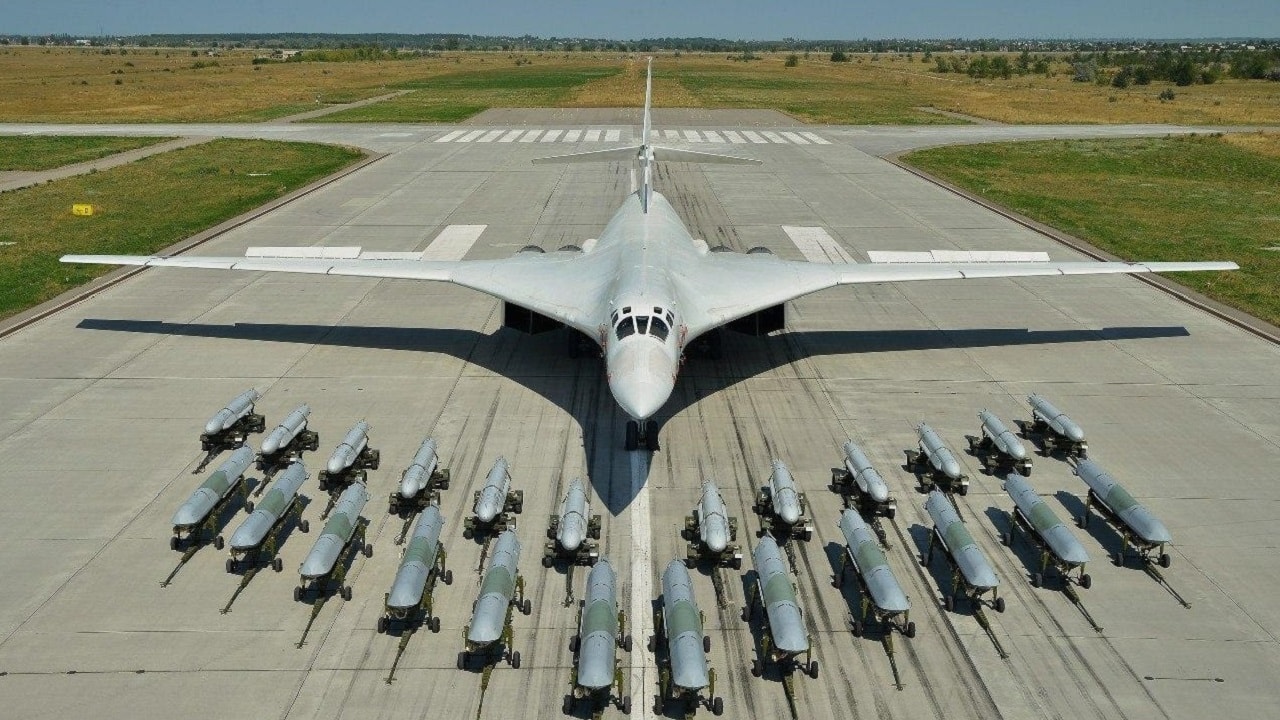
Russia’s Tu-160 bomber. Image Credit: Creative Commons.
Dividing $625 billion by the higher net-gain estimate produces a crude ratio of $21.5 million in military spending for each square mile gained.
To me, considering the loss of lives to gain such territory, this is nothing short of a disaster. More on the human cost in a second.
Russia Paid 1.4 Million Casualties for 12 Percent of Ukraine
The human bill is larger than the map suggests.
A July 2026 Center for Strategic and International Studies estimate put Russian battlefield casualties at 1.4 million, including killed, wounded, and missing personnel, from February 2022 through June 2026.
Between 400,000 and 450,000 were fatalities. CSIS estimated monthly losses of 30,000 to 34,000 in 2026, against recruitment of roughly 27,000, a shortfall in Moscow’s effort to keep feeding the front without another national mobilization.
Russia also lost at least 23,959 pieces of military equipment, according to the Oryx visual database as counted by Russia Matters, on August 4.
The total included 14,143 tanks and other armored vehicles, 380 aircraft, and 29 naval vessels. Oryx requires photographic or video evidence, so the number is a floor.
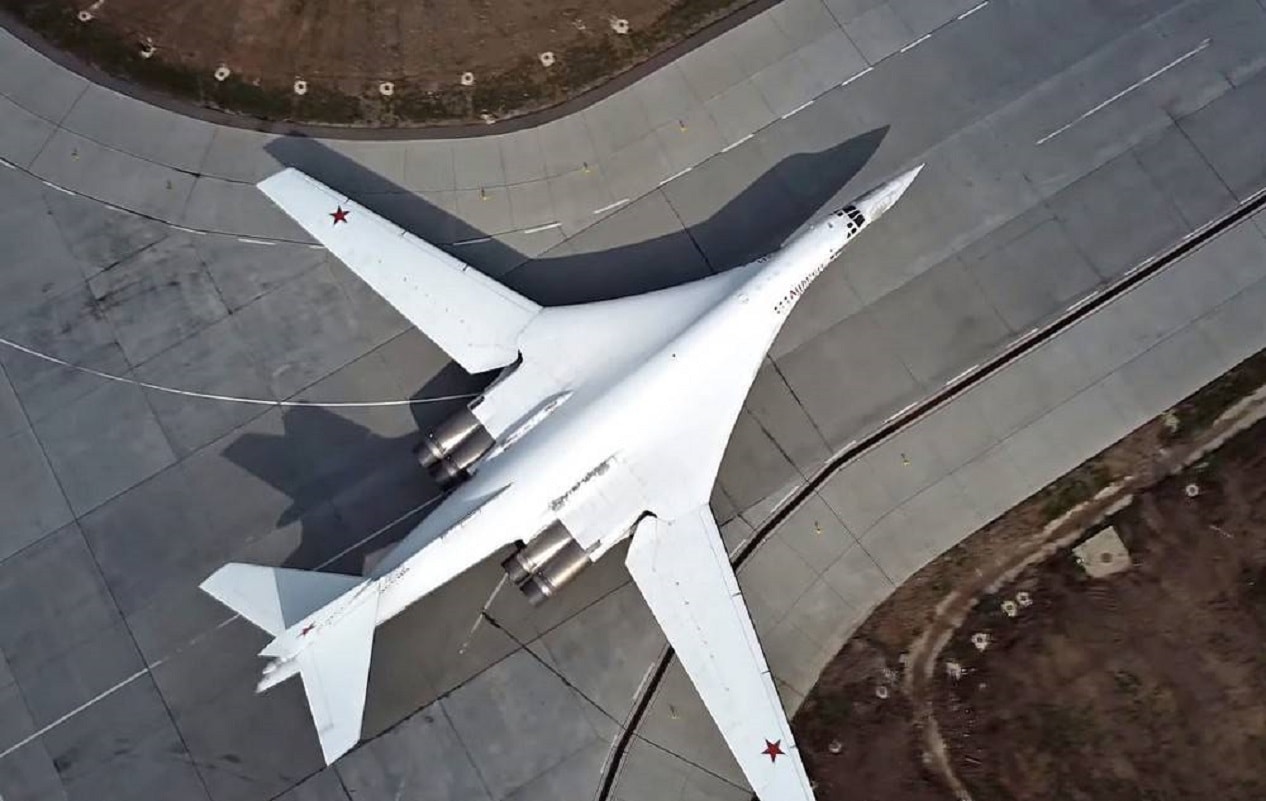
Modernized Tu-160. Image Credit: Russian Government.
It also counts equipment that is destroyed, damaged, abandoned, or captured, rather than treating every entry as destroyed.
The blunt ratios are severe, for sure. Using 1.4 million casualties and the higher territorial estimate, Russia suffered about 48 casualties for every square mile of net gain. Using the low end of the fatality estimate, the toll is almost 14 Russian dead per square mile.
During the year ending August 4, Russia added only 969 to 1,041 square miles, between 0.4 and 0.5 percent of Ukraine. Over the latest four-week period, the gain was 13 to 24 square miles.
There was a strategic loss beyond Ukraine. Finland joined NATO in April 2023, and Sweden followed in March 2024, abandoning military nonalignment after Russia invaded. Finland’s entry more than doubled NATO’s land border with Russia. Moscow gained occupied Ukrainian territory while helping produce the NATO expansion the Kremlin said it wanted to prevent.
Think back to Putin’s own words before the war: his biggest fear was NATO expansion along Russia’s territory. He feared Ukraine joining NATO. Now he has added two more states to the NATO alliance, and while Kyiv might not join NATO anytime soon, it will surely be stocked with the best NATO weapons money can buy when the war is over and be what I would consider a de facto part of the alliance for decades to come.
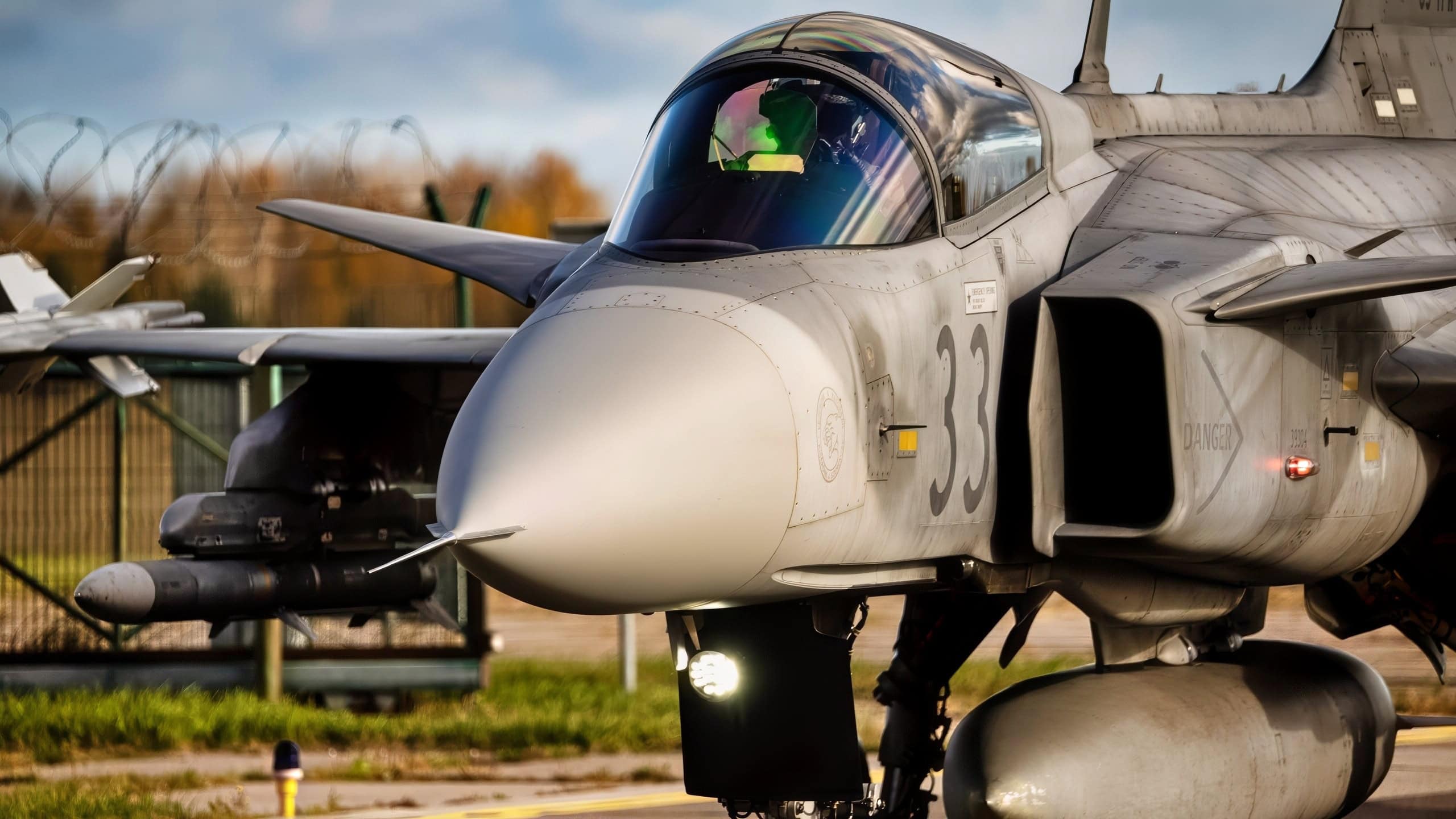
A Hungarian Air Force JAS-39 Gripen is seen taxiing across the runway after completing a successful training scramble.
Hungary took command of NATO’s Baltic Air Policing mission in August 2022, deploying JAS-39 Gripen fighter jets to Siauliai Air Base in Lithuania for the third time since 2015. Air Policing is a long-running mission that operates 24 hours a day, 365 days a year. It includes quick reaction fighter aircraft are ready to take off within minutes to intercept any aircraft that may threaten Allied airspace.
Russia’s War Economy Is Squeezing the Civilian State
Military production kept headline growth positive, but it did not create balanced growth.
SIPRI found military expenditure reached almost 16 trillion rubles in 2025, equal to 38 percent of federal spending. After inflation, civilian social-policy spending stood at only 72 percent of its 2020 level. Russia’s National Welfare Fund still held 13.6 trillion rubles in January 2026, but only 4.2 trillion was liquid and available to cover deficits.
The strain intensified in 2026. Russia’s government cut its annual growth forecast to 0.4 percent after growth slowed to about 1 percent in 2025. The federal deficit reached 5.73 trillion rubles during the first half of 2026, equal to 2.5 percent of GDP and 1.7 times the year-earlier level. Russian finance officials now face the rising cost of funding the war through taxes, borrowing, reserves and weaker civilian investment.
Russia is not bankrupt. Its sovereign debt remains manageable, energy exports still generate revenue, and the state retains broad control over banks, industry, and capital flows. The damage is structural. Workers, machinery, and credit move toward weapons production while civilian industries face high rates, labor shortages, and weaker demand.
Even peace would leave Moscow with a large reconstruction bill for its armed forces and depleted stockpiles; one reason ending the fighting would not end the military expense.
China Holds the Leverage and North Korea Supplies the Shells
The war also changed Russia’s relationship with China. The European Union Institute for Security Studies found Chinese products rose from 23 percent of Russian imports in 2021 to 57 percent in 2024.
Over the same period, Russia’s share of China’s imports increased by less than one percentage point. Beijing has other suppliers and markets. Moscow has fewer alternatives.
The result is a Russia increasingly confined to the role of China’s junior partner. The phrase describes the imbalance in trade leverage, technology access and energy sales.
North Korea fills a different hole, and one I never could have conceived of before the war began. Ukrainian military intelligence told Reuters Pyongyang had delivered 6.5 million artillery shells to Russia since 2023. An August 2026 Reuters review said North Korean ammunition and weapons now account for roughly half of Russia’s front-line munitions, alongside ballistic missiles and an estimated 14,000 to 15,000 troops sent to Russia. The core contribution is still millions of artillery rounds sustaining Russia’s rate of fire.
Russia Faces a Tough Reality Thanks to the Ukraine War
The newest budget record closes with one more hard figure. From January 1 through March 31, 2026, Russia’s military consumed 5.9 trillion rubles, equal to 46 percent of all federal expenditure during the quarter. Moscow spent 65.6 billion rubles per day and used 39.6 percent of the 14.886 trillion rubles approved for the entire year before April began.
And I would say Russia has gained nothing for all of this spending, lives and dreams crushed, and military assets that will be very hard to replace. And my gut sense is that Putin knows all of this.
About the Author: Harry J. Kazianis
Harry J. Kazianis (@Grecianformula) was the former Senior Director of National Security Affairs at the Center for the National Interest (CFTNI), a foreign policy think tank founded by Richard Nixon based in Washington, DC. Harry has over a decade of experience in think tanks and national security publishing. His ideas have been published in the NY Times, The Washington Post, The Wall Street Journal, CNN, and many other outlets worldwide. He has held positions at CSIS, the Heritage Foundation, the University of Nottingham, and several other institutions related to national security research and studies. He is the former Executive Editor of the National Interest and the Diplomat. He holds a Master’s degree focusing on international affairs from Harvard University.

