
Vladimir Putin can probably afford another year of the Ukraine war more easily than he can afford the first year of peace.
That’s the possibility sitting underneath the recent talk about Russia’s economy running out of road. The numbers are bad: growth is forecast at just 0.4 percent for 2026, and the federal deficit hit 5.73 trillion rubles in the first half of the year alone, already past the full-year target. Government budget data now suggest that spending, and the deficit, could exceed the official plan by more than another trillion rubles. Most commentary stops there and treats the arithmetic as the whole story. It isn’t. Four years of war have built a domestic political economy in Russia that now depends on the war continuing, and unwinding it doesn’t just relieve pressure on the Kremlin. It takes away things ordinary Russians and regional officials have come to count on.
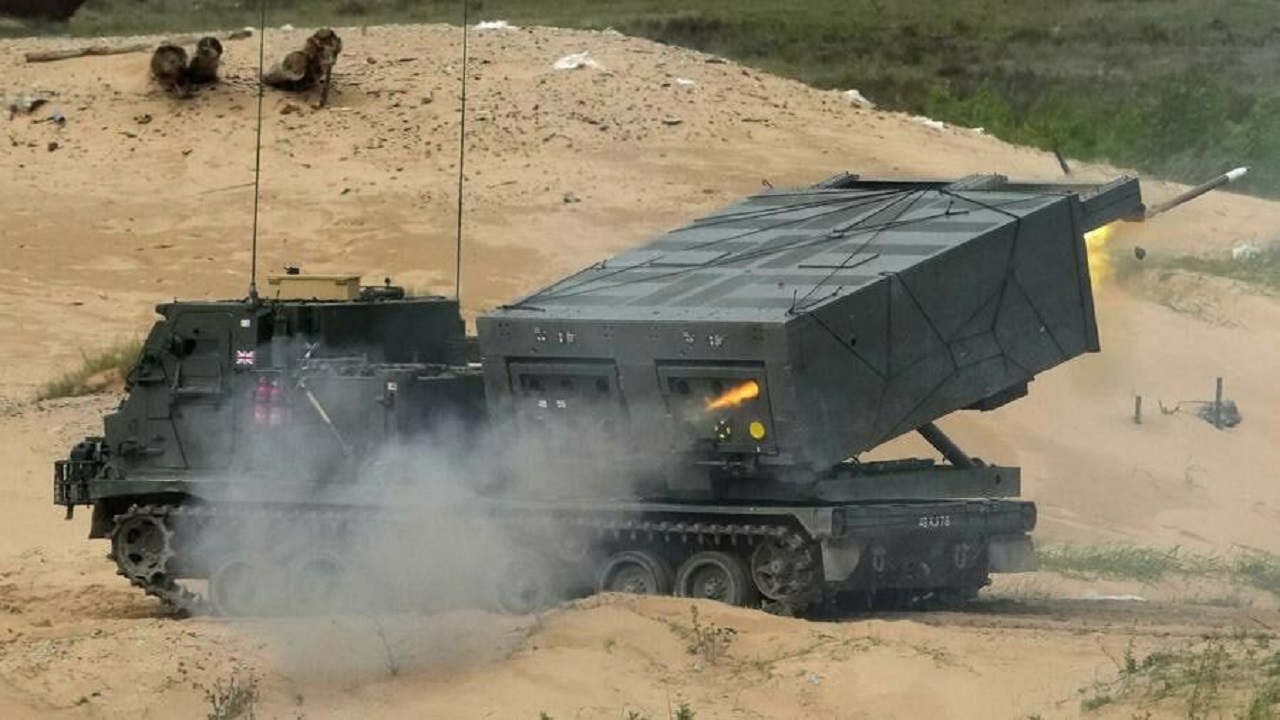
HIMARS. Image Credit: British Army.
A War Economy That Feeds Its Own Constituents
Start with what the war has actually done inside Russia, as opposed to Ukraine. Defense plants in depressed regions have hired workers and raised wages for the first time in a generation, something that would have sounded like a joke in 2019. Regional governments pay enlistment bonuses and cover expenses for soldiers’ families. Banks carry part of the load too, through subsidized lending meant to keep favored borrowers and defense contractors afloat even as high interest rates strangle everyone else, and Moscow has protected military spending while hunting for cuts elsewhere in the budget. None of this is patronage you can unwind quietly. Somebody will notice the moment it stops.
The regional numbers make the exposure concrete. Seventy-four of Russia’s 89 regions ran deficits in 2025, up from 50 the year before, and the total regional shortfall came in at roughly 1.5 trillion rubles, more than triple the 2024 figure. Corporate tax receipts are falling. War-related social spending keeps rising anyway. Even Moscow, the wealthiest region in the country, cut its own investment plans this year. A genuine demobilization would not fix that. It would begin removing the wartime income-supporting parts of local economies while leaving many of the promises regional governments made in place, unfunded.
Demobilization Is the Harder Problem
Regional finances are a spreadsheet problem, and spreadsheet problems have known fixes even when they’re painful. Veterans are something else. There’s no transfer payment from Moscow that solves the problem of what happens when the men come home.
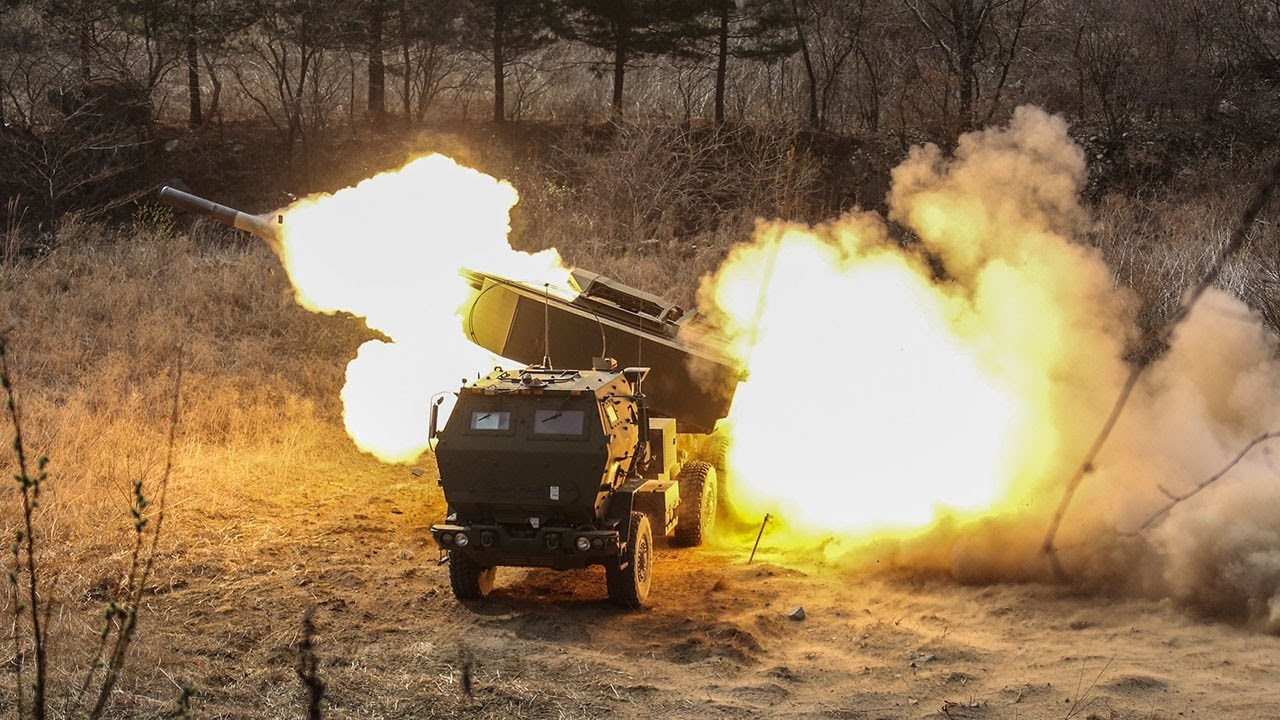
HIMARS attack. Image Credit: U.S. Military.
Russia has spent two years dangling signing bonuses, debt relief, and education perks to keep men enlisting, and it has worked. Those benefits, plus combat pay, have made military service one of the only realistic paths to sudden upward mobility for men in poorer regions.
In May, Putin added debt relief of up to 10 million rubles for new recruits and their spouses, real money in a country where median wages remain modest, and money that would stop flowing into new households once recruitment and combat pay began to taper off. Reuters has reported that Russia may eventually need to reintegrate well over a million veterans, including wounded soldiers and men recruited directly out of prison. Most will go home to regions that cannot match the pay they were getting or provide the medical care many of them will need.
Putin has tried to get ahead of this politically. His “Time of Heroes” program moves hand-picked veterans into government posts, and United Russia has placed a wounded veteran near the top of its list for September’s election. Useful gestures for state television, maybe. A jobs program for an army, no. War keeps these men paid and under military discipline, away from the communities that will eventually have to absorb them. Peace sends them home just when the civilian economy is least equipped to help them.
No Ukraine War End: Putin May Prefer an Armistice Without Demobilization
None of this means Putin wants to keep fighting at the current intensity forever. Russian casualties remain heavy, the budget is strained, and Ukrainian long-range strikes have inflicted real costs on Russian refining capacity, sending Russian energy firms to India in search of additional gasoline supplies.
The Kremlin has good reason to want a quieter front line. It has much less reason to dismantle the whole system it built around a loud one.
What that points toward is something short of real peace: an armistice that halts the worst of the fighting while military production, veteran registries, and enlistment programs keep running much as they do now. Confrontation with NATO, real or manufactured, gives Moscow a durable excuse to keep the armed forces large and the factories running even after the shooting stops in Ukraine. Russia’s 2026-2028 budget framework already maintains high defense spending and provides for continued stockpile replenishment even if active operations have ended. Putin gets his diplomatic win abroad. He keeps the machinery of wartime politics running at home, too.
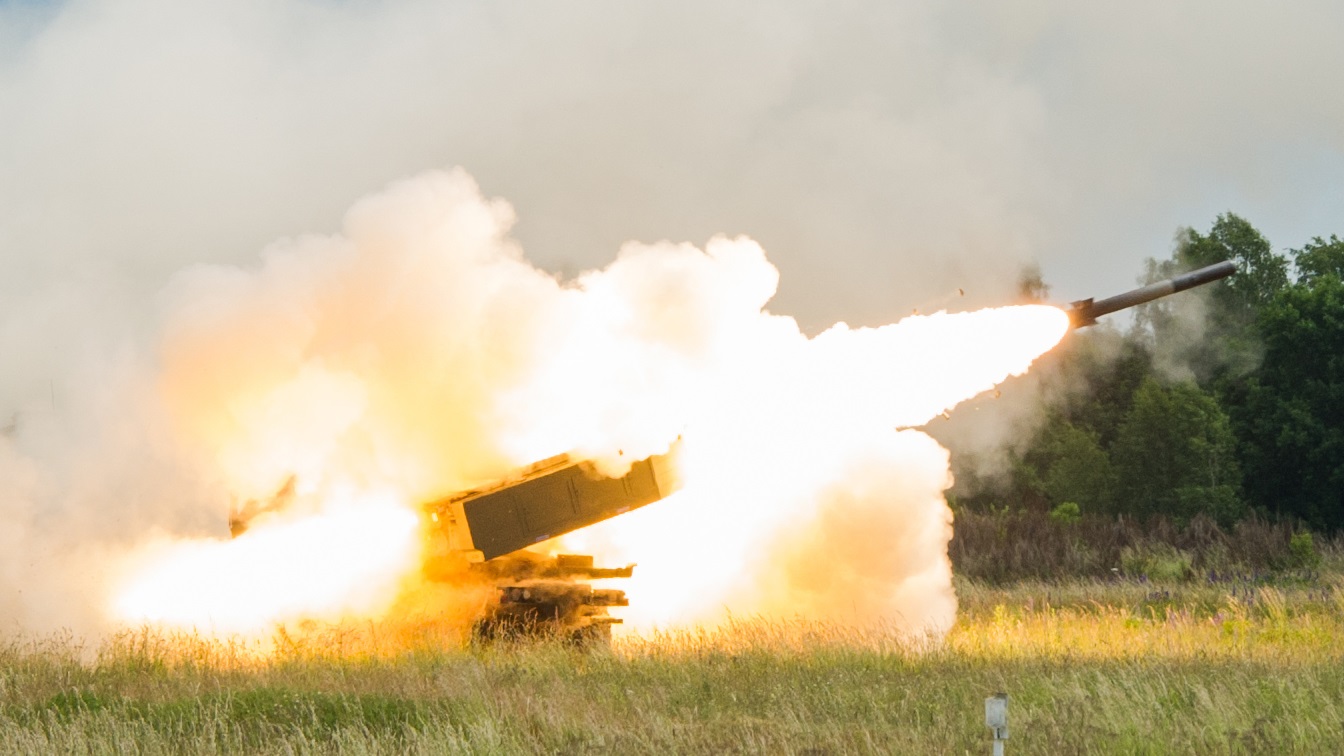
M142 High Mobility Artillery Rocket System (HIMARS) vehicles with 1st Battalion, 181st Field Artillery Regiment, Tennessee Army National Guard participating in Saber Strike 17 execute a fire mission at Bemoko Piskie, Poland, June 16, 2017. This year’s exercise includes integrated and synchronized deterrence-oriented training designed to improve interoperability and readiness of the 20 participating nations’ militaries. (U.S. Army photo by Markus Rauchenberger)
That’s the version of “peace” Washington should actually be planning for, and it isn’t the one showing up in most sanctions-relief discussions, which still tend to treat a ceasefire and a durable settlement as more or less the same event. Trading broad relief for a ceasefire in a lump sum would be badly mispriced relative to that reality. Relief should come in installments, tied to steps that can actually be verified, and stay reversible if those steps stop. Ukraine still needs the ability to deter another offensive, because a pause just gives Moscow room to rebuild while calling it self-defense. The real test of compliance shows up in force posture and production numbers, not in whatever language ends up in the signed document.
Washington’s instinct will be to read a slowing Russian economy as pressure toward a lasting settlement in Ukraine. It may be pushing Putin somewhere narrower instead, toward a cheaper, quieter version of the war he already has, one that ends the worst of the killing while leaving the state built to bring it back whenever he needs it again.
About the Author: Dr. Andrew Latham
Andrew Latham is a professor of international relations and political theory at Macalester College in Saint Paul, MN. You can follow him on X: @aakatham.