
In 1943 and 1944, a single American shipyard launched 50 aircraft carriers in under two years, peaking at roughly one a week. They were built not by a great naval contractor but by Henry Kaiser, an industrialist who had never constructed a warship in his life, using the mass-production methods he had perfected building cargo ships, and he did it over the objections of a Navy that thought the whole idea beneath it. The little “jeep carriers” that resulted were slow, thin-skinned, and mocked by the sailors of the fleet, until one group of them helped pull off one of the greatest last stands in naval history. It is a feat of industrial mobilization the United States would struggle to come anywhere near today.
The Carrier Crisis of 1942
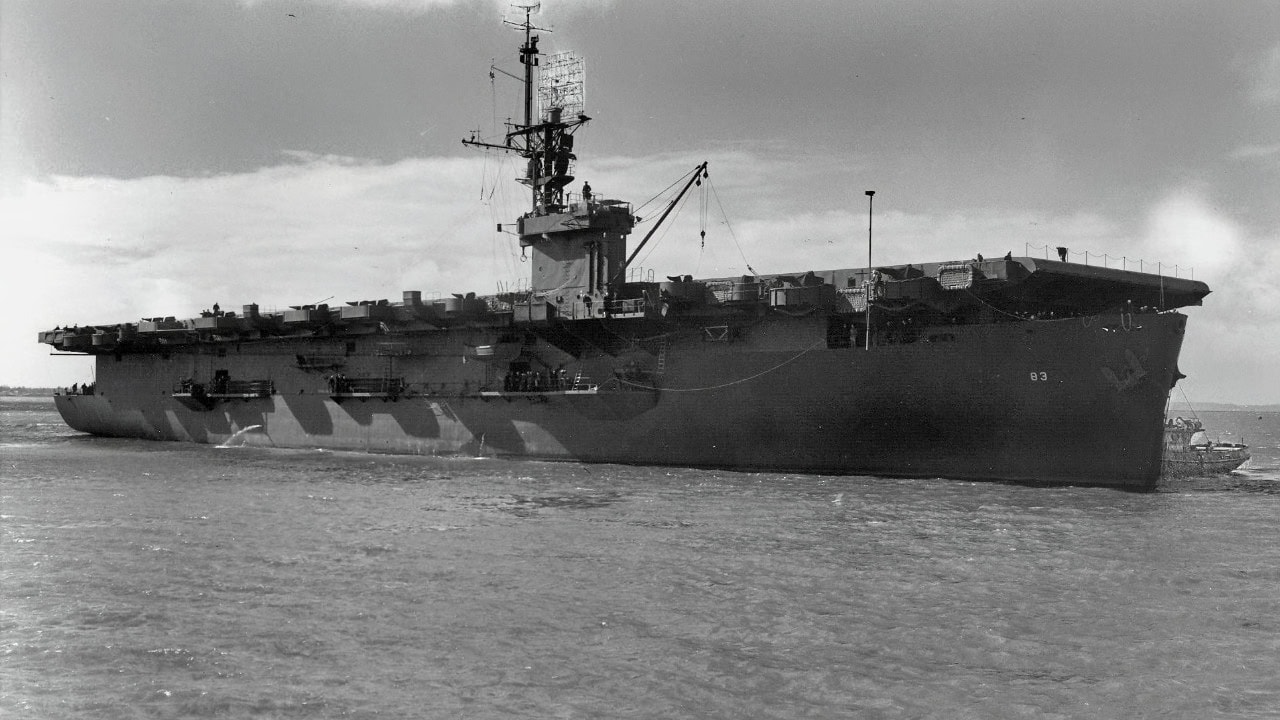
Casablanca-Class Aircraft Carrier
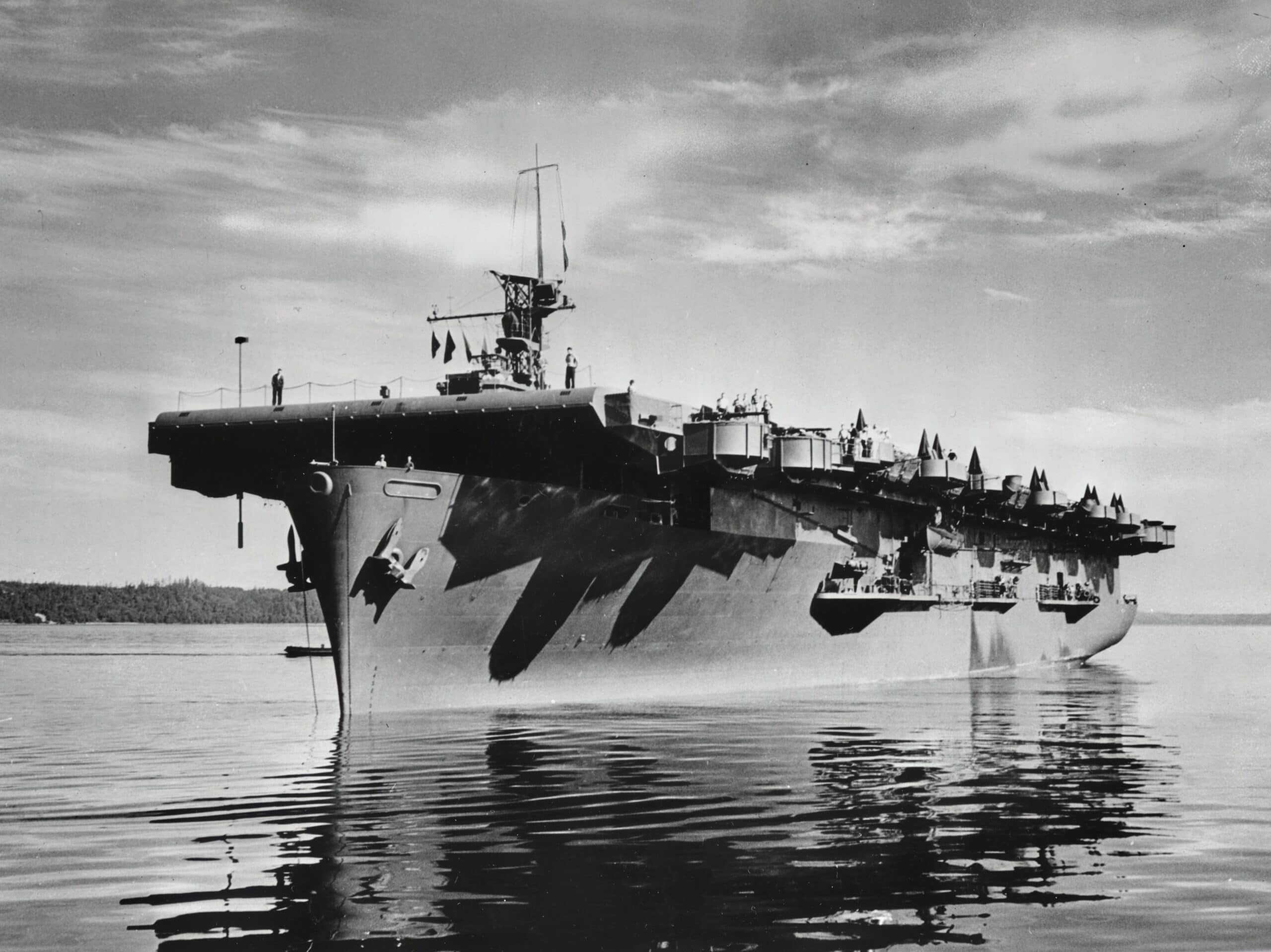
Casablanca-Class.
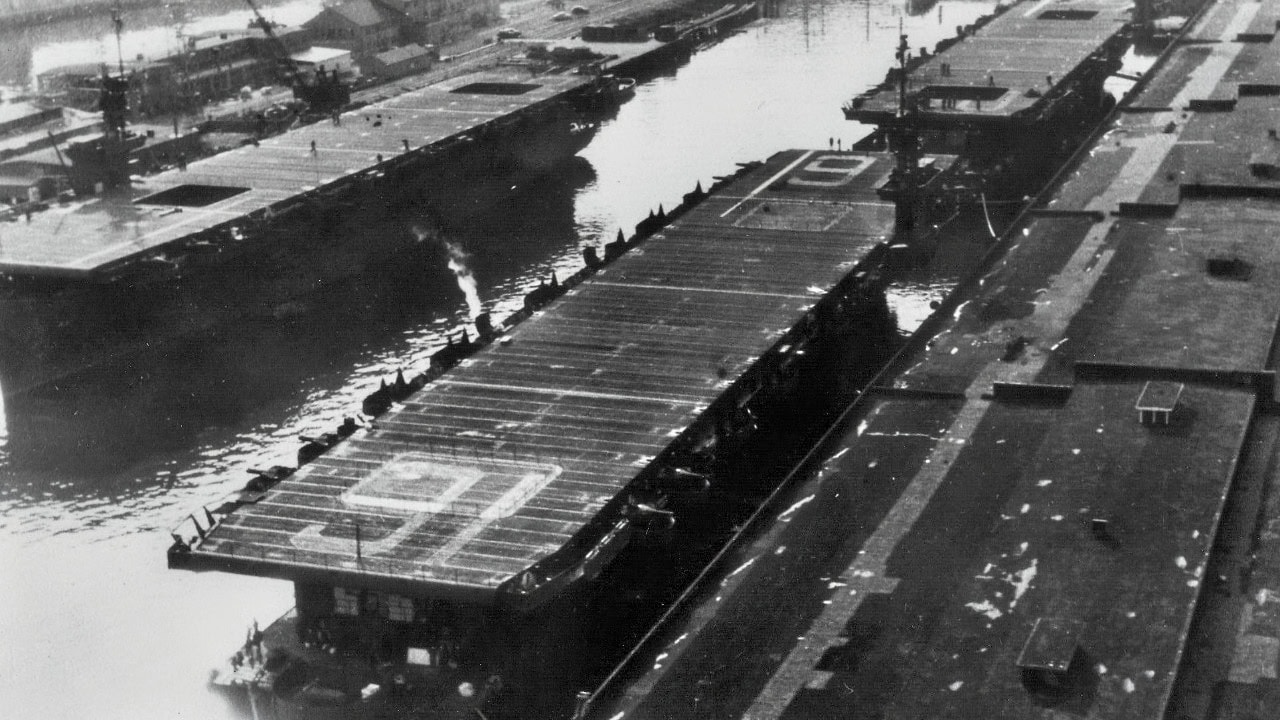
Casablanca-Class Escort Aircraft Carrier.
Pearl Harbor had settled the argument about what would rule the seas. The aircraft carrier, not the battleship, was now the decisive weapon of naval war, and the United States did not have nearly enough of them. The big fleet carriers of the Essex class were coming, but they took roughly two years apiece to build, and they would not arrive in numbers until 1944. In the meantime, the Navy was bleeding. German U-boats were sinking merchant ships off the American coast and across the mid-Atlantic faster than the Allies could replace them, in a stretch of the war so grim the U-boat crews called it their “happy time.” Convoys needed air cover in the middle of the ocean, beyond the reach of land-based patrol planes, and the fleet needed small carriers to escort amphibious landings so the big flattops could be freed for offensive strikes. What the Navy needed, above all, was carriers it could build fast.
The concept of a small, cheap escort carrier built on a merchant hull was not new; it had been discussed since the 1920s and tried in small numbers on converted cargo and tanker hulls. But converting existing ships one at a time was slow, and the early results were few. The problem was not the idea. It was production.
The Man Who Went Over the Navy’s Head
Henry J. Kaiser was the solution, though the Navy did not want to hear it from him. Kaiser was the Henry Ford of shipbuilding, an industrialist who had helped build Hoover Dam and then transformed the construction of merchant ships, slashing the time to build a Liberty ship from more than a year to a matter of weeks by breaking the work into prefabricated, welded, interchangeable sections. He proposed applying the same methods to escort carriers, and he was confident he could turn them out at a rate no traditional shipyard could match.
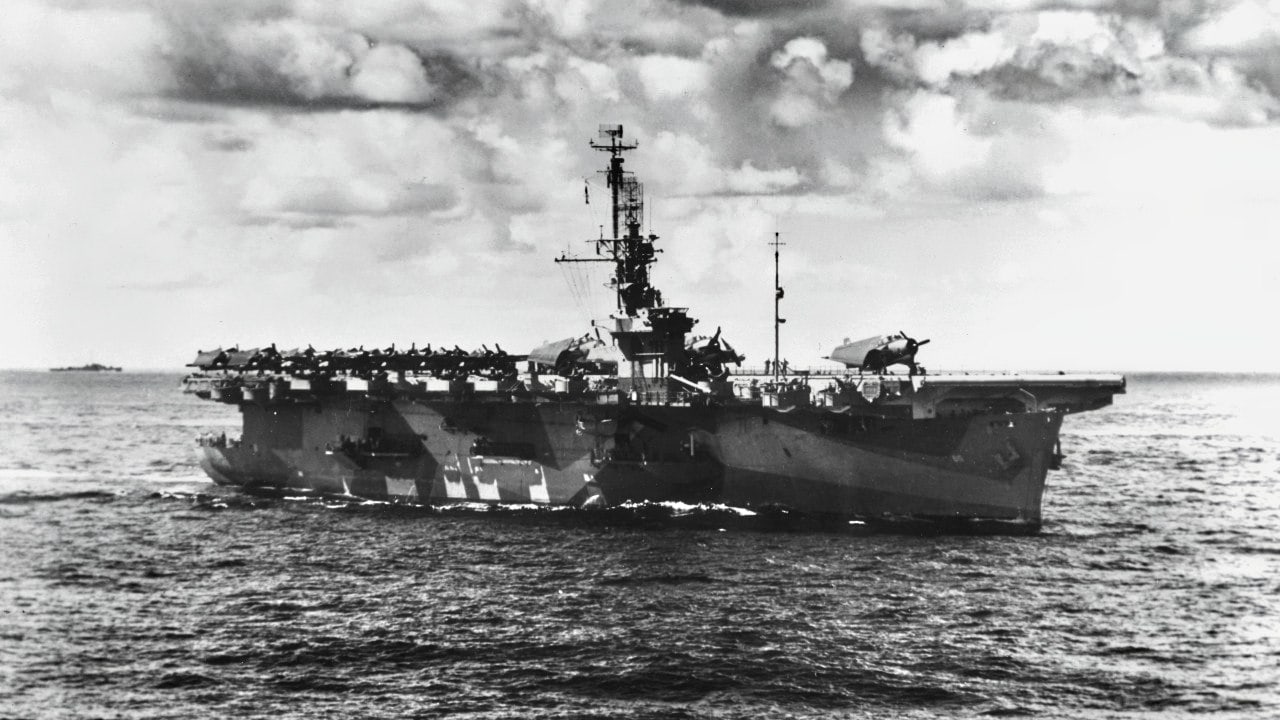
USS Wake Island Casablanca-Class Aircraft Carrier
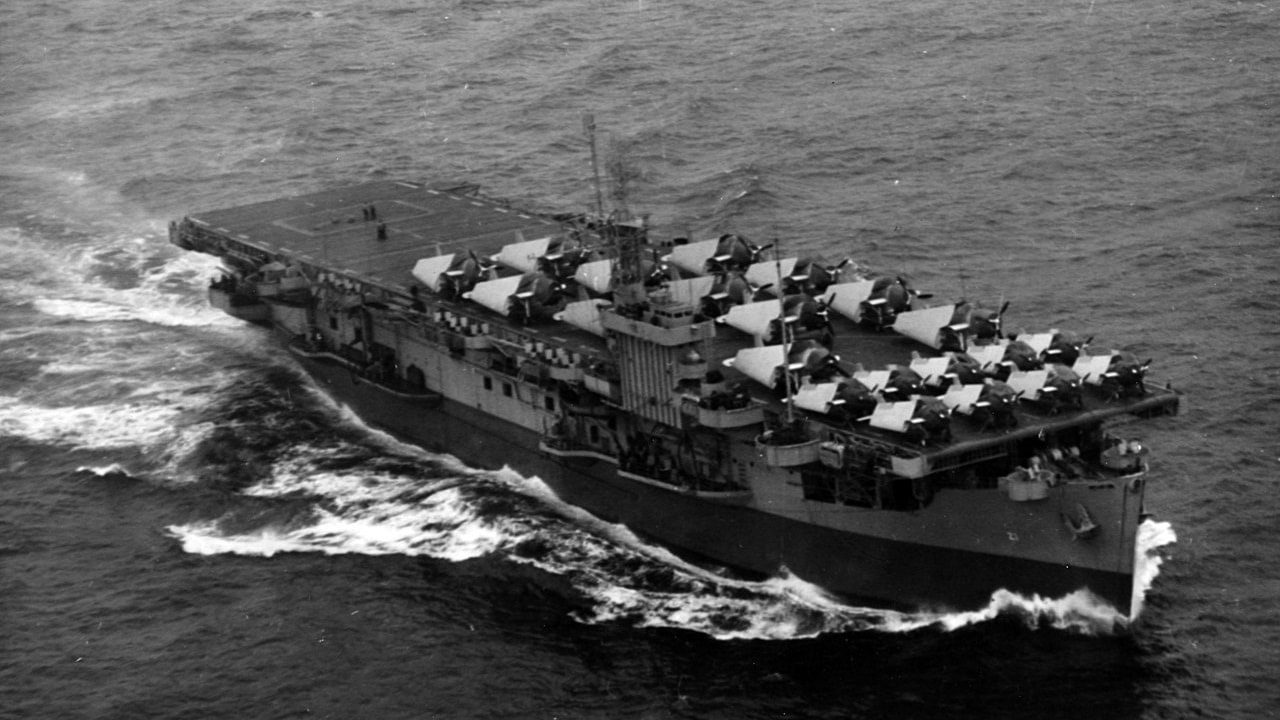
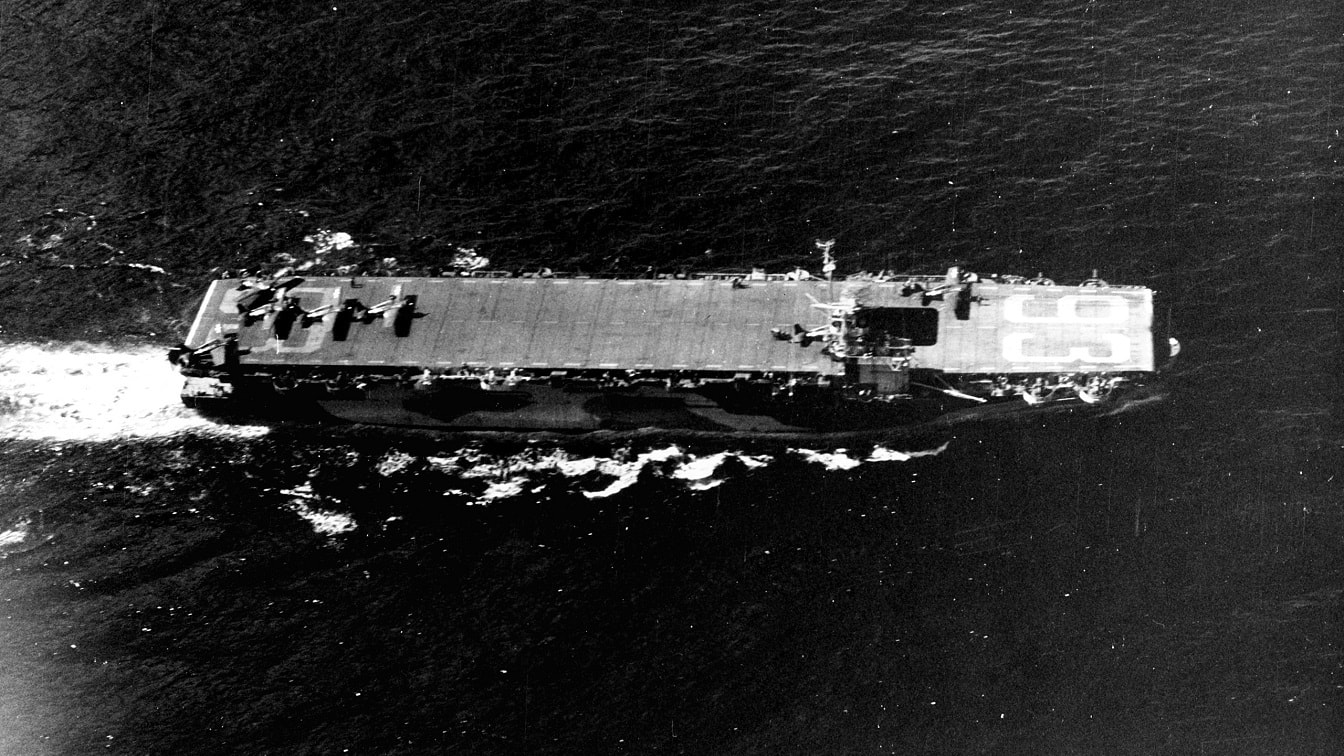
Casablanca-Class: The U.S. Navy escort carrier USS Block Island (CVE-21) underway Atlantic Ocean, off the mouth of Chesapeake Bay, shortly after leaving Norfolk, Virginia (USA), on 15 October 1943. She left for her first anti-submarine cruise, with aircraft from Composite Squadron 1 (VC-1) on deck: 9 General Motors FM-1 Wildcats (forward) and 12 Grummen TBF-1C Avenger. The photo was taken by a blimp of squadron ZP-14.
The Navy was skeptical, and not without reason. A jeep carrier would have only about two-thirds the speed of a fleet carrier and carry roughly a third the aircraft; senior officers questioned whether such ships were worth the steel and the crews. So Kaiser did what industrialists with political instincts do: he went over the Navy’s head, directly to President Franklin Roosevelt, who, as a former assistant secretary of the Navy, fancied himself a maritime expert and was acutely attuned to the shipping crisis. Roosevelt backed him. In the summer of 1942, the president threw his support behind the Kaiser design, and at a meeting with Navy leaders that August, Roosevelt requested that fifty escort carriers be built exclusively for the U.S. Navy, to a purpose-built design by the naval architects Gibbs & Cox, constructed to merchant-ship standards under the Maritime Commission at Kaiser’s yard in Vancouver, Washington. The Navy got its orders. Kaiser got his chance to prove the doubters wrong.
An Aircraft Carrier Every Week
He proved them wrong emphatically. The lead ship, USS Casablanca, was laid down on November 3, 1942, launched on April 5, and commissioned on July 8, 1943, keel to fleet in a little over eight months, which the U.S. Naval Institute describes as a “prodigious feat of industrial management and productivity.” And that was the slow one. As the Vancouver yard found its rhythm, the pace became almost unbelievable: the last ship of the class, USS Munda, was laid down in late March 1944, launched in June, and commissioned about a month after that. Between 1943 and 1944, Kaiser’s yard launched all fifty carriers, peaking at nearly one every week.
The numbers still astonish. The fifty ships of the class, running consecutively from CVE-55 to CVE-104, made it the most numerous class of aircraft carriers ever built, by anyone, before or since. Escort carriers as a whole came to dominate American carrier construction in the war: of the 151 aircraft carriers the United States built between 1941 and 1945, 122 were escort carriers. A country that had entered the war short of flight decks ended it having produced them in a flood, and the single largest tributary of that flood was one shipyard on the Columbia River run by a man the Navy had not wanted to hire.
“Combustible, Vulnerable, Expendable”
The ships that came off Kaiser’s ways were, to put it gently, no one’s idea of a capital ship. A Casablanca-class carrier ran about 512 feet long and displaced only some 8,000 tons light, a third the size of a fleet carrier. She made around 19 knots on uniflow reciprocating engines, an old-fashioned choice forced by wartime bottlenecks in the machinery that cut gears for steam turbines, and that low speed meant she could never keep up with the fast carrier task forces. She carried roughly 28 aircraft, typically FM-2 Wildcat fighters and TBM Avenger torpedo bombers, mounted a single 5-inch gun, and wore almost no armor, protected by little more than thin splinter plating. One admiral would later note that the escort carriers were, “for all practical purposes, converted merchant hulls,” lacking the heavy structure a warship needs to absorb punishment.
The sailors of the fleet noticed. They called the little ships “jeep carriers” and “baby flattops” with some affection, and “Kaiser’s Coffins” with rather less. Their own designation, CVE, was said to stand around the fleet for “Combustible, Vulnerable, and Expendable.” The nickname was cruel, and it would prove, in one respect, entirely accurate. But it missed the point of the ships, which was never to slug it out with battleships. It was to be everywhere at once, in numbers, providing the air cover that convoys and invasions could not do without. And in the fall of 1944, off a Philippine island called Samar, the jeep carriers were handed the one job they were never built for, and did it anyway.
The Last Stand That Justified Them
On October 25, 1944, during the sprawling Battle of Leyte Gulf, six Casablanca-class escort carriers and their screen of three destroyers and four destroyer escorts, a task unit with the radio call sign “Taffy 3” under Rear Admiral Clifton Sprague, found themselves alone in the path of the main Japanese battle fleet. Admiral William Halsey’s powerful Third Fleet had been lured north by a decoy force of Japanese carriers, leaving Taffy 3 as the only force standing between Vice Admiral Takeo Kurita’s Center Force — four battleships including the mighty Yamato, eight cruisers, and eleven destroyers — and the vulnerable American troops and transports on the Leyte invasion beaches. The little carriers’ 5-inch guns could not even penetrate the armor of the ships now bearing down on them.
What followed became legend. Sprague turned his carriers away and ran for a rain squall while launching every aircraft he had, and his escorts did something close to unthinkable: the destroyers and destroyer escorts charged the Japanese line head-on, laying smoke and firing their torpedoes at battleships and heavy cruisers many times their size. The aircraft, many armed only with weapons meant for ground support or antisubmarine work, attacked in waves and, when their bombs ran out, made dry runs to force the Japanese ships to maneuver. It was chaos, and it worked. Kurita, his formation scattered and unable to tell a jeep carrier from a fleet carrier through the smoke and the relentless air attacks, concluded he had blundered into a piece of Halsey’s main fleet and turned away with victory in his grasp.
The cost was terrible. Taffy 3 lost two escort carriers, two destroyers, and a destroyer escort, and more than 1,500 men were killed. USS Gambier Bay, pounded under by cruiser gunfire, became the only American aircraft carrier ever sunk by enemy naval gunfire; USS St. Lo, struck that same day in the first organized kamikaze attack of the war, became the first ship ever sunk by that new weapon. The survivors earned a Presidential Unit Citation, and Commander Ernest Evans of the destroyer USS Johnston, who drove his ship into the Japanese fleet and did not come back, received a posthumous Medal of Honor. Fleet Admiral Chester Nimitz wrote afterward that the escape of Sprague’s task unit from annihilation was “nothing short of special dispensation from the Lord Almighty.” A class of ships designed to ferry aircraft and hunt submarines had, in an emergency no one had planned for, helped save an invasion from the guns of the largest battleship ever built.
A Second Ocean, a Captured Submarine
The jeep carriers made their mark in the Atlantic, too, and there, one of them pulled off a feat with no parallel in more than a century of American naval history. Escort carriers anchored the “hunter-killer” groups that turned the tables on the U-boats, roving the ocean to chase submarines down rather than merely guarding convoys against them. On June 4, 1944, a hunter-killer group built around the Casablanca-class carrier USS Guadalcanal, commanded by Captain Daniel Gallery, forced the German submarine U-505 to the surface with depth charges and captured it intact. It was the first time the U.S. Navy had captured an enemy warship at sea since the War of 1812. The submarine, and the code materials aboard it, were spirited back across the Atlantic in secret; U-505 sits today in a museum in Chicago, a war prize taken by a carrier a skeptical Navy had almost declined to build.
The Feat America Could No Longer Repeat
The honest reckoning is that the jeep carriers were as fragile as their nickname promised. Five of the fifty Casablancas were lost to enemy action, a heavy toll for a single class, and their thin hulls and slow speed made them dangerous places to be when the enemy got close. Kaiser’s ships won no arguments about quality. What they won was the argument about quantity, and in a global war fought across two oceans, quantity was its own kind of quality. There were enough of them to be everywhere the fleet carriers could not be, and that ubiquity, not any single ship’s prowess, is what made them decisive. Even Fleet Admiral Ernest King, who had doubted the escort carriers, wrote to Kaiser in 1945 to concede the point: “Mere ‘Jeep Carriers,’ indeed.”
That is the part of the story worth thinking about today. The United States, facing a two-ocean war, took a man who built cargo ships, overcame the Navy’s institutional resistance to applying assembly-line methods to warships, and produced aircraft carriers at roughly one a week. Eight decades later, the picture is nearly reversed. American shipyards now build a small fraction of what China’s yards produce, the industrial base has withered, and the Navy struggles to deliver even a handful of ships in a year, its flagship carriers now costing well over ten billion dollars each and taking the better part of a decade to build. The question of how to rebuild that capacity, and whether it can be done in time to matter in a Pacific confrontation, runs through every serious discussion of American naval power. The Casablanca class is remembered, when it is remembered at all, for the gallantry off Samar. But its deeper lesson is industrial, not tactical. America once turned its shipyards into an assembly line that built carriers faster than the enemy could sink them. The hardest question the story poses is whether it could ever do so again.
About the Author: Harry J. Kazianis
Harry J. Kazianis (@Grecianformula) was the former Senior Director of National Security Affairs at the Center for the National Interest (CFTNI), a foreign policy think tank founded by Richard Nixon based in Washington, DC. Harry has over a decade of experience in think tanks and national security publishing. His ideas have been published in the NY Times, The Washington Post, The Wall Street Journal, CNN, and many other outlets worldwide. He has held positions at CSIS, the Heritage Foundation, the University of Nottingham, and several other institutions related to national security research and studies. He is the former Executive Editor of the National Interest and the Diplomat. He holds a Master’s degree focusing on international affairs from Harvard University.

