
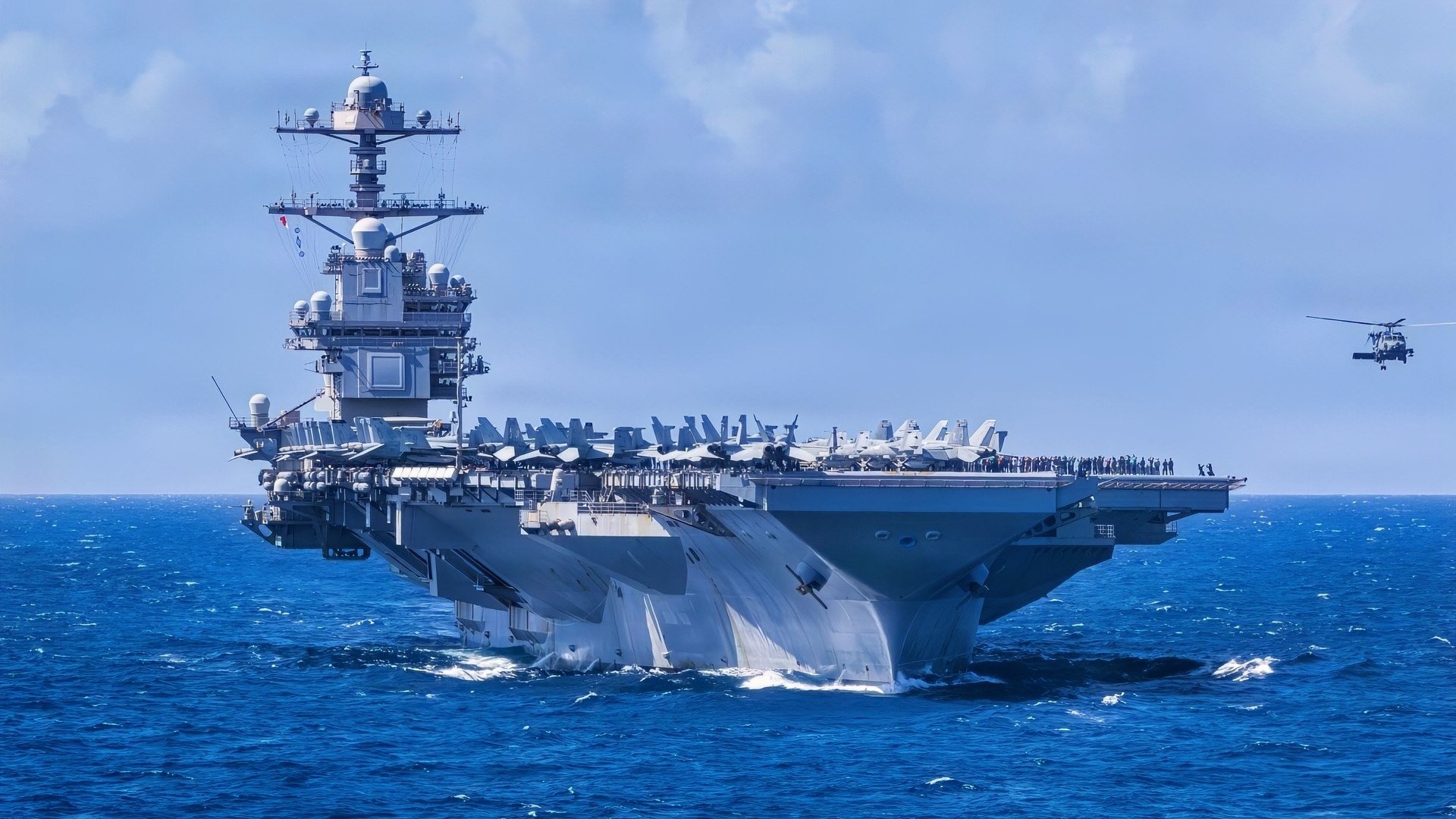
Summary and Key Points: The $13 billion Gerald R. Ford-class aircraft carrier represents the ultimate high-stakes gamble for U.S. naval dominance.
-Despite soaring costs and technical failures involving its electromagnetic catapults and advanced arresting gear, the program remains the only viable path to replacing the aging Nimitz-class fleet.
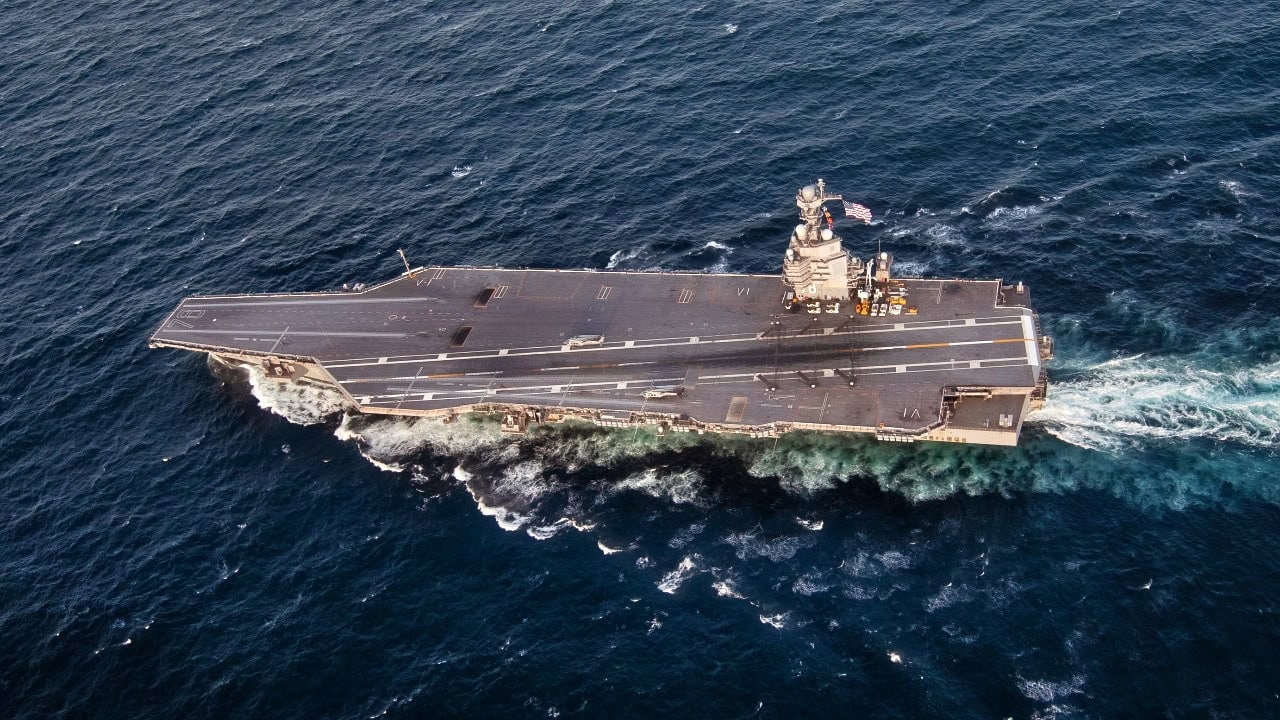
The Ford-class aircraft carrier USS Gerald R. Ford (CVN 78) and the Italian aircraft carrier ITS Cavour (CVH 550) transit the Atlantic Ocean March 20, 2021, marking the first time a Ford-class and Italian carrier have operated together underway. As part of the Italian Navy’s Ready for Operations (RFO) campaign for its flagship, Cavour is conducting sea trials in coordination with the F-35 Lightning II Joint Program Office’s Patuxent River Integrated Test Force to obtain official certification to safely operate the F-35B. Gerald R. Ford is conducting integrated carrier strike group operations during independent steaming event 17 as part of her post-delivery test and trials phase of operations.
-While critics suggest smaller carriers or drone swarms as alternatives, these options lack the sortie density and persistence required for global power projection.
-With billions already invested and the F-35C requiring a massive flight deck, the Navy is locked in.
-The Ford-class is the indispensable, albeit expensive, future of American maritime supremacy.
$120 Billion Later: Why the U.S. Navy Can’t Quit the Ford-Class Aircraft Carrier
The Gerald R. Ford-class carriers are late, expensive, and politically fraught. Cost overruns and technical problems have fueled calls to rethink the program. But with so much time and money already invested, does it not make sense to forge ahead, or is there a different pathway for U.S. naval power projection?
Why the Ford-class Exists
The Ford-class was designed to replace the 50-year-old Nimitz-class carriers one-for-one. The new platform offers higher sortie generation rates, lower lifetime operating costs, and power margins for future systems. The Ford was supposed to be an incremental step, not a full-blown revolution in carrier design—but complexity crept in and made the class’s roll-out harder than it had to be.
The key problem areas revolve around the new innovations. The new class’s electromagnetic aircraft launch system (EMALS), which replaces the traditional steam catapult, and the advanced arresting gear (AAG), which replaces the traditional trap system, have been especially fraught. Delays were a foreseeable result of attempting to field multiple unproved systems simultaneously, and the scale of the program has only amplified the problems.
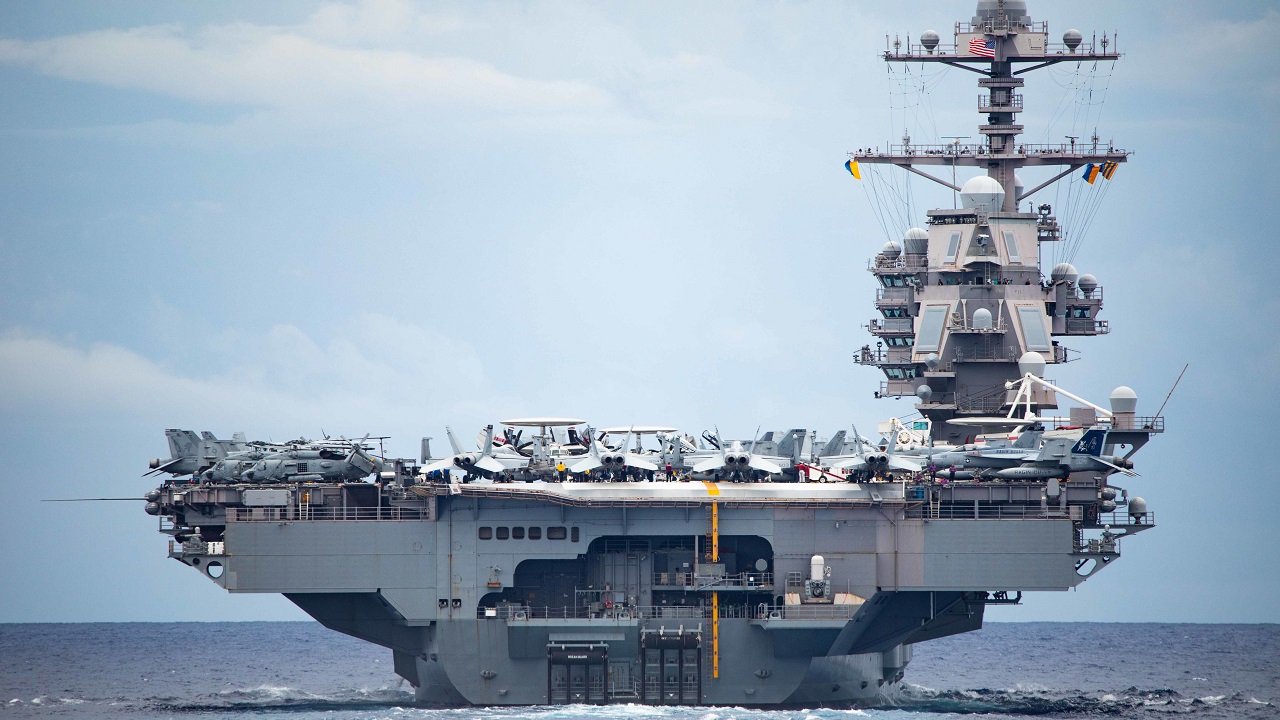
A view of the first-in-class aircraft carrier USS Gerald R. Ford (CVN 78) from aboard the Ticonderoga-class guided-missile cruiser USS Normandy (CG 60) as Normandy participates in a Tactical Force Exercise as part of the Gerald R. Ford Carrier Strike Group, Oct. 13, 2022. Ford is on its inaugural deployment conducting training and operations alongside NATO Allies and partners to enhance integration for future operations and demonstrate the U.S. Navy’s commitment to a peaceful, stable and conflict-free Atlantic region. (U.S. Navy photo by Mass Communication Specialist 2nd Class Malachi Lakey)
Still Delivering
Despite the problems, the Ford still offers real capability gains—increased electrical power generation, a more efficient deck layout, and potentially higher sustained sortie rates. The class was designed for F-35C operations and for future unmanned aircraft, and over its 50-year service life, these performance gains will be significant.
So, is there an alternative to the Ford? Commonly proposed alternatives for naval power projection include smaller carriers, arsenal ships, land-based air power or unmanned platforms. However, none fully replicates a supercarrier’s sustained presence, sortie density, or political signaling.
The Also Rans
Small carriers don’t outright replace super carriers—they have fewer aircraft, lower sortie rates, and reduced flexibility. They work well for regional powers such as Italy or India, but not for a great power with global commitments. U.S. missions, as currently conceived, require sustained, large-scale air operations.
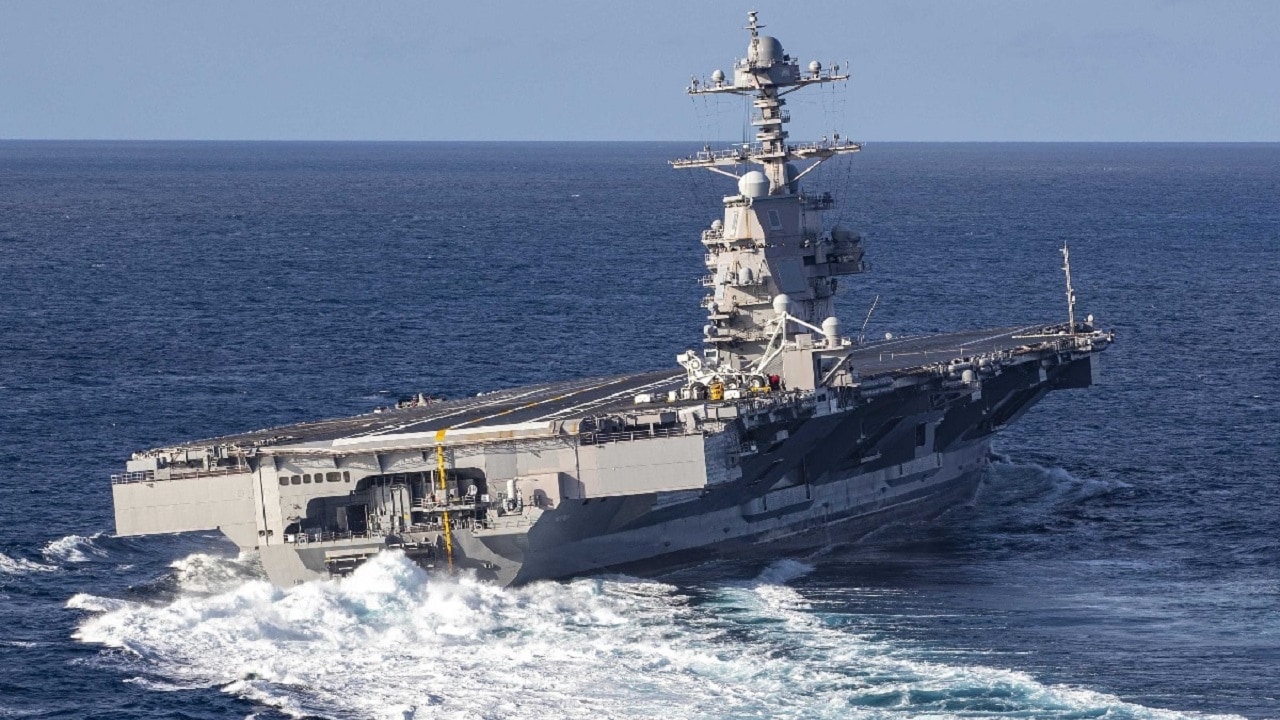
Ford-class Aircraft Carrier. Image Credit: US Navy.
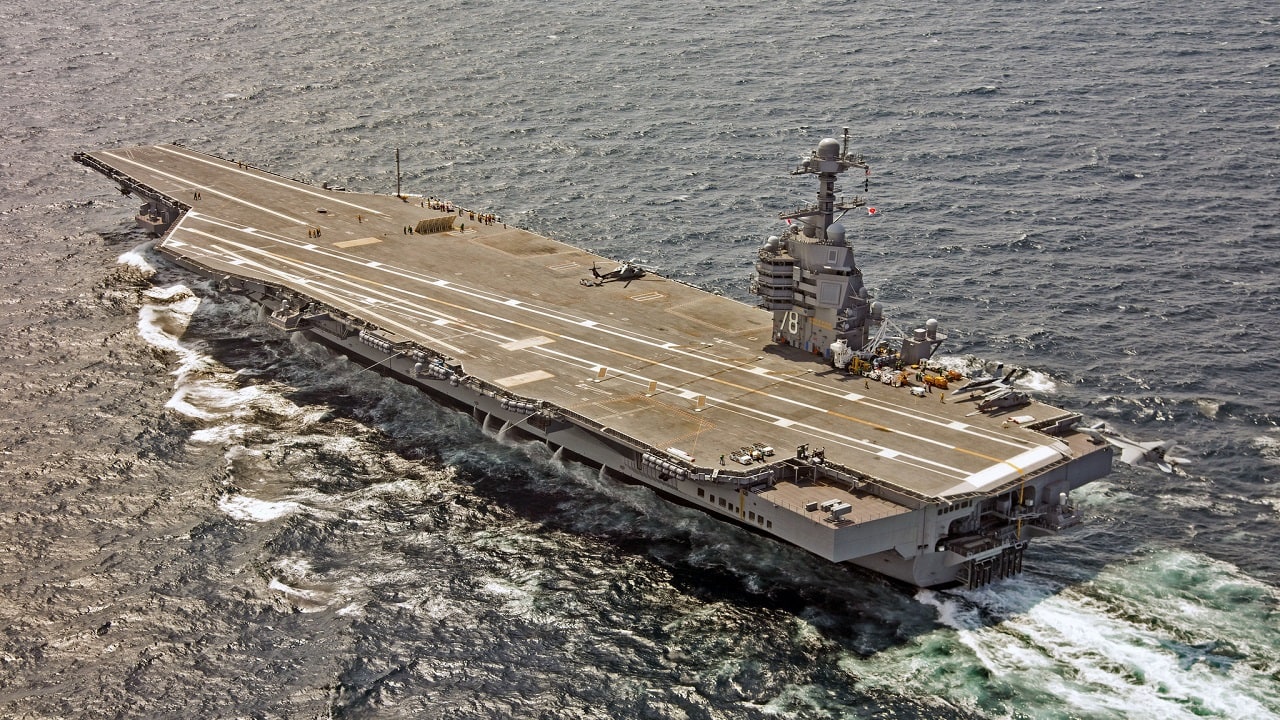
Ford-Class Aircraft Carrier Artist Rendering. Image Credit: Creative Commons.
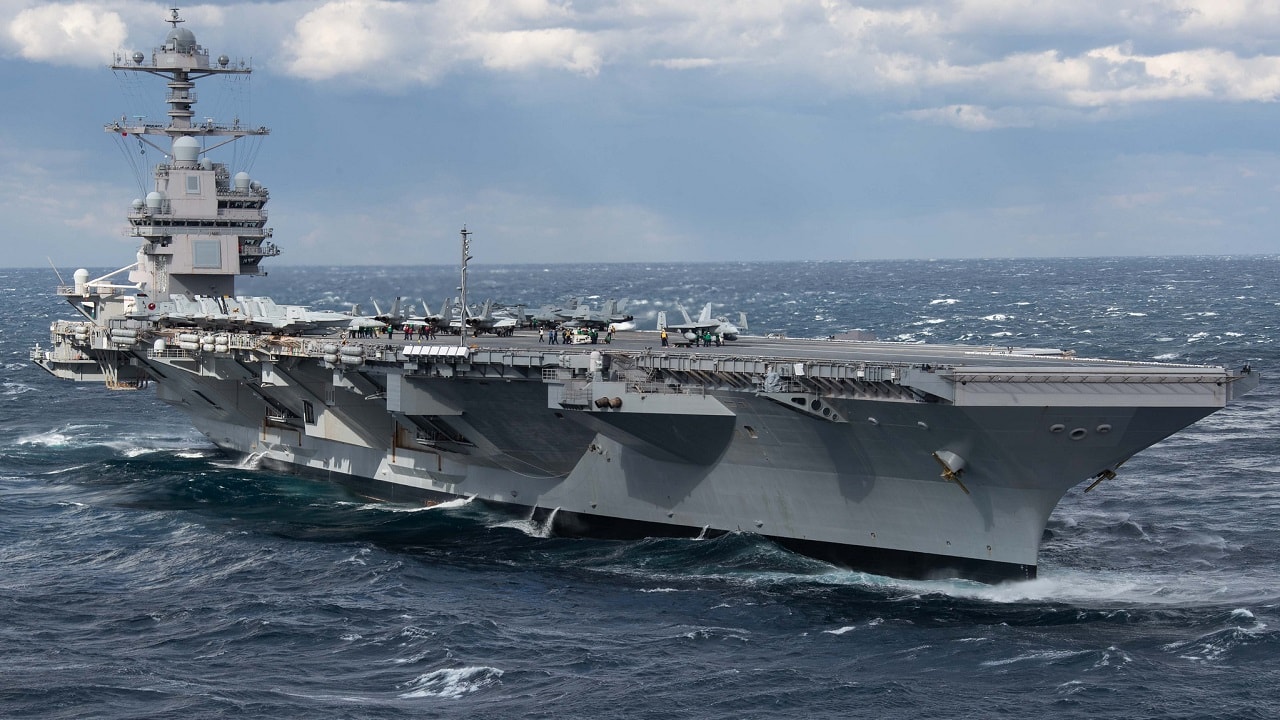
The aircraft carrier USS Gerald R. Ford (CVN 78) transits the Atlantic Ocean, March 26, 2022. Gerald R. Ford is underway in the Atlantic Ocean conducting flight deck certification and air wing carrier qualifications during the ship’s tailored basic phase before operational deployment.
Unmanned aviation is not a near-term replacement for carrier power, either. Drones enhance carriers but do not replace them. Drones are significantly limited in payload, survivability, and command-and-control in contested environments. Unmanned systems depend on the carrier’s power, sensors, and C2.
Land-based air power has limits, too; it requires a host-nation allowing access, long logistics chains, and political permissions. Land-based air power is also vulnerable to missile attack, whereas carriers remain the most flexible airbase option.
Sunk Costs
The strategic reality is that the United States already paid for the Ford-class. Billions upon billions have already been sunk into design, infrastructure, shipyards, and training pipelines. Walking away would mean wasting that investment, spreading it across just a handful of units, and accepting a force-structure gap, since no alternative would be ready within a decade.
There is a legitimate debate over how many carriers the U.S. Navy needs. It currently operates 11 super carriers, by far the most of any nation on Earth. Arguably, 11 carriers may exceed peacetime requirements.
While wartime surge requirements vary, observers such as Barry Posen argue that fewer carriers would still be sufficient to fight wars on two fronts simultaneously.
Regardless, the replacement math is unforgiving. For every Nimitz that retires, one carrier must fill that slot. The Ford-class is the only platform sized and designed to do so. Complicating the issue further: The U.S. industrial base is built around super carriers, and carrier air wings are sized for large decks.
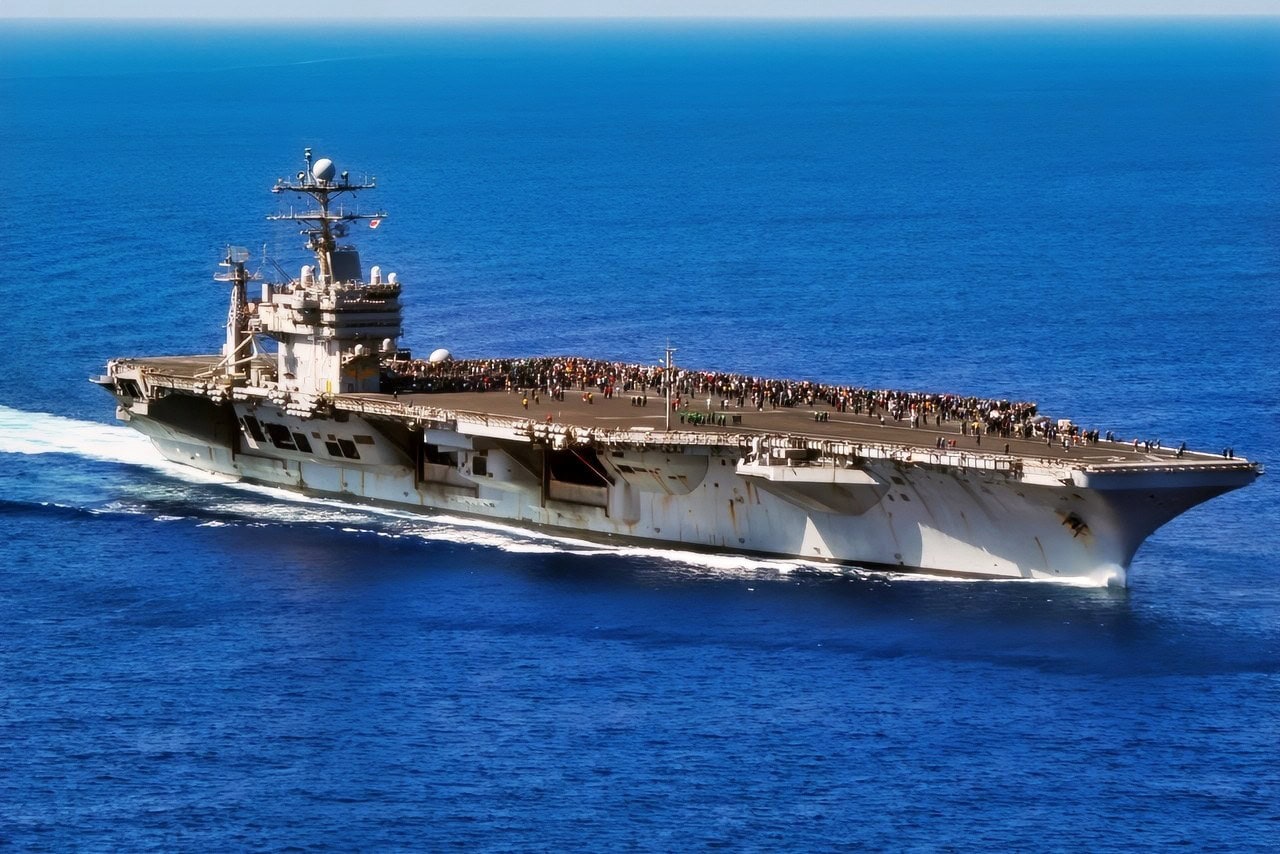
ATLANTIC OCEAN (Aug. 6, 2012) F/A-18 Hornets and Super Hornets from Carrier Air Wing (CVW) 2 fly in formation as MH-60S Seahawk helicopters assigned to the Golden Falcons of Helicopter Sea Combat Squadron (HSC) 12 fire flares during an air power demonstration above the Nimitz-class aircraft carrier USS Abraham Lincoln (CVN 72). Lincoln is returning to the United States after the completion of an eight-month change-of-homeport deployment during which she operated in the U.S. 5th, 6th and 7th Fleet areas of responsibility. (U.S. Navy photo by Mass Communication Specialist Seaman Zachary A. Anderson/Released)

USS Nimitz in November 2025. Image Credit: Creative Commons.
Doctrine, allies, and global posture all center on carrier strike groups. So designing and fielding a new concept would require decades to mature. Essentially, the supercarrier concept is already baked in.
The Bottom Line
The Ford-class is not perfect, but it is a functional aircraft carrier. No credible substitute exists that matches its firepower, persistence, or signaling value. The real question currently is not whether the United States should field an alternative to the Ford, but how to operate carriers more efficiently and more intelligently.
The Ford-class represents the cost of maintaining global naval power. Abandoning the platform would trade known problems for unknown gaps. So expect the Ford vessels to continue to be introduced into service—not because the platform is perfect, but because no viable alternative currently exists.
About the Author: Harrison Kass
Harrison Kass is an attorney and journalist covering national security, technology, and politics. Previously, he was a political staffer and candidate, and a US Air Force pilot selectee. He holds a JD from the University of Oregon and a master’s in global journalism and international relations from NYU.