
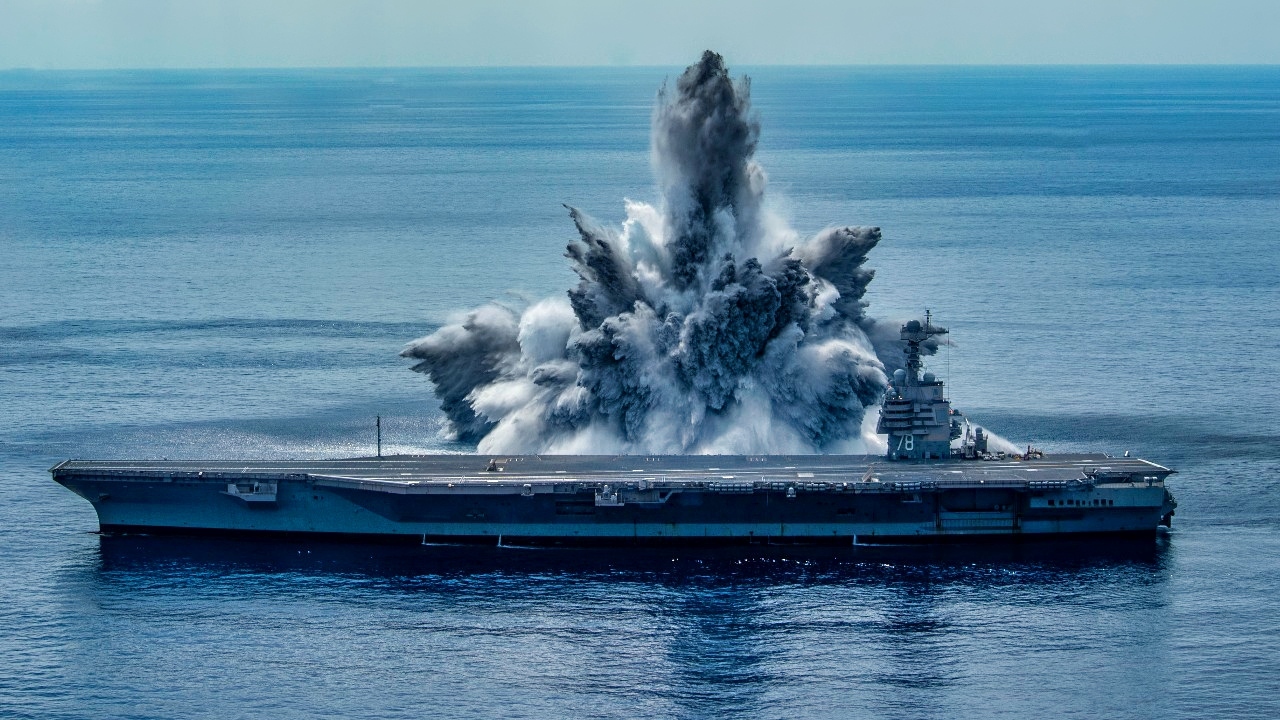
Key Points and Summary – The U.S. Navy does not disclose an exact flank speed for the Ford-class aircraft carrier, but public materials describe it as “30+ knots,” broadly comparable to the Nimitz-class.
-That is by design.
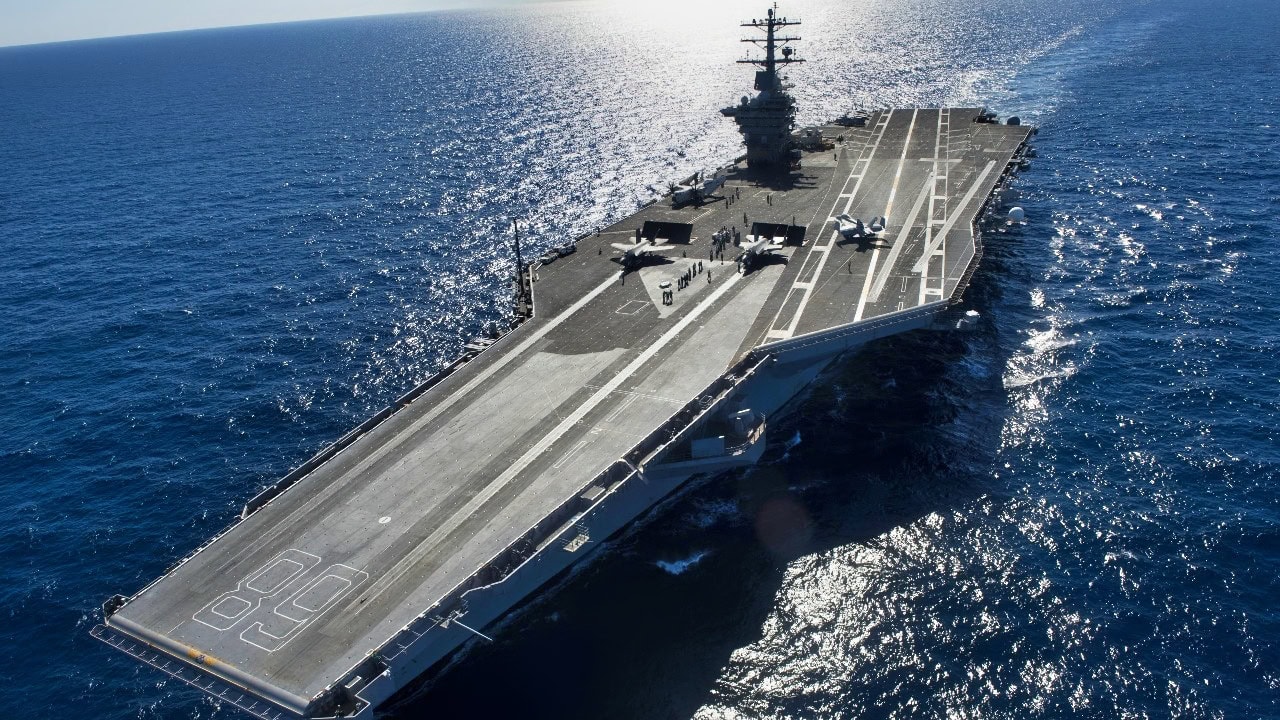
Ford-Class. Image Credit: Creative Commons.
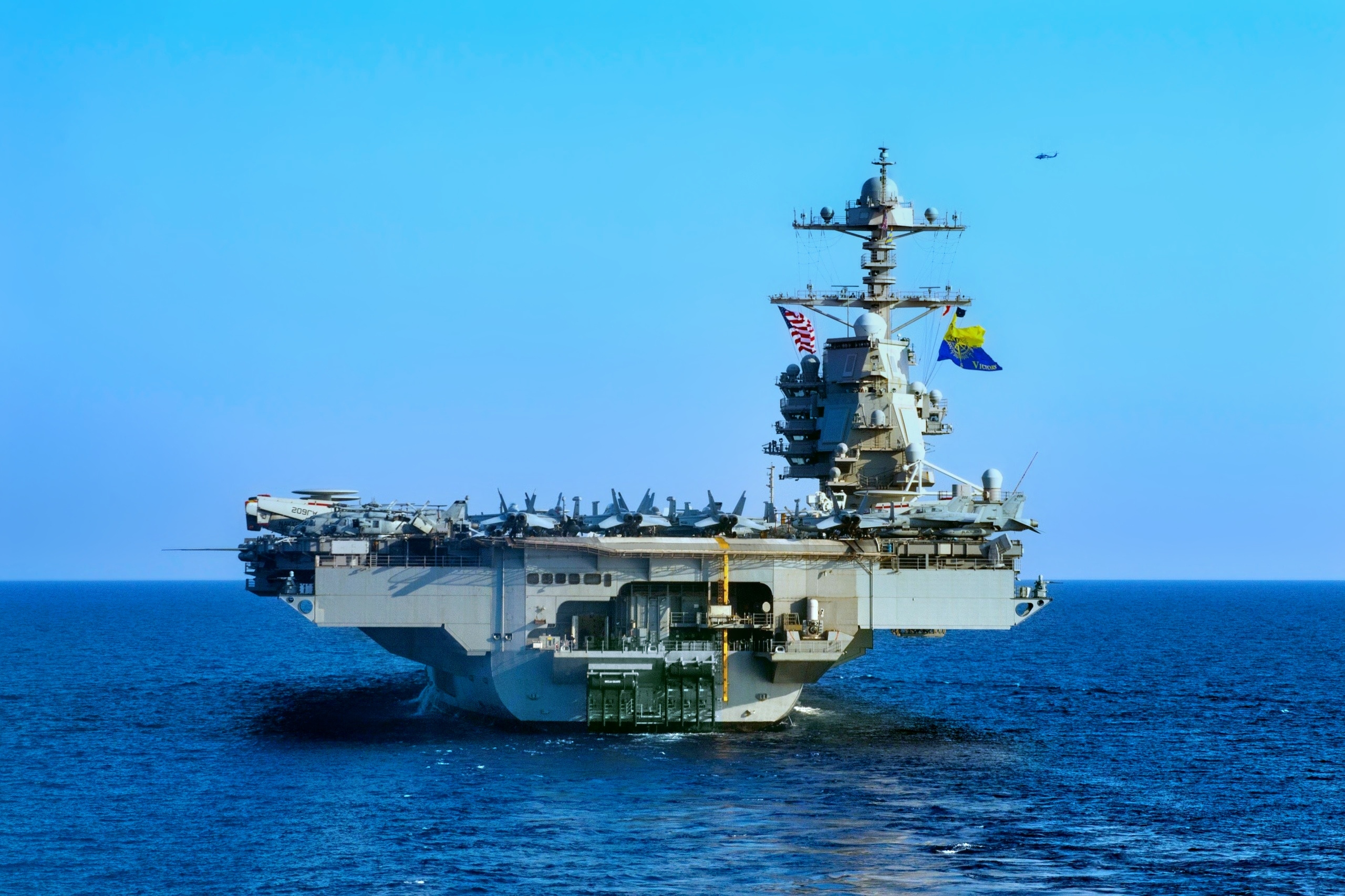
Ford-Class Aircraft Carrier. Image Credit: Creative Commons.
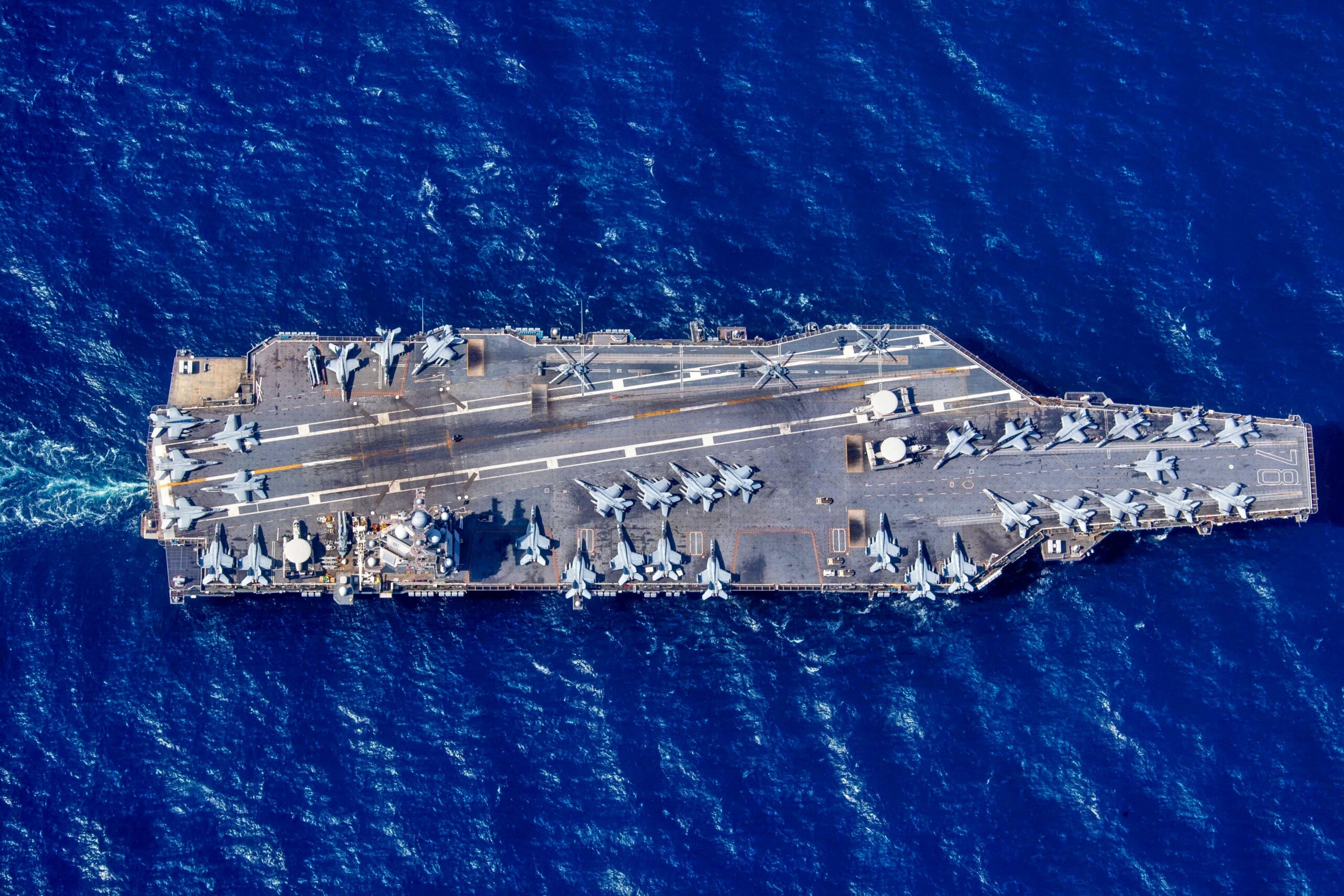
Ford-Class. Image Credit: Creative Commons.
-The Ford wasn’t built to be meaningfully faster, because carrier combat power comes from air operations, not surface sprinting.
-Pushing speed higher produces diminishing returns while raising engineering and lifecycle costs—and can worsen acoustic and maintenance burdens.
-Instead, the Ford invests in power generation, launch-and-recovery modernization, and long-term upgrade capacity to sustain higher operational tempo.
Ford-Class Carrier Flank Speed: What We Can Say Publicly
What is the flank speed of the Ford-class carrier?
Despite being a general upgrade over the Nimitz-class predecessor, the Ford is not meaningfully faster than the Nimitz. Why?
Because speed was not the primary design driver. Instead, the Ford was built to be efficient, electrically powered, with a higher sortie generation rate (SGR), and future upgradeable.
Essentially, the Ford-class aircraft carrier is designed to maximize air-wing productivity—not to optimize surface-ship performance.
Why the Ford-Class Aircraft Carrier?
The Ford was needed for the 21st century and beyond because the Nimitz-class, which debuted in the mid-1970s, was nearing the limits of power generation and crew efficiency, with only marginal room for the growth of new, modernized systems.
Basically, the Nimitz was out of date, with Cold War-era systems that struggled to support advanced sensors, electromagnetic launch, and next-generation aircraft and UAVs. The Navy needed to design a new boat from the keel up, featuring digital systems, higher electrical demand, and reduced manpower over a 50-year service life.
While the Navy has not publicly disclosed the true flank speed of the Ford, estimates hold that the speed is similar to the Nimitz: about 30+ knots, or 35 miles per hour. Both boats have the same core propulsion logic: nuclear reactors power steam turbines, which drive four shafts, offering tremendous torque and sustained speed.
The Ford cannot outrun the Nimitz. Speed wasn’t a design priority because aircraft carriers don’t fight through hull maneuvering—they fight through air power. So instead of directing resources towards designing and building a faster boat, the Navy decided the speed was good enough and focused instead on improving the SGR and power generation.
The Ford is definitely upgraded relative to the Nimitz with respect to power generation; the Ford features A1B nuclear reactors, replacing the Nimitz’s A4Ws.
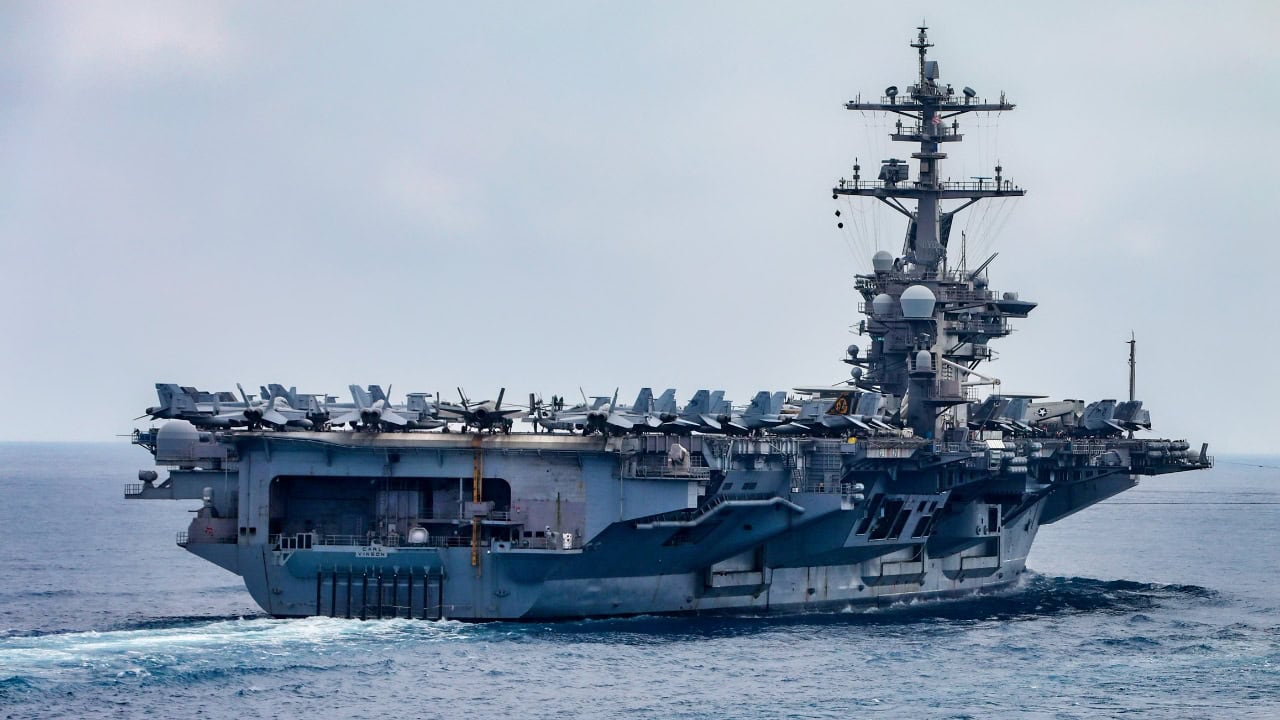
SOUTH CHINA SEA (Feb. 2, 2025) The Nimitz-class aircraft carrier USS Carl Vinson (CVN 70) conducts a replenishment-at-sea with the dry cargo and ammunition ship USNS Carl Brashear (T-AKE 7) Feb. 2, 2025. The Carl Vinson Carrier Strike Group is underway conducting routine operations in the U.S. 7th Fleet area of operations. (U.S. Navy photo by Mass Communication Specialist 1st Class Jacob I. Allison)
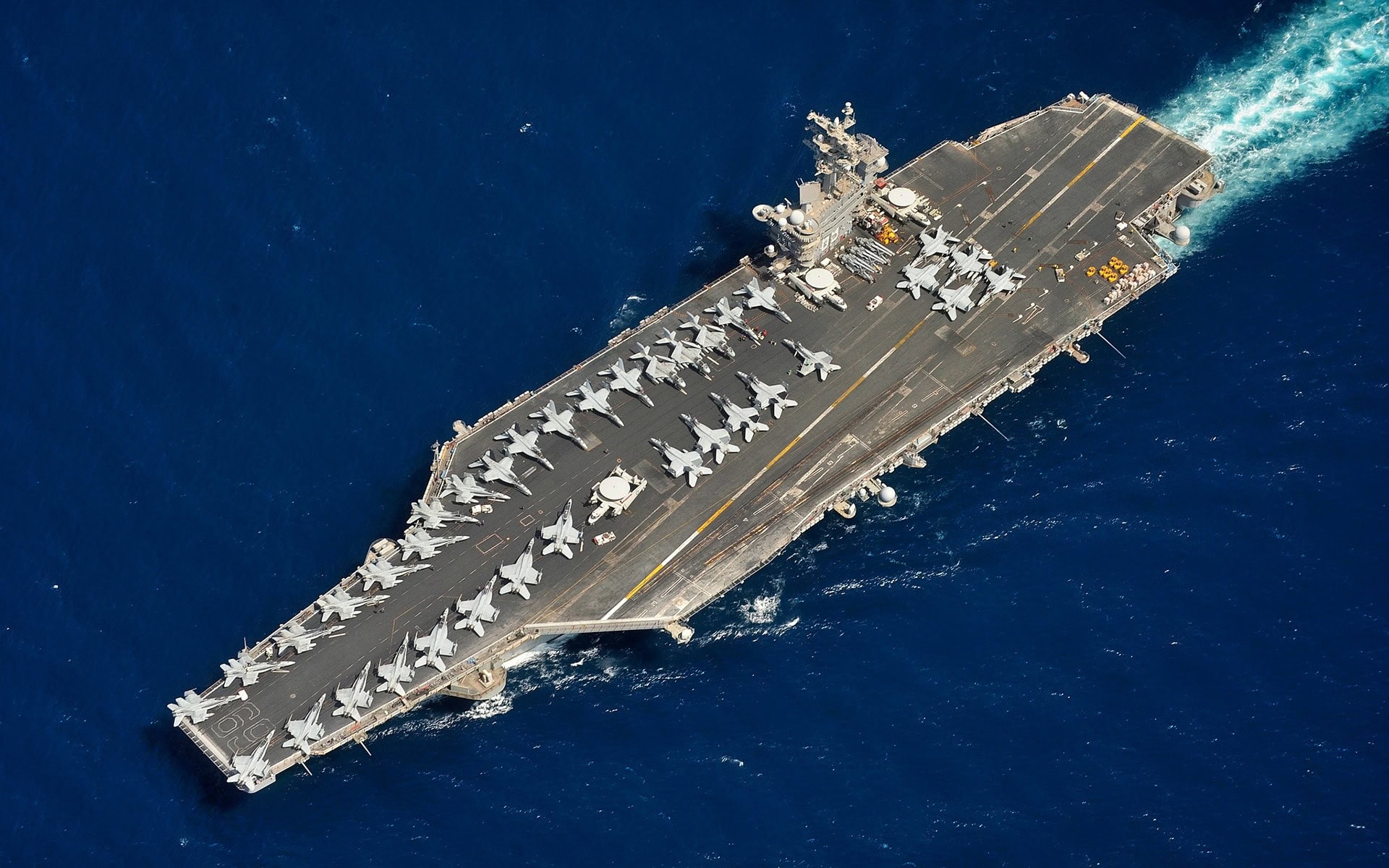
Nimitz-Class aircraft carrier. Image Credit: Creative Commons.
The A1B offers multiple advantages, such as significantly greater electrical output, a simpler reactor design, and reduced maintenance burden.
The A1B’s power surplus enables the boat’s EMALS, AAG, and potential future systems, i.e., lasers, sensors, and electronic warfare.
And this is arguably Ford’s defining feature: electrical headroom.
With surplus electrical energy, the Ford powers the EMALS (Electromagnetic Aircraft Launch System), which replaces steam catapults, offers smoother acceleration, and creates less stress on the aircraft—all while accommodating a wider variety of aircraft, which will be vital as more unmanned platforms are introduced to the fleet.
The electrical headroom also facilitates the new AAG (Advanced Arresting Gear) system, which is digitally controlled and designed for a broader range of aircraft weights. Between the EMALS and AAG, the Ford is expected to yield a higher SGR thanks to faster launch and recovery cycles.
Although the transition to the new tech has been bumpy; reliability issues have plagued the rollout, with software and mechanical issues cropping up. But as the problems are smoothed, the Ford is expected to offer a more efficient carrier operation, a greater operational tempo with fewer sailors.
The Ford features a redesigned flight deck with fewer bottlenecks, enabling more efficient aircraft movement. The crew has been reduced, too; the Ford has been designed to operate with thousands fewer sailors over its lifetime, which should save billions in personnel costs (as crew sizes drive lifetime costs more than fuel).
The operational concept of the Ford will remain essentially unchanged from its predecessors; the Ford will remain the centerpiece of the carrier strike group, offering a global presence and consistent deterrence. The main difference will be a higher sustained sortie rate, better integration of the F-35C, and more flexibility for mixed air wings.
From a strategic perspective, the Ford carriers accommodate the increasing power needs of carrier operations, making headroom for sensor- and network-intensive warfare.
And because speed alone cannot counter A2/AD threats, the Ford was built around other strengths, like resilience and adaptability, so expect incremental upgrades over the decades, some of which will be in response to threats that are currently undefined.
The Ford-Class Is No Speed Demon…But It Doesn’t Need to Be
In sum, the Ford does not replace the Nimitz by being faster. The Ford replaces the Nimitz by being more innovative, more efficient, and, in theory, more adaptable.
In an era where air wings matter more than hulls, the Ford is designed to make the carrier less about the ship and more about the aircraft that launch from the ship.
About the Author: Harrison Kass
Harrison Kass is an attorney and journalist covering national security, technology, and politics. Previously, he was a political staffer and candidate, and a US Air Force pilot selectee. He holds a JD from the University of Oregon and a master’s in global journalism and international relations from NYU.