
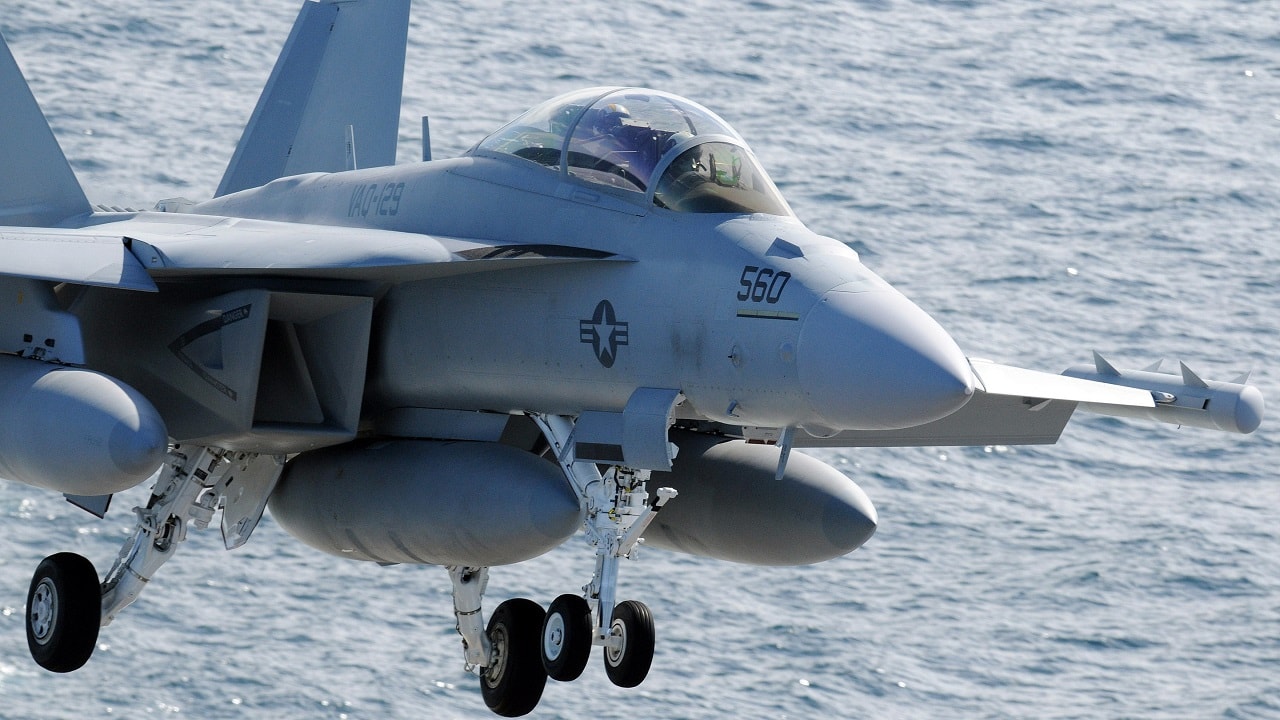
Key Points and Summary – USS Nimitz (CVN-68), commissioned in 1975, is the world’s oldest serving aircraft carrier and a symbol of U.S. naval power.
-Critics argue age, the costly Refueling and Complex Overhaul cycle, and limited shipyard capacity make early retirement sensible.
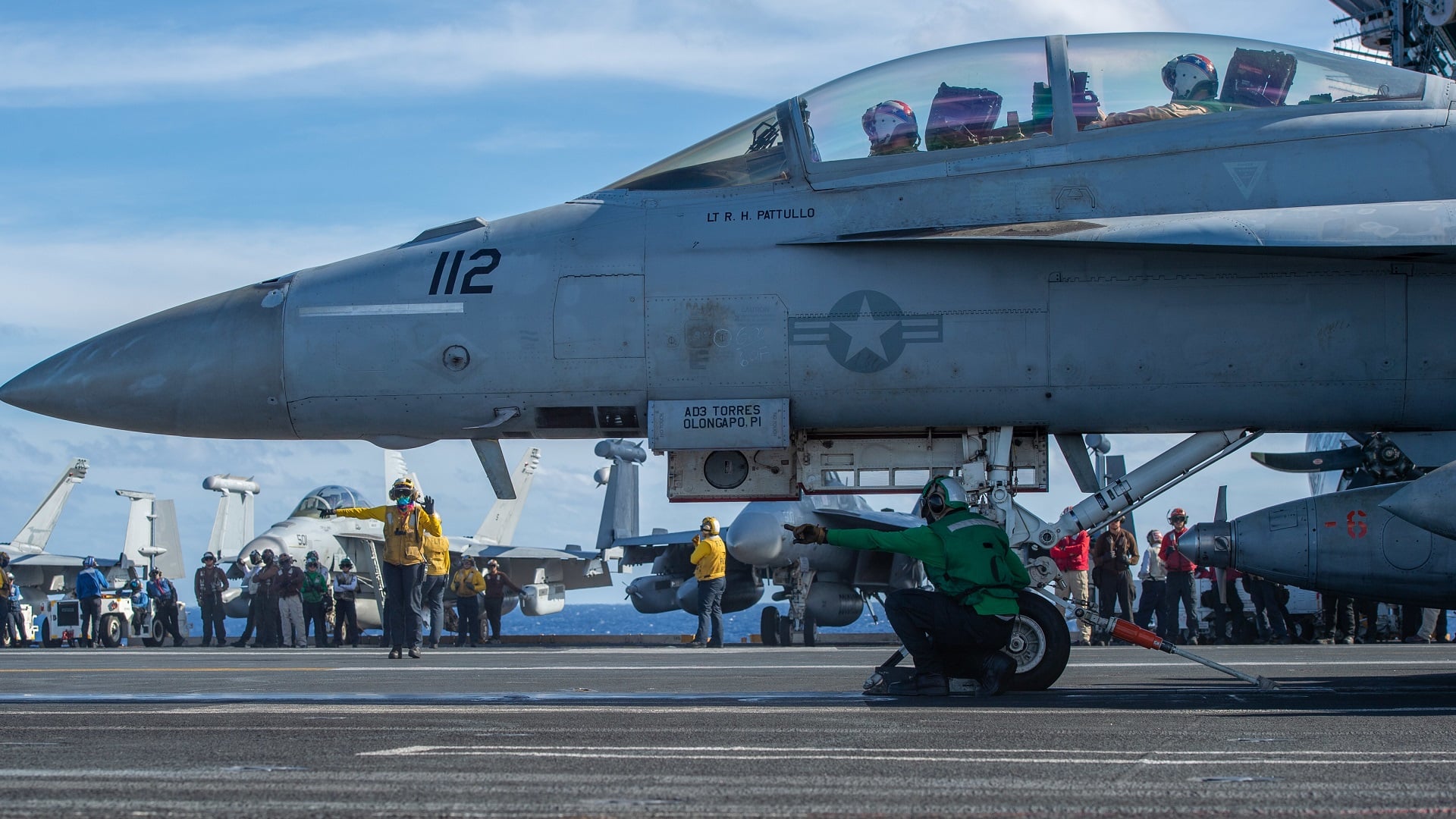
221227-N-DU622-1227 PHILIPPINE SEA (Dec. 27, 2022) An F/A-18F Super Hornet from the “Fighting Redcocks” of Strike Fighter Squadron (VFA) 22 prepares to launch from the flight deck of the aircraft carrier USS Nimitz (CVN 68). Nimitz is in 7th fleet conducting routine operations. 7th Fleet is the U.S. Navy’s largest forward-deployed numbered fleet, and routinely interacts and operates with 35 maritime nations in preserving a free and open Indo-Pacific region. (U.S. Navy photo by Mass Communication Specialist 2nd Class Justin McTaggart)
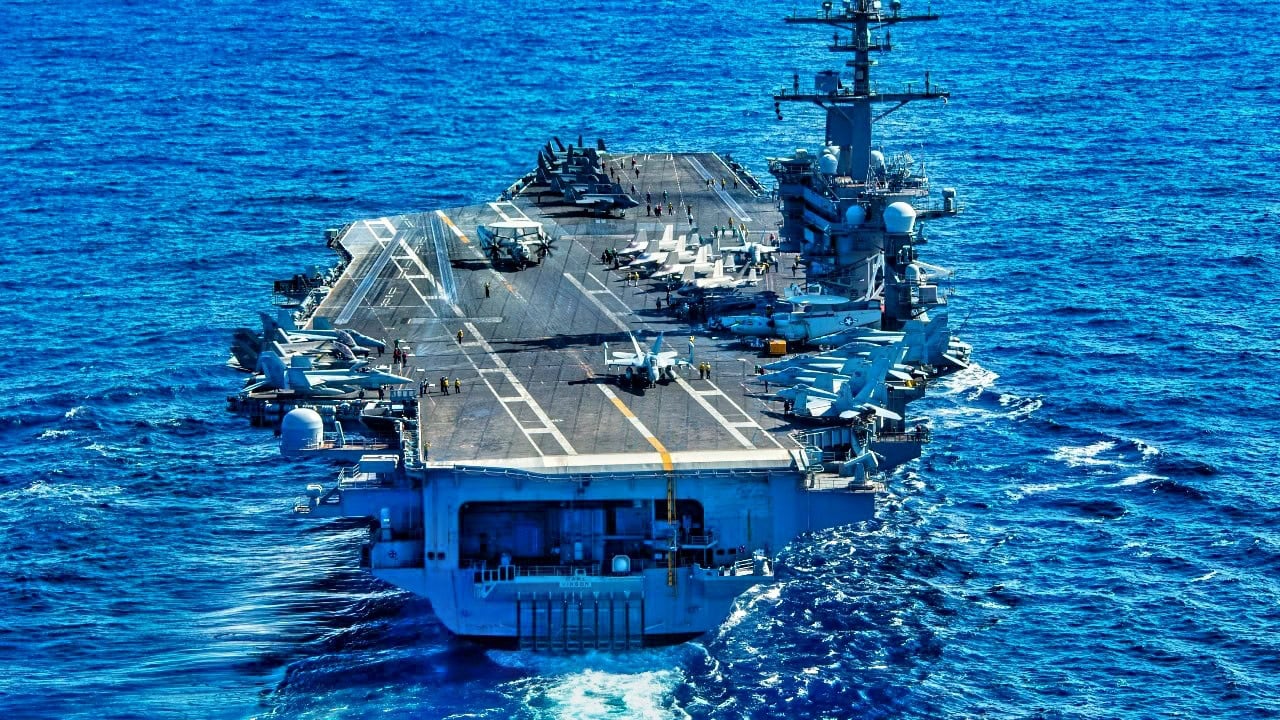
The Nimitz-class aircraft carrier USS Carl Vinson (CVN 70) transits the Philippine Sea with six additional F-35C Lightning II aircraft assigned to the “Argonauts” of Strike Fighter Squadron (VFA) 147, part of Carrier Air Wing FIVE, Dec. 13, 2024. VFA-147 operates from Marine Corps Air Station Iwakuni, Japan. U.S. Indo-Pacific Command forces perform operations in and around critical sea passages and trade thoroughfares to deter threats that create regional instability and impinge on the free flow of goods, people, and ideas. (U.S. Navy photo by Mass Communication Specialist Seaman Apprentice Pablo Chavez)
-Supporters counter that Ford-class delays—especially the late arrival of USS John F. Kennedy (CVN-79)—leave no slack in the Navy’s carrier rotation, shrinking day-to-day presence if Nimitz exits early.
-Nimitz also has a combat record, from the 1981 Gulf of Sidra incident to Desert Storm and strikes against ISIS, strengthening the case to keep her deployed longer. For now, deterrence beats nostalgia, decisively.
After 50 Years, USS Nimitz Faces Retirement—But the Navy May Not Be Ready
Admiral Chester William Nimitz (February 24, 1885 – February 20, 1966) is one of the most revered names in the annals of United States Navy history, and rightfully so. To name just one of his many accomplishments, he retired as a Fleet Admiral (5 stars), making him the last living US Navy officer to hold that rank.
It is therefore fitting that ADM Nimitz would have an entire class of warships named in his honor. Not just any type of warship class, mind you, but a class of nuclear-powered aircraft carriers—supercarriers no less. However, there’s a lot of talk that the lead ship of the class, the eponymous USS Nimitz (CVN-68), should be retired.
Retiring the Nimitz: The Case For
To be sure, CVN-68 is getting a bit long in the tooth. Built by Newport News Shipbuilding (NNS) — a division of Huntington Ingalls Industries (HII) – in Newport News, Virginia, she was ordered on March 31, 1967, laid down on June 22, 1968, launched on May 13, 1972, and commissioned on May 3, 1975. USS Nimitz is now not only the oldest US aircraft carrier in service, but indeed the oldest serving aircraft carrier in the world.
And like the rest of the ships of her class, she faces some significant challenges.
For one thing, there’s the rigamarole of ROCH. This acronym stands for Refueling Complex Overhaul, a complex and costly procedure that CVNs are required to undergo every 25 years, which entails cutting a massive hole in the hull and replacing everything from catapult systems to water purifiers.
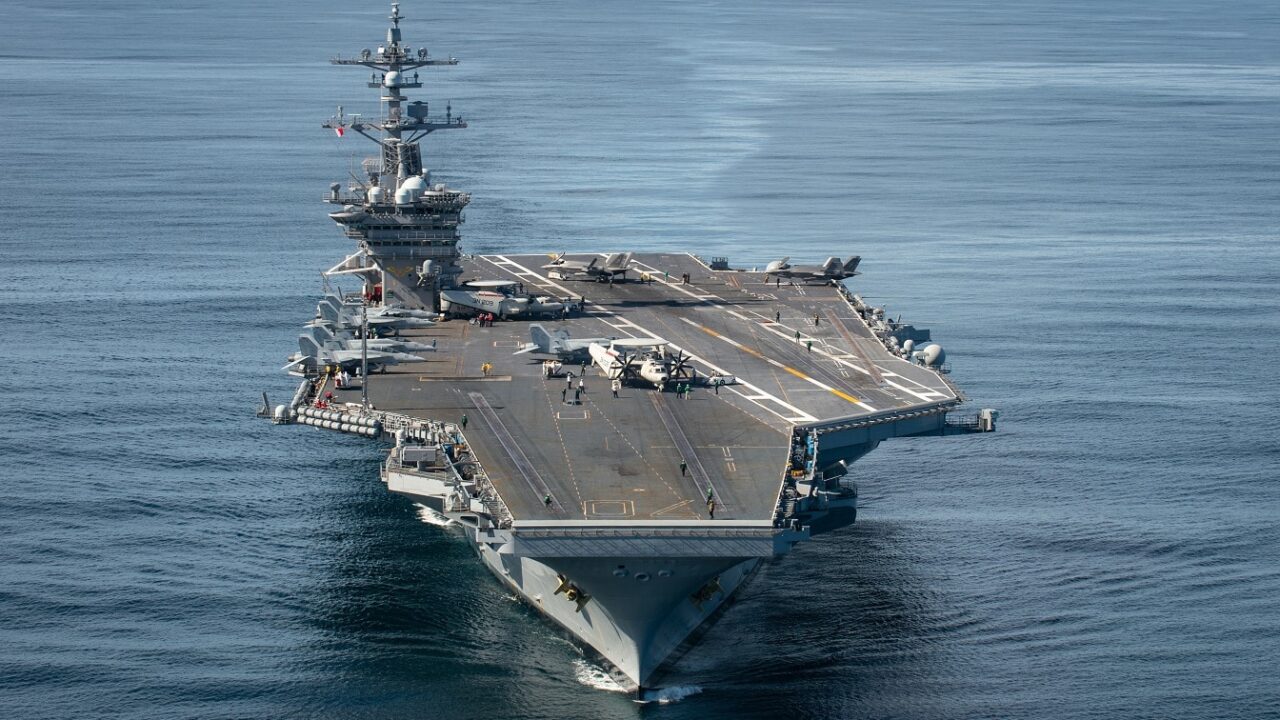
210128-N-GW654-1281 PACIFIC OCEAN (Jan. 28, 2021) Nimitz-class nuclear aircraft carrier USS Carl Vinson (CVN 70) is currently underway in the Pacific Ocean conducting routine maritime operations. (U.S. Navy photo by Mass Communication Specialist Seaman Olympia O. McCoy/Released)
For another thing, the United States has a measly four national shipyards capable of carrying out carrier repairs (a sobering reflection on just how much America’s shipbuilding capability has declined in the post-Cold War era). Many experienced workers have retired, and new hires lack hands-on expertise. Retiring the USS Nimitz now would mean one less vessel for the task-saturated, understaffed shipyards to worry about.
Retiring the Nimitz: The Case Against
(This former military officer is an unapologetic member of this latter school of thought.)
The US Armed Forces are replete with examples of weapons systems that appear, at first glance, to be obsolescent but are still needed due to either shortages or production delays affecting more advanced weapons.
Starting with airpower examples, despite 5th Generation stealth fighter jets like the F-22 Raptor and F-35 Lightning II being America’s top-of-the-line fighters, the US Air Force and Navy still haven’t cashiered the 4th Generation and 4.5 Generation F-15 Eagle (look at the F-15EX Eagle II variant), F-16 Fighting Falcon (AKA the “Viper”), and F/A-18 Super Hornet; these non-stealth warbirds still serve a very useful purpose.
Now, we can apply the same logic to the Nimitz class in general and CVN-68 in particular.
The class as a whole is supposed to be phased out by the ultramodern Gerald R. Ford-class supercarriers. All well and good in theory.
In practice, however, only one of the 10 Ford-class flattops has gone operational yet—that being USS Gerald R. Ford (CVN-78)—as the remaining Fords are facing various delays and cost overruns.
The next ship in the Ford class, USS John F. Kennedy (CVN-79), the specifically designated one-for-one replacement for USS Nimitz, is not slated for commissioning until 2027.
There’s another factor to consider: USN logisticians apply a “rule of thirds” to their flattops’ work schedules: at any given time, one-third of carriers are deployed, one-third are preparing for deployment, and one-third are undergoing maintenance. With 11 carriers in the fleet, this means that only three to four are typically out to sea. Retire Nimitz now, and that number of potentially available flattops dwindles even further, down to 10.

(April 28, 2017) The aircraft carrier USS Nimitz (CVN 68) transits Puget Sound enroute to its homeport at Naval Base Kitsap-Bremerton. The return to homeport marks the end of an underway with its carrier strike group, having successfully completed its composite training unit exercise and is now fully certified to deploy. (U.S. Navy photo by Mass Communication Specialist 2nd Class Vaughan Dill/Released)
Ergo, in case WWIII were to break out against either Russia and/or Communist China in the interim, “BOHICA” (one of the Nimitz’s affectionate nicknames) and her sister ships will still be needed to answer the call to duty faithfully.
USS Nimitz Battle History
Once CVN-68 finally does retire (all good things must come to an end, after all), she’ll do so with an imposing service record.
“Uncle Chester” was first “blooded” in combat during the Gulf of Sidra Incident of August 19, 1981, whereupon two Grumman F-14 Tomcats of Nimitz’s VF-41 shot down two of then-Libyan strongman Muammar Gaddafi’s Sukhoi Su-22 Fitters. To name just a few of her subsequent engagements:
-Deploying to the North Arabian Sea on October 29, 1988, in support of Operation Earnest Will, the reflagging of Kuwaiti oil tankers to protect them from the ravages of the Iranian Navy.
-The Persian Gulf War AKA Operation Desert Storm, January 17 to February 28, 1991; all five ships of the class actively serving at the time participated in the multinational coalition’s ultimately successful campaign to evict then-Iraqi dictator Saddam Hussein’s Iraqi forces from the tiny, oil-rich nation of Kuwait.
-Operation Inherent Resolve (OIR), June 2017; fighting against the Islamic State/ISIS/ISIL/Da’esh terrorist group in Iraq and Syria, USS Nimitz’s F/A-18 Super Hornets played a vital role in the Battle of Tal Afar, providing precision close air support (CAS) for advancing Iraqi soldiers.
About the Author: Christian D. Orr, Defense Expert
Christian D. Orr is a Senior Defense Editor. He is a former Air Force Security Forces officer, Federal law enforcement officer, and private military contractor (with assignments worked in Iraq, the United Arab Emirates, Kosovo, Japan, Germany, and the Pentagon). Chris holds a B.A. in International Relations from the University of Southern California (USC) and an M.A. in Intelligence Studies (with a concentration in Terrorism Studies) from American Military University (AMU). He is also the author of the newly published book “Five Decades of a Fabulous Firearm: Celebrating the 50th Anniversary of the Beretta 92 Pistol Series.”