
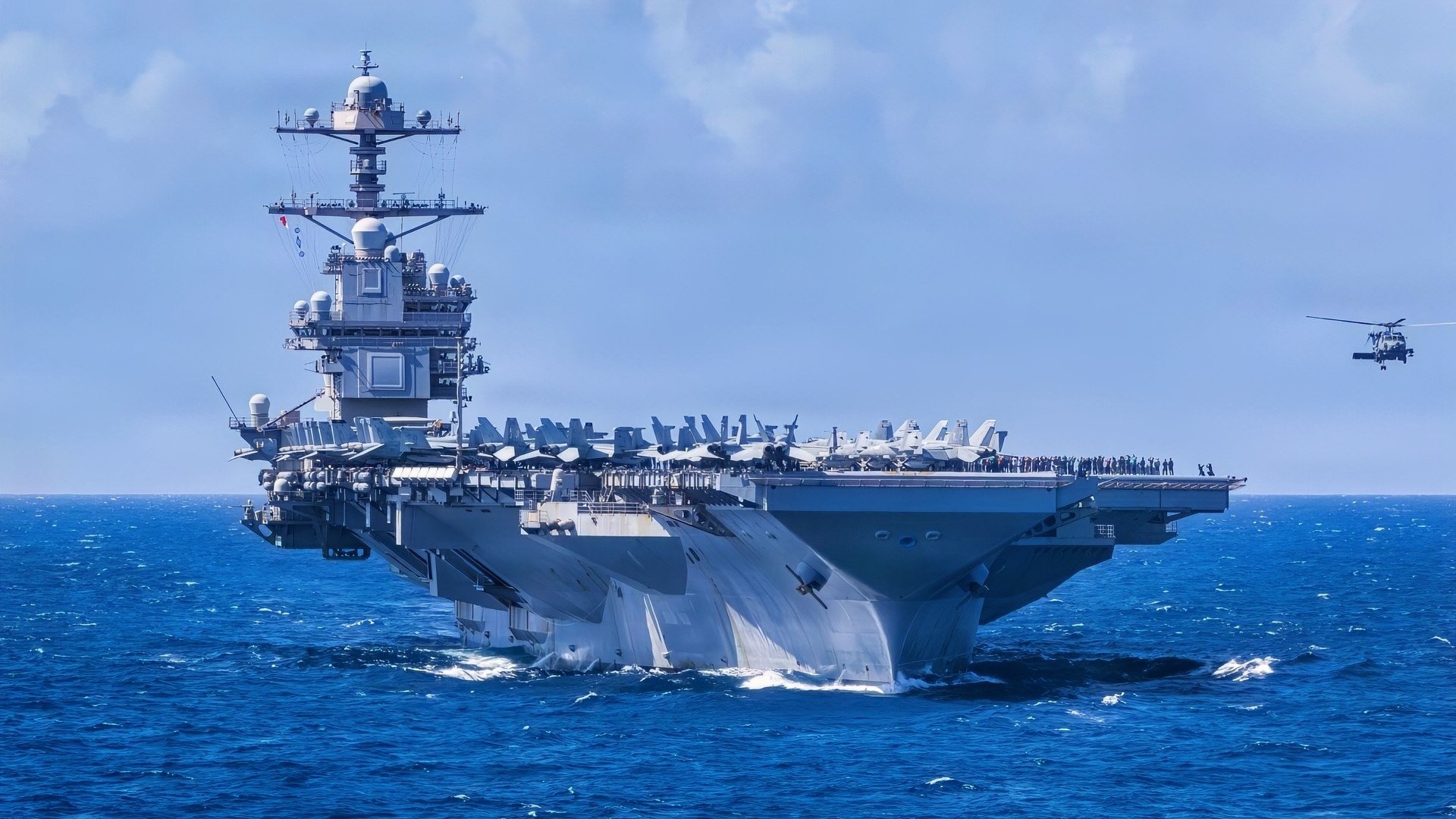
Summary and Key Points: USS John F. Kennedy (CVN-79) is meant to be the next major step in the Ford-class transition, bringing EMALS, Advanced Arresting Gear, and Advanced Weapons Elevators to boost sortie generation and reduce manning.
-But those same systems—especially AAG and the elevators—have driven repeated schedule slips as integration, redesigns, and certification demands stacked up.
-Shipbuilders also had to incorporate lessons learned from CVN-78 after construction was already far along, while supply-chain and workforce pressures added friction.
-With USS Nimitz retiring in May 2026 and CVN-79 now tracking to March 2027, the Navy could face a temporary 10-carrier window.
USS John F. Kennedy Slips To 2027: What’s Behind The Ford-Class Carrier Delays
The Gerald R. Ford-class aircraft carriers are the newest and most advanced class of carriers in the U.S. The ships integrate new technologies for launching and arresting aircraft in addition to the numerous advanced onboard systems.
The lead ship of the class, the USS Gerald R. Ford (CVN-78), was accepted into service in 2017. The next ship in the class, USS John F. Kennedy (CVN-79), is currently finalizing its construction and is expected to be delivered to the Navy sometime in 2027.
Like Gerald R. Ford, however, John F. Kennedy has suffered numerous delays throughout construction, pushing back her introduction by several years.
Design and Construction
The Kennedy plays a crucial role in the Navy’s transition toward a more advanced fleet structure.
It incorporates cutting-edge innovations such as the Electromagnetic Aircraft Launch System (EMALS), the Advanced Arresting Gear (AAG), and the Advanced Weapons Elevators (AWE), all designed to increase sortie generation and reduce manning requirements.
These improvements collectively allow the Ford-class carriers to achieve up to 160 sorties per day, exceeding the roughly 140 sorties possible from Nimitz-class ships, thereby offering significantly more combat capability in high-threat environments.
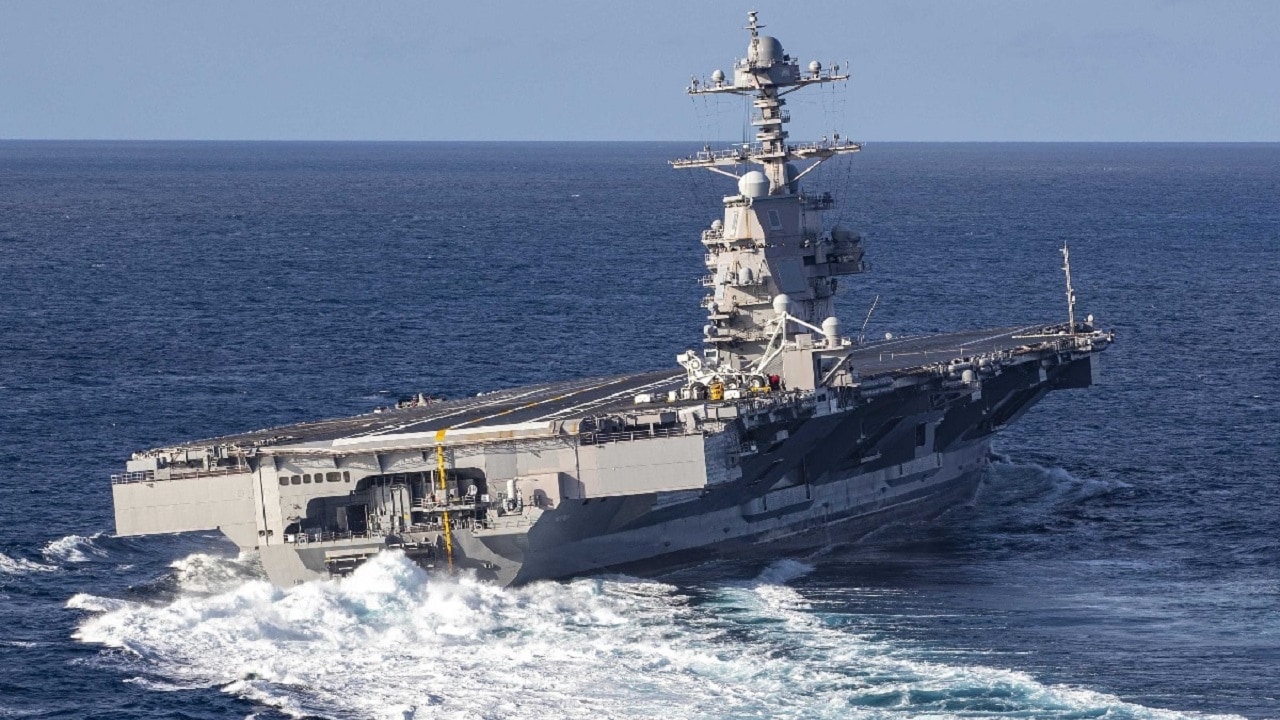
Ford-class Aircraft Carrier. Image Credit: US Navy.
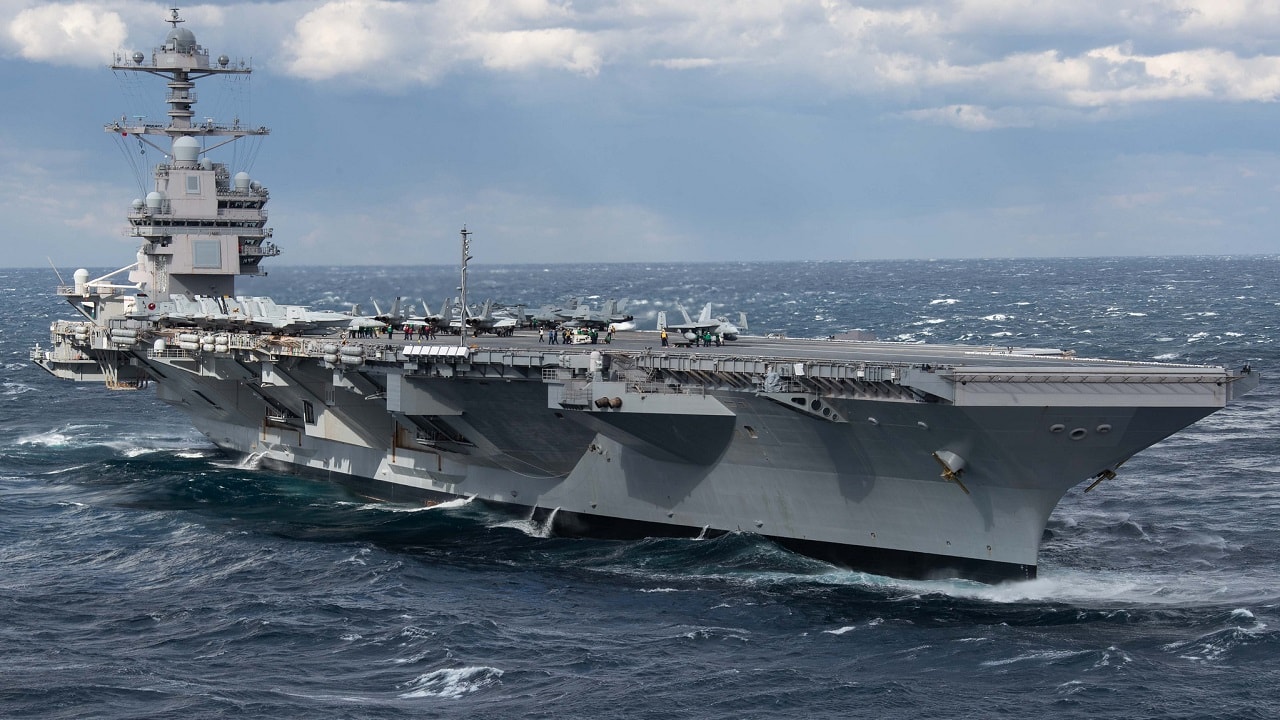
The aircraft carrier USS Gerald R. Ford (CVN 78) transits the Atlantic Ocean, March 26, 2022. Gerald R. Ford is underway in the Atlantic Ocean conducting flight deck certification and air wing carrier qualifications during the ship’s tailored basic phase before operational deployment.
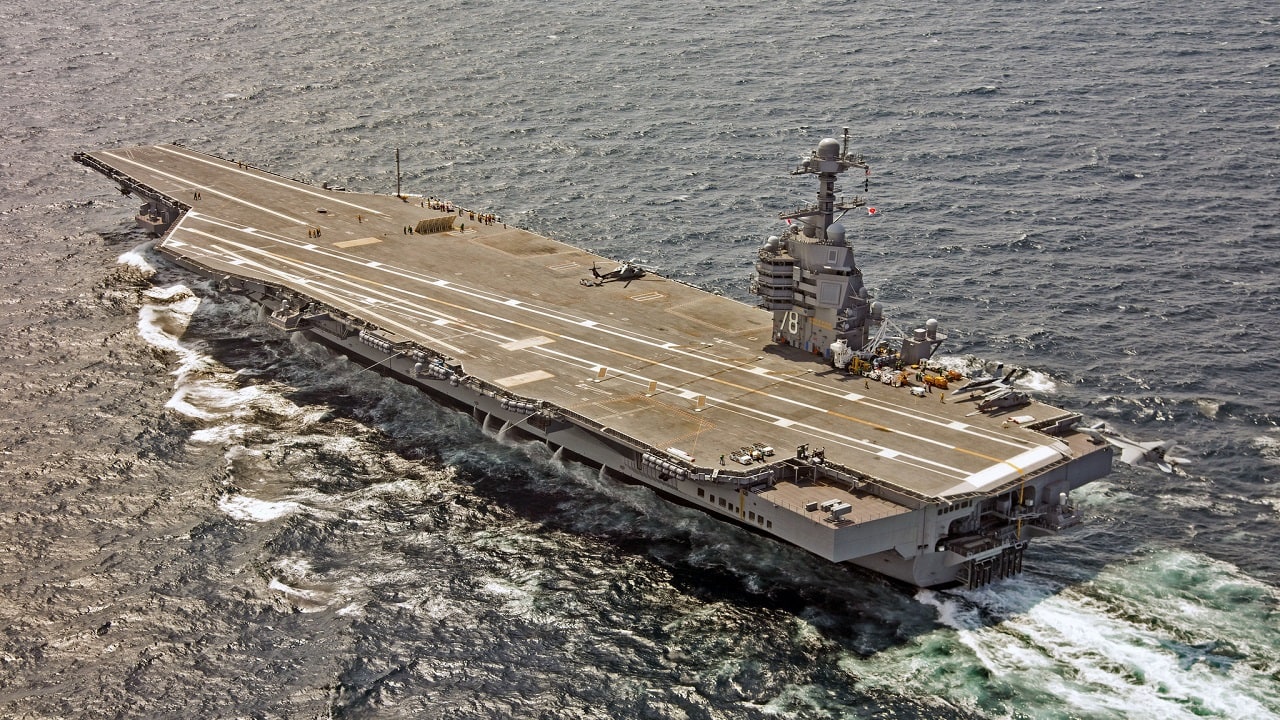
Ford-Class Aircraft Carrier Artist Rendering. Image Credit: Creative Commons.
While these improvements limit manpower requirements on the Ford-class, they introduce immense complexity, which has been largely responsible for the delays.
Construction of the John F. Kennedy began with its keel laying in August 2015, and early plans projected delivery in the early 2020s. This estimate shifted several times over the years: first to 2022, then into the 2024–2025 window, and ultimately to March 2027 as reflected in the Navy’s fiscal planning documents.
The cumulative effect is a delay of nearly five years beyond initial projections. Each delay can be traced to specific technical, structural, or logistical challenges, many of which stem from the ambitious new technologies that distinguish the Ford-class from its predecessors.
What’s Causing the Delays?
A major cause of delay has been the difficulty in integrating the Advanced Arresting Gear, a next-generation aircraft recovery system. According to the Navy’s 2026 Budget Report, the AAG was one of the main reasons for Kennady’s delay.
The AAG system had already proven troublesome during Ford’s construction, requiring extensive redesigns and retesting. Because the AAG issues were discovered while the Ford was already engaged in testing, Newport News Shipbuilding (NNS) was forced to implement required changes later in the construction sequence, which obviously pushed back the construction timetable.
Equally problematic have been the Advanced Weapons Elevators, responsible for moving ordnance rapidly and safely throughout the ship. These elevators, which rely on electromagnetic propulsion rather than traditional hydraulics, are essential to achieving the Ford-class’s increased sortie rate.
However, elevator integration significantly delayed CVN-78 and has done the same with CVN-79. Because these elevators must be fully certified before the carrier joins the fleet, the Navy and shipbuilder opted to complete more integration work during construction rather than postpone it to the post-shakedown period, a decision that lengthened the front-end schedule but is intended to reduce post-delivery downtime.
Learning From Ford’s Lessons
Another challenge that Kennedy’s construction was implementing the lessons learned from Ford into the new carrier. According to a spokesperson from HII Newport News Shipbuilding, “construction was fairly advanced when many Ford lessons were realized, precluding timely implementation of lessons learned for Kennedy.” That is to say, by the time HII learned its lessons building Ford, construction on Kennedy was well underway. Consequently, the shipbuilders had to back track her construction to make sure that the ship avoided many of the setbacks that had plagued Ford.
The Navy also altered its delivery strategy for CVN-79. Earlier in the program, it pursued a dual-phase delivery model in which the ship would be constructed in two major segments, allowing some systems to be installed after initial delivery.
However, the Navy reversed this approach, opting to perform more integration before initial acceptance, particularly in reactor plant systems, elevators, and weapons handling systems. This shift was intended to reduce the extended post-delivery delays that hampered CVN-78, but doing more work upfront inevitably pushed out the delivery calendar.
In 2023, the Navy formally extended the Kennedy’s delivery timeline so that work typically conducted during the Post Shakedown Availability period could instead be completed during initial construction, shifting the delivery from June 2024 into 2025, even before additional delays were announced.
What Kennedy’s Delay Means for the Navy
In some ways, the industrial base itself has contributed to delays. According to reports, shortages of materials and broader supply chain disruptions have hindered progress on CVN-79, reflecting an industry-wide challenge affecting multiple naval construction programs.
Newport News Shipbuilding, the only U.S. facility capable of building nuclear-powered carriers, is simultaneously managing the construction of multiple Ford-class carriers, alongside the demanding Virginia- and Columbia-class submarine programs, both of which impose heavy strain on the workforce and supply chains. Any shortage of skilled labor, high-precision components, or specialized materials has immediate cascading effects on a project as vast and complex as CVN-79.
As a result of the delays on John F. Kennedy, the U.S. Navy will be forced to operate only 10 carriers from 2026 to 2027. The USS Nimitz (CVN-68) is slated to retire in May 2026 and Kennedy was supposed to be her replacement. However, with these delays, the U.S. Navy will be forced to operate with one less carrier until Kennedy finishes her trials.
While this is unlikely to negatively impact the Navy in the long run, it could cause trouble if this trend continues with future Ford-class carriers. With the Nimitz-class vessels nearing the end of their service life, it is vital for the Navy to maintain maximum readiness, especially as the threat from China still looms in the Pacific.
About the Author: Isaac Seitz
Isaac Seitz, a Defense Columnist, graduated from Patrick Henry College’s Strategic Intelligence and National Security program. He has also studied Russian at Middlebury Language Schools and has worked as an intelligence Analyst in the private sector.