
Ford-Class Supercarrier JFK Finally Goes To Sea: EMALS, AAG, And Elevators Face The Real Test
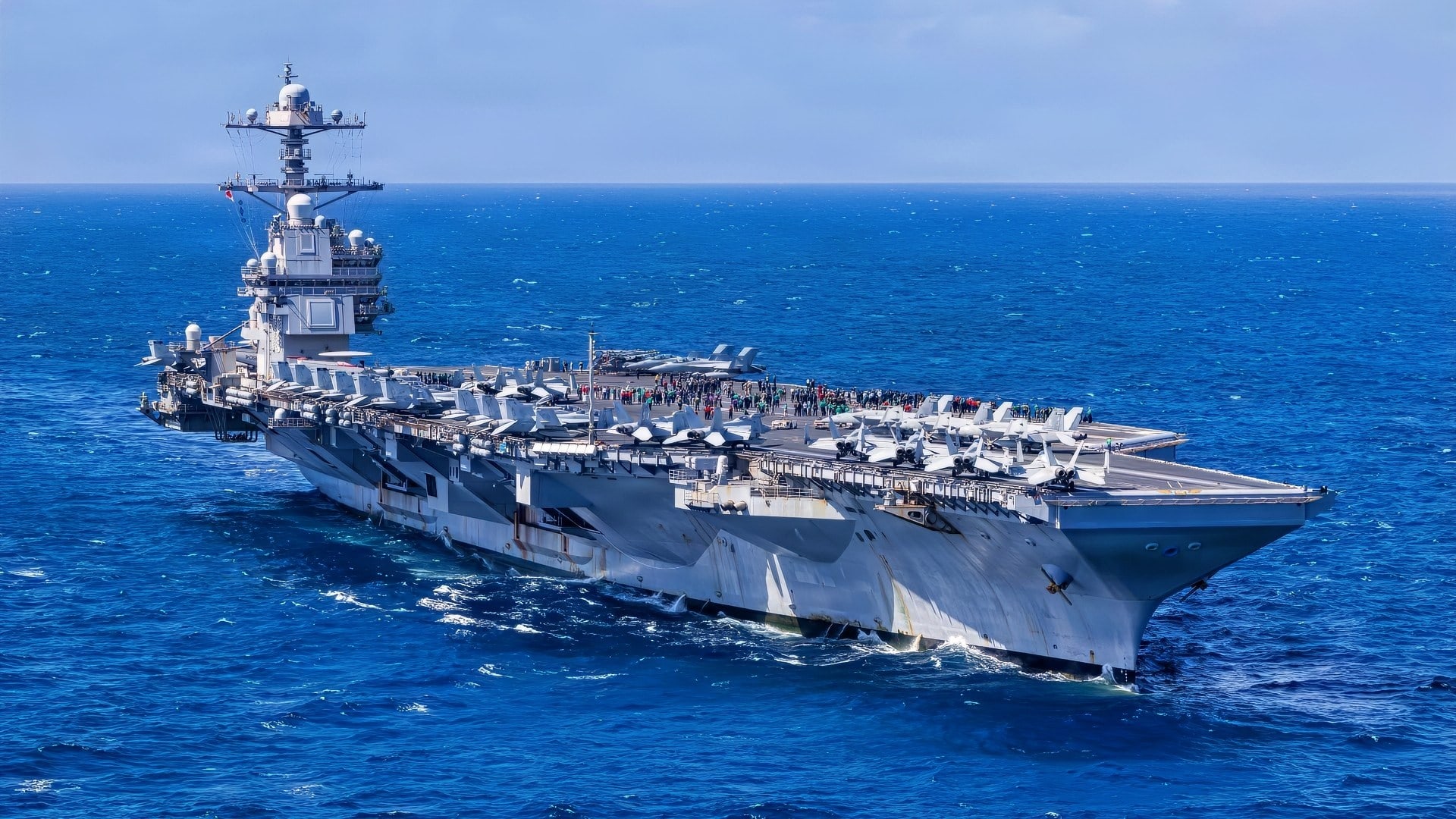
The USS John F. Kennedy (CVN-79) headed out to sea for the first time on Wednesday from its berth at Newport News, VA, for builder’s trials.
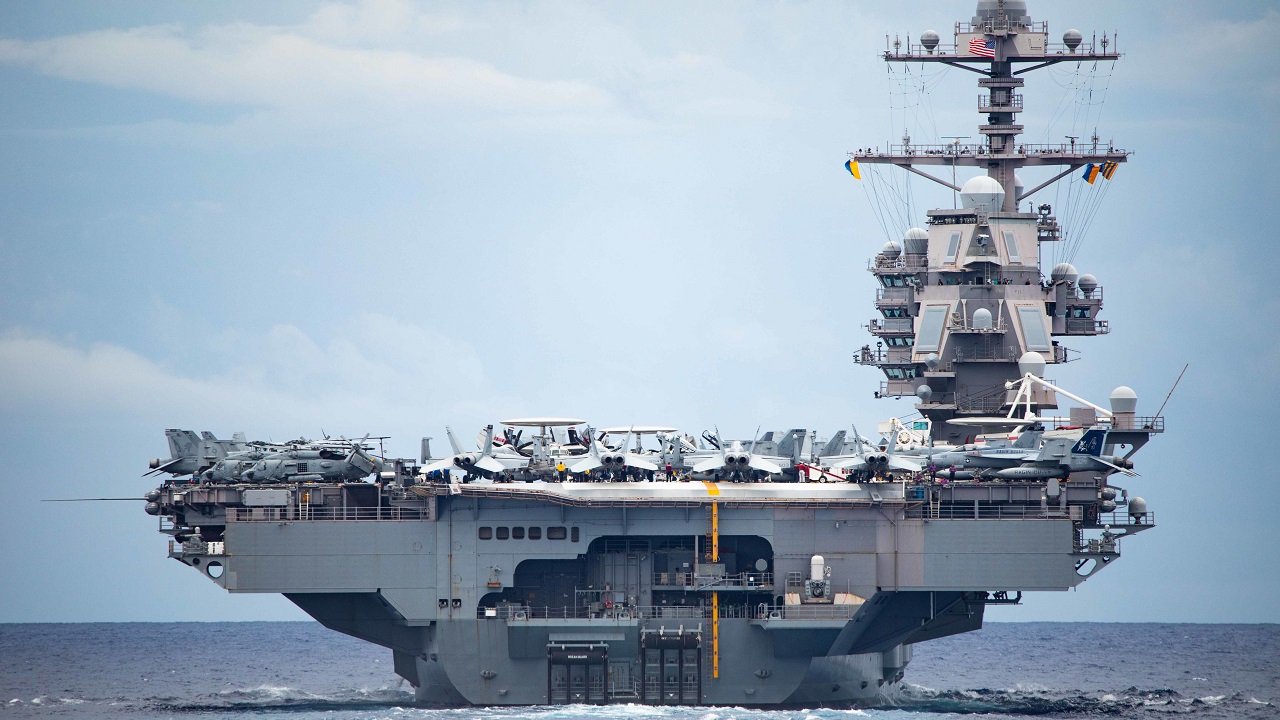
A view of the first-in-class aircraft carrier USS Gerald R. Ford (CVN 78) from aboard the Ticonderoga-class guided-missile cruiser USS Normandy (CG 60) as Normandy participates in a Tactical Force Exercise as part of the Gerald R. Ford Carrier Strike Group, Oct. 13, 2022. Ford is on its inaugural deployment conducting training and operations alongside NATO Allies and partners to enhance integration for future operations and demonstrate the U.S. Navy’s commitment to a peaceful, stable and conflict-free Atlantic region. (U.S. Navy photo by Mass Communication Specialist 2nd Class Malachi Lakey)
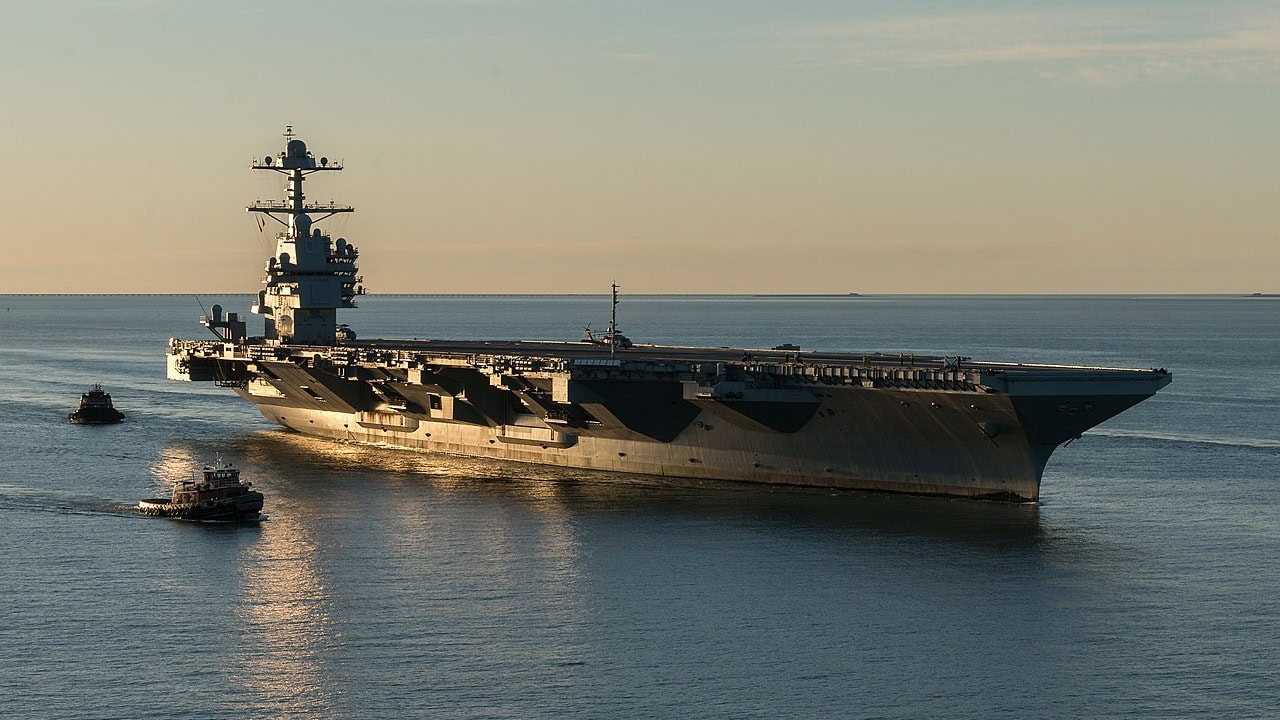
From 2017 – The aircraft carrier Pre-Commissioning Unit (PCU) Gerald R. Ford (CVN 78) pulls into Naval Station Norfolk for the first time. The first-of-class ship – the first new U.S. aircraft carrier design in 40 years – spent several days conducting builder’s sea trails, a comprehensive test of many of the ship’s key systems and technologies. (U.S. Navy photo by Matt Hildreth courtesy of Huntington Ingalls Industries/Released)
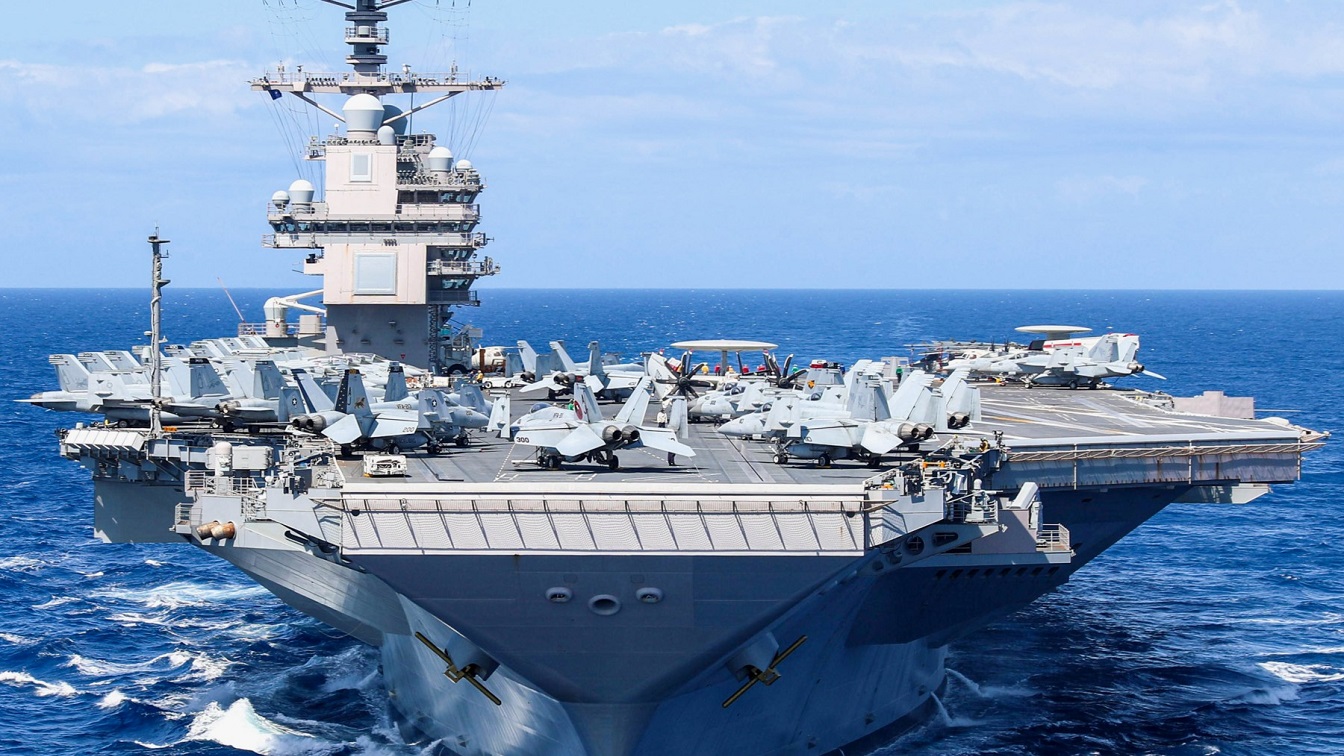
Ford-Class. Ford-Class Aircraft Carrier USS Ford.
Builder’s sea trials are a standard part of naval manufacturing, taking place before handover of the vessel to the US Navy.
Barring any further delays, which set back the ship several times, the USS Kennedy will now be delivered in March 2027, according to the Navy’s Fiscal Year 2026 budget justification documents.
The carrier was scheduled for delivery in July, per last year’s budget plans.
“These trials will test important ship systems and components at sea for the first time,” Todd Carillo, a Huntington Ingalls Industries (HII) spokesman, wrote in a social media post.
“This huge milestone is the result of the selfless teamwork and unwavering commitment by our incredible shipbuilders, suppliers, and ship’s force crew. We wish them a safe and successful time at sea!”
Differences Between The Kennedy and Ford Carriers:
The USS John F. Kennedy (CVN-79) is the second Gerald R. Ford-class aircraft carrier and features significant design improvements over the lead ship, USS Gerald R. Ford (CVN-78). Key differences include a superior AN/SPY-6(V)3 radar (replacing the DBR), improved construction, and a designed-in capability for F-35C operations.
The AN/SPY-6(V)3 radar, also known as the fixed-face version of Raytheon’s Enterprise Air Surveillance Radar (EASR), will replace the Ford’s Dual Band Radar (DBR). The DBR has proven highly problematic over the years.
The USS Kennedy uses a “complete model” approach and larger superlifts, which are expected to improve construction efficiency. The island structure is also modified to accommodate the new radar.
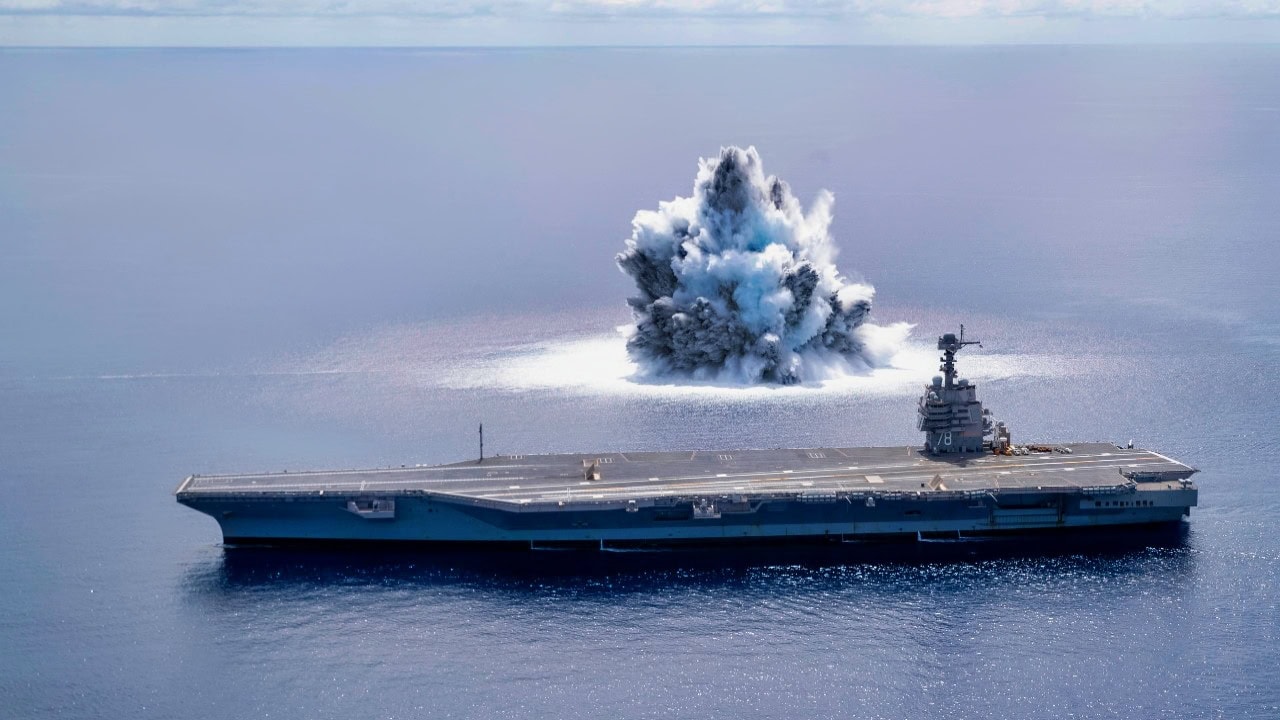
The aircraft carrier USS Gerald R. Ford (CVN 78) completes the first scheduled explosive event of Full Ship Shock Trials while underway in the Atlantic Ocean, June 18, 2021. The U.S. Navy conducts shock trials of new ship designs using live explosives to confirm that our warships can continue to meet demanding mission requirements under harsh conditions they might encounter in battle. (U.S. Navy photo by Mass Communication Specialist 3rd Class Riley B. McDowell)
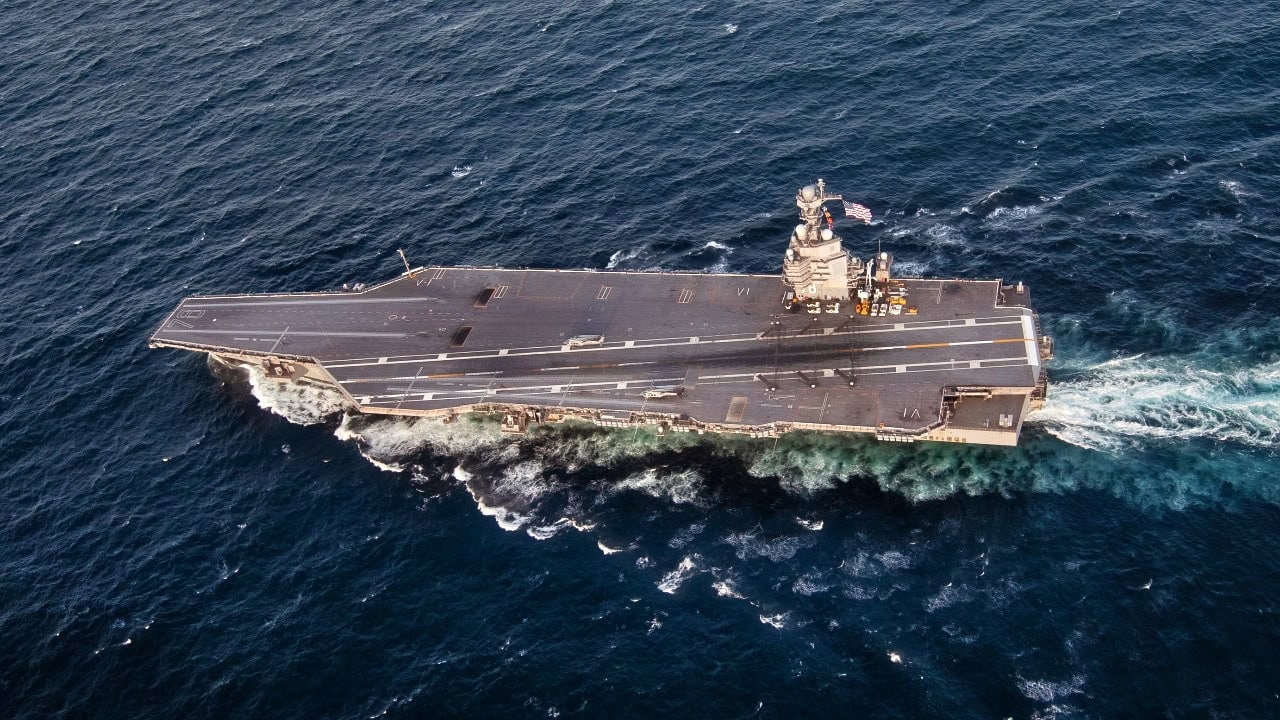
The Ford-class aircraft carrier USS Gerald R. Ford (CVN 78) and the Italian aircraft carrier ITS Cavour (CVH 550) transit the Atlantic Ocean March 20, 2021, marking the first time a Ford-class and Italian carrier have operated together underway. As part of the Italian Navy’s Ready for Operations (RFO) campaign for its flagship, Cavour is conducting sea trials in coordination with the F-35 Lightning II Joint Program Office’s Patuxent River Integrated Test Force to obtain official certification to safely operate the F-35B. Gerald R. Ford is conducting integrated carrier strike group operations during independent steaming event 17 as part of her post-delivery test and trials phase of operations.
The Kennedy is designed from the beginning for enhanced capabilities, including the integration of F-35C Lightning II fighters and Boeing MQ-25 Stingray drones.
The Kennedy is designed to achieve a faster, more cost-effective entry into the fleet, benefiting from the at times difficult learning curve of the first-in-class Ford.
The Kennedy incorporates fixes for early issues identified during the construction and sea trials of the Ford, particularly concerning the Electromagnetic Aircraft Launch System (EMALS) and Advanced Arresting Gear (AAG).
What Will Be Learned From The Sea Trials?
The USS Kennedy’s (CVN 79) sea trials, which began this week, will validate the performance of its core systems, particularly new Ford-class technologies such as the Electromagnetic Aircraft Launching System (EMALS) and Advanced Arresting Gear (AAG), in open seas. These trials will test propulsion, navigation, and weapon elevators to ensure readiness before delivery.
The most significant areas of the trials will include, but not be limited to:
The carrier’s system performance and reliability. Evaluating the effectiveness of the EMALS and AAG to ensure they can handle varied aircraft weights and improve sortie rates compared to Nimitz-class carriers.
Engineering and propulsion limits. Testing the new nuclear power plants and overall ship maneuverability in real-world conditions.
Confirming the success of design improvements, including a redesigned island and enhanced weapons handling systems, aimed at reducing sailor workload and improving efficiency.
Verifying that modifications, such as structural fixes for F-35C operations and improved weapon elevators, have addressed the technical issues experienced by the USS Gerald R. Ford.
What Are The Issues With the USS Kennedy?
This delay is due to ongoing issues with the ship’s advanced arresting gear and weapons elevators. Consequently, the U.S. Navy will temporarily operate with one fewer aircraft carrier, reducing the fleet to 10 ships on paper, for about a year.
The United States Navy’s Fiscal Year 2026 budget justification states that the delay is necessary “to support completion of Advanced Arresting Gear (AAG) certification and continued Advanced Weapons Elevator (AWE) work.” Both the Advanced Arresting Gear and the Advanced Weapons Elevator are new technologies being pioneered by the Ford-class.
These two systems, combined with persistent shipyard workforce shortages and supply chain disruptions, were cited as the direct causes of the new 2027 delivery estimate, according to the Army Recognition Group.
What Is The New Advanced Arresting Gear?
The AAG is a modular, integrated system consisting of energy absorbers, power conditioning equipment, and digital controls, designed as the follow-on to the Mark-7 (Mk-7) arresting gear. The Navy is currently utilizing the Mk-7 Mod 3 and Mk-7 Mod 4 designs on all Nimitz-class aircraft carriers.
The AAG architecture, Health Monitoring Assessment and Prognostics technology, and digital control system provide built-in test and diagnosis, resulting in the system requiring less maintenance and manpower to operate than the Mk-7.
This is designed to provide higher reliability and safety margins, while allowing sailors to focus on other areas of need. The system is also designed to enable potential arrestment of a broader range of aircraft, from the lightest unmanned aerial vehicles to the heaviest manned fighters.
The AAG was developed to replace the “legacy hydraulic arresting systems with an electromagnetic turbo-electric engine designed to recover a wider range of aircraft weights.” That includes lighter unmanned aerial systems (UAS). It also aims to reduce the stress loads on the aircraft’s airframes during launch.
The current Mk-7 Mod 3 arresting gear is a hydraulic system on U.S. aircraft carriers designed to quickly stop aircraft by using a tail hook to engage a series of cables stretched across the deck. This system can bring a 50,000-pound aircraft to a stop in under 350 feet. The AAG will replace it.
The Advanced Weapons Elevator
Advanced Weapons Elevators (AWEs) are electromagnetic systems used on the USS Gerald R. Ford (CVN 78) to move ordnance from weapons magazines to the flight deck.
They are faster, have more than double the capacity of older hydraulic systems, and can operate more smoothly with fewer crew members due to their advanced electronic and electromagnetic propulsion.
These elevators were a significant technological challenge, but were completed and are now a critical part of the carrier’s operational capability in the new Ford-class aircraft carriers.
Huntington Ingalls Industries (HII) spokesman Todd Corillo said lessons learned from building the carrier will make it easier to build future Ford-class carriers.
“Specifically, John F. Kennedy’s (CVN 79) construction was fairly advanced when many Ford lessons were realized, precluding timely implementation of lessons learned for Kennedy,” Corillo said in a statement. “In contrast, Enterprise (CVN 80) and Doris Miller (CVN 81) have been able to incorporate, leverage, and capitalize on Ford lessons learned earlier in the construction process.”
Further Ship Deliveries Are Delayed
Newport News Shipbuilding president Kari Wilkinson told USNI News last month that JFK was scheduled for preliminary acceptance in mid-2026.
“[The] ship’s force is going through their paces to make sure they’re ready to operate the ship, and after the first of the year, I expect that ship to get underway for its first sea trial,” she said.
The latest Navy budget reports show that the future USS Enterprise (CVN-80) is also facing a nearly one-year delay. The carrier is now scheduled to deliver in July 2030, rather than last year’s projection of September 2029.
“The CVN 80 delivery date shifted from September 2029 to July 2030 due to delays in material availability and industry/supply chain performance,” according to the Navy’s budget books.
It was only last year that the Navy’s budget forecasted an 18-month delay for Enterprise, pushing the delivery from March of 2028 to September of 2029, USNI News reported. Now that date keeps moving backward.
The Ford-class carriers, like the Columbia-class ballistic missile submarines and the Virginia-class attack submarines, are all behind schedule and over budget. These overruns it calls into question whether the Navy can successfully budget for and build the new F/A-XX stealth fighters, which would replace the aging F/A-18 Super Hornets.
The Navy needs more Ford-class carriers to begin retiring its aging Nimitz-class carriers. Once the Navy retires the USS Nimitz from active service this year as planned, the total size of the service’s carrier force will drop to 10 carriers until the USS Kennedy is commissioned
There is a critical shortage of carrier capacity due to global demand and the fact that half of the supercarriers are in port for maintenance at any given time.
About the Author: Steve Balestrieri
Steve Balestrieri is a National Security Columnist. He served as a US Army Special Forces NCO and Warrant Officer. In addition to writing on defense, he covers the NFL for PatsFans.com and is a member of the Pro Football Writers of America (PFWA). His work was regularly featured in many military publications.