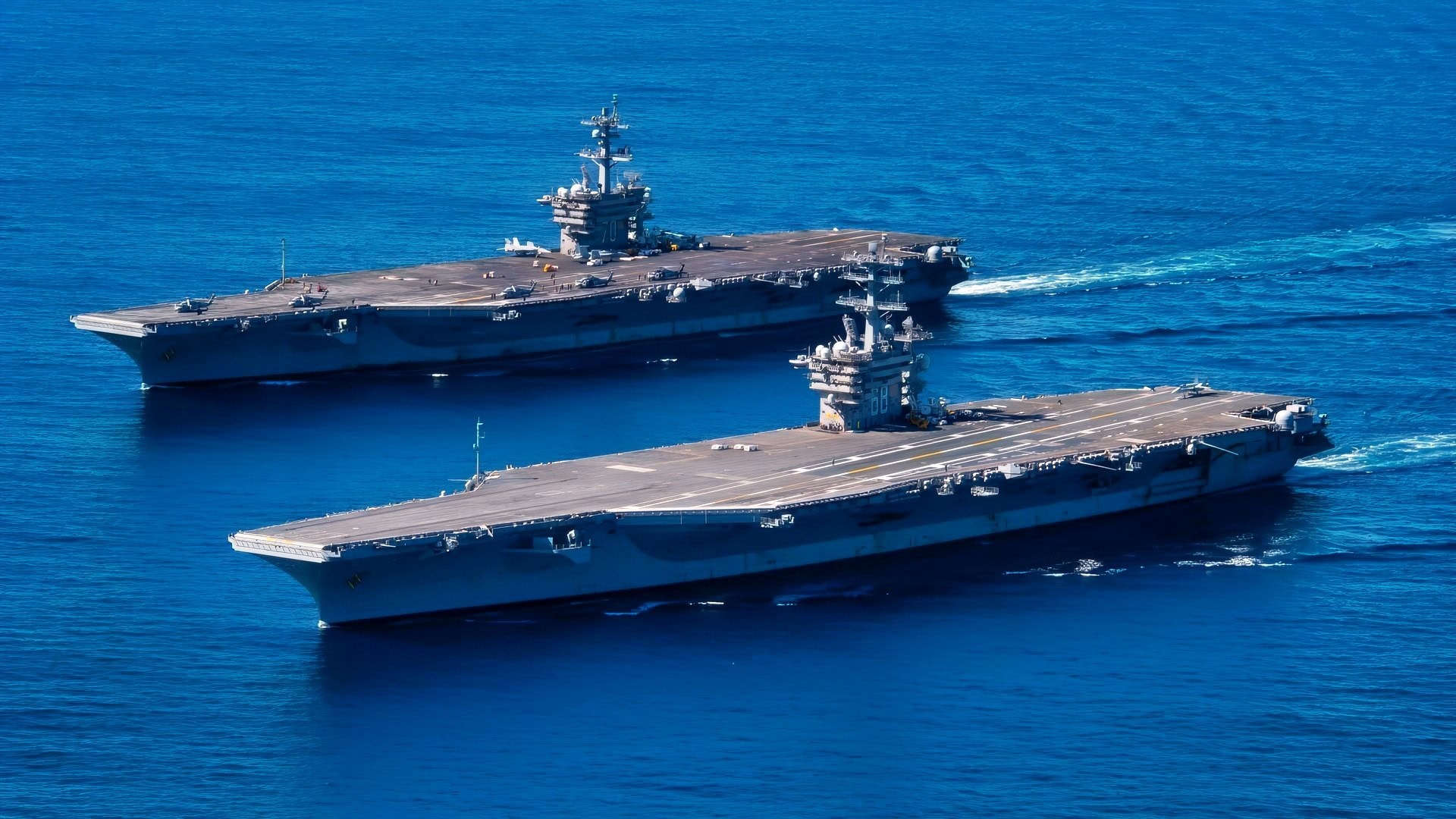
Summary and Key Points: USS Nimitz is slated to retire in 2026, but extending its service five to ten years could briefly give the Navy a 12-carrier force as USS John F. Kennedy nears operational readiness.
-That extra hull would ease deployment strain and strengthen forward presence across multiple theaters, especially the Indo-Pacific, where carrier aviation remains the most flexible way to mass airpower without relying on scarce land basing.
-Even in a modern missile environment, the carrier’s role is power projection while escorts provide layered defense through Aegis, interceptors, and electronic warfare. If the ship’s hull and systems remain sustainable, an extension could be a strategic bridge.
USS Nimitz Retiring In 2026? The Navy May Need 12 Supercarriers Instead
The oldest and longest-serving carrier in the U.S. Navy fleet is slated to retire in 2026—but there might be reason to extend its service life.
The latest U.S. carrier, the Gerald R. Ford-class USS John F. Kennedy (CVN-79), is nearing operational readiness. If the USS Nimitz (CVN-68) could operate for an additional 5 to 10 years, the Navy could operate 12 carriers for a period of time after the Kennedy arrives.
Operating 12 carriers would improve the Navy’s ability to sustain its forward presence and project power in multiple theaters. The Navy and Pentagon have long debated the merits of adding a 12th carrier in response to the persistent demand coming from combatant commanders.
Too Costly to U.S. Security to Retire USS Nimitz
The first question raised regarding the possibility of extending the Nimitz concerns sustainability. Can the Nimitz successfully operate for an additional five years beyond its scheduled retirement?
Carriers all go through a midlife refueling overhaul that makes them fit to operate for several additional decades.
If the hull and systems of the USS Nimitz are stable, perhaps the carrier’s service could be extended for several more years.
Other considerations relate to modernization and sustainment. Has the Nimitz been sufficiently updated to remain relevant in a new threat environment?
The answer likely is yes—carriers such as the Nimitz are intended to project air power, not to operate as missile-armed warships; such ships would protect the USS Nimitz as part of its carrier strike group.
The Nimitz could still prove relevant and useful in a conflict without requiring the most elaborate ship-defense technologies.
The destroyers and cruisers steaming alongside the carrier are armed with Aegis radar and ballistic-missile defense systems, as well as new generations of electronic warfare systems and interceptors.
The carrier would be well positioned to project air power while remaining defended by modern Navy warships.
Need Supercarriers in the Pacific
There are many reasons why it would make sense for the Navy to try to operate an extra carrier, given the current global threat environment.
Serious threats emanate from China, Iran, and Russia, creating an environment that demands a strong forward naval presence able to project power and deter adversaries.
The Navy is always looking to increase its carrier presence in the Pacific and has regularly conducted dual-carrier drills. During a potential great power war in the Pacific, any ocean-launched air campaign against China would need to coordinate hundreds of aircraft to mass power.
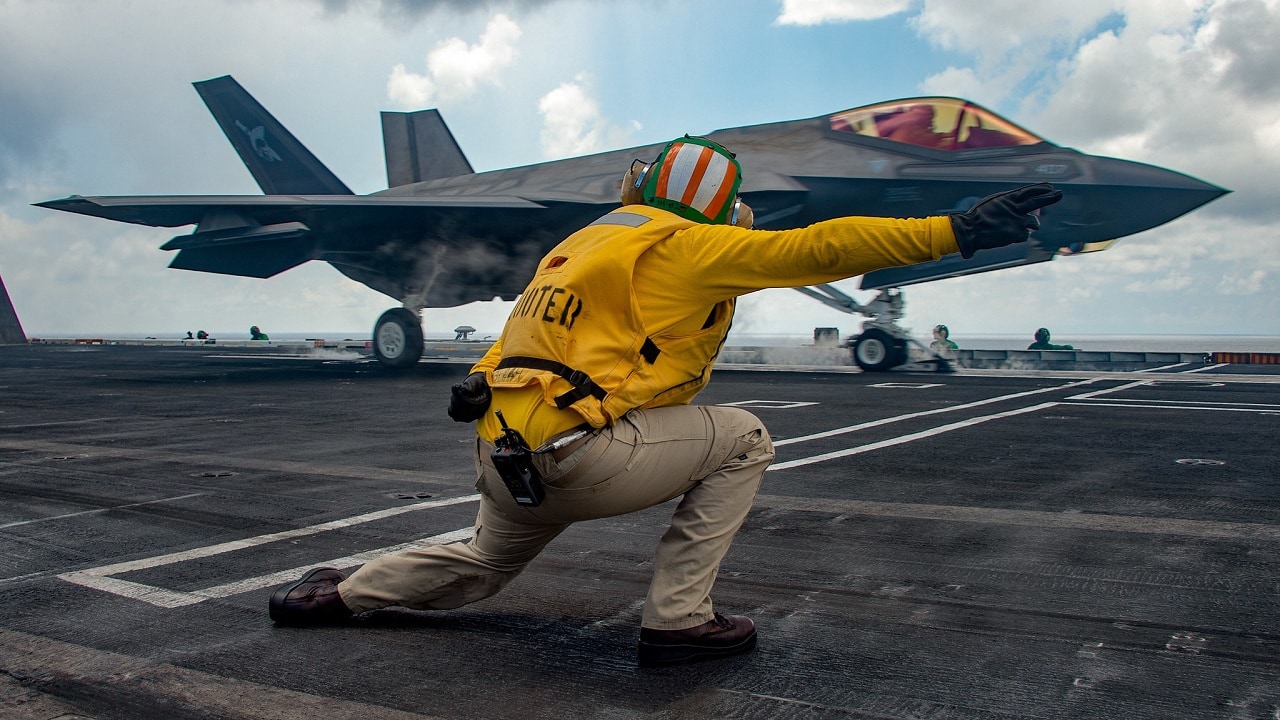
SOUTH CHINA SEA (Oct. 25, 2021) Lt. Nicholas Eppler, from Exeter, Calif., directs flight operations as an F-35C Lightning II assigned to the “Argonauts” of Strike Fighter Squadron (VFA) 147 launches from the Nimitz-class aircraft carrier USS Carl Vinson (CVN 70), Oct. 25, 2021. The Carl Vinson Carrier Strike Group is on a scheduled deployment in the U.S. 7th Fleet area of operations to enhance interoperability through alliances and partnerships while serving as a ready-response force in support of a free and open Indo-Pacific region. (U.S. Navy photo by Mass Communication Specialist Seaman Emily Claire Bennett) 211025-N-TY704-1241
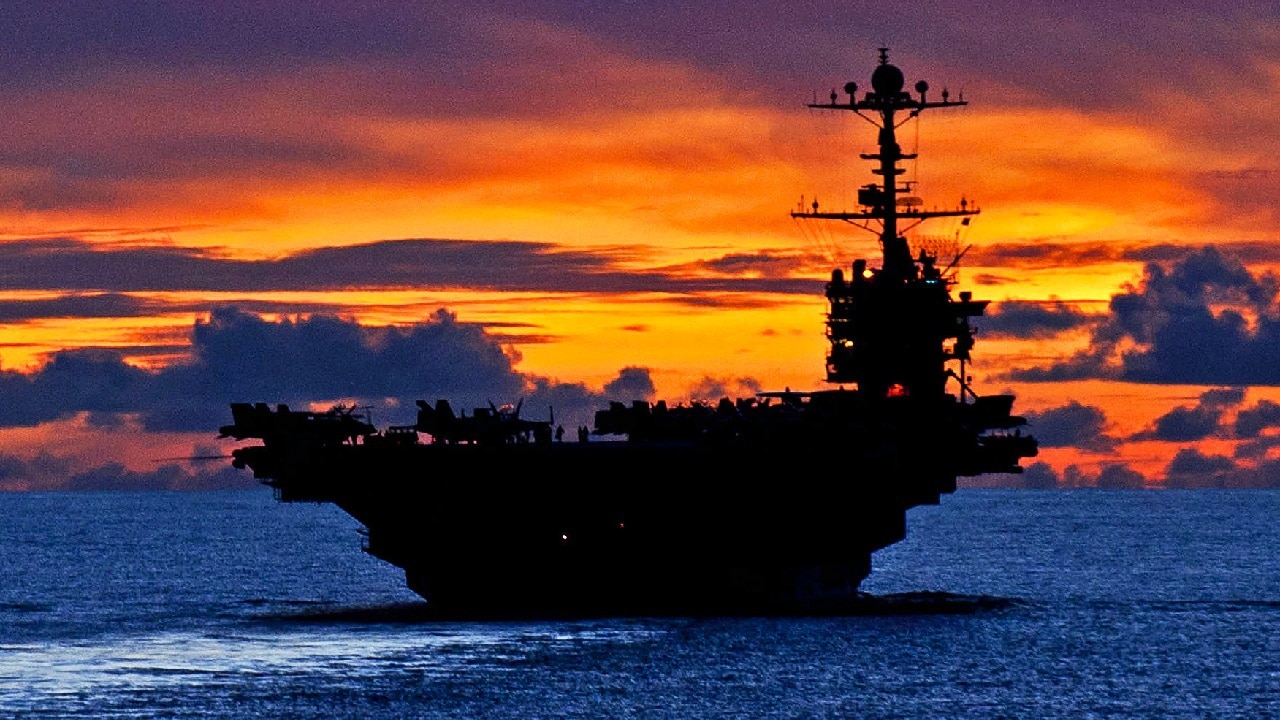
The aircraft carrier USS George Washington sails through calm seas near Guam at sunset while under way in the Pacific Ocean, Sept. 8, 2012. The George Washington is the centerpiece of Carrier Strike Group 5, the US Navy’s only continuously forward deployed carrier strike group, based out of Yokosuka, Japan. Carrier Strike Group 5 is currently on a routine Western Pacific patrol.
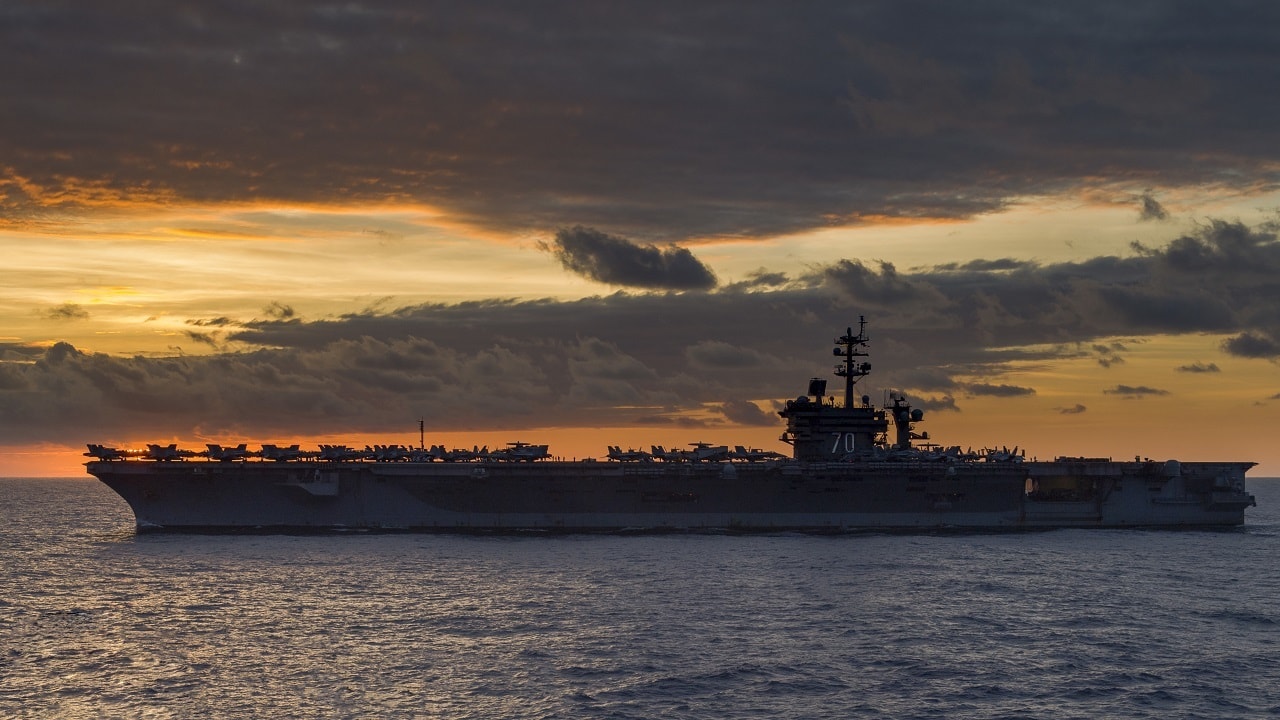
(Feb. 10, 2018) The Nimitz-class aircraft carrier USS Carl Vinson (CVN 70) transits the South Chna Sea. The Carl Vinson Strike Group is currently operating in the Western Pacific as part of a regularly schedule deployment. (U.S. Navy photo by Mass Communication Specialist Third Class Jasen Morenogarcia/Released)
Two or three carriers operating together in the Pacific could exponentially increase the Navy’s attack power.
This is important, given that land basing for fixed-wing assets in the Pacific remains a challenge.
New bases in the Philippines and Japan increase the options for land-launched fixed-wing aircraft, but carriers are far more versatile—they can reposition to deliver force from advantageous locations throughout the vast Pacific.
Upgraded Nimitz
The USS Nimitz over the course of its service has been greatly upgraded with new command-and-control technology, support for unmanned systems, and communications capabilities. It could be a critical asset during a dual-carrier operation.
As long as the hull of the ship was properly maintained, reinforced, and sustained, it could continue to operate.
About the Author: Kris Osborn
Kris Osborn is the President of Warrior Maven – Center for Military Modernization. Osborn previously served at the Pentagon as a highly qualified expert in the Office of the Assistant Secretary of the Army—Acquisition, Logistics & Technology. Osborn has also worked as an anchor and on-air military specialist at national TV networks. He has appeared as a guest military expert on Fox News, MSNBC, The Military Channel, and The History Channel. He also has a Master’s Degree in Comparative Literature from Columbia University.