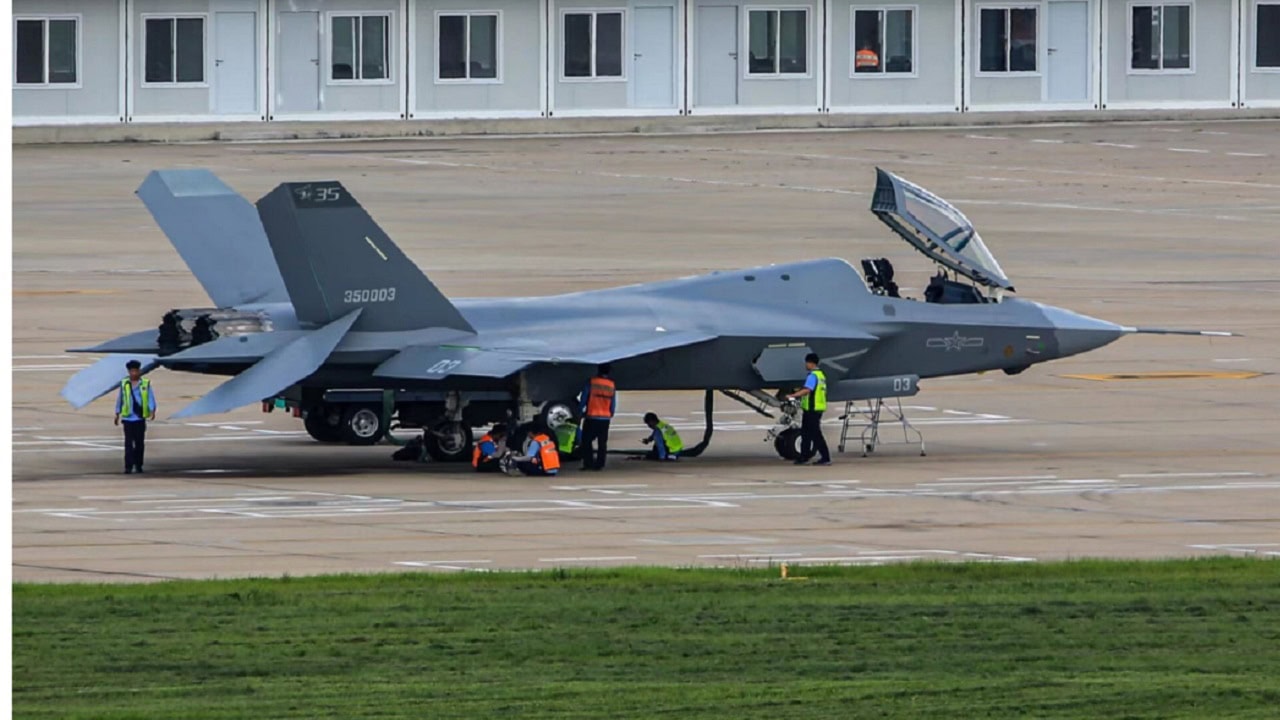
China’s J-35 Production Surge: Shenyang Plans to Double Output in Five Years
In recent statements, Chinese officials have talked openly about the Chengdu J-20 being the lead element if the People’s Liberation Army Navy (PLAN) and Air Force (PLAAF) attack Taiwan. The Republic of China (ROC) Air Force fleet of F-16s would succumb to the J-20, they say, not just because of superior Chinese numbers, but because of what those officials consider to be a “generational mismatch” between the two.
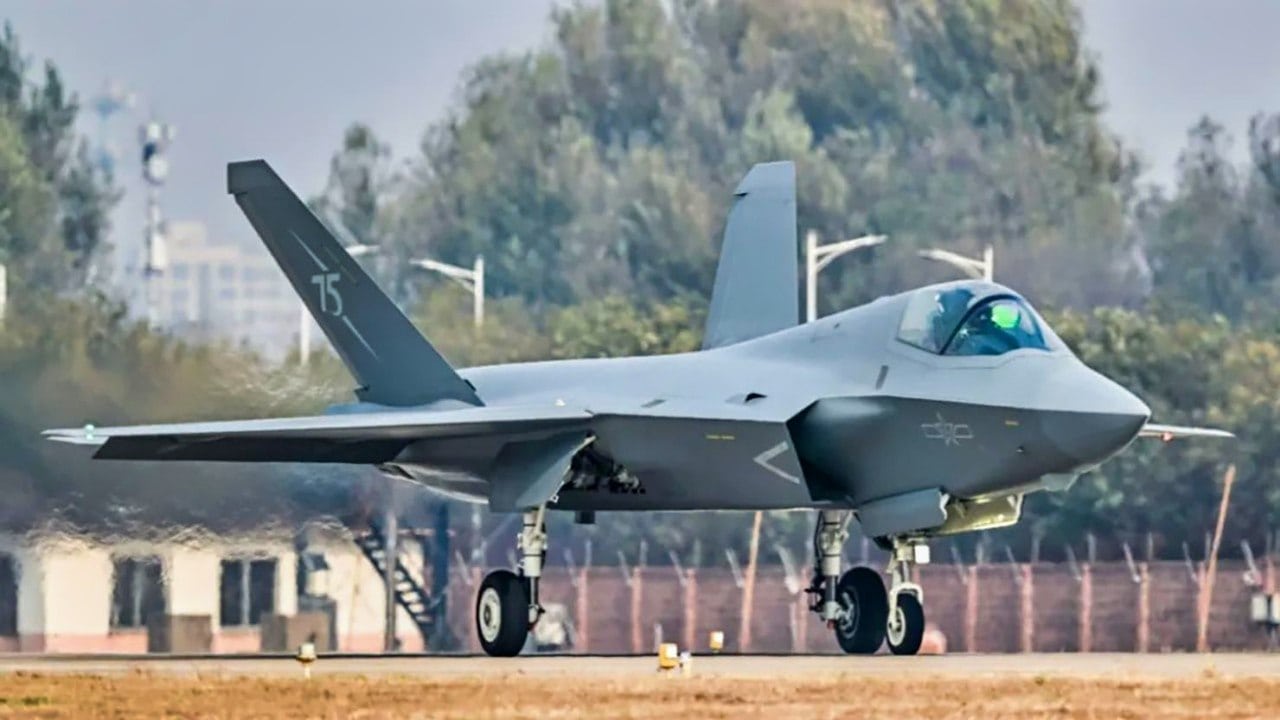
J-35A Fighter from China. Image Credit: Chinese Military
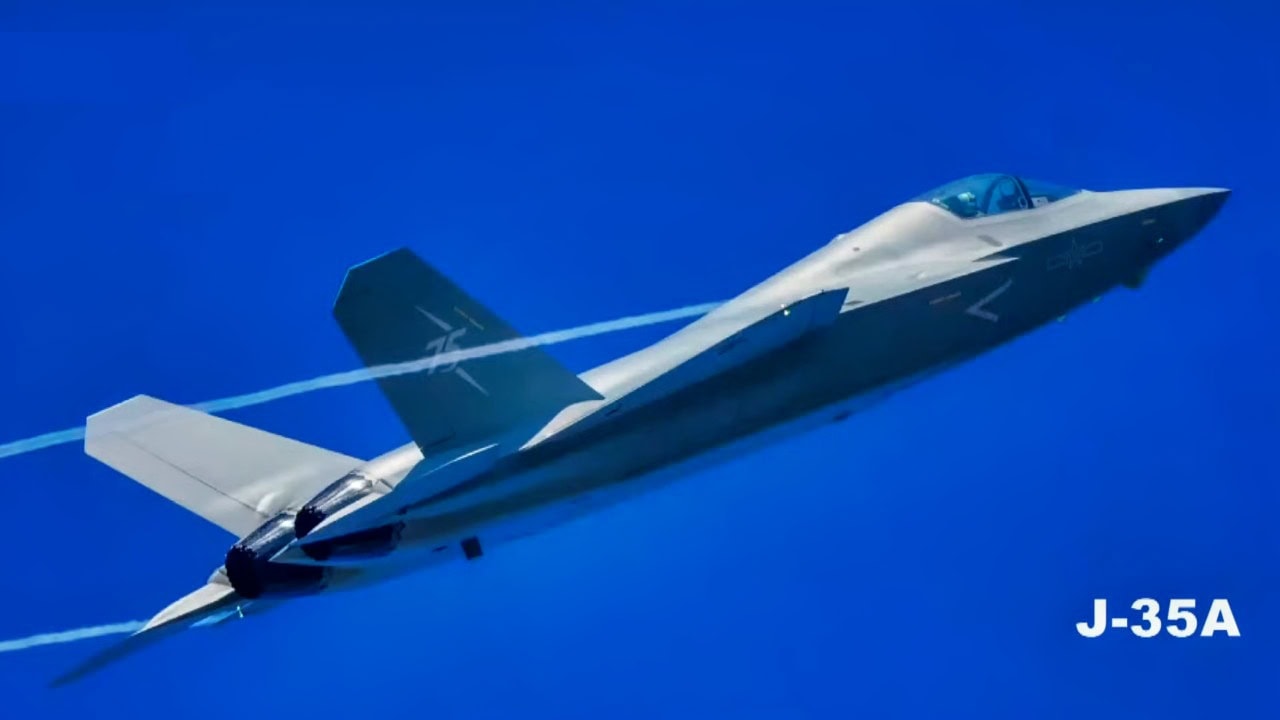
China J-35 Fighter. Image Credit: Creative Commons.
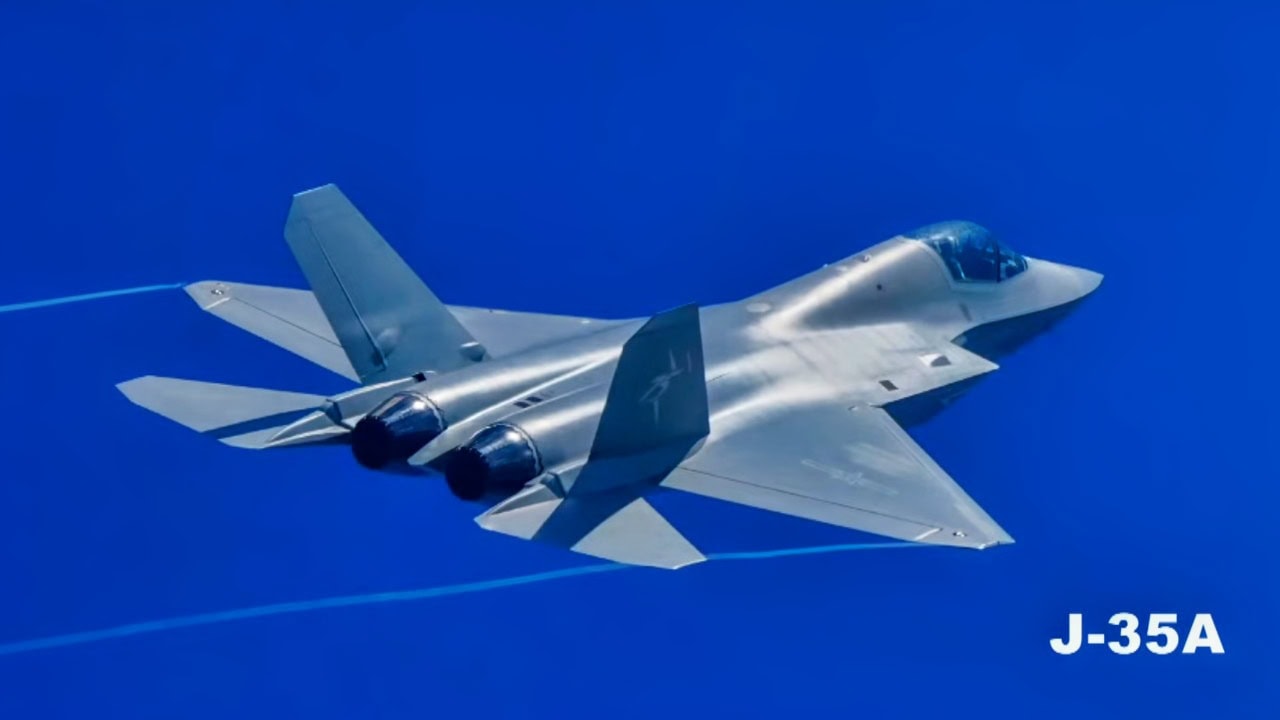
J-35 flying at Zhuhai Airshow 2024.
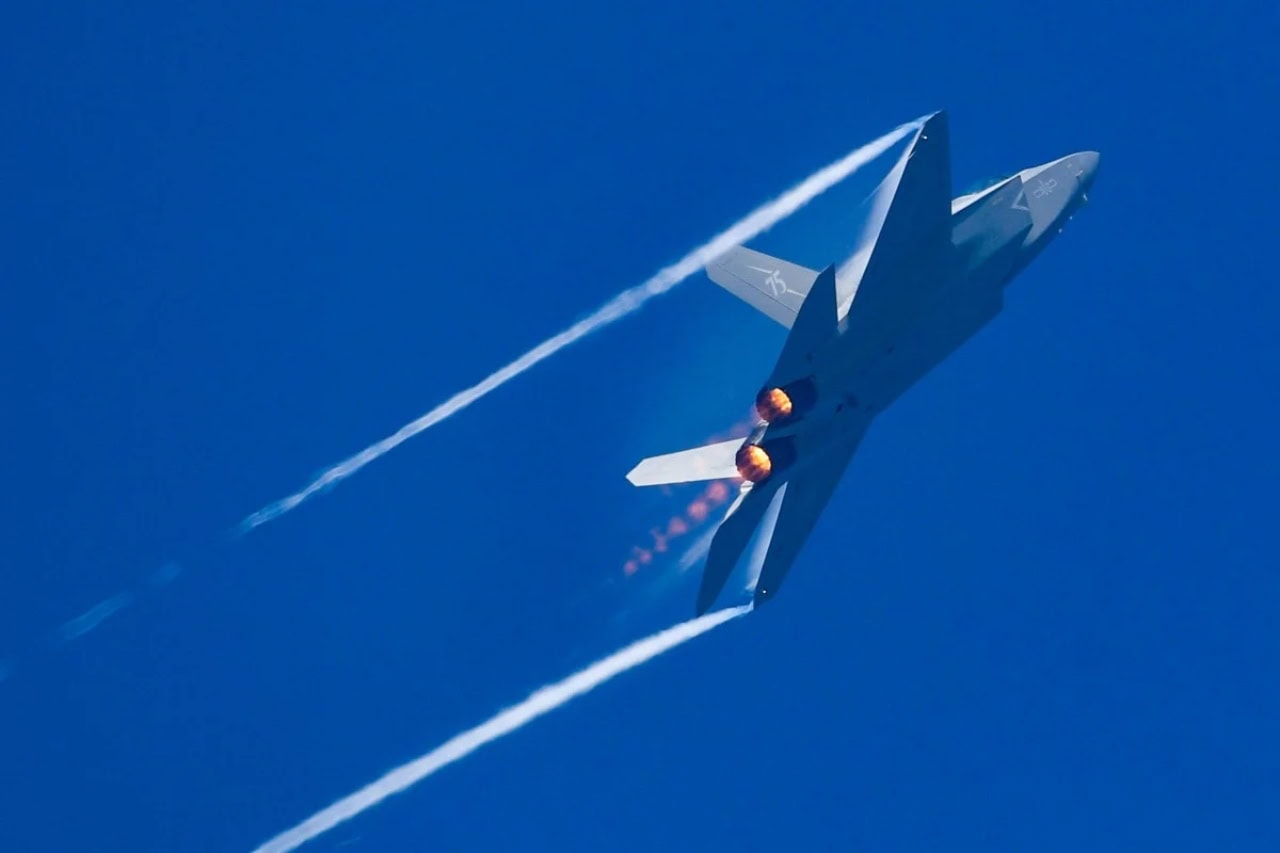
J-35. Image Credit: Chinese State Media.
However, there is important news about another Chinese platform. The South China Morning Post reported January 9 that the Shenyang Aircraft Corporation plans to double the production rate of its J-35 fighter aircraft in the next five years. This production surge would affect the land-based J-35A and the carrier-capable J-35B stealth fighters.
Shenyang is one of the two main fighter-aircraft design and production centers under the umbrella of the Aviation Industry Corporation of China (AVIC) conglomerate. As it provided the update, the company also released video footage of both J-35 variants— the stealth fighters are seen conducting their first flights of the year from the aerodrome that adjoins Shenyang facilities in Liaoning province.
Images released along with the footage showed both variants still painted in the new-generation green-colored factory primer. The new color replaced the yellow coating that adorned earlier aircraft models, because the zinc-chromate primer paint guards against corrosion.
Expanding Production Space
Chinese state media cited the local Liaoning Daily, which reported Shenyang in the middle of 2025 finished the main structure and other major elements for a new production line at the facility.
Full-scale production is expected to begin in 2026, with media reports calling the now significantly larger facility the “Shenyang Aerospace City” industrial zone.
Shenyang also announced plans to build an “intelligent manufacturing” system that will support production across the entire assembly process. The company stated it invested 8.6 billion yuan ($1.2 billion) in a new 4.2-square-kilometer facility.
Considering projected production numbers and the high-profile effort by Shenyang to supercharge its assembly line, it seems more likely that it will be a force of J-35s that leads the effort to overwhelm Taiwan’s fleet of F-16s and Aerospace Industrial Development Corporation (AIDC) F-CK-1 fighters.
“As with most of the PRC-developed weapon systems, the surge of J-35 production is likely to move forward at a speed that most US or European modern military aircraft production enterprises would find difficult – if not impossible – to keep pace with,” said a retired NATO-nation intelligence officer with long experience assessing Beijing’s defense industrial complex.
J-35A/B Future Improvements and Deployment
That source’s position is supported by a recent article from the Royal United Service Institute (RUSI) in London assessing the evolution of the Russian and Chinese military aircraft programs.
The author points out that “in late 2025, the J-35/A is almost certainly still in low-rate initial production, but if previous programs are any indication of likely direction of travel, production can be expected to increase rapidly in the coming years. The aircraft will also probably incorporate development experience and technology from more mature [aircraft] types, in particular the J-20A/S, for its avionics and weapons systems.”
The report also notes the uptick in harassment flights during which PLA air groups circumnavigate Taiwan in increasingly larger numbers of fighters, bombers and airborne support platforms.
“In 2025, PLAAF and PLAN AF aircrew routinely fly complex training and demonstration of force sorties involving fighters, bombers, tankers and AEW&C aircraft, in coordination with each other and with PLAN surface action groups. This is especially noteworthy around Taiwan and in the Sea of Japan,” according to RUSI.
The Chinese military describes the J-35 as a medium-sized multi-role stealth fighter capable of air-superiority and strike missions against ground and maritime targets. The heavier and larger J-20 is primarily designed for air superiority missions.
Official Chinese sources also intimate that the J-35 will operate from the PLAN Type 003 CV-18 Fujian aircraft carrier, as well as amphibious assault ships. The intent is to integrate carrier-based aviation elements into joint maritime operations.
About the Author: Reuben F. Johnson
Reuben F. Johnson has thirty-six years of experience analyzing and reporting on foreign weapons systems, defense technologies, and international arms export policy. Johnson is the Director of Research at the Casimir Pulaski Foundation. He is also a survivor of the Russian invasion of Ukraine in February 2022. He worked for years in the American defense industry as a foreign technology analyst and later as a consultant for the U.S. Department of Defense, the Departments of the Navy and Air Force, and the governments of the United Kingdom and Australia. In 2022-2023, he won two awards in a row for his defense reporting. He holds a bachelor’s degree from DePauw University and a master’s degree from Miami University in Ohio, specializing in Soviet and Russian studies. He lives in Warsaw.