
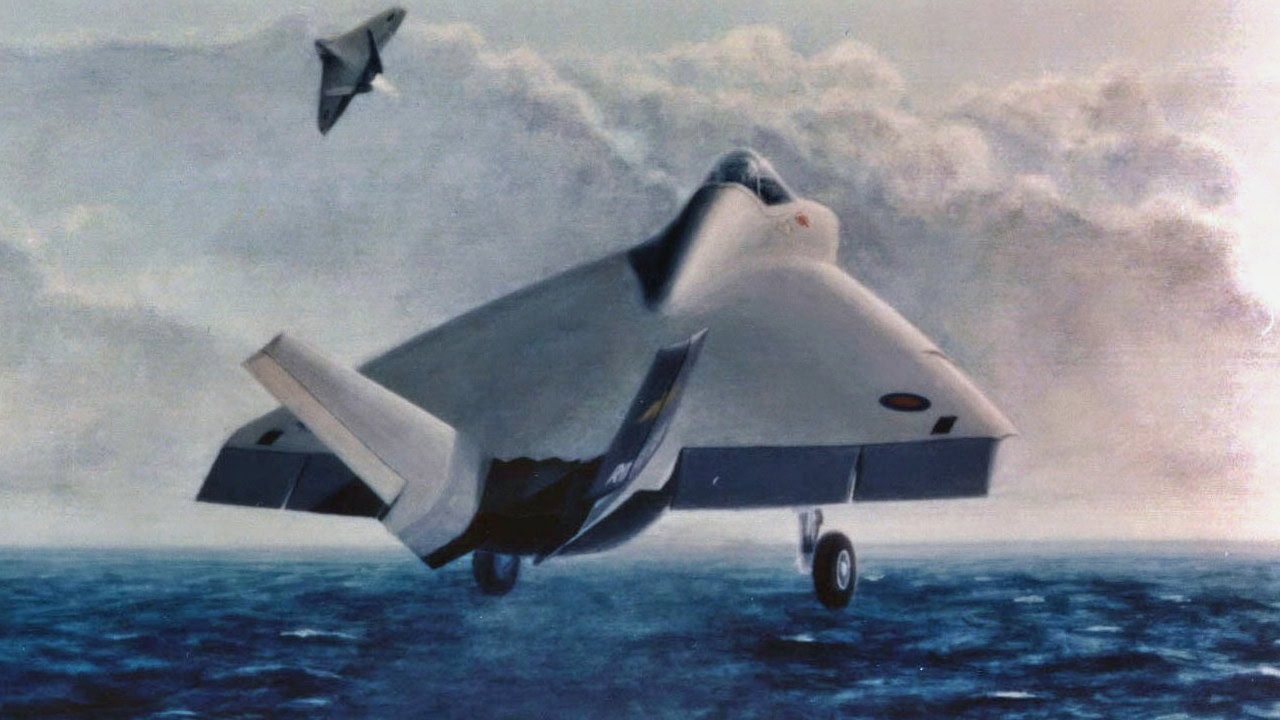
Synopsis: The Joint Strike Fighter competition (1997–2001) aimed to produce one stealth aircraft family for the Air Force, Navy, and Marine Corps—plus allies—while reducing upkeep costs.
-In the final head-to-head, Lockheed’s X-35 and Boeing’s X-32 pursued three variants, with STOVL performance becoming a major discriminator.
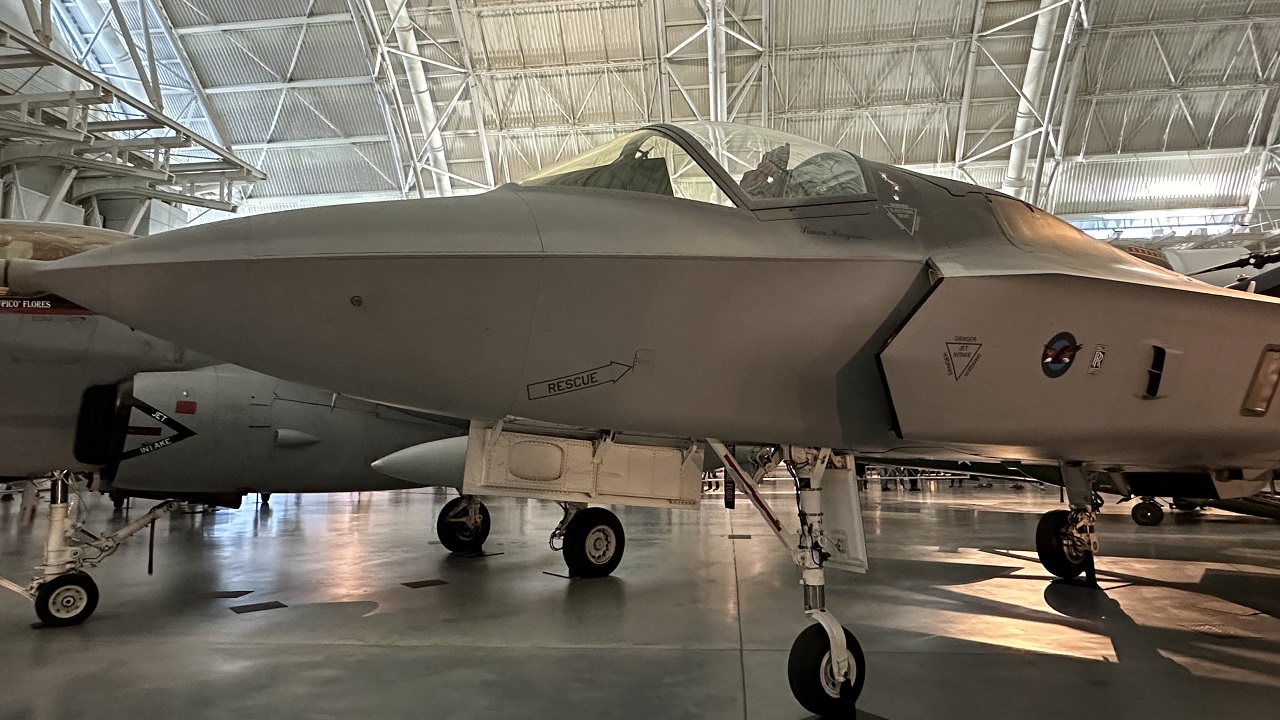
X-35B Joint Strike Fighter. Image taken on October 1, 2022, at the National Air and Space Museum.
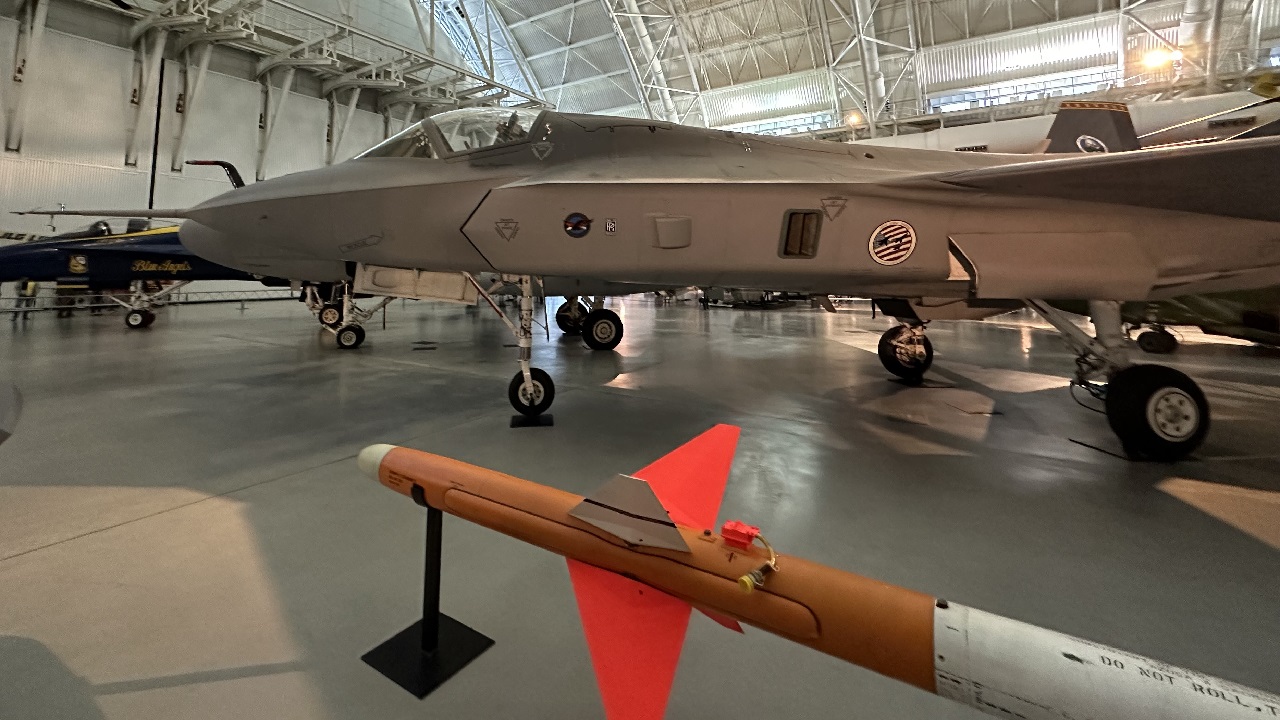
X-35B Joint Strike Fighter. Image taken on October 1, 2022 at National Air and Space Museum.

X-35B Joint Strike Fighter. Image taken on October 1, 2022, at the National Air and Space Museum.
-The X-35’s approach required fewer configuration changes to execute short takeoff/vertical landing, and evaluators also viewed its evolving design as steadier and more scalable for avionics growth.
-A 2000 mishap sidelined the X-32 for weeks, while the X-35 continued demonstrating key operational behaviors. Lockheed ultimately won the 2001 decision.
Why Boeing’s X-32 Lost the JSF War to Lockheed’s X-35
This Joint Strike Fighter (JSF) competition began in 1997 and lasted until 2001. The idea behind the JSF was to produce a fighter that could do it all instead of simply focusing on one role.
The JSF evaluators envisioned a stealthy airplane that could win head-to-head dogfights, intercept enemy fighters in peace time, complete close air support missions, collect intelligence, surveillance, and reconnaissance data, serve as an electronic warfare platform, and take out or suppress enemy air defenses.
The JSF would also have the same maintenance and upkeep requirements across the military in different modes for the U.S. Air Force, the Marine Corps, and the Navy. It would also be used in allied air forces. The idea was to keep it in the air for less money and effort.
This Was an Ambitious Program
The U.S. military accepted four applications for the JSF program, but it only chose two: The Lockheed Martin X-35 and the Boeing X-32. The JSF required both defense contractors to ultimately produce three variants: conventional takeoff/landing, short-takeoff/vertical landing, and carrier takeoff/landing.
X-35 Conducted Short-Take Off and Landing More Efficiently
The first difference between the X-35 and X-32 emerged while conducting tests for short-takeoff and vertical landing (STOVL). The X-32 had a disadvantage – maintenance crews had to make changes to the airframe before it could engage in STOVL operations. Meanwhile, the X-35 had better technology that made these prior modifications unnecessary. The Lockheed model had better performance while executing STOVL.
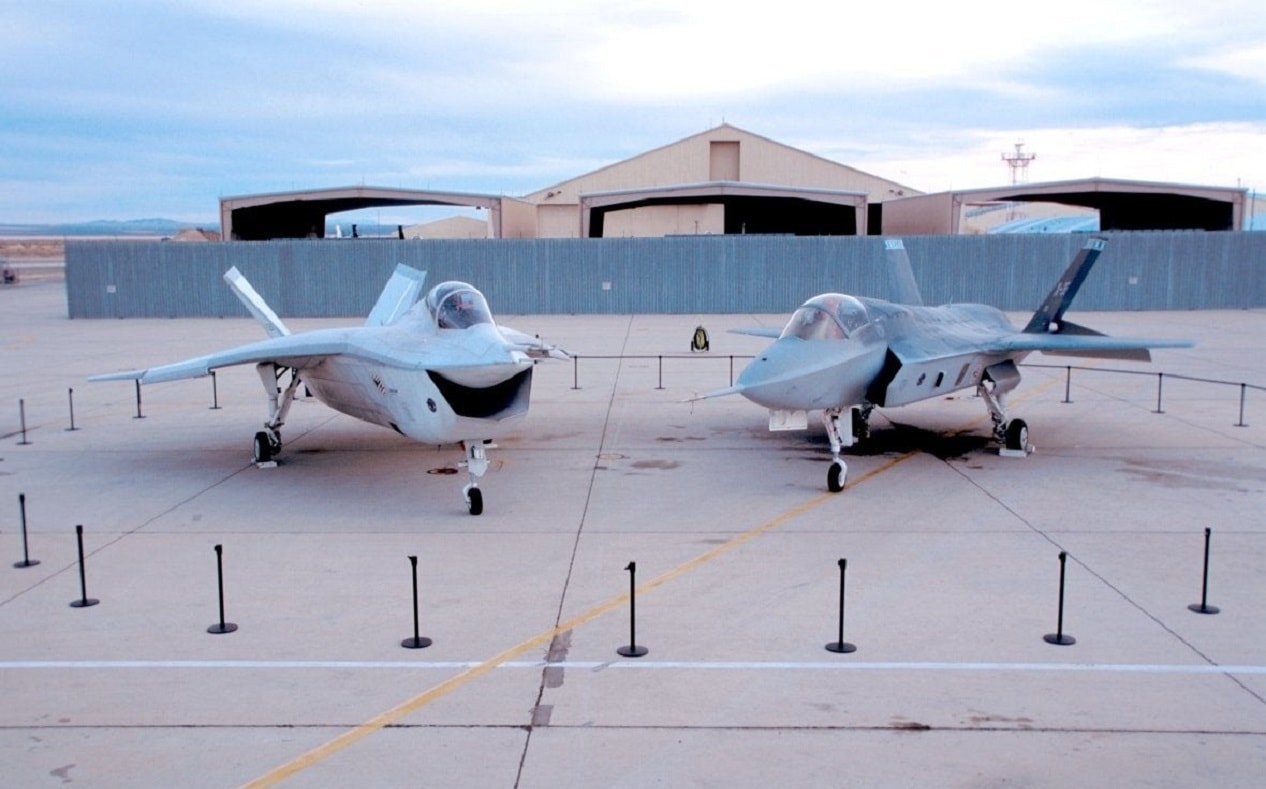
Boeing X-32 vs. Lockheed Martin then X-35. Image Credit: US Government.
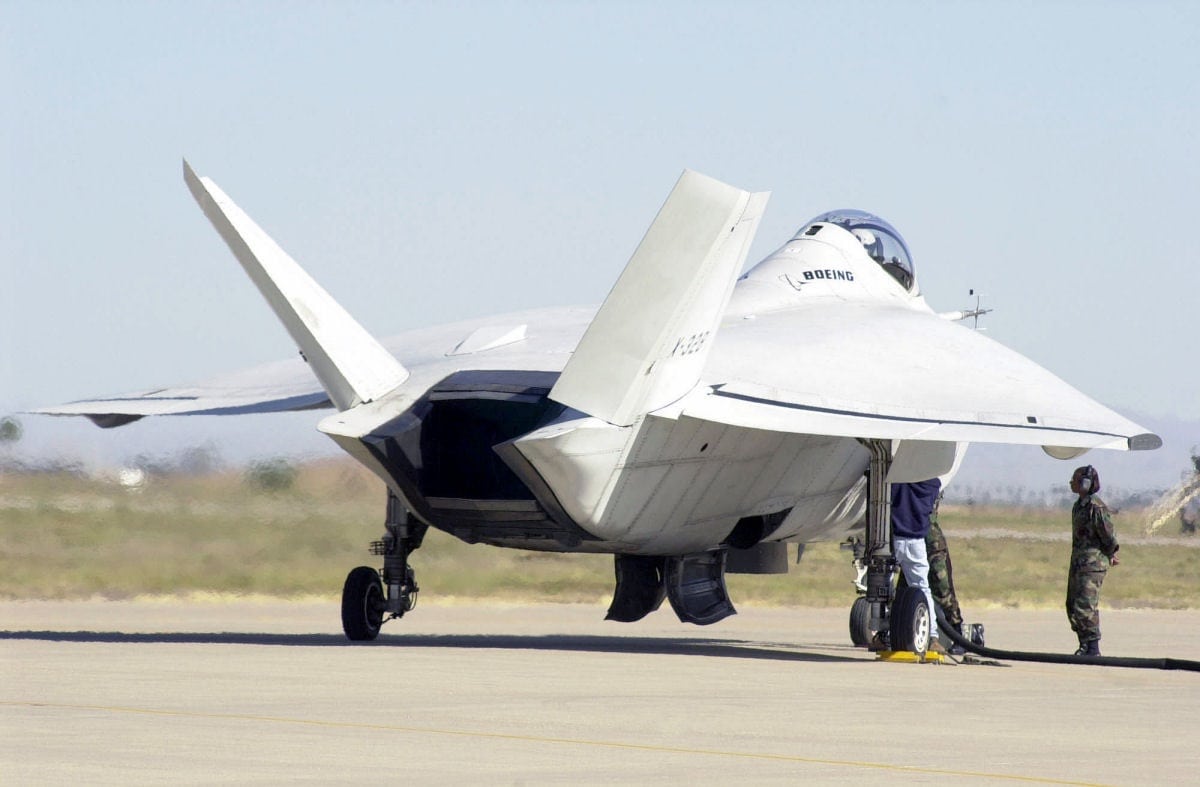
The Boeing Joint Strike Fighter (JSF) X-32B fills-up at a “hot pit” refueling station at Luke AFB during a cross-country trip. The X-32B is making a trip across the United States, making other stops along the way.
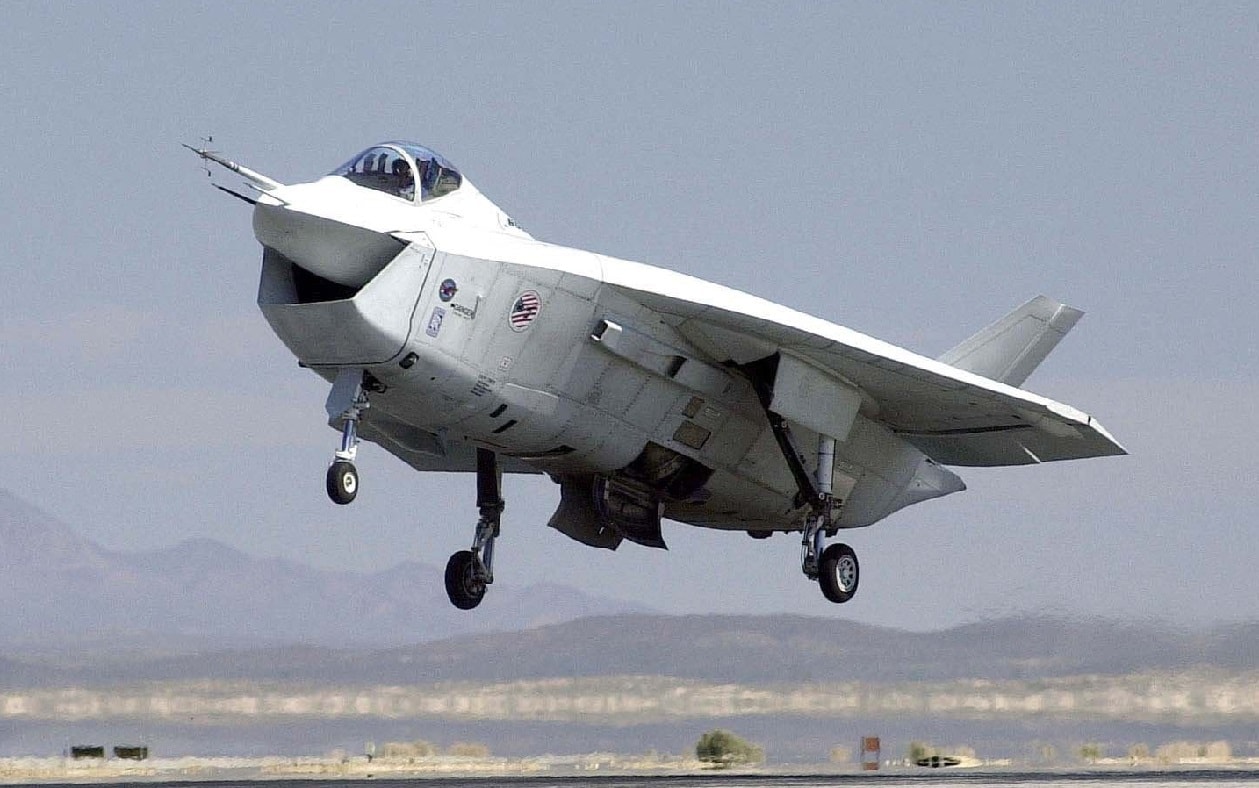
X-32. Image Credit: Creative Commons.
Lockheed Martin Stayed Closer to Their Original Proposal
Second, there was concern that the airplane that Boeing submitted to the JSF competition was different than the original proposal. Did this mean that there were problems with the original design parameters? Evaluators were concerned that this was the case.
A Navy test pilot named Phillip “Rowdy” Yates in a retrospective interview published by the Warzone about the JSF competition said, “In the analytical process that Boeing undertook to decide what the final design would be, they actually changed horses mid-stream and said ok, we’re going to go with a more conventional, little bit of a delta-wing, but it also would have a conventional tail, as well.”
The X-32 Did Not Look the Part
Another aspect that unnerved the evaluators was the aesthetics of the competing designs. The X-32 was seen as being “ugly” and the X-35 was better looking. It just appeared to have success written all over it. The X-35 looked like a superior fighter.
Design Differences Yielded Better Performance for the X-35
Fourth, another design aspect was that X-35 had a longer fuselage to enable a bigger suite of avionics. Evaluators also determined that the X-35 had better “balance and control” because the horizontal stabilizers were shifted towards the rear.
X-32’s Accident Sealed the Deal
Fifth, an incident cemented the X-35 in the minds of the engineers who were to determine the fate of the Joint Strike Fighter program.
The X-32 had a mishap in 2000. The test pilot found that the airplane’s brakes were not working, so he was forced to land on a lake, where the X-32 had to stop.
This incident grounded the jet for three weeks.
Meanwhile, the X-35 showed it could conduct aerial re-fueling at significant speed – evidence that the Lockheed Martin model was exceptional in such an important endeavor.
So, the U.S. military chose the X-35 in the Joint Strike Fighter program in 2001. Aspects of the two variants of the X-32 were incorporated into the F/A-18 E/F Super Hornet so Boeing did not waste all the testing data. The JSF competition was one of the most important in aviation history. It was thorough and extensive.
The evaluators took numerous criteria of design and performance parameters into account. The F-35 is planned to fly for several more decades. Time will tell if the U.S. military made the correct choice.
About the Author: Dr. Brent M. Eastwood
Brent M. Eastwood, PhD, is the author of Don’t Turn Your Back On the World: a Conservative Foreign Policy and Humans, Machines, and Data: Future Trends in Warfare, plus two other books. Brent was the founder and CEO of a tech firm that predicted world events using artificial intelligence. He served as a legislative fellow for U.S. Senator Tim Scott and advised the senator on defense and foreign policy issues. He has taught at American University, George Washington University, and George Mason University. Brent is a former U.S. Army Infantry officer. He can be followed on X @BMEastwood.