
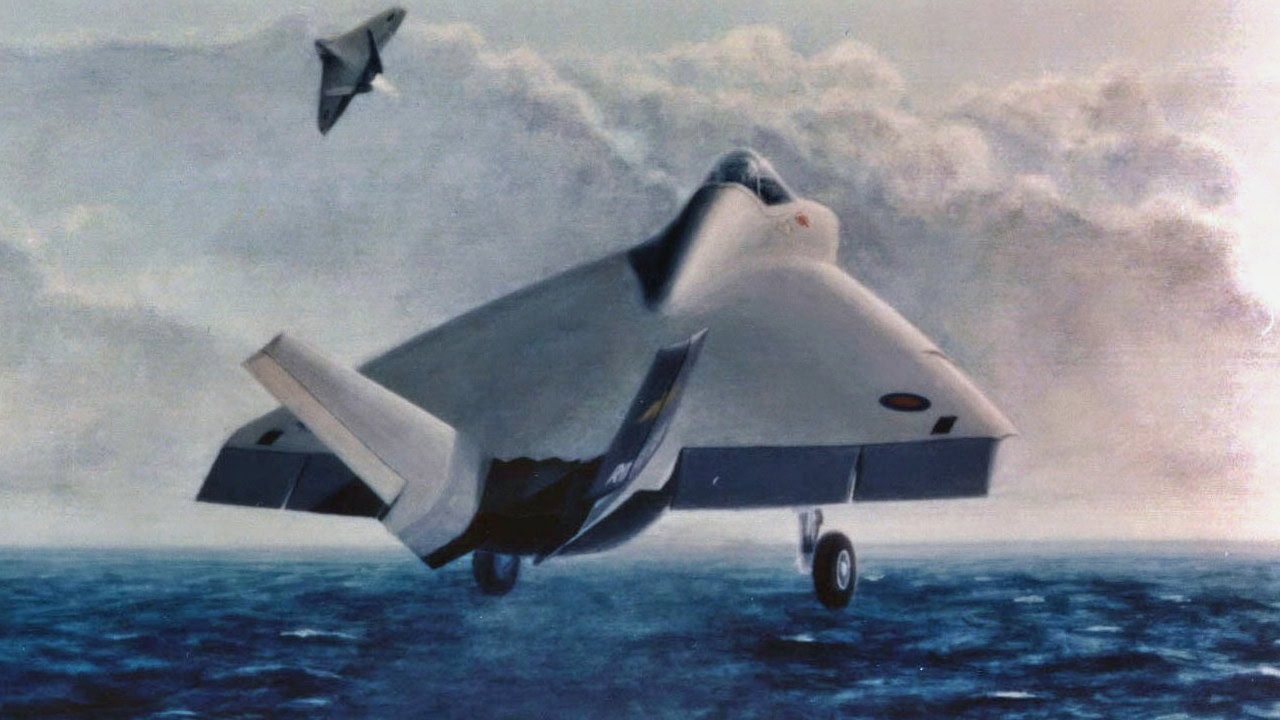
Summary and Key Points: The Boeing X-32 was Boeing’s entry into the U.S. Department of Defense’s Joint Strike Fighter (JSF) competition, designed to replace multiple aging aircraft.
-Despite innovative approaches to cost-efficiency, including a unique delta wing and “alligator mouth” air intake, the X-32 lost to Lockheed Martin’s X-35 (now the F-35 Lightning II).
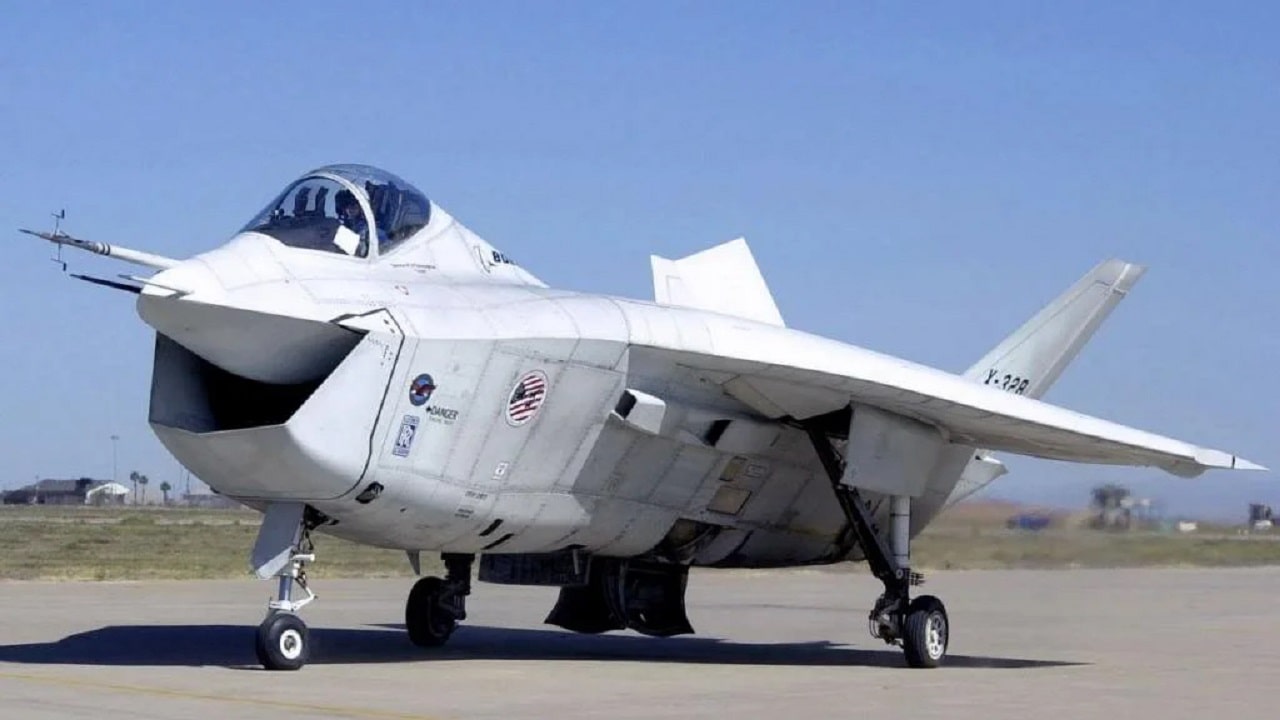
Boeing X-32. Image Credit: Creative Commons.
-Its less efficient vertical lift system, compromised stealth characteristics, lower agility, and limited adaptability contributed to its defeat.
-Nonetheless, the X-32 advanced aerospace technology, influencing future manufacturing and material innovations.
-Although unsuccessful as a combat jet, its lessons continue to impact aviation technology development and military aircraft procurement strategies today.
Boeing’s X-32 Fighter Jet Failed—Here’s Exactly Why
The Boeing X-32 was Boeing’s entry into the U.S. Department of Defense’s Joint Strike Fighter (JSF) competition, designed to replace multiple aging aircraft.
Despite innovative approaches to cost-efficiency, including a unique delta wing and “alligator mouth” air intake, the X-32 lost to Lockheed Martin’s X-35 (now the F-35 Lightning II).
Its less efficient vertical lift system, compromised stealth characteristics, lower agility, and limited adaptability contributed to its defeat. Nonetheless, the X-32 advanced aerospace technology, influencing future manufacturing and material innovations.
Although unsuccessful as a combat jet, its lessons continue to impact aviation technology development and military aircraft procurement strategies today.
The Boeing X-32 was an experimental stealth fighter aircraft developed as part of the Joint Strike Fighter (JSF) competition, a program initiated by the United States Department of Defense (DoD) to create a versatile, next-generation fighter jet.
The competition aimed to replace a variety of aging aircraft across the U.S. Air Force, Navy, and Marine Corps, as well as allied nations. Despite its innovative design and ambitious goals, the X-32 ultimately lost to the Lockheed Martin X-35, which evolved into the F-35 Lightning II.
This article delves into the history, design, and reasons behind the X-32’s failure to secure the JSF contract.
The Joint Strike Fighter Competition
In the early 1990s, the DoD faced the challenge of replacing several aging aircraft, including the F-16 Fighting Falcon, F/A-18 Hornet, and AV-8B Harrier II. To address this, the DoD launched the Joint Advanced Strike Technology (JAST) program, which later merged with the Common Affordable Lightweight Fighter (CALF) project to form the JSF program. The goal was to develop a family of aircraft that could meet the diverse needs of the Air Force, Navy, and Marine Corps, as well as international partners.
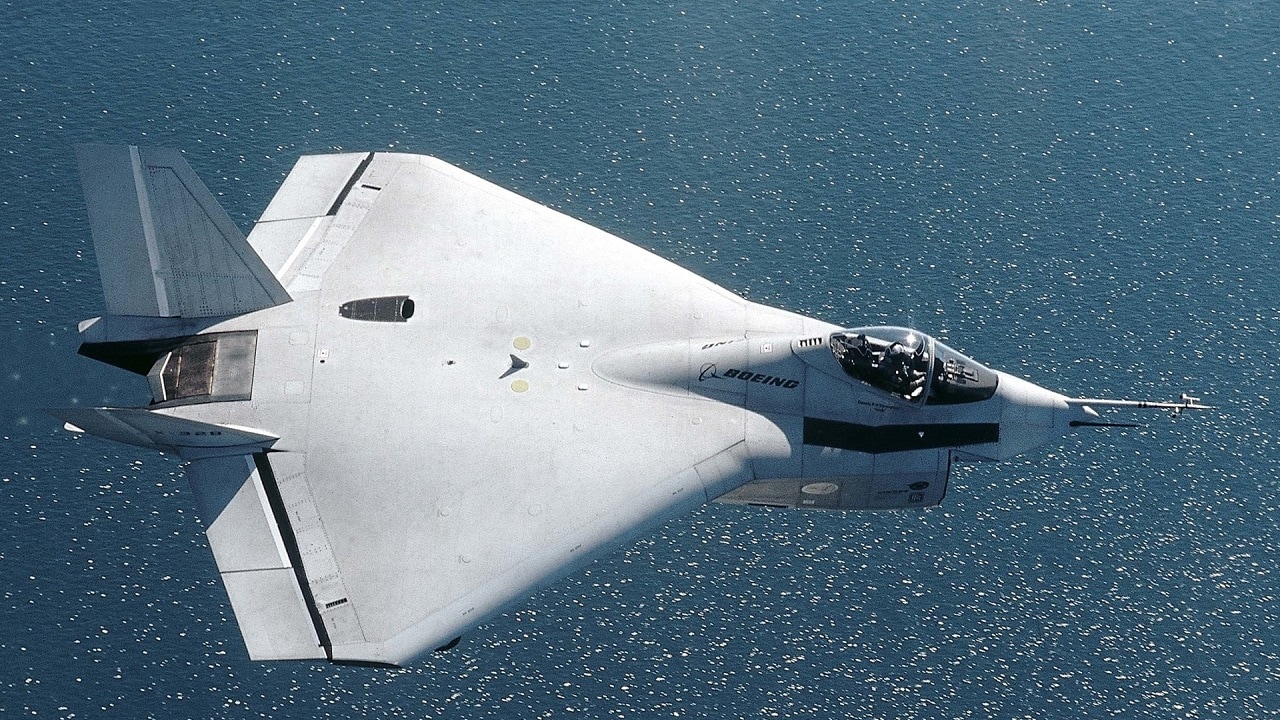
X-32 Stealth Fighter from Boeing. Image Credit: Creative Commons.
In 1996, Boeing and Lockheed Martin were awarded contracts to develop concept demonstrator aircraft (CDA) for the JSF competition. Each company was tasked with producing two prototypes that could demonstrate conventional takeoff and landing (CTOL), carrier takeoff and landing (CV), and short takeoff and vertical landing (STOVL) capabilities.
X-32: Boeing’s Attempt at a Fifth-Generation Fighter
Boeing’s approach to the JSF competition focused on minimizing manufacturing and life-cycle costs. The X-32 was designed around a large, one-piece carbon fiber composite delta wing, which provided structural simplicity and reduced production costs. The wing had a span of 9.15 meters and a 55-degree leading edge sweep, allowing it to hold up to 20,000 pounds of fuel. This design aimed to offer a balance between aerodynamic performance and stealth capabilities.
The X-32 featured a unique “alligator mouth” air intake, which contributed to its unconventional appearance. The aircraft was powered by a Pratt & Whitney JSF119-PW-614 engine, capable of producing 40,000 pounds of thrust. For the STOVL variant, Boeing employed a direct-lift system, similar to the one used in the AV-8B Harrier II, which redirected engine thrust downward for vertical takeoff and landing.
The JSF competition required both Boeing and Lockheed Martin to demonstrate their aircraft’s capabilities in various scenarios. The X-32 and X-35 (later F-35) underwent rigorous testing, including flight performance, stealth characteristics, and mission adaptability. Both aircraft had to prove their ability to perform CTOL, CV, and STOVL operations, as well as demonstrate ground-based systems representative of production models.
X-32 vs the F-35
Despite its innovative design and cost-effective approach, the X-32 ultimately lost to the X-35 for several reasons. The X-32’s direct-lift system for STOVL operations was less efficient and more complex than the X-35’s shaft-driven lift fan system. The X-35’s lift fan provided better vertical lift performance and reduced heat signature, which were critical for stealth operations. Additionally, the X-32’s large delta wing, while cost-effective, resulted in higher drag and lower agility compared to the X-35’s more conventional wing design.
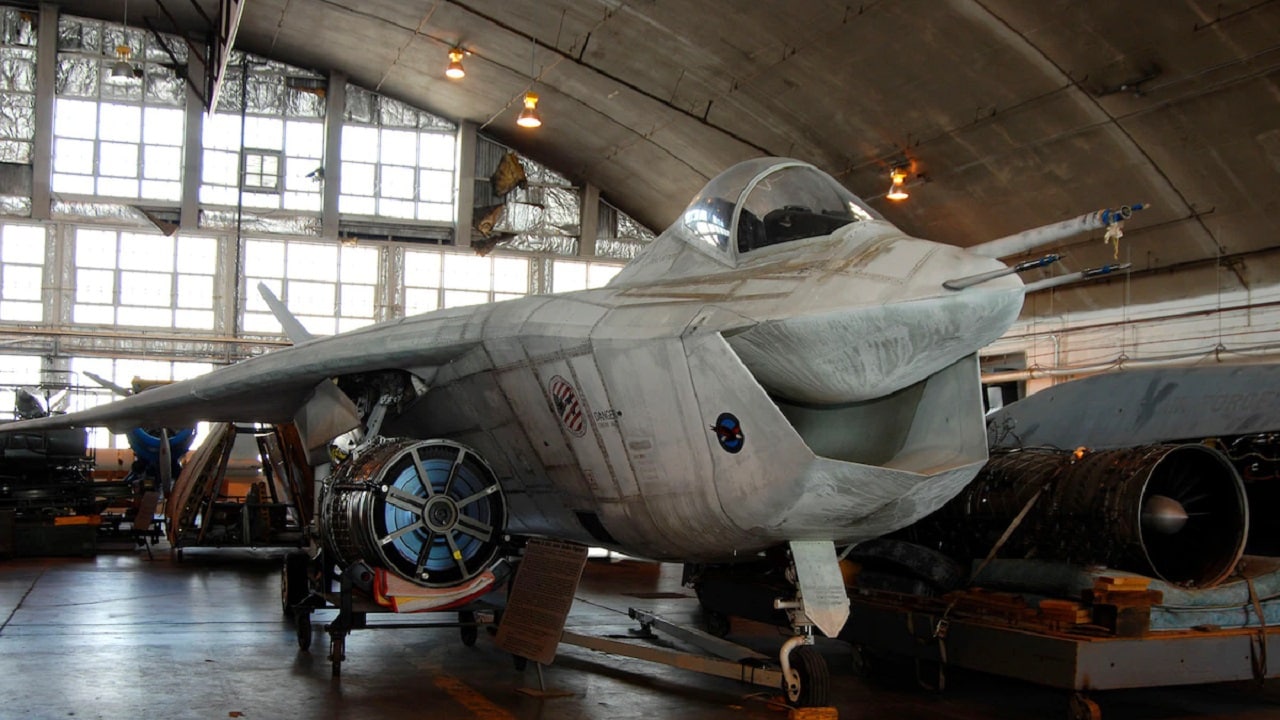
DAYTON, Ohio (02/2007) – The Boeing X-32A in the restoration hangar at the National Museum of the U.S. Air Force. (U.S. Air Force photo by Ben Strasser)
The X-35 demonstrated superior stealth characteristics, thanks to its more refined design and advanced materials. The X-32’s “alligator mouth” air intake and overall shape were less conducive to minimizing radar cross-section, a key requirement for modern stealth fighters.
The X-35’s design allowed for greater flexibility in meeting the diverse needs of the Air Force, Navy, and Marine Corps. Its modular design and advanced avionics made it easier to adapt to different mission profiles and operational environments. The X-32, while innovative, was less adaptable and faced challenges in meeting the varied requirements of the JSF program.
Interesting Ideas, Poor Execution
Feedback from test pilots and maintenance crews played a significant role in the decision-making process. The X-35 received more favorable reviews for its handling, ease of maintenance, and overall performance. The X-32, on the other hand, faced criticism for its unconventional design and operational limitations.
Lockheed Martin’s previous experience with the F-22 Raptor likely influenced the Pentagon’s decision. The F-22’s success and Lockheed Martin’s proven track record in developing advanced stealth fighters gave the X-35 an edge over the X-32. Additionally, the potential for export success and leadership in stealth technology further tipped the scales in favor of the X-35.
Lessons Learned
Although the X-32 did not win the JSF competition, it did play a crucial role in advancing aerospace technology and shaping the future of military aviation. The lessons learned from the X-32 program contributed to the development of more efficient manufacturing processes and advanced materials, which have been applied to other aircraft projects.
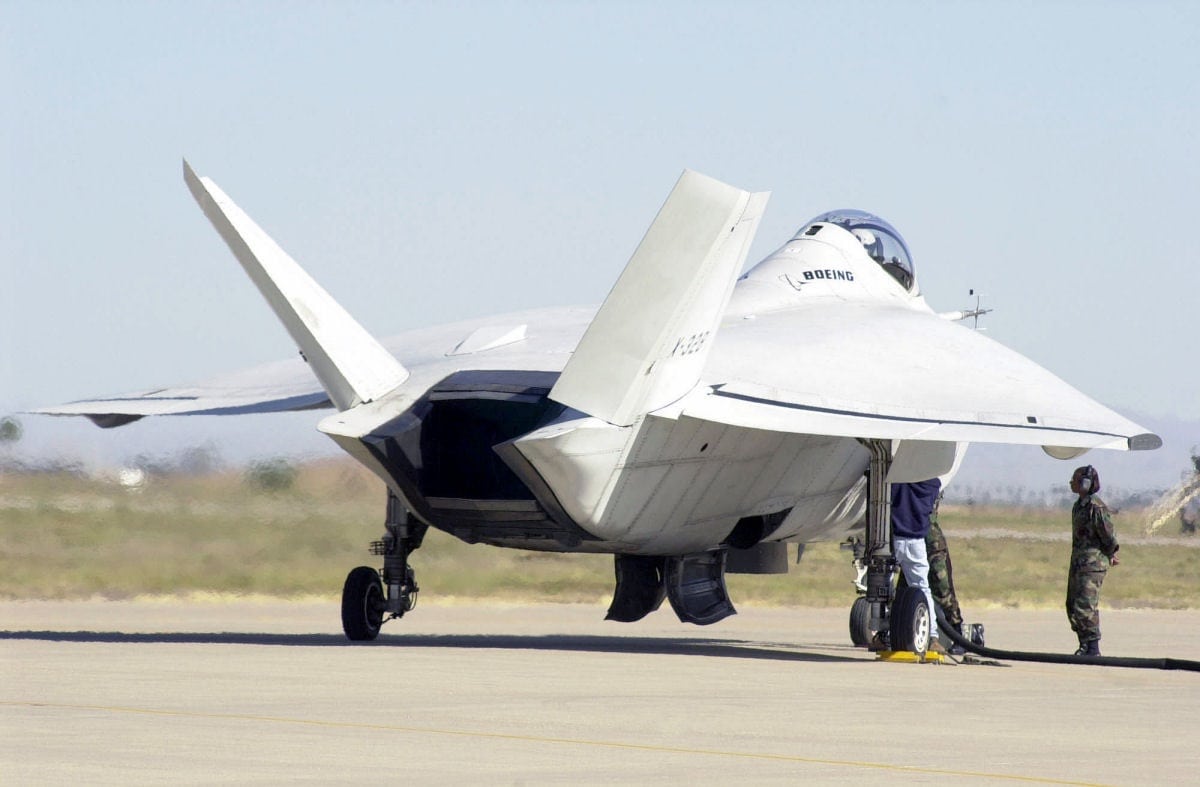
The Boeing Joint Strike Fighter (JSF) X-32B fills-up at a “hot pit” refueling station at Luke AFB during a cross-country trip. The X-32B is making a trip across the United States, making other stops along the way.
The Boeing X-32 was an ambitious and innovative aircraft that ultimately fell short in the JSF competition. Its unique design and cost-effective approach were not enough to overcome the superior performance, stealth capabilities, and operational flexibility of the Lockheed Martin X-35. The X-32’s legacy, however, lives on in the lessons learned and technological advancements that continue to shape the future of military aviation.
About the Author: Isaac Seitz
Isaac Seitz, a 19FortyFive Defense Columnist, graduated from Patrick Henry College’s Strategic Intelligence and National Security program. He has also studied Russian at Middlebury Language Schools and has worked as an intelligence Analyst in the private sector.