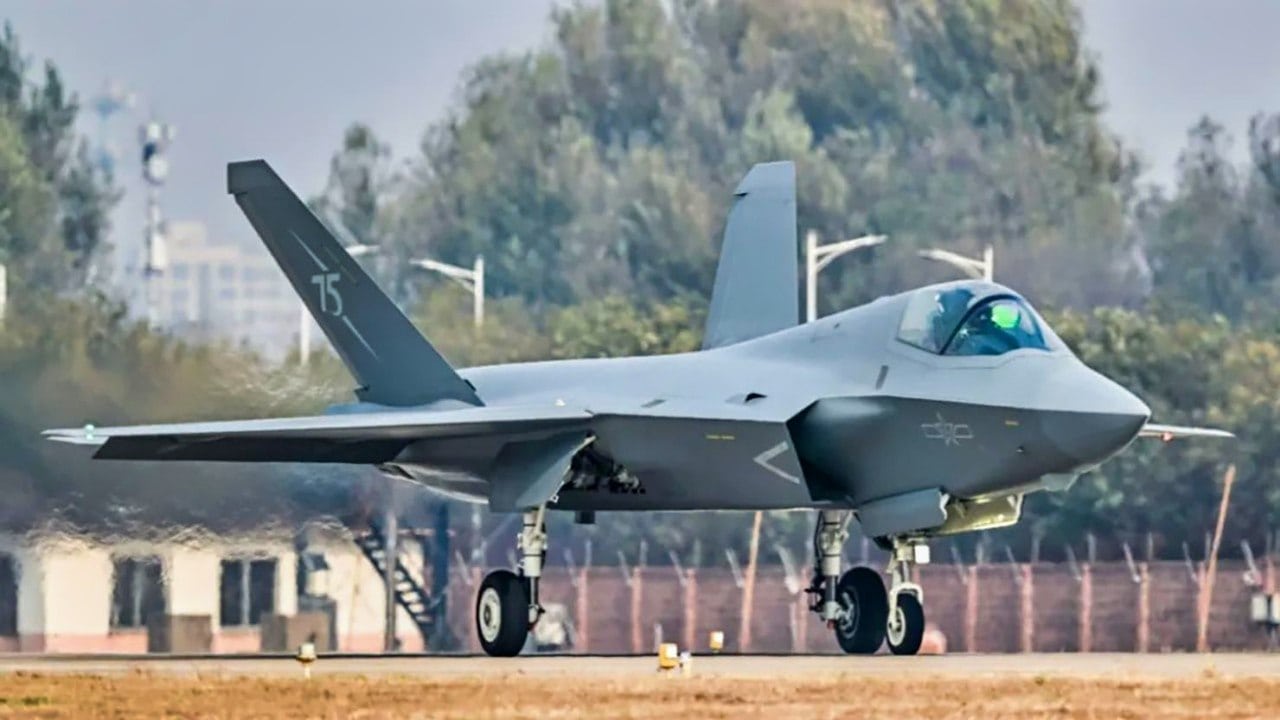
China’s J-35 Carrier Stealth Jet Has One Big Problem: Can It Match the F-35’s Upgrade Path?
China’s new J-35 carrier-based stealth fighter marks a significant step toward closing its airpower deficit with the U.S., which has long held a longstanding advantage with the F-35.
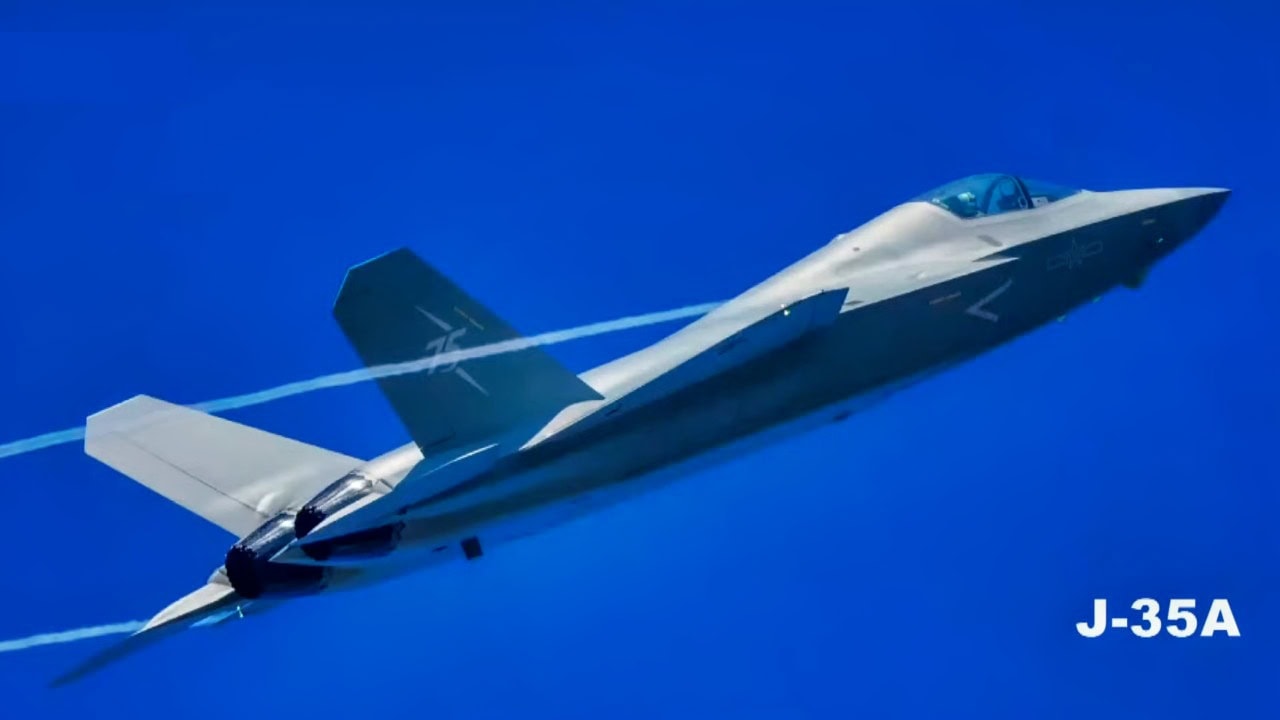
China J-35 Fighter. Image Credit: Creative Commons.
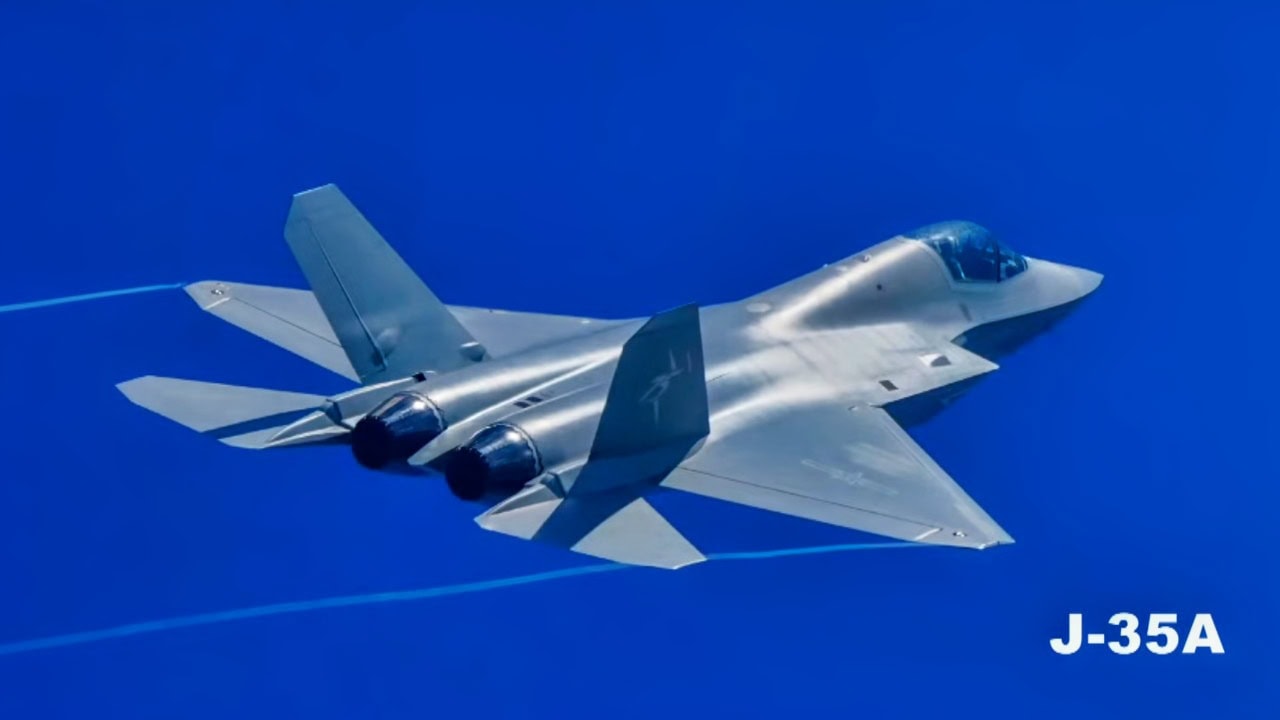
J-35 flying at Zhuhai Airshow 2024.
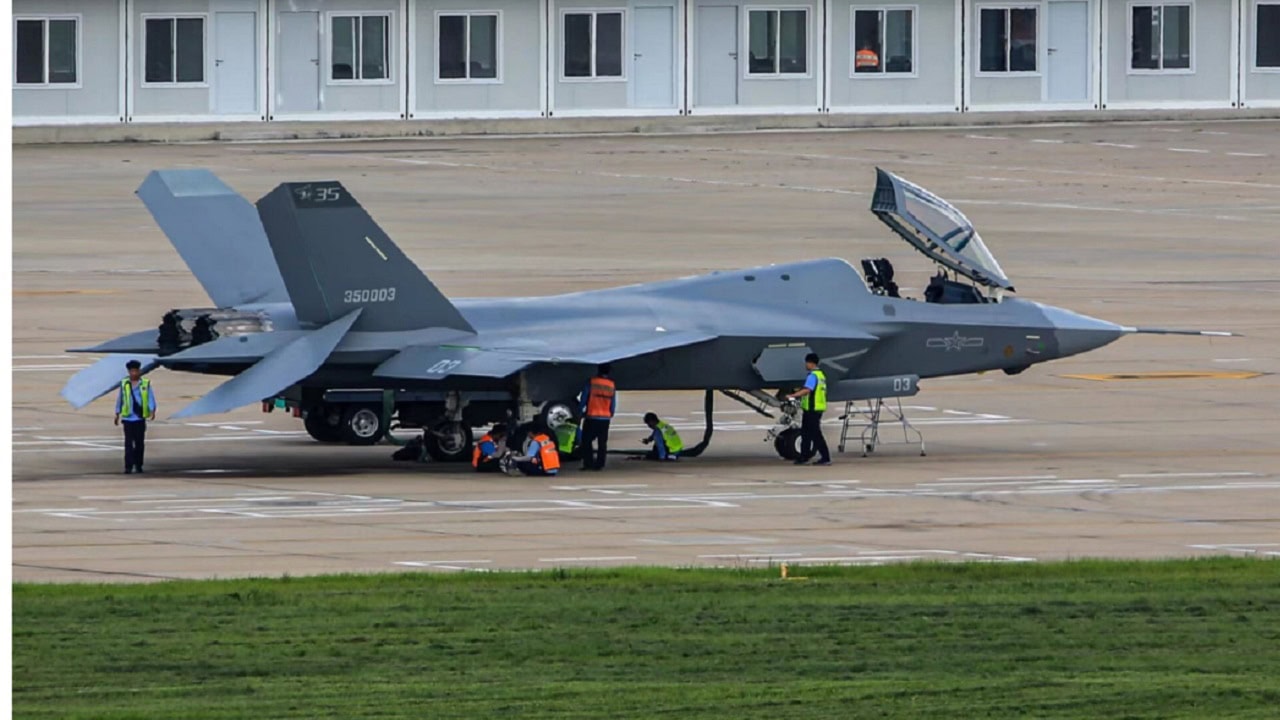
J-35 Stealth Fighter. Image Credit: Chinese Internet.
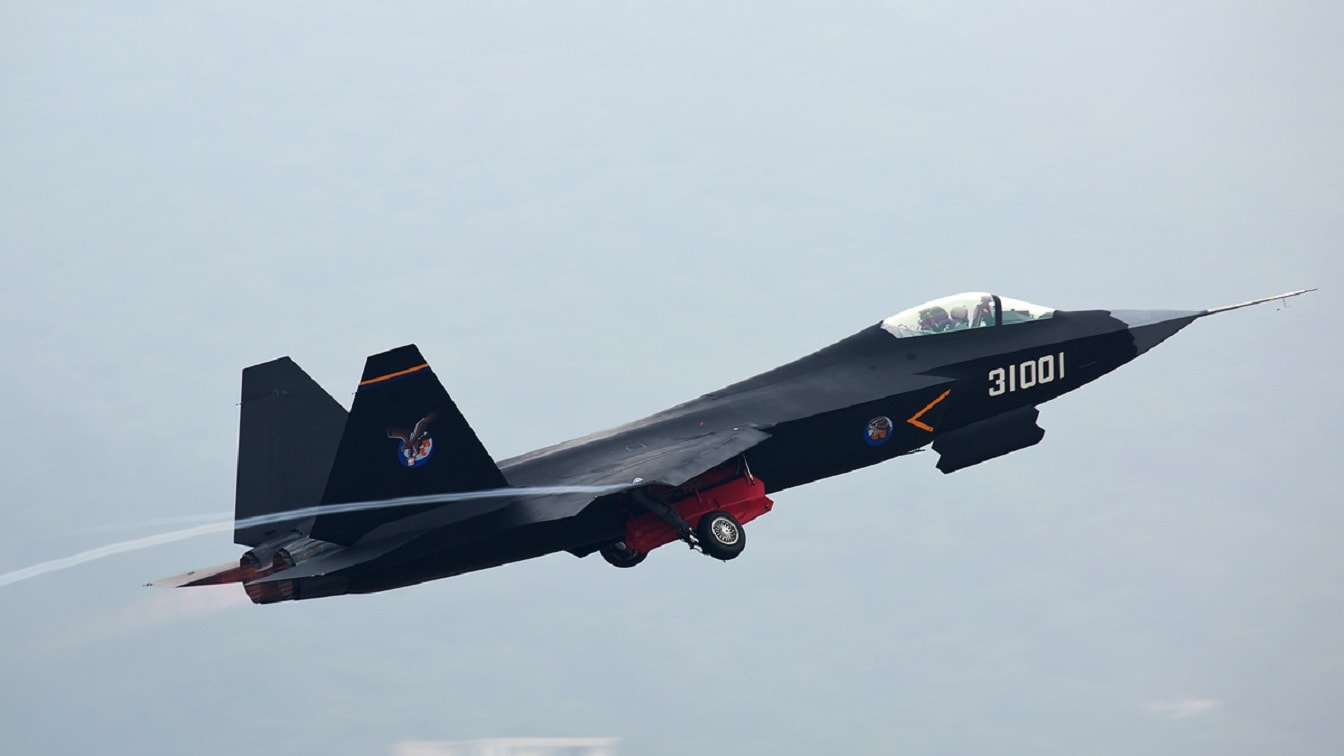
J-35 Stealth Fighter. Image Credit: Creative Commons.
The J-35 looks like an F-35, is slightly faster (Mach 1.8), and has a similar combat range to the F-35 of roughly 1,200 nautical miles.
A key question informing this equation, of likely great relevance to the Pentagon, is whether the J-35 has been engineered with any kind of “upgradeability” capable of mirroring, matching, or rivalling the F-35.
Whatever its current capabilities may be, the operative question with the J-35 would seem to be the extent to which it can be “upgraded” and improved in the future. Specifically, the Pentagon has a plan to upgrade its F-35 for years into the future, and there seems to be little available information related to whether the fast-emerging Chinese J-35 can sustain and improve its capabilities into the 2050s and beyond
The critical, unanswered questions remain about its internal systems: whether its engines are reliable, its avionics are competitive, and, most importantly, if it possesses the “sensor fusion” capabilities that give the F-35 its decisive combat advantage.
The arrival of China’s first carrier-launched fifth-generation stealth jet, the J-35, marks a significant step forward in the People’s Liberation Army’s (PLA’s) attempt to close its airpower deficit with the United States. The U.S. Navy and Marine Corps, along with Pacific allies such as Japan and South Korea, now operate hundreds of sea-launched F-35Bs and F-35Cs.
Until now, the PLA had no comparable platform.
How Many J-35s Will China Have
The PLA Air Force (PLAAF) now operates as many as 300 J-20 Mighty Dragon stealth fighters. But these aircraft are land-launched and less equipped to sustain combat in a maritime environment, particularly beyond the first island chain.
The United States, by contrast, operates aircraft carriers and amphibious assault ships in the Pacific that are capable of transporting and launching hundreds of F-35s in the event of a major war—a foundational tool of power projection.
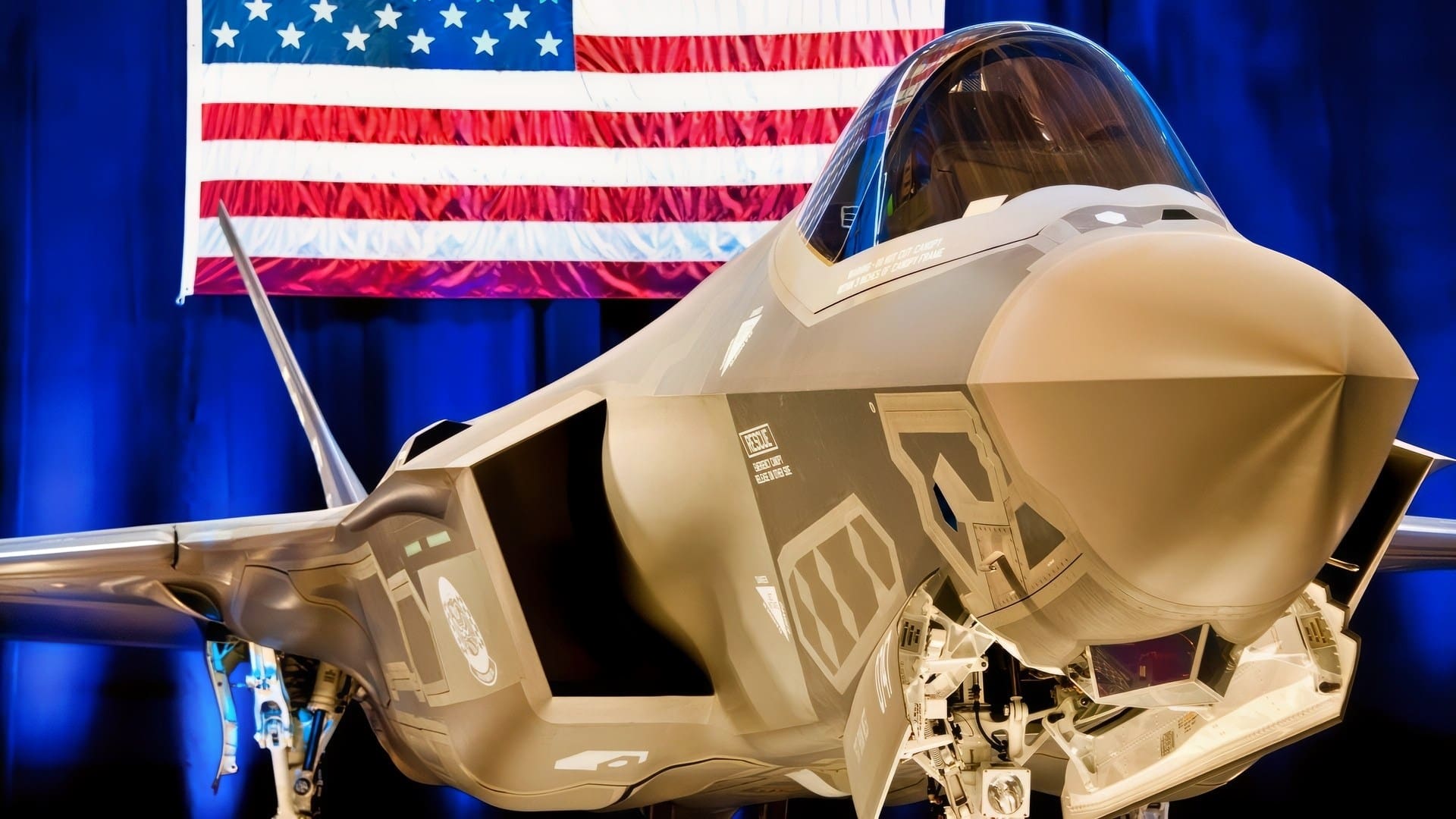
F-35 Fighter With U.S. Flag. Image Credit: Creative Commons.
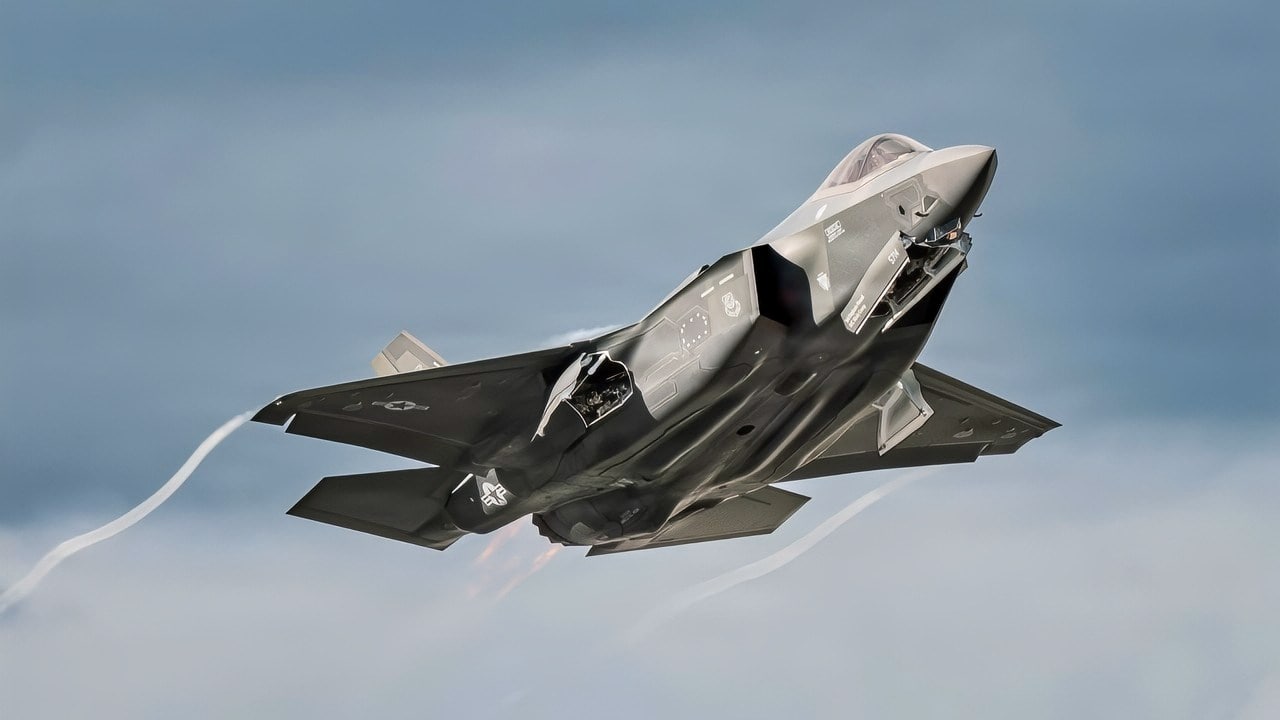
A U.S. Air Force F-35 Lightning II assigned to the 6th Weapons Squadron takes off in support of a U.S. Air Force Weapons School Integration (WSINT) mission at Nellis Air Force Base, Nevada, Nov. 18, 2025. WSINT incorporates multiple aircraft, domains and mission sets to challenge participants with dynamic problem-solving. (U.S. Air Force photo by Senior Airman Lauren Clevenger)
The carriers can position themselves strategically at sea to optimize attack options and increase survivability, and any U.S.-allied force would operate with a fleet of aircraft that offers long range, significant dwell time, and fifth-generation sensing and targeting capabilities.
However, if China quickly manufactures meaningful numbers of carrier-launched J-35s, it could considerably shrink this power-projection gap.
The U.S. has enjoyed a jump-start of at least a decade in deploying an operational carrier-launched fifth-generation stealth fighter, but China is well known for its civil-military fusion and its ability to rapidly mass-produce new platforms. It showed how quickly it can catch up to the J-20, as the PLA has more than doubled the size of its Mighty Dragon force over the last several years.
J-35 Could Be F-35 Rip-Off
Available specs claim the J-35 can reach Mach 1.8, a speed slightly faster than the F-35. It also has a combat radius of 785 nautical miles, according to an interesting write-up in Defense Security Asia — roughly equivalent to the F-35B and F-35C, which each operate with overall ranges greater than 1,200 miles.
Of course, the J-35’s most remarked attribute is significantly less technical: Its external configuration very closely resembles that of a U.S. F-35.
This is by no means surprising, given that multiple reports and Congressional assessments from more than 10 years ago cited evidence that China had stolen sensitive data about the F-35 through cyberattacks.
The J-35 has a smooth, rounded, stealthy-looking blended wing-body and two F-35-like vertical tails. Apart from powering thrust with two engines, instead of the F-35’s single-engine design, the J-35 is nearly indistinguishable from an F-35C.
J-35 Mission Systems
While they may look similar, the markers of difference between the F-35 and J-35 are probably not visible to the eye, and it is hard to compare without certainty about the specifics.
For instance, what is the range and fidelity of the J-35’s targeting sensors, radar, and weapons guidance? Does it have the ability to grow and control drones from the cockpit?
Perhaps most important of all, does the J-35 function with any kind of advanced AI-enabled sensor fusion capability, as the F-35 was designed to do?
U.S. Air Force wargames have demonstrated that the F-35’s targeting range is more than sufficient to track and destroy multiple fourth-generation platforms at distances where they cannot be detected. This is in large measure enabled by the range and resolution of the F-35’s Electro-Optical/Infrared and Distributed Aperture System sensing and targeting technology.
Does the J-35 have comparable sensing and computing abilities? Other key variables include things such as engine power, aerial agility, and thrust-to-weight ratio.
J-35 vs F-35
The J-35 incorporates a Chinese Guizhou WS-19 engine with afterburning turbofans, and observers are likely to wonder whether the J-35 can fly with an F-22-like supercruise, whereby the jet can maintain Mach speeds without needing an afterburner. The F-22 is famous for this.
Supercruise increases dwell time and combat-engagement time, at much higher speeds, for much longer periods of time.
Thrust-to-weight ratio specs for the J-35 are not available, likely because the aircraft is new. Whether the J-35 can rival fighters with the best thrust-to-weight ratios—such as the American F-22 and the Russian Su-57—is an important question.
About the Author: Kris Osborn
Kris Osborn is President of Warrior Maven – Center for Military Modernization. Osborn previously served at the Pentagon as a highly qualified expert in the Office of the Assistant Secretary of the Army—Acquisition, Logistics & Technology. Osborn has also worked as an anchor and on-air military specialist at national TV networks. He has appeared as a guest military expert on Fox News, MSNBC, The Military Channel, and The History Channel. He also has a Masters Degree in Comparative Literature from Columbia University