
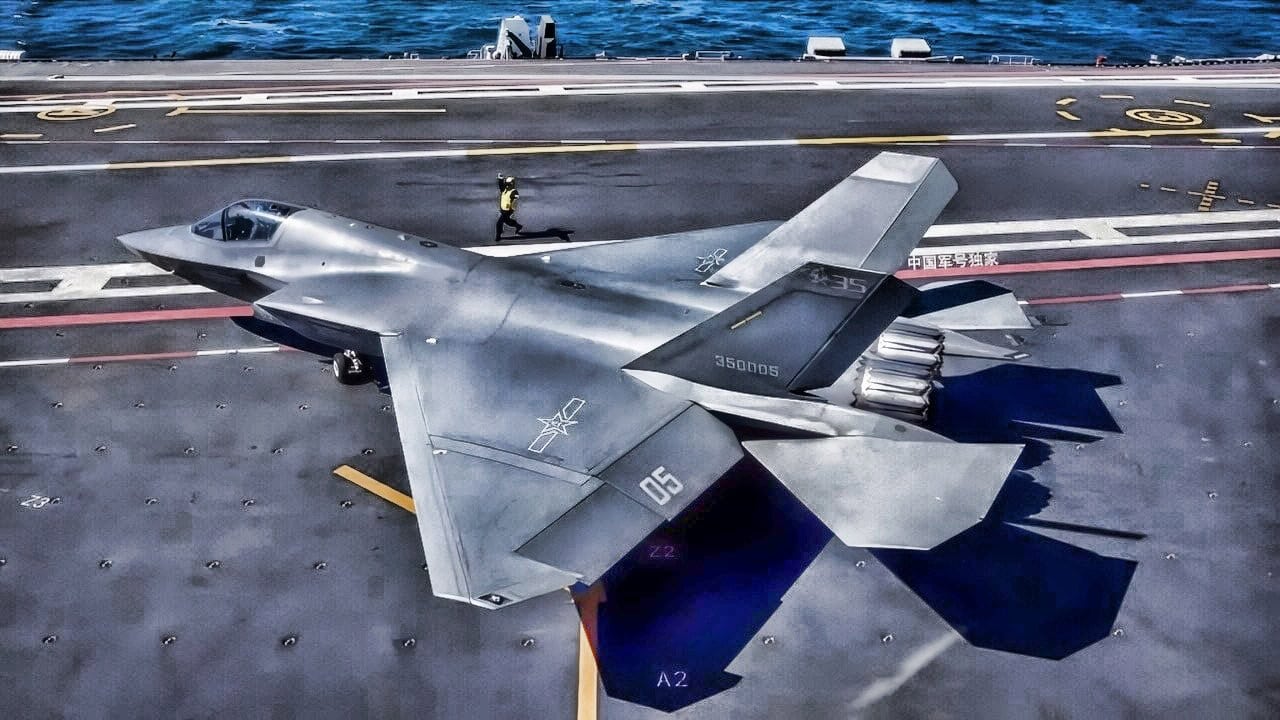
Key Points and Summary – China’s J-35 carrier-borne stealth fighter marks a major leap for the People’s Liberation Army Navy. Derived from the J-15 and FC-31 programs, the twin-engine J-35 is designed to operate from the EMALS-equipped Fujian, giving Beijing a true fifth-generation deck jet to rival the U.S. Navy’s F-35C.
-With claimed Mach 2.2 speed, long combat radius, and internal weapons capacity, the J-35 will deepen China’s power projection in the Indo-Pacific and beyond, from the South China Sea to Djibouti.
-While its actual stealth is debatable, growing J-35 numbers will force U.S. planners to rethink carrier operations and standoff ranges.
The J-35 Carrier-borne Chinese Fighter Is a Naval Wonder
Unfortunately for the United States, Chinese naval aviation has enjoyed a run of good fortune. China now has its own carrier-borne stealth fighter jet.
Meant to compete with the U.S Navy’s F-35C Lightning II, the J-35 radar-evading next-generation warplane will be another asset the Americans must account for as they devise a maritime strategy to thwart the People’s Liberation Army Navy (PLAN).
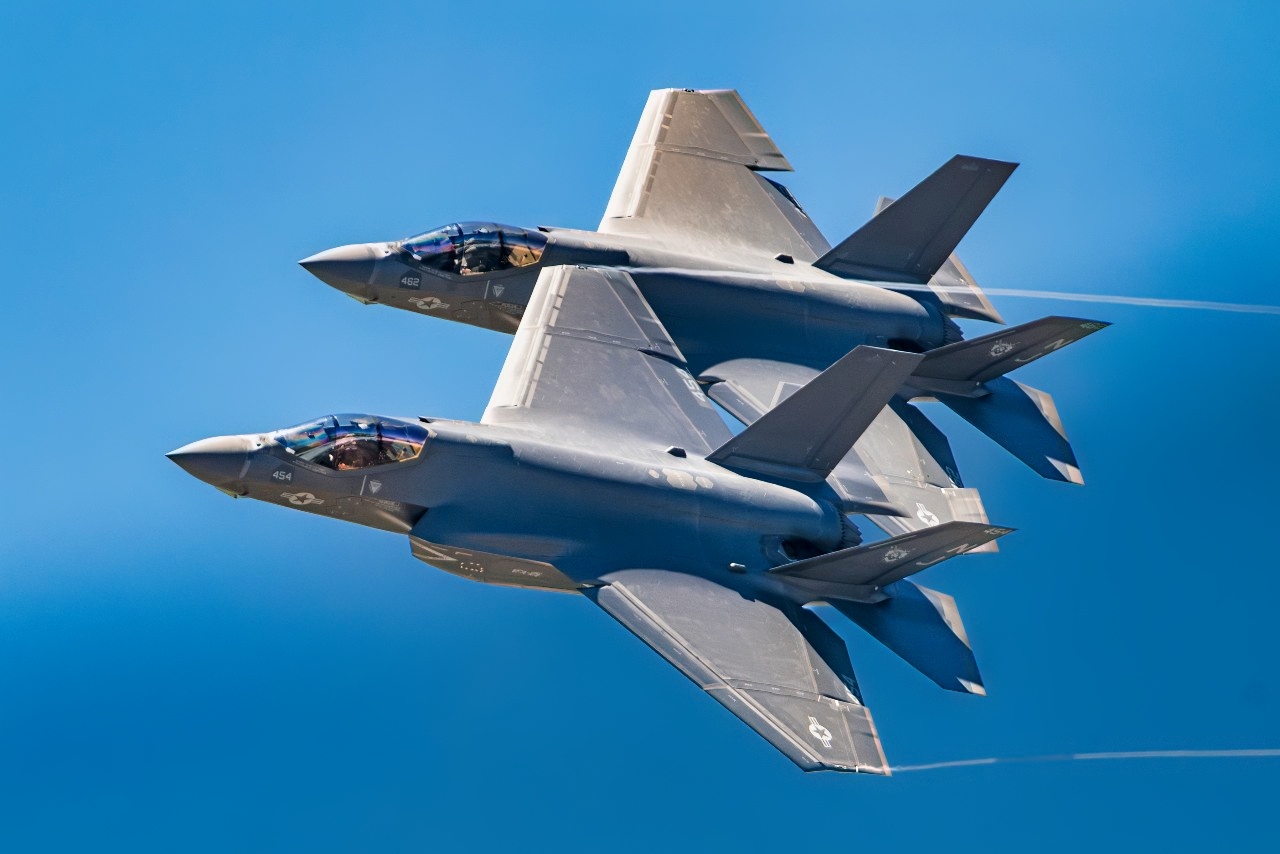
The U.S. Navy F-35C Lighting II Demo Team performs a flight demonstration at the Wings Over South Texas Air Show. This year’s air show marks Wings Over South Texas’s first return to Naval Air Station Corpus Christi since 2019.
It was only a matter of time before the PLAN created a fifth-generation naval fighter. The J-35 will help China’s efforts to dominate the region and project power in the Indo-Pacific. Meant to fly from electromagnetic catapults (EMALS) on the Fujian carrier, the fighter’s arrival means the PLAN has finally joined the modern era of carrier aviation.
Can the J-35 Be Deployed Outside East Asia?
The fighter could also be a blue water naval asset someday. The Chinese have a military installation in Djibouti in the Horn of Africa, meaning the stealth fighter could see action in naval exercises in the Middle East and North Africa. This makes the stealth warbird a global asset that could be used to intimidate rivals in the Indo-Pacific and protect Chinese territorial claims and militarized islands in the South China Sea.
The J-35 Is Already Operating Off a Carrier
The fighter first conducted carrier launches and landings on the Fujian in September. This was a momentous occasion for the PLAN, which is not known for having the best aviators in the Chinese military.
The service is still relatively new to carrier aviation, and earlier vessels are of the bygone ski jump variety. Those days are over, and the fighter’s pilots have earned their wings.
China Imitates the F-35C
The PLAN knew it had to compete with the Americans in carrier aviation. They were enamored with the stealthiness, power, and performance of the F-35C. The Chinese are known for copying and emulating adversarial aircraft, so it is no surprise the PLAN developed a J-35 naval variant that reminds one of the F-35C.
The fighter evolved from the fourth-generation J-15 naval fighter and the FC-31 stealth technology demonstrator jet. The PLAN wanted its own version of the J-35A that flew for the air force, and the technology from the J-15 and FC-31 ended up providing just that.
Born From the FC-31 Program
The FC-31 first flew in 2012. The program was seen as a hit and become the basis for further development of what would become the J-35 naval variant. The PLAN worked overtime to make the J-35 into a carrier-borne fighter. This was going to be more than a run-of-the-mill ski jump capable jet. The fighter would grace the Fujian—China’s largest and most advanced carrier.
China is producing the fighter at a low rate right now, but a full squadron of J-35s will likely join the Fujian in 2026. By the 2030s, there could be as many as 80 J-35s—plenty to supply the new Type 004 carrier, which is believed to be nuclear-powered.
“The J-35 comes standard with two WS-19 ‘Huangshan’ engines, which are equipped with omnidirectional thrust vectoring technology, and the radar cross-section of the J-35 can be reduced to 0.01 square meters. Standard equipment includes gallium oxide active phased array radar. Moreover, the takeoff weight of the J-35 will reach 35 tons, with a payload of 8 tons, and it can carry up to 8 missiles in its bays and on its wings. The operational radius of the J-35 reaches 1350 kilometers, with a maximum speed of MACH 2.2,” according to China Arms.
J-35: A Story in Photos
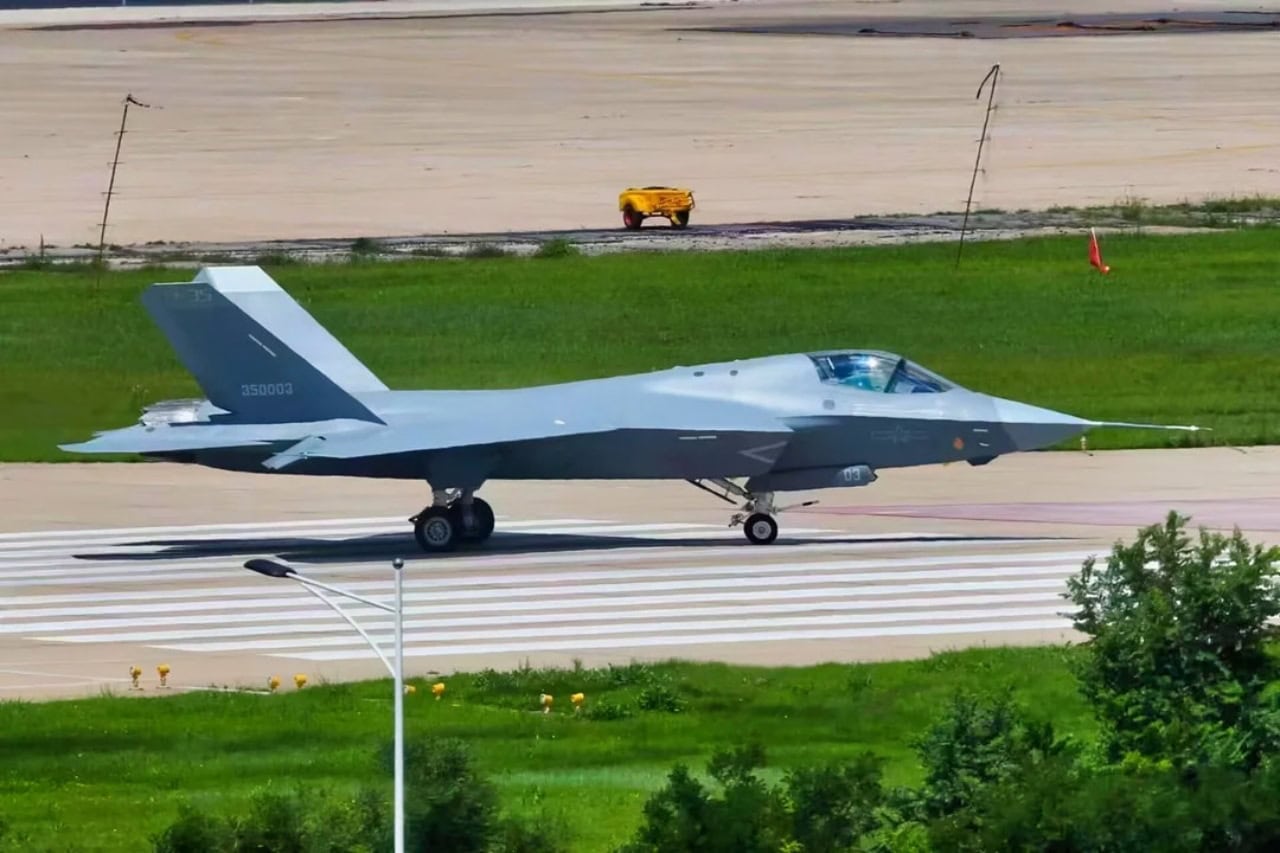
J-35 Fighter. Image Credit: Chinese Internet.
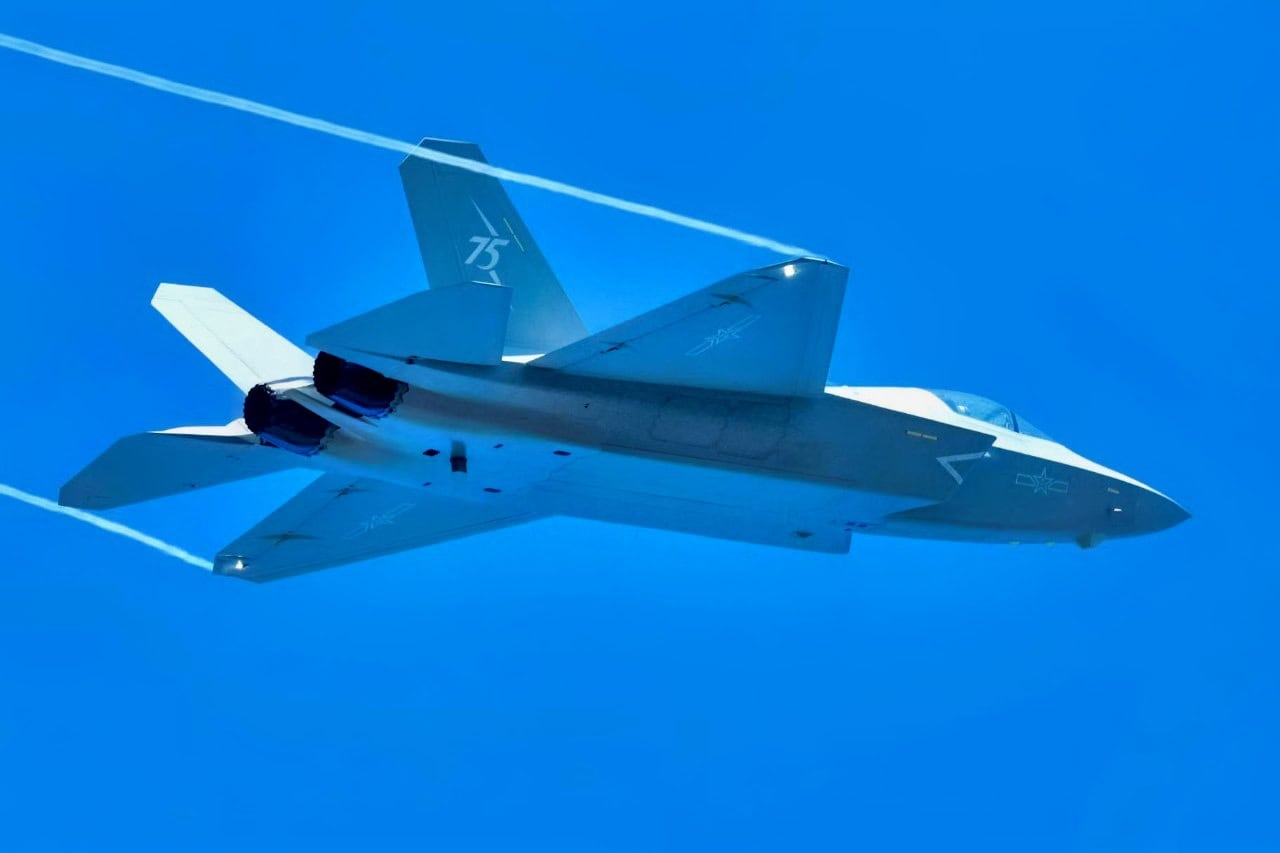
J-35 Fighter. Image Credit: Chinese State Media.
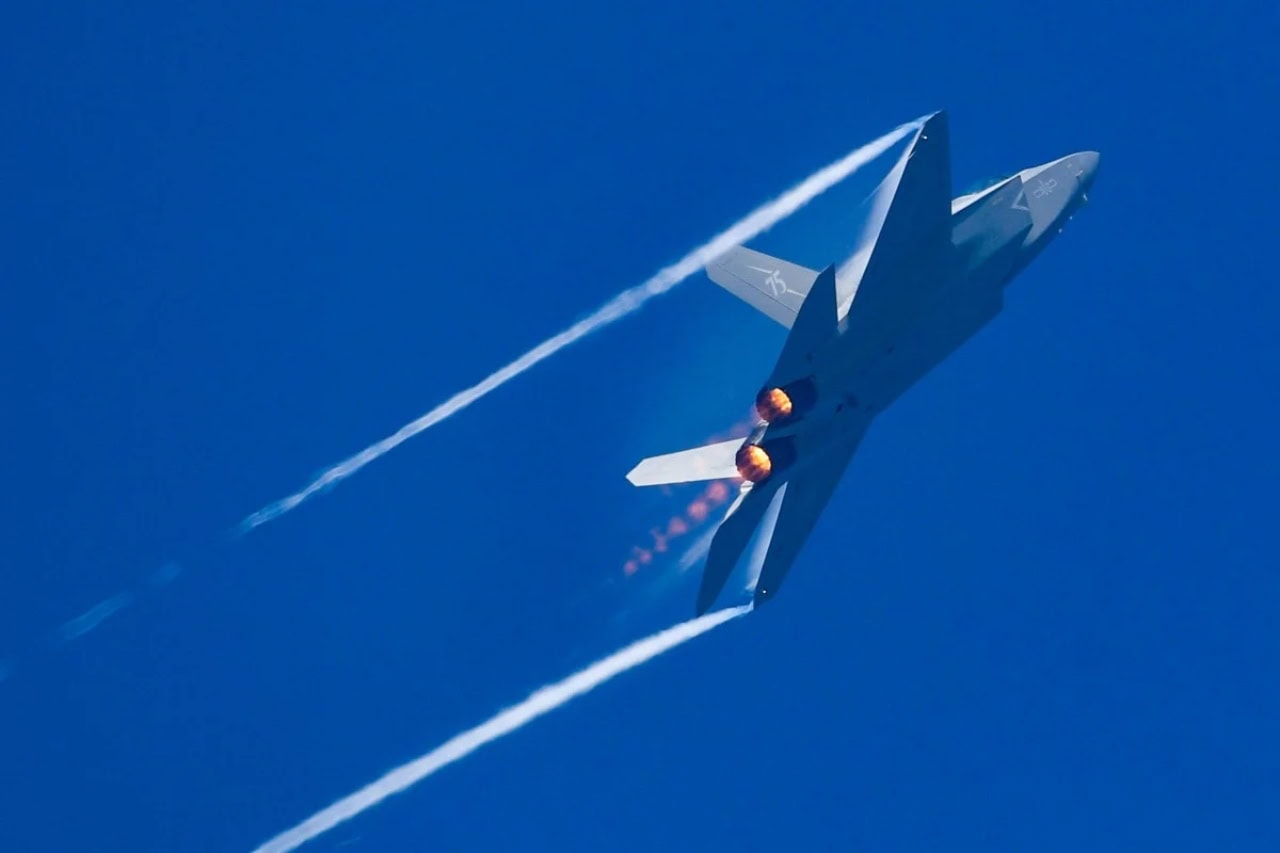
J-35. Image Credit: Chinese State Media.
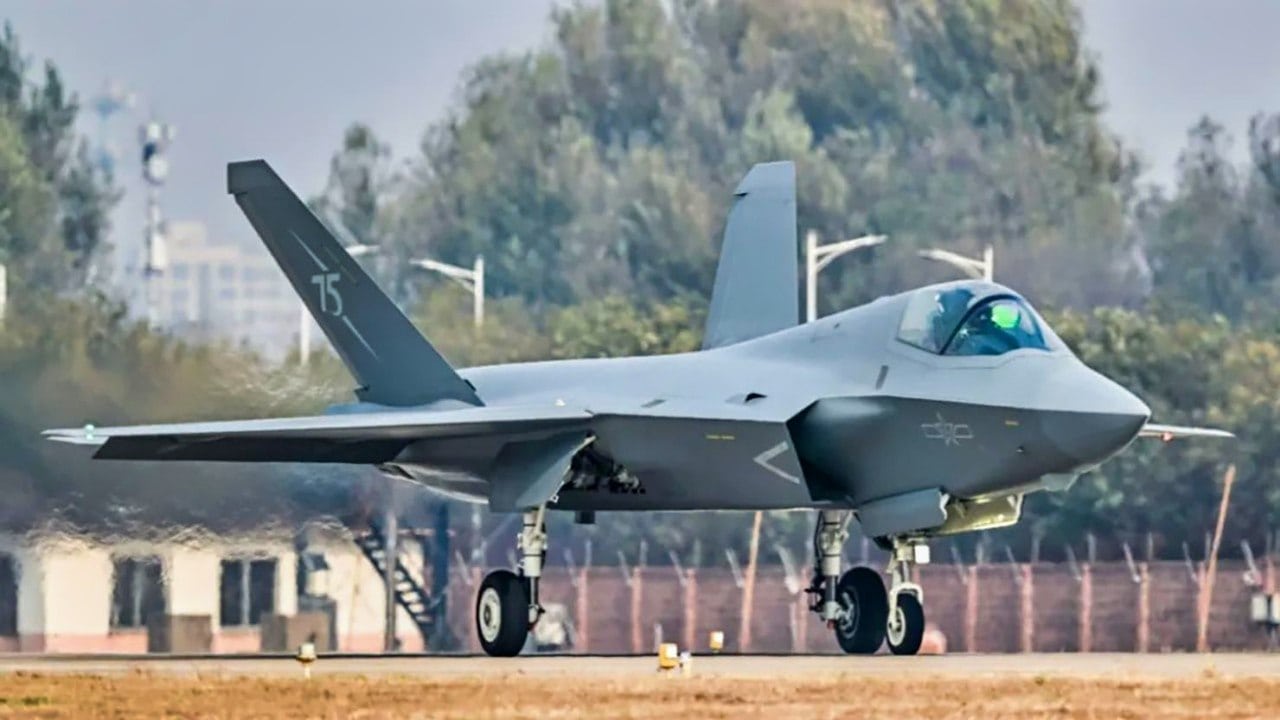
J-35A Fighter from China. Image Credit: Chinese Military
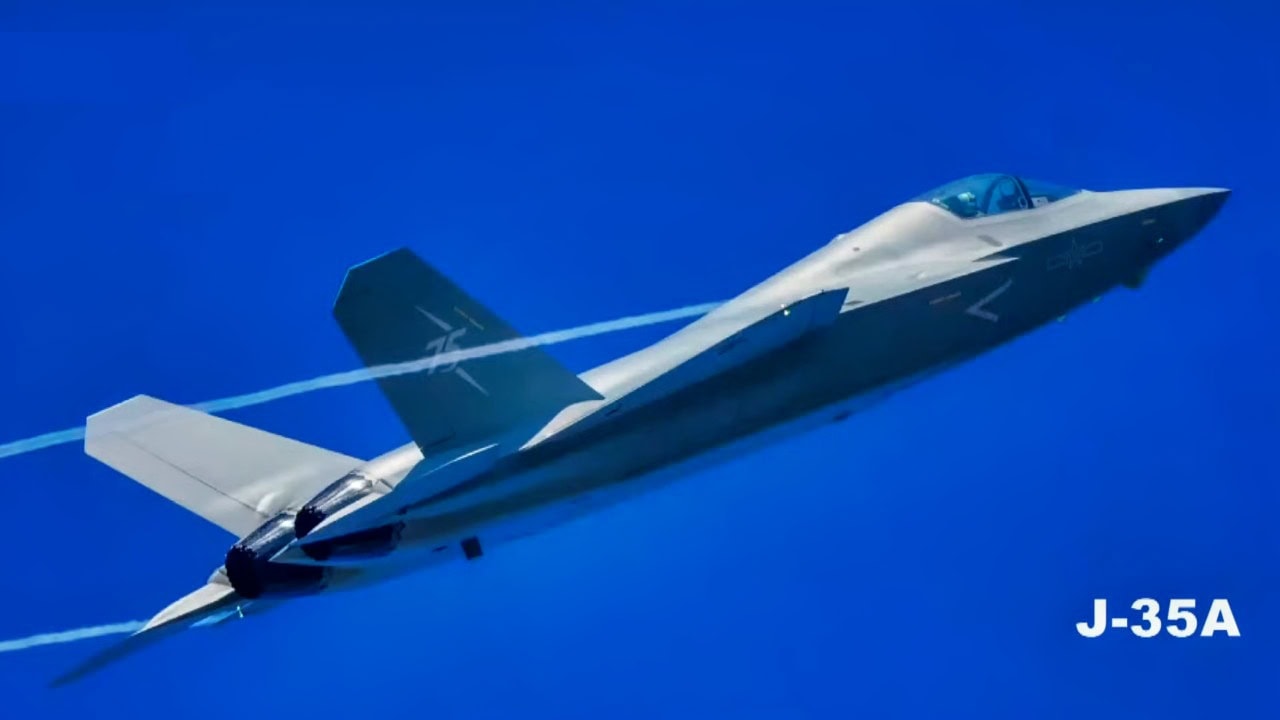
China J-35 Fighter. Image Credit: Creative Commons.
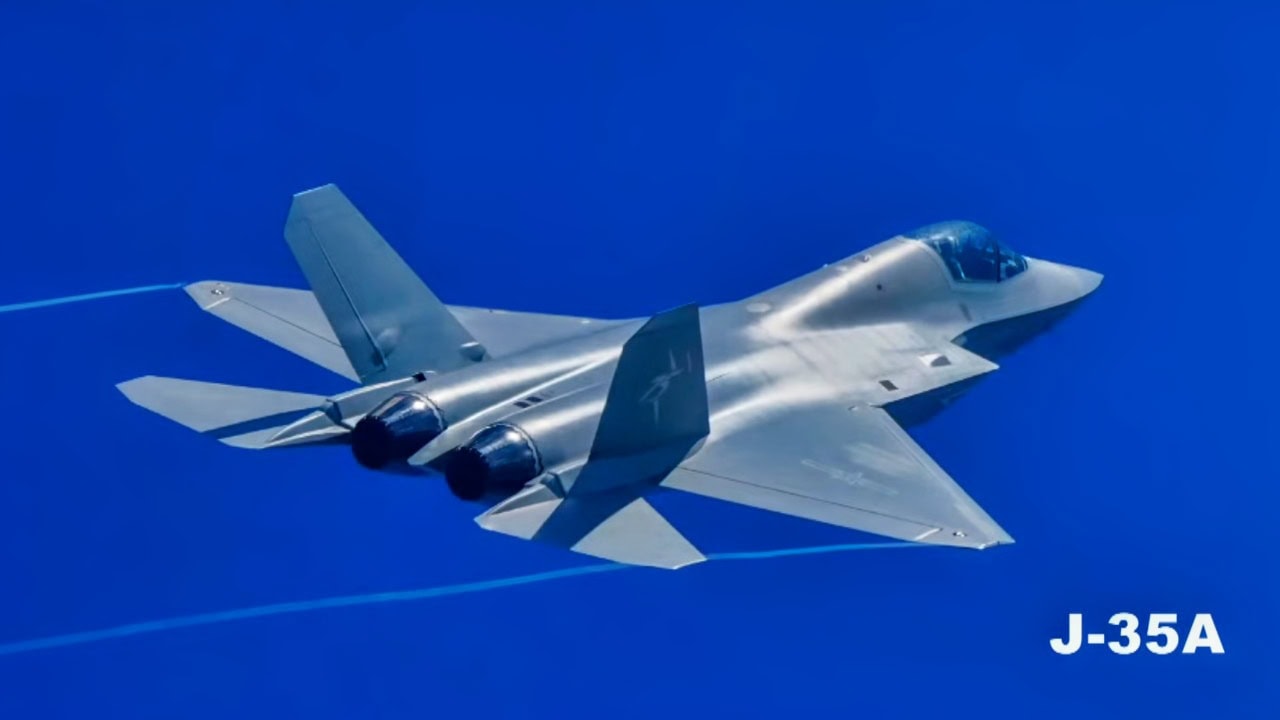
J-35 flying at Zhuhai Airshow 2024.
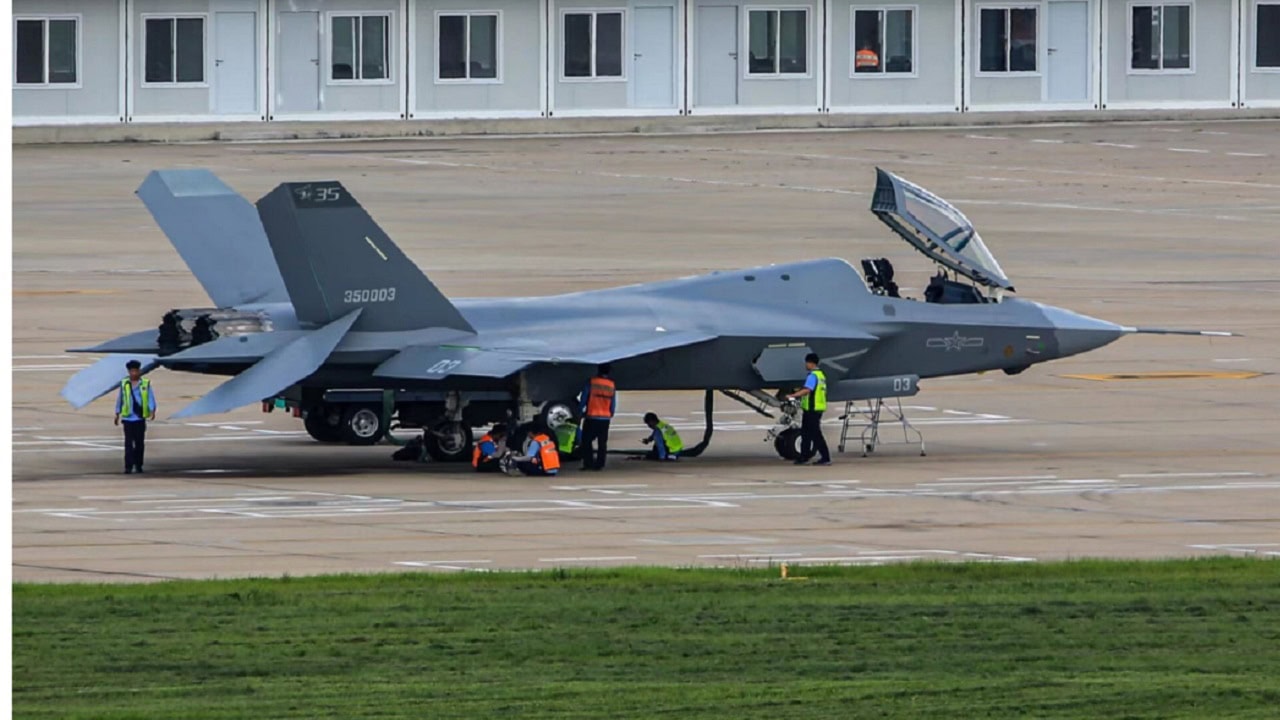
J-35 Stealth Fighter. Image Credit: Chinese Internet.
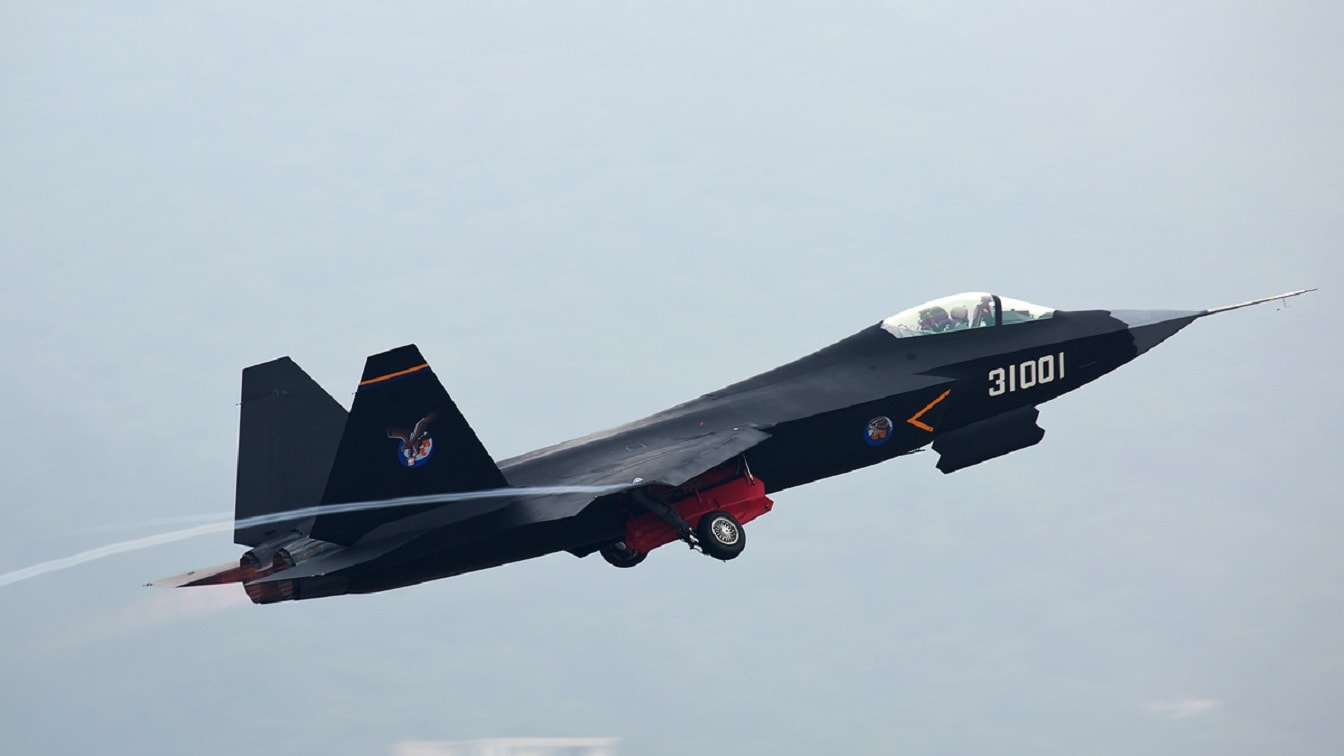
Stealth Fighter. Image Credit: Creative Commons.
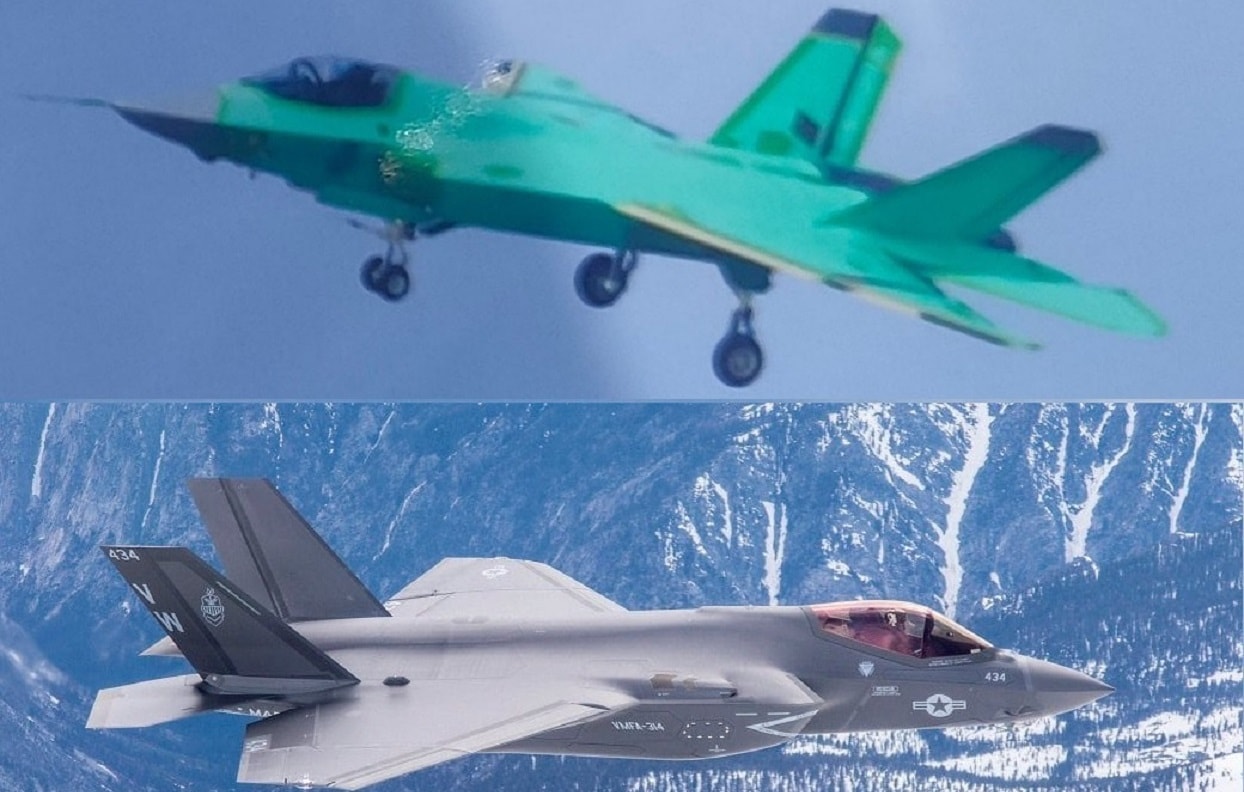
J-35 vs. F-35 Comparison. Image by Twitter User RupprechtDeino.
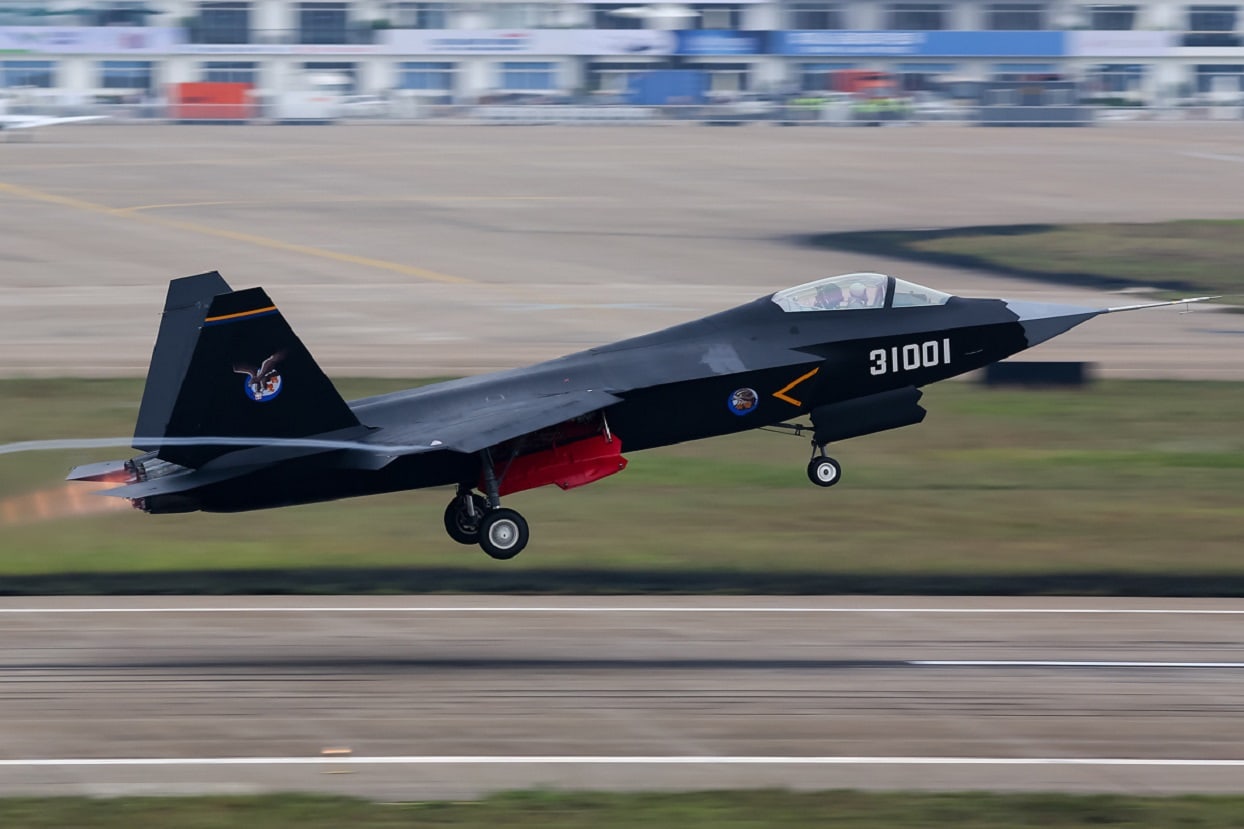
J-35 Fighter. Image: Creative Commons.
Perhaps Not That Stealthy
The fighter’s radar cross-section is less than 1 meter, China Arms explained, but I’m skeptical of this claim. The J-35 is not likely to be more stealthy than the F-22 or F-35C. Any such claims are likely hyperbole from the Chinese.
However, the fighter has a decent level of radar evasion—enough to make the Americans take notice as their battle planners devise an anti-aircraft doctrine in East Asia.
China is launching and landing the fighter and will only get more proficient at carrier operations in the future. The Fujian is a quality carrier that can carry the flag throughout the region. The PLAN is better with the J-35.
The U.S. Navy will have to consider the need to stay out of the range of Chinese carriers as they improve. The Americans have the valuable MQ-25 Stingray drone tanker to help with that task—the Stingray can extend the range of Lightning IIs and Super Hornets by 500 nautical miles.
The Americans are planning for a day when a carrier-on-carrier war could start. China believes the J-35 can take on an F-35 or F/A-18 E/F. Those airplanes are likely better performers than the J-35, but China will produce its stealth naval fighter in greater numbers in the coming years.
Look for China’s state-run media to trumpet the J-35’s progress and release more videos that show off its exploits. U.S. naval intelligence analysts will have their hands full predicting how the PLAN will use its capable fifth-generation fighter jet.
About the Author: Brent M. Eastwood
Author of now over 3,000 articles on defense issues, Brent M. Eastwood, PhD is the author of Don’t Turn Your Back On the World: a Conservative Foreign Policy and Humans, Machines, and Data: Future Trends in Warfare plus two other books. Brent was the founder and CEO of a tech firm that predicted world events using artificial intelligence. He served as a legislative fellow for US Senator Tim Scott and advised the senator on defense and foreign policy issues. He has taught at American University, George Washington University, and George Mason University. Brent is a former US Army Infantry officer. He can be followed on X @BMEastwood.