
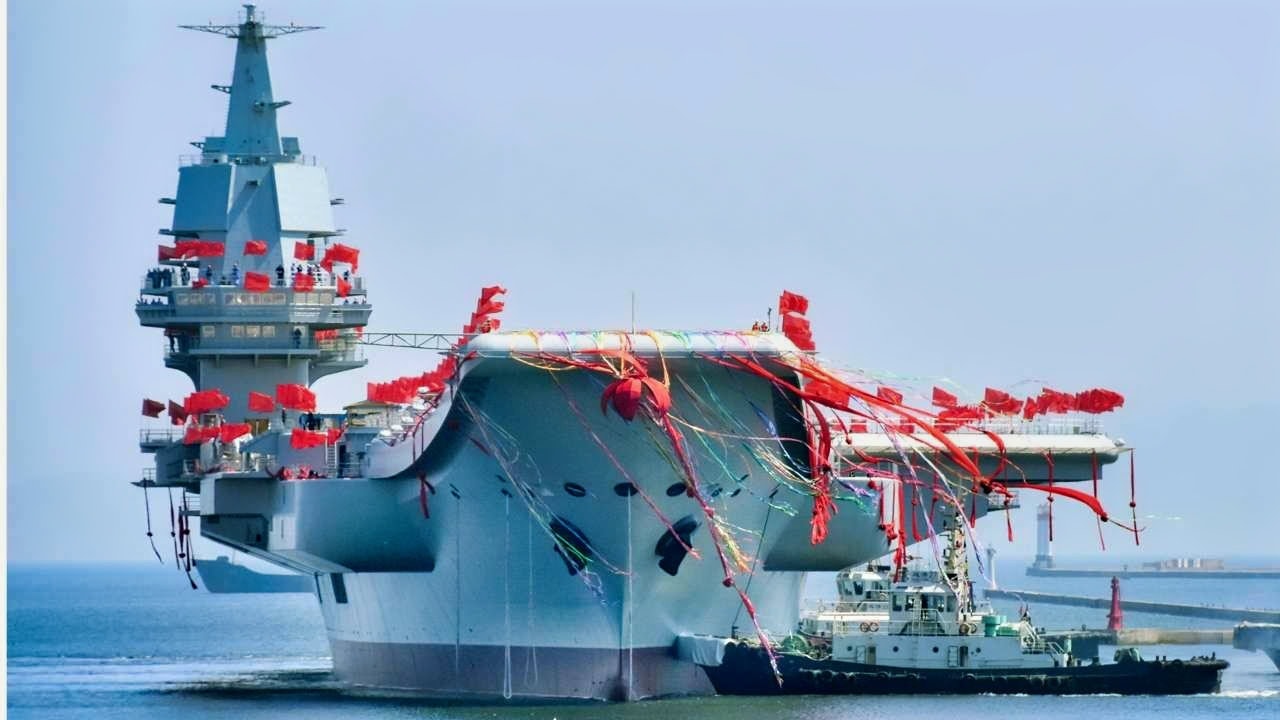
Key Points and Summary – China’s naval strategy around aircraft carriers is not contradictory, even if it looks that way.
-Beijing fields DF-21D and DF-26 “carrier killer” missiles and other A2/AD systems to keep U.S. carrier groups at risk in its near seas and complicate any intervention over Taiwan or disputed waters.
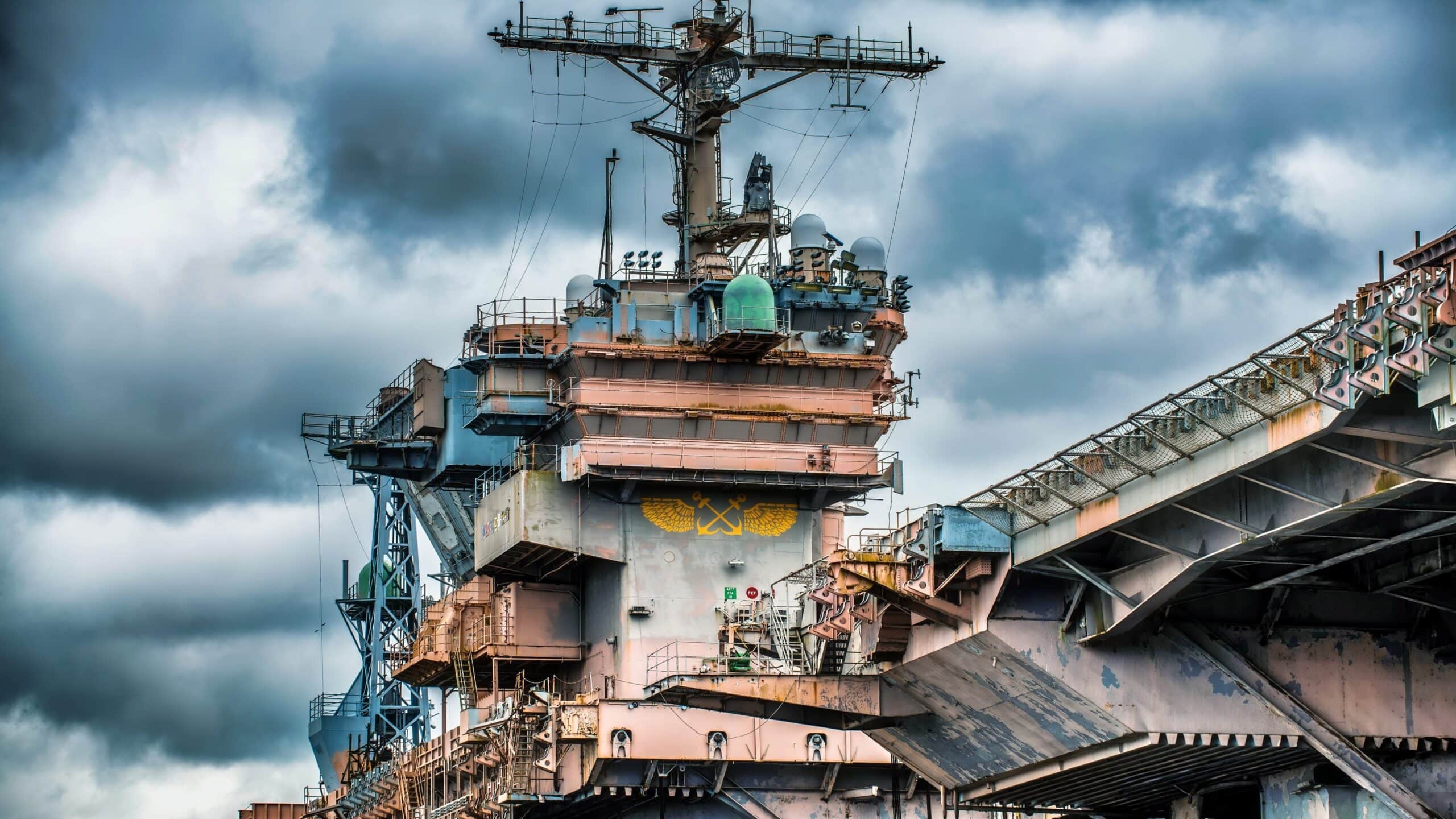
Aircraft Carrier U.S. Navy. Image Credit: U.S. Navy
-But missiles cannot replace global presence, logistics, or flexible airpower.
-That is where new CATOBAR carriers like Fujian, and future Type 004 supercarriers, come in.
-They give China blue-water reach to escort convoys, protect sea lanes, and project power abroad.
-In short, China wants to deny U.S. carriers locally while gaining its own far from home.
Why China Wants Its Own Aircraft Carriers – Even As It Builds “Carrier Killers”
At first glance, China’s naval build-up strategy may seem contradictory. On the one hand, Beijing has invested heavily in long-range missiles and other anti-access/area-denial (A2/AD) capabilities designed to keep foreign fleets – particularly American carriers – far from its shores.
On the other hand, the People’s Liberation Army Navy (PLAN) is currently commissioning and outfitting large, modern aircraft carriers of its own. Among those new carriers is the Fujian, which in September 2025 successfully launched and recovered advanced fixed-wing warplanes using electromagnetic catapults.
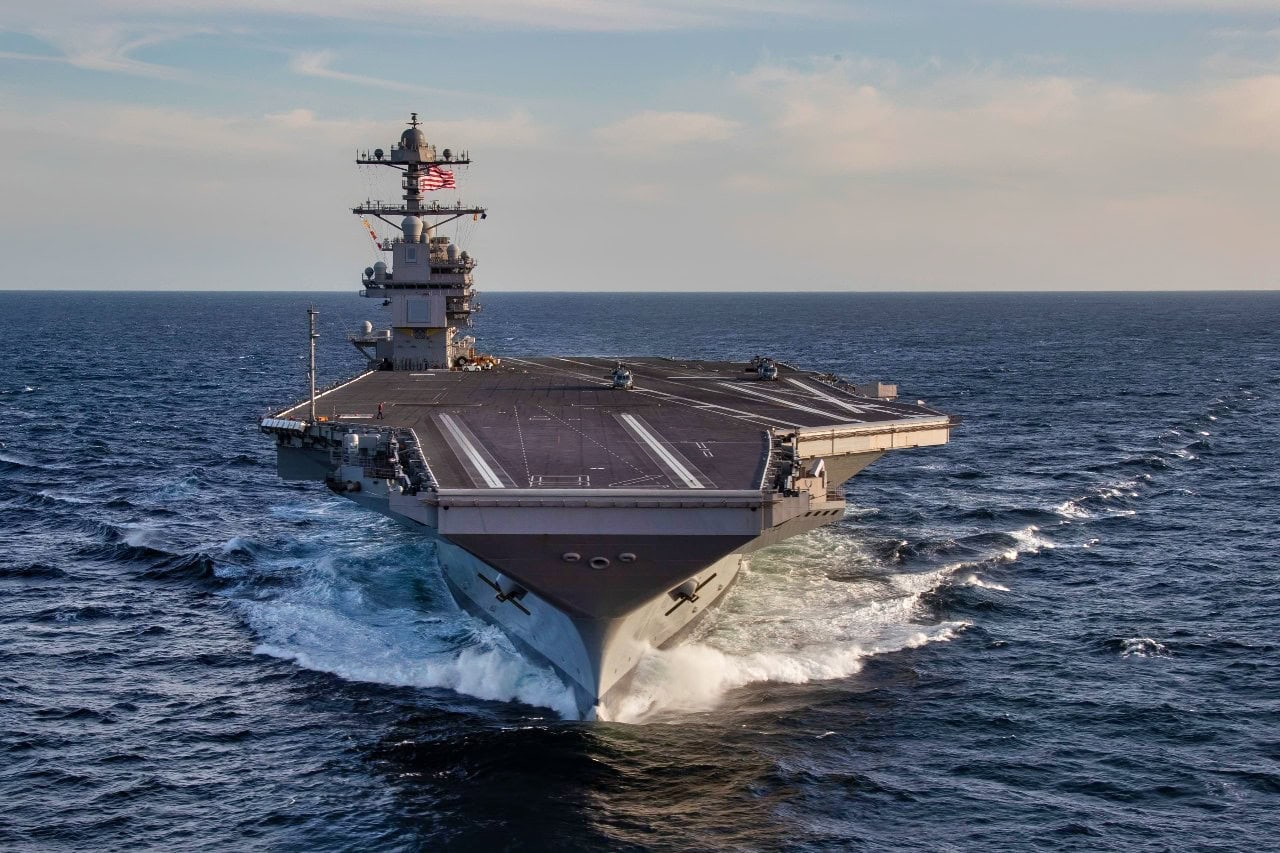
The Ford-class aircraft carrier USS Gerald R. Ford (CVN 78) and the Italian aircraft carrier ITS Cavour (CVH 550) transit the Atlantic Ocean March 20, 2021, marking the first time a Ford-class and Italian carrier have operated together underway. As part of the Italian Navy’s Ready for Operations (RFO) campaign for its flagship, Cavour is conducting sea trials in coordination with the F-35 Lightning II Joint Program Office’s Patuxent River Integrated Test Force to obtain official certification to safely operate the F-35B. Gerald R. Ford is conducting integrated carrier strike group operations during independent steaming event 17 as part of her post-delivery test and trials phase of operations.
It may seem like a paradox – building “carrier killers” and carriers at the same time – but it’s not. In plain terms, China is looking to make U.S. carriers vulnerable in its near seas while also giving itself the ability to project power far beyond its own coastlines.
For China, building aircraft carriers is about closing the capability gap with the United States, while building carrier killers is about ensuring American supercarriers remain far from Chinese shores.
A2/AD: China’s First Layer
Over the last two decades, China has invested heavily in missile systems that are explicitly designed to challenge U.S. carrier strike groups.
The DF-21D anti-ship ballistic missile system, along with the longer-range DF-26, poses a serious threat to any large warship operating within thousands of kilometers of China’s coastline.
To perfect those carrier killer systems, Beijing even built full-scale mock-ups of U.S. carriers and destroyers in remote deserts, mounted on rails so their radar signatures and movements could simulate real naval operations.
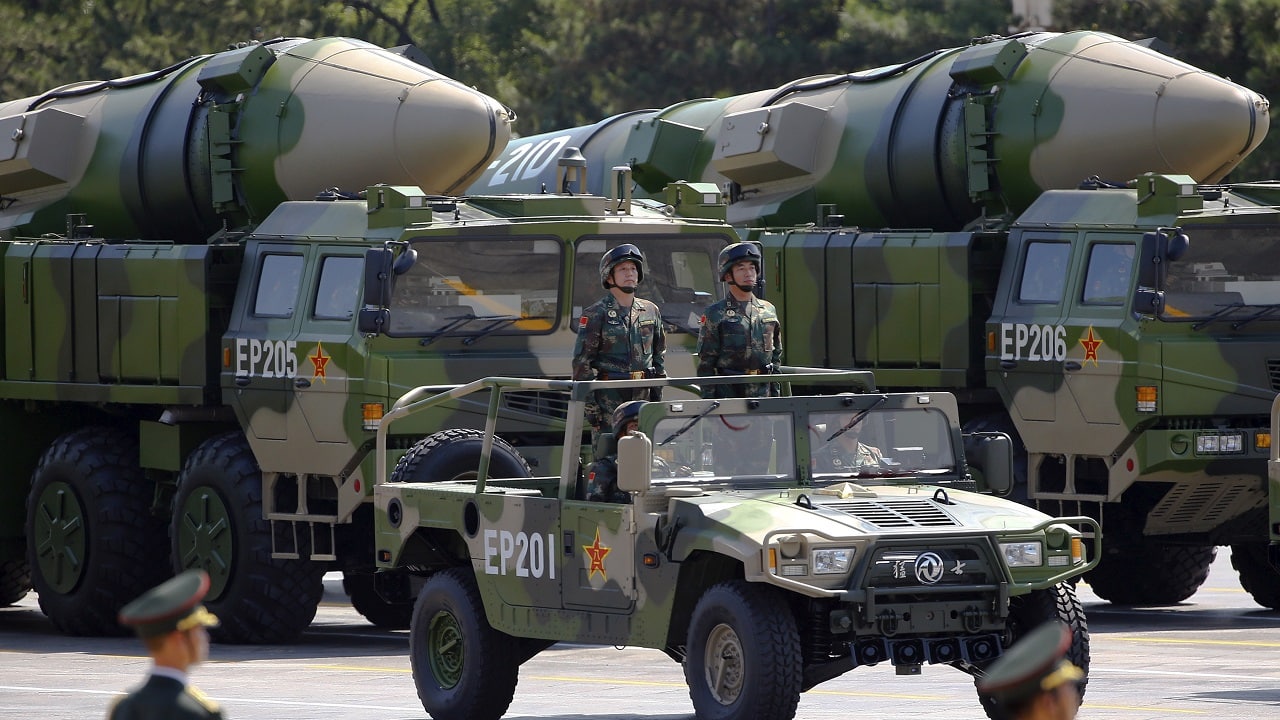
Military vehicles carrying DF-21D ballistic missiles roll to Tiananmen Square during a military parade to mark the 70th anniversary of the end of World War Two, in Beijing, China, September 3, 2015. REUTERS/Damir Sagolj
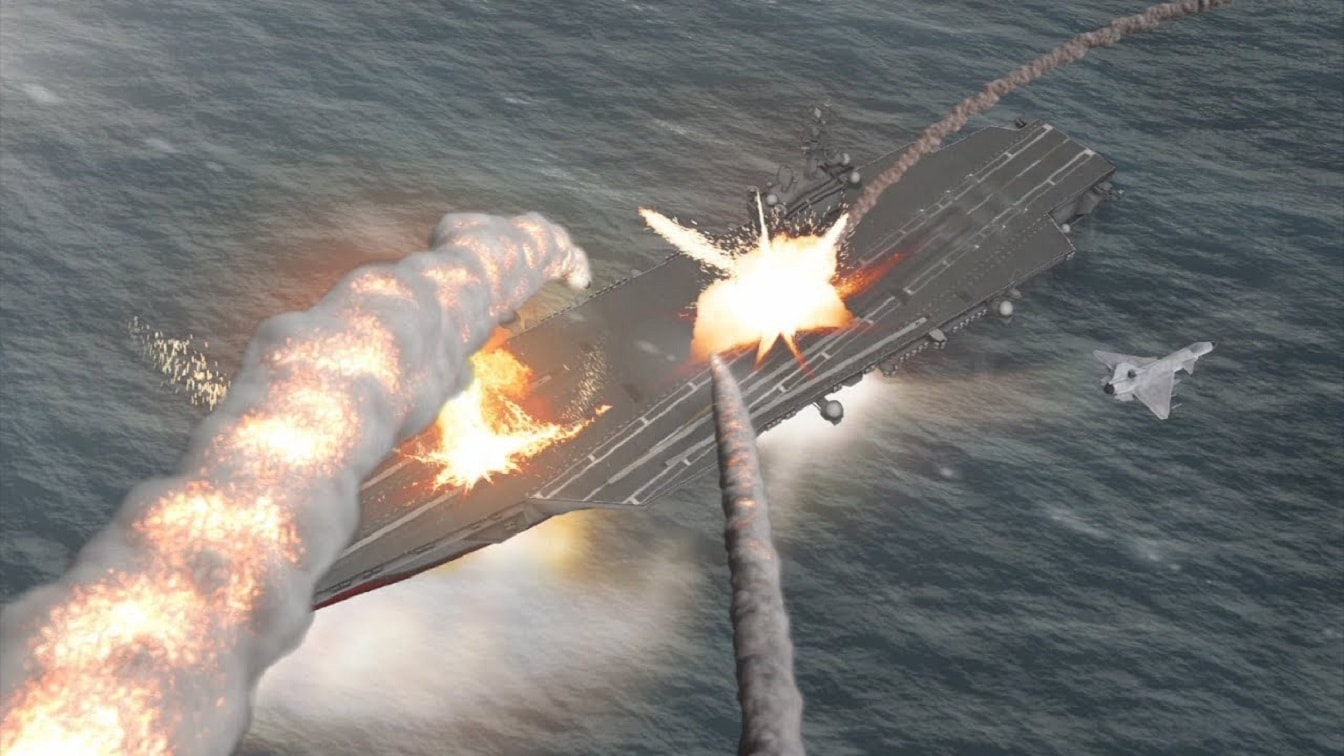
YouTube Screenshot of a Simulation of China Firing a DF-21 ASBM.
This kind of testing is all part of China’s commitment to its A2/AD doctrine: creating layered defenses that deter, delay, or destroy any American naval vessels approaching its territory.
Specifically, China is doing it not just to defend Chinese territory, but arguably to prevent Western intervention in the anticipated invasion of Taiwan or to establish dominance ahead of potential conflicts over contested islands in the South and East China Seas.
In this context, China’s efforts are not just about matching U.S. ships – that will take decades to achieve – but about making their deployment risky and costly.
It’s also the case that the A2/AD strategy offers some asymmetric advantages.
Instead of attempting to match the U.S. Navy both in terms of technological capability and numbers, China is investing in relatively cheaper missiles, sensors, command-and-control, and precision strike – all of which create a deterrent that complicates any potential U.S. intervention.
But, even an effective A2/AD strategy will have its limits.
Once outside of the bubble, missiles are less relevant and simply can’t substitute for a sustained naval presence and the logistics that come with it – not to mention the flexible strike options that come with having supercarriers deployed all over the world. And that’s why China’s strategy isn’t contradictory: Beijing needs more than A2/AD.
Protecting Power Further
For years, China’s carriers were more symbolic than anything.
The earlier carriers built by PLAN – Liaoning and Shandong – use ski-jump decks, which limited their aircraft to short take-off. In turn, those limitations meant aircraft had restricted payload, fuel, and endurance.
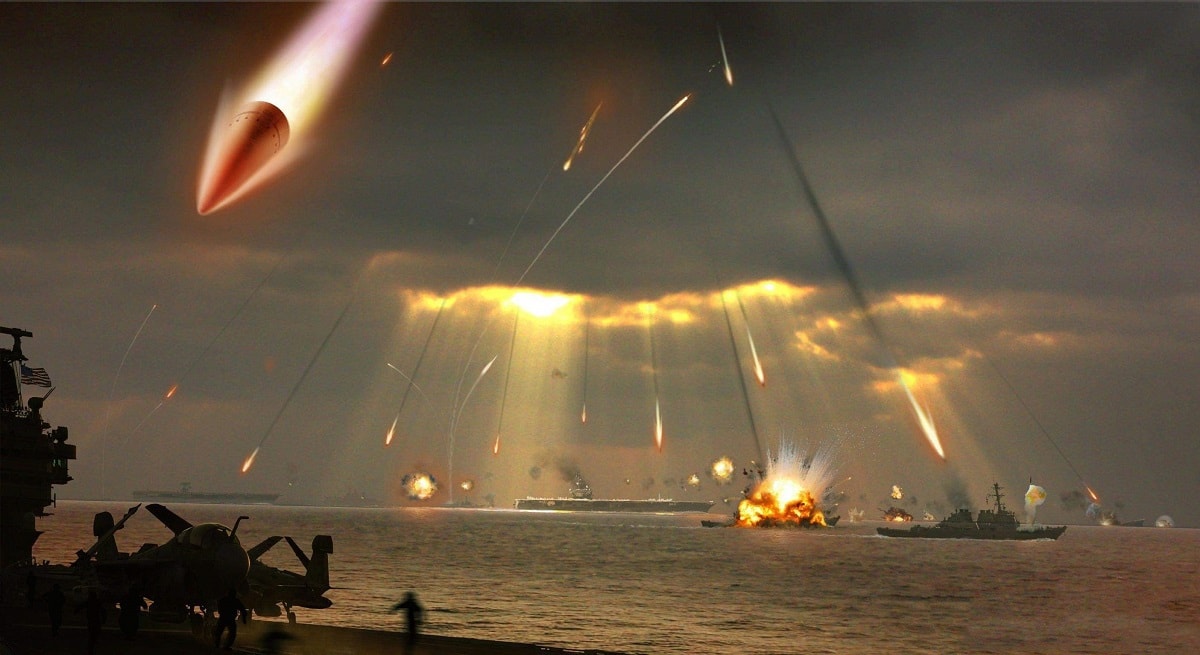
Depiction of Chinese missiles attacking the U.S. Navy. Image: Chinese Internet.
That changed this year with the commissioning of the Type 003 Fujian, China’s first carrier equipped with electromagnetic catapult launch and arrested-recovery (CATOBAR) capability. In September 2025, Chinese media released footage showing the launch and recovery of advanced fixed-wing aircraft – including the new stealth fighter Shenyang J-35 and the carrier-based KJ-600 – from the Fujian.
The announcement is a turning point for China, and it’s not the end of the road, either. Beijing is also preparing to launch the Type 004 supercarrier soon, giving the PLA Navy a true blue-water strike capability beyond the near seas.
Carriers matter, and Beijing knows it. They’re floating airfields, but they’re also more than that: they are tools that allow for global power projection and influence, and by using a modern carrier strike group, China can now project air power nearly anywhere in the Indo-Pacific.
China can escort convoys, safeguard vital sea communication lines, and even conduct intelligence, surveillance, and reconnaissance (ISR) missions. Non-combat global operations are now possible as well.
In effect, these carriers give China options that A2/AD doesn’t: flexibility and global presence. And in turn, Beijing can now work to shape and respond to international events.
China wants its own fleet of supercarriers for precisely the same reason it seeks to deter U.S. carriers from entering its near seas: they’re an effective military and diplomatic tool.
About the Author:
Jack Buckby is a British author, counter-extremism researcher, and journalist based in New York who writes frequently for National Security Journal. Reporting on the U.K., Europe, and the U.S., he analyzes and understands left-wing and right-wing radicalization and reports on Western governments’ approaches to the pressing issues of today. His books and research papers explore these themes and propose pragmatic solutions to our increasingly polarized society. His latest book is The Truth Teller: RFK Jr. and the Case for a Post-Partisan Presidency.