

Key Points and Summary – China claims to have engineered a graphene-based “metasurface” coating that can survive 1,800°F, shrug off high-speed airflow, and slash radar reflections by roughly –42 dB—all in a 0.1 mm layer.
-Developed by teams at Peking University and other Chinese labs, the ultra-thin material can be integrated into thermal insulation, potentially turning J-20s, future J-36s, and hypersonic systems into harder-to-track “ghosts.”
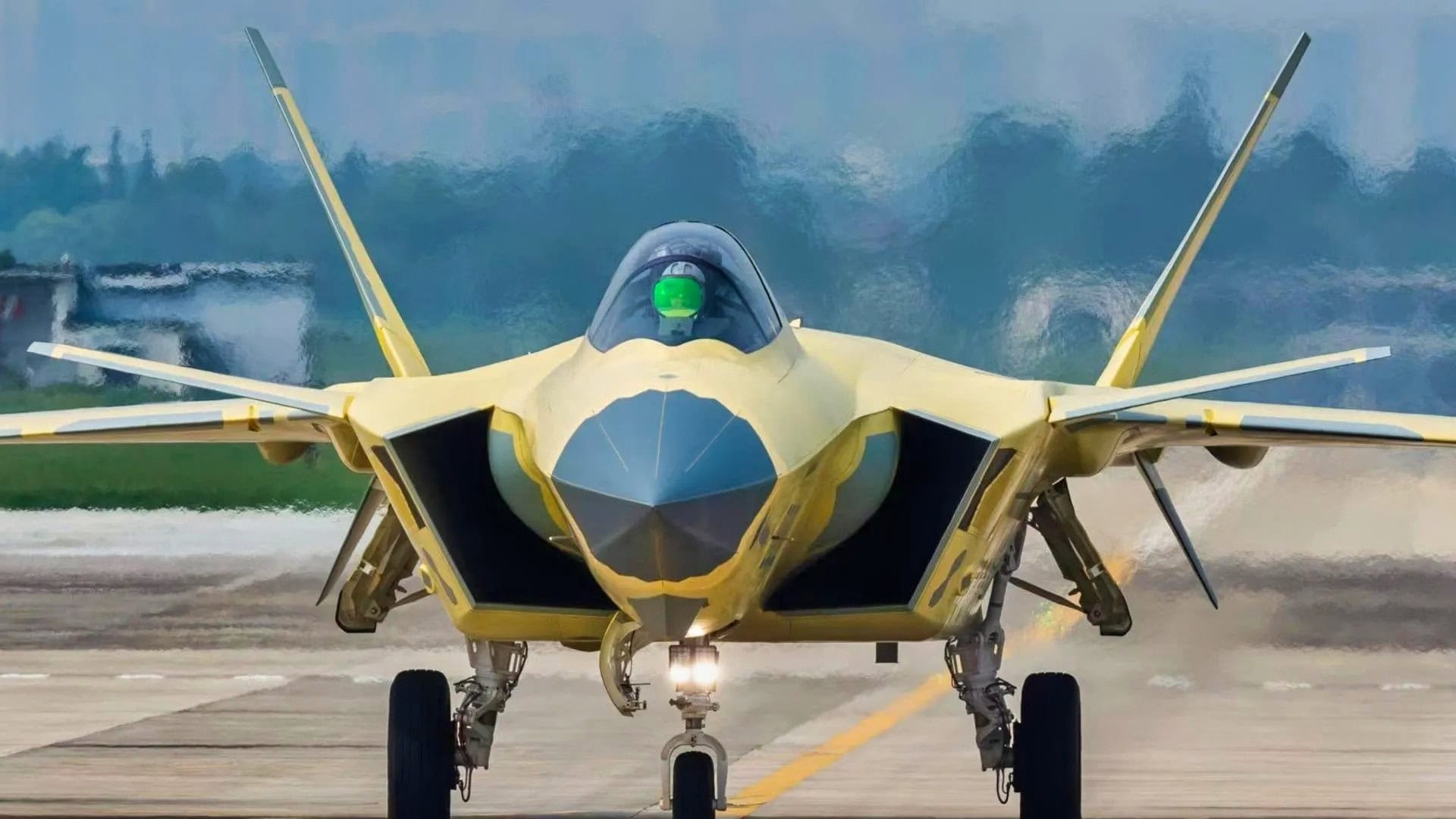
China J-20 Fighter. Image Credit: Creative Commons.
-The work highlights a growing asymmetry: while U.S. F-22 and F-35 stealth coatings are maintenance-intensive, corrosion-prone, and costly per flight hour, China is touting tougher, cheaper stealth solutions that could also spill into civilian aerospace and space applications.
China’s 1,800°F Stealth Fighter Skin Is a Warning the Pentagon Can’t Ignore
One of the most intensive aspects of Great Power competition has been the ongoing tussle between the United States of America and the People’s Republic of China (PRC) to one-up each other in the arena of stealth fighter jets.
Starting with 5th-generation fighters, the US is producing the Lockheed Martin F-22 Raptor and the Lockheed Martin F-35 Lightning II, whilst the PRC is developing its own stealth warbirds, such as the Chengdu J-20 and the Shenyang J-35. Moving on to 6th-generation warbirds, America is developing the Boeing F-47 Next Generation Air Dominance (NGAD) fighter, whilst China is working on Chengdu J-36/JH-XX and Shenyang J-50 (J-XD/J-XDS) fighters.
Now, assuming some new reports are accurate, Beijing’s research and development (R&D engineers have conjured up a new coating that rings eerily of the Klingon cloaking device in the Star Trek sci-fi franchise.
Bottom Line Up Front (BLUF)
This disturbing development comes to us via an October 24, 2025, article penned by award-winning defense journalist Kapil Kajal for Interesting Engineering titled “1,800°F coating could turn China’s fighter jets into ghosts invisible to radar.“
Mr. Kajal cites an October 14 paper published in Advanced Materials (which is a weekly peer-reviewed scientific journal covering materials science) by researchers Cui Guang and Liu Zhongfan of Peking University, along with Wang Huihui of Peking University of Technology and Li Maoyuan of Harbin Engineering University, describing how they created a lightweight, ultra-thin “metasurface” that combines flexibility, strength, and electromagnetic absorption.
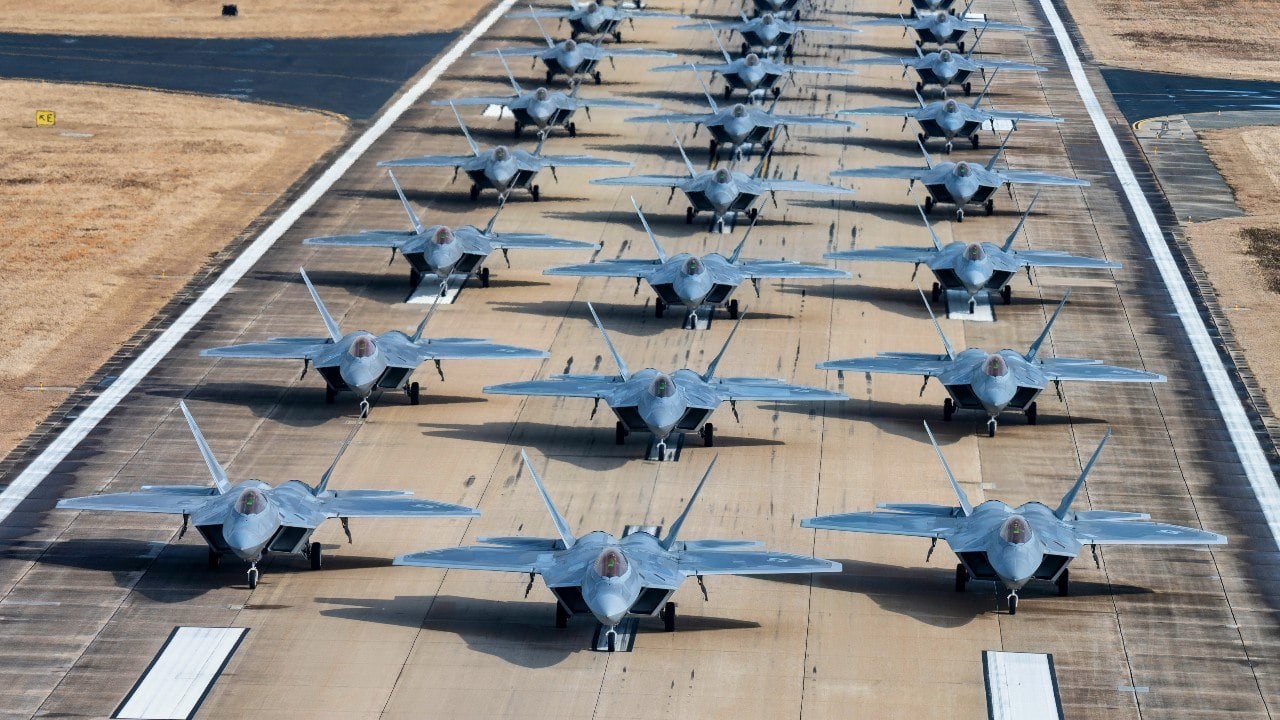
Aircraft from the 1st Fighter Wing conducted an Elephant Walk at Langley Air Force Base, Virginia, Jan. 31, 2025, showcasing the wing’s readiness and operational agility. This demonstration highlighted the wing’s capability to mobilize forces rapidly in high-stress scenarios. The wing’s fleet includes F-22 Raptors and T-38 Talons. As Air Combat Command’s lead wing, the 1 FW maintains unparalleled combat readiness to ensure national defense at a moment’s notice. (U.S. Air Force photo by Tech Sgt. Matthew Coleman-Foster)
Among their claims: “‘ Integrating this metasurface directly into an aircraft’s thermal insulation layer can reduce radar reflection to -42 decibels without adding significant weight or altering the aircraft’s structure.'” They said the technology could be used on stealth aircraft, satellites, drones, and hypersonic platforms exposed to extreme thermal and electromagnetic conditions (presumably the latter includes deliberate electromagnetic pulse [EMP] strike).
In addition to the boost this could give to the PRC’s stealth warbirds, this development also shows potential as a dual-use technology, with civilian aerospace applications such as electromagnetic shielding for high-temperature electronics and adaptive stealth systems for space missions.
Nitty-Gritty Details
As indicated in the title of Mr. Kapil’s article, the coating reportedly withstands temperatures up to 1,832 degrees Fahrenheit (1,000 degrees Celsius).
It maintains performance under high-speed airflow, conditions typical of supersonic flight. It also demonstrated stable radar absorption after being heated to 1,112 degrees Fahrenheit (600 degrees Celsius) in open air for 5 minutes and under sustained vacuum heating at 1,832 degrees Fahrenheit (1,000 degrees Celsius).
When subjected to airflow at 0.12 miles per second (200 meters per second), the coating lost less than 1% of its radar-absorption capability.
Those remarkable (and scary) figures become even more remarkable (and more terrifying) when you consider that the material is only 0.0039 inches (0.1 millimeters) thick.
“Rome wasn’t built in a day,” as the saying goes, and those Chinese scientists certainly didn’t attain success with their research project overnight.

A crew chief assigned to the 158th Fighter Wing, taxis an F-35A Lightning II fifth generation aircraft assigned to the wing at the Vermont Air National Guard Base, South Burlington, Vermont, May 2, 2022. The aircraft departed to Spangdahlem Air Base, Germany, to continue NATO’s Enhanced Air Policing mission along the Eastern Flank. (U.S. Air Force photo by Tech. Sgt. Richard Mekkri)
The team of Cui, Liu, and Wang used chemical vapor deposition to deposit graphene directly onto a silica fabric substrate, yielding a graphene-silica fiber membrane (G@SFM).
This cloth-like material is both lightweight and thermally stable. However, the initial version of the material was ineffective at dispersing radar waves.
Undeterred by this initial setback, the team enhanced the material’s electromagnetic properties using a subtractive laser patterning process, thus creating a tunable “metasurface,” a structured layer that manipulates how waves interact with the surface, allowing the coating to absorb radar signals across various frequencies.
The end result was a durable, highly flexible material with adjustable electrical resistance and a low surface density.
A Warning Message for America
Mr. Kajal wraps up his article with a sobering assessment of America’s stealth fighter vulnerabilities vis-à-vis the PRC’s strengths and advancements:
-The F-22’s iron-based absorbent paint is prone to peeling and corrosion
-“Photos of a corroded F-35C aboard the [Nimitz-class carrier] USS Carl Vinson [CVN-70] in July underscored the vulnerability of current US coatings to saltwater and humidity.”
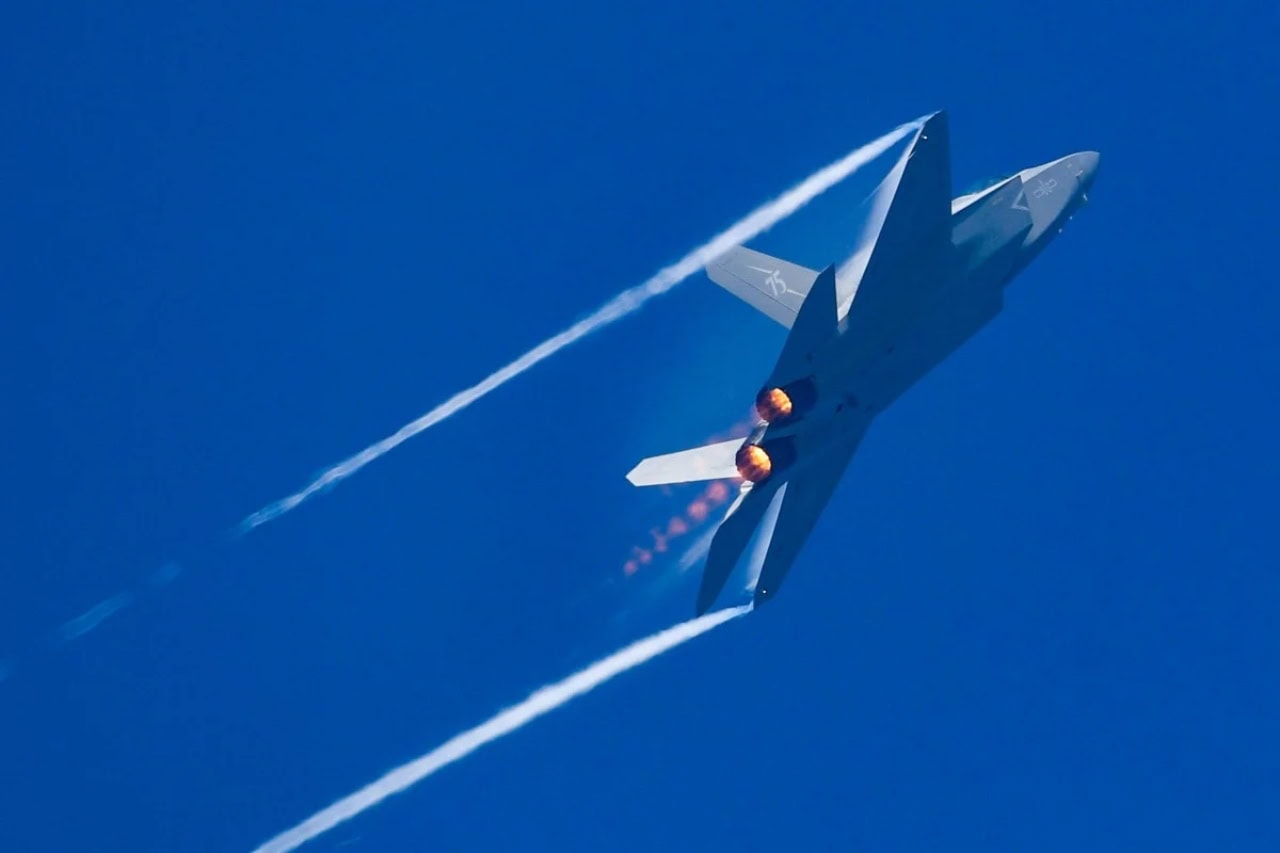
J-35. Image Credit: Chinese State Media.
-These vulnerabilities in turn lead to higher maintenance costs due to the need to conduct upkeep in climate-controlled hangars; a 2023 report by the U.S. Department of Defense (that was before the Department of War name change, of course) estimated that the F-35A and F-22A cost a whopping $28,500 and $33,500 per flight hour, respectively.
By contrast, at the 2025 Changchun Airshow, observers noted that the J-20 Weilong (“Mighty Dragon“) sported a radar-absorbent surface that appeared more durable and easier to maintain than that of U.S. aircraft.
Hopefully, America’s own aviation R&D geniuses, at Lockheed Martin Skunk Works, Boeing, Northrop Grumman, the Defense Advanced Research Projects Agency (DARPA), and elsewhere, are paying heed.
About the Author: Christian D. Orr, Defense Expert
Christian D. Orr is a Senior Defense Editor. He is a former Air Force Security Forces officer, Federal law enforcement officer, and private military contractor (with assignments worked in Iraq, the United Arab Emirates, Kosovo, Japan, Germany, and the Pentagon). Chris holds a B.A. in International Relations from the University of Southern California (USC) and an M.A. in Intelligence Studies (concentration in Terrorism Studies) from American Military University (AMU). He is also the author of the newly published book “Five Decades of a Fabulous Firearm: Celebrating the 50th Anniversary of the Beretta 92 Pistol Series.”