
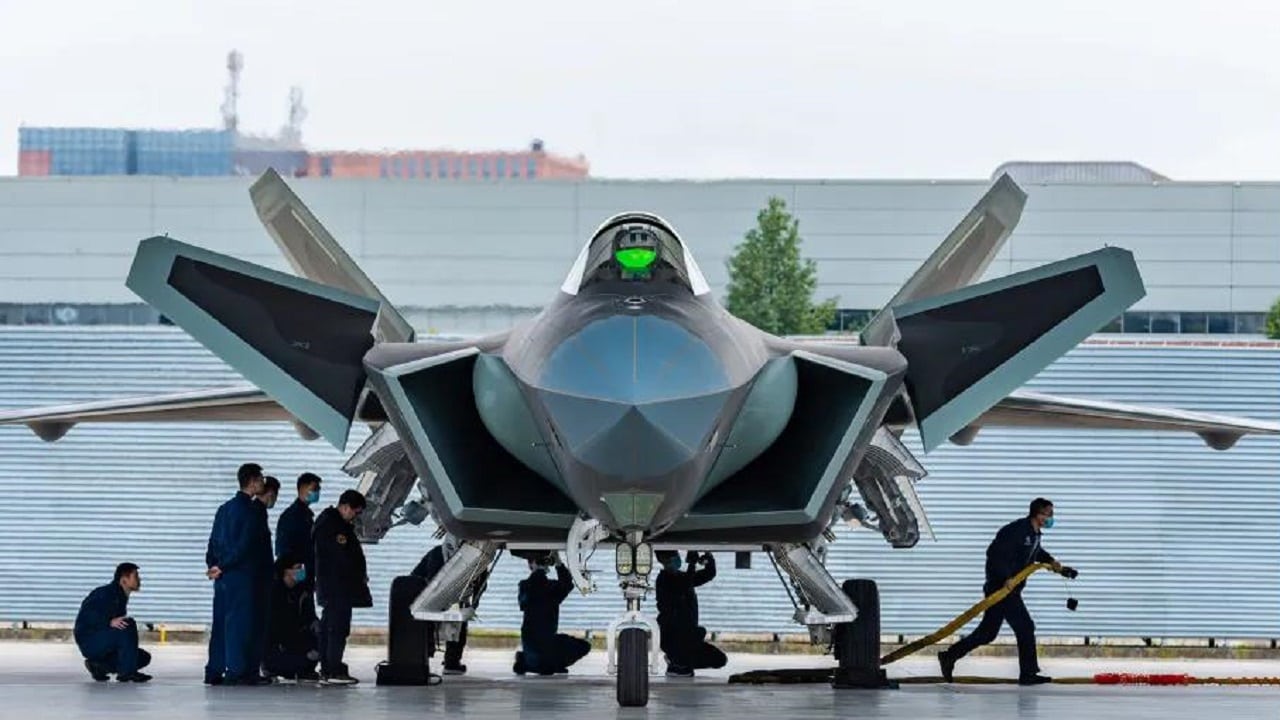
Key Points and Summary – China’s J-20S is the world’s first two-seat stealth fighter, and it signals a major doctrinal shift.
-By adding a back-seater to manage loyal wingmen, electronic warfare, and long-range targeting, Beijing is turning its premier fighter into an airborne battle manager.
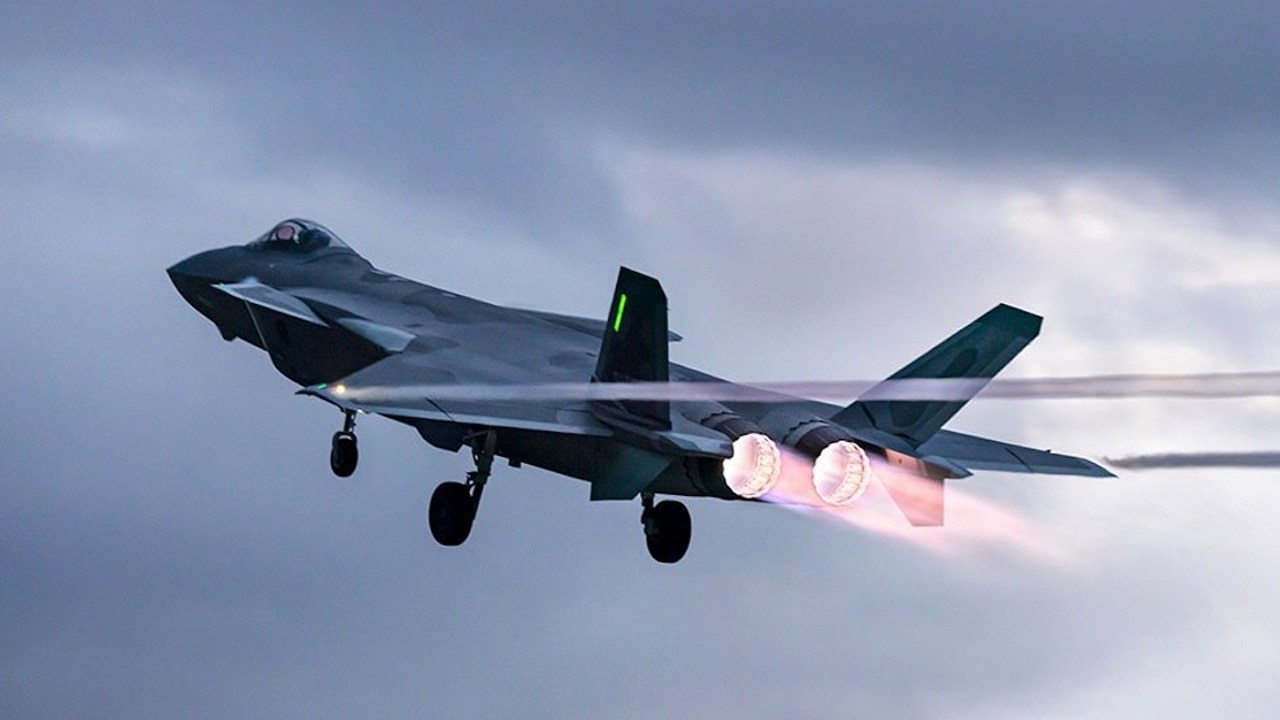
J-20 Fighter. Image Credit: Chinese internet.
-Modified with a stretched cockpit, upgraded WS-10C/WS-15 engines, expanded computing, and new antennas, the J-20S is designed to control UCAVs, support maritime strike, and even act as a mini-AWACS in contested airspace.
-If it works as intended, the J-20S will anchor a networked kill web—and could pressure the U.S. to accelerate NGAD and collaborative combat aircraft.
China’s J-20S: The World’s First Two-Seat Stealth Fighter Changes the Game
With the J-20S, China became the first nation to develop a two-seat, twin-engine, stealth fighter.
The design signals a major shift in how China intends to use fifth-generation fighters—not just for air superiority but for command-and-control, loyal wingman teaming, and long-range strike.
The evolution of a two-seat J-20 variant also signals that China has increased strategic confidence in the platform; the J-20 family is maturing beyond a simple F-22 counterweight or a threat to vulnerable enablement aircraft (AWACS, tankers) into a more specialized family of combat aircraft.
Basic Overview of the J-20S
The J-20S features an elongated cockpit with tandem seating that maintains stealth shaping. The two-seat configuration is for multi-role missions, not for training J-20 pilots, so instead of an instructor in the back seat, the backseater is instead a second crew member, included to expand the team’s cognitive bandwidth for complex missions in high-threat environments.
Modern air combat increasingly involves information management, i.e., managing swarms of drones, sensor fusion, electronic warfare coordination, and battle space management—all of which is cognitively taxing.
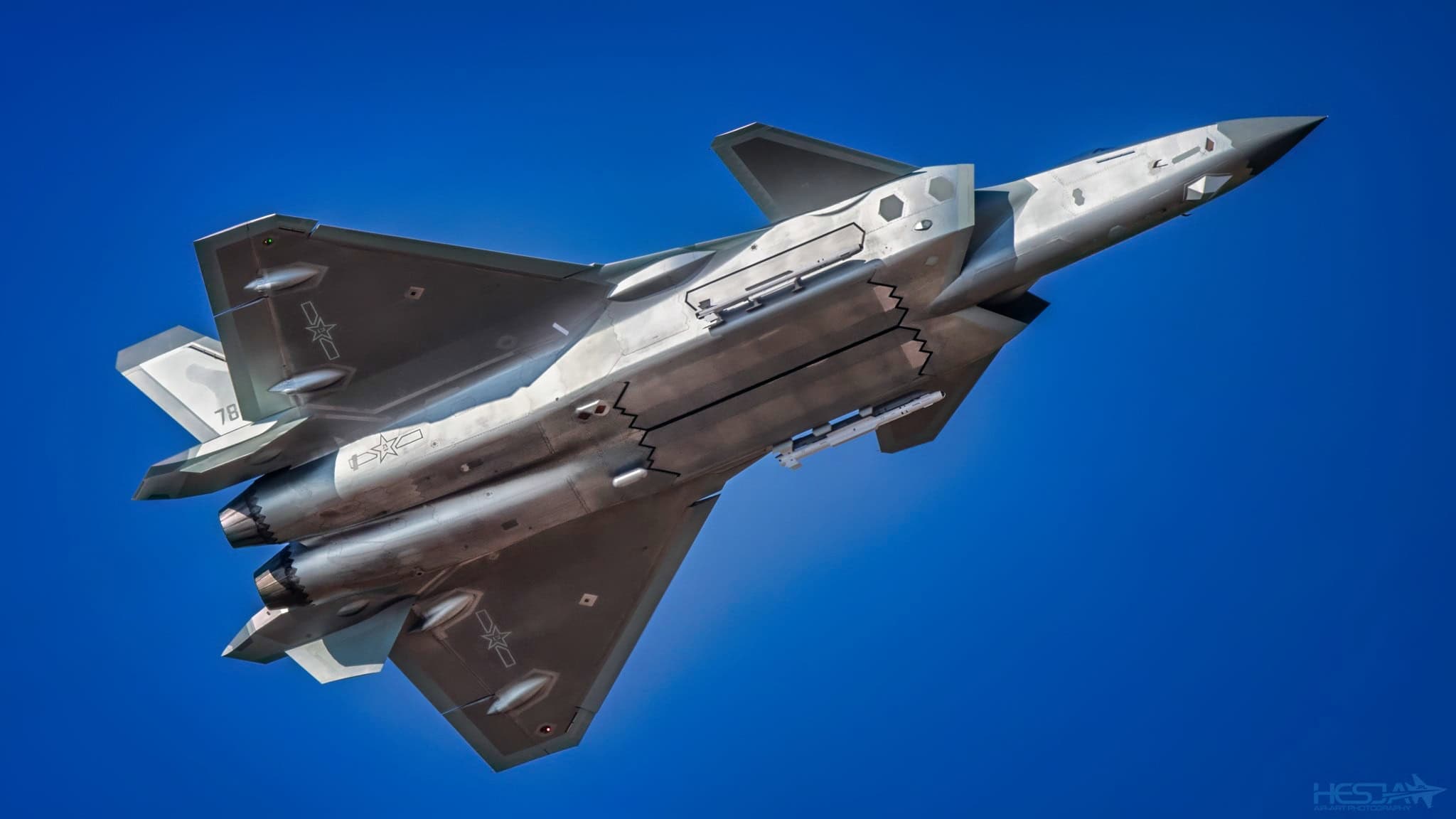
J-20 Fighter from China. Image Credit: Creative Commons.
Even in sophisticated fifth-generation jets, where pilot information processing is optimized, single pilots are often saturated with data—a problem that is only going to exacerbate in the near future when fifth-generation pilots are tasked with operating loyal wingmen. Accordingly, a second crew member is increasingly desirable.
China, which is trending towards a manned-unmanned teaming doctrine (much like the United States), delegates essential tasks to the back-seater, including wingman coordination, EW operations, long-range targeting, mission management, and data fusion.
To accommodate a second seat in the J-20 platform, the original J-20 was modified.
The canopy was slightly enlarged. The airframe uses improved WS-10C or WS-15 engines.
The internal computing systems were expanded for sensor fusion and UCAV control.
Antennas and flush sensors were added, suggesting enhanced networking and EW capabilities. And possibly, the internal weapons bay was reconfigured to accommodate new long-range strike weapons.
Operational Application
The likely roles of the J-20S will be varied. Expect the J-20S to serve as a drone-controller platform, capable of controlling large autonomous UAVs such as the FH-97A or GJ-11. The back-seater will direct drone swarms for reconnaissance, SEAD, decoy tactics, long-range strike, and close escort.
Essentially, the J-20S will serve as a stealthy quarterback for unmanned systems.
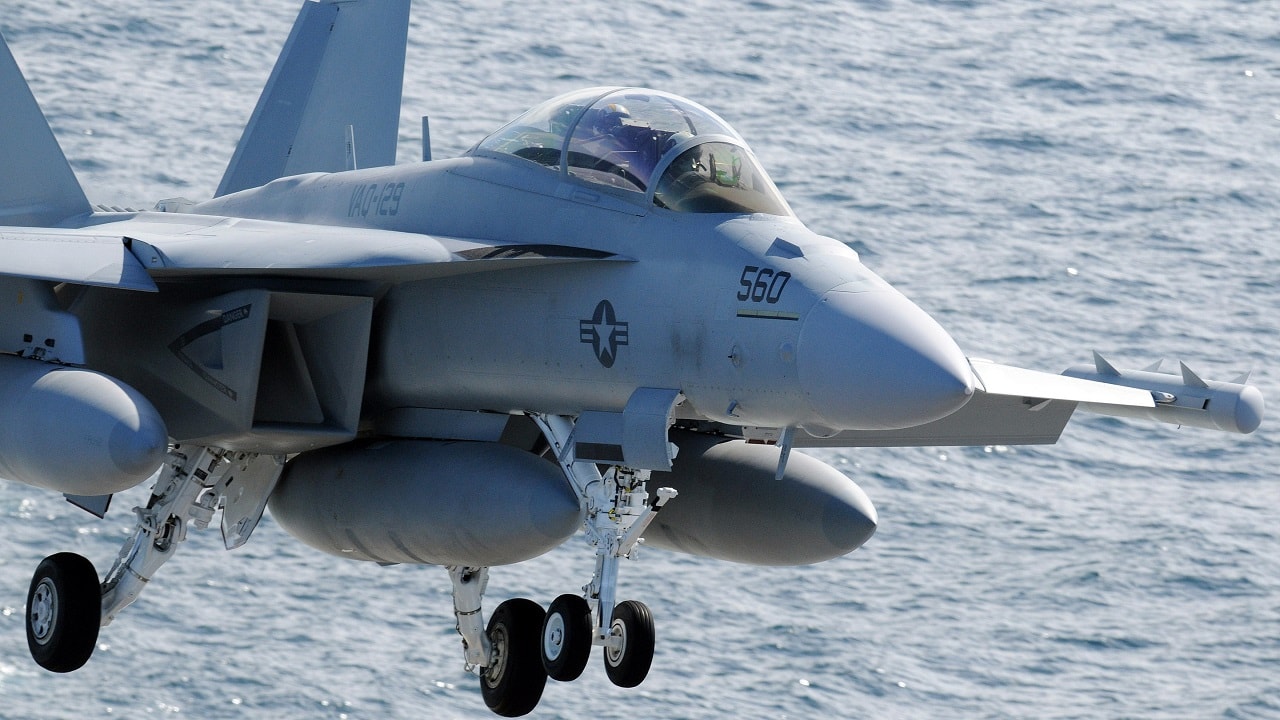
(Feb. 17, 2009) An EA-18G Growler assigned to the “Vikings” of Tactical Electronic Warfare Squadron (VAQ) 129 aligns itself for an at sea landing aboard the Nimitz-class aircraft carrier USS Ronald Reagan (CVN 76). The Growler is the replacement for the EA-6B Prowler, which will be replaced in the 2010 timeframe. Ronald Reagan is underway performing Fleet Replacement Squadron Carrier Qualifications in the Pacific. (U.S. Navy photo by Mass Communication Specialist 3rd Class Torrey W. Lee/Released).
The J-20S will also serve as an electronic warfare and penetration support platform. The back-seater will operate the active/passive EW systems and conduct cyber-enabled attacks on radar networks.
The aircraft could evolve into an equivalent of the US Navy’s EA-18G Growler.
Consistent with the A2/AD network and doctrine, the J-20S may be used for long-range maritime strike against US carrier groups. If the J-20S is configured to carry long-range anti-ship missiles or hypersonic glide missiles, the J-20S could pose a significant threat to US surface vessels operating in the Indo-Pacific.
Because China lacks a fleet of AWACS, a two-seat J-20 could fill the airborne battle manager gap, operating as a stealth mini-AWACS operating from forward positions that larger, non-stealth aircraft cannot go.
The tactical implications of the J-20S allow China to transition from singular, platform-centric warfare to a more network-centric operation, more comparable to 21st-century US operations.
The aircraft will likely serve as a nerve center for a network, including a formation of drones, J-16s, J-10Cs, and naval aviation assets.
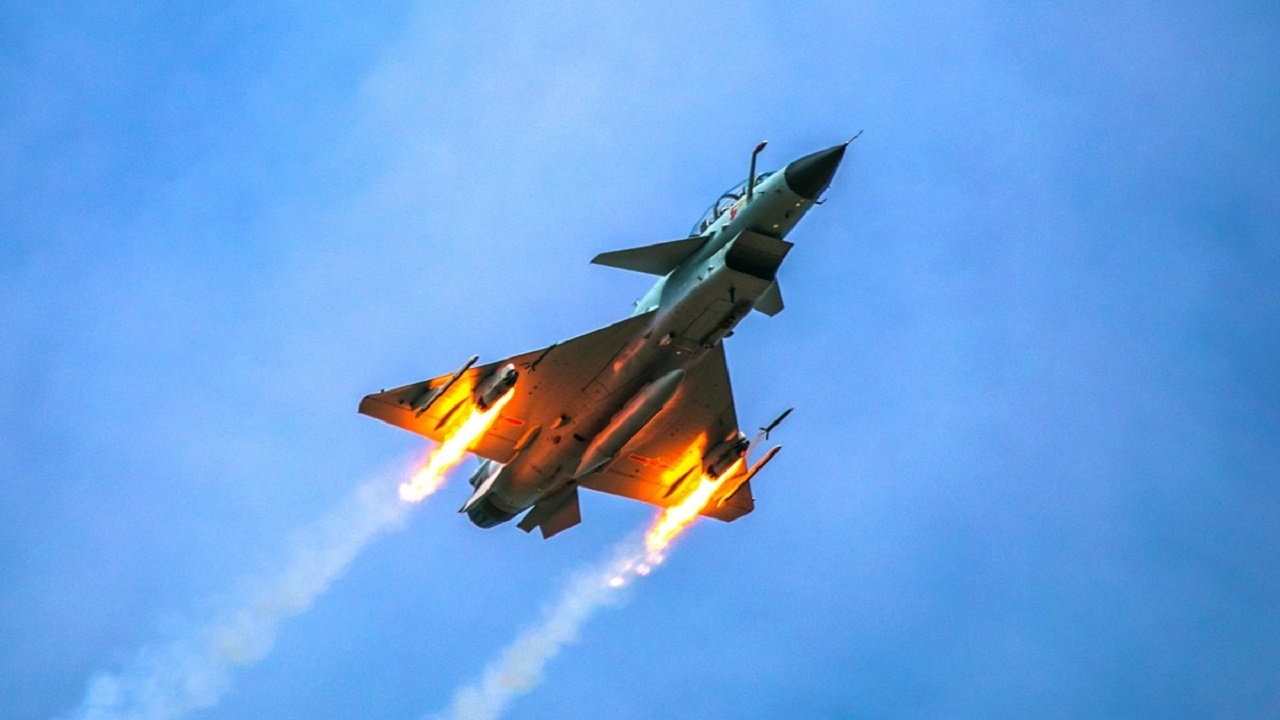
J-10 Fighter. Image Credit: Creative Commons.
The stealth nature of the J-20S platform will enhance survivability, increasing the overall effectiveness of the network and ultimately acting as a force multiplier capable of threatening US surface ships or forward bases.
The strategic implications are significant.
The fighter puts China ahead of the US in fielding a manned stealth UCAV-controller platform.
This could pressure the US to accelerate the F-47 NGAD and CCA program.

Shown is a graphical artist rendering of the Next Generation Air Dominance (NGAD) Platform. The rendering highlights the Air Force’s sixth generation fighter, the F-47. The NGAD Platform will bring lethal, next-generation technologies to ensure air superiority for the Joint Force in any conflict. (U.S. Air Force graphic)
If the J-20S is successful and capable, it enhances China’s ability to challenge US air dominance in the Taiwan Strait, South China Sea, or any other contested airspace in the Indo-Pacific.
The warplane could bolster China’s long-range strike capabilities and further deter US intrusion.
And whether successful or not, the J-20S platform strongly suggests that China is preparing for information-heavy, team-based warfare, not just traditional fighter jet dogfights. The J-20S shows that China isn’t just following the US in lockstep with faithful emulation, but is instead experimenting and innovating at a faster-than-expected pace.
About the Author: Harrison Kass
Harrison Kass is an attorney and journalist covering national security, technology, and politics. Previously, he was a political staffer, candidate, and a US Air Force pilot select. He holds a JD from the University of Oregon and a master’s in global journalism and international relations from NYU.