
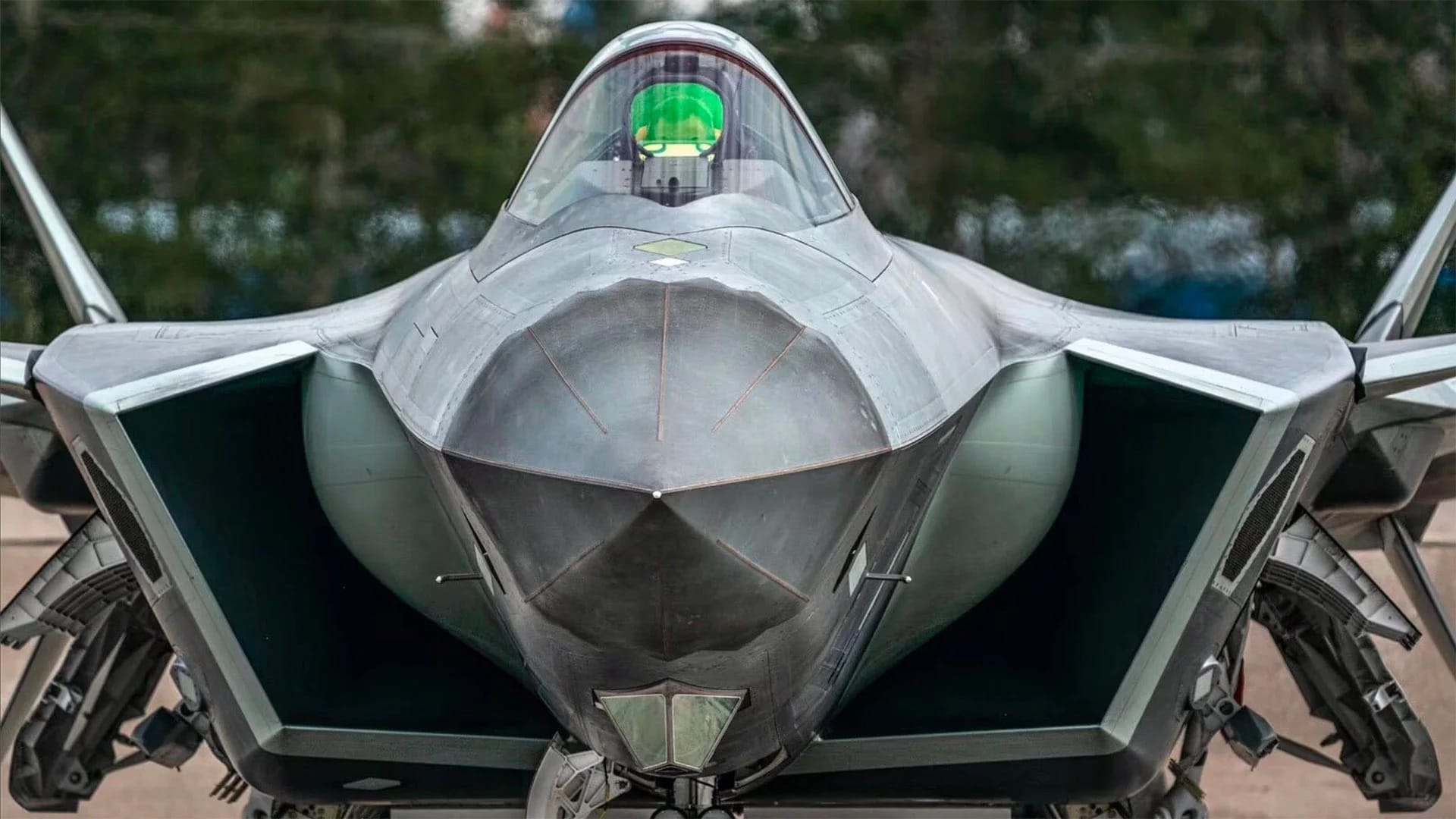
Key Points and Summary – China’s new J-20S isn’t just another variant of the Mighty Dragon—it’s a major step forward in how Beijing plans to fight in the air.
-By adding a second crew member to manage electronic warfare, sensors, and loyal wingman drones, the J-20S turns from a pure fighter into an airborne command node.
-Paired with new WS-15 engines, it can supercruise, range farther, and maneuver more aggressively while staying stealthy.
-Networked datalinks, long-range missiles, and “beast mode” loadouts give it options from quiet interception to mass missile salvos. In short, it’s a flexible force multiplier, not just a better fighter.
-The J-20S In One Word: Flexible
The J-20S Mighty Dragon Just Got Scarier – 5 Capabilities You Need to Know
The J-20S is the most recent and most advanced variant of the Chengdu J-20 Mighty Dragon. This latest model features a second seat for EW and oversight of autonomous weapon systems.
Additionally, the J-20S incorporates advanced WS-15 engines and minor enhancements to its stealth systems.
To casual readers, a two-seater stealth fighter may not seem like a significant development, but make no mistake, the J-20S is a substantial (and concerning) advancement.
Here are the five most impressive capabilities that the J-20S brings to the table.
#1 Flexibility
The most distinctive feature of the J-20S is its twin-seat cockpit, making it the world’s first operational fifth-generation stealth fighter with two crew members.
This configuration is not merely for training purposes; it fundamentally redefines the aircraft’s role in combat.
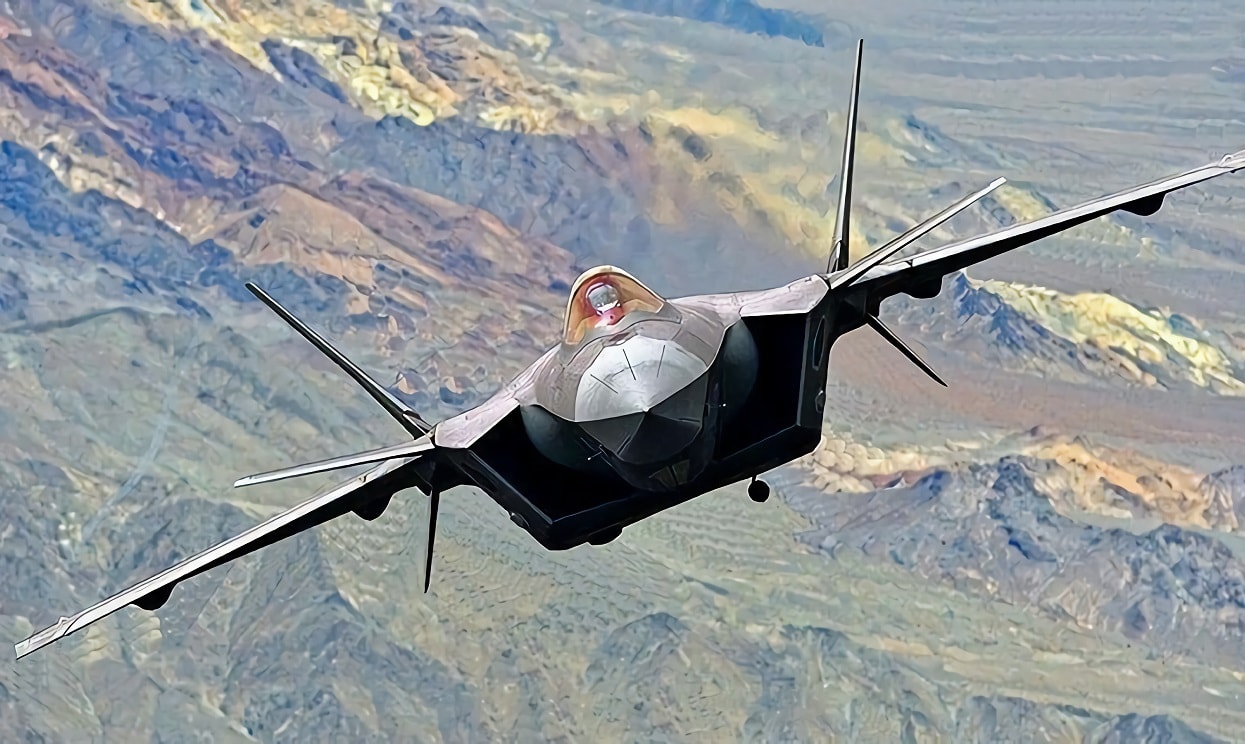
China’s J-20 Fighter. Image: Creative Commons.
The second seat is occupied by a Mission Systems Officer (MSO), whose responsibilities include managing electronic warfare systems, coordinating with Unmanned Aerial Vehicles (UAVs), and overseeing complex tactical operations.
This dual-crew setup allows the J-20S to function as a tactical command node in the sky.
The MSO can direct loyal wingman drones, such as the FH-97A or GJ-11, enabling the J-20S to orchestrate swarm attacks, reconnaissance missions, and electronic suppression operations.
By offloading these tasks from the pilot, the aircraft becomes more responsive and capable in high-intensity scenarios. The result is a fighter that not only engages in direct combat but also serves as a battlefield coordinator, enhancing the effectiveness of surrounding assets.
Moreover, the twin-seat design supports manned-unmanned teaming (MUM-T), a concept increasingly central to future air combat.
In this role, the J-20S can guide multiple drones simultaneously, leveraging artificial intelligence and real-time data fusion to execute coordinated strikes.
This capability positions the J-20S as a force multiplier, capable of extending its reach and influence far beyond traditional fighter roles.
#2 Stealth
Stealth remains a cornerstone of the J-20S’s design.
Like its predecessor, the aircraft features a chiseled nose, canted vertical stabilizers, and an internal weapons bay, all optimized to reduce radar cross-section (RCS).
The fighter also includes a darker, and likely more advanced RAM coating.
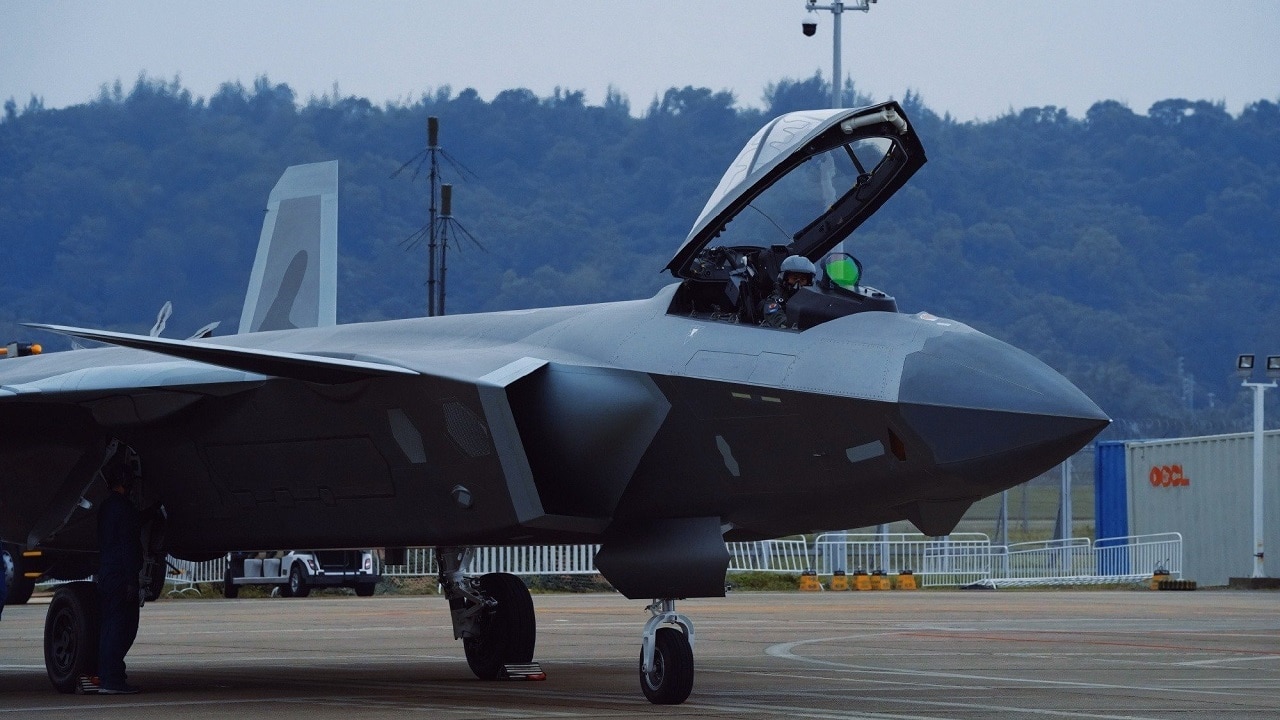
J-20 Fighter. Image Credit: Creative Commons.
The aircraft’s diverterless supersonic inlets (DSI) and S-shaped engine ducts help conceal the engine’s radar signature, while its infrared suppression systems reduce heat emissions.
In addition to physical stealth, the J-20S excels in electronic stealth through its sensor fusion capabilities.
It is equipped with a powerful AESA radar housed in a large radome, enabling long-range detection and tracking of targets. Complementing this is an electro-optical targeting system (EOTS) and infrared search-and-track (IRST) sensors, which allow passive detection of enemy aircraft without emitting signals that could reveal its position.
These sensors are integrated into a sophisticated avionics suite that fuses data from multiple sources, providing the crew with a comprehensive and real-time picture of the battlespace.
This multidimensional situational awareness is critical for identifying threats, prioritizing targets, and executing precision strikes.
The J-20S’s ability to operate in electronic warfare environments and coordinate with other platforms makes it a formidable asset in both offensive and defensive operations.
#3 Supercruise
One of the most significant upgrades in the J-20S is its propulsion system. The aircraft is powered by the WS-15 engine, a domestically developed high-thrust turbofan capable of generating between 18 and 20 tons of thrust.
The WS-15 engine enables the J-20S to achieve supercruising, which offers several tactical advantages. First, it allows the aircraft to maintain high speeds while conserving fuel, extending its operational range and endurance. Second, it reduces the infrared signature associated with afterburner use, enhancing stealth. Third, it improves the aircraft’s ability to respond rapidly to threats and reposition in combat zones.
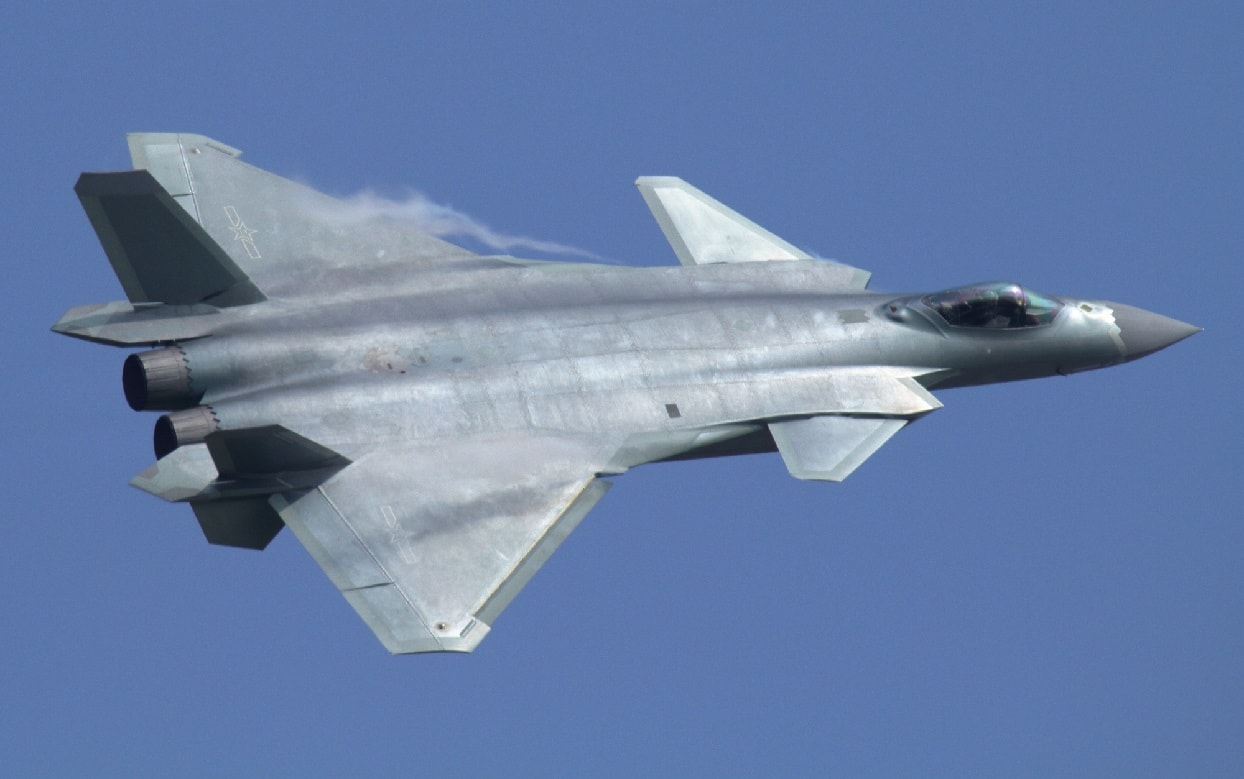
Image of J-20 Stealth Fighter. Image Credit: Creative Commons.
The WS-15 engine also enhances maneuverability, particularly at high altitudes and speeds. This makes the J-20S more agile in dogfights and better equipped to evade incoming missiles.
The engine’s advanced thermal management and materials engineering indicate the increasing sophistication of China’s domestic aerospace industry, reducing reliance on imported Russian engines and signaling a move toward self-sufficiency.
#4 Network
The J-20S is designed to operate as part of a broader network-centric warfare strategy. Its avionics and communication systems enable seamless integration with other platforms, including early warning aircraft, ground-based radar stations, and naval assets.
This connectivity enables the J-20S to share targeting data, coordinate strikes, and receive real-time mission updates.
In this role, the aircraft functions as a command-and-control hub, capable of directing multi-platform operations across domains.
The presence of a second crew member enhances this capability, allowing one operator to focus on flying while the other manages networked assets and coordinates the mission. This division of labor is particularly valuable in complex scenarios involving electronic warfare, drone swarms, and joint force operations.
#5 Weapons
The J-20S is equipped with a versatile weapons suite that supports a wide range of mission profiles. Its internal weapons bays preserve stealth while carrying long-range air-to-air missiles such as the PL-15 and the emerging PL-21.
These missiles are designed for beyond-visual-range (BVR) engagements, with ranges exceeding 200 to 300 kilometers, allowing the J-20S to strike targets before they can respond.
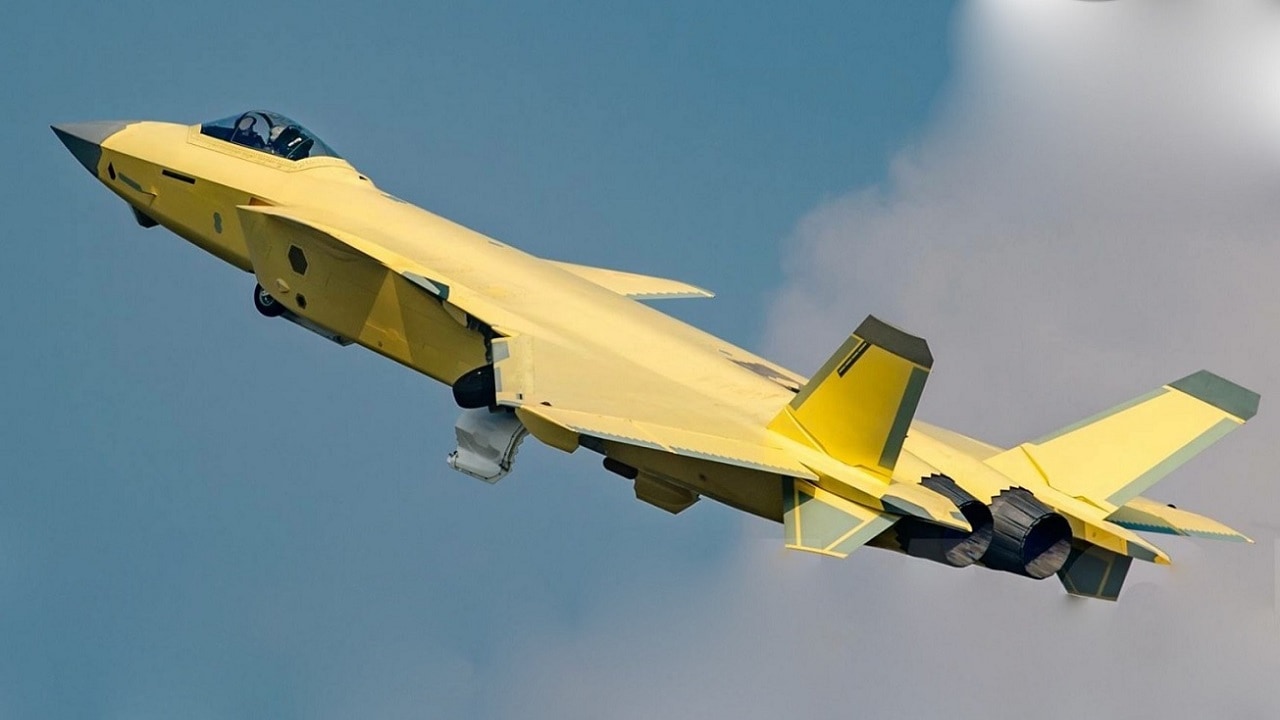
J-20 Mighty Dragon Stealth Fighter. Image Credit: Chinese Internet.
In addition to internal bays, the aircraft features external hardpoints that can be used in “beast mode” configurations.
This allows the J-20S to carry up to 14 missiles, including eight externally, when stealth is not a priority.
Such flexibility enables the aircraft to adapt to different combat scenarios, from stealthy interception missions to full-scale aerial dominance operations.
The J-20S’s weapons systems are managed through an advanced fire control system that integrates sensor data, threat analysis, and engagement protocols.
This system enables the simultaneous tracking and targeting of multiple threats, thereby enhancing the aircraft’s lethality and survivability.
About the Author: Isaac Seitz
Isaac Seitz, a Defense Columnist, graduated from Patrick Henry College’s Strategic Intelligence and National Security program. He has also studied Russian at Middlebury Language Schools and has worked as an intelligence Analyst in the private sector.