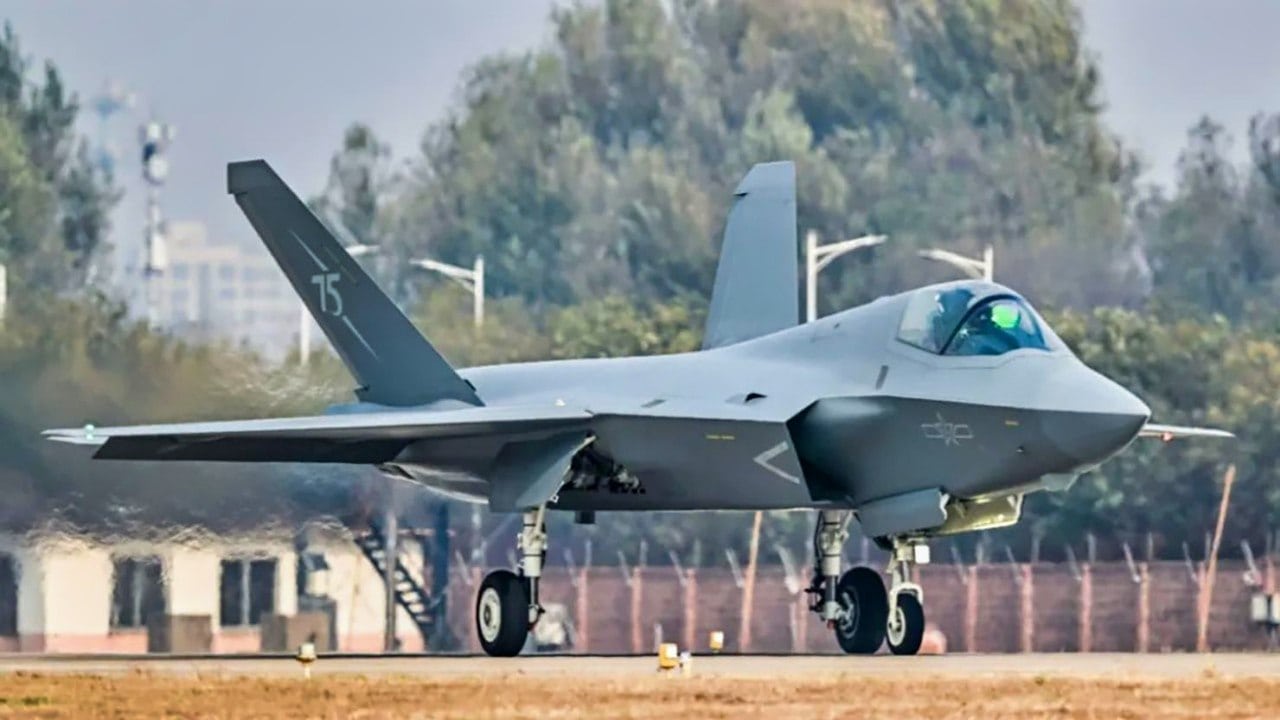
Key Points and Summary – Shenyang Aircraft Corporation has successfully completed acceptance flights for two variants of its new stealth fighter: the land-based J-35A and the carrier-capable J-35B.
-Marking the PLA’s first tests of 2026, the J-35B features a distinct twin-wheel nose gear designed for the electromagnetic catapults on the Fujian carrier.
-Evolving from the FC-31 prototype and powered by domestic WS-21 engines, these multirole jets are slated to replace older J-15T and J-10C models, serving the Chinese Air Force and Navy well into the 2050s.
J-35B Carrier Variant Revealed: Twin-Wheel Gear and Launch Bar Spotted in New Flight Tests
Chinese aerospace company Shenyang Aircraft Corporation reported successful acceptance flights of two J-35 fighter jets. One was a J-35A ground-based variant, and one a J-35B carrier-capable model. These are the first two People’s Liberation Army (PLA) aircraft to be flight-tested in 2026.
Photos of the aircraft were published on the X account of the military aviation observer Andreas Rupprecht. Other images were published online on Chinese social media and enthusiast websites such as Baidu.
The images come from local “tail spotters” who took photos showing differences between the PLA Air Force (PLAAF) and PLA Navy (PLAN) air wing versions of the J-35. Both aircraft were configured according to their operational uses, as was seen during the test flights conducted over the Shenyang aerodrome.
Which aircraft was constructed for which branch of the PLA could be identified by minor configurational details. Neither of the J-35s sported any unit or service branch markings, as they were both still painted in factory primer.
Different Variants
One of the most telling visual differences between the carrier-based version of the fighter and the land-based variant is the nose landing gear. The J-35B PLAN aircraft has a twin-wheel configuration that is integrated with the shuttlecock launch bar components, enabling interaction with a carrier’s catapult system.
This fighter is intended to operate alongside the previous-generation J-15T carrier aircraft, which is another Shenyang product but copied from the Russian Sukhoi Su-33. The J-35B should eventually replace the older fighter entirely.
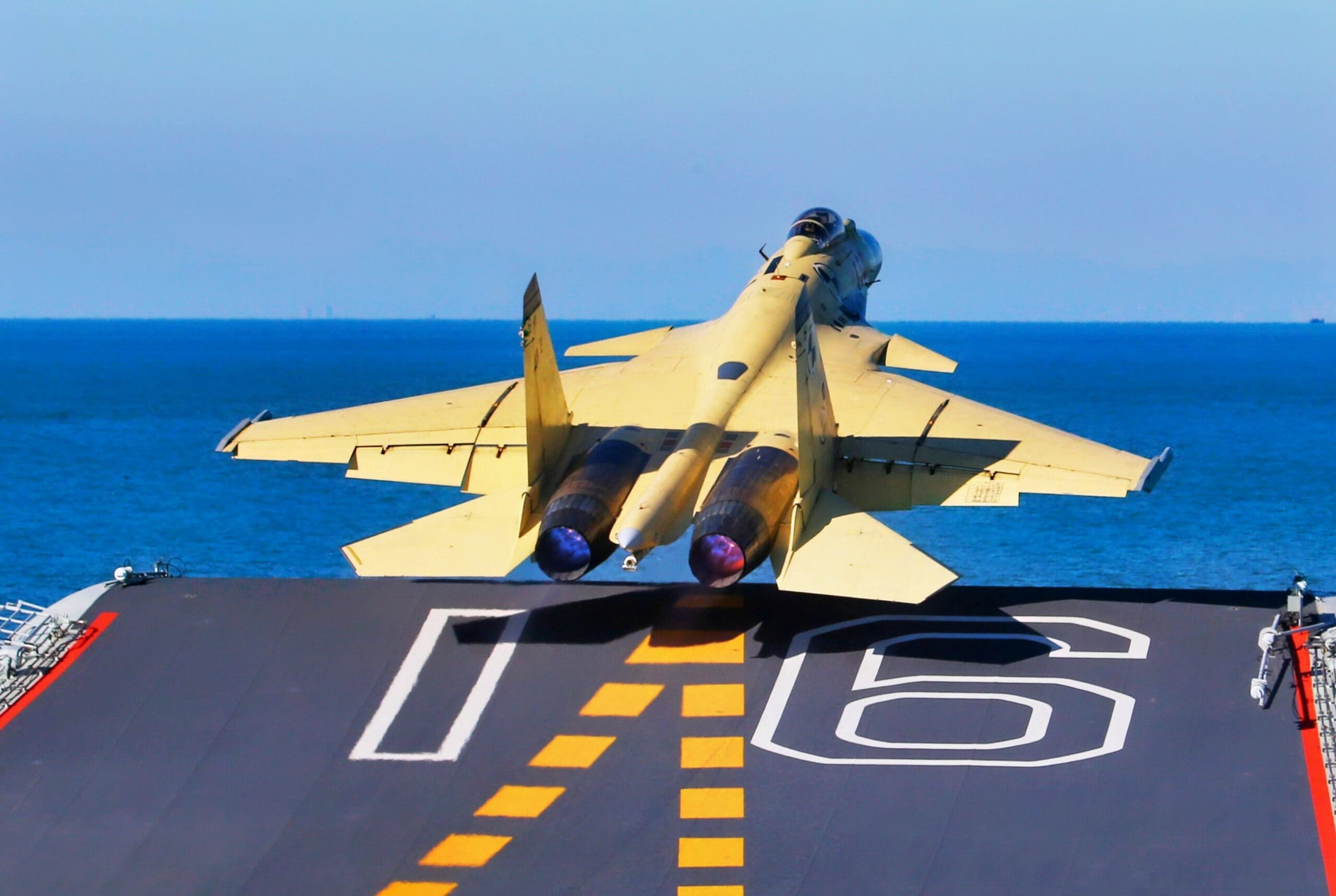
J-15 Fighter from China. Image Credit: Creative Commons.
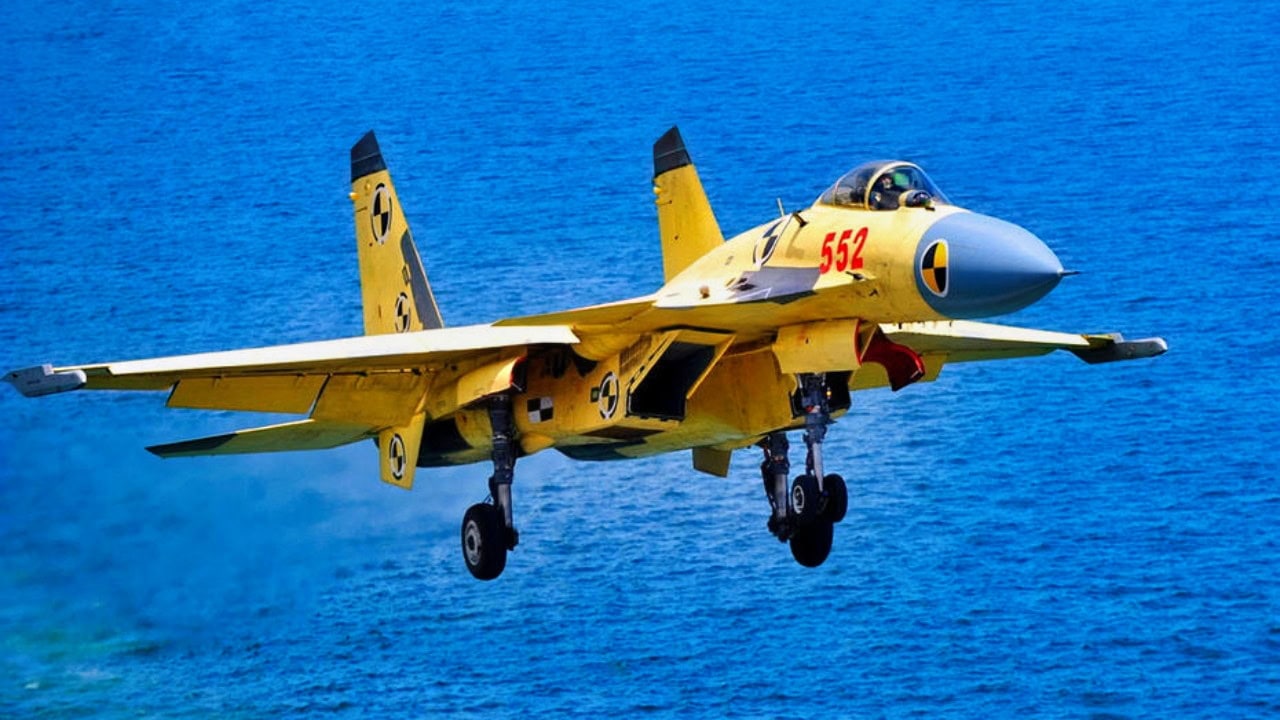
J-15 Flying Shark Fighter from China.

J-15 Fighter. Image Credit: Creative Commons.
J-15T is a modification of the original J-15 that was unveiled in September 2025 and participated in some of the flight trials aboard the CV-18 Fujian carrier. This ship is not only the first PLAN carrier to be equipped with a catapult but only the second in the world to utilize an electromagnetic aircraft launching system instead of a traditional steam catapult.
In contrast, the J-35A land-based version is equipped with a single-wheel nose landing gear and lacks the attachment points required on a carrier-based aircraft.
The J-35A is viewed as a complementary platform to heavier PLAAF stealth aircraft, primarily the Chengdu J-20. This aircraft’s latest activity is seen in footage released by the PLA Eastern Theater Command showing the “Justice Mission 2025” joint-service exercises in late December.
The J-20 appears to be operating alarmingly close to Pingtung Airbase in Taiwan. The J-20 being able to fly in such close proximity to the base, which is operated by the Republic of China (ROC) Air Force, has raised alarms about the effectiveness of defenses at the facility.
J-35 Fighter from China: Development and Production
The J-35 is planned for production in large numbers, as it will fill the requirement for a multirole combat aircraft that could carry out missions for both the PLAAF and PLAN. It will eventually replace not only the J-15T models in PLAN service, but the older-generation PLAAF Chengdu J-10C aircraft.
J-35 models are expected to be in service well into the 2040s, and perhaps into the 2050s. The aircraft has a history of long and methodical development stretching over more than a decade. It has evolved from an earlier Shenyang prototype model, the FC-31, which was originally proposed as an export-oriented stealth fighter with a conventional twin-engine layout. It also featured two swept vertical stabilizers that appeared to mimic the configuration of the U.S. F-35.
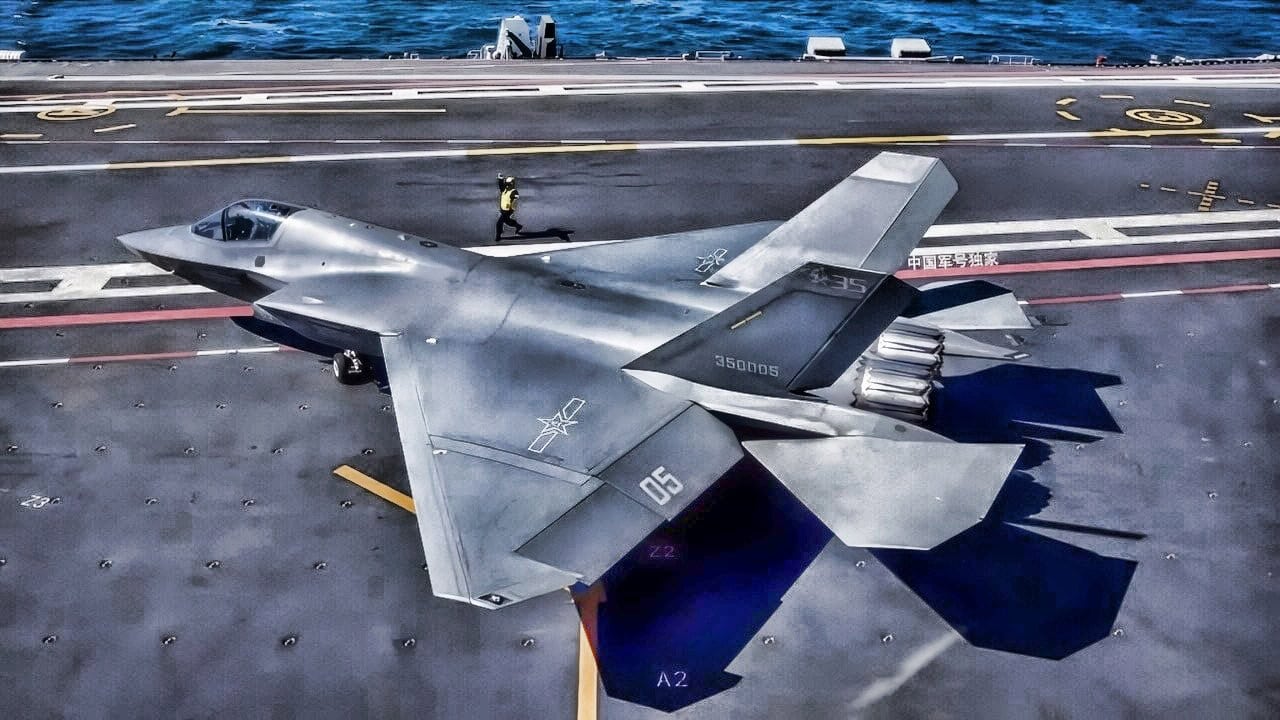
China J-35 Naval Stealth Fighter. Image Credit: PLAN.
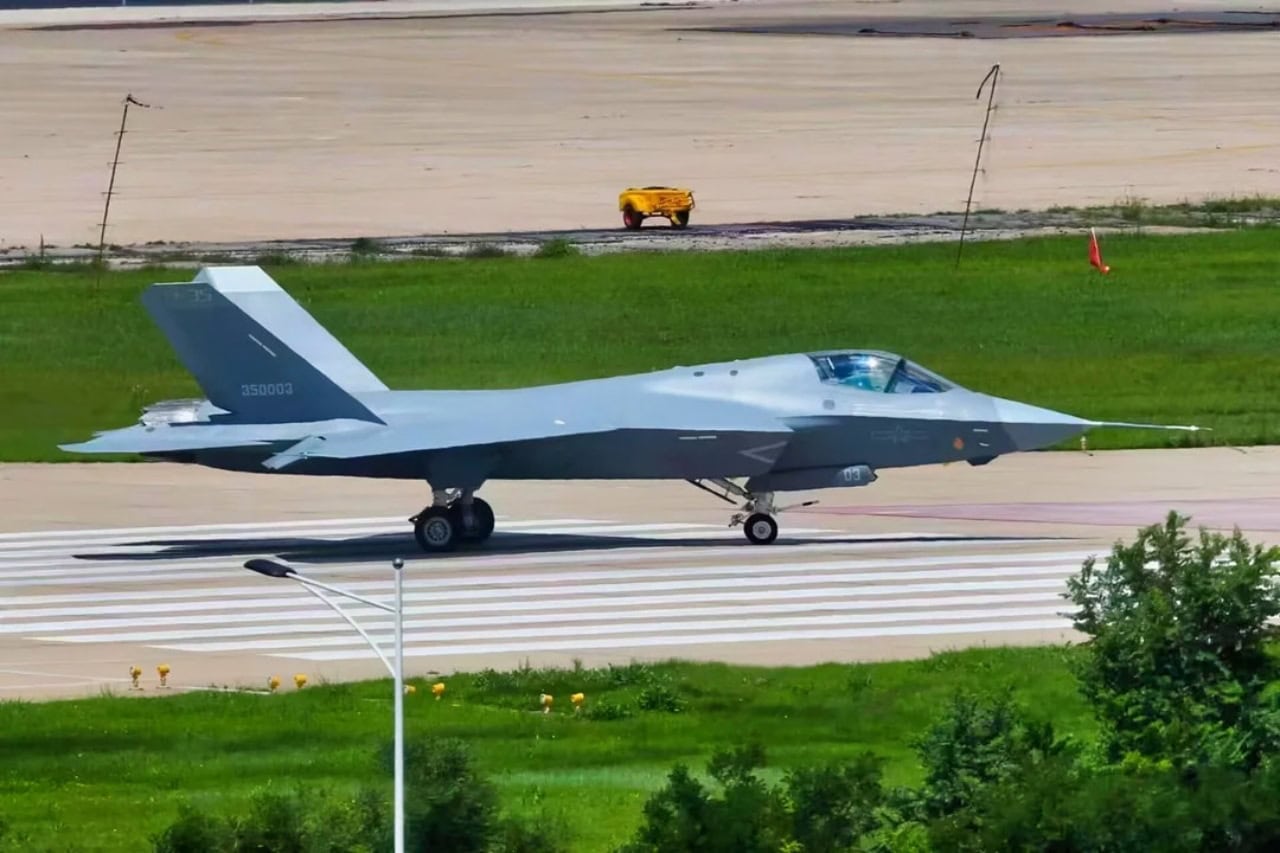
J-35 Fighter. Image Credit: Chinese Internet.
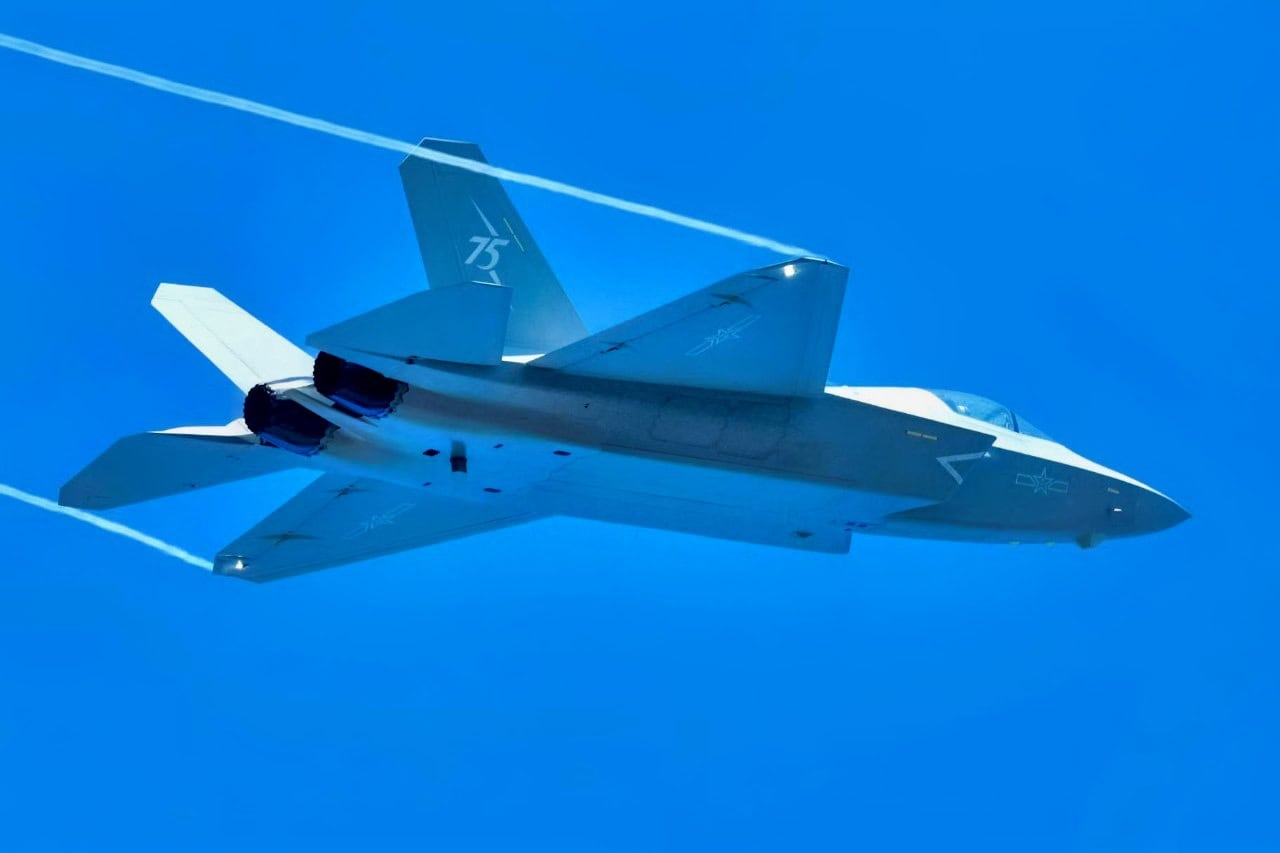
J-35 Fighter. Image Credit: Chinese State Media.
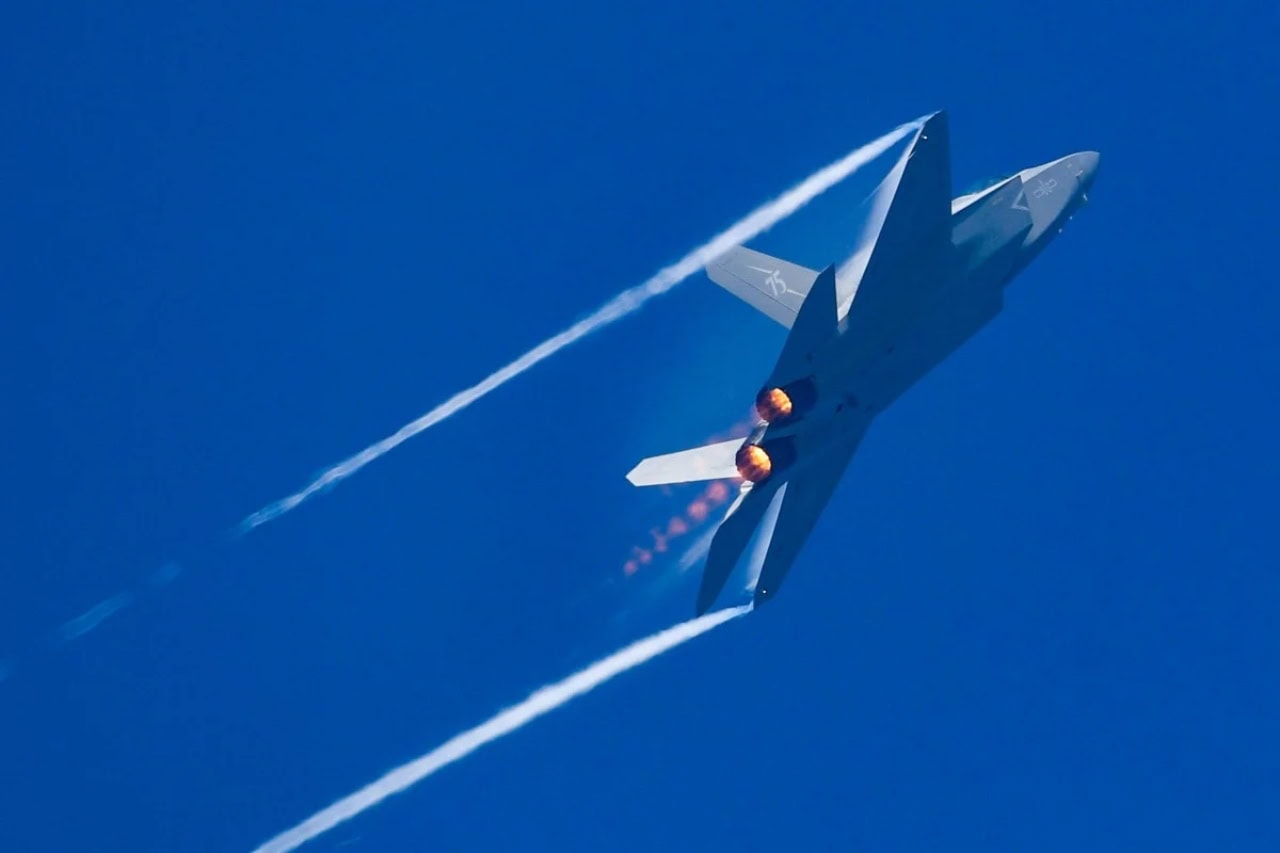
J-35. Image Credit: Chinese State Media.
The FC-31 flew in 2014 at the biennial Air Show China in Guangdong province, but gave a disappointing and underpowered performance. The aircraft had two Russian-made NPO Klimov RD-93 engines, which were adaptations of the Mikoyan MiG-29’s RD-33 power plant.
Reports of the development of the J-35 did not emerge until 2018, when Shenyang released some initial concept images.
The first J-35 flight prototype made its maiden flight on October 29, 2021, and this time it was powered by two Chinese-designed WS-21(H) engines.
The first role for the aircraft was reported to be operating from the PLAN’s newest aircraft carrier, the Type 003 Fujian.
But satellite imagery from the period 2021–24 shows the aircraft was to be tested not only for catapult launches from the Fujian, but also for operating on the ski-ramp flight decks of the Liaoning and Shandong carriers.
About the Author: Reuben F. Johnson
Reuben F. Johnson has thirty-six years of experience analyzing and reporting on foreign weapons systems, defense technologies, and international arms export policy. Johnson is the Director of Research at the Casimir Pulaski Foundation. He is also a survivor of the Russian invasion of Ukraine in February 2022. He worked for years in the American defense industry as a foreign technology analyst and later as a consultant for the U.S. Department of Defense, the Departments of the Navy and Air Force, and the governments of the United Kingdom and Australia. In 2022-2023, he won two awards in a row for his defense reporting. He holds a bachelor’s degree from DePauw University and a master’s degree from Miami University in Ohio, specializing in Soviet and Russian studies. He lives in Warsaw.