
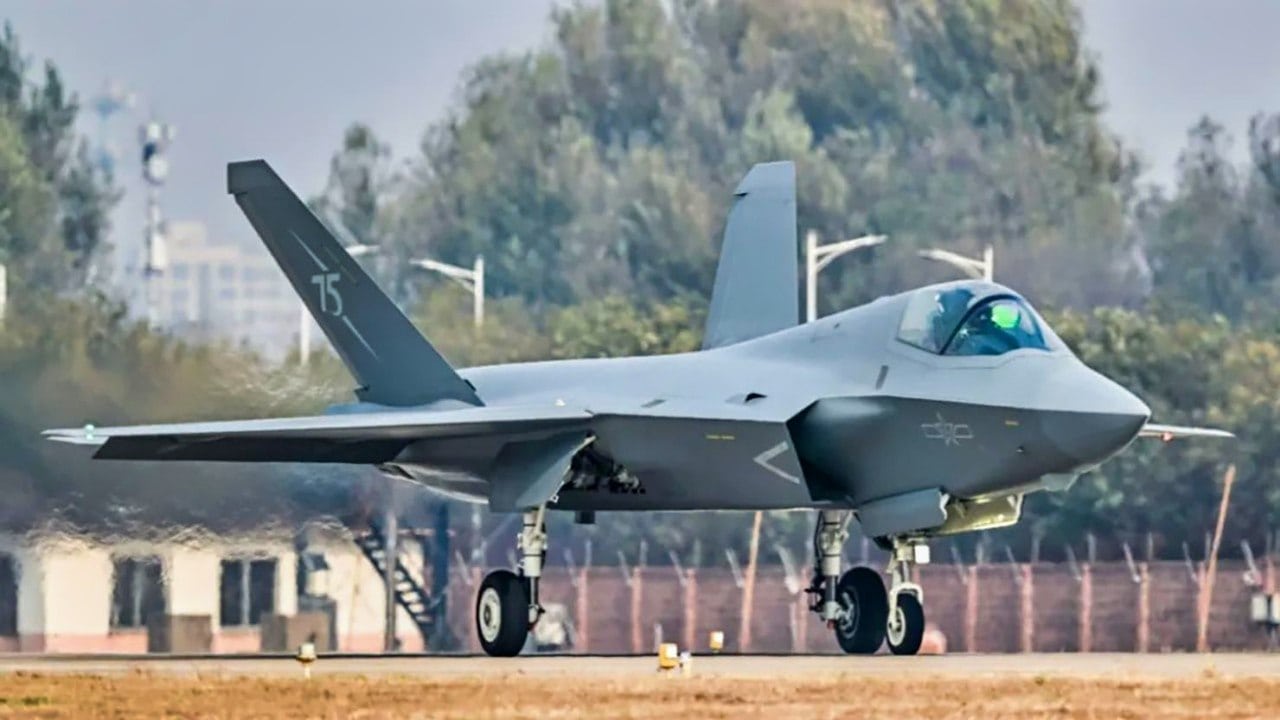
Key Points and Summary: China is rapidly fielding new carriers, stealth fighters, missiles, and island bases, while the F-47 NGAD and B-21 Raider remain years from frontline duty.
-Until then, the US Air Force has to win with what it has: F-35s, F-22s, and F-15EXs, dispersed under Agile Combat Employment, backed by hardened bases and forward-deployed squadrons.
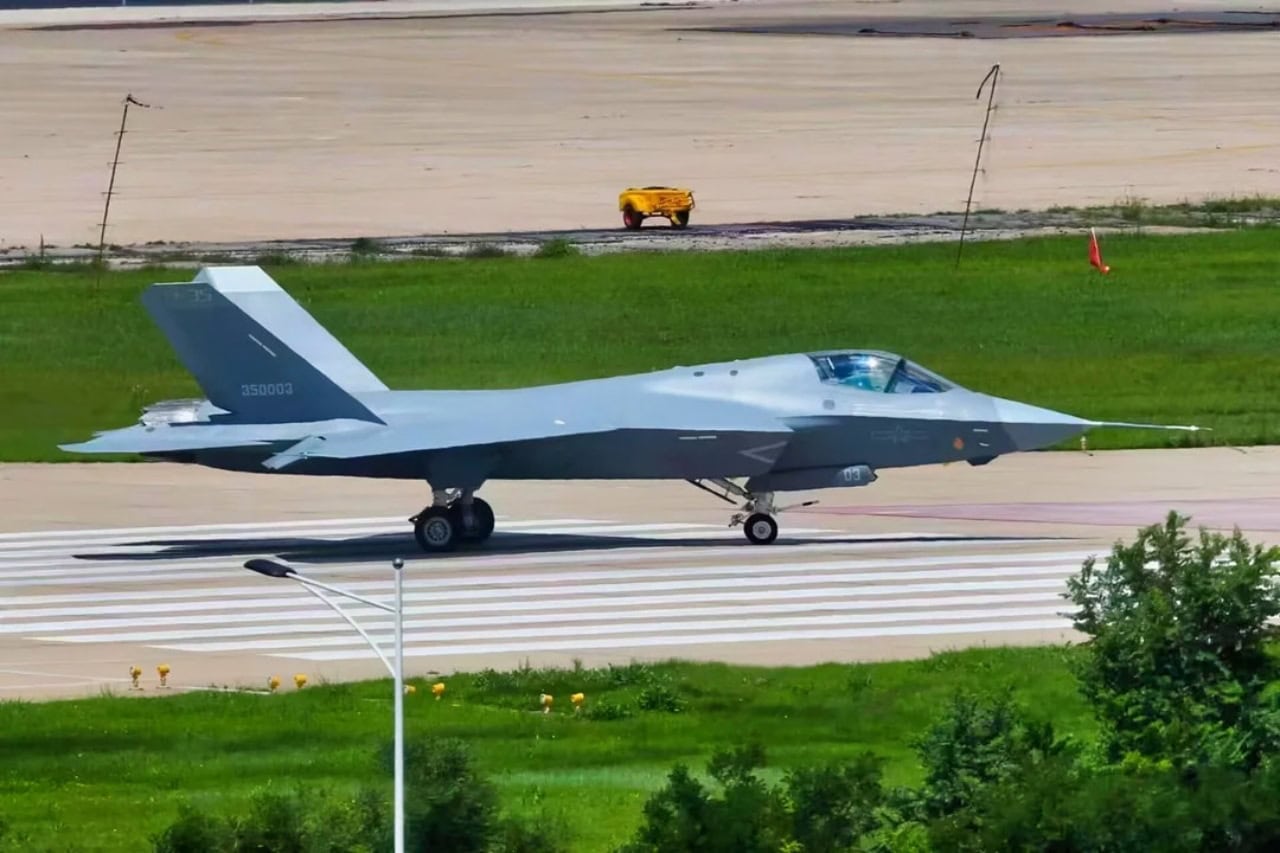
J-35 Fighter. Image Credit: Chinese Internet.
-Some of the biggest threats come from the older J-20 Mighty Dragon. Others from China’s Air Force include the J-35 and J-35A as well as J-50 stealth fighters.
-Success hinges on deep integration with allies like Japan, Australia, South Korea, and the Philippines; resilient space and cyber networks; relentless large-scale exercises such as REFORPAC; and high-tempo logistics, tankers, and maintenance.
-If those pieces function together, Washington can still deter Beijing in the Indo-Pacific.
What the US Air Force Must Do to Counteract China
The future of the US Air Force looks strong. Boeing is working on the new F-47 NGAD, which could fly within the next two to three years. Northrop Grumman is testing two B-21 Raider airplanes.
These are next-generation warbirds that could transform the way the Air Force conducts battle in the 2030s. But what about the present US Air Force order of battle until those airplanes are ready?
Current Air Force fighter jets, such as the F-35 Lightning II, the F-22 Raptor, and the new F-15EX Eagle II, will be an excellent counterforce to the People’s Republic in East Asia. These airplanes can help US allies react strongly to a potential attack by China against Taiwan.
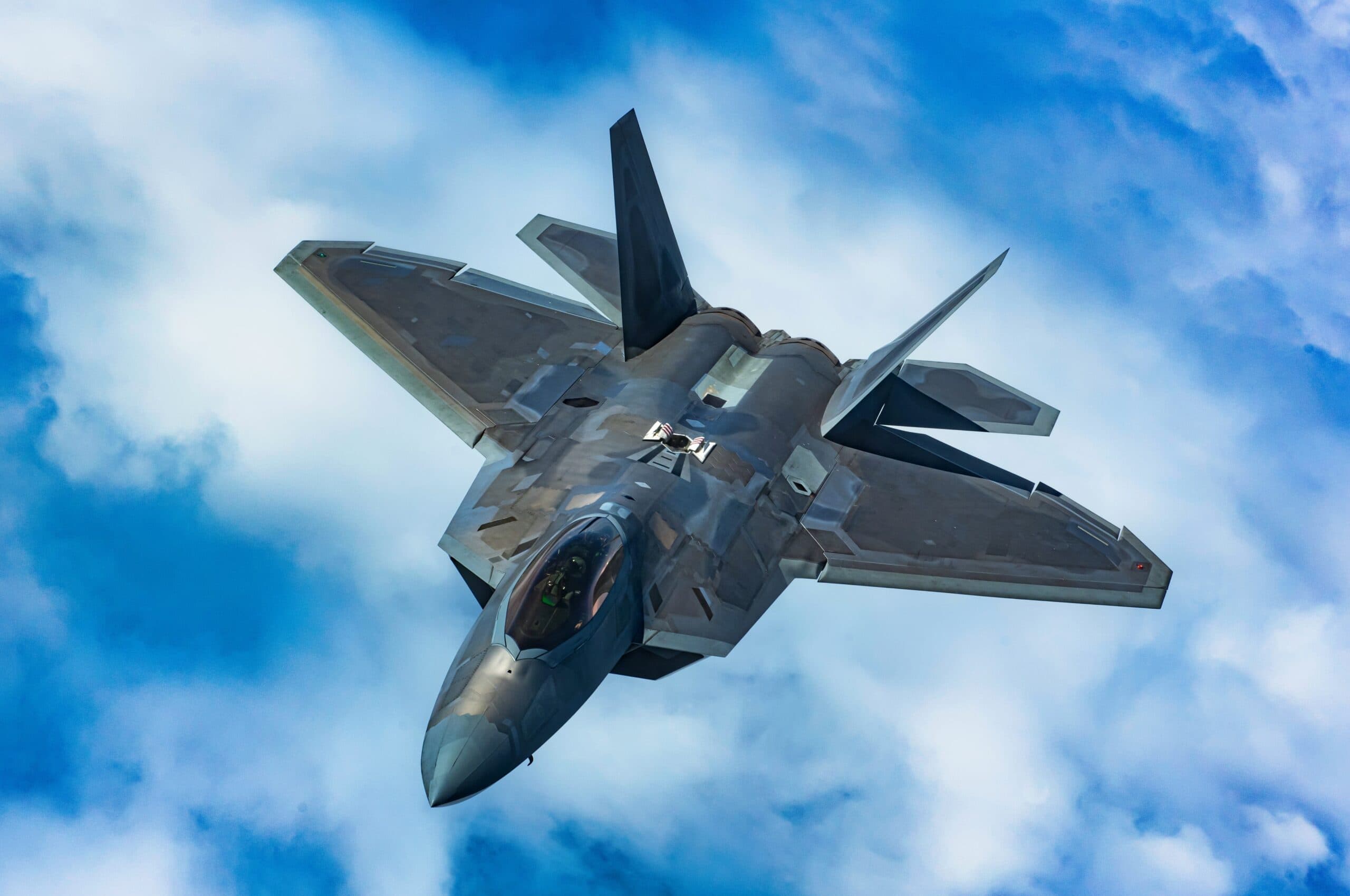
A Hawaii Air National Guard F-22 Raptor pulls away from a KC-135 Stratotanker after receiving fuel April 21, 2021, near Oahu, Hawaii. The fifth-generation aircraft, operated by Airmen from the 199th and 19th Fighter Squadrons, integrated with a Royal Australian Air Force command-and-control aircraft during exercise Pacific Edge 21. The exercise was held to enhance air-combat proficiencies through the integration of allied units and further the interoperability between the two countries’ aircraft. (U.S. Air National Guard photo by Staff Sgt. John Linzmeier)
China Is Stacked with Old and New Capabilities
China is as strong as ever in the Indo-Pacific, and the Chinese navy is loaded with three functioning aircraft carriers.
China has its own next-generation stealth fighters, such as the J-36 and J-50. There are modern air defenses such as the HQ-9 and its variants, as well as the HQ-22. These surface-to-air missiles could reach out and destroy US fighter jets, whether stealth or non-stealth.
What Is Agile Combat Employment?
One thing the US Air Force is trying to accomplish is to use allies such as Japan, South Korea, and other partner nations to disperse its aircraft across East Asia so that a single enemy strike or mission cannot destroy them on the ground. This is called Agile Combat Employment. The Americans have hardened Air Force infrastructure at allied bases to resist a Chinese Day One attack.
It’s All About the Allies, Space, and Cyber
The Air Force will also work with the Philippines and Australia to improve interoperability with those nations’ militaries. Space warfare and agility in defending against Chinese cyberattacks will be important. The Air Force must be able to refuel its fighters and bombers to extend range when they react to a Chinese military operation that would require a flexible response.
The Air Force must also increase aircraft numbers to counter the Chinese militarization of islands and reefs in the South China Sea. Forward-deployed squadrons will be better than waiting for aircraft from the United States to arrive in the theater during warfare.
The More Combined Military Exercises the Better
The Air Force also must conduct more military exercises with allies to be ready for the Chinese menace. Drills near Guam are necessary.
Andersen Air Force Base in Guam rotates American bombers, including the B-2 Spirit, B-52 Stratofortress, and B-1B Lancer. These aircraft can be used for drills with partner nations to better support Air Force bombing runs to respond to a Chinese threat in the First or Second Island Chain.
REFORPAC 2025 is a good example of how the Air Force can be ready for combined efforts with other nations. Tactics and logistics are rehearsed and perfected in these exercises. REFORPAC 2025, held last summer, drew over 12,000 people and 400 aircraft from more than 50 locations across East Asia.
Airplanes from Japan, Canada, and Australia took part. This was four weeks of 24-7 activity. Engineers even practiced repairing runway damage. China is expected to use its bombers and ballistic missiles to destroy runways in allied nations to stymie an Air Force and allied response during combat.
The Americans must also maintain a strong diplomatic presence in the Indo-Pacific to create excellent relations with partners. This would entail having US Air Force officers and allied officers conducting military exchanges. The Americans can give expert defense advice to smaller air forces in the region.
Cyber infrastructure across multiple domains and partner nations must be maintained at high levels. China will surely conduct electronic warfare and cyber attacks against the Air Force to spoof and blind radar and air defense systems to pave the way for further Chinese strikes.
Military satellites will be important to gather intelligence for the Air Force. These satellite constellations must be operating at their maximum capacity, and a close working relationship between the US Space Force and the Air Force must be maintained at all times.
High Levels of Logistical Support Can Turn the Tide of Battle
Next is maintenance. Maintenance and refueling crews will operate at a high operational tempo around the clock. That is why large-scale air force exercises are so important. Support personnel receive training in war-like scenarios that simulate real combat.
There are other aspects of warfare that the Air Force must execute. Tankers and cargo airplanes in the Air Force are desperately needed. Food, fuel, and munitions will need continuous replenishment. The Air Force cannot run out of logistical supplies.
More airmen on duty means the Air Force must house personnel on bases in better quarters and feed them regularly so pilots and maintainers can operate at their best. New quarters should be built to accommodate more personnel entering the area of operations as additional aircraft are added to the combat theater.
Individual airmen must perform their duties at a high level while leveraging their training and expertise. Non-commissioned officers should maintain a high level of readiness to ensure younger airmen are doing their jobs and leveraging their talents. Pilots will face the biggest challenges of their careers, and all the dog-fighting simulations conducted over the years will be integral to executing real-world combat.
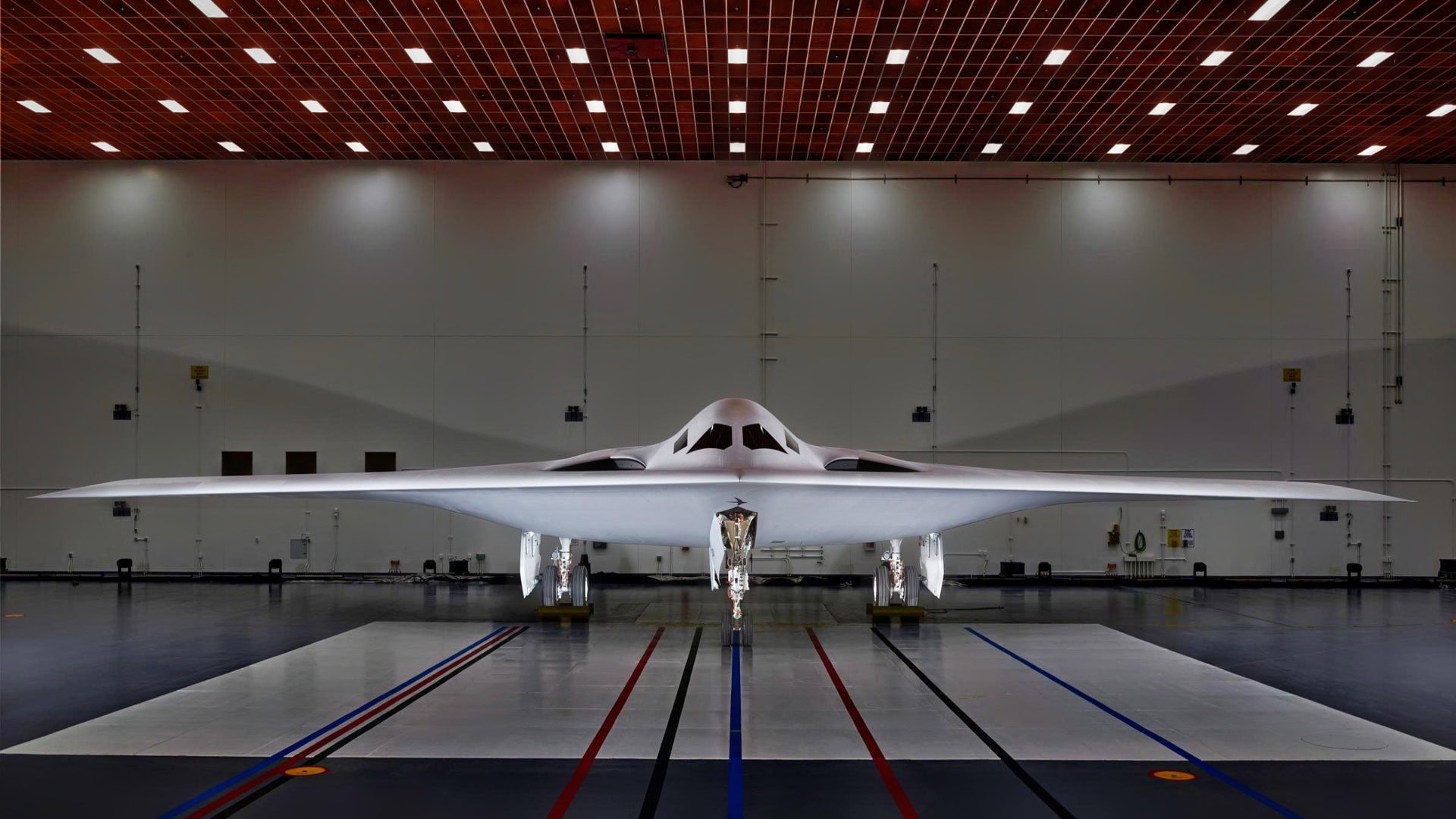
B-21 Raider U.S. Air Force. Image Credit: U.S. Air Force.
The Air Force has much to worry about, but it is ready to meet the challenges. China is getting stronger by the day, with the massive buildout of next-generation aircraft. The Air Force has its work cut out for it until the F-47 NGAD and B-21 Raider are ready.
That will take three to five years before those platforms enter active duty. During that time frame, the Air Force will rely on legacy platforms in the fight against the enemy.
Current levels of air power without new systems can still be adequate. The cyber and space domains are critical, as well as intelligence support and logistics. Successful interaction with allies is essential, and this can best be achieved through military exercises and officer exchanges.
Maintenance crews must operate flawlessly. A successful military strategy against China must combine all these dimensions, emphasizing the use of air power to deter the People’s Republic from attacking.
This level of readiness can still be maintained for Air Force success in the Indo-Pacific.
About the Author: Brent M. Eastwood
Author of now over 3,000 articles on defense issues, Brent M. Eastwood, PhD is the author of Don’t Turn Your Back On the World: a Conservative Foreign Policy and Humans, Machines, and Data: Future Trends in Warfare plus two other books. Brent was the founder and CEO of a tech firm that predicted world events using artificial intelligence. He served as a legislative fellow for US Senator Tim Scott and advised the senator on defense and foreign policy issues. He has taught at American University, George Washington University, and George Mason University. Brent is a former US Army Infantry officer. He can be followed on X @BMEastwood.