
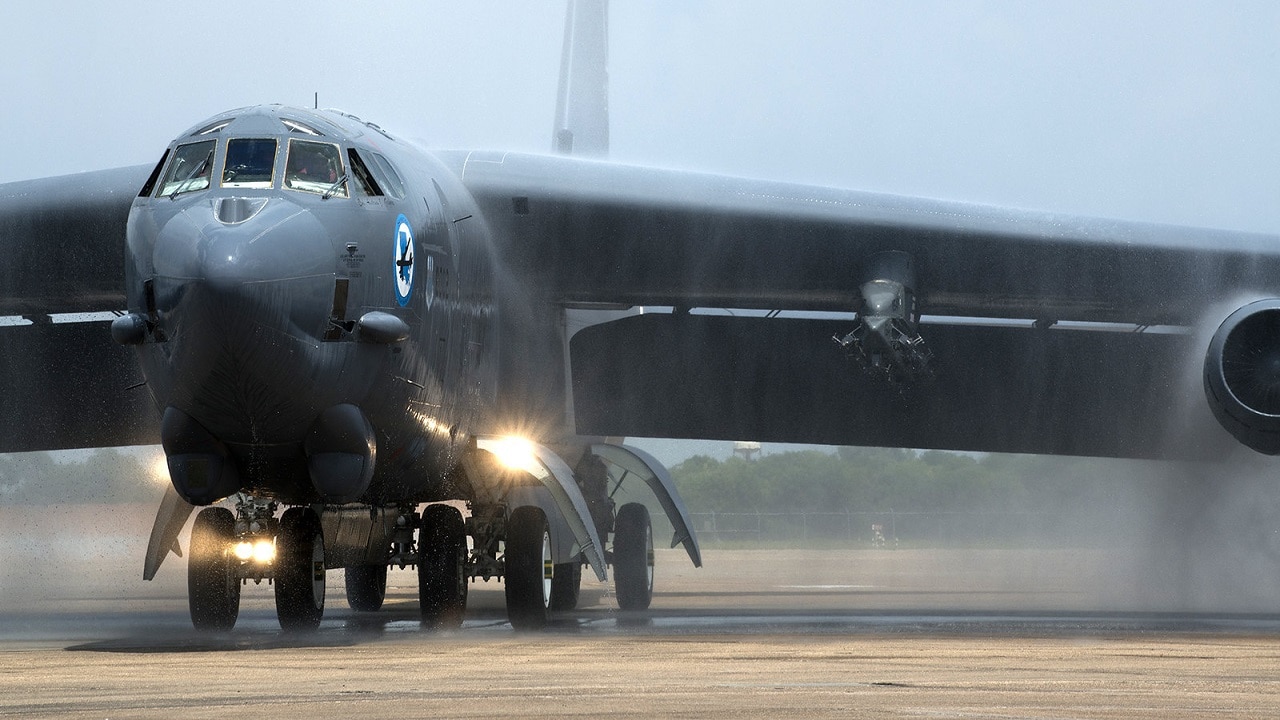
Key Points and Summary – The B-52J isn’t about nostalgia; it is about mass at range in a decade of scarce stealth bombers and stretched fighter fleets.
-This op-ed argues that a re-engined, re-radared, heavy-pylon BUFF is the fastest, most affordable way to restore magazine depth and endurance for long-range strike.
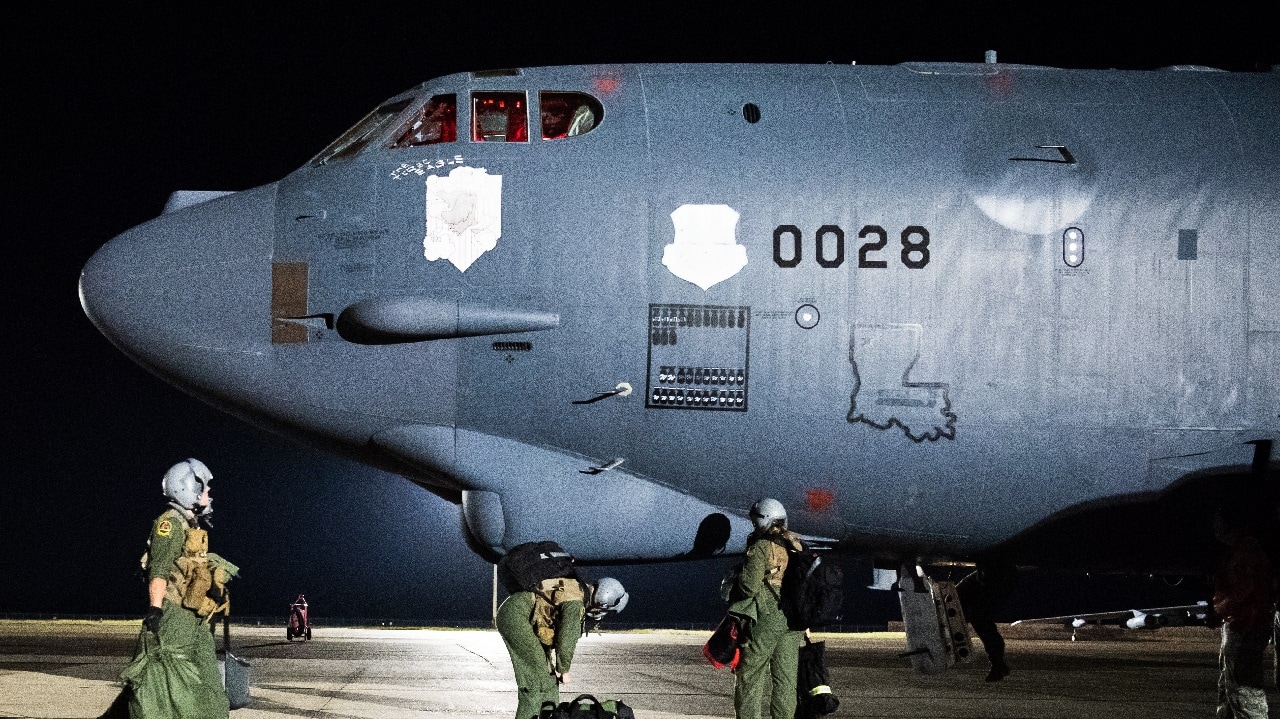
Airmen from the 96th Bomb Sqaudron load gear onto a B-52H Stratofortress at Barksdale Air Force Base, La., Oct. 13, 2020. The crew took part in a NATO crossover exercise designed to increase interoperability with NATO mission partners. (U.S. Air Force photo by Airman 1st Class Jacob B. Wrightsman)
-New F130 engines, a focused stand-off radar suite, and rewired pylons for cruise and hypersonic weapons turn a durable airframe into a predictable arsenal.
-Yes, costs are up and timelines have slipped. But compared with relying on a small B-21 fleet alone, a modernized B-52J is the hard-headed choice.
The B-52J Plan: Why America’s Oldest Bomber Still Beats Buying More B-21s
Keep the B-52 flying into its second century?
On its face, that sounds like sentimentality wrapped in sunk costs. It isn’t. It’s a hard-headed choice about mass at range, how the United States sustains a credible strike capacity in a decade when the Air Force will field too few stealth bombers, with uneven fighter availability, and the need to launch large numbers of long-range weapons without burning out its most exquisite assets.
The logic is simple enough to withstand contact with budgets and delays: a modernized B-52J is the most cost-effective—and fastest—way to achieve the magazine depth and endurance the joint force needs, even if it arrives later and costs more than initially planned.
The Old Stratofortress
First, consider the purpose. The modern Big Ugly Fat Fellow is not a knife-fighter; it is a long-range weapons truck that does not have to cross a hostile radar lobe to matter. In an era of scarce stealth and abundant targets, the air force needs capacity: aircraft that can lift cruise missiles, maritime-strike weapons, and ultimately hypersonic cruise missiles from outside the densest threat rings.
The B-21 provides reach and penetration. The B-52 offers volume and persistence. In light of that division of labor, the B-52J is unglamorous—but strategically essential.
Bringing the BUFF Up to Date
From purpose flows the modernization logic. Think of the upgrade as an industrial-scale refit that turns a durable airframe into a predictable arsenal. In terms of propulsion, the new F130 engines, paired with redesigned inlets, aim to address the airflow variability that threatened reliability and performance.
Solve that, and you unlock the cascade that matters in operations: fewer engine removals, better fuel burn, longer unrefueled legs, and surplus electrical power for today’s electronics. On sensing, the AN/APQ-188 radar is being finalized with a tight focus on modes that make a stand-off arsenal lethal: wide-area maritime search with tracks good enough for weapon hand-off; ground-moving target indication for cueing and assessment; and weather penetration to keep timelines intact when the atmosphere misbehaves.
On carriage, rewired pylons and power provisioning enable meaningful loads—multiple conventional cruise missiles per sortie, robust maritime-strike packages, and a growth path for hypersonic cruise as it matures—while ensuring the nuclear Long-Range Stand-Off weapon integrates cleanly.
Engines keep jets on the line; radar makes each round smarter; pylons turn capacity into delivered effects.
BUFF in the Skies
Only then should we tally the bill and check the clock. Costs rose as the program bought engines at scale; tooled and tested redesigned inlets; upgraded wiring, displays, communications, and pylons across the fleet; and absorbed radar hardware and software rework, including nuclear-hardening and radome changes.
Delays stemmed from engineering and throughput issues: inlet aerodynamics that necessitated redesign and new wind-tunnel testing; environmental qualification and integration challenges on the radar, including tight nose-fit tolerances; and tail-by-tail modifications through finite depot lines. The result is an initial operational capability in the early to mid-2030s, accompanied by a higher overall price tag than initially briefed.

A U.S. Air Force B-52 Stratofortress bomber, deployed from Barksdale Air Force Base, La., lands at Andersen Air Force Base, Guam, July 4, 2020. The B-52 flew the 28-hour mission to demonstrate U.S. Indo-Pacific Command’s commitment to the security and stability of the Indo-Pacific region. (U.S. Air Force photo by Master Sgt. Richard P. Ebensberger)
Set those realities against the force America will actually field. The Air Force of the 2030s will have a B-21 fleet measured in dozens, not hundreds. Fighters will continue to wrestle with sustainment cycles and training demands. Munitions inventories will matter only if platforms can throw them in volume. In that world, an engine-modernized, radar-competent, heavy-pylon B-52 is not a luxury add-on. It is the backbone of strike capacity—the airplane that absorbs non-penetrating missions, preserves stealth sorties for what only stealth can do, and turns replenished magazines into persistent pressure.
Against that backdrop, the neat counterproposal—retire early and buy more B-21s and missiles—falls to earth. Even with money, bomber production and crew generation move at a deliberate pace with test, training, and sustainment pipelines that cannot be wished away.
By contrast, re-engining and refitting the B-52 converts an existing, trained force into a more available, more useful one on a schedule the joint force can actually use. That conversion buys what the United States lacks most in a contested decade: time. Time to ramp stealth inventory without flying it to exhaustion. Time to rebuild the missile industrial base. Time to harden and iterate the kill chain already in hand.
Measured correctly, affordability strengthens the case. Sticker shock is not a strategy; cost per delivered effect is. The relevant question is how many long-range weapons you can launch reliably, month after month, in multiple theaters, without cannibalizing the rest of the force. On that math, the B-52J pays for itself.
The B-52J Variant
Reliable engines raise mission-capable rates. A competent radar raises lethality and reduces re-attacks. Certified pylons raise volume per sortie. Together, they lower the cost of sustained coercive pressure—from maritime interdiction in the Western Pacific, to long-range strikes that complicate enemy air defenses, to quiet deterrence across the Arctic and North Atlantic seams.
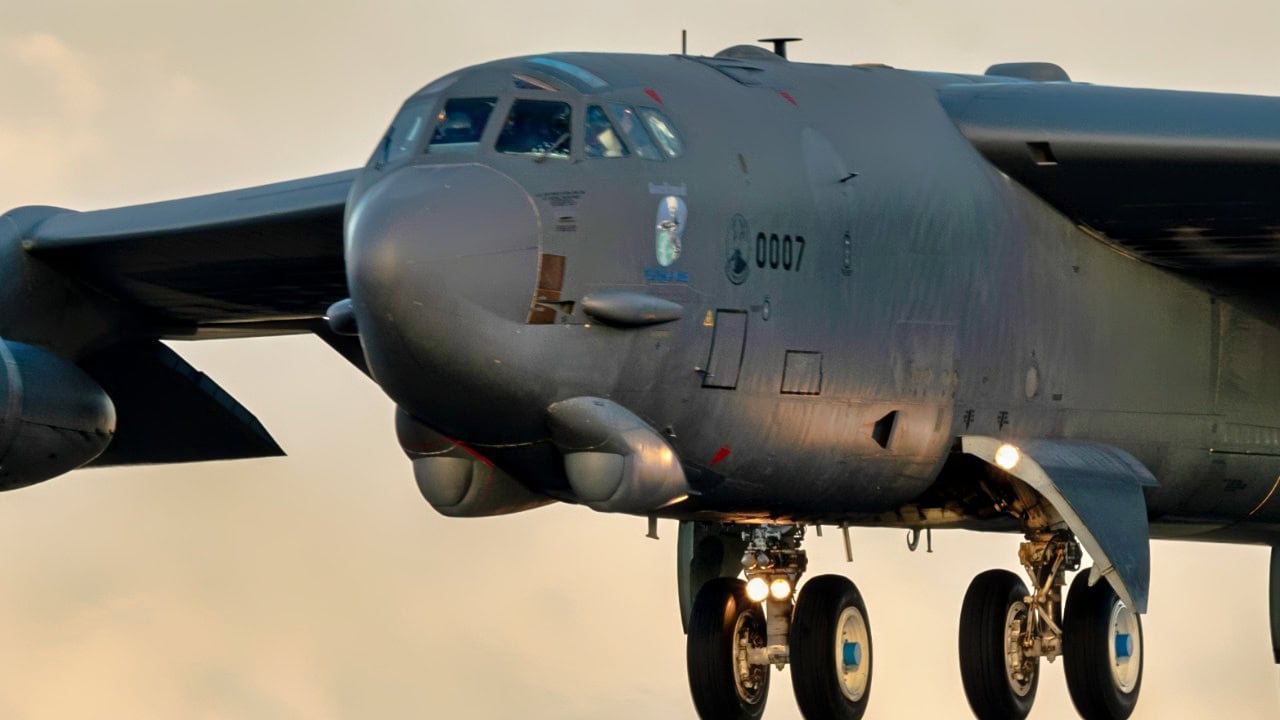
U.S. Air Force B-52H Stratofortress lands at RAF Fairford, England, following a sortie in support of Bomber Task Force 25-2, Feb. 27, 2025. The U.S. maintains a strong, credible strategic bomber force that enhances the security and stability of Allies and partners. (U.S. Air Force photo by Airman 1st Class Luis Gomez)
Quality at the finish line clinches it. The propulsion fix is a one-time pain that yields decades of steadier performance. The radar suite is aligned with what the mission actually demands rather than festooned with “nice-to-have” features. The pylons and wiring are set for the weapons that matter now and the ones that are arriving next.
This is not nostalgia dressed up as modernization; it is a disciplined rebuild to field a heavy hitter that does exactly what the force needs—launch a lot of smart weapons from far away, predictably.
Execution, not reinvention, will carry it across the line. Keep the design locked. Keep the schedule tight. Tie every upgrade to a mission the force actually needs. That means engines that stay on the wing, radar modes that feed stand-off employment, resilient navigation and communications that ride out a jammed spectrum, and pylons that carry the weapons that matter. Skip boutique features that reopen software and slip the clock. The goal is predictable sorties and full racks, not show-and-tell.
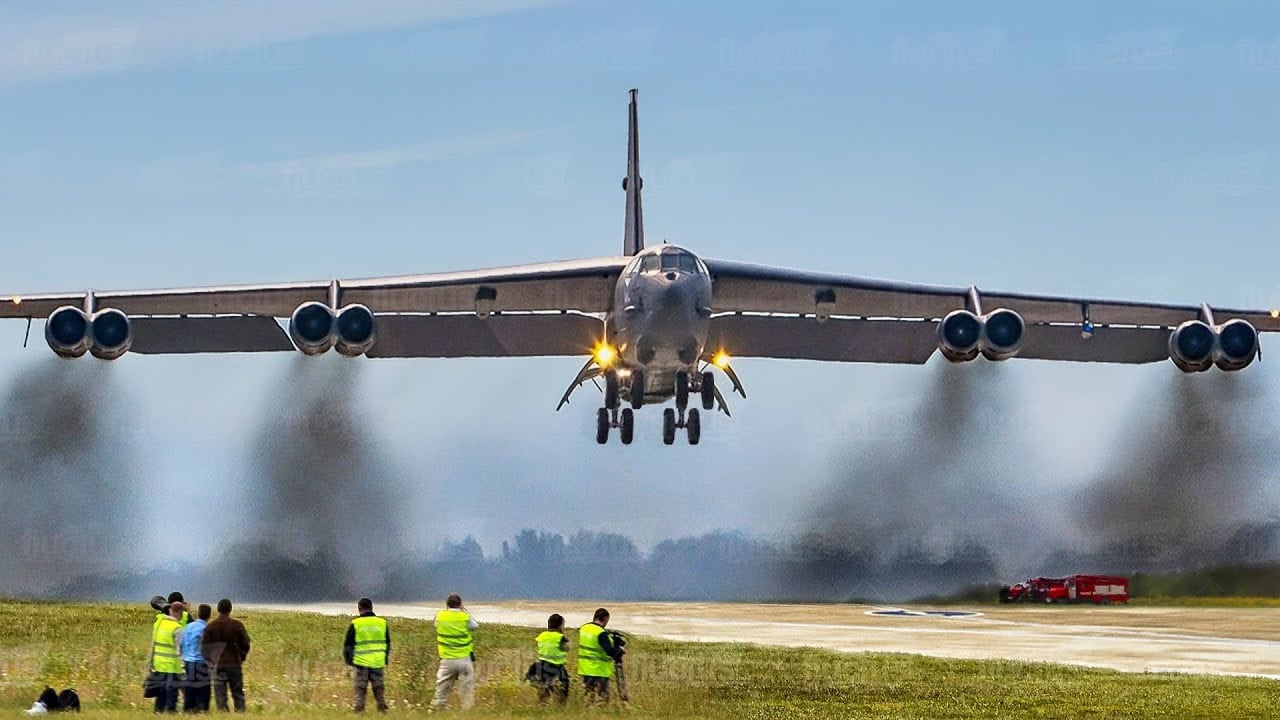
B-52 Bomber. Image Credit: Creative Commons.
Viewed end-to-end, the trade-off is worth making. Yes, the B-52J is very costly and very late. No, it is not too costly or too late for the world that the United States actually faces. It delivers needed capacity within an acceptable—if not optimal—window and at a justified price for what it returns: reliable mass at range.
Finish the modernization with focus and discipline, and the weapons truck will do exactly what it is intended to do—fill the gap that must be filled, at an acceptable cost and on a tolerable clock.
The last Stratofortress that rolled off the line in 1962 will still be earning its keep in 2042—not as a museum piece, but as the most dependable way to turn stockpiled range into real deterrence.
About the Author: Dr. Andrew Latham
Andrew Latham is a Senior Washington Fellow with the Institute for Peace and Diplomacy, a non-resident fellow at Defense Priorities, and a professor of international relations and political theory at Macalester College in Saint Paul, MN. You can follow him on X: @aakatham.