
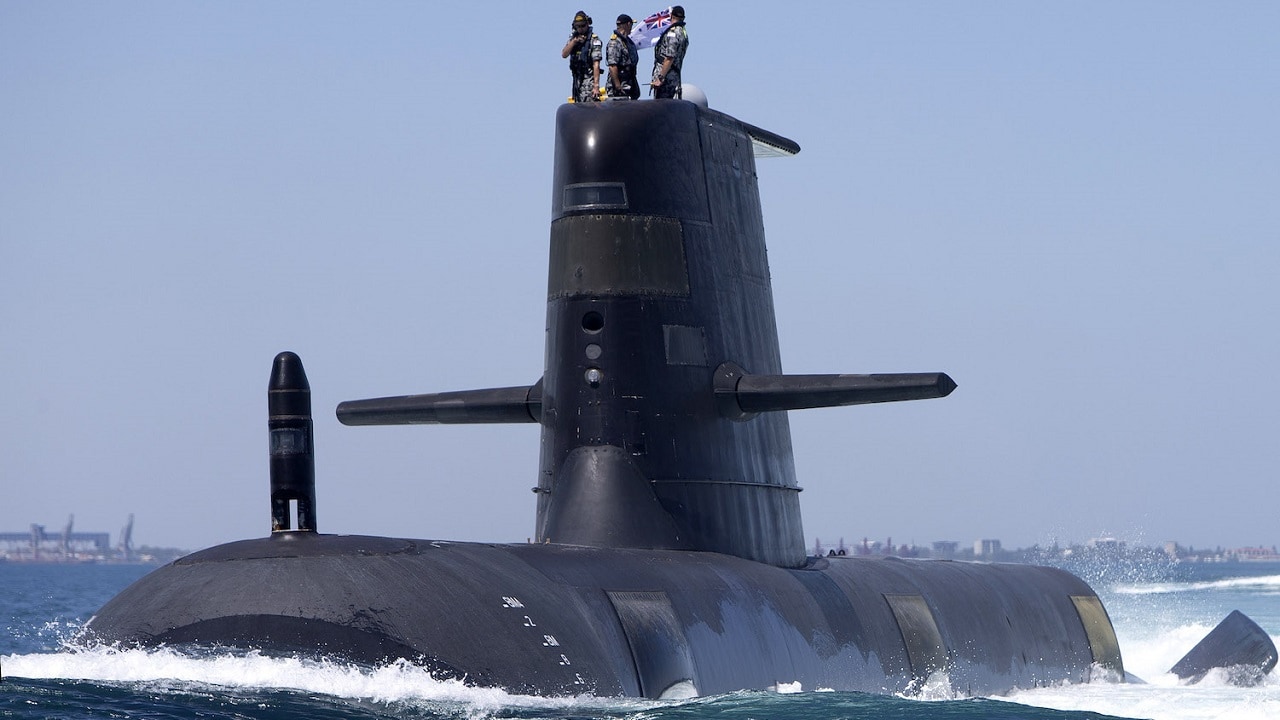
Australia’s Collins-class submarines were supposed to be the pride of the Royal Australian Navy—stealthy, advanced, and the cornerstone of Australian undersea power. Instead, they became one of the most troubled defense programs in modern Australian history, plagued by defective welds, propellers that generated too much noise, and a combat system so unreliable that the Navy eventually replaced it with American and allied technology that Canberra will adapt to its needs.
The Collins-Class Submarine Challenge for Australia
The Collins-class Submarine is a class of Australian-built diesel-electric attack submarines for the Royal Australian Navy (RAN).
With only six in the class, these submarines represent the only functional submarines that Australia possesses in its Navy. Although they were designed by the Swedish firm Kockums, they were built in Australia to give the RAN greater control over their sustainment and maintenance.
The Collins-class became the center of multiple controversies after experiencing mechanical breakdowns in their early service lives. To replace them, the Australian government signed a trilateral partnership with the US and the UK, formalizing the AUKUS agreement.
The Troubled Development of Australia’s Submarines
In May 1987, Kockums was selected for a heavily enlarged design loosely based on its earlier Västergötland submarines.
The winning proposal offered a hull significantly larger than most diesel‑electric submarines of its era, providing space for fuel, weapons, and crew accommodations suitable for long patrols. Construction was assigned to the newly created Australian Submarine Corporation in Adelaide, marking the first time submarines had ever been built in Australia.
While it provided a boon to Australia’s shipbuilding industry, it also meant that a workforce with little prior experience building submarines would be tasked with assembling one of the most complex machines ever produced domestically.
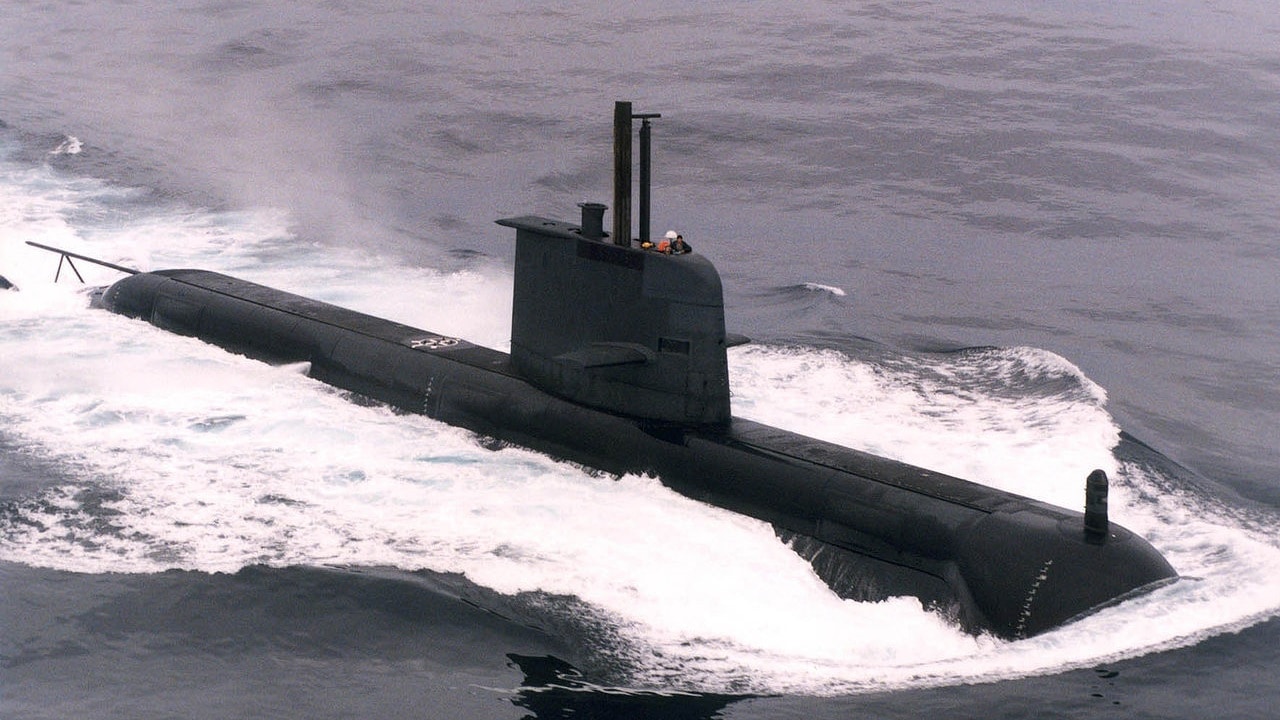
Collins-Class Submarine from Australia.
The first major issue was identified during the construction of the lead ship, HMAS Collins. During her initial construction, it was discovered that multiple welds in the hull were defective.
Part of the problem was that Sweden, seeking to speed up production, employed multiple welders who were not qualified to work with the submarine’s high-strength steel.
There was also confusion about the type of weld the RAN wanted on Collins. The Swedish Navy always requested partial-penetration welding, while the RAN wanted full-penetration welding. However, the RAN had not communicated this clearly to Kockums, which resulted in delayed steel deliveries and a noticeable drop in quality compared to Australian-made components.
Stealth Submarines That Weren’t Stealthy
Once the submarines were assembled, however, more problems began to appear. The Collins-class generated significantly more noise than anticipated. One of the main issues underpinning the others was that the RAN’s requirements for stealth were vague and poorly defined.
They were required to be “twice as quiet” as their predecessors, the Oberon-class, but this provided little information to the designers. Additionally, the project’s design and requirements changed. Scale model tests indicated that the chosen Collins-class hull was quite suitable at all speeds; however, the hull design was changed during production. The result was a submarine that generated significantly more noise than tests indicated.
The solution, the RAN found after multiple meetings and tests, was to modify the submarine’s casings with fiber casings and fiberglass fairings, reducing cavitation on the propellers.
Closely linked to the acoustic problems were difficulties with the propulsion system. The diesel engines chosen for the class experienced reliability and vibration issues that increased their acoustic profile.
The system was prone to frequent delays in the early years, and the propellers themselves were poorly manufactured. These problems were compounded by the lack of a mature submarine sustainment base in Australia, leading to delays in diagnosis and repair.
Over time, extensive modifications and changes in maintenance practices reduced these issues, but the damage to the program’s reputation had already been done.
Issues With the Combat System
The combat system proved to be an even more serious challenge. The original system, supplied by Rockwell International, was intended to integrate sonar data, tactical displays, and weapon control using advanced software.
In practice, it suffered from instability, slow processing, and integration failures, limiting the submarines’ operational effectiveness. At times, the system reportedly struggled to efficiently manage sensor data, resulting in unacceptable delays in target tracking and engagement.
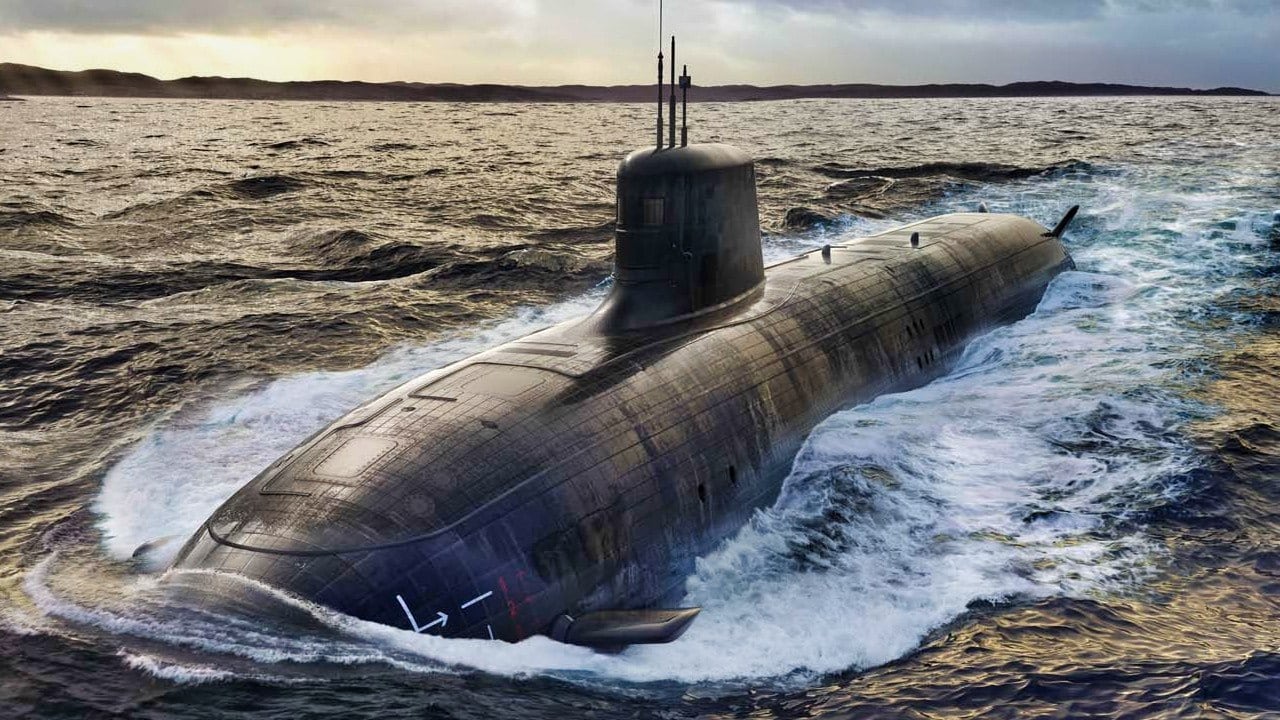
SSN-AUKUS Submarine. Image is Creative Commons Artist Rendering.
One of the main problems plaguing the development of the combat system was that the RAN’s requirements were too ambitious for the technology of the day. Computer developments were also quickly outpaced by the private sector, resulting in systems that were obsolete upon delivery.
Eventually, Australia made the difficult decision to abandon the original combat system and replace it with a version of the US Navy’s AN/BYG‑1 system.
This system was much more reliable and proved to be the best option in the long run. However, the time required to replace and install the new system required additional funds and further delayed the project.
Dramatic Turnaround: Reviving Australia’s Floundering Submarine Program
The issues on the Collins-class never seemed to go away, even after several years of service as the RAN struggled to maintain its most advanced subm,arines. By the mid‑2000s, availability rates were unacceptably low, with periods when only one submarine (or sometimes none) was fully operational. Working in poor conditions, the RAN struggled to retain sufficient personnel to keep more than two Collins-class submarines active at any given time.
In 2008, the government placed the Collins sustainment effort on the formal “Projects of Concern” list, with multiple investigations launched to determine possible courses for reform. The subsequent Coles Report, headed by Dr. John Coles in 2012, identified deep structural issues and recommended sweeping changes on nearly all levels.
Since the adoption of the Coles Report, Australia’s submarine force has improved dramatically. The management structure around the submarines has been significantly changed, leading to more efficient sustainment structures. At the same time, steady upgrades to sensors, weapons, and the combat system made the submarines increasingly capable as they aged. By the mid‑2010s, the Collins‑class had rid itself of most of the issues that had plagued it in the early days.
Originally intended to be retired by 2026, the submarines are now expected to remain in service until 2030, after which they will be replaced by the AUKUS.
About the Author: Isaac Seitz
Isaac Seitz, a Defense Columnist, graduated from Patrick Henry College’s Strategic Intelligence and National Security program. He has also studied Russian at Middlebury Language Schools and has worked as an intelligence Analyst in the private sector.