
Key Points and Summary – China’s airpower ambitions are expanding beyond stealth fighters to the support systems that make them truly strategic.
-A new generation of aerial refueling tankers—most notably the Y-20U—is transforming the reach of Chinese aircraft such as the J-20 and carrier-borne J-35.
-Refueling allows these fighters to stay aloft longer, strike farther into the Pacific, and escort bombers over extended ranges.
-It also deepens China’s anti-access and area-denial network, creating more persistent pressure on U.S. forces and regional bases.
-The U.S. still leads in experience and numbers, but Beijing’s growing refueling capacity is narrowing that advantage fast.
Why China’s J-20 and J-35 Just Got a Major Range Boost
China is no longer building only fighter aircraft but also the infrastructure that makes fighters more strategically relevant—such as aerial refueling.
Although quiet, less flashy than a supersonic fighter or strategic bomber, aerial refueling is a decisive force multiplier.
Observers like Kris Osborn argue that expanded fueling could double the effective range of China’s stealth fighters, the J-20 and J-35.
Regardless of the improvements in the approximate range, refueling will change the dynamics of great power competition in the Indo-Pacific.
Refueling Matters for J-20 and J-35
Fuel capacity is a significant constraint on modern fighters, which can only carry so much internal fuel while accommodating the shaping and structural needs required for stealth, maneuverability, power, etc.
External fuel tanks are always an option—but they degrade stealth and kinetic performance, while still placing a hard cap on range.
Refueling, however, is a more flexible option that enables longer combat radius, extended loiter time, and increased options for ingress and egress routes. Refueling allows fighters to operate theater-wide, offering strike and patrol across a vastly improved range. Historically, US air power has relied heavily on tankers.
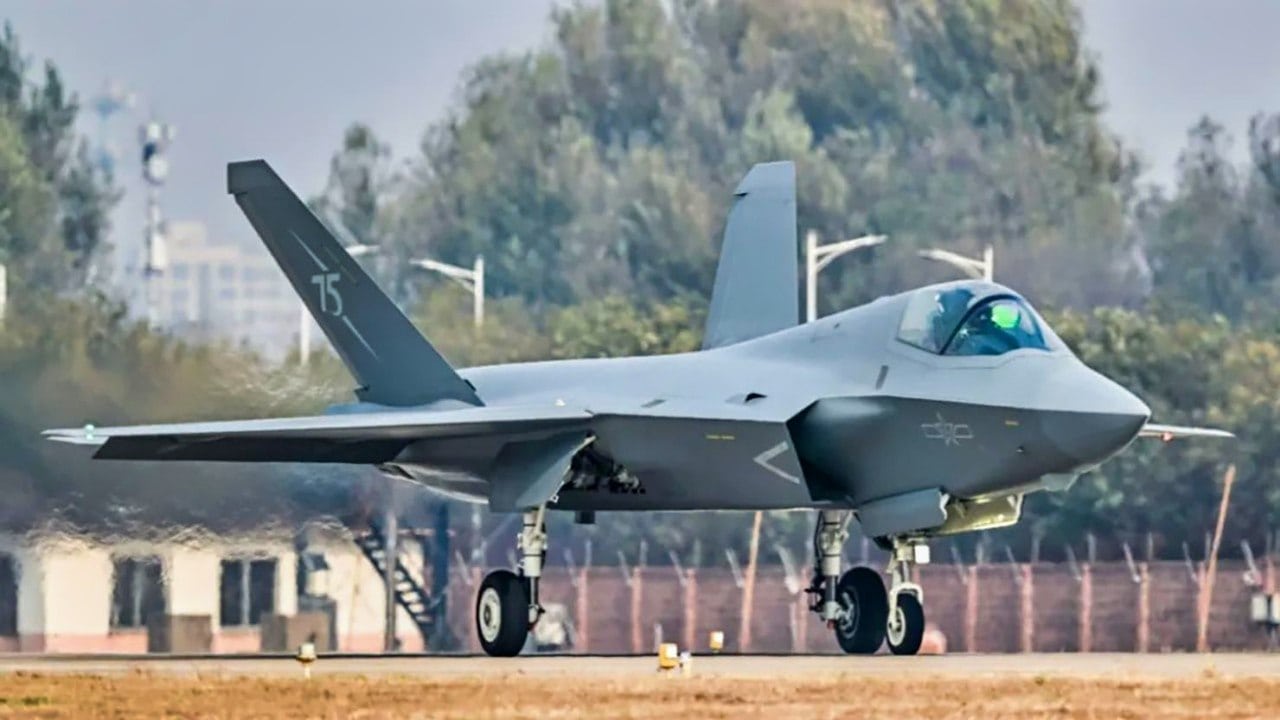
J-35A Fighter from China. Image Credit: Chinese Military
Now, China appears to be explicitly copying this model.
What’s Changing
The PLA Air Force is expanding its tanker fleet. The older H-6U tanker is still in service, while the newer Y-20U tanker variant offers advantages in fuel offload, modern avionics, and the ability to support stealth fighters.
China is also placing an increased emphasis on joint training, long-range flight profiles, and multi-refuel mission planning.
The effect: refueling is becoming routine rather than exceptional.
The technology involved is not new; the PLA standard is the probe-and-drogue system, which is simpler than a boom and compatible with naval aviation.
The key challenges China is working to address are night refueling, adverse-weather refueling, formation discipline, and stealth-aircraft integration.
And of course, non-stealth tankers often need fighter protection or an umbrella of land-based air defense to increase survivability.
Because refueling nodes are not just a logistical convenience—they are part of the kill chain.
Fighter Impact
The J-20 is a long-range interceptor with a heavy payload and advanced sensors. Without tanker support, the J-20’s range is, of course, finite. But with refueling, according to Osborne, the combat radius potentially doubles.
This would allow for sustained patrols over the First and Second Island Chains, with deeper reach into the Philippine Sea.
In effect, the J-20 would be transformed from a homeland defender into a forward air-dominance platform, capable of escorting bombers and conducting counter-air missions far from the Chinese coastline.
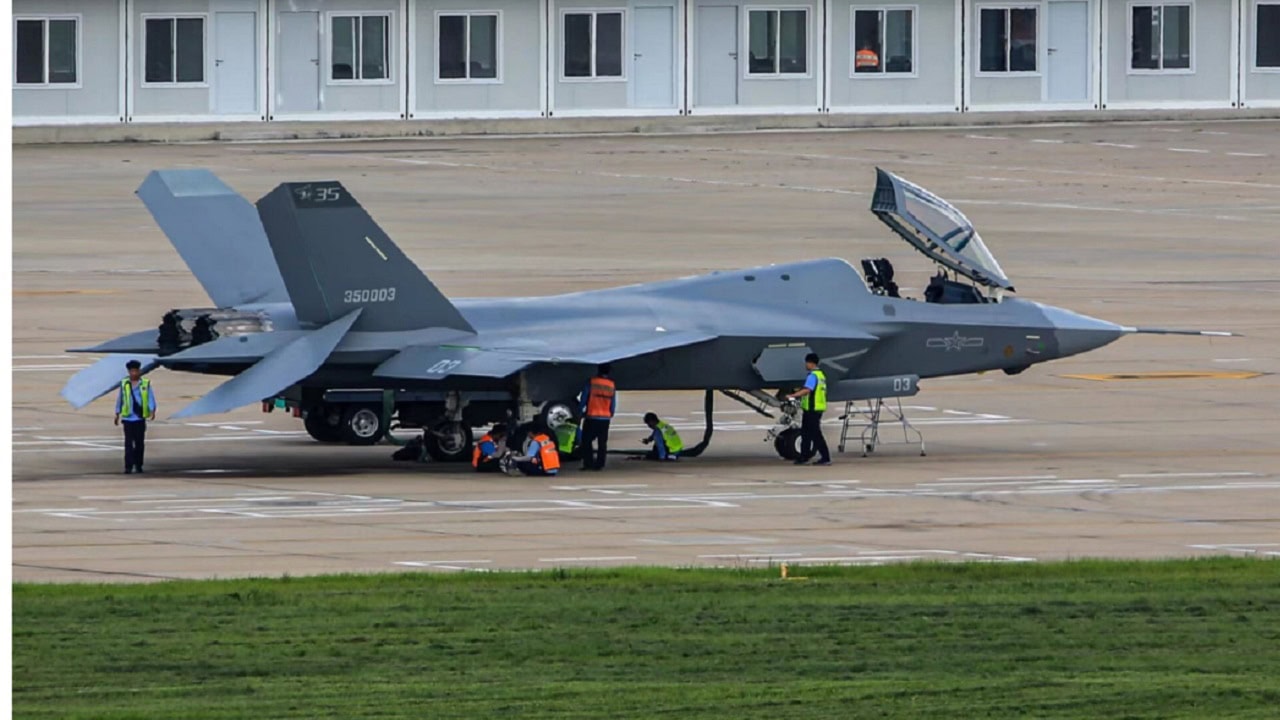
The carrier-capable J-35, meanwhile, is smaller than the J-20 with an inherently shorter range, meaning refueling would be more transformative for the J-35 than the J-20; the carrier air wing reach would be extended, mitigating the limits of ski-jump or STOBAR operations.
This allows Chinese carriers to project power farther from shore, which complicates US naval planning.
In effect, the J-35 would become, through refueling, viable beyond local sea denial.
A2/AD Enhancement
Refueling does not operate in isolation. Tankers likely operate within the range of land-based SAMs and under fighter and ISR coverage. Tankers would be integrated with missile systems, space-based tracking, and long-range sensors.
The result is expanded air power under a protective umbrella, which increases pressure on US forces at a distance. Essentially, the A2/AD network becomes deeper and more elastic.
Strategically, refueling amplifies existing assets, allowing China to contest airspace farther from home, sustain operations longer, and threaten rear-area bases.
Refueling signals that the PLA is maturing from a regional defense organization to a more ambitious entity with enhanced operational reach.
In effect, deterrence is reinforced through increasing uncertainty and complicating US operations.
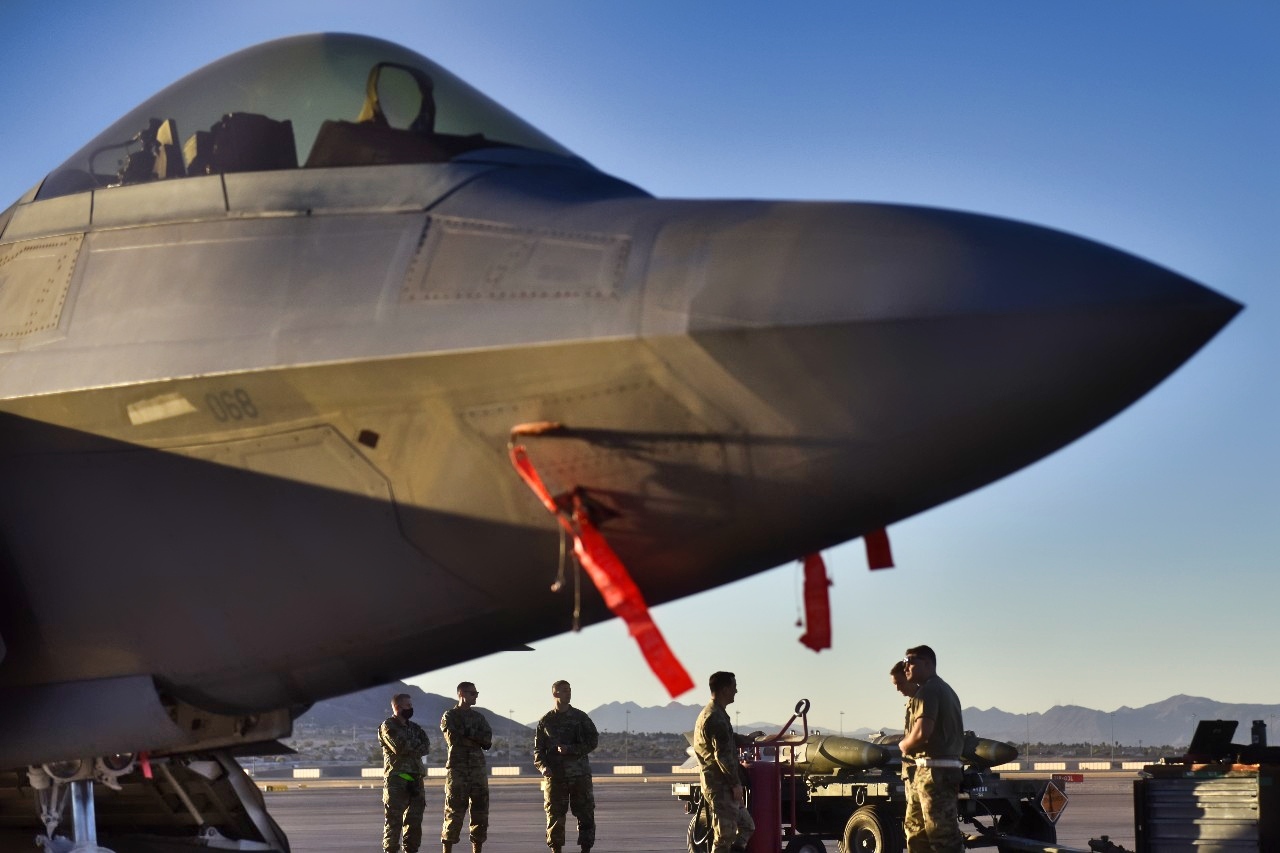
Airmen from the 757th Aircraft Maintenance Squadron talk about their execution plan next to an F-35 Lightning prior to the start of weapons load crew competition at Nellis Air Force Base, Nevada, Oct. 16, 2020. Throughout the year weapons crews are put to the test of safely loading and unloading ordinance to their respective aircraft in front of their peers while being timed. At the end of the year, the winners from each event are pitted against each other to see which team is the best. (U.S. Air Force photo by Tech. Sgt. Alexandre Montes)
The US will need to account for China’s refueling; Chinese fighters are no longer range-limited.
This increases pressure on US tankers (which are already high-value targets), forward bases, and distributed operations.
The US will retain its advantage, however, despite China’s refueling improvements. Indeed, the US still has a larger tanker fleet, more combat experience, and the benefit of alliance basing throughout the region.
But the gap is narrowing, and Chinese refueling is chipping away at it.
Aerial refueling won’t make the J-20 or J-35 invincible; it just makes them more relevant, and hence harder for the US to ignore.
By enhancing range and persistence, refueling enables Chinese stealth fighters to operate theater-wide.
About the Author: Harrison Kass
Harrison Kass is an attorney and journalist covering national security, technology, and politics. Previously, he was a political staffer and candidate, and a US Air Force pilot selectee. He holds a JD from the University of Oregon and a master’s in global journalism and international relations from NYU.