
Key Points and Summary – China’s J-35 is shaping up as the PLAN’s first carrier-capable stealth fighter, and 2026 could be the year it starts showing up in meaningful numbers.
-Beijing’s “sparrow” or “human palm” radar-cross-section claims should be treated cautiously, but the strategic shift is real: Fujian’s catapults, a stealthy fighter, and the KJ-600 “traffic cop” together create a far more credible Chinese carrier air wing.
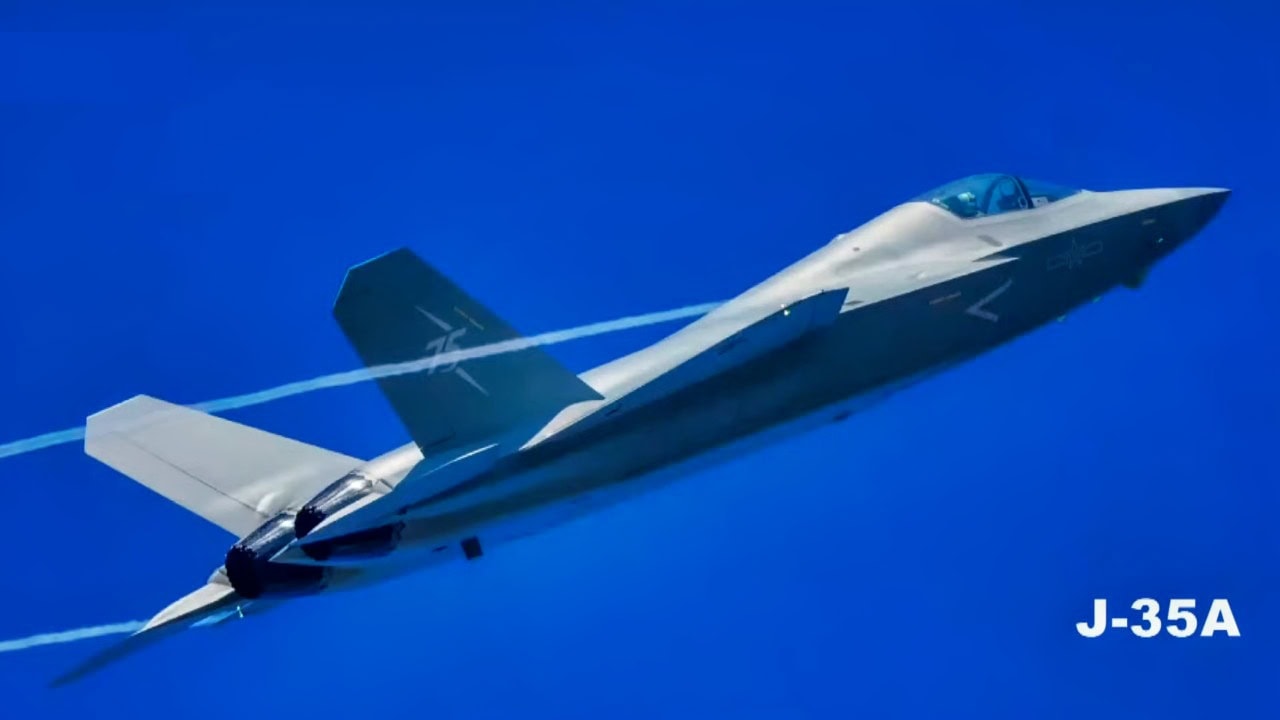
China J-35 Fighter. Image Credit: Creative Commons.
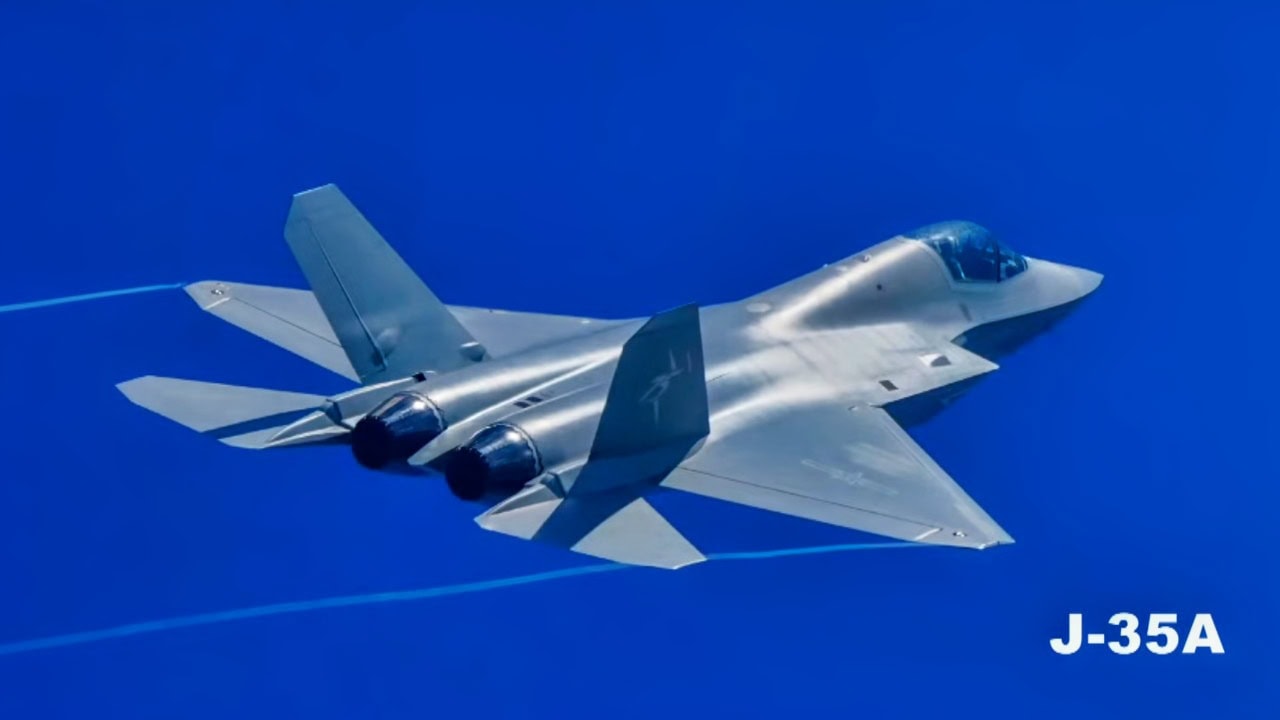
J-35 flying at Zhuhai Airshow 2024.
-That matters for Taiwan contingencies and for U.S. Navy risk calculations inside the first island chain.
-Even if the J-35 is imperfect, it forces harder decisions on U.S. carrier tactics, air defense, and the urgency of F/A-XX.
China’s J-35 Naval Stealth Fighter Is Ready to Rip in 2026
The carrier-borne next-generation J-35 stealth fighter equips Chinese naval aviation with the utmost in stealth technology.
The People’s Liberation Army Navy (PLAN) will use the J-35 repeatedly in 2026. Beijing brags that the J-35 has a radar signature the size of a “human palm,” if you can believe their state-run media.
The Chinese love to brag about their military hardware, and their claims about stealthiness are often over-stated, but let’s agree that the J-35 has enough stealth to challenge U.S. Navy carrier-based fighter jets such as the F-35C Lightning II and the F/A-18 E/F Super Hornet.
Is It Time for the U.S. to Approve the F/A-XX?
The advent of the J-35 means the sixth-generation F/A-XX fighter should be a priority for Washington—it would be even more stealthy than the F-35C. The F/A-XX has yet to get the final approval from Secretary of Defense Pete Hegseth, but the airplane has much potential and would be needed face off with the J-35.
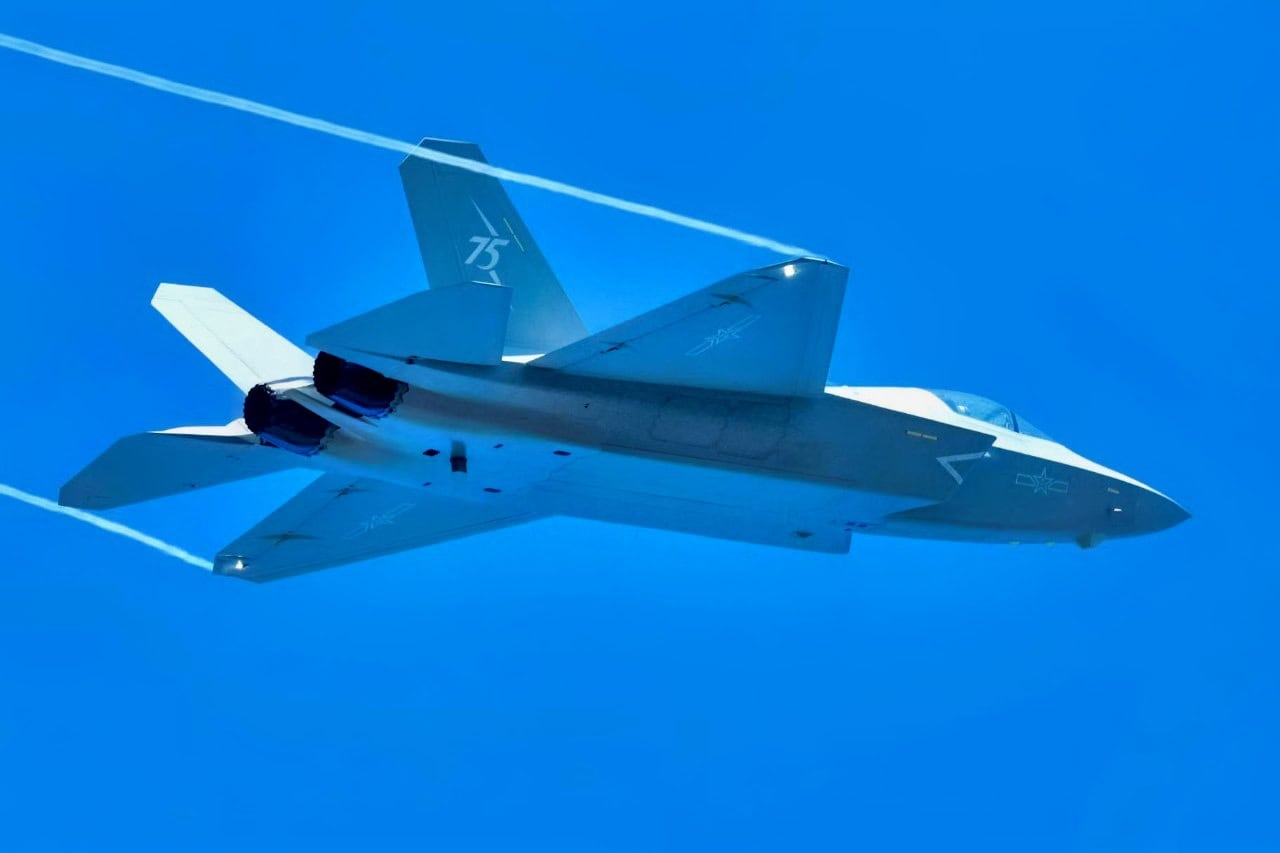
J-35 Fighter. Image Credit: Chinese State Media.
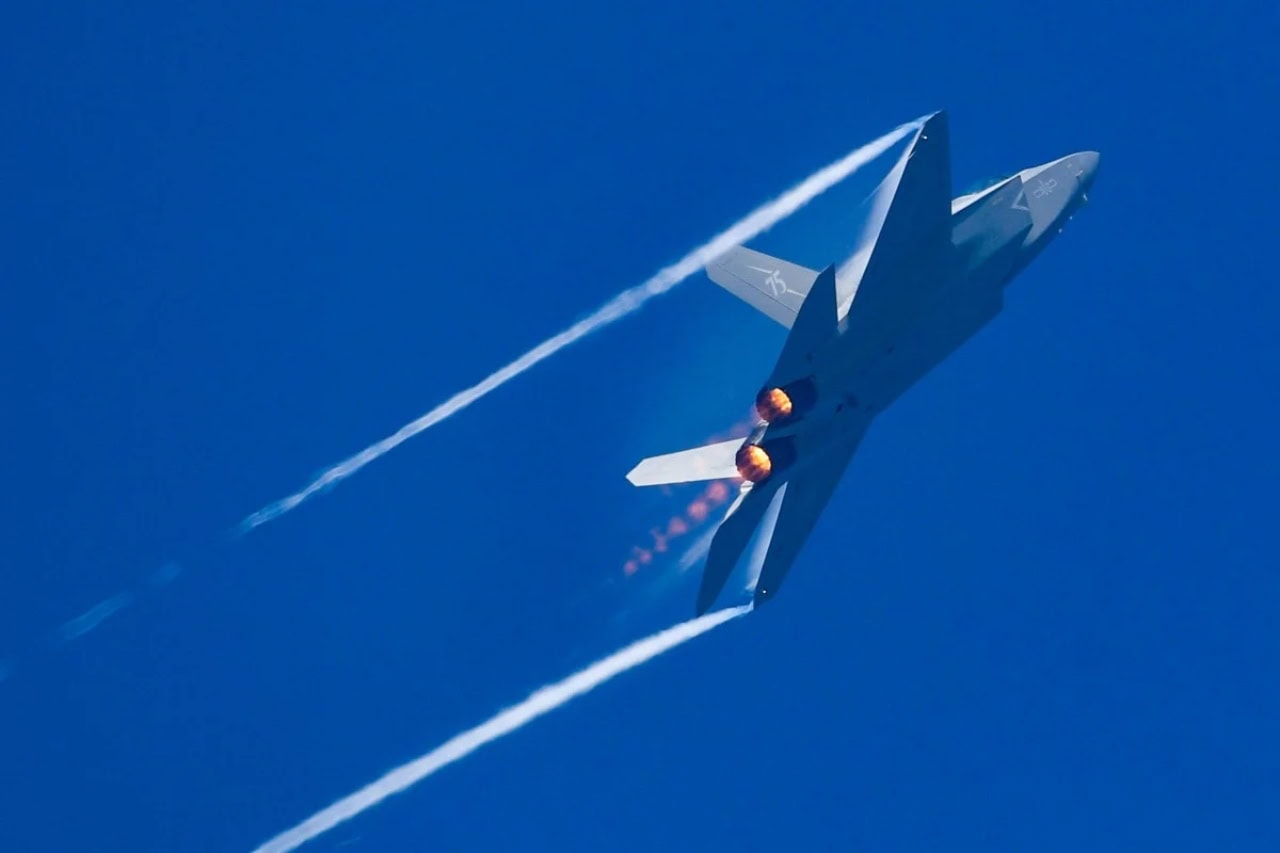
J-35. Image Credit: Chinese State Media.
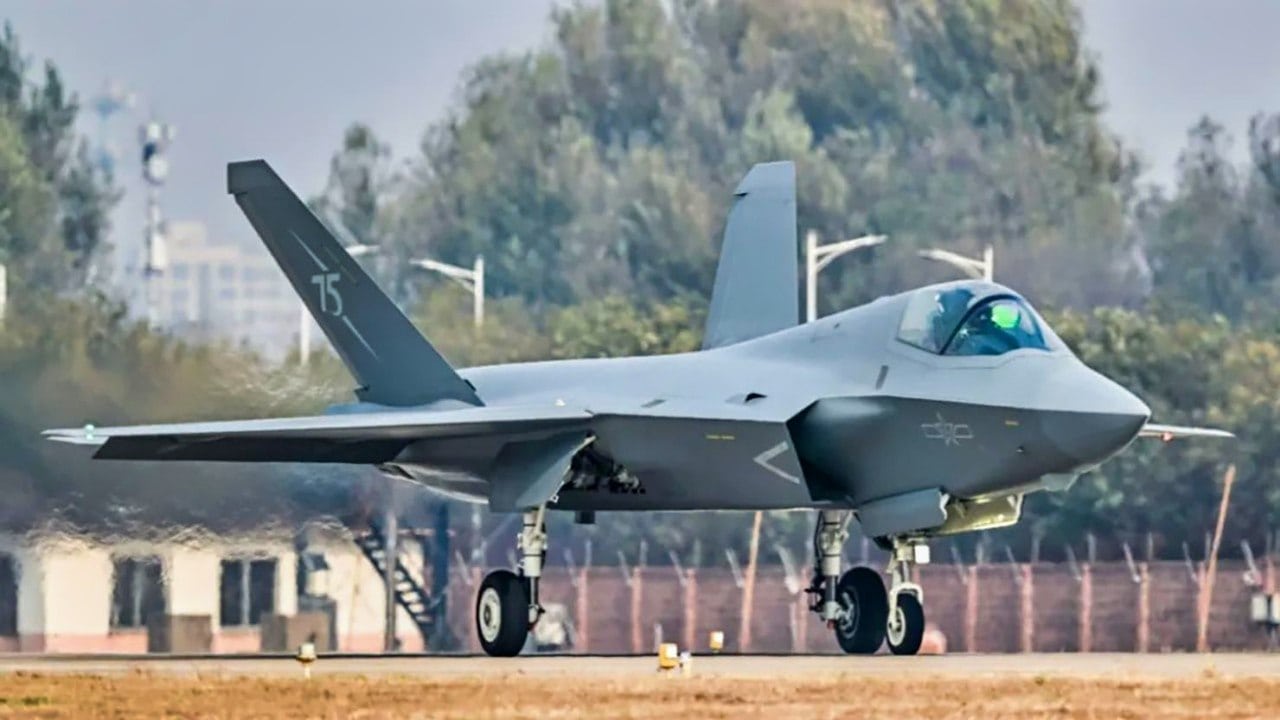
J-35A Fighter from China. Image Credit: Chinese Military
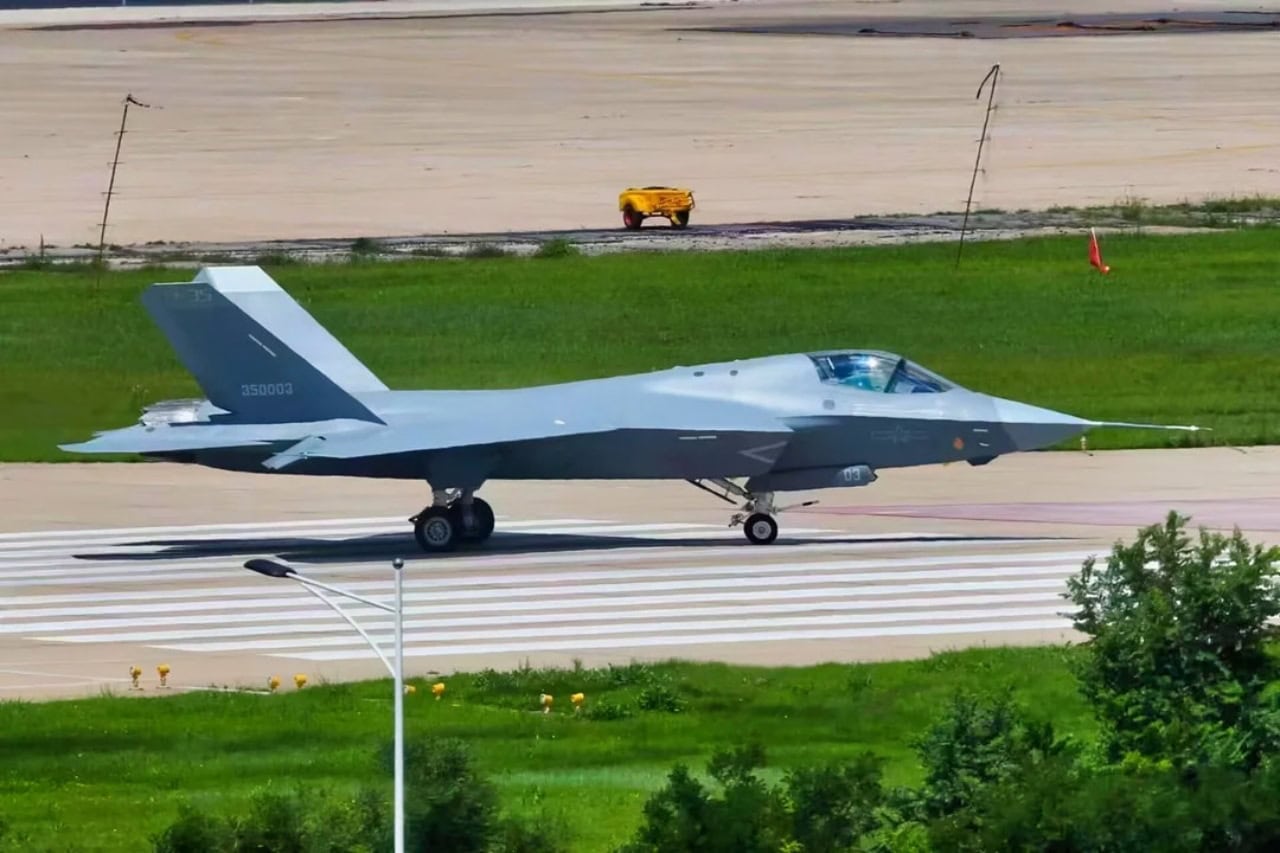
J-35 Fighter. Image Credit: Chinese Internet.
Fujian Carrier Is Top-Notch
Last year, the J-35 underwent tests from China’s third aircraft carrier, the new Fujian home-built flat-top.
The J-35 reportedly had no problems being launched from the Fujian’s electromagnetic catapult. This places the Chinese in rare company as a navy with a stealth fighter that can be deployed from aircraft carriers.
The J-15T Is a Good Wingman for the J-35
The J-35 is flying with the J-15T 4.5-generation navy fighter jet. China hopes the J-15T matches up well with the Super Hornets flying from U.S. Navy carriers.
The Chinese warbird has been improved greatly over the years, and Chinese pilots have used it to show off their expertise flying off carriers.
Aerial ‘Traffic Cop’ Helps the PLAN
China has another ace up its sleeve. The PLAN’s KJ-600 airborne early warning aircraft can take off and land from a carrier, a key aspect of 21st-century naval warfighting.
The KJ-600 gives China a “traffic cop” that can direct warfare from carriers, allowing the Chinese to deploy a strike group with greater efficacy. The KJ-600 can run the aerial war with the carrier-borne fighters and compete with the Americans and their allies in the Indo-Pacific.
The J-35’s stealth is trumpeted by aviation experts who track the PLAN. Wang Ya’nan, chief editor of the Beijing media source “Aerospace Knowledge,” told the state-backed Global Times that a radar cross section (RCS) of “about the size of a sparrow” is a world-class level of stealth, Interesting Engineering noted.
“Such a small RCS can enable the J-35 to remain undetected until it is very close to its target, giving it more advantages and opportunities in combat,” Wang told the Global Times.
The J-35 Is a Match-up Nightmare for the U.S.
Like a good football team, the Chinese are looking at exploiting match-ups and pondering how they can go on offense against the Americans—and not just rely on playing defense.
The PLAN is looking to overload the zones and gaps in the U.S. Navy’s defensive posture in East Asia. The J-35 and J-15T can realistically be successful against the F-35C and F/A-18E/F.
The J-35 is also a heavy fighter, weighing 30 tons with an admirable weapons payload. It has two indigenously produced engines.
These can carry a significant amount of fuel to extend the range of the fighter.
Now China must look at its defense industrial base to see how many J-35s it can produce. The stealth coatings and other radar-evasive technologies must be replicated regularly to create squadrons that can launch from the Fujian and the other two Chinese carriers, which are ski-jump models.
Making Aircraft Carrier Aviation Punish Taiwan
Chinese pilots are only getting better flying off carriers, and they will take to the J-35 in the coming years. The J-35 aims to allow China to use its carriers to bully Taiwan. China just completed wargames to test its ships’ ability to surround the island and conduct aerial operations.
The J-35 could sneak in to penetrate enemy air defenses in Taiwan. If the J-35 does have the radar cross-section of a sparrow, it would be tough for the Taiwanese to defend against. The stealth warbird could also be used to enforce a no-fly zone around Taiwan during a blockade or quarantine.
Overall, China should be happy with the performance of the J-35 as a stealth naval asset. Now is the time for the PLAN to produce it in numbers and rehearse as many carrier launches and landings as possible. The Americans and Taiwanese should adjust their gameplan to “cover” the J-35 with the best “defensive backs” possible.
The Bottom Line
The J-35 is a platform to watch, but its stealth attributes may be exaggerated by the state-run press and by experts who analyze Chinese aviation capabilities.
Let’s not get carried away with the J-35’s abilities—American and Taiwanese pilots are still capable of going toe-to-toe with the J-15T and J-35—but China has significantly developed its carrier aviation capabilities.
The J-35 and J-15T are the future of the PLAN. China could invade or blockade Taiwan in 2027, after they max out their capabilities and figure out a plan for an amphibious attack. The airplanes and carriers will be ready by then to do some damage. American and Taiwanese pilots must be at the top of their game.
If the J-35 can evade radar well, it will become an aerial slog, and that’s just what China is trying to create: a match-up nightmare for the United States and its allies in the Indo-Pacific.
About the Author: Dr. Brent M. Eastwood
Author of now over 3,000 articles on defense issues, Brent M. Eastwood, PhD is the author of Don’t Turn Your Back On the World: a Conservative Foreign Policy and Humans, Machines, and Data: Future Trends in Warfare plus two other books. Brent was the founder and CEO of a tech firm that predicted world events using artificial intelligence. He served as a legislative fellow for US Senator Tim Scott and advised the senator on defense and foreign policy issues. He has taught at American University, George Washington University, and George Mason University. Brent is a former US Army Infantry officer. He can be followed on X @BMEastwood.