

Key Points and Summary – The Navy’s aircraft carrier dilemma isn’t just about new tech—it’s about time. As Ford-class ships face delays and shipyards struggle with backlogs, the Nimitz-class remains the fleet’s day-to-day workhorse for global presence.
-Keeping those carriers relevant means targeted upgrades: modern landing aids like JPALS, stronger command-and-control links, better integration with unmanned systems, and tighter alignment with strike-group air and missile defenses.
-The hardest constraint is industrial, not operational: extending USS Nimitz for 5–10 years could preserve capacity, but it also risks piling more strain onto already overtaxed carrier maintenance and construction.
How Can The Navy Keep The Nimitz-Class Carriers Relevant?
The US Navy has significant aircraft carrier problems, including an aging fleet needing costly upgrades, slow shipbuilding for new Ford-class carriers due to aging shipbuilding facilities and infrastructure, supply chain issues, workforce shortages, chronic maintenance delays leaving carriers unavailable, and the sheer cost/vulnerability of these massive assets in a changing threat landscape, straining readiness to meet global demands.
To remain relevant, the older Nimitz-class carriers require extensive, complex upgrades, such as the “cutting-edge” Joint Precision Approach and Landing System (JPALS) for F-35s, to compete with newer Ford-class ships for resources. Nimitz-class carriers and their carrier strike groups, however, are the centerpiece of the U.S. Navy. They project immense power worldwide.
The Nimitz-class carriers can conceivably remain at sea for 20 years without refueling, and carry up to 130 aircraft of all types. The Navy’s supercarriers have been among the most successful warships in history. They have an outstanding combat record.
But the Nimitz-class carriers are aging and in some circles are considered obsolete. They are expensive and time-consuming to maintain. The USS Nimitz, the nation’s oldest aircraft carrier, is set to retire in 2026, ending a 50+ year service life.
As great as the carriers have been, they have their flaws—and all nuclear-powered vessels eventually must be retired. The Navy announced several years ago that it would replace the iconic Nimitz-class with the new Ford-class carriers.
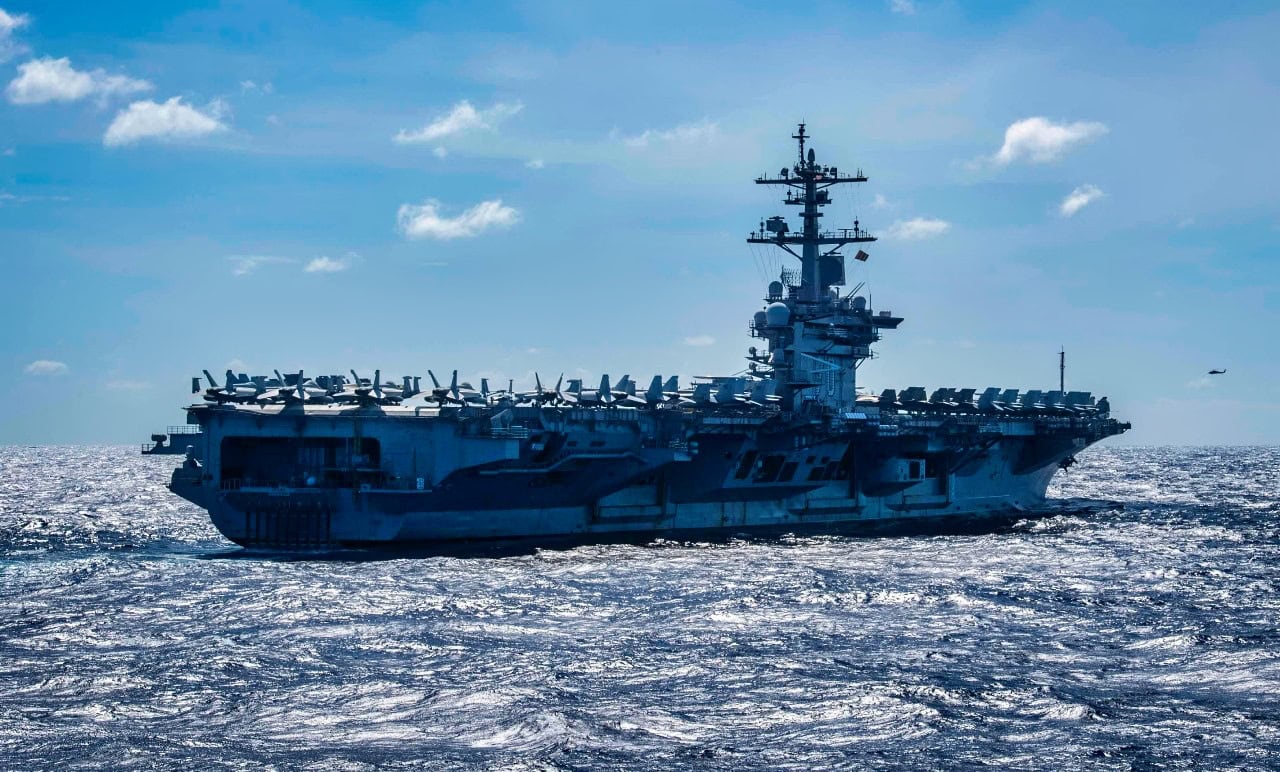
The Nimitz-class aircraft carrier USS Carl Vinson (CVN 70) transits the South China Sea during a Maritime Cooperative Activity with the Philippine Navy, Jan. 17, 2025. The U.S. and Philippines work together as allies, enhancing the interoperability of maritime forces and supporting their shared goal of a free and open Indo-Pacific. Carrier Strike Group ONE, is underway conducting routine operations in the U.S. 7th Fleet area of operations. (U.S. Navy photo by Mass Communication Specialist 3rd Class Brianna Walker)
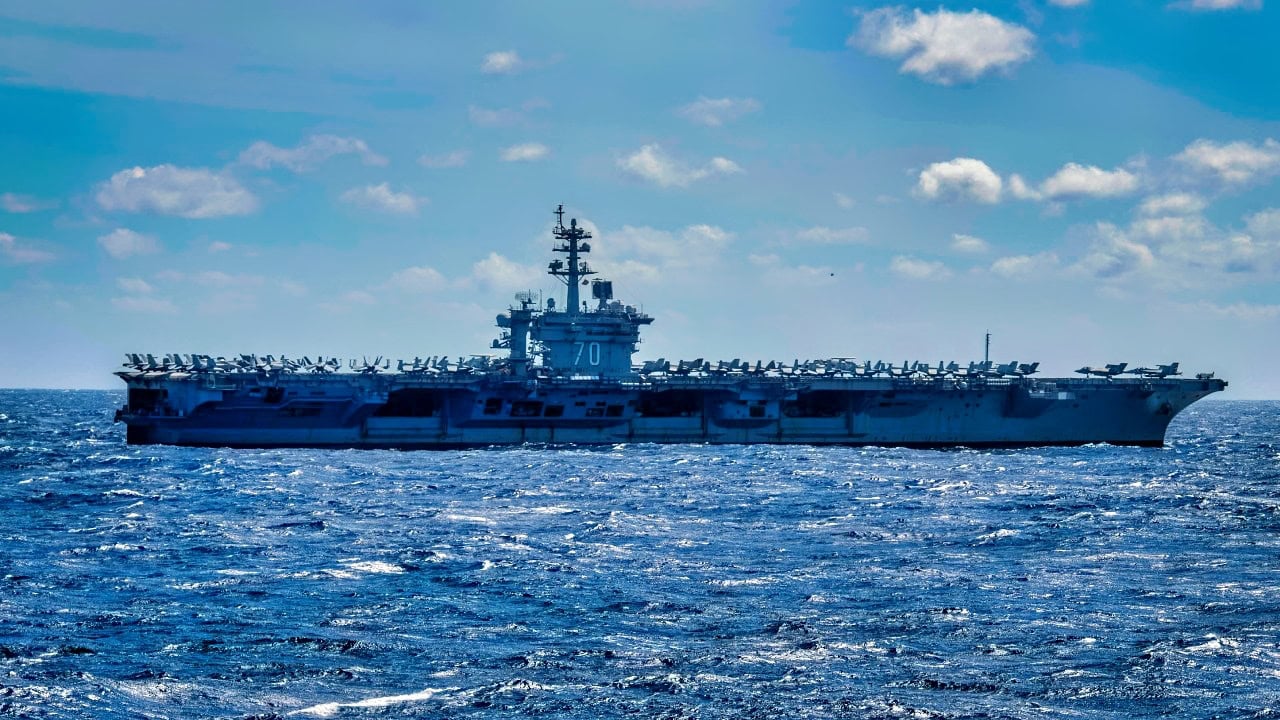
SOUTH CHINA SEA (Jan. 17, 2025) – The Nimitz-class aircraft carrier USS Carl Vinson (CVN 70) transits the South China Sea during a Maritime Cooperative Activity with the Philippine Navy, Jan. 17, 2025. The U.S. and Philippines work together as allies, enhancing the interoperability of maritime forces and supporting their shared goal of a free and open Indo-Pacific. Carrier Strike Group ONE, is underway conducting routine operations in the U.S. 7th Fleet area of operations. (U.S. Navy photo by Mass Communication Specialist 3rd Class Brianna Walker)
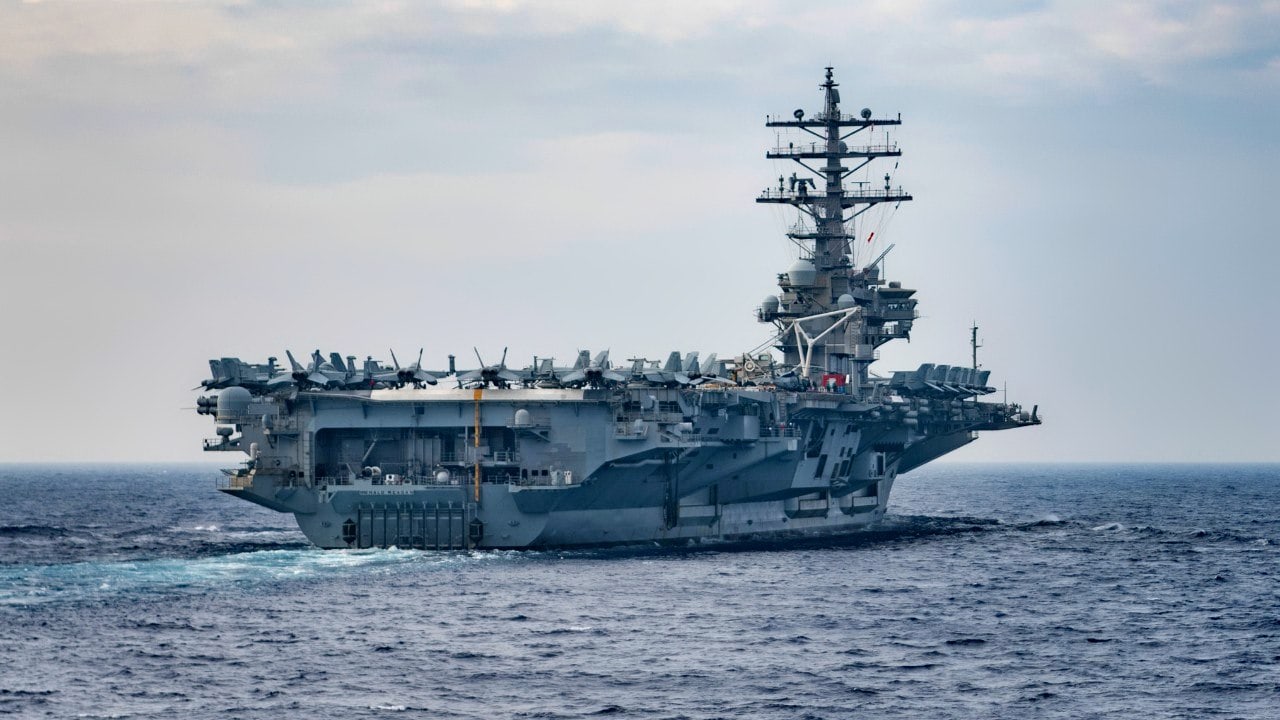
(May 30, 2020) The Nimitz class aircraft carrier USS Ronald Reagan (CVN 76) conducts routine operations in the Philippine Sea. Ronald Reagan is forward-deployed to the U.S. 7th Fleet area of operations in support of security and stability in the Indo-Pacific region. (U.S. Navy photo by Ltjg. Samuel Hardgrove)

PHILIPPINE SEA (Feb. 24, 2024) A U.S. Air Force B-52 Stratofortress, attached to the 5th Bomb Wing, and aircraft attached to Carrier Air Wing (CVW) 11, fly in formation over the Nimitz-class aircraft carrier USS Theodore Roosevelt (CVN 71), Feb. 24, 2024. Theodore Roosevelt, flagship of Carrier Strike Group Nine, is underway conducting routine operations in the U.S. 7th Fleet area of operations. U.S. 7th Fleet is the U.S. Navy’s largest forward-deployed numbered fleet, and routinely interacts and operates with allies and partners in preserving a free and open Indo-Pacific region. (U.S. Navy photo by Mass Communication Specialist 1st Class Thomas Gooley)
However, the new Ford-class carriers face massive cost overruns and construction delays (e.g., USS John F. Kennedy) due to the integration of new technology and industrial base issues.
How can the Navy keep the Nimitz-class carriers relevant in today’s environment?
Can The Navy Extend The Nimitz Class Another 5-10 Years?
The debate over decommissioning the USS Nimitz (CVN-68) involves balancing its proven service and strategic need with its age, high upkeep, and the arrival of next-gen carriers; arguments for keeping it involve maintaining the crucial 11-carrier fleet during Ford-class transitions.
While arguments for retiring it cite reaching its 50-year lifespan, obsolescence, and the cost of maintaining aging infrastructure, the Navy has announced its retirement on April 12, 2026, despite the current high demand.
Is it a mistake for the Navy to decommission the Nimitz right now, when issues with the Ford-class carriers are delaying their production, while the numbers the Navy needs to maintain deterrence worldwide are rising?
Extending the carrier’s lifespan by 5-10 years would temporarily boost the fleet to 12, providing crucial operational flexibility amid rising tensions with China, Iran, and Russia.
Current Demand For the Carrier Strike Groups Is High
The current world situation is volatile, and the demand for US carrier strike groups in the Indo-Pacific, the Middle East, and Europe is very high. US doctrine states that the US maintains 11 aircraft carriers to meet the nation’s needs.
Even with the Nimitz operational, those capabilities have been stretched thin due to the Navy’s OPTEMPO. Now, with the next-generation USS John F. Kennedy (CVN-79) and Ford-class vessels delayed or still in trials, the retirement of the USS Nimitz from the fleet risks making America’s carrier force weaker than is advisable, considering the situation.
And the issues with the shipbuilding industry are not getting any better anytime soon.
Keeping the USS Nimitz (CVN-68) Active
The high demand for carrier strike groups in the Indo-Pacific, the Middle East, the Arctic, and elsewhere (Caribbean) has already stretched the Navy thin. Carrier Strike Groups are vital for U.S. power projection in the Indo-Pacific, Middle East, and Europe, and removing one carrier weakens the force.
The transition gap leaves the Navy shorthanded. New Ford-class carriers (such as USS John F. Kennedy) are facing delays, potentially creating a gap in available carriers if the Nimitz leaves service too soon. There is a valid argument that keeping the Nimitz active, at least until the USS Kennedy is operational.
The Nimitz’s proven capability is, without question, a plus, despite her age. The Nimitz is a reliable, proven nuclear-powered platform that provides significant operational flexibility.
The Needed Upgrades To Keep The USS Nimitz Sailing
The Nimitz-class carriers can remain relevant over the next decade through crucial upgrades to command/control, communications, and unmanned systems, as well as integration with modern strike group defenses.
However, the Navy must address maintenance gaps and delays in the delivery of new Ford-class carriers to maintain overall fleet capacity, serving as the necessary “workhorses” for global presence and dual-carrier operations. Their sheer size, durability, nuclear propulsion, and ability to support advanced air wings keep them vital despite aging.
Technology integration will require extensive upgrades. Upgrading with new command, control, and communication systems to integrate seamlessly with modern destroyers and unmanned vessels.
Unmanned systems support is a must. Adapting the carriers to launch and support newer drones and autonomous systems is crucial for future warfare.
The Nimitz class must enhance its shipboard defenses. This can be done by integrating with the wider Carrier Strike Group (CSG) to leverage advanced missile defense (Aegis) and electronic warfare (EW) from escorts.
Life Extension & Maintenance Are Far Behind And Costly
U.S. Navy carrier maintenance faces significant challenges: aging infrastructure, shipyard capacity constraints, skilled workforce shortages, outdated equipment, supply chain issues with parts, and complex modernizations, leading to substantial delays, deferred maintenance, and reduced readiness, impacting the entire fleet’s ability to deploy and sustain its global presence.
Issues include insufficient drydocks, difficulty obtaining parts, unexpected work during overhauls, and contract issues, resulting in carriers staying in port longer than planned.
The Navy’s massive, complex carriers require tremendous industrial support that isn’t keeping pace with the aging fleet’s needs, creating a persistent readiness crisis. This is a critical issue that needs to be addressed and remedied ASAP.
A 12-Carrier Fleet Presents Issues
The Navy will be balancing the current needs (an 11-carrier fleet) against the costs of maintaining a 50+-year-old aircraft carrier. Having a 12-carrier fleet would ease some of the operational tempo concerns the Navy currently faces while maintaining deterrence worldwide.
However, keeping the Nimitz active would place additional strain on Newport News Shipyard’s already overtaxed maintenance capability, which is far behind schedule. It is the only shipyard that handles aircraft carrier RCOHs, deactivation procedures, and new carrier construction.
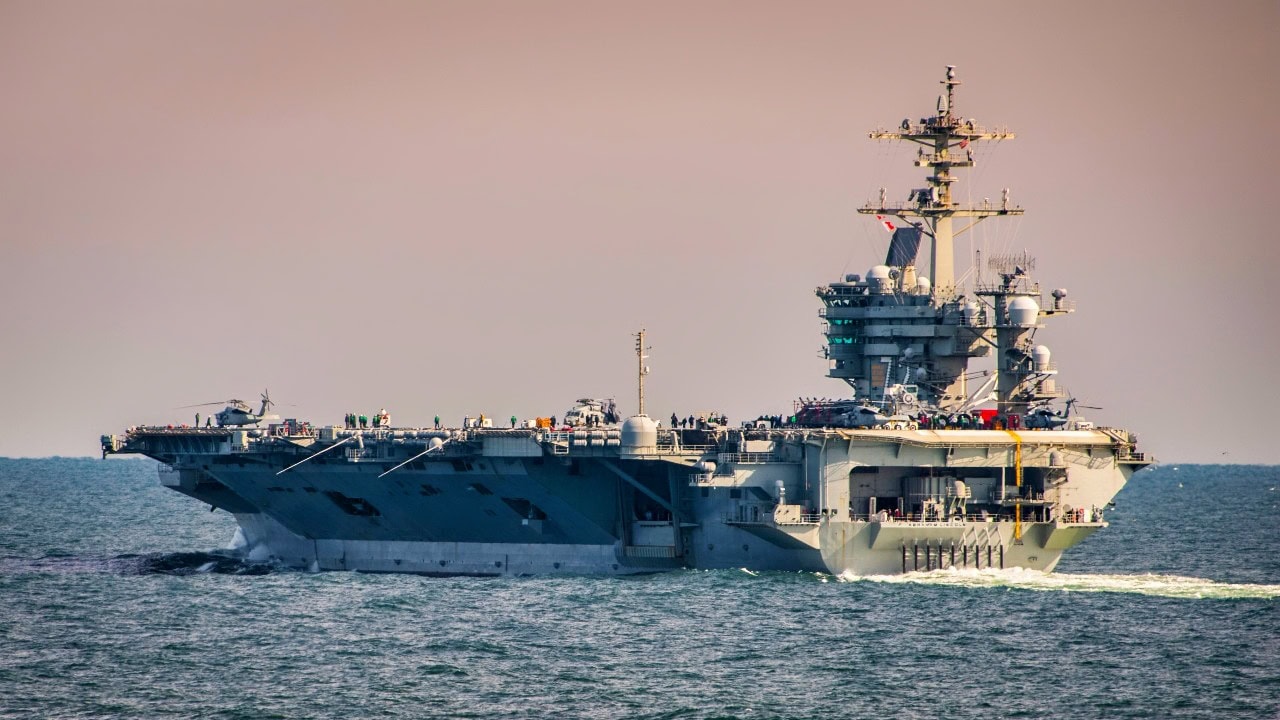
Nimitz-Class Aircraft Carrier
The Navy believes that while extending the Nimitz would temporarily bridge the operational gap, it would also create additional shipyard issues that would further delay new carrier construction, a genuine concern.
While the Nimitz class can’t match the Ford class carrier’s 33 percent higher sortie rate, it can operate alongside the Ford class and mutually support one another.
About the Author: Steve Balestrieri, Military Expert
Steve Balestrieri is a National Security Columnist. He served as a US Army Special Forces NCO and Warrant Officer. In addition to writing on defense, he covers the NFL for PatsFans.com and is a member of the Pro Football Writers of America (PFWA). His work was regularly featured in many military publications.