
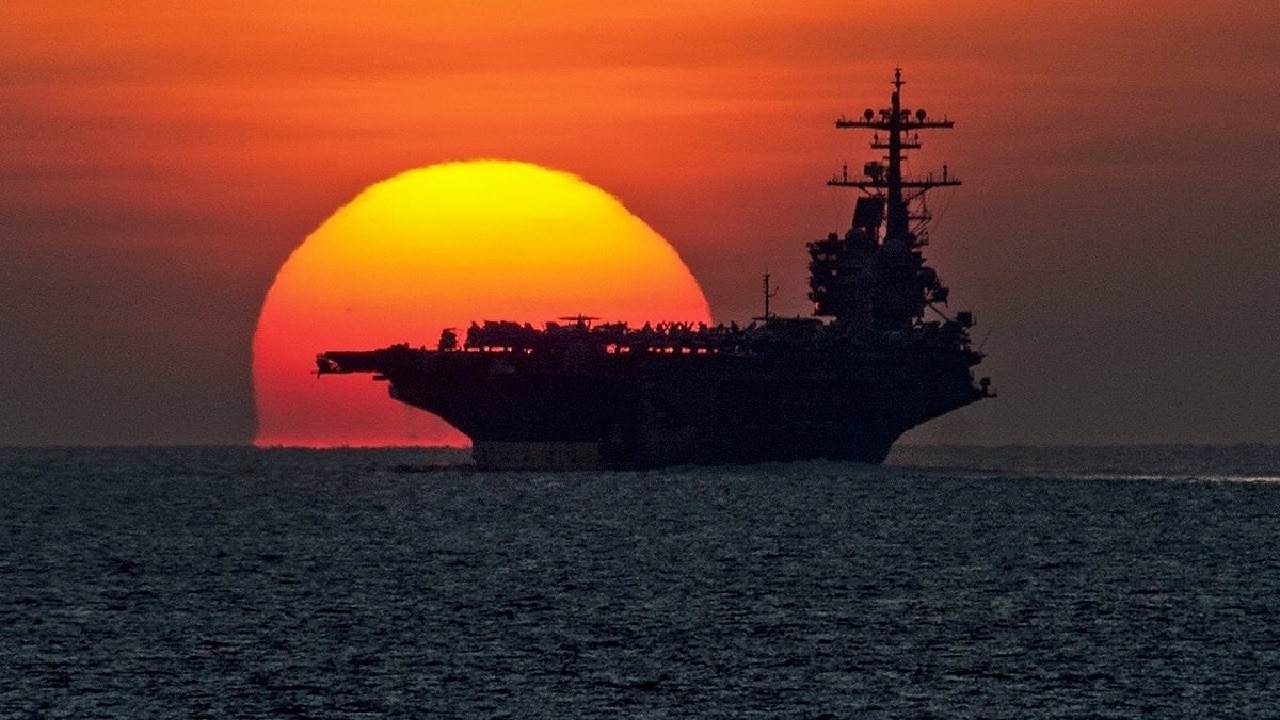
Key Points and Summary – In 2015, the French Navy’s compact Rubis-class nuclear attack submarine Saphir slipped through the layered defenses of the aircraft carrier USS Theodore Roosevelt during an exercise and scored a simulated “sink.”
-The moment underscored how disciplined crews, smart routing, and low acoustic signatures can exploit gaps in a carrier strike group’s anti-submarine screen.
-Though Rubis boats were small SSNs by global standards, later quieting upgrades improved their survivability and reach with torpedoes and tube-launched Exocet missiles.
-The lesson is enduring: carriers remain formidable, but undersea threats still punish complacency and demand constant ASW training, sensors, and tactics—especially in contested Indo-Pacific waters.
How a Small French Nuclear Sub “Sank” USS Theodore Roosevelt in 2015
The French Navy’s Rubis-class submarines are nuclear-powered attack submarines (SSNs) that are primarily designed for anti-submarine warfare, intelligence gathering, and power projection missions.
However, during a naval exercise in 2015, a stealthy Rubis-class sub, Saphir (S602), maneuvered into the defensive area of the Nimitz-class aircraft carrier USS Theodore Roosevelt and “sank” her. This showcased the Rubis-class’s capabilities against advanced anti-submarine defenses.
Meet The Rubis-class Submarines
The French Navy tried to develop nuclear-powered submarines in the 1960s, but their first attempt was scrapped in the early construction phase. In the early 1970s, they developed a new Plan Blue, which required producing 20 conventionally and nuclear-powered submarines.
The resulting SNA972 Rubis class became the smallest nuclear-powered type in operational service with any navy. France made this possible by installing a tiny 48-megawatt integrated reactor-heat exchanger system.
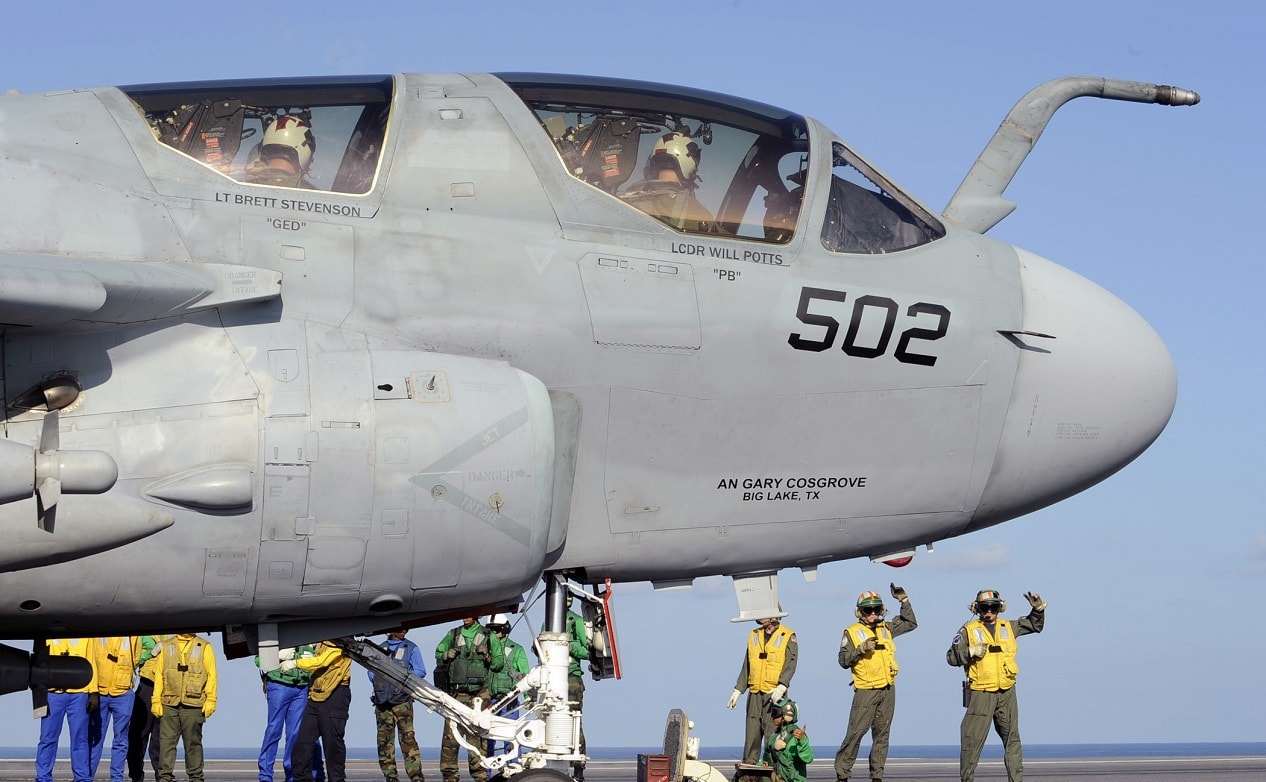
An EA-6B Prowler, assigned to the “Shadowhawks” of Electronic Attack Squadron 141 prepares to launch from a catapult during flight operations aboard the Nimitz-class aircraft carrier USS Theodore Roosevelt during carrier qualifications.
The earliest submarines were very noisy, a potential death sentence for an attack submarine during war. However, the French rectified this issue by reshaping and lengthening the hull to reduce noise emissions.
The Rubis-class submarines, developed in the 1980s, were the prime component of France’s nuclear-powered attack submarine force for strategic and tactical operations. The compact and stealthy submarines combine nuclear propulsion with advanced sonar and weapons systems, offering a versatile platform.
Six vessels were built under this class, including Rubis (S601), Saphir (S602), Casabianca (S603), Émeraude (S604), Améthyste (S605), and Perle (S606).
Small But Heavily Armed
Rubis-class submarines are 241 feet long and 25 feet wide and displace just 2,600 tons underwater. They are propelled by the K48 pressurized water nuclear reactor, which has one shaft and one propeller. The submarine’s top speed is 25 knots.
Armaments include four 21-inch torpedo tubes that launch F17 Mod.2 heavy torpedoes. The boat carries Exocet SM39 sea-skimming missiles.
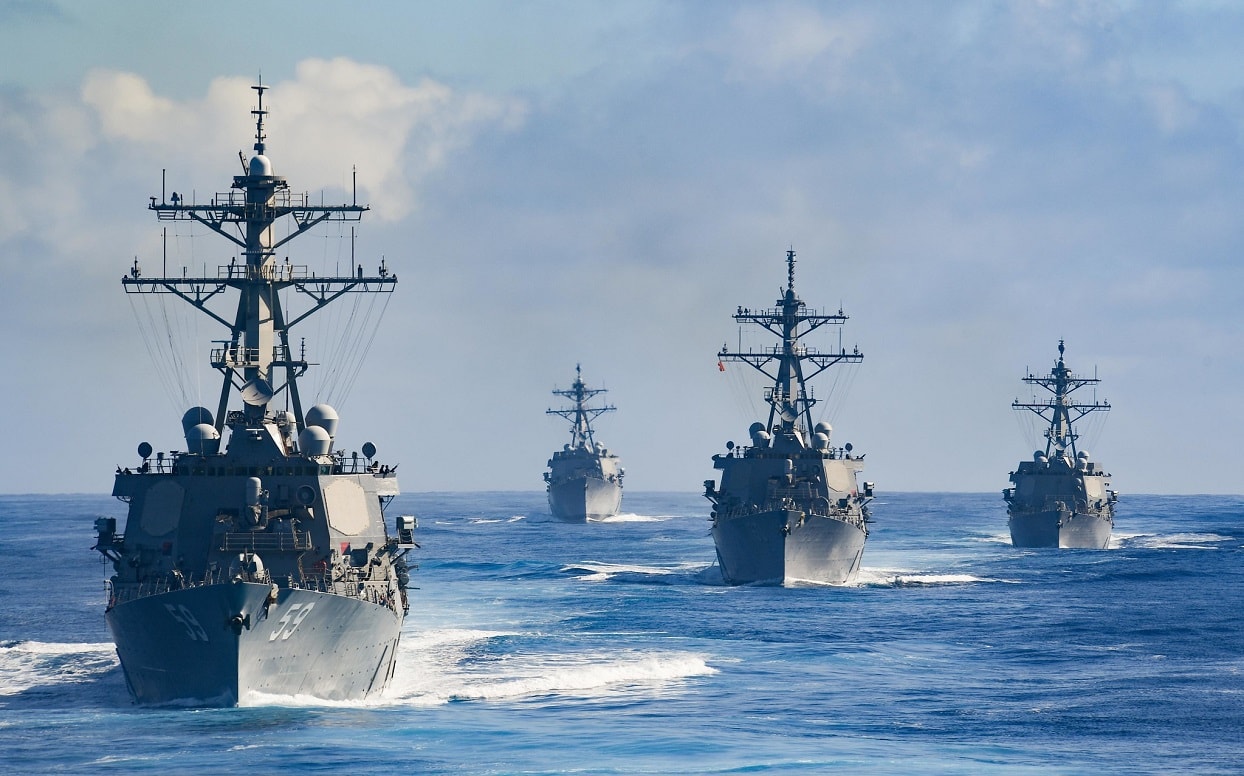
PACIFIC OCEAN (Jan. 22, 2020) Ships assigned to Destroyer Squadron (DESRON) 23 transit the Pacific Ocean, Jan. 22, 2020. DESRON 23, part of the Theodore Roosevelt Carrier Strike Group, is on a scheduled deployment to the Indo-Pacific. (U.S. Navy photo by Mass Communication Specialist 3rd Class Erick A. Parsons/Released)
Naval Technology wrote this about the Exocet missile, “The torpedo tube-launched Exocet SM39 anti-ship missile is manufactured by MBDA (formerly EADS Aerospatiale). Target range and bearing data is downloaded from the submarine’s tactical data system and weapon control system into the Exocet’s computer. The missile approaches the target area in sea-skimming mode using inertial navigation and then active radar homing, at speeds over Mach 0.9 with a range of 50km. The Exocet’s 165kg high-explosive shaped charge warhead is armed with a delayed impact and a proximity fuse.”
The “Sinking of the USS Theodore Roosevelt” in 2015
The joint exercise that made the Rubis-class submarines famous took place in 2015.
During this particular exercise, the Rubis submarine Saphir patrolled with the Nimitz-class carrier USS Theodore Roosevelt.
Saphir was initially assigned to the friendly force team, supporting aerial operations from the carrier.
On day two, as the exercise continued, the focus shifted to the enemy force, tasked with locating and attacking the carrier.
Due to her stealth and the expertise of her crew, the Saphir penetrated the defensive screen around the USS Theodore Roosevelt, “sunk” the Nimitz-class carrier, and escaped, all while evading detection by the carrier group’s anti-submarine warfare (ASW) assets.
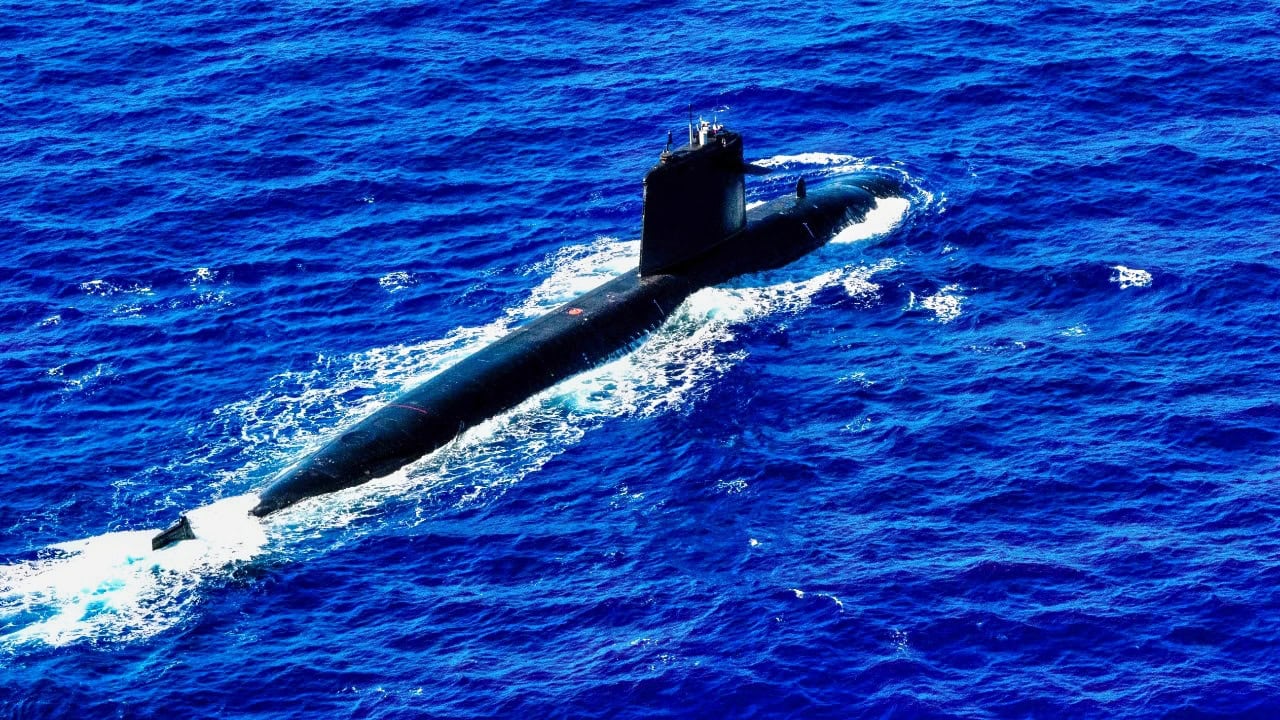
Rubis-Class Submarine from France
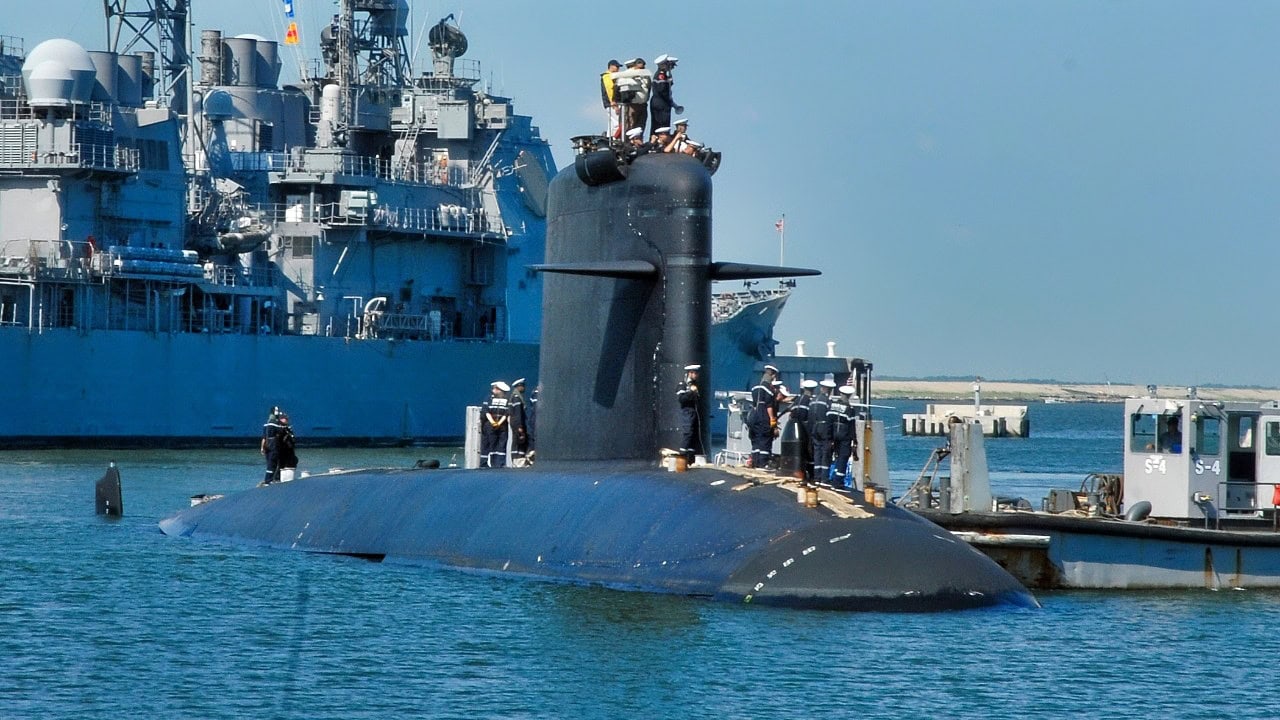
Rubis-Class: The French nuclear attack submarine FS Amethyste arrives at Naval Station Norfolk after completing patrol operations in the West Indies. Amethyste is making a four-day port call before joining the Theodore Roosevelt Task Group for Joint Task Force Exercise starting next week.
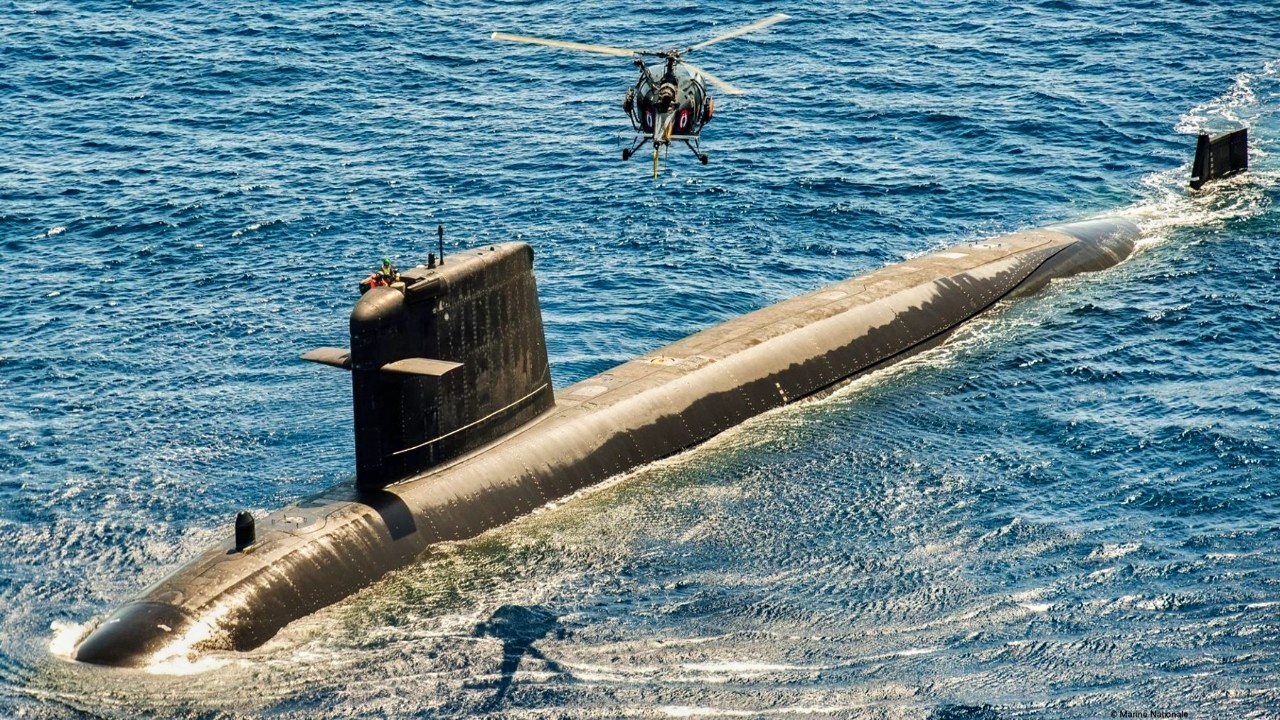
Rubis-Class French Navy Submarine. Image Credit: Creative Commons.
It was quite an accomplishment for the smaller Saphir to infiltrate the carrier group’s defensive screen and sink the big ship.
Adding to the US Navy’s red face in this exercise is the fact that Saphir, an older submarine with aging technology and inferior to more modern submarines, was still able to accomplish this mission.
This exercise, like the one earlier in the decade with the Swedish Gotland-class submarine, was of interest to the Chinese Navy. With a potential war brewing in the Indo-Pacific region, the Chinese #1 target on the sea will be the US aircraft carriers.
The Chinese have developed the Yuan-class submarines powered by AIP, and will study how the submarines were able to infiltrate the defensive screen of the carriers undetected.
The French Navy has begun retiring the Rubis-class submarines; only three remain active. The Saphir was retired in 2019, followed by the Rubis in 2022 and the Casabianca in 2023.
About the Author: Steve Balestrieri
Steve Balestrieri is a National Security Columnist. He served as a US Army Special Forces NCO and Warrant Officer. In addition to writing on defense, he covers the NFL for PatsFans.com and is a member of the Pro Football Writers of America (PFWA). His work was regularly featured in many military publications.