
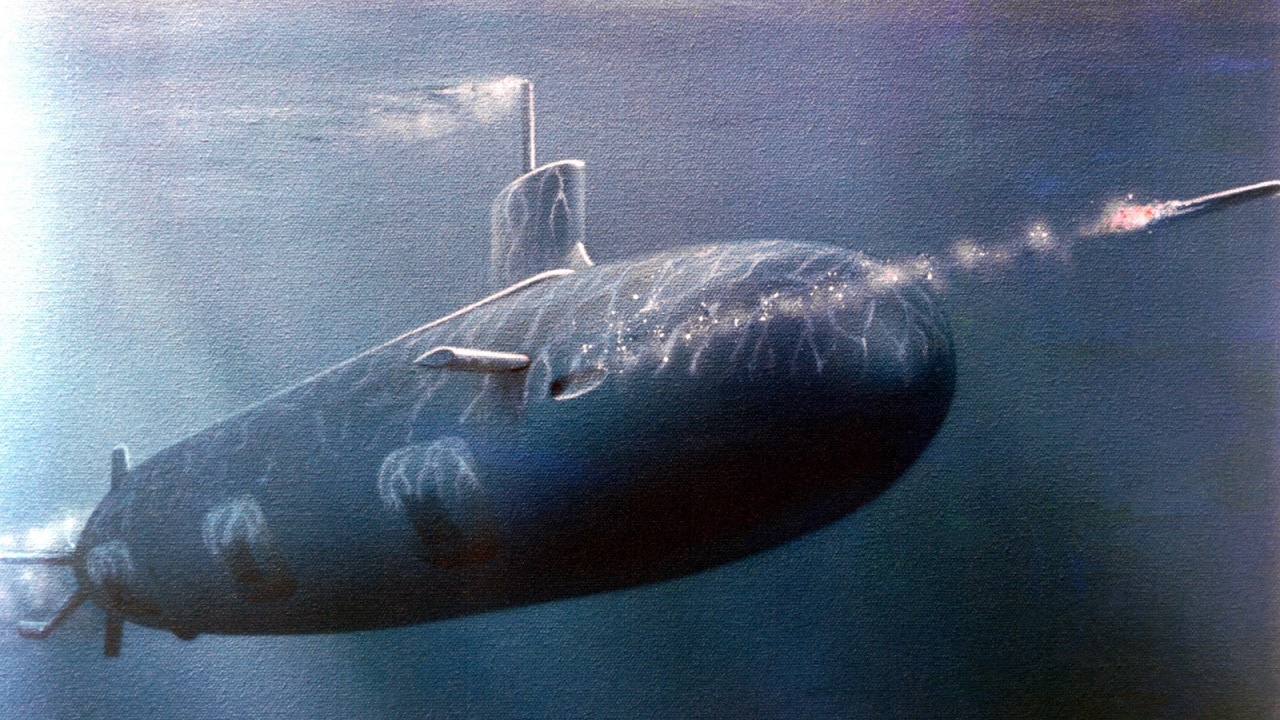
Article Summary – The Seawolf-class was conceived at the height of the Cold War to outclass new, ultra-quiet Soviet Akula and Sierra boats with unmatched speed, depth, firepower, and stealth.
-The advantage: many consider them the best attack sub ever.
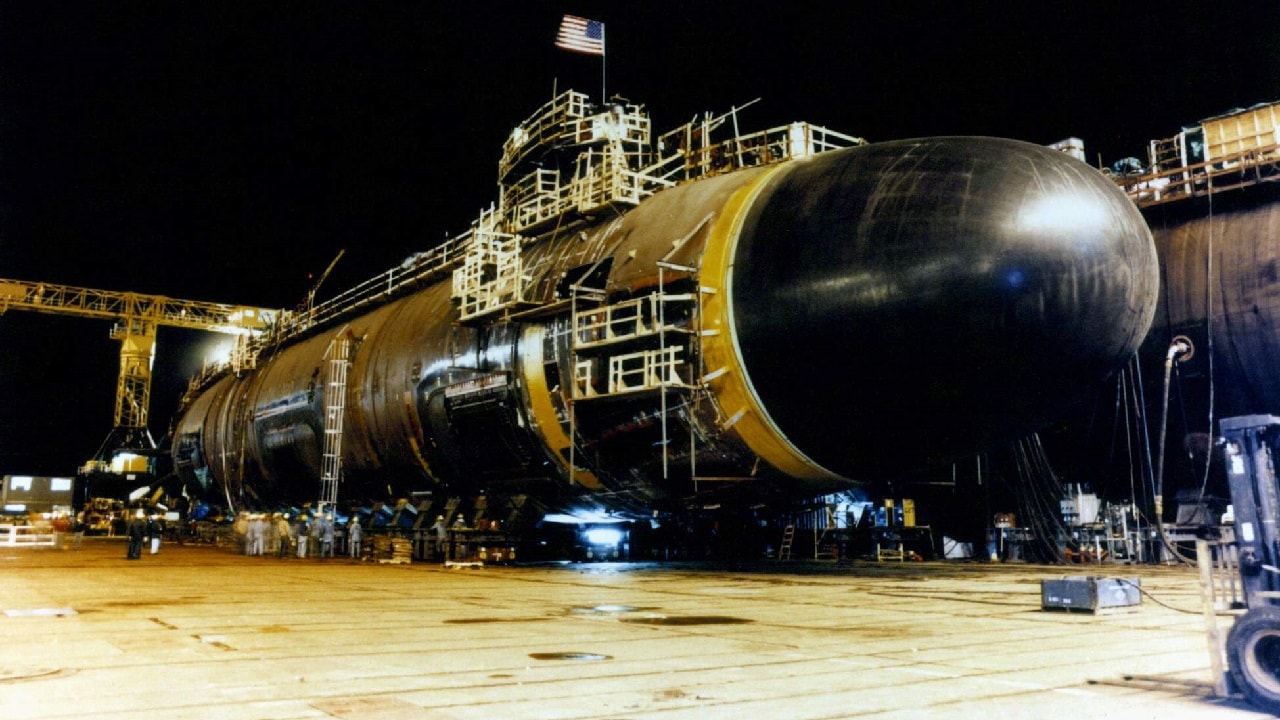
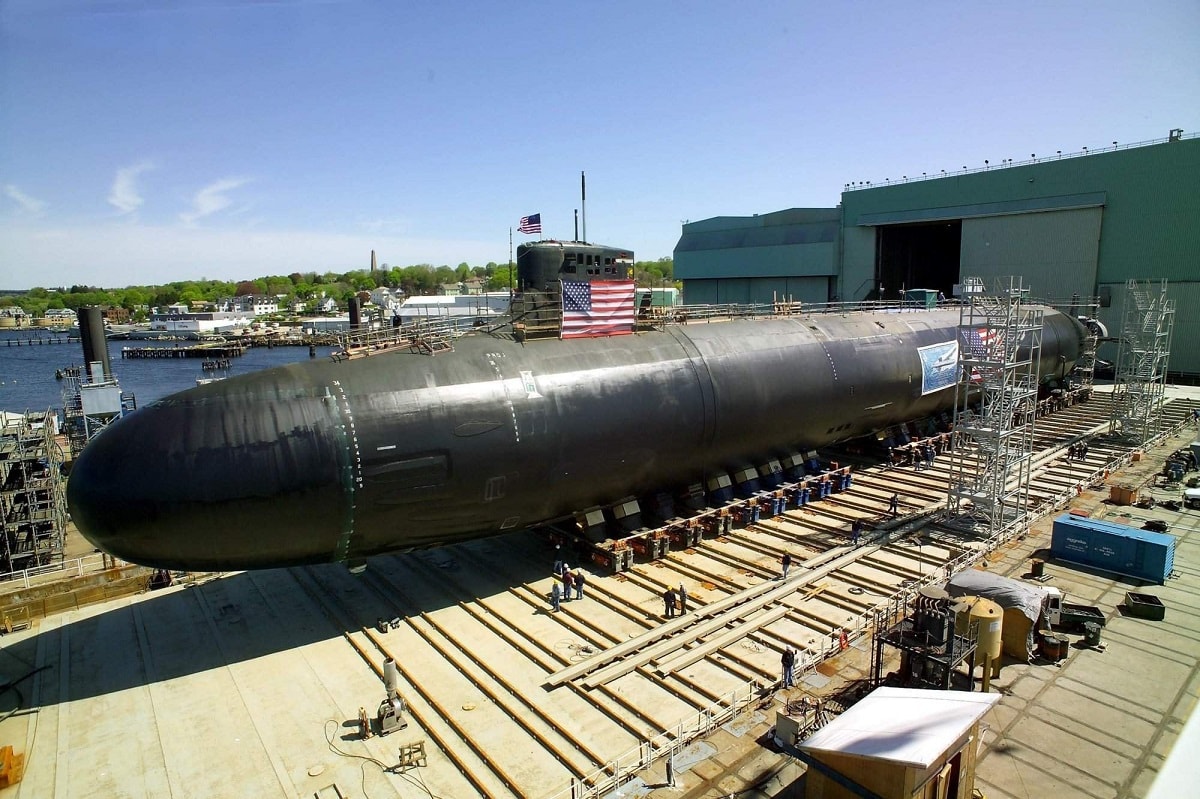
The first of a revolutionary new class of fast attack submarine, the Seawolf (SSN-21). Shown during construction at the Electric Boat Division of General Dynamics Corporation in Groton, Conn. She was christened by Margaret Dalton, wife of Secretary of the Navy John H. Dalton, on June 24, 1995.
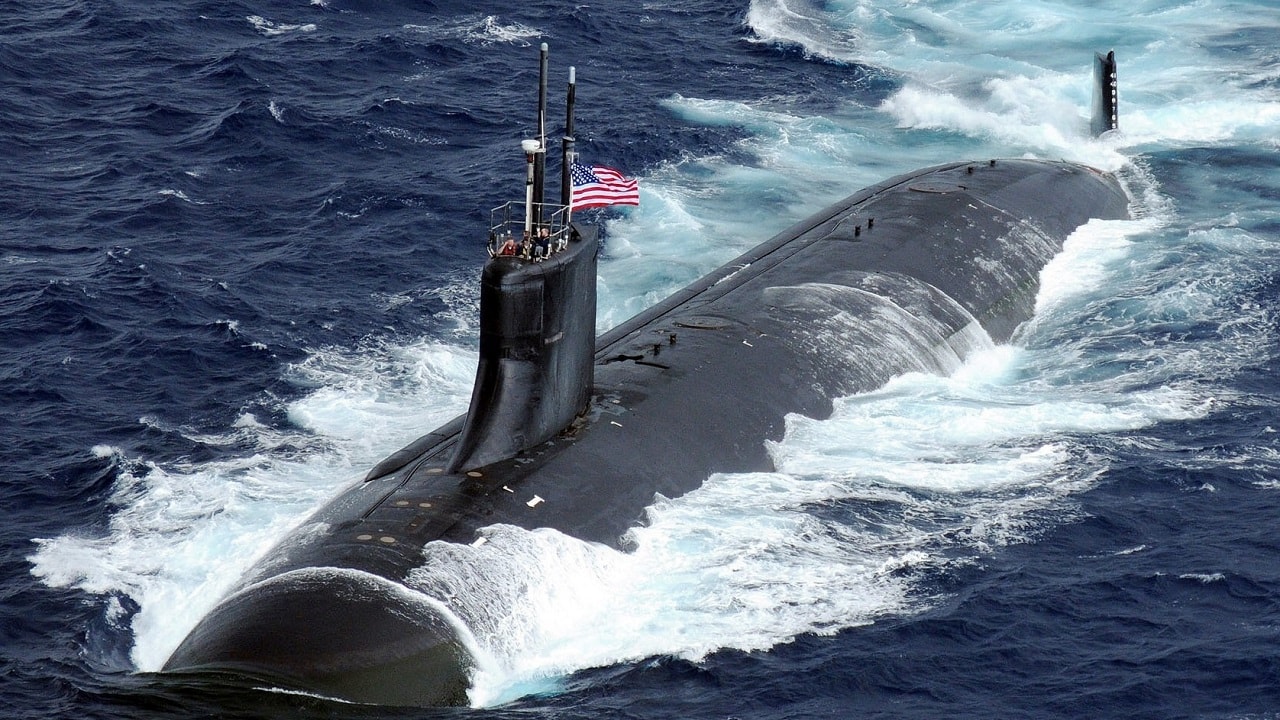
Seawolf-Class Submarine USS Seawolf. Image Credit: Creative Commons.
-Built with HY-100 steel, a powerful S6W reactor and eight torpedo tubes for up to 50 weapons, it became the ultimate hunter-killer—just as the USSR collapsed.
-Washington slashed the planned 29-boat fleet to three hulls, treating Seawolf as an unaffordable luxury in an era of “peace dividends.”
-With China and Russia now fielding world-class submarines and U.S. attack-boat numbers shrinking, that decision looks like a historic, self-inflicted wound.
Seawolf-Class: The Super Sub That Became a Ghost Fleet
In the silent, crushing depths of the world’s oceans, there is an apex predator unlike any other. It is a creature of pure lethality, a ghost forged from high-tensile steel, capable of moving with a stealth that borders on the supernatural and striking with a ferocity that can alter the course of a war.
This is not some mythical leviathan; it is the U.S. Navy’s Seawolf-class nuclear-powered attack submarine.
It is, without exaggeration, the most powerful and dominant hunter-killer submarine ever put to sea.
Yet, this unparalleled weapon, the undisputed king of the undersea realm, is also a ghost of what could have been.
With only three hulls ever built, the Seawolf class represents one of the most profound and consequential strategic miscalculations of the post-Cold War era.
The decision to cancel the fleet was seen at the time as a prudent move for a nation cashing in a “peace dividend.”
However, it appears that a significant mistake has now come back to haunt the Pentagon. In an era where the threats posed by a rising China and a resurgent Russia are no longer theoretical, the ghost fleet of the Seawolf-Class serves as a chilling reminder of the price of strategic shortsightedness—and the critical capability we let slip through our fingers.
Seawolf-Class: Forged to Hunt Soviet Leviathans
To understand the Seawolf, you must first understand the existential fear that drove its creation. By the mid-1980s, the U.S. Navy was confronting a terrifying reality. For decades, America’s technological edge had guaranteed its submarines were acoustically superior to their Soviet counterparts; we could always hear them before they could hear us.
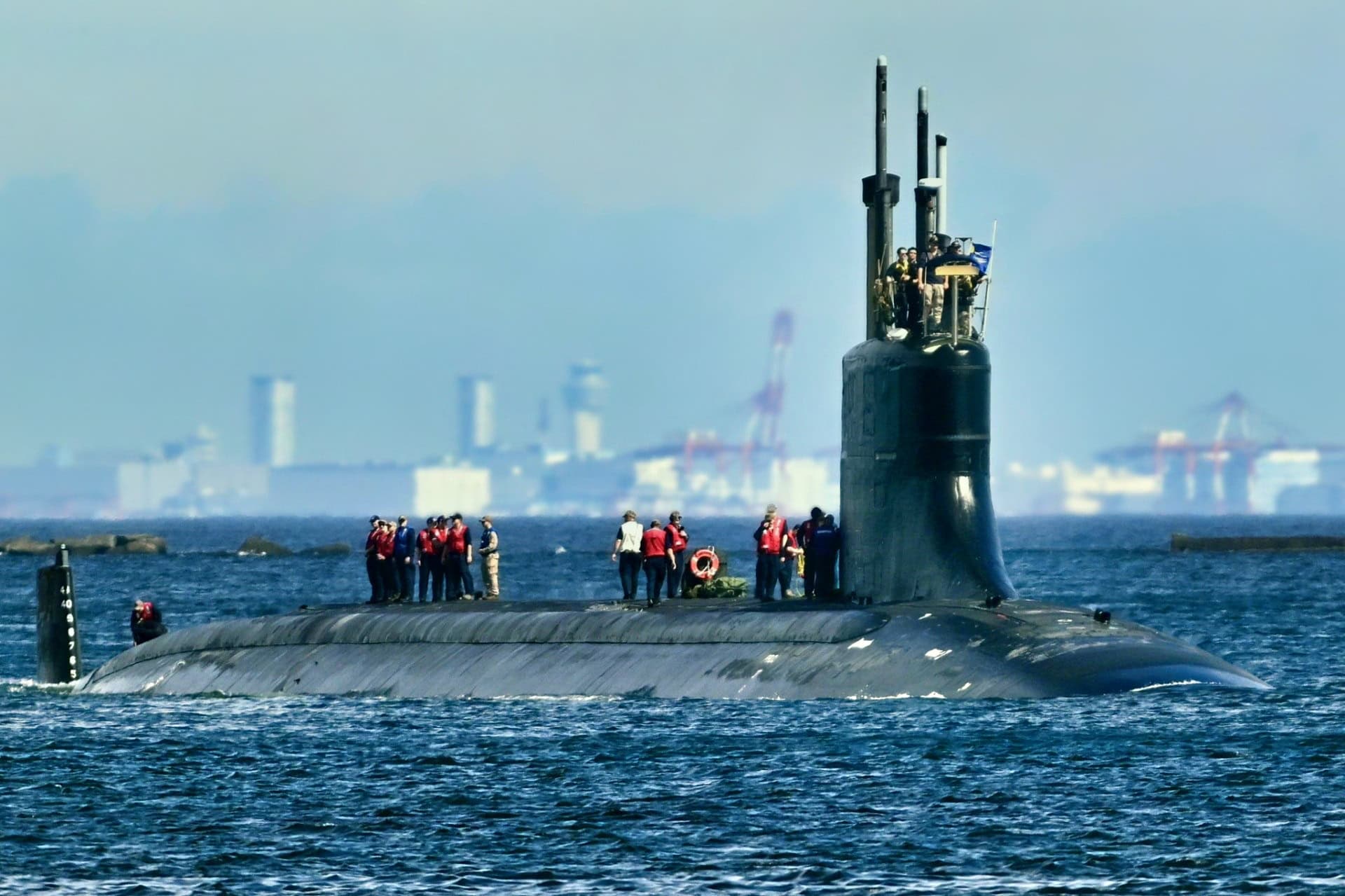
Seawolf-Class Submarine. Image Credit: Creative Commons.
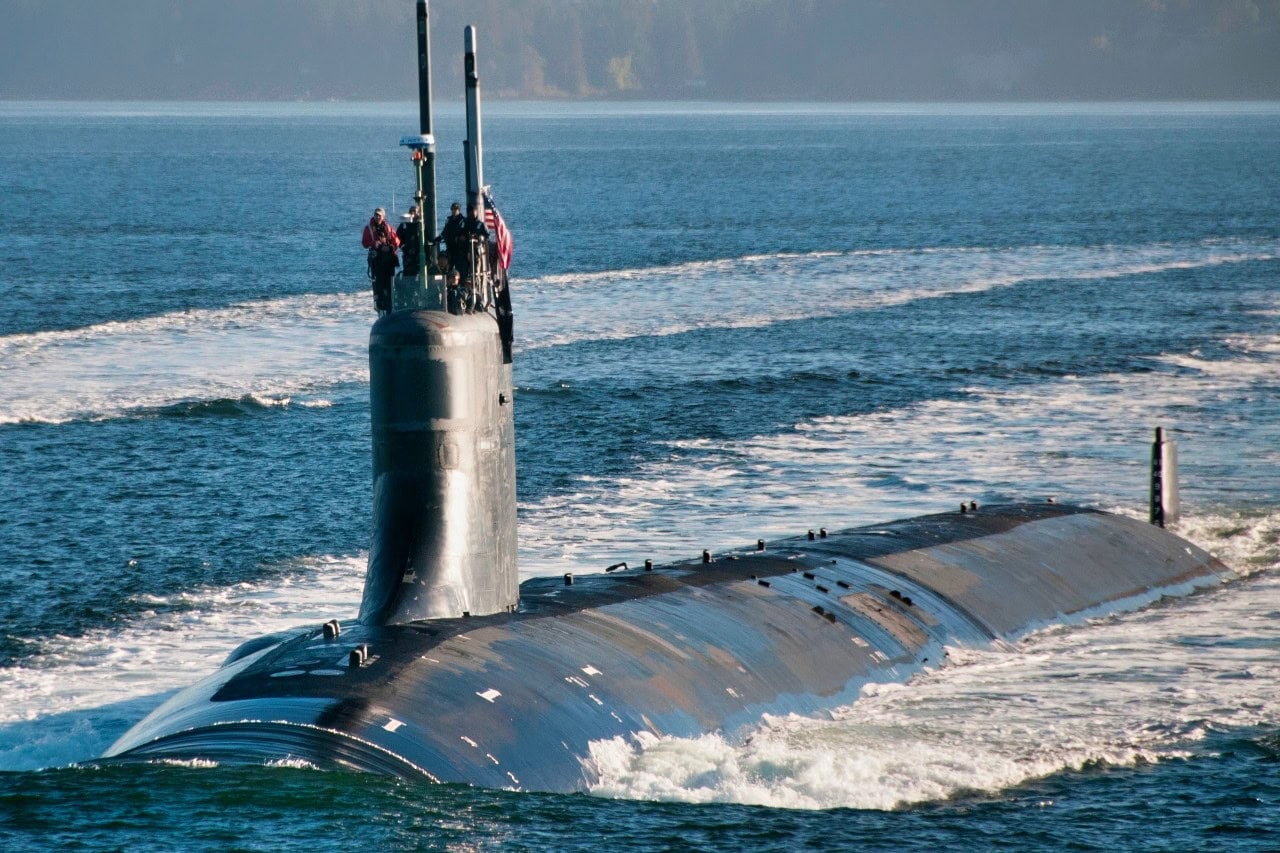
PUGET SOUND, Wash. (Sept. 11, 2017) The Seawolf-class fast-attack submarine USS Jimmy Carter (SSN 23) transits the Hood Canal as the boat returns home to Naval Base Kitsap-Bangor. Jimmy Carter is the last and most advanced of the Seawolf-class attack submarines, which are all homeported at Naval Base Kitsap. (U.S. Navy photo by Lt. Cmdr. Michael Smith/Released)
But that advantage was eroding at an alarming rate. Soviet espionage, particularly the Walker spy ring, had given Moscow a treasure trove of secrets on American submarine quieting technology.
The result was a new generation of Soviet leviathans—the Akula and Sierra-class attack submarines. These boats were fast, deep-diving, and, most critically, shockingly quiet. For the first time, U.S. naval planners had to confront the real possibility that Soviet hunter-killers could stalk our carrier battle groups or trail our own ballistic missile submarines undetected. Our venerable Los Angeles-class submarines, the workhorses of the fleet, were suddenly facing a peer.
In this high-stakes undersea environment, parity was unacceptable. The Navy needed a revolutionary leap forward, a new submarine so far beyond the capabilities of the Akula that it would re-establish absolute American dominance for decades to come.
The answer was a program designated SSN-21, the first submarine of the 21st century. Its mandate was simple and absolute: to be faster, deeper-diving, more heavily armed, and, above all, quieter than anything else on the planet. This new boat, later named the Seawolf, was purpose-built to operate under the Arctic ice—a key operating bastion for the Soviet fleet—and hunt the most advanced Soviet submarines in their own backyard.
A Titan Rendered ‘Obsolete’ by Peace
The Seawolf was a technological marvel from its inception. One former Electric Boat engineer told me many years ago that when the Navy came to them with the specs of the boat they wanted, he explained that most of the technology did not exist at the time, and it would not be cheap. The Navy instructed them to invent what they needed, and they would provide the necessary funds. Wow.
Its hull was constructed from high-strength HY-100 steel, allowing it to dive deeper and withstand more punishment than any previous American attack submarine. Its S6W nuclear reactor was far more powerful, enabling it to achieve tactical speeds in excess of 35 knots while remaining acoustically undetectable.
Every piece of machinery, from the reactor to the pumps, was mounted on massive sound-isolating rafts, a system designed to smother the boat’s own noise. The result was a submarine that was reportedly quieter at 25 knots than a Los Angeles-class sub was when tied to the pier.
Its offensive firepower was equally staggering. It was designed with eight 660mm torpedo tubes—double the number on a Los Angeles-class boat—and a massive internal magazine capable of holding up to 50 weapons, a mix of heavy-duty torpedoes and Tomahawk cruise missiles. The Seawolf was not just a hunter; it was a wolf pack of one.
But as this ultimate Cold War weapon was taking shape, the world it was designed to dominate vanished. The Berlin Wall fell in 1989. The Soviet Union dissolved in 1991. The primary adversary that had justified the Seawolf’s eye-watering price tag—over $3 billion per submarine in 1990s dollars—was gone.
Almost overnight, the Seawolf went from being a strategic necessity to an unaffordable luxury. In 1992, Secretary of Defense Dick Cheney, seeking to reap the “peace dividend,” moved to cancel the program entirely. The original plan for a fleet of 29 Seawolf-class submarines was eviscerated.After intense political debate, a compromise was reached: the program would be truncated to just three boats. The lead ship, USS Seawolf (SSN-21), and its sister, USS Connecticut (SSN-22), would be built to the original design. A third, heavily modified vessel, the USS Jimmy Carter (SSN-23), would be constructed with a 100-foot hull extension called the Multi-Mission Platform, turning it into a one-of-a-kind asset for espionage and special operations.
The fleet of underwater dreadnoughts that was meant to rule the 21st century was dead before it was ever truly born.
The Price of a Premature Peace
Seawolf-Class. Image: Creative Commons.
For two decades, the decision to cancel the Seawolf seemed prudent. The world was focused on the War on Terror, a conflict fought in deserts and mountains, not in the deep ocean. The Navy’s submarine force shifted its focus to intelligence gathering and land-attack missions in permissive environments.
The need for a fleet of ultra-high-end hunter-killers seemed like a relic of a bygone era.
Now, that era is back with a vengeance.
Today, the U.S. Navy faces a strategic environment that is eerily similar to the one that gave rise to the Seawolf program. China is engaged in a naval buildup that is unprecedented in modern history, producing quiet, capable attack submarines at a breathtaking pace.
Russia, for its part, has invested heavily in its own new generation of hunter-killers, like the Yasen-class, which are by some metrics even quieter than America’s frontline Virginia-class submarines.
The very threats the Seawolf was designed to kill are re-emerging, and in greater numbers. Simultaneously, the U.S. attack submarine fleet is shrinking. The retirement of the aging Los Angeles-class boats is outpacing the production of new Virginia-class submarines, creating a looming numerical deficit at the exact moment the demand for undersea assets is skyrocketing.
What a War Teaches Us About the Seawolf-Class
Let’s put it this way, and think it over in a crisis scenario: A situation over Taiwan escalates into open conflict. A core element of China’s strategy is to use its own submarine fleet to create an anti-access/area denial (A2/AD) bubble, preventing U.S. carrier strike groups from getting close enough to intervene.
The first and most critical mission for the U.S. Navy is to win the undersea battle—to hunt down and sink those Chinese submarines.
This is the exact mission the Seawolf was born for. With its superior speed, depth, and acoustic stealth, it is the only asset that can confidently enter that contested battlespace, sweep the seas of enemy subs, and survive.
But with only two available for this primary combat role, they cannot be everywhere at once. Our Virginia-class submarines, while excellent, are a compromise—they were designed to be a more affordable “jack-of-all-trades,” and they do not possess the Seawolf’s overwhelming kinematic and acoustic advantages.
We would be forced to send a very good submarine to do a job that requires the absolute best, taking on risks that a full fleet of Seawolfs would have rendered negligible.
What Happens Now?
The decision to cancel the Seawolf was a gamble that the world had fundamentally changed, a bet that great-power conflict was a thing of the past.
That bet has failed. The three boats of the Seawolf class are the most powerful, most lethal, and most survivable submarines ever built.
But they are a ghost fleet, a haunting reminder of the force we could have had, and the dominance we so casually gave away.
It was a self-inflicted wound born of strategic hubris, and the scar it has left on the U.S. Navy will be felt for decades to come.
About the Author: Harry J. Kazianis
Harry J. Kazianis (@Grecianformula) is Editor-In-Chief and President of National Security Journal. He was the former Senior Director of National Security Affairs at the Center for the National Interest (CFTNI), a foreign policy think tank founded by Richard Nixon based in Washington, DC. Harry has over a decade of experience in think tanks and national security publishing. His ideas have been published in the NY Times, The Washington Post, The Wall Street Journal, CNN, and many other outlets worldwide. He has held positions at CSIS, the Heritage Foundation, the University of Nottingham, and several other institutions related to national security research and studies. He is the former Executive Editor of the National Interest and the Diplomat. He holds a Master’s degree focusing on international affairs from Harvard University.