
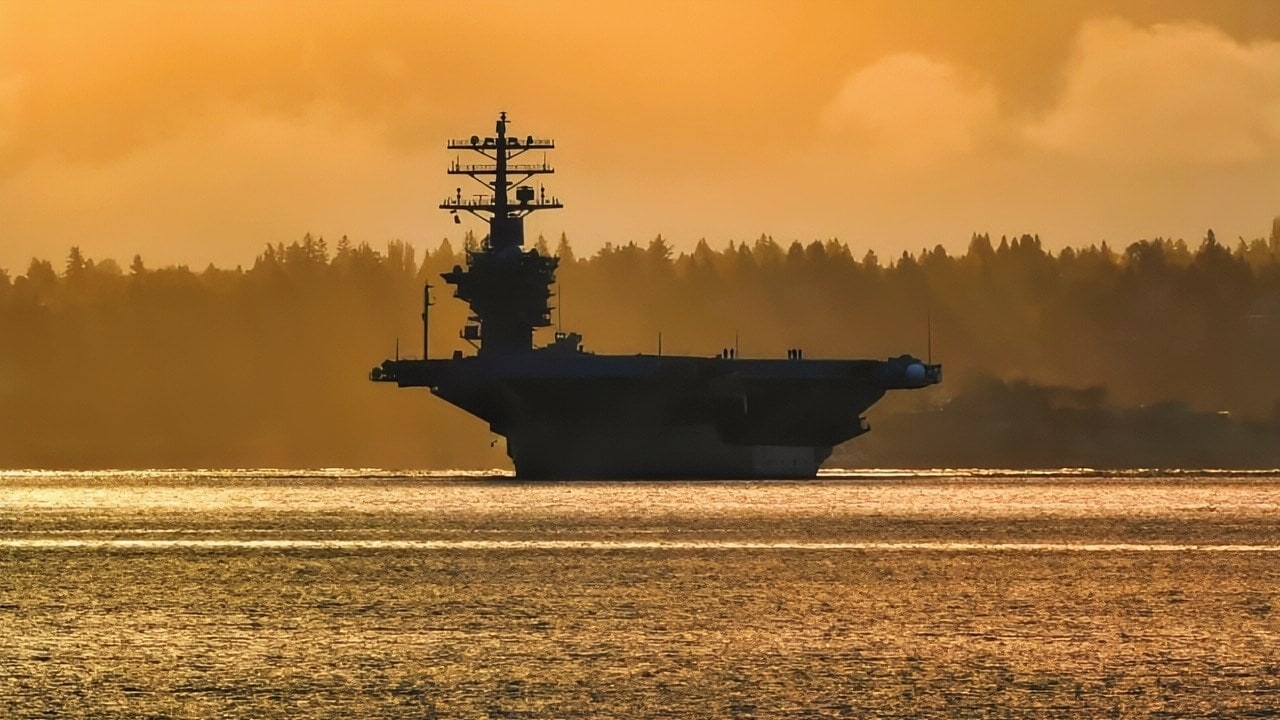
Key Points and Summary – USS Nimitz (CVN-68) returned to Naval Base Kitsap on Dec. 16, likely ending her final deployment and closing a 50-year chapter in carrier aviation.
-Commissioned in 1975, the first Nimitz-class ship served from the Cold War through today, from Desert Storm to counter-ISIS operations.
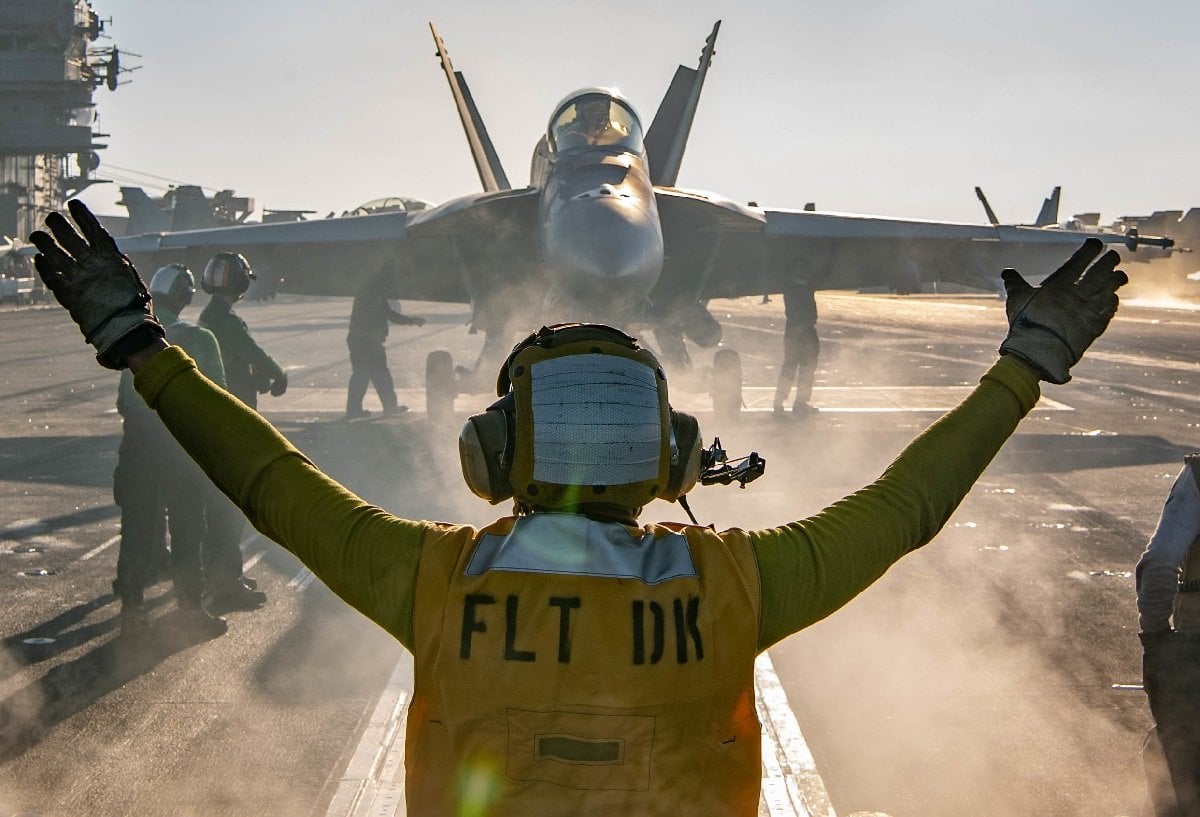
ARABIAN SEA (Jan. 17, 2021) A Sailor directs an F/A-18E Super Hornet from the “Kestrels” of Strike Fighter Squadron (VFA) 137 on the flight deck of the aircraft carrier USS Nimitz (CVN 68) during flight operations. Nimitz, the flagship of Nimitz Carrier Strike Group, is deployed to the U.S. 5th Fleet area of operations to ensure maritime stability and security in the Central Region, connecting the Mediterranean and Pacific through the western Indian Ocean and three critical chokepoints to the free flow of global commerce. (U.S. Navy photo by Mass Communication Specialist 3rd Class Charles DeParlier) 210117-N-JX182-1128.
-Her last cruise ranged from the Indo-Pacific to the Middle East, included flight operations, partner engagements, and the loss—and recovery—of two aircraft at sea.
-Now Nimitz moves toward formal decommissioning: maintenance in Bremerton, a 2026 shift toward Norfolk, nuclear defueling, and eventual dismantling.
-As Ford-class carriers arrive, her sendoff signals the start of the Nimitz-class transition.
Aircraft Carrier USS Nimitz Just Came Home—And It Could Be the End of a U.S. Navy Era
On December 16, the USS Nimitz (CVN-68) pulled into Kitsap Bay in Washington state, marking the end of her potentially final deployment. First commissioned in May 1975, Nimitz has had a long and eventful career, spanning the end of the Cold War to today.
Her eventual retirement marks the beginning of the end for the Nimitz-class carriers, as they are gradually being replaced by the newer, more advanced Ford-class carriers. Nimitz’s lifetime was exceptional and eventful, and her final outing was no exception. She partook in operations in the Middle East, patrolled the South China Sea, and lost two aircraft before finally returning home.
Legacy of the USS Nimitz
Commissioned on May 3, 1975, at Norfolk Naval Station, she was the first of the Nimitz-class nuclear-powered aircraft carriers, named in honor of Fleet Admiral Chester W. Nimitz, the legendary commander of the US Pacific Fleet during World War II.
From her earliest days, Nimitz embodied technological innovation and global reach. Her first Mediterranean deployment began in July 1976, and by 1977–78 she had completed a circumnavigation of the globe.
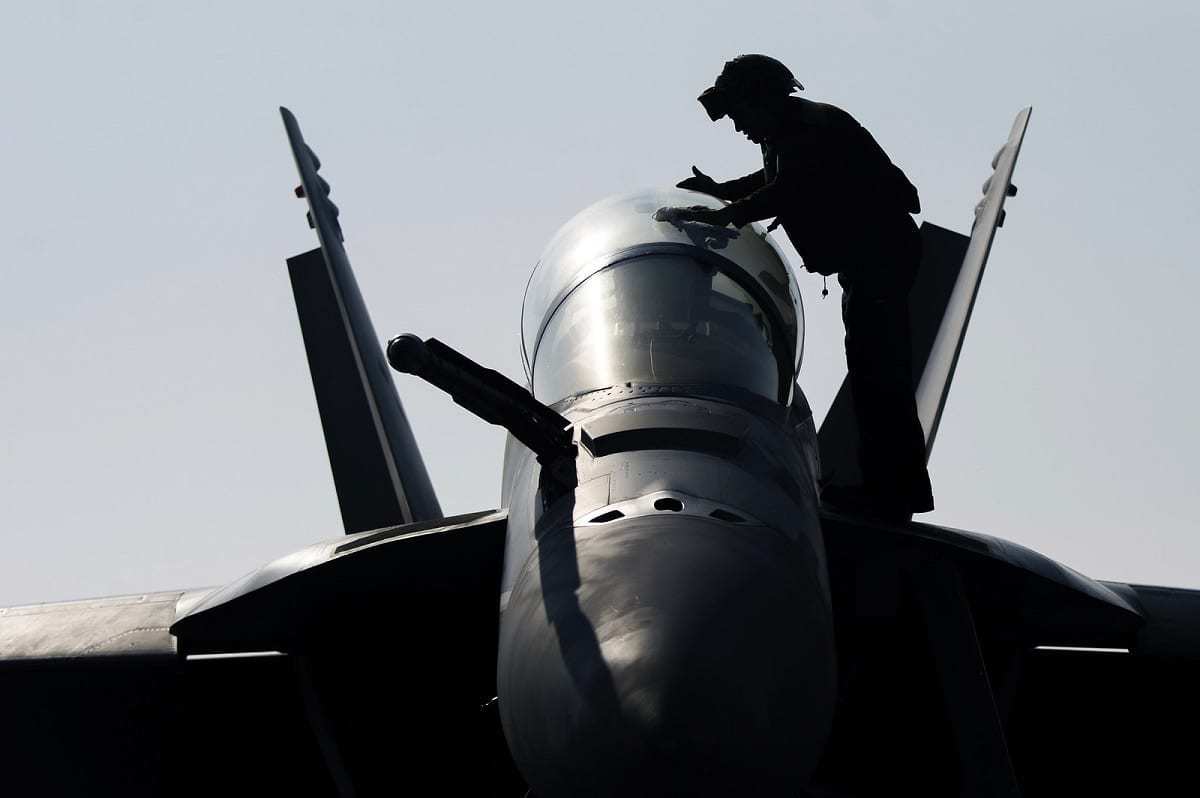
ADRIATIC SEA (June 2, 2018) Airman Louis Calderon wipes down the window of an F/A-18F Super Hornet assigned to the “Fighting Checkmates” of Strike Fighter Squadron (VFA) 211 on the flight deck aboard the Nimitz-class aircraft carrier USS Harry S. Truman (CVN 75). Harry S. Truman is operating in the U.S. 6th Fleet area of responsibility in support of maritime security operations alongside allies. (U.S. Navy photo by Mass Communication Specialist 3rd Class Rebekah A. Watkins/Released)180602-N-UJ486-0001
Over the decades, she played pivotal roles in major operations, including the attempted rescue of American hostages in Iran in 1980, combat missions during Operation Desert Storm in 1991, and later campaigns such as Iraqi Freedom and Enduring Freedom. She also supported strikes against ISIS in Syria in 2014 and completed a record-breaking 341-day deployment during the COVID-19 pandemic, covering nearly 99,000 nautical miles. Nimitz even marked a milestone in naval aviation when the F-35 Lightning II made its first carrier landing aboard her deck.
Her final deployment began in late March 2025, departing from Bremerton, Washington, and San Diego as the flagship of Carrier Strike Group 11. The mission spanned nine months and three major fleet areas, showcasing the carrier’s enduring versatility.
In the Indo-Pacific under the US 7th Fleet, Nimitz conducted extensive drills and made a port call in Guam in April, where a tragic incident occurred when a sailor went missing despite a five-day search effort. By May, she was engaged in exercises with the Japan Maritime Self-Defense Force in the Philippine Sea. She conducted freedom-of-navigation operations near the Malacca Strait before visiting Malaysia.
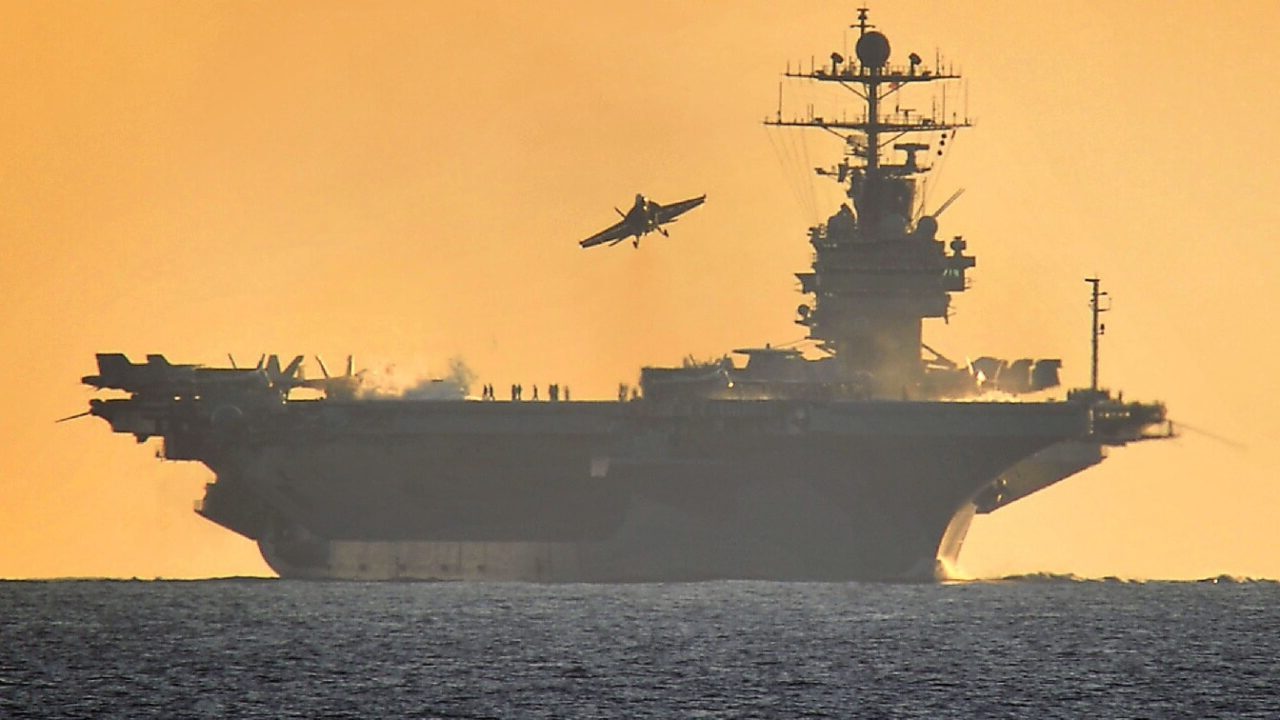
American Nimitz class aircraft carrier USS Harry S Truman is pictured during flying operations in the company of HMS Somerset in the Mediterranean. HMS Somerset was perforing anti-submarine duties for the immense vessel at the the time.
One Last Eventful Outing
In June, Nimitz transitioned to the Middle East under the US 5th Fleet, sailing alongside USS Carl Vinson and positioning in the Arabian Sea during Operation Midnight Hammer, which involved US strikes on Iranian nuclear sites.
Throughout this phase, she transited the Strait of Hormuz four times, projecting power amid heightened Iran-Israel tensions.
Her operations included supporting ceasefire conditions in the region, conducting strikes against ISIS positions in Somalia under US Africa Command, and maintaining freedom-of-navigation missions.
During this period, Nimitz visited Bahrain, Oman, and the United Arab Emirates, marking the first US carrier visits to Bahrain and the UAE in five years. These stops were not merely symbolic; they involved leadership exchanges and interoperability exercises with navies from Bahrain, UAE, France, India, Malaysia, Oman, Pakistan, Saudi Arabia, and Qatar, reinforcing the US Navy’s collaborative stance.
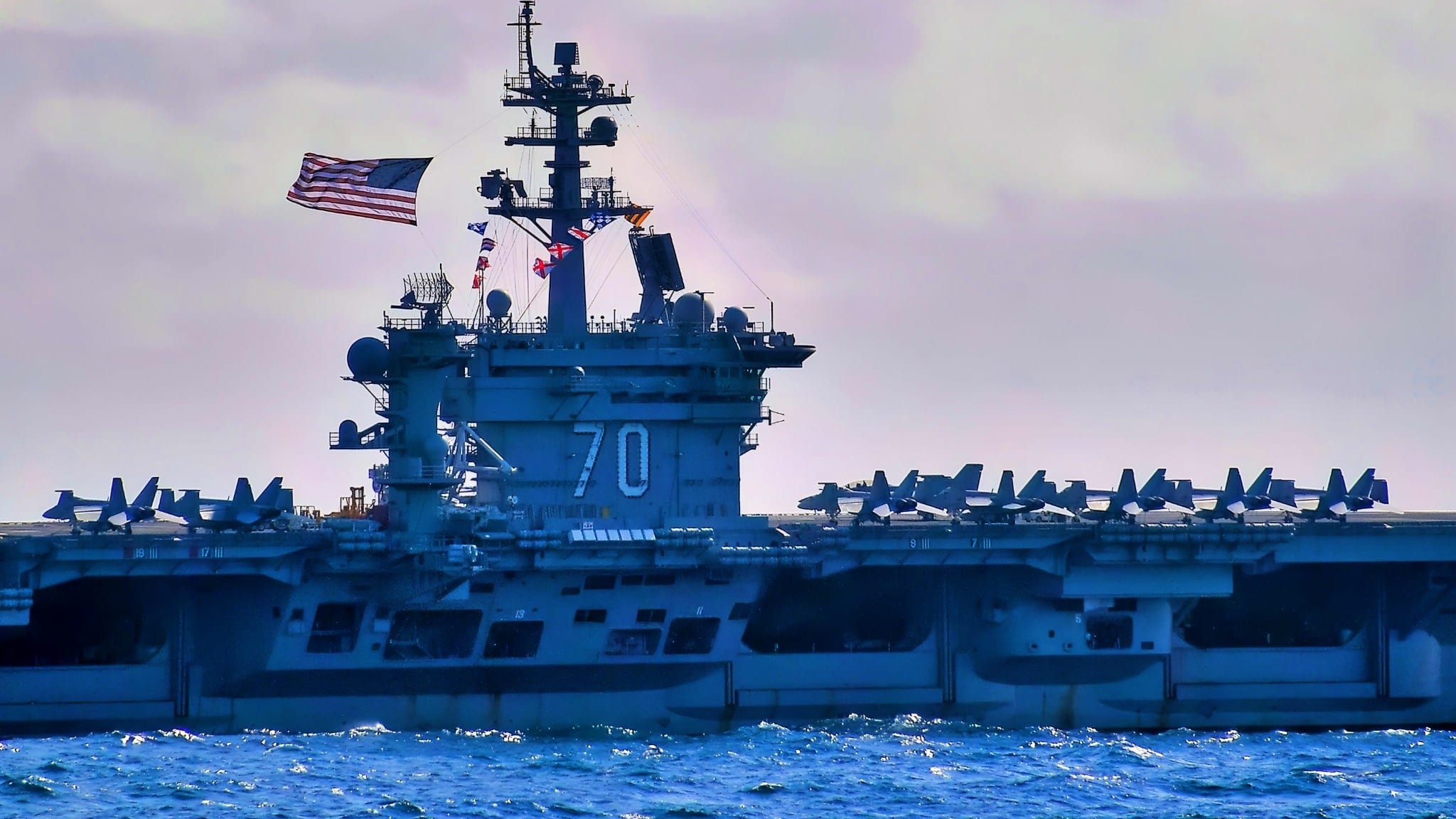
The Battle Ensign is flown aboard the Nimitz-class aircraft carrier USS Carl Vinson during an exercise with the Peru navy. Carl Vinson is supporting Southern Seas 2010, a U.S. Southern Command-directed operation that provides U.S. and international forces the opportunity to operate in a multi-national environment.
After months in the Middle East, Nimitz returned to the Indo-Pacific via the Singapore Strait. In late October, two aircraft, a Super Hornet and a Sea Hawk, were lost at sea within thirty minutes of each other, though all crew members were rescued and the aircraft were recovered in December. Nimitz continued her diplomatic and operational presence by participating in the Langkawi International Maritime and Aerospace Exhibition in Malaysia, strengthening regional partnerships.
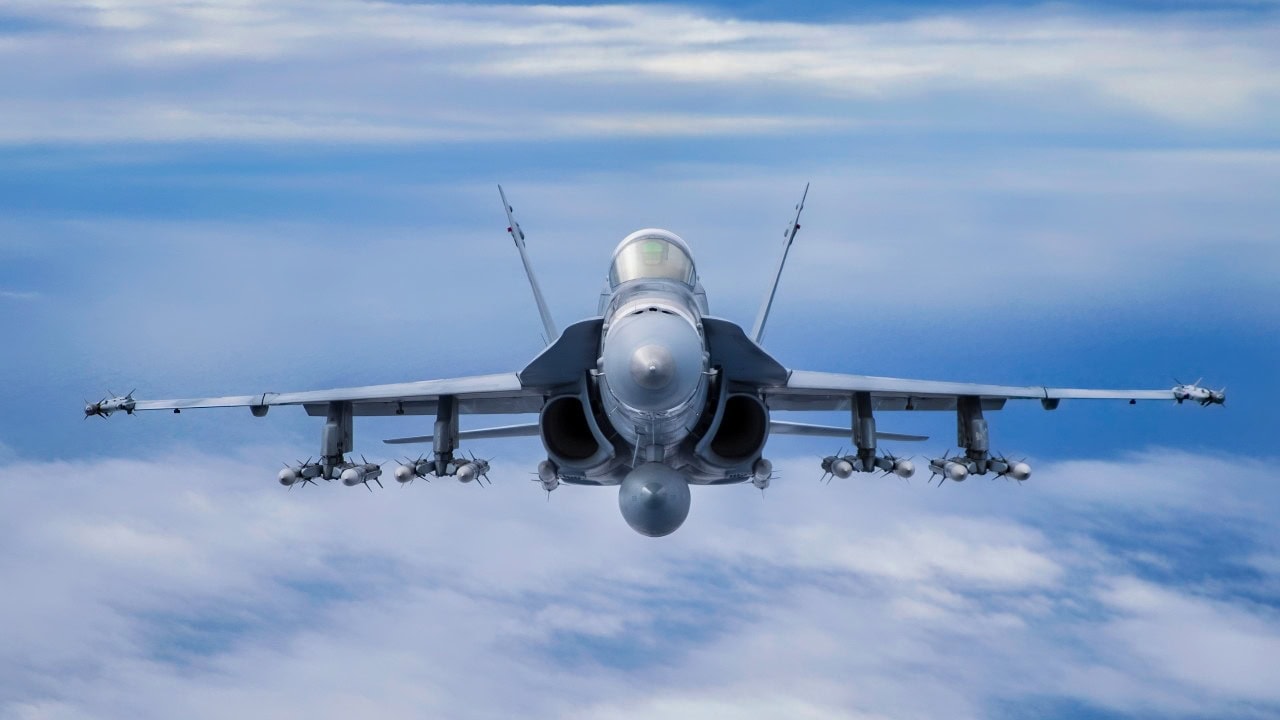
An F/A-18 Hornet with Marine Fighter Attack Squadron (VMFA) 323, MAG-11, 3rd Marine Aircraft Wing (MAW), carrying ten AIM-120 and two AIM-9X Air-to-Air missiles, prepares to refuel over the W-291 training area in southern California, March 6. MAG-11 supports and integrates aviation combat power and capabilities while enhancing 3rd MAW’s ability generate lethality for the supported Marine Air-Ground Task Force (MAGTF). (U.S Marine Corps photo by Sgt. Dominic Romero)
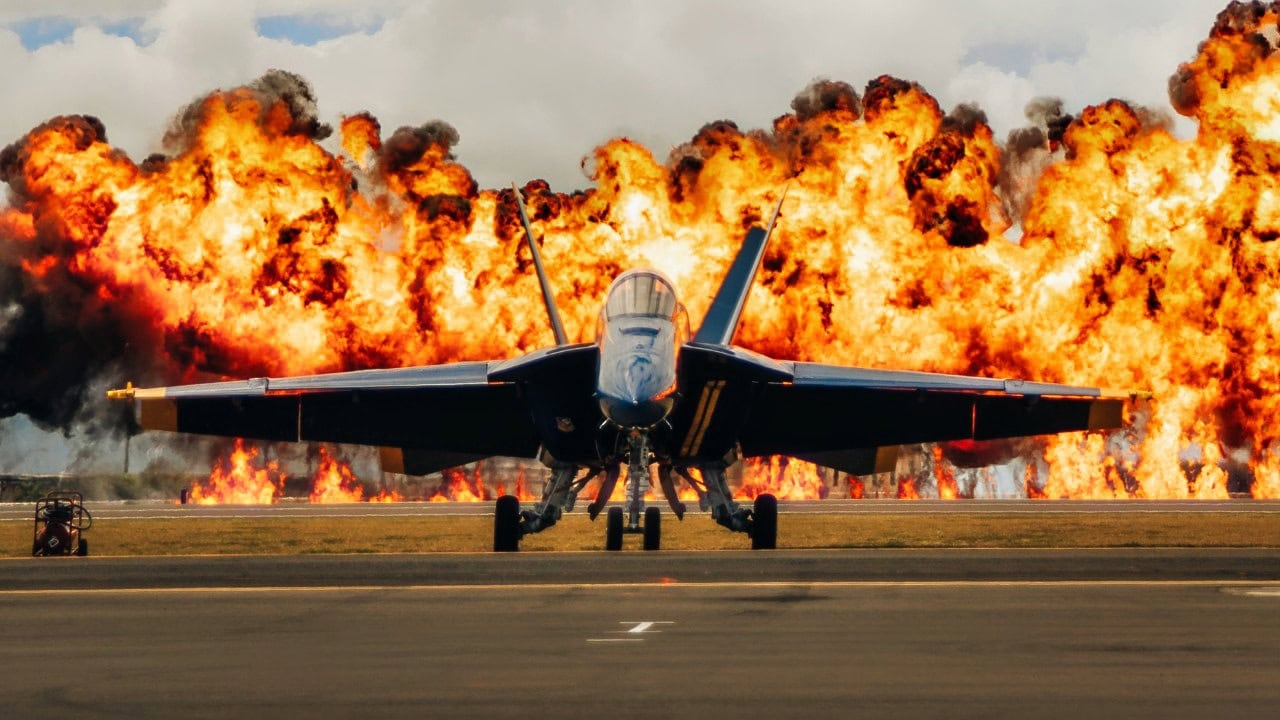
The ‘Wall of Fire” detonates behind two U.S. Navy Blue Angels F/A-18 Super Hornets during the 2022 Kaneohe Bay Air Show, Marine Corps Air Station Kaneohe Bay, Marine Corps Base Hawaii, Aug. 13, 2022. The air show provided an opportunity to demonstrate the capabilities of a Joint Force in the Indo-Pacific Region. The Kaneohe Bay Air Show, which contained aerial performances, static displays, demonstrations and vendors, was designed to express MCBH’s appreciation to the residents of Hawaii and their continued support of the installation. (U.S. Marine Corps photo by Cpl. Patrick King)
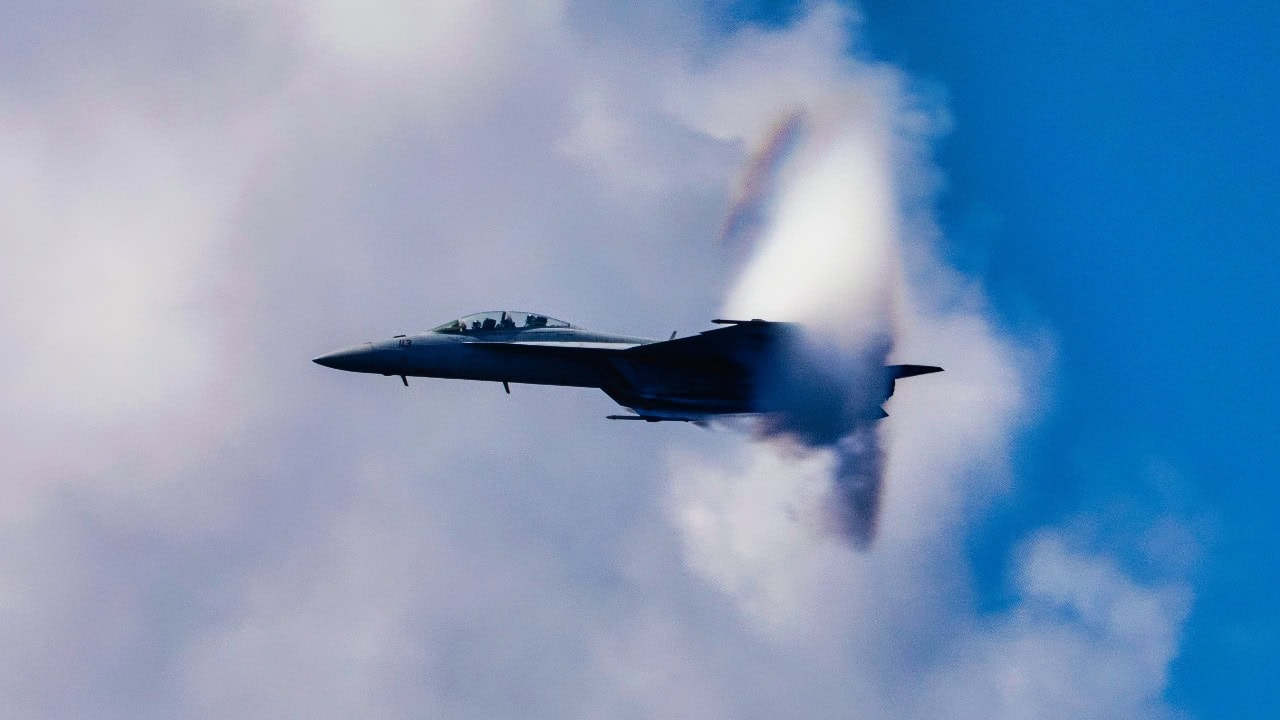
(June 18, 2023) An F/A-18F Super Hornet from the “Fighting Redcocks” of Strike Fighter Squadron (VFA) 22 breaks the sound barrier during flight operations near the aircraft carrier USS Nimitz (CVN 68). Nimitz is underway conducting routine operations. (U.S. Navy photo by Mass Communication Specialist 3rd Class Kevin Tang)
Her final legs included a stop at Pearl Harbor before arriving in San Diego on December 7, where Carrier Air Wing 17 disembarked. On December 16, Nimitz completed her journey by docking at Naval Base Kitsap in Bremerton after a 270-day deployment that covered approximately 82,000 to 99,000 nautical miles, involved more than 8,500 sorties, 17,000 flight hours, and 50 replenishments at sea. Families and crew shared emotional reunions as sailors stepped ashore for the last time aboard Nimitz.
Nimitz Nears Her End
With her final deployment complete, Nimitz now prepares for decommissioning. She will undergo maintenance in Bremerton before shifting her homeport to Norfolk in 2026, where nuclear defueling and deactivation will begin at Newport News Shipbuilding.
Unable to pass through the Panama Canal, she is expected to sail around Cape Horn en route to Norfolk, a fitting conclusion to her global legacy. Unlike some historic ships, Nimitz will not become a museum due to the complexities of her nuclear reactors; her reactor compartments will be disposed of in a secure repository, and the remaining hull will be scrapped. Her role will be assumed by newer Ford-class carriers such as USS John F. Kennedy (CVN-79), ushering in a new era of naval aviation.
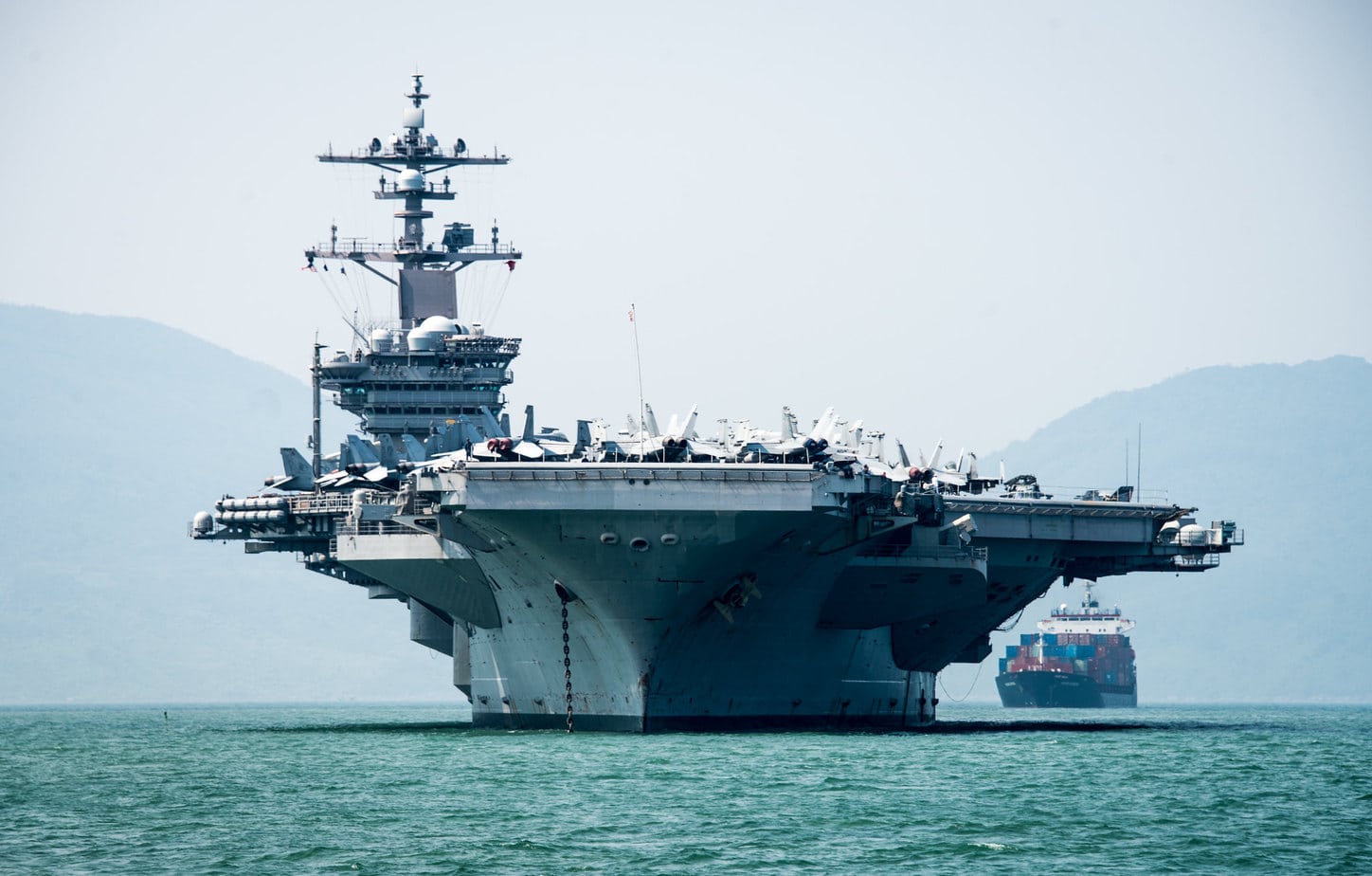
DA NANG, Vietnam (March 5, 2018) The Nimitz-class aircraft carrier USS Carl Vinson (CVN 70) arrives in Da Nang, Vietnam for a scheduled port visit. The Carl Vinson Strike Group is in the Western Pacific as part of a regularly scheduled deployment.
The USS Nimitz was an extraordinary vessel. She helped usher in next-generation technology, supported countless missions, and served as a home to thousands of sailors whose lives were shaped by her decks.
As she transitions to retirement, her legacy will endure in the ships that follow and in the memories of those who served aboard her. Her final voyage was not just a deployment but the closing chapter of an extraordinary story that showcased the power, commitment, and courage of the US Navy.
About the Author: Isaac Seitz
Isaac Seitz, a Defense Columnist, graduated from Patrick Henry College’s Strategic Intelligence and National Security program. He has also studied Russian at Middlebury Language Schools and has worked as an intelligence Analyst in the private sector.

