
Key Points and Summary – Nimitz-class carriers don’t publish an official top speed, but open sources consistently place them at 30-plus knots—roughly 35 mph—when ordered to flank.
-That number matters less than what it enables: wind over deck for launches and recoveries, rapid repositioning of the carrier’s strike radius, and the ability to complicate an adversary’s tracking picture.
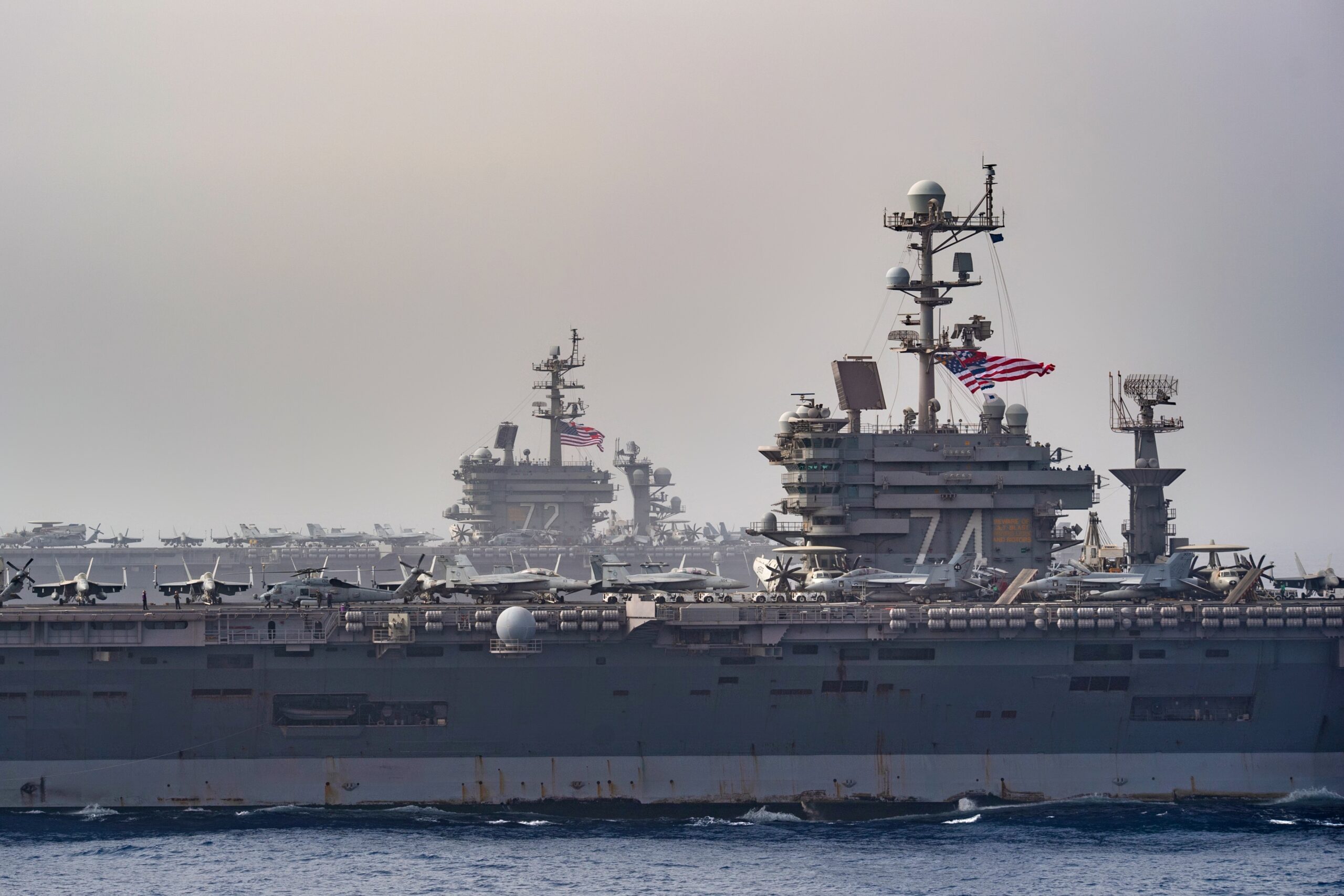
The aircraft carrier USS John C. Stennis (CVN 74) steams alongside the aircraft carrier USS Abraham Lincoln (CVN 72), background, in the Mediterranean Sea, April 24, 2019. The John C. Stennis Carrier Strike Group (CSG) 3 and Abraham Lincoln Carrier Strike Group (CSG) 12 are conducting dual carrier operations, providing opportunity for two strike groups to work together alongside key allies and partners in the U.S. 6th Fleet area of operations. John C. Stennis is underway in the Mediterranean Sea as part of the John C. Stennis Carrier Strike Group (JCSCSG) deployment in support of maritime security cooperation efforts in the U.S. 6th Fleet area of responsibility. (U.S. Navy photo by Mass Communication Specialist 3rd Class Grant G. Grady)
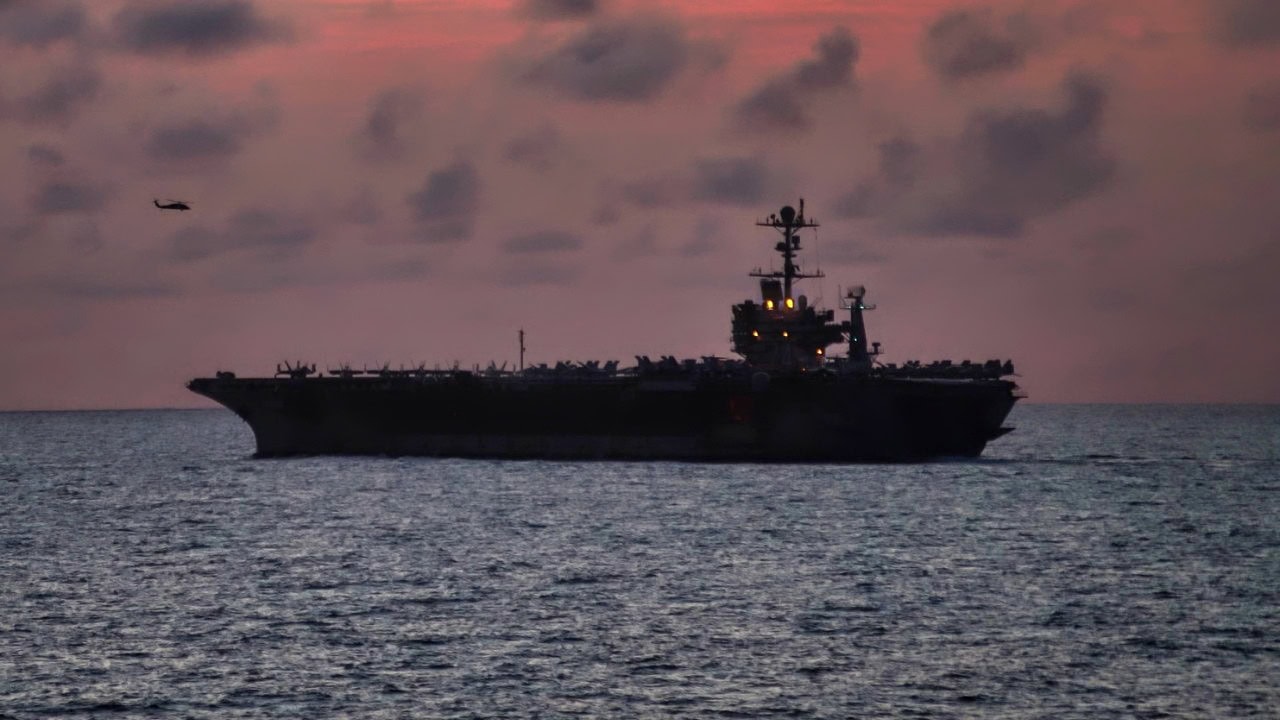
USS John C. Stennis Aircraft Carrier. Image Credit: Creative Commons.
-Two A4W reactors feed steam turbines that turn four shafts, giving the ship immense torque and sustained high-speed endurance without the fuel penalties of conventional propulsion.
In practice, carrier speed supports airpower productivity and crisis response, not surface combat racing. It’s a moving airfield, not a racecar.
The Nimitz Can Do 30+ Knots—Here’s Why That “Top Speed” Isn’t the Point
What is the flank speed of the Nimitz-class aircraft carrier?
Flank speed is a naval term meaning maximum sustainable speed for short periods, used during combat maneuvering, emergencies, or repositioning.
While the actual flank speed of the Nimitz is classified, publicly acknowledged estimates suggest she can move at about 35 miles per hour, or 30+ knots. Not bad for a vessel measuring one-fifth of a mile in length.
Top Speed of Flank Speed for Nimitz-Class Aircraft Carrier?
The Nimitz-class has served as the backbone of American naval power for half a century. First commissioned in the mid-1970s, the class was designed at the height of the Cold War to project air power globally. Powered by nuclear reactors, the Nimitz can operate for decades without refueling while carrying an entire air wing.
Essentially, the Nimitz transformed the aircraft carrier from a regional asset into a genuinely global tool of power projection, a role that has been central to US doctrine for decades. The platform’s success stems from a variety of factors, not just speed, though speed has indeed proven an asset.
The Navy deliberately avoids publishing exact top speeds. And frankly, top speed doesn’t matter as much as sustained high-speed endurance. For the power projection a Nimitz facilitates, endurance and mobility matter more than top speed.
But it’s still worth pointing out that there is a common misconception: that carriers are slow because they’re so large. The reality, however, is that carriers are faster than most surface combatants. Shocking but true. How does such a significant ship move so fast?
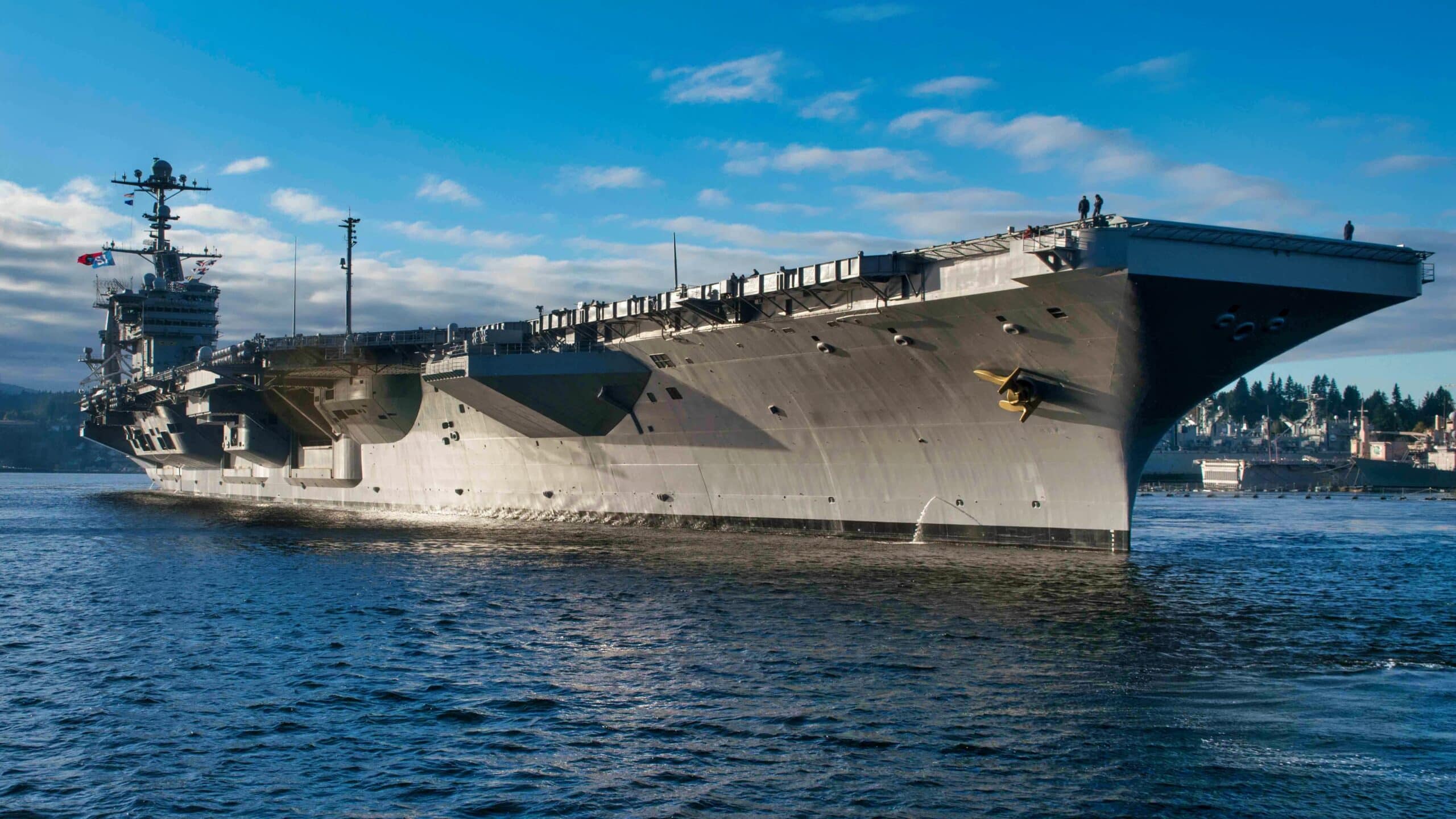
USS John C. Stennis Aircraft Carrier. Image Credit: Creative Commons.
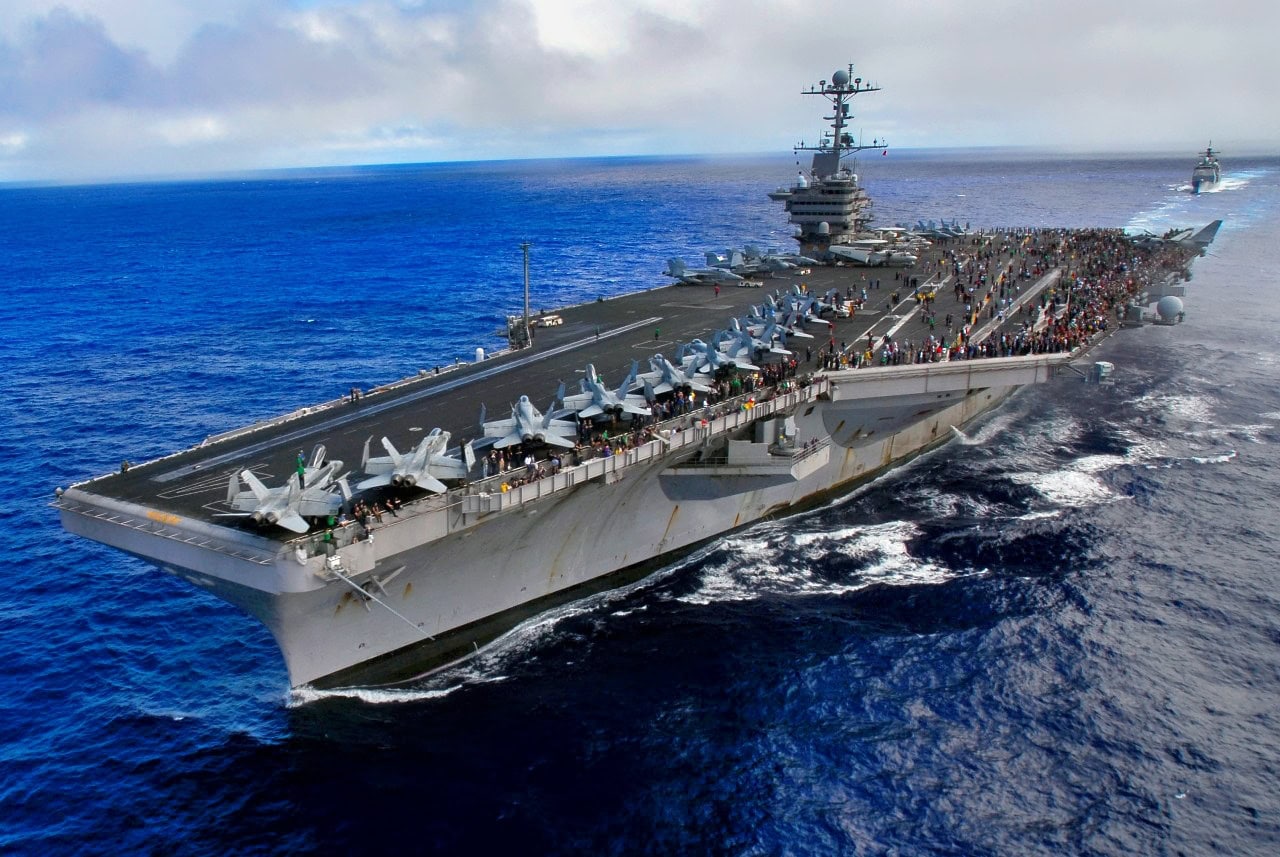
Nimitz class aircraft carrier USS John C. Stennis (CVN 74) leads guided-missile cruiser USS Antietam (CG 54) prior to conducting an air power demonstration. The air power demonstration showed the capability of Stennis and Carrier Air Wing 9 to service members’ family and friends who were invited to get underway with the ship. Stennis is returning to the United States after a 7 month long deployment promoting peace, regional cooperation and stability, and supporting the global war on terrorism.
The Nimitz relies on two A4W nuclear reactors for propulsion and power. The nuclear reactors offer advantages, namely unlimited range and no trade-off between speed and endurance. Steam turbines drive four shafts, which provide massive torque and sustained high speeds.
The vessel’s hull design also facilitates speed. The long, narrow waterline reduces drag; the entire vessel is optimized for open-ocean transit, rather than littoral maneuvering. So the result is that the Nimitz can spring when needed and cruise indefinitely.
Speed does matter for a carrier. It offers tactical flexibility. Speed enables an air wing to be repositioned over hundreds of miles in a single day. This generates surprise and uncertainty. Also, launching and landing aircraft carries wind-over-deck requirements.
So carriers are often charged with turning into the wing. And higher ship speed reduces reliance on natural wind. Speed also enhances survivability, especially as defense systems become more sophisticated, i.e., China’s A2/AD bubble, as speed complicates enemy targeting and forces constant updates to ISR. Speed also enables more effective crisis response, obviously, by allowing a vessel to arrive on scene more quickly.
Contextually, carrier speed is about air power projection, not surface combat.
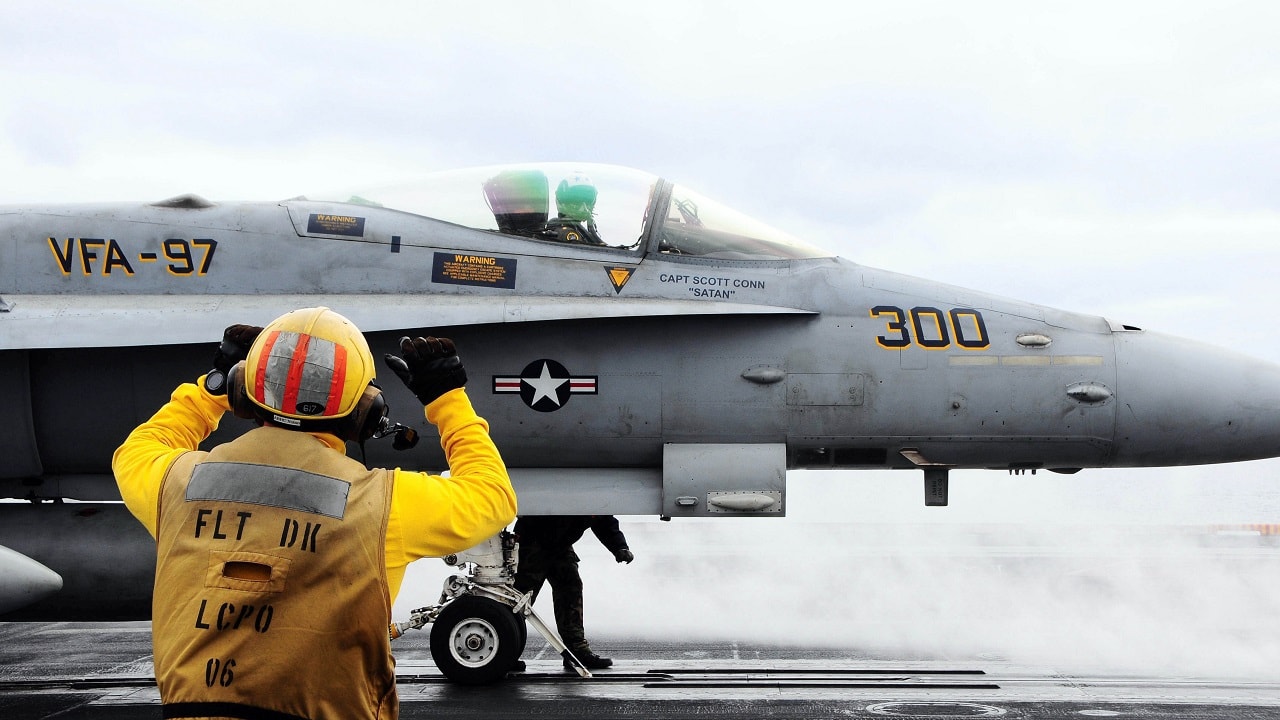
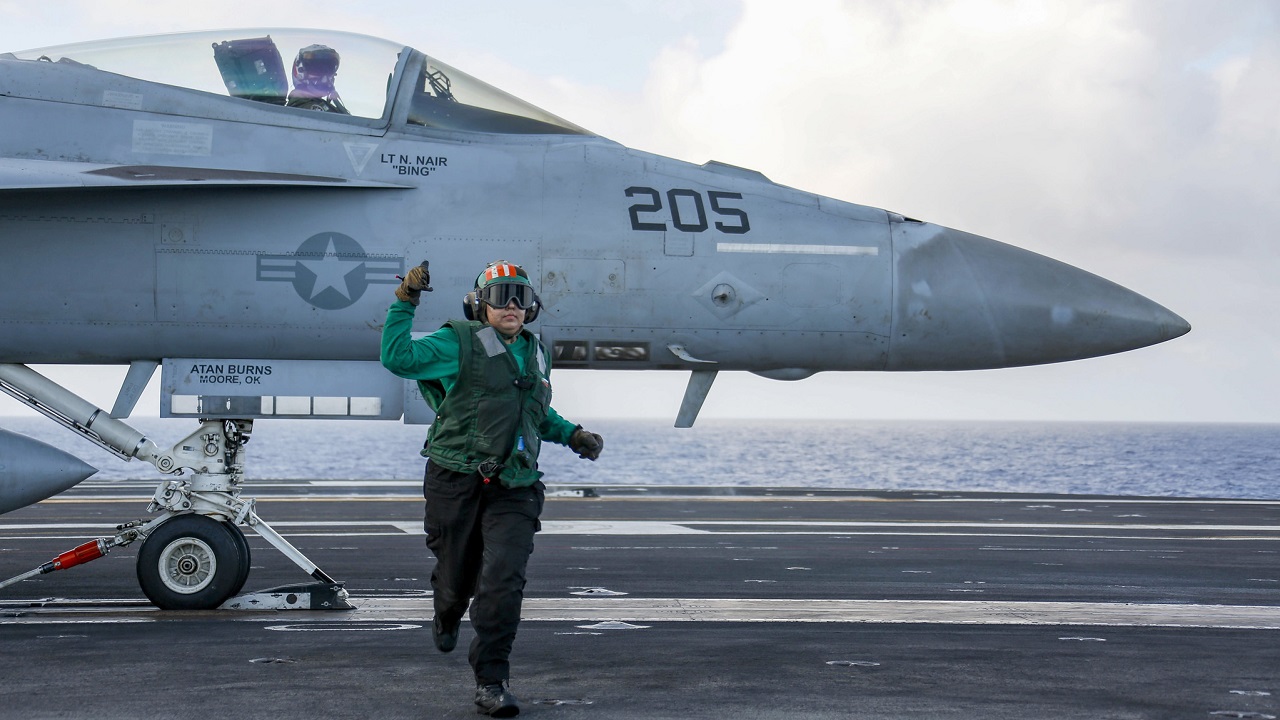
A Chief Aviation Boatswain’s Mate guides an F/A-18C Hornet assigned to the “Warhawks” of Strike Fighter Squadron 97 into place on catapult three aboard the aircraft carrier USS Nimitz. Nimitz and Carrier Air Wing 11 are conducting a Composite Training Unit Exercise off the coast of Southern California in preparation of a scheduled deployment to the western Pacific Ocean.
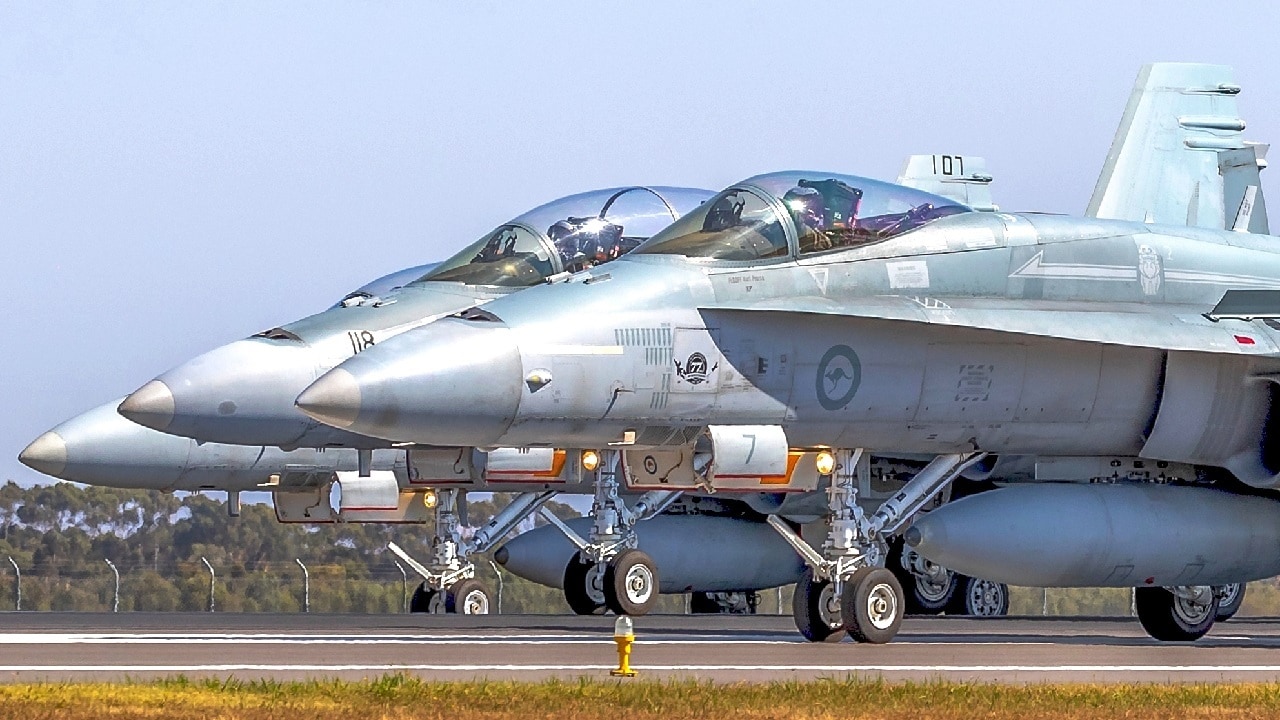
Block III F/A Super Hornet. Image Credit: Creative Commons.
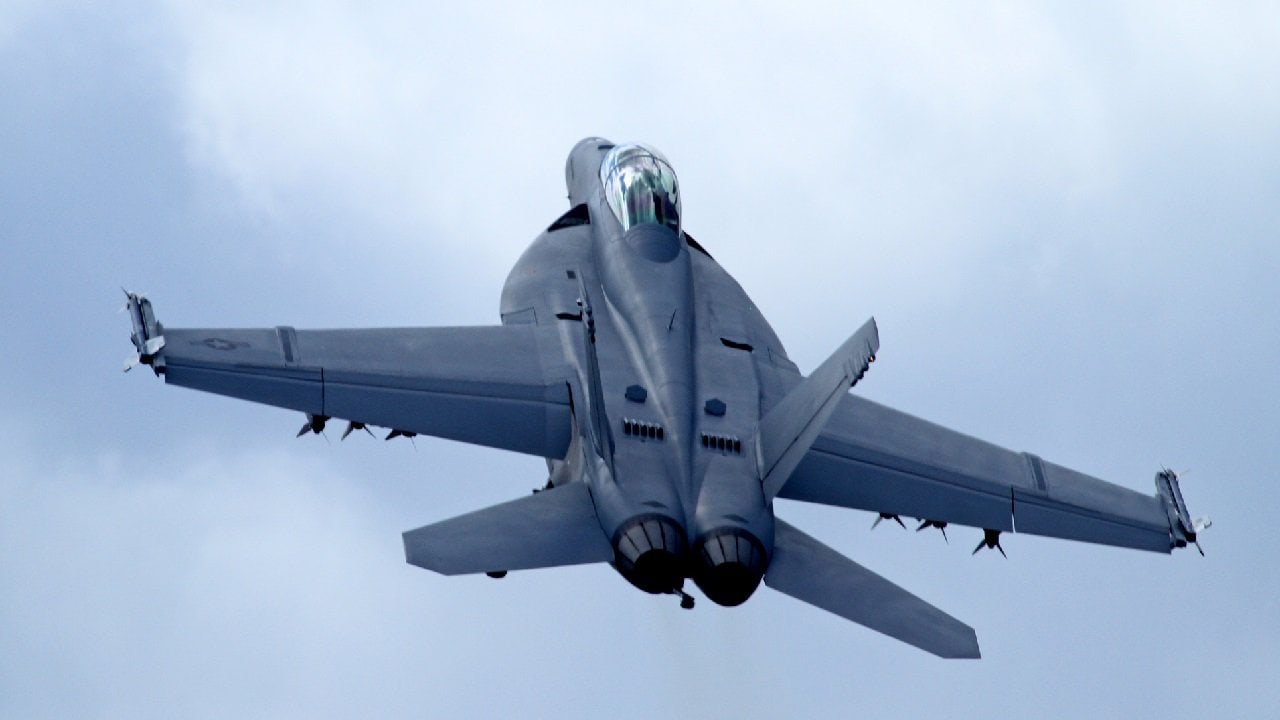
Block III F/A-18 Super Hornet.
A carrier is not going to race against a destroyer. Instead, the airline uses speed to move the airfield itself, to shift the strike radius. This allows flexible launch and recovery cycles, or quick withdrawal from threat zones. In a sprawling geography, like the Indo-Pacific, speed supports wide-area operations across enormous distances.
But speed itself is not a cure-all. Carriers are not stealthy—and they operate as part of a larger carrier strike group (CSG). Speed will not negate hypersonic “carrier-killer” missiles or long-range ISR. Speed complicates ISR or missile deployment but does not defeat them outright.
Ultimately, carriers are not used to chase targets; speed has no application in that respect.
Instead, speed in the carrier context is about bringing sustained air power anywhere on Earth. The Nimitz has been uniquely successful over the decades because it can combine speed, endurance, and scale in a way few military platforms ever have.
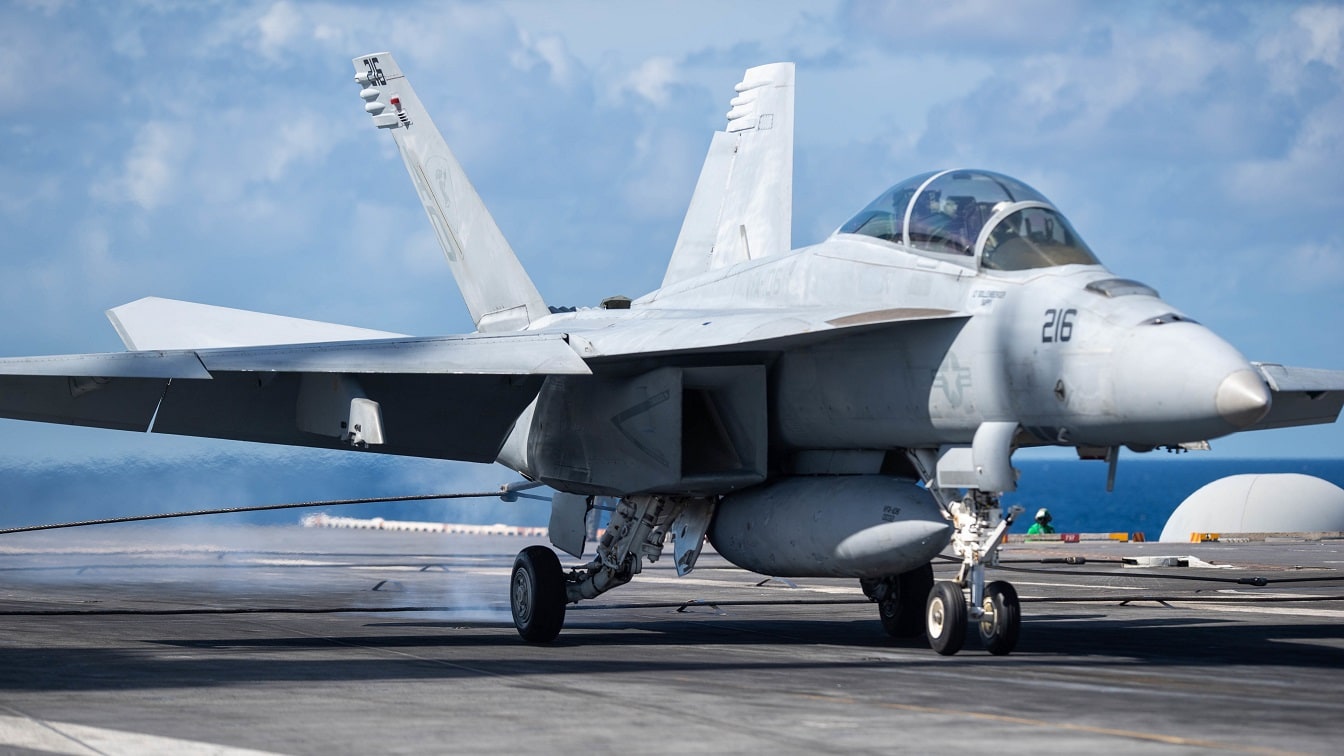
An F/A-18F Super Hornet, assigned to Strike Fighter Squadron (VFA) 106, catches an arresting gear wire while landing on the flight deck of the aircraft carrier USS John C. Stennis (CVN 74) in the Atlantic Ocean, Nov. 4, 2019. The John C. Stennis is underway conducting routine operations in support of Commander, Naval Air Force Atlantic. (U.S. Navy photo by Mass Communication Specialist 2nd Class Grant G. Grady)
The Nimitz is sunsetting, however. The first ships in the class are now half a century old. Reactors and hulls are nearing their end-of-life. Maintenance costs are increasing as ships degrade and parts become more outdated.
The Ford-class is arriving as a timely replacement, offering more efficient power generation, EMALS and AAG innovations, and a higher sortie generation rate (SGR). Still, the Nimitz remains a capable platform, suggesting just how ahead of her time she was when she debuted.
And her speed, specifically, is still impressive; she is fast and capable. Her replacement isn’t about raw performance metrics, though, it’s about efficiency and the potential for future growth.
About the Author: Harrison Kass
Harrison Kass is an attorney and journalist covering national security, technology, and politics. Previously, he was a political staffer and candidate, and a US Air Force pilot selectee. He holds a JD from the University of Oregon and a master’s in global journalism and international relations from NYU.