
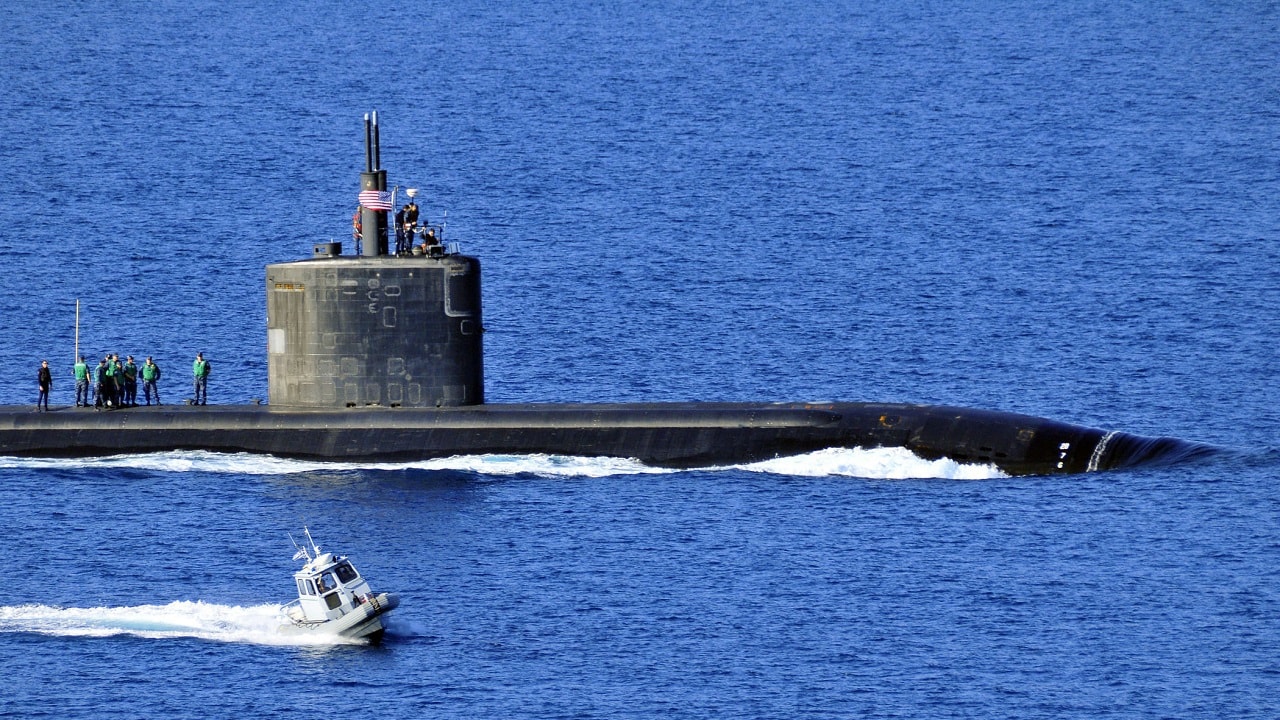
“We built the best submarine ever, and now we can’t replace it. The U.S. Navy has no real solution for this.” That’s how a former U.S. Navy commanding officer explained the situation with the Los Angeles-class submarine to me just recently. Many naval experts consider them the best submarines to ever sail for many reasons. But now, with their retirement coming fast, and the Virginia-class coming online slowly, the Navy has a numbers crisis on its hands. As one retired NATO offical told me just yesterday: “The Los Angeles-class was the best Cold War submarine to sail, but now, your country made half-baked plans to replace them. Now the U.S. Navy will pay for it.”
The Los Angeles-Class Submarine Story
“This was a statement sinking.” That’s how a former member of President Obama’s National Security Council explained it to me over the weekend. The Los Angeles-class still had the tools to destroy anything on the open ocean.
The torpedo wake left a track in the Indian Ocean that the U.S. Navy had not drawn in eighty years.
On the morning of March 4, 2026, the Los Angeles-class fast-attack submarine USS Charlotte put a Mark 48 heavyweight torpedo into the Iranian frigate IRIS Dena roughly nineteen nautical miles off the southern coast of Sri Lanka. The Pentagon released periscope video showing the explosion lifting the ship’s stern out of the water. Dena sank in two to three minutes. Sri Lankan rescue forces eventually pulled 32 sailors out of the water and recovered 87 bodies. According to U.S. Defense Secretary Pete Hegseth, who confirmed the engagement at a Pentagon briefing, Charlotte fired the weapon during the 2026 Iran war.
It was the first time a U.S. Navy submarine had sunk an enemy warship with a torpedo since the Pacific theater of World War II. It was the first combat engagement by a U.S. nuclear-powered attack submarine in the class’s entire history. And it was performed by a boat from a class the Navy is now retiring as fast as it can decommission them — because the reactors are running out, and the replacements are not coming online fast enough.
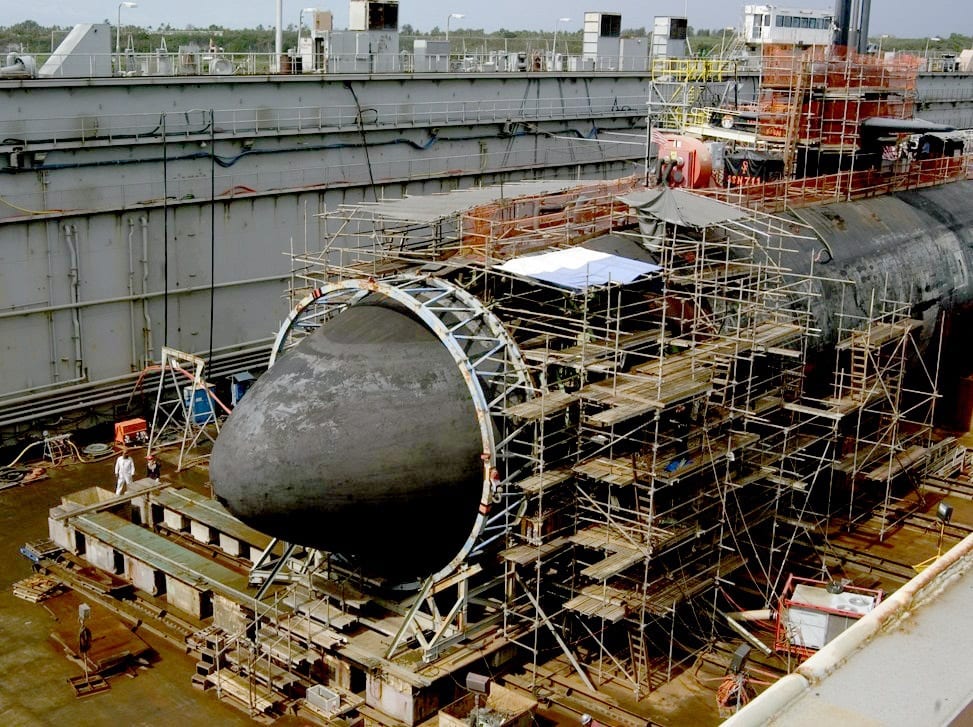
Apra Harbor, Guam (May 8, 2005) The Los Angeles class submarine USS San Francisco (SSN 711) shown in dry dock is having repairs made on its damaged bow. A new large steel dome about 20 feet high and 20 feet in diameter was put in the place of the damaged bow. San Francisco ran aground 350 miles south of Guam Jan. 8, killing one crew member and injuring 23. U.S. Navy photo (RELEASED)
To understand the Los Angeles-class, we need to step back in time.
Why The Navy Built The 688
The Los Angeles-class — known to crews and contractors as the 688, after the hull number of the lead ship — was conceived in 1967 as a direct response to a problem the U.S. Navy had not faced since the early Cold War: Soviet submarines that could keep up with American carrier battle groups.
By the mid-1960s, Soviet fast-attack submarines were achieving speeds sufficient to track and threaten U.S. carriers at sea, and Soviet missile submarines were being built with the capacity to overwhelm a battle group’s defenses with simultaneous salvos. The American Sturgeon-class boats that constituted the bulk of the U.S. attack submarine fleet were quiet, but they were too slow. A Sturgeon could not chase a Soviet boat that did not want to be chased.
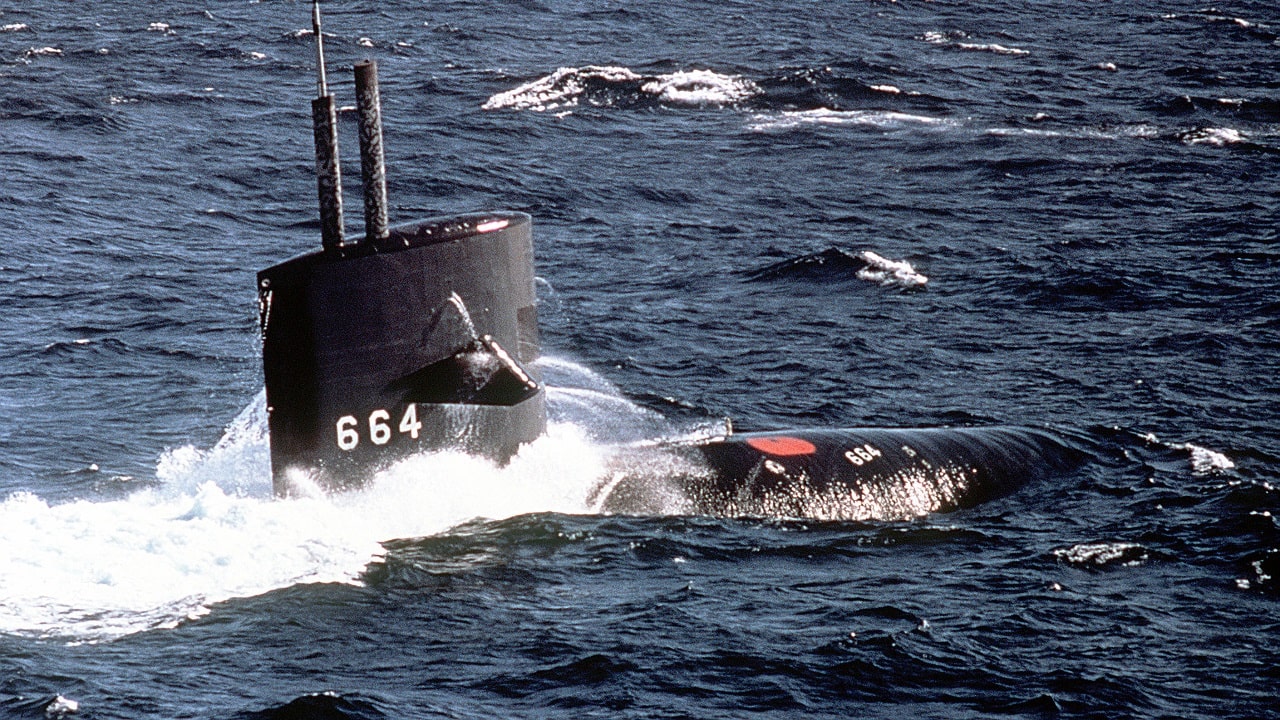
A starboard bow view of the nuclear-powered attack submarine USS SEA DEVIL (SSN-664) underway off the Virginia Capes.
The trigger event in the historical narrative came in January 1968, when the carrier USS Enterprise transited out of San Francisco Bay bound for Vietnam and was shadowed by Soviet vessels with no American attack submarine fast enough to keep pace. Within weeks, Admiral Hyman Rickover — the father of the nuclear Navy — convened seven submarine commanders in secret to design a new boat. The team came back in roughly 90 days with a design optimized around one requirement above all others: speed.
The result, the 688, was approximately fifty percent larger than the Sturgeon-class and carried major improvements in stealth and propulsion architecture. The Department of Defense officially listed the class’s top speed as “25-plus knots.” Tom Clancy, in his book Submarine: A Guided Tour Inside a Nuclear Warship, estimated the actual top speed at roughly 37 knots. The Navy has never confirmed the figure. Operating depth is officially given as 650 feet, with classified figures believed to be considerably deeper.
The trade-off behind the 688 was acknowledged at the time and has been debated ever since. To get the speed, the design committee gave up some of the diving depth the previous Sturgeon-class had achieved. The team believed a future iteration would solve that. It never did.
The first Los Angeles-class boat — USS Los Angeles (SSN-688) herself — was laid down in 1972 by Newport News Shipbuilding, launched in 1974, and commissioned in November 1976. By the time the last hull, USS Cheyenne (SSN-773), was completed in 1996, the United States had built 62 boats of the class — the largest production run of nuclear-powered attack submarines in history.
When Rickover was asked why the class had broken with the Navy’s tradition of naming attack submarines after marine animals — Skipjack, Sturgeon, Seawolf — and switched to naming them after American cities, he reportedly replied: “Fish don’t vote.”
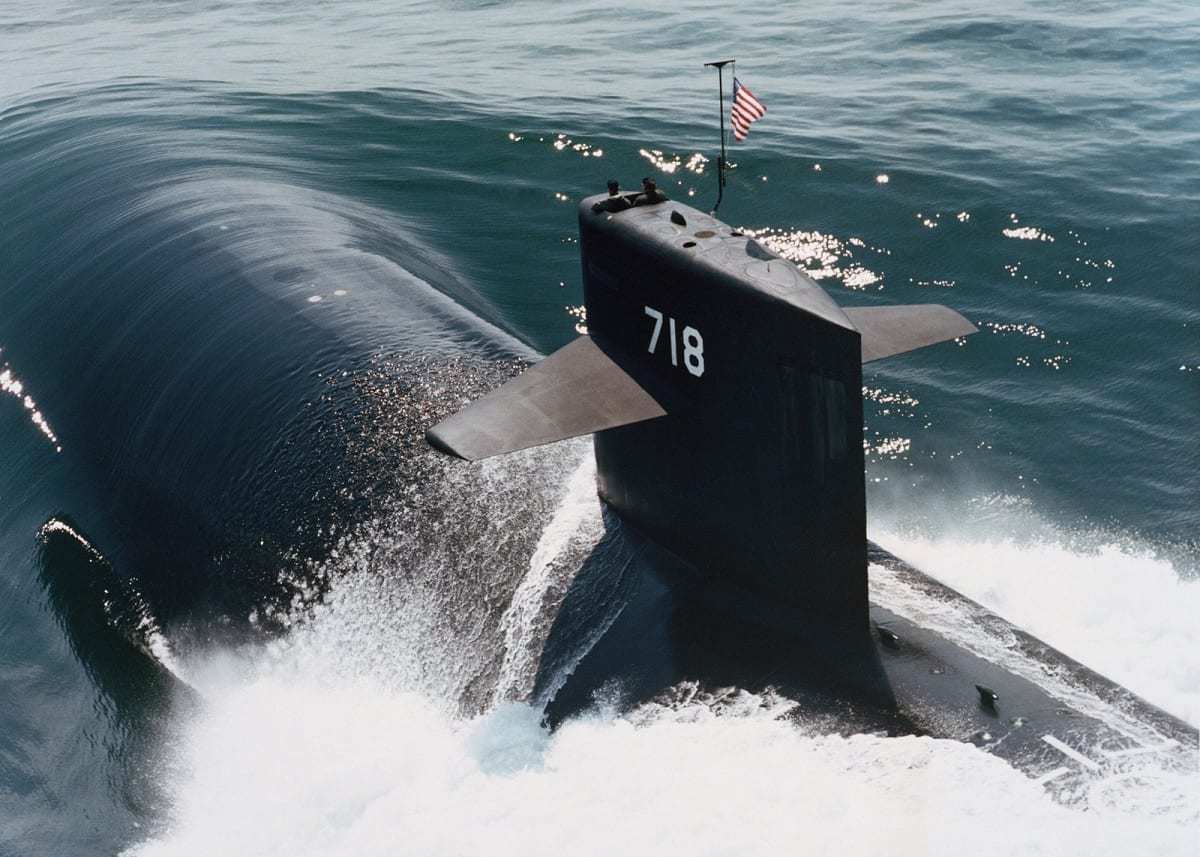
Aerial port quarter view of the sail area of the Los Angeles class nuclear-powered attack submarine USS HONOLULU (SSN 718). The submarine is underway during sea trials.
The Three Flights And What They Carried
The Los Angeles-class evolved across three production flights, each adding capability.
Flight I boats (SSN-688 through SSN-718) established the baseline. Four 21-inch bow torpedo tubes capable of firing Mark 48 heavyweight torpedoes, Tomahawk land-attack and anti-ship cruise missiles, and Harpoon anti-ship missiles, all launched horizontally from the torpedo tubes. The boats carried roughly 25 weapons in their internal magazine. Their primary sonar was the AN/BQQ-5 system, with a spherical bow array of 1,241 transducers, a conformal hull array of 104 to 156 hydrophones, and towed arrays trailing astern.
Flight II boats (SSN-719 through SSN-750), beginning with USS Providence (SSN-719) in 1985, added a section forward of the sail housing twelve dedicated Vertical Launch System tubes for Tomahawk cruise missiles. For the first time, a 688 could deliver a substantial cruise missile salvo without consuming torpedo tube capacity for it.
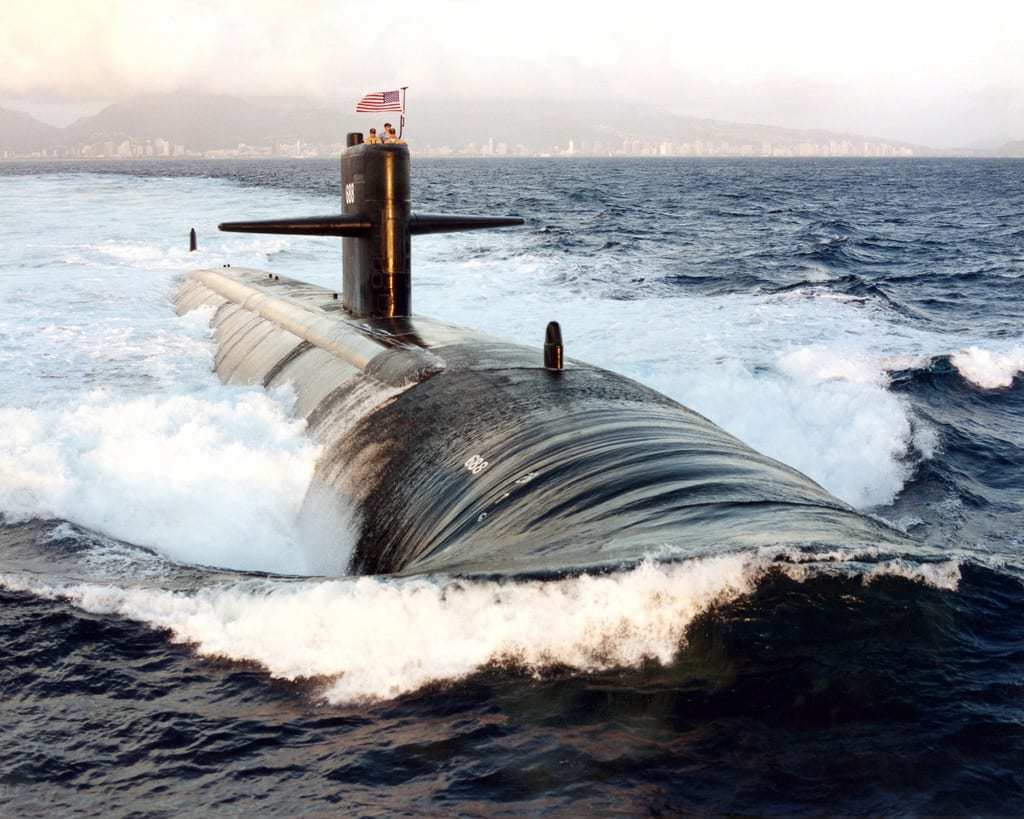
Starboard bow view of the US Navy (USN) LOS ANGELES CLASS: Attack Submarine, USS LOS ANGELES (SSN 688) underway off the coast of Oahu, Hawaii (HI).
Flight III, also designated the 688i (Improved), began with USS San Juan (SSN-751) in 1988. The 688i variant moved the diving planes from the sail to the bow, reinforced the sail for under-ice operations, added a mine-laying capability, integrated the new AN/BSY-1 combat system, and incorporated significant noise-reduction work. The Flight III boats were purpose-configured to hunt the latest Soviet hunter-killers — the Sierra-class titanium-hulled boats and the Akula-class — and to track Soviet ballistic missile submarines into their Arctic bastions.
The total ammunition load varied by flight. The Flight I boats could carry 25 weapons in the torpedo room. The Flight II and Flight III boats added 12 dedicated Tomahawk launch tubes on top of the torpedo room loadout.
What The 688s Actually Did During The Cold War
The Cold War combat record of the Los Angeles-class is, by definition, mostly classified. What is known is enough to outline the mission set.
The class spent most of its early operational life on intelligence collection and adversary tracking. American attack submarines monitored Soviet naval movements across the Mediterranean, the Atlantic, and the Pacific, gathering acoustic intelligence on every Soviet submarine class as it deployed. The U.S. submarine force operated under what would later be acknowledged as the Maritime Strategy — articulated publicly by Secretary of the Navy John Lehman in 1985 and codified in 1986 by Chief of Naval Operations Admiral James Watkins, who declared that U.S. attack submarines would “wage an aggressive campaign against all Soviet submarines, including ballistic missile submarines.”
The mission set widened with time. Trailing Soviet ballistic missile boats. Probing the approaches to Soviet naval bases on the Kola Peninsula. Operating under the Arctic ice cap. Conducting acoustic surveillance from inside Soviet operating areas, the Soviets believed to be sanitary.
After the Cold War ended, the Los Angeles-class found a second career as a precision strike platform. The boats fired Tomahawk cruise missiles into Iraq during Operation Desert Storm in 1991, into Yugoslavia during NATO operations in the Balkans, into Afghanistan in 2001, and into Iraq again in 2003. The 688i variant in particular evolved from a pure hunter-killer into a flexible strike platform, capable of holding Tomahawk salvo capacity in reserve while still maintaining the anti-submarine warfare capability that defined the original mission.
The boats also lost ships in peacetime. USS Miami (SSN-755) was destroyed by arson during a 2012 overhaul at Portsmouth Naval Shipyard and was eventually written off rather than repaired. USS San Francisco (SSN-711) struck an undersea mountain at flank speed near Guam in January 2005, killing one sailor and severely damaging the bow. The boat survived the impact and was repaired. The accident prompted significant changes in submarine navigation procedures.
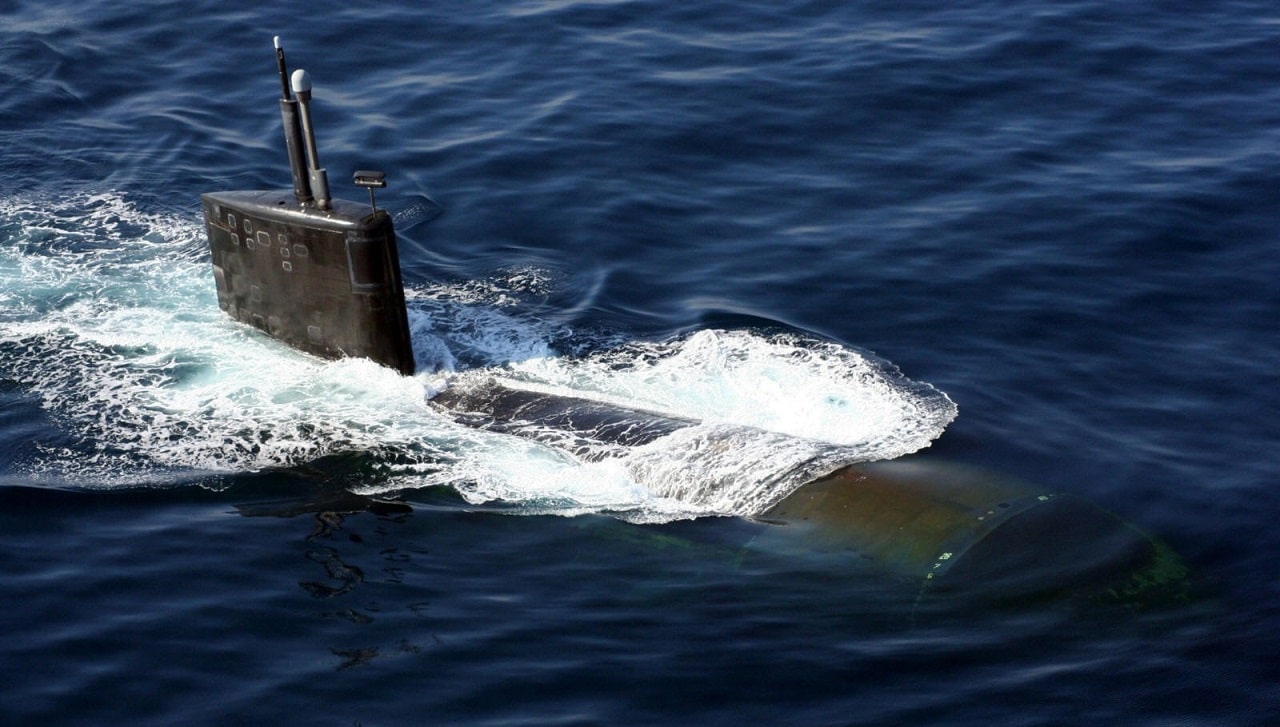
USS Miami. Image Credit: Creative Commons.
March 4, 2026: The First American Submarine Sinking In Eighty Years
The Iran war that began in early 2026 produced the moment the entire submarine force had been training for since World War II without ever expecting to perform.
USS Charlotte (SSN-766), a Flight III 688i boat commissioned in 1994, was operating in the Indian Ocean as part of U.S. operations against Iranian forces during what would come to be known as the 2026 Iran war. According to multiple verified accounts, the Iranian Moudge-class frigate IRIS Dena was returning home from the International Fleet Review in India and the multinational Exercise Milan when she crossed Charlotte’s operating area roughly nineteen nautical miles south of Galle, Sri Lanka.
Charlotte fired two Mark 48 heavyweight torpedoes. One hit. The 1,500-tonne frigate sank in roughly two to three minutes. Of the approximately 130 crew aboard, reports indicate 87 bodies were recovered and 32 personnel were rescued, with the remainder missing.
The strategic novelty of the sinking is hard to overstate. It was only the fourth time in the entire post-1945 era that any submarine had sunk a warship in combat — joining the Pakistani submarine PNS Hangor (which sank the Indian frigate INS Khukri in 1971), the British nuclear submarine HMS Conqueror (which sank the Argentine cruiser ARA General Belgrano in 1982), and the North Korean midget submarine that sank the South Korean corvette ROKS Cheonan in 2010. Charlotte’s strike was the first U.S. submarine torpedo sinking of any kind since the closing weeks of the Pacific war.
The sinking also produced significant diplomatic friction. Australian Prime Minister Anthony Albanese confirmed that three Royal Australian Navy personnel were aboard Charlotte at the time of the engagement, embedded under the AUKUS submarine training program. Albanese stated that the Australian sailors took no part in offensive action. Indian commentators raised concerns about the use of force in what the Indian government considers its maritime neighborhood. Iranian officials called the attack an atrocity at sea. Legal scholars, including the editors of the Newport Manual on the Law of Naval Warfare, concluded that the strike was lawful under customary international law governing armed conflict at sea.
The single Mark 48 torpedo that did the work cost the U.S. Navy roughly $4.2 million, according to Department of the Navy fiscal year 2025 budget estimates.
Why The Class Is Being Retired Faster Than It Can Be Replaced
The Los Angeles-class has a hard expiration date built into its hulls.
A Los Angeles-class submarine is powered by a single S6G nuclear reactor whose core has a service life of roughly 30 to 35 years before refueling. Refueling a 688 means cutting the hull open, replacing the core, and welding it shut again — a multi-year, multi-hundred-million-dollar undertaking. As the class has aged, the Navy has refueled some boats and chosen not to refuel others. The boats whose midlife refuelings were canceled have been retired early.
The mathematics is unforgiving. Of the 62 boats built, the majority have already been decommissioned. As of the most recent counts available, only a few dozen Los Angeles-class boats remain in active service, with steady retirements continuing through the late 2020s and into the 2030s.
The replacement, the Virginia-class, is an excellent submarine — quieter than the Los Angeles, more capable in nearly every measurable dimension, and equipped with a life-of-the-ship reactor core that requires no midlife refueling. American shipyards, however, are delivering Virginia-class boats more slowly than the Los Angeles-class is retiring. The Navy’s planned next-generation attack submarine, the SSN(X), has slipped to the early 2040s for the start of production.
Every Los Angeles-class boat that retires before a Virginia-class boat enters service is a net loss to American undersea capability. China is launching submarines at a rate American yards cannot match. Russia is fielding the Yasen-class, which by some metrics is quieter than a frontline Virginia. The strategic environment in which the 688s operated — and in which Charlotte just demonstrated the class is still combat-relevant — is getting harder, not easier.
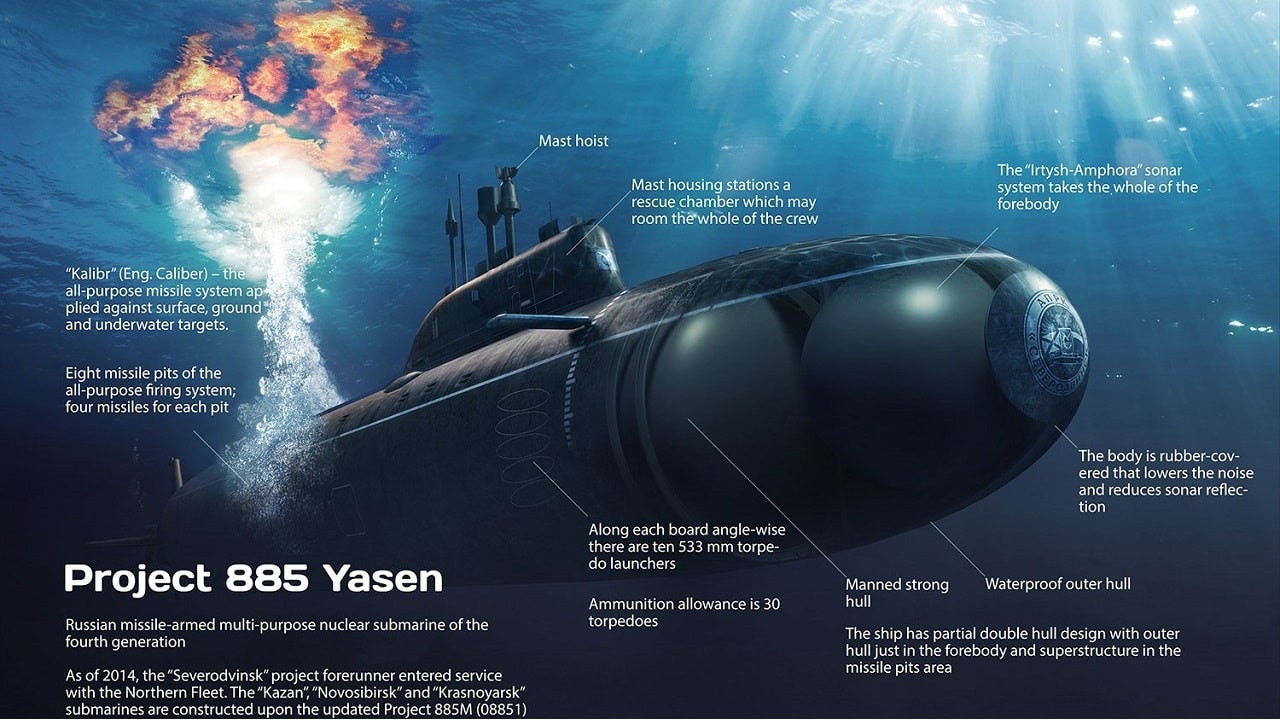
Yasen-M attack submarine. Image Credit: Russian Government.
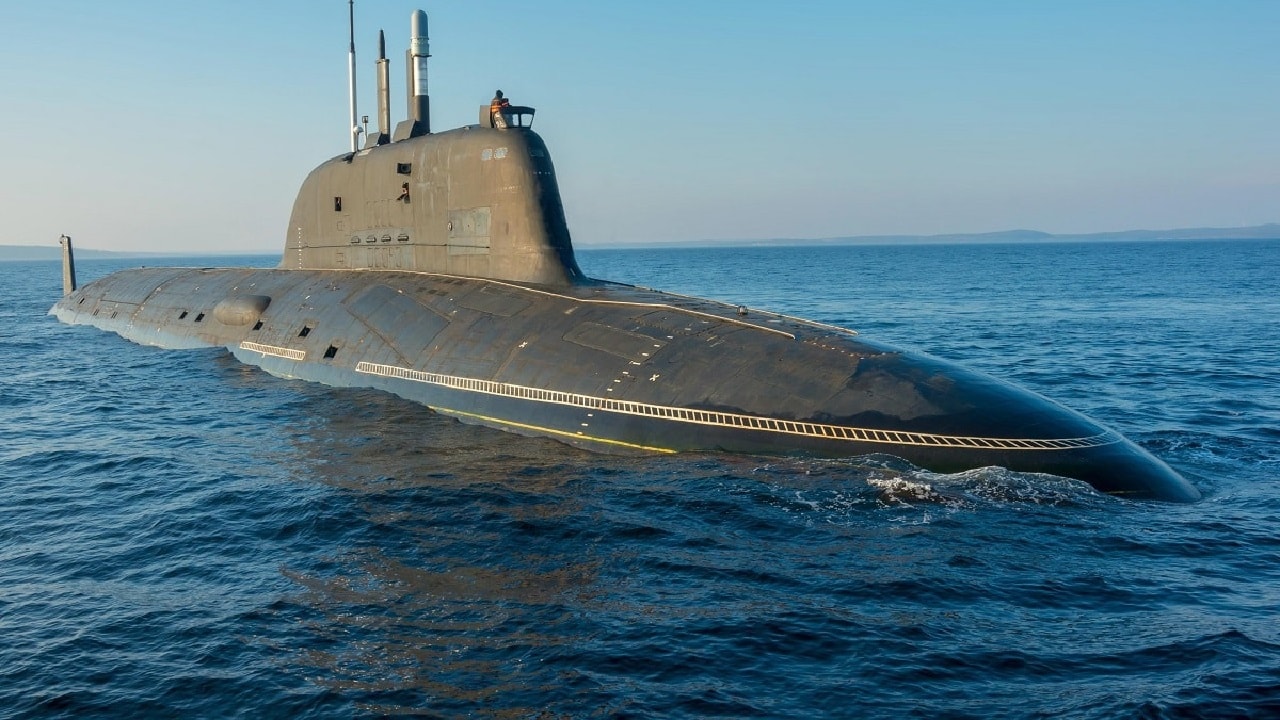
Russian Yasen-class Submarine.
The Boats America Has Left: One Expert Has a Way to Save Some Los Angeles-Class Subs
The Los Angeles-class is the bridge between the late Cold War submarine force and whatever comes next. Sixty-two hulls, three flights, three decades of construction, half a century of operations across the entire spectrum of submarine missions: intelligence collection, deterrence, strike, anti-submarine warfare, and — as of March 4, 2026 — the first surface-vessel sinking by an American submarine since 1945.
USS Charlotte will eventually retire. So will the rest of her sisters still be on active duty? The boats are running out of reactor life faster than American shipyards can deliver Virginia-class hulls to replace them. The Navy has known this for a decade. The Navy will continue to know this as the gap widens.
One minority opinion worth noting is that many of the 688I Los Angeles-class submarines should be modernized and returned to sea for another 10-15 years. As one retired U.S. Navy officer told me last week, he thought, “You could easily reboot and update quite a few 688I Los Angeles-class submarines and keep boats in the water for at least a decade or more. This should at least be explored as we have nothing to lose.”
When the last Los Angeles-class boat is finally hauled to the recycling pen at Puget Sound, the United States Navy will be left with a fleet that is qualitatively superior to the one it replaced and quantitatively smaller than the one it needs.
Charlotte’s torpedo run on March 4, 2026, was a reminder. The American submarine force can still do what it was built to do. The question is how many boats are left to do it with.
About the Author: Harry J. Kazianis
Harry J. Kazianis (@Grecianformula) was the former Senior Director of National Security Affairs at the Center for the National Interest (CFTNI), a foreign policy think tank founded by Richard Nixon based in Washington, DC. Harry has over a decade of experience in think tanks and national security publishing. His ideas have been published in the NY Times, The Washington Post, The Wall Street Journal, CNN, and many other outlets worldwide. He has held positions at CSIS, the Heritage Foundation, the University of Nottingham, and several other institutions related to national security research and studies. He is the former Executive Editor of the National Interest and the Diplomat. He holds a Master’s degree focusing on international affairs from Harvard University. Kazianis is Editor-In-Chief of 19FortyFive.