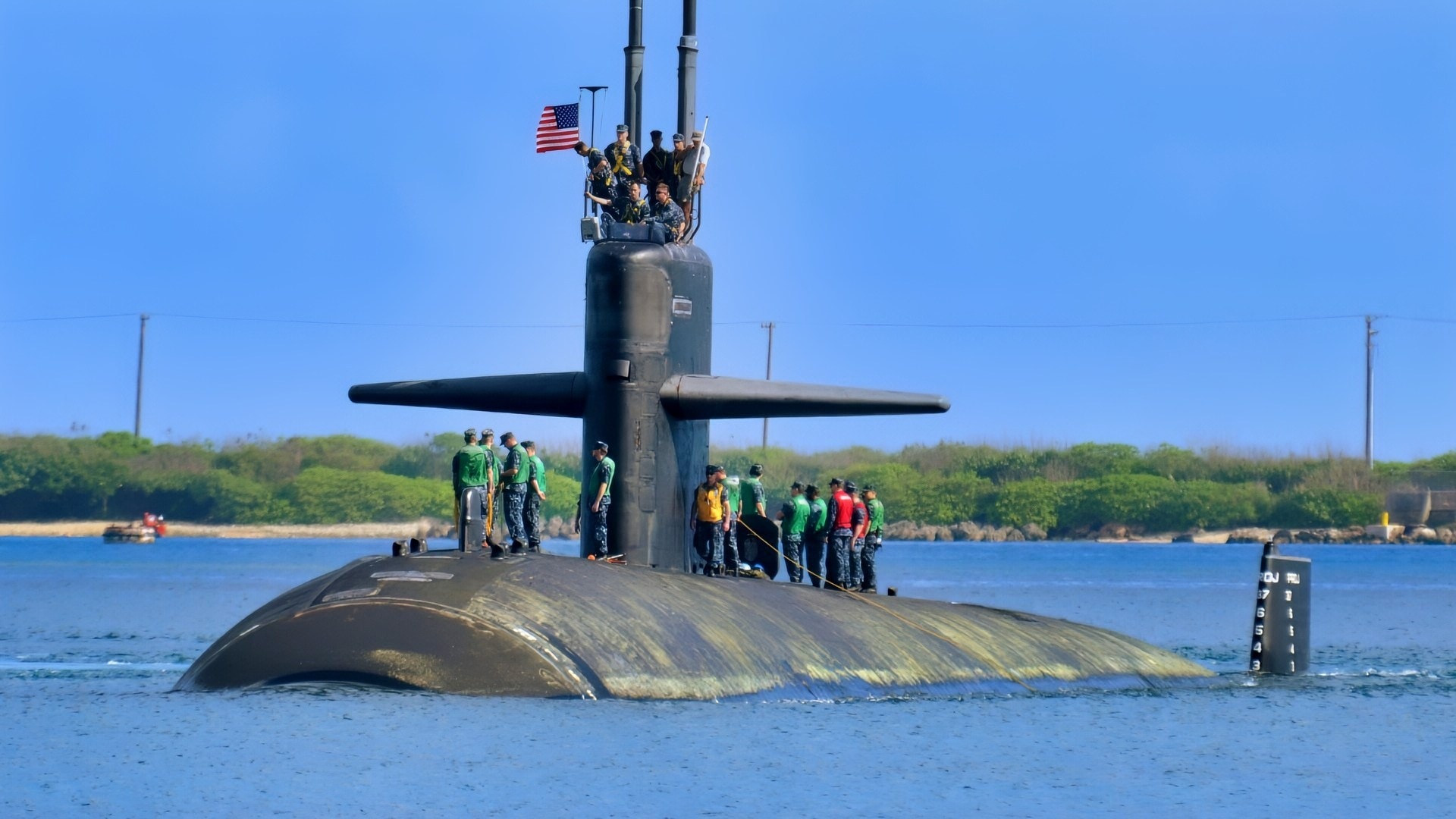
The U.S. Navy’s SSN Los Angeles-Class Submarine Will Be Very Hard to Replace At Scale: Russia and China are Taking Notes
The Los Angeles-class submarines have been the keystone of the United States Navy’s fast-attack submarine forces since their inception. Designed as a decisive answer to a specific and vexing strategic problem, the class is now being phased out in favor of a newer, more capable class of submarines.
The Los Angeles-class first went out on patrol during the height of the Cold War, when the United States faced a rapidly improving Soviet fleet of silent and capable submarines. Older Navy submarines such as the Sturgeon-class were slow, loud, and outfitted with dated sensor suites.
The Navy saw the Los Angeles-class as an opportunity to restore eroding undersea capabilities.
To that end, the Los Angeles-class would have a higher sustained speed, which would be essential for chasing down Soviet submarines and ships; modernized sonar for detecting new and very quiet subs; and nuclear propulsion to give the new class unlimited range, checked only by crew sustenance requirements.
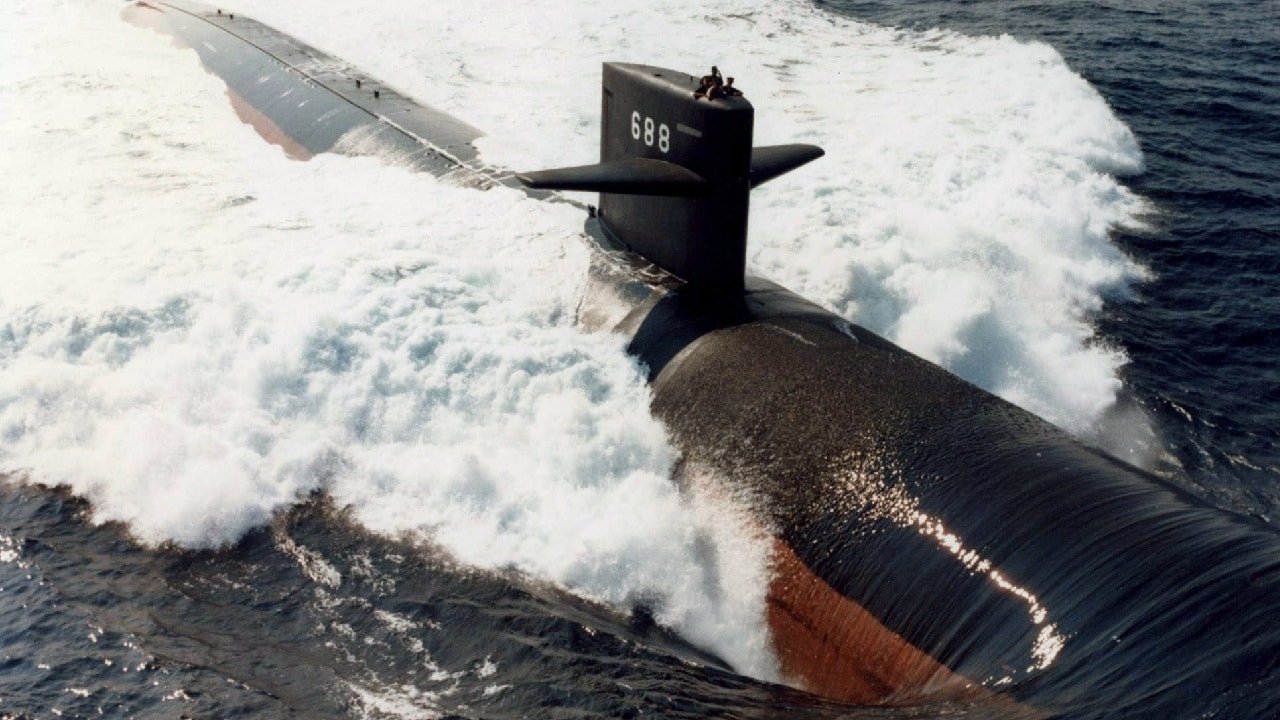
Los Angeles-class attack submarine. Image Credit: Creative Commons.
The goal was a revamped class of submarines optimized for blue-water anti-submarine warfare. Initially, they would be tasked with intercepting Soviet ballistic missile submarines before those could threaten the United States. They also were capable of protecting carrier groups and gathering intelligence. Over time, however, the Los Angeles-class’ mission would expand to include a potent land-attack capability.
Ultimately, 62 Los Angeles-class submarines were built for the Navy, divided into three flights. Flight I builds were purely hunter-killer submarines. They lacked the vertical launch systems (VLSs) included on later blocks and were optimized for deep-ocean anti-submarine warfare.
Flight II builds were a transitional upgrade to the Los Angeles-class design. They added 12 VLS tubes for Tomahawk missiles, as well as an improved reactor and incremental upgrades to onboard electronics.
Though not a complete transformation of the class, Block II Los Angeles-class builds expanded the class’ role. From purely hunter-killer boats, they became a mobile strike submarine that could threaten land targets and ships on the surface without sacrificing the submarine’s torpedo loadouts.
The most significant upgrade to the Los Angeles-class design was Block III.
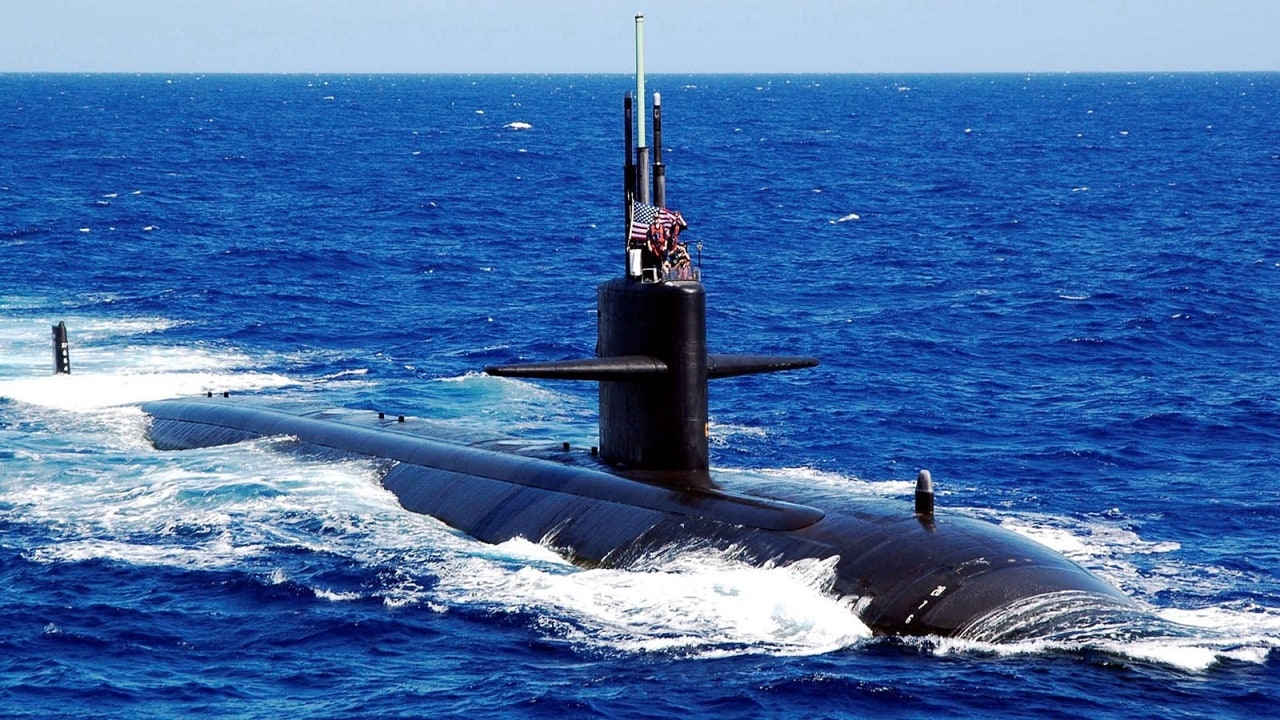
US Navy Los-Angeles Attack Submarine. Image Credit: Creative Commons.
688i
The Los Angeles-class 688i is the most capable and longest-lived of the class.
They incorporated significant changes to their design, and the Navy built 23. Thanks to a substantially quieter design, the submarines were more survivable and more lethal than previous blocks.
They also incorporated an Arctic capability, moving now-retractable diving planes from the sail to the bow, and could punch through thick layers of ice and launch missiles if necessary. Finally, they could track Soviet submarine bastions in the far north.
Without compromising torpedo inventory, the improved Los Angeles-class subs could deliver missile salvoes. The boats were, in effect, a bridge between late Cold War-era anti-submarine warfare and post-Cold War precision strike platforms.
But despite the extensive modernization, the Los Angeles-class is slowly being retired.
Stricken from the List
The Los Angeles-class now faces technological and structural limitations. Though the subs are nuclear-powered and able to operate for decades, their nuclear reactors have finite lifespans of 30 to 35 years without refueling.
Many of the Los Angeles-class submarines have reached the end of their service lives. Submarine technology has significantly advanced since the Los Angeles-class made its Cold War debut, and modern U.S. Navy submarines offer enhanced capabilities that can better respond to increasingly advanced submarine designs from China and Russia.
Even the newest 688i Los Angeles-class submarines are acoustically inferior to more modern submarines.
The class was built for open-ocean warfare, not necessarily for the full gamut of today’s missions.
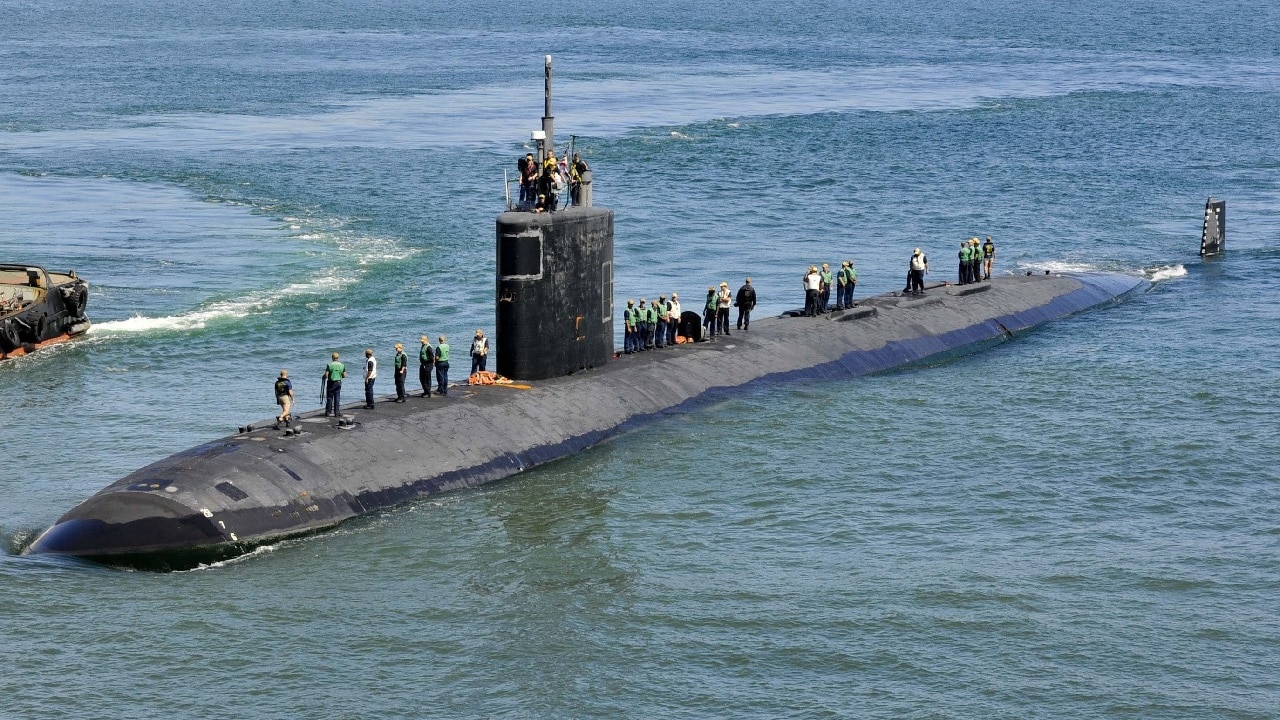
PUERTO PRINCESSA, Philippines – (Dec. 9, 2018) – The Los Angeles-class attack submarine USS Greenville (SSN 772) prepares to moor alongside the submarine tender USS Emory S. Land (AS 39), Dec. 9. Emory S. Land is a forward-deployed expeditionary submarine tender on an extended deployment conducting coordinated tended moorings and afloat maintenance in the U.S. 5th and 7th Fleet areas of operations. (U.S. Navy photo by Mass Communication Specialist 2nd Class Daniel Willoughby/RELEASED)
They have limited space for special operations forces, and their internal architecture is less adaptable. Older sensors and dated electronics limit the submarines. And as they age, increasingly lengthy maintenance periods are required, limiting their availability. But the Los Angeles-class has a successor: the Virginia-class submarines.
The Replacements for the Los Angeles-Class: Meet the Virginia-Class
The Virginia-class is the Navy’s direct successor to its Los Angeles subs. Compared to their predecessors, the Virginia submarines place a premium on a modular design to facilitate future upgrades.
Littoral operations closer to shore differentiate them, too, as well as an explicit special operations support capacity that includes SEAL delivery and lockout chambers. They’re quieter and boast more flexible payload capabilities as well.
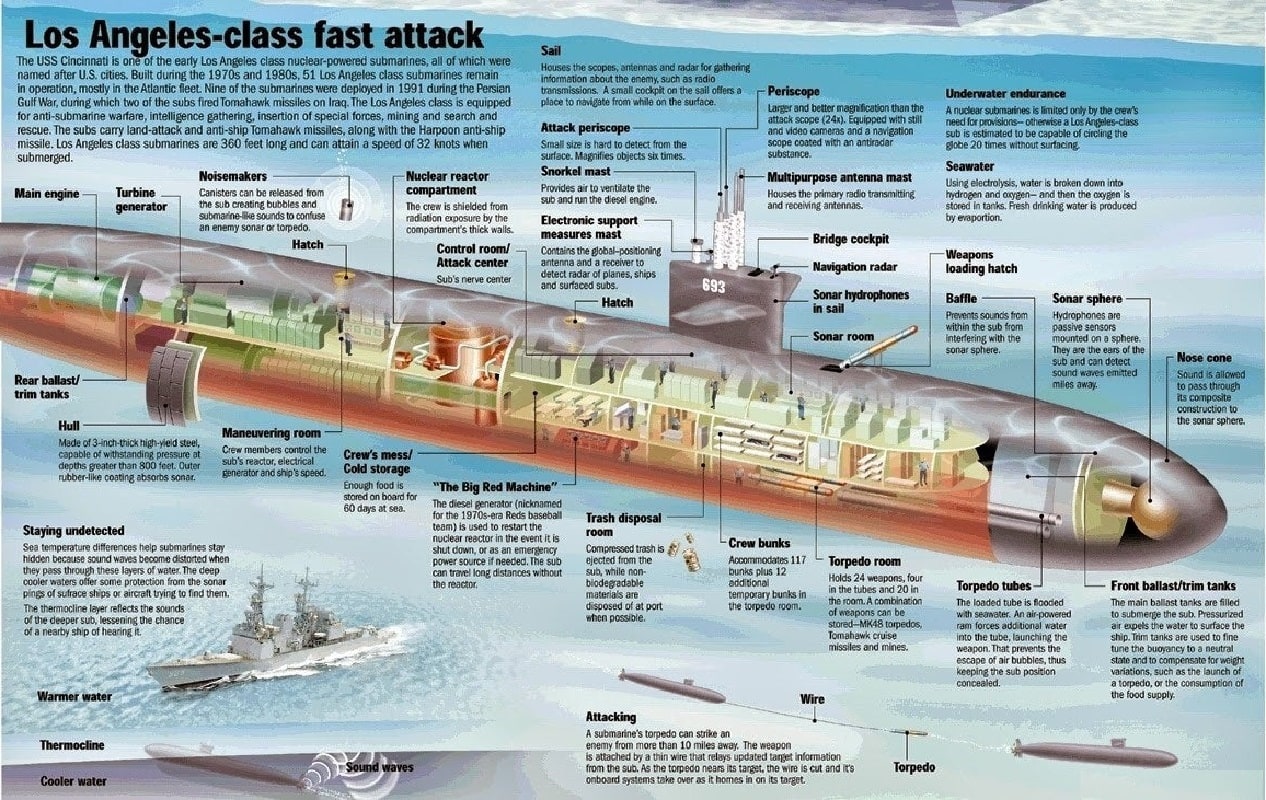
Los Angeles-Class diagram. Image Credit: US Navy.
Though Virginia-class submarines are still being manufactured, plans for their successors are already in the works. Though lacking a class name, the provisionally designated SSN(X) submarine will replace the Virginias with a design meant to address high-end conflict against a peer adversary.
Though the Navy’s Los Angeles-class chapter is slowly winding down, industrial-production constraints may give a lucky few Los Angeles-class submarines a new lease on life.
The AUKUS Agreement
Under the terms of the somewhat awkwardly named AUKUS agreement, the United States and the British Royal Navy will share the crown jewel of their nuclear deterrence triad with Australia: underwater nuclear propulsion technology.
If that plan remains on track, Australia will eventually have nuclear submarines in service—these are provisionally called the SSN-AUKUS boats. Those submarines will be nuclear-powered but not nuclear-armed.
Thanks to a slowdown in submarine construction during the 1990s, following the end of the Cold War, the ability of U.S. builders to manufacture submarines for the U.S. Navy and its British and Australian counterparts is in jeopardy.
According to some estimates, the U.S. Navy will count 47 submarines in its fleet by 2030, a dip that will slowly rise to the mid-60s by 2050. Building AUKUS submarines could risk a shortage for the U.S. Navy.
As Emma Salisbury, a naval expert, opined, “to bridge the production gap, the Navy is planning to refuel and extend the lives of up to seven Los Angeles-class submarines, the predecessor to the Virginia class. It’s also exploring ‘hull-by-hull’ service life extensions to squeeze more years out of older boats.”
Though the plan has its merits, it also comes with risks. “These are stopgaps, not solutions,” Salisbury wrote. “The long-term answer lies in expanding production. The Navy’s 30-year shipbuilding plan envisions buying two new Virginia-class submarines per year starting in 2030 — eventually ramping up to 2.33 per year. That increase is meant to support U.S. force structure goals and fulfill the AUKUS commitment, but hitting those numbers will require an industrial renaissance not seen since the Cold War.”
Pentagon policy czar Elbridge Colby has repeatedly questioned the wisdom of supplying the Royal Australian Navy with new-build nuclear-powered AUKUS submarines if doing so risks a shortfall for the U.S. Navy.
Under the terms of the AUKUS agreement, Canberra has made good on billions of dollars of investment intended to expand U.S. submarine industrial capacity. More than a goodwill gesture, the cash injections have been contractually obligated, but also are hoped in Canberra to curry favor with Colby and the Pentagon and ensure the AUKUS agreement survives the current U.S. administration.
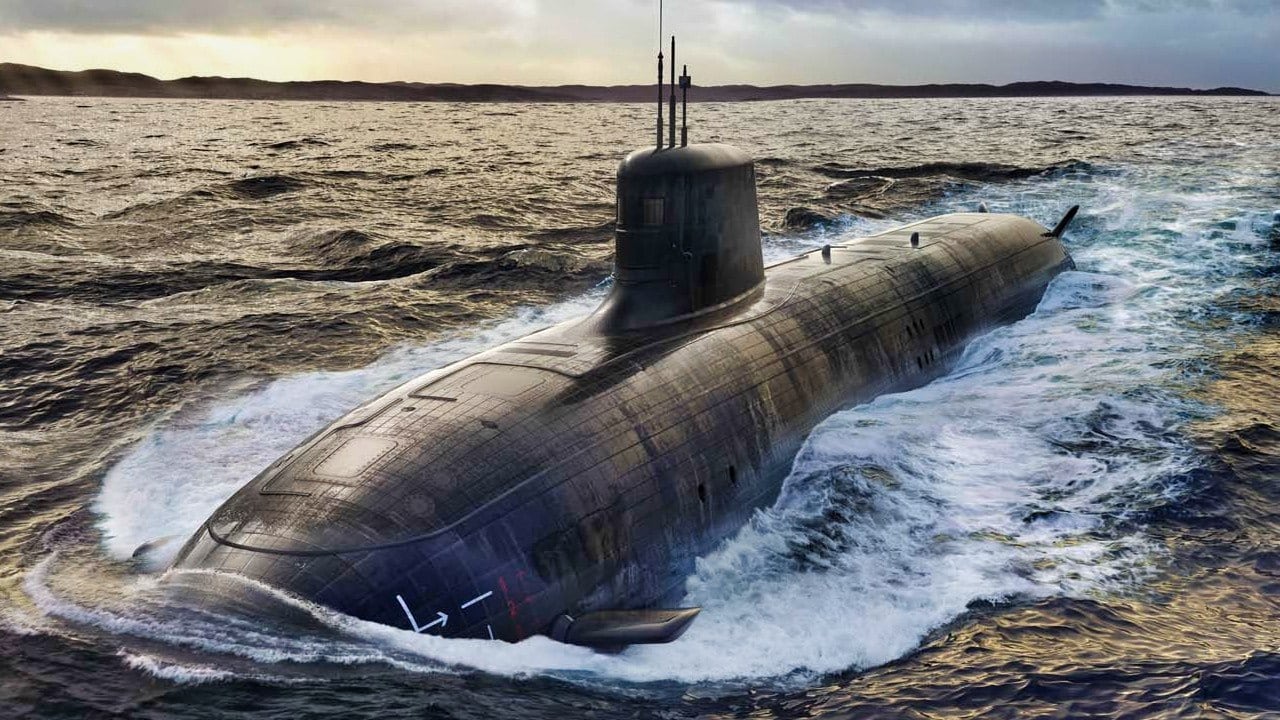
SSN-AUKUS Submarine. Image is Creative Commons Artist Rendering.
Acknowledging Colby’s apprehension, Salisbury quoted Admiral Daryl Caudle, Chief of Naval Operations, who said “the only way we’ll ever make good on the AUKUS agreement is that we get to the 2.3 [build rate].”
Into the Deep
The Los Angeles-class submarines were designed to fight and win against the Soviets if the Cold War ever turned hot. Over time, however—particularly after the dissolution of the Soviet Union—the platform gradually evolved from purely a hunter-killer submarine hunter into a more flexible strike platform, in particular with its final 688i iteration.
And while the class played a crucial role during that cold conflict, its design was the product of an operational philosophy and industrial capability rooted in the 1970s.
As the U.S. Navy shifts toward engaging highly capable peer rivals that field ever-quieter submarines, it is leaning into newer, quieter submarine designs.
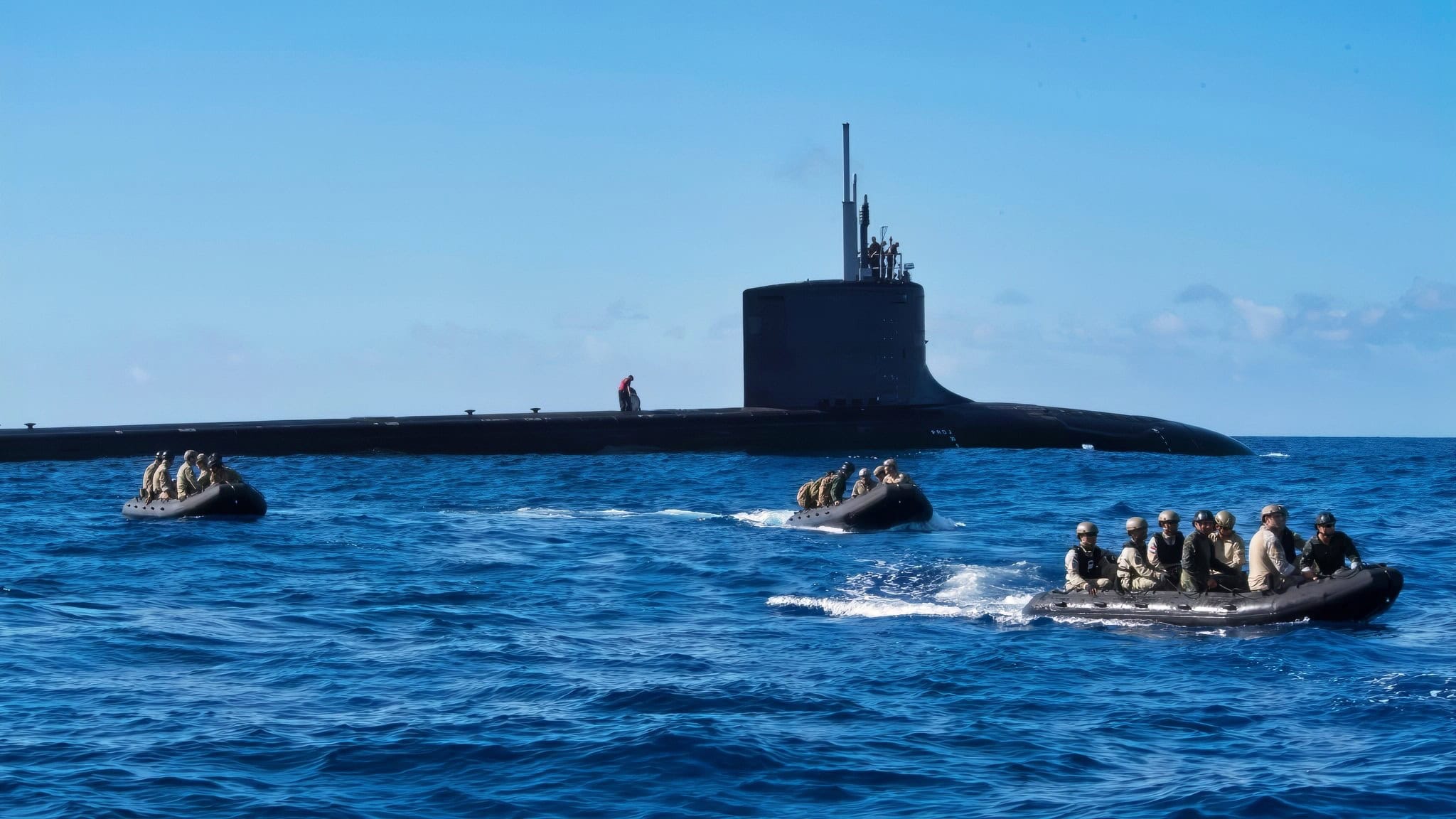
PEARL HARBOR (July 9, 2018) – Multi-national Special Operations Forces (SOF) participate in a submarine insertion exercise with the fast-attack submarine USS Hawaii (SSN 776) and combat rubber raiding craft off the coast of Oahu, Hawaii during Rim of the Pacific (RIMPAC) exercise, July 9. Twenty-five nations, 46 ships and five submarines, about 200 aircraft, and 25,000 personnel are participating in RIMPAC from June 27 to Aug. 2 in and around the Hawaiian Islands and Southern California. The world’s largest international maritime exercise, RIMPAC provides a unique training opportunity while fostering and sustaining cooperative relationships among participants critical to ensuring the safety of sea lanes and security of the world’s oceans. RIMPAC 2018 is the 26th exercise in the series that began in 1971. (U.S. Navy photo by Lt. j.g. Michelle Pelissero)
Though the Los Angeles-class may enjoy a renewed ability thanks to constrained submarine manufacturing capacity, that renewal is a stopgap measure and not a renaissance.
Still, the Los Angeles-class made a significant mark, particularly in the realm of popular culture and thriller fiction. Perhaps one of the submarine’s most memorable mentions is embodied in the Tom Clancy novel The Hunt for Red October, in which the USS Dallas is tasked with hunting a rogue Soviet Typhoon-class submarine, Red October, intent on defecting to the United States and surrendering the submarine to the U.S. Navy.
It was further popularized in the 1990 spy thriller film of the same name.
MORE – The U.S. Air Force Can’t Build More F-22 Raptors
MORE – A U.S. Navy Aircraft Carrier Caught Fire, and It Wasn’t the Gerald R. Ford
About the Author: Caleb Larson
Caleb Larson is an American multiformat journalist based in Berlin, Germany. His work covers the intersection of conflict and society, focusing on American foreign policy and European security. He has reported from Germany, Russia, and the United States. Most recently, he covered the war in Ukraine, reporting extensively on the war’s shifting battle lines from Donbas and writing on the war’s civilian and humanitarian toll. Previously, he worked as a Defense Reporter for POLITICO Europe. You can follow his latest work on X.